Neurodiversity & Mental Health: Session 2
Speech-language pathologist Alexa Kelly presents continuing education on neurodiversity and mental health, covering burnout risk factors like masking and poor interoception, trauma pathways specific to neurodivergent individuals, and why autistic youth have elevated suicidality rates. The session emphasizes trauma-informed care and practical strategies including sensory accommodations and leveraging special interests in therapy.
Chapters
All right, welcome everybody. My name is Corinne Kukeon, and I have been an SLP for over 20 years with a passion for telepractice across the lifespan. I'm a lifelong learner, a professional development enthusiast, and the current CE administrator here at Parallel. Thank you for being here today and spending the next hour with us. At Parallel, we take pride in nurturing our professional community as well as the broader community by offering innovative, high-quality programming for clinicians and educators alike. A few housekeeping items before we start. First and foremost, I want to sincerely thank each and every one of you for the incredible work you do as providers. You are the— at the forefront, making a meaningful difference in the lives of students each and every day. This course is offered for 0.1 ASHA CEUs and 1 NASP-approved CPT CPD credit. If you wish to have us report CEUs to ASHA and/or receive a certificate of completion, please be sure to do the following. Attend the entire live webinar today. Attendance will be tracked through Zoom reports. Be sure to join with the email address attached to your registration. No partial credit will be awarded. Complete and submit a self-assessment evaluation within 3 business days. And be sure to indicate that you want to receive ASHA CEUs and provide your ASHA ID number in the post-webinar survey that you will receive tomorrow. We love and encourage questions from our participants, and if you have any questions, please feel free to drop them in the chat. We will do our best to answer them through at the end during our Q&A time. And then, while it is not a requirement to stay after the completion of the educational portion of Alexa's presentation today, We do have a fun and exciting surprise raffle that we will announce at the end. You'll have the option to stay on for a few extra minutes to hear a little bit more about Parallel and how we are supporting districts across the US. You'll also get a chance to enter some fun raffles. And now I'd like to introduce you to Alexa Kelly. Alexa is a speech-language pathologist in the Atlanta area. She holds a Master of Science in Communication Sciences and Disorders from Armstrong State University, where she also earned their Bachelor of Science in the same field. Their professional experience spans various settings from outpatient clinics to public schools, where she has worked with diverse populations, including pediatric and adult clients. As of 2023, Alexa owns a mobile speech therapy clinic called Brain Positivity Therapy, where she promotes neurodiversity-affirming care to individuals of all ages. She was inspired to create her clinic because of her experience as someone with ADHD and autism herself. Alexa uses a holistic trauma-informed approach to care so that clients can feel at ease communicating about their experiences and their needs. Alexa has been recognized with ASHA Distinguished Early Career Award by American Speech-Language-Hearing Association in September 2023. She's also a published writer with her work being published in the March-April 2024 edition of the ASHA Leader. Her writing targets advocacy for neurodivergent individuals and promoting a social model of care across— over the medical model, excuse me. And now without further ado, here's Alexa.
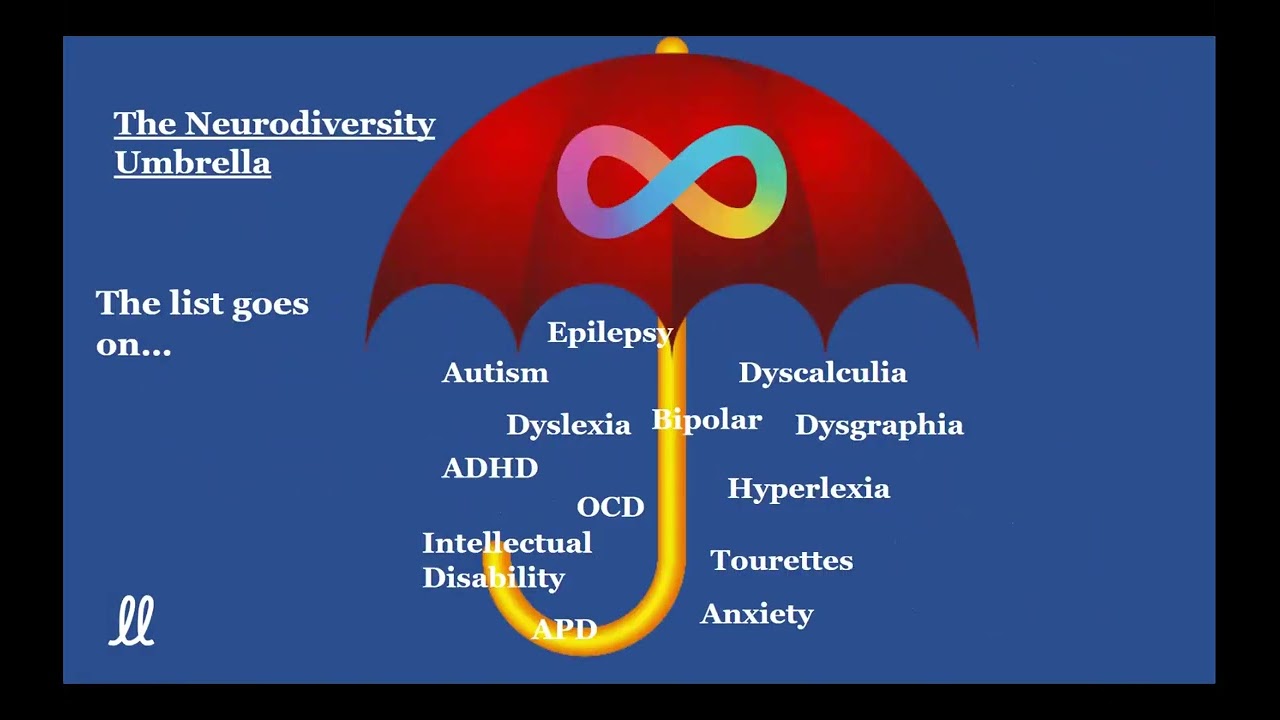
Hi, everybody. I hope everyone's doing well. Thank you so much for joining me this evening. So I am so grateful to be here, and I'm happy to present on one of my favorite topics, which is neurodiversity just as a whole, but also neurodiversity as it relates to mental health. And I'm a huge advocate for mental health and providing support to those who are especially in marginalized, marginalized or underserved populations. So I'm happy to share everything that I have with you today. So we'll go ahead and get started. So just a little bit about me. So just like Corinne was saying, I'm a speech therapist based out of Atlanta. I was diagnosed with ADHD and autism in 2023 of last year. So I'm kind of new into this sort of self-revelation experience. So it's, it's been definitely a learning journey, but I think it's helped me so much as a speech therapist. I am the owner of Brain Positive Therapy. It's a mobile neurodiversity-affirming clinic that provides virtual services at the moment, as well as home-based services across the Southeast. I primarily serve states such as Georgia, Florida, Maryland, and South Carolina. All right, so here are some financial disclosures. So I am the owner of Brain Positive Therapy, but I'm not receiving any compensation for this presentation. And there are no other relevant non-financial disclosures to cite at this time. Alright, now we'll go ahead and jump into some of the learning outcomes. So for today, and you might have seen this on some of the, you know, visual posters for today's webinar, the learning outcomes are to identify common signs of burnout in neurodiverse individuals. Summarize how neurodiverse individuals are at higher risk of mental health comorbidities. Describe the pillars of trauma-informed care. And be able to summarize 3 ways in which providers can advocate for a neurodiverse individual's mental health needs. All right, so here is today's agenda. It's kind of essentially breaking down everything that's in the learning outcomes. So The first thing we'll do is we'll define some sort of baseline terms, neurodiversity, of course, as well as burnout, just as a concept. After we define those 2 terms, we'll then discuss some risk factors for mental health comorbidities, specifically in the neurodiverse population. Afterwards, we'll talk about trauma and how the likelihood of experiencing trauma can sometimes be directly related to being neurodivergent. After we discuss all of those phenomena, we'll describe trauma-informed care, not just as a general practice, but through the neurodiversity-affirming framework. And last couple of things we'll cover is we'll learn some advocacy strategies to create safe spaces for neurodiverse people. This is great for anyone. You know, I'm a speech therapist, but this is great for any sort of provider or educator. After we learn some, you know, tangible strategies, we'll have some closing remarks and have a little Q&A session and talk about, you know, maybe some things that crossed our mind throughout the presentation. All right. So without further ado, we'll jump through the first portion of the presentation, which is just Defining the basic terms of neurodiversity as well as burnout. So of course, what is neurodiversity, right? Neurodiversity is what I like to call an umbrella term, and I know a lot of people, others call it that as well. It encompasses all types of neurodevelopment. So I think a lot of times people will associate neurodiversity with autism and ADHD. Those are kind of the 2 biggest diagnoses associated with this brain type or label of brain type, but it encompasses all types of neurodevelopment. I think that's something really important to keep in mind. We'll be talking about way more than just people with autism and ADHD. There's all kinds of brains out there we'll explore. As the foil to neurodiversity, we have neurotypical. If a neurodiverse brain is varying types of neurodevelopment that are outside of what's considered the norm, a neurotypical brain would be the opposite. This would be a person or people whose neurodevelopment falls within the range that's usually considered typical development. I have at the bottom here just some tense-based terminology. You might hear me refer to someone as neurodivergent or the neurodiverse population as a whole. What I'm referring to there is I'm just describing someone who has a neurological difference in their development. It doesn't just relate to neurodevelopmental disorders, but this also includes those whose brains have been impacted by a neurological event such as acquired brain conditions. You'll see I have my little rainbow infinity symbol up in the corner. If you see that, that just refers to neurodiversity as a whole and Kind of the spectrum of colors that can fall under that umbrella. And speaking of umbrella, I've got my lovely neurodiversity umbrella here. So like I said, it doesn't just encompass autism and ADHD, right? And even this small list of different neurotypes doesn't even begin to cover all of the things that fall under this umbrella. But I thought these would be fun examples just to highlight. So We've got autism and ADHD, of course. We have other brain types, behavior disorders like antisocial personality disorders considered neurodiverse, obsessive-compulsive disorder, Tourette's, even things like bipolar, anxiety disorder. Those with intellectual disabilities are also considered neurodiverse. Those that have different learning challenges such as dyslexia, dyscalculia, and dysgraphia. Even those that we might not consider to be impaired by society's norms, such as hyperlexia, is also a form of neurodivergence as well. A lot of these kind of refer to developmental neurological needs, but also those with a traumatic brain injury or aphasia or any sort of cognitive impairment can fall under this umbrella of neurodiverse. So now that we've defined neurodiversity and what being neurodiverse means, we're going to talk a little bit about burnout. So what is burnout in general? So burnout as a concept was actually defined back in the 1970s. So it's, it's not a very old concept. Burnout is defined as the physical, emotional, or mental exhaustion accompanied by decreased motivation, lowered performance, and negative attitudes towards oneself and others. And this is a definition from the American Psychological Association. So it is a documented term. And I think if you are a provider or a service provider of any kind, you're familiar with what burnout as a concept is, right? It actually started as an occupational description of the feeling of overwork. That is often experienced by healthcare workers as well as other caretakers or other service providers. So that's just the general definition of burnout, but we'll talk a little bit more about how burnout can be redefined from a neurodiverse lens. All right, so here is our first poll question. So looking back, and this is just to get your general opinion, Based on what we've learned about burnout and being neurodiverse, have you ever interacted with a neurodiverse person who is experiencing burnout? And here's some, you know, examples of ways you could answer this question. For me, I would say yes, definitely. You know, if this is kind of a new experience for you or new terminology, you might say, I'm pretty sure, I believe so, but I'm not so sure. Or you might say, no, not at all. I don't think I've ever experienced this. So I'll give you guys a couple seconds just to put in your answers, and then when everyone's done with that, we'll move on to the next section. All right, perfect. Let's go ahead and move on. Okay. So for the next section, we're going to talk about risk factors for mental health challenges. So, you know, we'll be talking all about how burnout can play into mental health challenges, how some of the symptoms of being neurodiverse can have a direct link to mental health challenges. You know, there's a lot that I hope that you can get from this portion of the presentation. There's a lot of interesting data in here. So burnout and neurodivergence. So we've established what burnout is just as a whole. Neurotypical people experience burnout, but there is a unique way in which neurodiverse people experience burnout from their perspective. So in my own words, I've kind of summarized why neurodivergent people experience burnout in this unique way. And it's because burnout in these individuals can result from living in a world that isn't made for them, right? Being an outlier in a society that wasn't made for you can come with its own challenges, and there's actually some interesting data to support this. So research conducted in 2023 focused on the experience of neurodivergent students in a graduate program, and I found this particularly interesting not just because of how recent the study was, But the fact that it would be likely that these students were highly masking, you know, very intelligent in a graduate program. So we're dealing maybe with a lot of individuals that might have had a later diagnosis in life, or, you know, are presenting with neurodivergence in a very unique way. So they found from all of this information, and, and the infographic on the screen has a representation of all of these factors that play into burnout in neurodiverse individuals. And what they found with this particular population of adults was the risk factors were tied to internalizing neurotypical norms. So constantly having a little voice in the back of your head saying you need to do that more the normal way. Self-silencing. So that can be related to maybe if you have any sensory needs, you need to self-regulate, but you know, that's not what normal people do. You might want to silence that part of yourself just to fit in a bit more with the crowd, as well as pressure to overwork and mask. So I know masking is a very popular term these days. People can resonate a lot with it. And I think masking is directly related to, you know, all of these other symptoms as well as, you know, the pressure to overwork. A lot of times in order to cope with the sensation of overwork, neurodiverse individuals will mask themselves, right? Because neurotypical people may be able to handle, you know, a 9-to-5 job without breaks, but if they are pressured to follow those norms and they need regular breaks throughout the day, that's a lot of pressure to put on someone who is also trying to hide the fact that they don't have this disability or challenge, right? So there's so much at play, I think, when it comes to the pressure That neurodiverse people experience when they're in various settings just out in the real world. Now here's some more about risk factors and signs of burnout. So outside of just that one study, there's other risk factors that contribute to burnout. So we have the what's called the double empathy problem. So I don't know if any of you are familiar with this. As a concept, but it's a very new term or become really popular in recent years. I think it started showing up around 2017, 2018. What it essentially describes is the reciprocal misunderstanding of neurotypical people and neurodivergent people. What I mean by that is it's always been understood That neurotypical people do not understand neurodiverse people, right? You know, something has always been labeled as wrong with them. You know, something's odd about them, something's different. But then it became apparent that it also went the other way, right? So neurodiverse people thought it was quite odd the way neurotypical people communicate as well. It's not within their repertoire of communication and social interaction to act with the world the way neurotypical people do. This double empathy problem can create an environment where there's conflict, especially if there's no way to adequately repair those communication breakdowns that can occur. Another thing is changes in routine, of course. If you are thinking of someone who's autistic, for example, they're very routine-oriented, they have a very sometimes a very strict regimen that they prefer to adhere to. And we'll talk about why that might be a reason in later slides. But, you know, if someone needs a routine in order to stay regulated, obviously a change in routine would cause some negative repercussions, right? So that's the reason for that. And then stressful life events, of course, that kind of also plays into changes in routine. As well. So, you know, stressful life event is usually, you know, very rare, hopefully very rare, right? So when these do happen, you know, it's a change in routine which can also exacerbate the, you know, stress response that a neurodiverse person might have. So that kind of again is more fuel to the fire in terms of how burnout can culminate in someone with neurodiverse traits. And then this last one I found particularly interesting. So co-occurring symptoms such as alexithymia and poor interoception can make it difficult to regulate one's emotions and detecting bodily signs of stress. So, you know, I think for a neurotypical person, they might have a better brain-body connection. So if you are able to sense your own heart rate, and sense all those physiological signs that you're getting stressed out, then you can allow yourself to excuse yourself from the situation where you're getting stressed. You're able to take a more active part in your ability to regulate your emotions. A lot of times for people who are neurodiverse, they have these issues with alexithymia, so difficulty understanding emotions of others and poor interoception, so that lack of brain-body connection. So when they are feeling signs of stress, they're not as privy to them because they're not sensing it as clearly as a neurotypical person would. Now, other signs of burnout. So we're, you know, we thought about like some risk factors. So these are specific signs to look out for. So if you're talking with someone or you're working with someone that you know or suspect is neurodivergent and you're worried that they're on the edge of burnout or they could be at risk, some signs you might see are decreased executive functioning skills. So, you know, if they are having more challenges with balancing multiple tasks throughout the day, that can be a sign of burnout. Another thing is decreased ability to engage in self-care routines. I think anyone who's ADHD can attest to this, and that's a lot of times why people who are ADHD get first diagnosed with depression, because it's that lethargy that they experience. You know, it might be seen as like, oh, they're too depressed to brush their teeth or comb their hair, but really it's the overwhelm, the executive function overwhelm that comes with the multiple steps that are within that one task. So, you know, that inability to engage in self-care routines can oftentimes be misunderstood. And it can also lead to— or burnout can lead to chronic fatigue and exhaustion. So this makes a lot of sense. I think a lot of neurotypicals can relate to feeling tired or exhausted when they're burnt out. But a lot of times this can be more of a physical Manifestation in a neurodiverse person, and they are going to be less likely to hide this as long as they're not masking. When you add masking into it, it can make it a little more complicated. But if the person in question is not masking, then it's going to be more, you know, overdrive of their sensory system, right? And then the last thing is reduced tolerance to stimuli. So if you see that someone's more sensitive to, you know, UV lights or fluorescent lights, sounds, you know, maybe, you know, they're a bit more verbal about their disdain for like someone's chewing in the break room or something like that, then that, that might be a sign that they are a little bit burnt out, right? As well as the increased need to self-isolate. I think this one Is quite common in anyone who has to mask a lot to interact with others. You know, masking is a performance, right? You're performing. And if you're performing all day, every day, that's exhausting, right? So if, you know, the whole reason you're performing is because you're around other people, then you need to take a break from other people, right? So then you need to go self-isolate. These symptoms, of course, you know, while a lot of them you might tie back to autism or ADHD, the degree of these symptoms or the presentation, the frequency, the magnitude of these symptoms will depend on the person's diagnosis and the context that triggered that person to be sent into burnout. Now, Let's talk a little bit about the importance of recognition. So why is it important to not just recognize burnout in a general sense, but also why make the specific, you know, measure for neurodiverse people, right? The reason why is tied back to a lot of data related to mental health comorbidities. So neurodivergent people are at a higher risk of mental health comorbidities than their neurotypical counterparts, and that's for many reasons. So because of this difficulty with the brain-body connection, you know, this lack of control they feel in their nervous system, there's an increased chance of expressing that, you know, challenge through self-harm or injury. There is an increased risk in this population of suicidal ideation and attempts. They are 4 times more likely to develop depression. Risk can become more severe when looking at underrepresented populations as well. So, you know, as you kind of break down the neurodiversity umbrella into farther and farther marginalized populations, so women, for example, people of color, people that are, you know, identifying as neuroqueer, so There's a lot of data that shows that many people in the neurodiverse population are transgender or exploring their gender presentation. So there's so much that being marginalized can obviously tie back into mental health comorbidities, and that can all be exacerbated by the presence of neurodivergence. So I ended up making a little bit of an infographic, a pie chart if you will, on the suicidality in autistic youth. I know this is potentially triggering information, so just know this will only be for a few more seconds of the slide where I talk in depth about suicidality, and then we'll be back to other topics. But I just wanted to hone in the importance of how likely suicidality can be in neurodiverse people. So a lot of the statistics are around autistic individuals. That's really where we've gotten the most information from. So based on the study in 2022, which is not that long ago, while 66.3% of individuals did not outwardly present with suicidality, they didn't have documented signs of suicidality. Of all of the ones that were sampled, a fourth of them generally, so 25.2%, had ideation. So that means that they regularly, on a regular basis, thought about ending their life. Okay. And of that total amount, 8% of those individuals had actually made physical attempts to end their life. You know, and that's really, really sad to me. And I don't know if a lot of people know that that is something that regularly occurs within this population, but it is quite a large percentage. And unfortunately, 0.2% of individuals in this study did suffer fatality because of their suicidal ideations and their suicidality. So this is just something to keep in mind if You know, up to this point, things felt a little abstract. My hope was that this piece could kind of provide some concrete evidence to say this is an issue, right? So it's so important to recognize this because of this risk of suicidality. We don't want to lose lives to mental health struggles that can easily be mitigated. All right, so now we're on to the second poll. So prior to today's presentation, were you aware of the statistics surrounding neurodiversity and mental health comorbidities? I've talked with a lot of people that have different opinions on it or different experiences. You know, some people don't know, but it makes sense. Some people are really surprised by this information. Some people are very, very aware. Some people knew there was a risk, But they didn't know it was as high as it was reported. And you'll see some more numbers further on in the presentation that highlight the frequency of these comorbidities. All right. So looks like everyone got their answers in. We'll go ahead and move on to the next portion. So now that we've kind of highlighted the social implications and the mental health comorbidities that are at risk with this population, we're going to explore trauma as a concept because trauma in this population is what ties in obviously to trauma-informed care, right? So let's think about the likelihood of trauma in this population. So because we had to look at burnout Specifically as it relates to neurodiverse people. We're also going to look at trauma as it relates to neurodiverse individuals, and they are more likely to develop trauma because of consistent overbearing demand that exists in the neurotypical world. Again, this is where a lot of these compensatory, you know, self-subconscious compensatory strategies come in, like masking. There's a lot of other You know, things that happen or can cause trauma. So again, social demands, medical trauma is also a situation that isn't talked about enough, in my opinion. A lot of times individuals who are neurodiverse have difficulty communicating when they're scared or communicating their consent to a medical procedure. And so a lot of times that leads to them having things happen to them without their consent. Or they might be told information that maybe was not handled in a very delicate way and it traumatized them and it changed the way they viewed their world forever after that. Sometimes that can happen. Sensory regulation needs can cause trauma because your brain never turns off when you're neurodivergent. Your sensory system is constantly working. You know, a lot of times our sensory system is constantly in flux and it's constantly in need, right? So a lot of times sensory systems can have a huge demand on our cognitive load. And if it kind of takes over and it goes into overdrive, then that can be traumatic for the individual.
Ableism.
is a very huge issue. If you're not familiar with ableism, this is the general idea that, you know, someone does not, you know, approve or is discriminating against someone with a disability. And obviously, with most disabilities, there are people who are ableist towards neurodiverse people as well. And we'll talk a bit about the nuances of that in, you know, a couple slides too. Something that kind of plays into ableism is having an invisible disability. So sometimes it can trigger a response in neurotypical people if you have what's called an invisible disability, and it can also just be traumatic if you are someone with an invisible disability. You know, if you are able to hold a 9-to-5 job, if you're able to get good grades in school, If no one suspects anything wrong with you, that can be in a way traumatic because you're not given access to the supports that you need to be emotionally regulated and, you know, loving yourself the way you should. So that can cause some trauma as well. Something else I wanted to highlight specifically with those that might have difficulty with alexithymia or even cognitive or intellectual disabilities is the risk of exploitation. This is another thing kind of similar to medical trauma that I don't think people think about when thinking of a neurodiverse population and some of the risks that can come along with being neurodiverse. It says in a lot of recent studies that children with ASD are more likely to experience bullying, exploitation, and physical and sexual abuse. Compared to neurotypical peers. And again, that has a lot to do with the, you know, inability to read people's emotions, the inability to understand when someone is bullying you, or if someone is trying to be your friend. These subtle nuances in social communication especially can put a neurodiverse person at risk for being abused, bullied, or exploited, right? So these are all just things to really, you know, think about when we're thinking about, you know, why does a neurodiverse person have trauma? You know, these are some of the things that are why. These are some of the things that directly contribute to that trauma response. Okay. So I wanted to include this in here just because I think that it paints a great picture of why neurodiverse people experience trauma at the rates that they do. And this infographic, if you've never heard of the polyvagal theory, I highly recommend looking into this, into some of the research by Dr. Stephen Porges. I attended one of his webinars and it was super informative, and that's actually where I got this information from, this visual specifically. But I wanted to talk a little bit because it explains greatly how neurodiversity works and how tied in it is to the fight-flight response. So the way this polyvagal ladder is, you're going to imagine that this ladder is essentially your nervous system, right? At the top of the ladder, you've got your more sophisticated functions. So communication, for example, would be kind of at the top of that ladder. And then as you go down the ladder, you experience more of those more primitive brain functions. So thinking about maybe those brainstem functions. So your You know, ability to, you know, desire to eat and sleep and all of those things that can be kind of in that more primitive brain response. And then fight or flight sometimes comes in the middle. So I wanted to highlight what happens when someone is experiencing trauma. When someone is experiencing trauma, particularly a neurodiverse person in this case, they're in the state of fight or flight. Right? This puts them smack dab in the middle of the ladder, right? If they are stuck in the middle of the ladder, they don't have the ability to access their higher order functions, which put them in that safe and social zone. So that ability to, you know, communicate their emotions and, you know, use more sophisticated means to regulate All of those more sophisticated brain functions are inaccessible because they're in this state of fight or flight. If you've ever worked with someone who has been in a meltdown, autistic meltdown, or any other meltdown experiencing high forms of stress, you might see them in that fight or flight response. If you've ever tried to communicate with someone who is in fight or flight, you'll find it's That's pretty hard to do, and that's definitely because they are unable to access those more sophisticated brain needs. So I think all of this to say, most of the time, neurodiverse people are in that fight or flight zone. Even if they are able to access some, you know, sophisticated means of communication, there's always still an underlying sense of fight or flight depending on what you know, senses and what experiences are being highlighted in this response. So just something I wanted to mention, that's definitely not a whole breakdown of the theory. It's kind of a summary. So if you do want to hear more about it, I'd highly recommend looking up some of the research. Okay, so now we'll look into some more statistics or data related to the likelihood of trauma in this population. Again, just highlighting the importance of why this is necessary. So for neurodiverse people, if we're thinking about pathological stress, specifically post-traumatic stress disorder, you know, I think a lot of times people will imagine a war veteran, right? Someone who's been through something really traumatic in a combative sense. Neurodiverse people as a whole are 60 to 70% more likely to have post-traumatic stress disorder. And I thought this number was super interesting because that means that, you know, almost 3/4 of the people that we're working with on a regular basis, if you're a service provider, that are neurodivergent have some form of post-traumatic stress disorder. So I really just wanted to highlight that. A trauma response can also be linked to failing to be the perfectly Disabled or the idyllic disabled person. So this can also be a huge trauma point for neurodiverse people. It has a lot to do with people's expectations versus their reality. It also has a lot to do with having an invisible disability. If people can't sense that you're disabled by looking at you, then you're not what they wanted you to be. You're not the You know, disabled person. You know, if you're someone with ADHD and, you know, you can walk and talk just fine, then you failed in that person's eyes to be disabled. And this is the constant narrative that's going through neurodiverse people's heads all the time, is this concept of, you know, will I be accepted as good enough as a disabled person? There's, there's so much, so many underlying levels that go into that. Also has to do with people's expectations versus reality. A lot of times you're either too able-bodied to be considered having a disability or you're a nuisance for being too disabled. So there's a lot of back and forth there. I also wanted to quickly highlight, I know we're running out of time a little bit, but infantilization. So infantilization is something that's so rampant in people, you know, with Disabilities, they're, you know, subject to infantilizing. A lot of times I myself have experienced healthcare providers infantilize me. So it's not a good feeling. Autism in particular is though predominantly considered a childhood disability, and that's why a lot of times autistic people in general are infantilized. A lot of times their special interests align with special interests that are from their childhood, so people treat them like a child. that can also elicit a trauma response and cause some traumatic stress to an individual. Here's just a quick little visual from Dr. Megan Neff. I think she has some really great infographics. She runs Neurodivergent Insights. These are just some specific examples of trauma as it relates to ADHD. They experience trauma at higher likelihoods. ADHD women are more likely to experience victimization. ADHD children will experience victimization more likely than their neurotypical peers. A lot of this has to do with less flexible nervous systems. There's a higher likelihood as a whole with traumatic experiences in ADHD individuals in particular. So now we're going to jump into trauma-informed care. So these are the specific strategies that I really think would benefit you as a provider or a teacher instructor, if you're curious about how to support this population in whatever setting you are providing to. So we'll quickly define trauma-informed care. I won't have to dive in too deep in this. I think the name's pretty self-explanatory, but trauma-informed care is just a strength-based approach, and I think a lot of the social model of care is being promoted more than the medical model. So we're not doing so much deficits-based approach anymore, but it's just a form of strengths-based that promotes being mindful, being compassionate as a provider, providing clarity regarding boundaries and expectations, and avoiding unnecessarily triggering trauma or stress. And a lot of the principles that come along with trauma-informed care are empowerment, choice, Collaboration, trustworthiness, safety, and a person-centered care approach. So essentially, the whole goal is to make the person feel their agency as, you know, someone you're treating, and you want them to, you know, be the center of the care team, right? So they should be able to make choices. They should feel empowered to make choices related to their care plan. And they should always be informed on what the expectations are of any sort of appointment or lesson before they occur. So if we're thinking about building self-advocacy skills, excuse me, that's one of the number one ways to be trauma-informed. So if the client has the capacity to understand the concept of self-advocacy, This is really, really important. So self-assessment of their current level of self-advocacy. If they're able to do so through more sophisticated means, they can use something called the Self-Advocacy Questionnaire. I highly recommend it. It's a free tool, I believe. As well as being honest with oneself about situations that require additional support. It's important for a neurodiverse person to ask themselves about what a perfect world would look like and how that can be attained, because they won't be able to be accommodated appropriately if they don't know what it is they need to be accommodated, right? So, a lot of self-reflection is really important here, as well as narrowing down necessary and attainable accommodations in any or all settings. I highly recommend promoting that the client or the student think very general about what their needs are so that whatever accommodations they select can be replicated across multiple contexts, not just at school, but at home or doctor's offices, other places like that. Another way that you can build self-advocacy skills is informing the individual of their legal rights and what supports they're entitled to. So if I'm ever working with an adult, I always, you know, when they're talking to me about the stresses of their job and how they feel like they can't keep up, I always talk about the Americans with Disabilities Act and how they're entitled to these things. If you work in an educational setting, then you might find referencing free and appropriate public education. You know, even if you work with school-age kids, younger kids, a lot of times they'll understand what it means to be able to be empowered, right? You don't have to use educational legal terms, but they can still have this sense of agency. And what exactly they're in, you know, speech or, you know, whatever Their lesson is, right? Something else you can do is internally acknowledge the likelihood that trauma has occurred. Like we said, you know, 60 to 70% likelihood and the potential origins of trauma. Avoiding infantilization, teaching through rapport. So always make sure before you do anything that you think might, you know, risk stepping over a boundary, build a connection first. Don't worry so much about procedure, data collection, those things. The report is going to get you farther than any data would within those first, you know, few sessions. Absolutely. Let them know in advance what to expect, you know, especially if they have an anxiety, you know, response or an anxious personality type. That's so important. Gives them agency and what to expect. Also, another thing I wanted to highlight is, you know, sometimes we do have an expectation of what someone's experienced as a neurodiverse person. You know, we internally acknowledge the likelihood of trauma based on statistics, right? But we also need to remember at the same time that neurodiverse sort of, you know, infinity sign, right? Everyone has their own unique experience with, you know, trauma and being neurodiverse. So even if you have a high likelihood that something might work for someone, you know, don't assume their experience in life and also don't expect them to share their trauma with you. Don't, you know, probe too, too hard on, you know, past experiences, even if you feel like it's relevant to whatever you're doing in the session with them. That sometimes can be unnecessarily triggering, especially if you do it too soon within the relationship. Some other continued supports for advocacy. These are just like some quotes that I use a lot in my sessions with my clients as Showing gratitude for information that has been shared with you. It's a big deal when someone who's neurodivergent, you know, shares their trauma or is, you know, willing to share an emotional experience that they had with you. So I always will say things like, thank you for sharing that, or I admire your confidence and your strength. I don't force or expect a linear communication style, especially if I'm talking with someone who is ADHD, they tend to do this like cul-de-sac or like roundabout speaking style, you know. So I don't force them to communicate in a specific way that I think they should communicate. I'm ADHD, so I'm a roundabout talker anyway, so it doesn't bother me any. But you know, you might find that kind of diverting your expectation might be beneficial. Preemptively offering sensory support. So If you can just tell from their body language that they might be a little bit dysregulated or sensory seeking, sensory avoiding, you might say, would you like to sit somewhere more comfortable? You're more than welcome to turn off your camera if needed. I always offer that in my virtual sessions with my clients. They're always very thankful. One of the last things on here is just engaging in conversation around their special interests. This is actually related to one of the articles I wrote for the ASHA Leaders. We talked a lot about turning perseveration into passion, not referring to Perseveration as a negative thing, but it's someone's passion, right? It's their interest. That is the key to, you know, seeing positive outcomes in this population is tapping into what they like and what, you know, keeps them alive and what keeps them going day after day. So for me, you know, I work with a lot of kids that like Sonic the Hedgehog, Pokémon, Minecraft, literally anything under the sun you can think of. So I will tie it back into our sessions. So it's awesome that you love Pokémon. Let's practice saying our sounds while reading off names of different Pokémon. You know, there's so many ways you can sort of wrap their interests back into whatever treatment goal or educational goal you have for them. All right, and this is the last poll question. I think we're pretty much at the end of the presentation, but last poll question is, has any— is anyone already brainstorming ways to advocate for a neurodiverse person in your life? I'm someone who is very impulsive thinker, obviously. So I'm always like, yes, yes, absolutely. When the thought pops into my head, I'm super excited about it. But I also understand it's overwhelming information as well, especially the, you know, unfortunately sad statistics. You know, you might still be processing information. You may not know where to start, or you may have come up with a couple ideas. Regardless, I think Putting any thought towards taking care of this population is a great first step in the right direction. So I'll wait until we get all of our responses in for this poll. And then I think, yeah, awesome, cool. So looks like people are processing and that's great. I think that's the best thing you can do, right, is at least give some thought to it and I think it's a great place to start. So I think that's it. So I am finished with my presentation. I appreciate everyone's time and listening. I guess we can— Corinne, do you want to jump into questions, or how would you like to do it?
Yeah, absolutely. So we do have actually a lot of really great questions. Before I dive into the questions, I was wondering You mentioned the self-advocacy questionnaire. Where can people find that? Is that just a quick Google of those words and it'll pop up, or where can they access that?
Yeah, so I want to say it is a free PDF that you can access by Googling the name of the document. If there's any way that you'd like me to like provide the PDF as like maybe some additional like take-home stuff, I can find that and definitely provide that as well.
Okay, great. Yes, that would be excellent, and we can definitely email it out with the questionnaire, so that would be very helpful. So we have some questions. Um, first one is, do you think masking can exist with neurotypical individuals?
That's a really good question. Um, I think there is a distinction between, you know, masking in the sense of pretending to be a different neurotype and maybe playing a role as it pertains to maybe a responsibility that you have or, you know, any sort of context that you're, you know, performing in. If it's like the workplace, for example, a lot of times people will, you know, kind of have a work voice that they use and then they have a voice they use at home, right? It's kind of almost that code-switching concept. So I think there is some validity to the concept that You know, neurotypical people might feel what they think is masking. I think masking is more so related to trauma when you think about it from the lens of neurodiverse individuals. It's more of a survival tool. It's more of a survival mechanism than it is, you know, saving face per se in a social interaction where they might want to present as more amiable or something like that. So. I think that's really the main distinction, but that's a great question.
All right, thank you. And then next question, do you know if medications approved for anxiety or depression have had clinical trials on known individuals who are neurodivergent?
So I do know there's some medications for anxiety and depression that Are a lot of times prescribed for neurodiverse individuals. I don't know if they've done any like explicit trials on them, but like a medication, for example, is Wellbutrin. I know Wellbutrin as an antidepressant is also prescribed to people with ADHD because it plays into some of the symptoms of like the lethargy and the sort of like emotional dysregulation that can sometimes happen with those, you know, attention deficit disorders. So. I'm not sure of any specific trial off the top of my head, but I do know there is an overlap in terms of how those medications are prescribed.
All right, well, thank you. We have a comment. I love polyvagal theory. I don't know if I pronounced that correctly. And a question that goes along with that comment, what does your typical therapy session look like as a speech therapist? Focusing on neuroaffirming care?
Awesome. Yeah, that's a great question too. So I typically, I always start very disarming, right? So I, I don't, you know, try to make myself seem like I am superior to them. I'm almost like a friend hopping on. You know, I do a lot of virtual sessions, so I might use like a very calming voice. You know, I try not to, you know, sound too, too professional. You know, some clients like that. It just kind of depends on who they are as a person. But a lot of times I'll, I'll be a bit disarming going in, and I'll just kind of ask about their week, you know, how have things been going. And a lot of times I don't go in with an explicit plan, just because a lot of times emotional regulation and the context of that person's world is so contingent on how they're going to perform in that session. So a lot of times I'm gathering information, you know, in my head while they're telling me about their week. You know, I might ask questions about like, you know, were there any times that you felt like, you know, you had a hard time expressing your feelings this week? Or like, give me some examples of like, you know, like, how's your week been going? And then when they tell me those things, I'll think in my head, ooh, this ties back well to one of the goals they have in their care plan about A, B, or C. So then I'll just kind of have, you know, my materials at my disposal. Or, you know, we'll kind of do something on the fly. We might do like some social scripting or whatever it may be. And usually before we even get into the task, kind of like the slides I've done, you know, before, I'll say things like, you know, if you want to have your camera off, that's totally fine. You know, I'll usually say, as long as I can hear your voice on the other side, that's totally fine. There's no expectation to engage with me in any particular way. And a lot of the language that I use of like, you know, thank you for sharing that. I find a lot of my clients tend to info dump, for lack of a better word. So they're always talking about something in depth. And, you know, I think they just love someone to listen. So I usually am just collecting information and chatting with them about what they like, their special interests, and just tying it back to their goals. And then after we do something that's client-led, I might, you know, say, Practice these things at home, and then we call it a day. So that's pretty much it.
I love that. And then how do you approach neuroaffirming care with younger populations in comparison to older?
That's a great question too, because I think, again, if you think about a self-advocacy questionnaire, those sort of things are more for an older population, right? So if I'm thinking about maybe EI, like early intervention, pre-K, school-age kids, that younger age group, a lot of times I, for one, I make sure to write goals that are for self-advocacy in their plan of care. So not just, you know, focusing specifically on like how many words they're using to communicate their needs and interests. I make sure there's something embedded in their plan of care that allows us to work on self-advocacy as a concept because that's typically the gateway to neurodiversity-affirming care as they can understand it intrinsically. So we work a lot on self-advocacy. I don't ever really teach things explicitly because a lot of times kids in this population process things in a unique way. Obviously, you know, a lot of them might be hyperactive, so they're running around the room. You know, we're doing a lot of play, right? I'm not going to have a PowerPoint and say like, this is, you know, how you advocate for yourself sort of thing. I might even, you know, if the child's able to comprehend imaginary play, I might act out a scenario with the toys where, you know, there's been some sort of conflict or interaction and one of the other characters says, no, stop doing that, or something like that, you know. So that's kind of a way of teaching through experience. Um, a lot of times, like, if I had like a Gestalt language processor and we're practicing some like different phrases, I might, you know, try to shape some of those phrases from TV shows that they like into phrases that they could use to advocate for themselves. I think the biggest thing is maybe don't plan as much in those sessions. I think that's the biggest thing for me is I don't go in, I have a goal in mind in terms of what I would like outcomes to be for the session, but I never set a firm expectation on what needs to be done in terms of how that is approached. Um, because if they're in fight or flight often, then, you know, I think it's going to be hard to really work through that if you say, no, you can't do it that way, you've got to do it this way. So as long as you go in with a plan, a general plan, but you're flexible and you can kind of watch the signs of how that client's or student's interacting in their environment, just follow their lead, then I think that's a great way to teach.
Yeah, definitely. I love that answer. And so unfortunately, we have several other questions, but we're out of time. So how can folks get in touch with you if they would like to connect with you?
Yeah, so what you can do is if you have any other questions, you can email me at Alexa. So my name is A-L-E-X-A. Alexa at brainpositivetherapy.com. So that's my email, how you can reach me. You can also call me at my business number. It's 404-369-0814. And when we're sending out like the advocacy questionnaire, I can also like type that out, write it out as well for people who would like to reach out.
Well, thank you so much. That's very generous of you. Um, so that does conclude the educational portion of our webinar. And, um, again, as a reminder, if you would like to receive ASHA CEUs, um, a certificate of completion, and/or NASP CPDs, please do complete the survey by the deadline, um, which is 3 business days. And, um, make sure that you look for the email. We'll go ahead and Put Alexa's contact information and the additional resource she mentioned in there as well. And also, we will be posting this recording on the YouTube channel, so you can look for that as well. And so again, whoever would like to stay on, we wanted to speak a few more words about our special announcements regarding Parallel. And Alexa, if you wouldn't mind, there might be another slide in there with a QR code if we can advance to that one.
Yeah, let me see. There we go.
Okay. So we do have some white papers also that you guys can download. Go one more in addition to that. Sorry.
You're good.
To the one where the raffle— yeah, there we go. That's the one. That's the one. Thank you so much. So we know it's not always easy to be a provider, and that's why we'd like to raffle off our relaxation kit to anyone who may be interested in filling out a form either to become a provider or refer a provider or even refer a district. So again, we are hiring for the current school year. So if you or anyone you know may be interested, Please do share that information. We do also have a referral program should your district be interested in partnering with Parallel. And again, we have the reasons why we love Parallel. We have a mission to help you become the best in your field by giving you the tools and resources you need to succeed. And we help you basically to learn from each other and support your growth and development. As we are doing today with our continuing education program. So come grow with us and join our amazing team. And also, if you are very happy with your current position, again, keep in mind you may be working for a district that has a lot of need and is short-staffed. So again, there are multiple ways that you can partner with us, spread the word, do scan that QR code if you'd like and enter the raffle. And again, we have 1 or 2 quick more announcements. Again, we do have 1 more session in our fall series, and that's going to be Thursday, November 14th. We look forward to seeing you at that next session, and be sure to follow us on Instagram, YouTube, and LinkedIn. And with that, I'd like to again thank everyone for joining us and giving us your 1 hour this evening. Have a good night.
More from Dr.


SDI Is Not a Place: Writing IEP Instruction a Teacher Can Use Tomorrow | Dr. David Bateman

Special Education Legal Q&A: Responding to the Issues Emerging This School Year



Oral Language and Phonological Awareness: Foundations for Reading Development

Audit-Ready & Student-Centered: IEP Goals, Progress Monitoring & What Illinois Is Watching



A Conversation For Arkansas Special Education Leaders: "What Hearing Officers Look for First"

Groundbreaking Missouri Special Education Conversations: What You Need To Know Before ‘26-’27