Building & Architecting Crypto & Blockchain Technology

David Zhang, Naina Singh, and Tabon Cosmos discuss how to actually build blockchain systems. They argue most of a crypto product is still conventional web engineering, and blockchain works best for specific problems like immutability and trustlessness. The next wave runs through stablecoins, supply chain, and real-world finance.
Chapters
All right, welcome everybody to another TF Labs event. We are live here at the TF Labs offices here in Seattle, and we're going to have a really good conversation about building and architecting crypto technology. This is our fourth event of the year, and we've been live streaming as well. So if you're watching on this live stream, thank you for doing so. Please share it out. And you're welcome to ask questions here also. So with that, I want to go ahead and invite my guests to come up and speak and talk with us. And so first and foremost, I want to sit next to David Zhang of Stably. So come on down, David.
There he is.
All right. And next, Come on down. I did something wrong, so no one could hear anything that we were doing there.
Technical difficulties.
Yeah, it's, it's basically what happens when you try to, um, there we go. That's what happens when you try to, uh, produce and post at the very same time. So, um, all right, so you and I are gonna do our best to show this microphone. You two are gonna do your best to share that microphone. It should pick you both up and hopefully people can hear us. But anyways, David, go ahead. Why don't you just introduce yourself really quickly?
Sure. I guess just real quick, David, CTO and co-founder at Stably. We're a stablecoin infrastructure and fiat on and off-ramp business. And I've been in the software field for— oh God, how long has it been? Like 8 years or so, 9 years, something like that. So that's my background.
Hi everyone, I'm Naina Singh. I actually feel quite ancient when you say I've been in the software for 8 years. I think I have been for more than twice that long. So I'm a GM at ConsenSys. It's one of the most well-known Web3 companies. For those of you who are familiar, it's, it's the company that owns MetaMask, which pretty much everybody knows in the Web3 world. But I don't work on that product. I work in Infura, which is the developer platform. So I've been at, uh, I've been at ConsenSys for just about a year, and before that I was in Microsoft, uh, and I was also in their blockchain team. So which a lot of people don't realize that they had a— they have a pretty decent-sized Web3 investment Started my career as a developer and was a dev for a long time, and then I moved over into product management. Been into product management longer than he's been an engineer. Just dating myself there.
Yeah, hi, my name is Tabon Cosmos, and, uh, oh, so I have been in the software industry not for so long, uh, Roughly about the same time as his, but about like 9 years. And yeah, and my career has been— I started as a product manager, if you will, as opposed to like a software engineer immediately. And then after that, I realized that I was spending too much time building products. I need to actually build the infrastructure. And I did find myself with my friend Jonathan, and right now we're building, you know, stuff together.
Yeah, so Tavon is our head of engineering at Nifmint, and we're doing some really good things there. So, um, excited for this conversation. Um, I feel like a lot of times when we talk about technology in, um, you know, crypto events or crypto context, we get like super technical, um, or it's more like very marketing driven. So I thought this would be a good topic to talk about more from like a the building of building and architecting crypto, but also kind of like coming at it from the standpoint of like building a company or building a team and just really just building software overall. Because a lot of times for most companies, it's not like 100% of what you're building is on the blockchain, right? There's elements of it, but ultimately you have to build a front-end app. You have to have some sort of user applications, interactions those sorts of things. So I guess first and foremost, let's just talk down, talk about, and I'll ask you first, David. When you first started coming up with Stably and you started thinking about Stably, like, how did you start thinking about what you were actually building from like a software perspective?
Yeah, I mean, that's a good question. I mean, so for me, I got into crypto and, you know, got into Stably from a trading perspective. So before actually building a company in this space, I was just like a wild speculator, like how most people get into this space if they're honest with themselves. So I was writing trading bots for Bitcoin and Ether and that sort of stuff. It wasn't until maybe like a year into my journey that I realized, hey, there's actually a technology here and that this is going to change the way that finance is done. So by the time that I had gotten to that point, I had already felt the pains of the traditional financial system, how everything is siloed, how there's not a lot of access for non-banking institutions, for example. So for me, thinking about the role of blockchain in a Web3 company, I mean, Web3 wasn't even defined at that point, but thinking about the role that blockchain plays for me was very intuitive, right? For anything where I need this property of immutability and decentralization and trustlessness, that's a good use case for blockchain. And for us, when we started building out our stablecoins, it was really just the accounting layer for our stablecoin, right? We were like, how do we build an accounting ledger that everyone can have visibility into and people can control without our permission? And the answer was blockchain, right? Of course, for our business, because we have to interface with a lot of legacy traditional finance systems, we're probably on the less Web3 or less blockchain integration side of the spectrum here. I would say less than 1% of our tech stack is actually blockchain specific, but it varies by company by company. But I guess my point is I think as as the industry matures, there's going to be more and more companies that incorporate some aspect of blockchain into their business for the parts where they need these specific properties that blockchain can provide. So I don't think blockchain is going to replace web development, for example, right? Though there are some projects trying to do that, but that's another story.
How about you?
Well, so I did not start a company, unlike— I joined a company. Smaller startup, which is kind of 1,000 people big, so not really a startup, but if you compare to Microsoft, it is. Uh, I think for me it was interesting. I worked in IoT before. I wanted to move into something, I guess, the next shiny object. Blockchain seemed pretty interesting. I had done a cryptography project when I was in college, and I'm like, oh, this sounds interesting, maybe I should look into what blockchain does. And because I was very much about— I used to think about assets and how you can actually represent assets, especially when you think about digital twins. That's one of the areas where I was working in, this concept of tokens and at the time non-fungible tokens was very interesting. That's where I started spending a lot of my time and NFTs was not a hype back then. I feel like I recognized NFTs as technology before they were a hype. I feel a little bit cheated that I was not part of the NFT hype because by the time Microsoft was moving away from that particular space. And so I spent a lot of time thinking about, well, for real-world applications around, except for collectibles, like in gaming, in supply chain, in the world of enterprises where you actually need to prove out authenticity and have a physical digital representation of a physical or a digital asset, the concept of tokens was really interesting interesting. So I spent a lot of time working with Ethereum on the Ethereum Enterprise Alliance, coming up with a token taxonomy framework and describing the attributes and the behaviors of how you can actually control a, and transact on a token, whether it's a non-fungible or fungible token. So that's when my journey started. Believe it or not, like we used to actually edit the code for CryptoKitties in those days, right? Like And so, and so it didn't matter whether you're a product manager or not, you kind of had to code. And, um, and then I think once you start thinking about what Web3 can do for you, there's no going back really.
Yeah.
And, uh, so that's how I started. But one thing I did want to add to what he said, typically we see when a customer is actually creating a solution and Web3 is a very small component, and many times it's It's just 3 to 10%, but that's okay. The point about, I think, if you think about like crossing the chasm, the idea of Web3 is not to think about the complexity, but how will you actually abstract the complexity? And that's when we are gonna get the most amount of users and it's gonna start becoming mainstream. And I think that should be the goal 'cause technology is still evolving.
Yeah, you're not supposed to see that. I mean, with the things that we interact with every day, we're not like, oh, I'm so interested in the backend of my Facebook application.
Exactly.
It's the experience.
Yeah. I want to touch base on what you just said earlier about the simplicity, but I'll come back to that later. So my introduction to just the blockchain space has been since college, right? Because I was studying computer science and one of my friends told me like, hey, there's this thing you can you know, interact with in the dark web. You can buy stuff. And I was like, man, I'm an immigrant. I can't do this stuff. If I get caught, I get deported, man. So, uh, so, uh, and, uh, from there I was like, wait, I get, you know, maybe there's, um, you know, maybe there's some sort of like interesting thing about this technology in the coming years, right? Um, but I did stop at that point when I realized that it was used for a different thing and everyone is talking about it in a bad way, right? So people are badmouthing the technology. Fast forward though, after I graduated, I went to work with GE and then I was trying to figure out what was my next move. And then Jonathan happened to throw this nice event. It's TF Lab 1, right? Yeah, that was 2018.
Throwback.
Yeah, throwback, right? So I did go to that event, and the reason why I went there really was to sort of like connect with people in the crypto that are actually building something that is more interesting to me. And I think you guys would know this, that is scalability, right? Then, you know, everyone is trying to build, you know, blockchain for what you might call, you know, for enterprise. But the problem people were having issue with was It's not scalable, it's too slow, right? And so I came from that standpoint and I was thinking about building my own blockchain then too. And so luckily enough, I met somebody that worked at Dragonchain. I don't know if you guys know Dragonchain. So yeah, so I worked for Dragonchain as a co-developer and I learned a lot of stuff there, just sort of like understanding how to simplify the issue with scalability using L2 and stuff like that. So anyways, right now I work with Jonathan and we are building amazing things at NIF Mint. And the reason why I'm saying that is you said something like simplifying, right? So personally, as a product manager, because I was a product manager as well, I'm thinking in terms of the customer, I'm thinking about the community. The community of crypto or just the Web3 in general is very small. And if we're going to work with brands like Coca-Cola or Starbucks or all those big brands that have millions of users, they're just not going to know anything about crypto or just Web3 or NFTs in general.
Exactly.
Yeah. And so how do we really create a platform that allows them to have access to NFTs or just crypto in general or just the Web3 ecosystem and not even think about it. Sort of like, what is the internet back in the day, right? Like everyone's using internet today, no one really questions it. So our goal is really to simplify creating that layer to remove that abstraction and be able to have people just have access to Web3 technology easily. Without using MetaMask. No, just kidding.
We have a MetaMask integration.
We do have MetaMask integration. Yeah.
All right, so let's talk about thinking from the architecting side, right? So there's building and architecting. So when we think about architecture, and so walk me through how you might think about building your non-Web3 elements and then incorporating the Web3 elements or the blockchain elements into the product? Do you think of it as one monolithic thing or do you think about it as being separated?
Yeah, I mean, I think most people that are building like practical applications, they try to think like, what is the essential component that blockchain can help with? And then they integrate blockchain for that component. Right. So it's usually like a modular piece of a much larger puzzle. But during every bull market, you see this trend where people just try to use blockchain for everything, right? So sometimes it's hard to tell where the usefulness ends and where the hype begins. But there is some kernel of usefulness there, right? That's why despite all these market cycles, the industry continues to grow. People continue to invest and build infrastructure. Because some of us, we see this future, we might not be able to describe exactly what it looks like, similar to how people in the early '90s or late '80s, they might say like, okay, one day everyone's gonna be using the internet, right? But they couldn't tell you what, right? They probably couldn't have predicted that we'd be scrolling TikTok and watching Netflix and all that sort of stuff. But they could see that it's gonna be in everyone's hands, well, or on everyone's desktops, They probably couldn't— they probably didn't predict mobile phones back then either, but that's a separate story. But my point is, you know, it adds something that we've never been able to do before, which is this, you know, decentralized trustless, uh, layer that everyone around the world can utilize and rely on. So no more do we have to rely on like centralized entities for things like, uh, you know, like domain resolution or, you know, accounting or attestation, right? Like, all of these things are now powered by this technology called blockchain. So whatever use case people are using blockchain for, I guess what I'm trying to say is, you know, as long as they're using it for the essential things that only blockchain can do, then, you know, that's what makes the most sense, right? And in our case, it's a small modular piece of our entire product. Since a lot of product is interfacing with traditional finance. But for some other companies, let's say they're building like a Web3 game, for example, it might be like 80% of their entire backend, for example, right? So there's high variability. It's like asking what percent is this company like a web company, right? Like some companies might have only web services, whereas other companies might just have like a landing page, but they still use software for data processing or something like that. Hard to give a general answer.
I think from our perspective, I would agree. And I think I wouldn't say we're fully in Web3 yet. Most scenarios aren't Web3, pure Web3 anyways, they're Web2.5 at best, right? Even if you look at many of the infrastructure companies, ironically, it's a little bit about centralization. Yeah.
Because—
Yeah. But there is a path to progressive decentralization. And I think to your point, what is the entry point? I think wallets, fortunately or unfortunately, do make the entry point, right? And that's also kind of aggregated. Could you do it in a decentralized way? Sure.
Everyone builds their own wallet.
Right. Or that's the way to, you know, I mean, I think a custodian versus a non-custodian wallet is an example of that. But if you want mainstream, then how do you not build a custodian wallet? Because people, does everybody understand how to actually do stuff on the blockchain? No. So I think there's a path to progressive decentralization in many ways. And I think there's a lot of work being done, I think, from an architecture perspective in terms of using all the blockchain components with web, right? Like, sorry, with the cloud components. So how do you do your key management? You'll still need frontend. You'll still need load management. You'll still need Once you extract the data, you still need your data services. Where are you going to store it? How are you going to index the data? How are you going to augment that data? So I think there are so many components that are now starting to intertwine with Web3 and Web2. To say that it'll only be Web3, I think to your point, it's hard to kind of predict what that world would look like.
Yeah, so I guess just to real quick add something to that, because Web3 is like a higher number than Web2, people think it's going to replace it, right? But really, that's not what it is, right? Web3 is like an augmentation to the internet. It's not like a different internet because blockchain and all that sort of stuff, they all get routed through the existing internet protocols.
Yeah, just like Web2 wasn't a replacement of Web1. It was— yeah, yeah.
I definitely think that in order to create a system that services Web3, you have to think from the standpoint of a customer, right? Like, who am I trying to serve, right? Then that sort of like indicates what amount of Web3 technologies you're going to use under the hood, right? Like we said earlier, there's a mixture between Web2 and Web3. And in this case, we are building our infrastructure such that it seamlessly integrates with Web2, right? Without the customers actually knowing, right? And so I think for many companies today, they're definitely thinking about like, what do we do in terms of— sorry, I'm just losing my train of thought here. So what are we doing in terms of like building a Web3 application that handles some of the most critical functionalities that we need in order to bring different type of users into the ecosystem that they're creating, right?
Yeah. I mean, if you think about it, like when Facebook came out or YouTube came out, there wasn't like huge team out there being like, this is how you use Facebook. No, it's like, hey, use Facebook. And like, oh, this is awesome. I want to use it, right? It wasn't like we need to onboard people into social media, right? You hear that term so much, like we need to onboard people into Web3.
Yeah.
There wasn't, yeah. Hey, let's onboard people onto social media. Let's onboard people into YouTube. No, there was just a product that people wanted to use.
Yeah.
So it's like understanding what they actually want, right?
Yeah.
As opposed to just forcing them to.
Yeah. I mean, people talk about the Netscape moment for an industry, right? It's the point where it becomes easy enough to use that the mainstream can actually get value from it without having to have a very specific reason to go out and use it, right? Right now I would say, if we're being honest with ourselves, the only reason most mainstream users use Web3 is for speculation, right? Like, they think that this is going to be worth way more in the future, so they learn how to use wallets, they learn how to manage and back up their keys, they learn how to sign transactions, all in the service of, you know, trying to get rich, right? But one day people will use Web3 because there's genuinely services cheaper or faster or things that you just can't do with trustless layers, but we're not there yet.
I think actually to add more to that or take that further is the fact it's not just, that's one aspect, the other aspect is the concept of owning your data. As a user, all of us, like in some way, I was a dev and I can freely admit that I was a nerd, I used to play games. How much money have we spent buying accessories in a game and then being forced to continue to play that game because you're like, I have invested so much, I can't afford to go to a different game now, right? What if I owned the data? What if I owned, like I've paid like, you know, embarrassingly I've paid for trying to find out the shortcuts because I couldn't clear a level, right? I mean, I just didn't have enough time so I had to do that. But what if I, and now I'm like, I have spent so much money, I'm going to finish this game, right? I mean, or buy an accessory. The fact that you could use your lucky accessory in another game, is that possible? It isn't. I think the idea, what I'm trying to say is a combination of two things. One, owning your data and having that control over what you own, how you wanna share your data is very powerful. And that's made possible, I think, by blockchain. And the second concept is, you know, the power of the consumer. Like, who knew iPhone was going to become this big? It's not like those big devices didn't exist, but the big companies like Motorola, etc., were completely— or especially the RIM, what was the phone that they made? Blackberry. They were completely, you know, blown out of the water because the experience was so amazing that the consumers within a year adopted this new this new device. Similarly, I think we can't underestimate the power of the users forcing and wanting a certain experience and that ownership. And I think that could— is a big motivation and a big way to drive change in my mind.
Yes, Steve Ballmer was very against the iPhone, if you remember, like making fun of it because it didn't have keyboard to it.
Oh, I remember those days.
All right, so, okay, so we're kind of talking through architecting side and the consumer experience being key. Now I guess let's just start getting a little bit more technical overall. So I meet a lot of developers who want to get into Web3, and I think if someone's, call it, more junior in development, they might assume that they have to know how to create smart contracts to be in a Web3 company. How might you answer that? Right. Because obviously not everybody needs to write smart contracts, but they need to understand basic things like API calls or how they're going to be writing this information.
Yeah. I mean, from my perspective, I would say do your research, right? Figure out what that company is actually doing, what the role actually is for, and only then will you understand what's skills you need, right? It's like applying, you know, for a job at Facebook and thinking that you need to be, you know, good with taking pictures of yourself because you see that that's what people on the platform do, right? Like, yeah, maybe if you work on the consumer product for like, you know, uploading photos or like, you know, displaying that to the user or something, right? But like 99.9% of Facebook is everything else. So similarly, you know, if you apply for a job at a Web3 company, not every role is writing smart contracts. I mean, it depends on the company. Some have more, right? If you're working on a DeFi protocol, then maybe most of the backend roles are writing smart contracts, right? But maybe you're working for like, or maybe you're applying for a job at like an exchange or something, right? In that case, you know, maybe you're just working on a traditional frontend web role. So in that case, all you have to understand is, you know, why are users using this product? And you know what, is a user that's getting into crypto looking for. So there's different requirements, right? I think a lot of people kind of overgeneralize when they think Web3 tech role, they think smart contracts, but really that's just a component to making everything work. Like if everything was just smart contracts, then only developers could interact with these apps. And that's obviously not why these products are built, or at least most of the time, right?
I couldn't agree with you more. I think Web3 from that perspective is making a lot of progress in terms of making it easier for developers to onboard. And I think even if you look at the number of job openings, very few of them are actually backend engineers for blockchain. Right? A lot of them are full-stack developers and full-stack Developers, yes, you need to do some blockchain work, but most of it isn't necessarily blockchain. There are a lot of other skills. So I think there is a way to get your feet wet for developers when you have all these other skills, because frankly, those skills are very much needed in Web3 as well. That's one. And I think the other aspect is everything is on the internet these days, right? It's not like I haven't been smart contracts. I've not been a dev for 10 years.
Just ask ChatGPT.
Exactly. And I think that Jonathan, to your point, the concept of APIs, like there are some certain core standards and development methodologies that are common across everything, including Web3, right? Like what you're— so knowing what your backend is, we still need quality engineers. There is how do you do DevOps? All of that, nothing is different in Web3. So I think it sounds a little bit more mysterious than it actually is. Yes, when the blockchain came out, it was hard to code in certain languages. I mean, Solidity was, it was different, right? But the thing is now there's so many development platforms that make it easier.
Yeah, yeah, I think all developers should should learn Rust so they can develop. Exactly.
Yeah, there's two kinds of developers, Rust developers and everyone else.
Yeah, I know, I'm totally kidding. Kidding aside, I mean, like, there's definitely a lot of flavors out there. You know, you could use Rust if you want, right, to write your smart contracts. But in general, to me, Web3 and Web2, I just think of it as just software, right? And in school, all we learned was algorithms and data structures and stuff. When you're looking for a job, the thing that you want to know is that, like you said earlier, what are you good at? Are you a full-stack developer? Are you a backend developer? Right. Personally, I haven't read a lot of smart contracts. I can write smart contracts, but I haven't read a lot of them. Looking at Dragonchain, I was responsible for writing the smart contracts in different languages. So we wrote smart contracts in Shell. Nobody really cares about Shell, right? But what I'm trying to say is expand your horizon a little bit more to think of, you know, what can I do better? What am I good at? And then take that into, you know, Web3.
Yeah, just some general career advice. Whenever people ask There's a lot of people that like go into computer science and they're like, what language should I learn first? I'm like, that's, that's like a false, that's almost like a false question, right? Like people think when they get into programming that it's about learning a programming language, but really it's about learning, you know, how to solve problems and learning like the first principles around like how software and data structures and algorithms work. And after that, you know, whether it's blockchain or web development or data science, I mean, yes, there's different specializations, they all rely on the same fundamental principles, right? Like blockchain and Web3 is no different. Like, yes, the security model's a little different, you know, yes, the way that you deploy code, you have to think about it a little differently, but the same fundamental principles apply. So, you know, get a strong foundation and you can go anywhere.
I, I have a funny story, which is the ops, which is actually illustrates how this world is flipped. We were looking, talking to our developers about something we were not able to do, and it's, it's it was related to data indexing. And, and I was— and I'm a product manager, not a dev, for a long time. And I'm hearing these guys explain why we couldn't meet a deadline. I'm like, but you— what you're actually trying to do is just put data into a database and then index it. And why can't we meet XYZ scale? And they're like, oh, but we can't. And they're telling me all about how they're setting up these parallel servers. And I'm like, this is not a Web3 problem, this is a Web2 problem. And now we're having— we're struggling because Web3 developers have not necessarily done— you're not data architecture. And I'm like, oh my God, this problem has been Solved, right? Like, let's not reinvent the wheel. So just a funny anecdote to tell you that, you know, we need to kind of come together rather than making this really hard. And the Web3 developers were like, what? Like, yes, but scale and highly— in a highly available way. This is—
yeah. And one thing that also I should sort of like seen in the space is that a majority of the Web3 developers are mostly developers, so they understand how to do things in the front end, and then they know that they can apply, you know, APIs, the front end, and just get things to work. Because with minting or just, you know, accessing, you know, any DeFi network, whatever, you just, you know, use APIs, right? And so it makes it really easy for them to do that. But when it comes to actually building the infrastructure, that is where really computer science comes in, right? Like, that's where you really have to think like a web to, right? Like, what, what are my pipeline, you know, processes, right? Um, how do I, you know, make sure that all the different services integrate together? And how do I make it fault tolerant, right?
Exactly.
So there's all that little things that, uh, most people don't really care about, but it's really important in terms of, like, you know, in terms of, like, building an infrastructure, uh, for a Web2 or Web3.
Sorry. Yeah, for scalability and for highly available systems, I think we need all those skills.
Oh, totally.
I think one of the big problems was, you know, because crypto is such a volatile market, like not just in terms of price but in terms of like sentiment, interest, and whatever, like every time there's a large adoption wave, you get this huge increase in what I call like— I don't know how to say this without sounding derogatory, but like boot camp developers, like, you know, people that have no development background, they take like a 2-3 month boot camp And, you know, they learn how to code a very specific narrow use case, but they don't learn the fundamentals well. So my advice to you is if, if you're in that position, you already know how to code, that's great. But you, you know, to really, uh, be able to, you know, build, I guess, better products or to expand your role into not just frontend, you have to get good fundamentals. And I think that's What's missing a lot of the time for like Web3 developers. So, you know, it's a downside of the hype cycle.
Yeah. Yeah. And I think you were saying something that I'm sorry, I, but I really like that book. So there is between two and Web2 and Web3. I think Web3 developers need the help of already established developers that can bring those skills to make Web3 more accessible. And scalable and things like that. And I think that bridge is like, it's on us on both sides to kind of build the bridge on both sides so that we can meet somewhere in the middle. I think it's almost sad that Web2 thinks, oh my God, Web3 is so hard, so I'm not going to try. But the people who try are maybe to be developing.
Right. One thing that I do though is I do mentor some students that you know, have skills in, let's say, building a couple things here and there, I'm building production-ready sort of like software. One thing that I find interesting is it's— if you want to build something, you have to sort of like start from the basics, right? Like you can't just start learning React, you know, and hoping that you can do a lot of things with React, right? React is just a framework, right? Can you think like a computer scientist? Can you think like a programmer, right? One thing that I do is I push them into sort of like spending time learning algorithm and analysis, right? Understanding how those algorithms are used to build even React itself, because a lot of algorithms like trees are used to manipulate the, to manipulate the DOM, right? The DOM. And so having them to kind of like, ground themselves down a little like, okay, I know React, but I don't know how React works. That's the problem already there. Once you understand the basics of data structures, it gives you that ability to think through a problem in a bigger scale as opposed to just thinking, I need to know Web3-specific technologies so I can build a Web3 company. But there's a lot of solutions out there that you can kind of like ping here and there. Once you know the basic, you know how to think as a programmer, then you're able to actually make a lot of dent for sure.
Yeah. Well, I want to open it up to questions from anybody here if anybody has one.
Don't be shy.
Yeah.
So yeah, I found it interesting that just right now I'm starting to write a solid smart contracts. The big difference is like for the upgradeability. It's like in the Web2, you can like ship code like maybe in a different version, but it continues to deploy. That's it. But in the blockchain, the upgradeability is very difficult because every function you maybe upgrade, that maybe have some mistrust between the user to use that and the smart contract because you maybe change the ownership. You can transfer all the tokens to your own wallets, like a developer wallet, project wallet, like a rug pull for the users. So I'm considering if any, is there any principles to have, whether to more on upgradability because they can make the smart contracts more modular and more adaptive to the next level. They want to maybe add more features, some something like this, or build a very single smart contract like in the Uniswap. They build a way one, way two, way three in independent version because they don't need to like a migration or data upgrade or the contract that build just a single one like version one, version two, version three. That's just like just a jump with different versions. So have different experiences. What's your best opinion about like build a single like version 1, version 2, version 3 without any upgradability, or just build upgraded the same version but different minor changes? Yeah, something like this.
Yeah, I mean, I can start.
Yeah, go ahead.
Okay, so I mean, really what you described is like there's a— there's kind of a dichotomy within the space. So there's people that believe, you know, that applications should be, you know, fully, you know, immutable. They should be, you know, very transparent. Like, you know, people should know exactly what's going to happen when they interact with the contract. And then there's kind of the other camp, which is like, you know, we can't predict, you know, we have to be able to change things, you know, otherwise it's just going to stagnate and people are just going to move on to a different product.. And then of course there's people kind of in the middle. So there's a lot of different techniques, and I would say it really comes down to what the expectation of your users are. So if, if you're writing a large protocol that commands like, you know, 30% of the TVL on Ethereum, for example, then trust is gonna play a huge factor, right? So, you know, the reason Uniswap team decided to go with this user opt-in migration approach is to give them confidence that their tokens were safe and that they knew exactly what would happen if they deposited into the protocol. Right. But there's other protocols, right? Like maybe you're building like a DeFi game or maybe you're building like a social network or something like that where you need to be able to apply faster changes, whether it's to incrementally release features or just because you need to release like patches or fixes or whatever that doesn't have to deal with people's money. I mean, some people would say, like, oh, if that's the case, then you shouldn't even be building on chain at all. But that's not always true, right? Whether something should be purely on chain or not, I would say, is a spectrum, right? For some use cases, like money, right, the more on chain and the more immutable, the more people can trust it, and usually the better it is, right? But for some other use cases, maybe you just need it as a coordination layer, right? Maybe you just need it as a way to create interoperability between different applications, right? There's a lot of use cases where mutability would be acceptable, right? And there's organizations and libraries and frameworks out there that have tried to build standards around this. So OpenZeppelin, if you haven't taken a look at how they approach it, I mean, that's kind of the gold standard, right? And people have kind of built like mechanisms on top of it to kind of balance these two worlds, right? So like you could have like a time lock upgrade, for example, right? Where all upgrades have to wait a certain period of time before they get applied. So that gives people time to actually look at the code and make sure that it's not a rug pull. So people have been trying to innovate on this space and there's also protocols that have upgradeability built into the protocol level. So it's still early on. I don't think there's been like a best solution that's been king yet, but it'll come eventually. Or maybe there will be just a wide landscape of tools.
I agree. I think you said it really, really well. I think there's a lot of work ongoing. It always comes up every time you look at, like even in Ethereum, if you look at all the body of work that they do, upgradability and version management is always one area that people wanna discuss. And there's the camps, the different camps and schools of thought. I also think like, you know, this is why frankly Layer 2 and Layer 3s are important too, right? Like what do you really want on your base layer, layer 1, and what are you okay with on your layer 2 or layer 3, and where can you continue to add? Are there different ways of getting to version management without necessarily having to do the actual upgrade? Because one school of thought, or the core school of the blockchain thought, was that you should not. Once it's on the blockchain, it's immutable.
I don't think I have really a response that will help you. Yeah, yeah, I think when I was working at Dragonchain, I basically assumed that everything we're building definitely is going to have some issues, which is true. But also I was like, how do we ensure that our smart contracts are bulletproof, meaning before we release it, right? Does it go through a thorough testing and audit process, right? If you can guarantee or ensure that that happens before it reaches the final level of deployment, it's probably going to save you a lot of money, right? And also it's going to save you a lot of time as well. And then that way you're able to replicate the same process for your next versions of releases. So I did try to design a system for our interoperable system to allow for the smart contracts to go through that process automated, but we weren't able to actually get it to go to any in-place to get developed.
Sorry. And I think there are products like Diligence, if you've seen, we do a lot of fuzzing, auditing, verification. So I think that Diligence team is based here in Seattle. I don't know if It might be if you're interested, I could invite that team to actually talk about some of those concepts here as well, if that's of interest.
Yeah, anything to learn. Does anybody else have a question?
Go ahead.
I have a comment to make and then I have a question. We were talking about Facebook, YouTube, and typically those are FF2.0 applications. But if you think about it, when Facebook came, YouTube came, there was nothing called Web 2.0. It was like web, right? So what I'm trying to say here is in Web 3.0, what is happening is we are going with technology first and then we are looking for those applications which will onboard users to Web 3.0. So I think that's where my take is on this Web 1.0, Web 2.0, Web 3.0. Uh, but then, and the second question that I have is, it could be because of my ignorance, all I see from the outside are there like so many blockchains. And again, I'm looking for the core use case scenario of Web3 for, you know, just that's, uh, that's what is waiting, that I'm waiting for. So when you have so many blockchains, the question is how are they interoperable? Which, what decision to make if I have to write something? Why should I write my own blockchain? If I was a Web3 developer, which one should I choose? So any tips or guidance, you know, like, or any take on this in terms of evolving technology but still waiting for that few core scenarios that will help us onboard people.
I'm passionate about that. Can I talk on that real quick? Yeah, please. So the thing about interoperability is probably one of the biggest things that blockchain needs to solve, because right now everybody's building their own projects, right? And I think it's the same thing that happened since 2018, where there's a lot of protocols that are being built. Some of them failed, some of them still continued, some of them we don't know where they are, right? And today there's a lot that's still being built, right? Maybe in the next 5 years we'll still build more. Now the issue here is that most people want to, first of all, get the financial benefit out of it. That to me is very obvious. Everybody knows that. And then second, how can we get some of the biggest players in the industry that have already established themselves to sort of like think of a committee or community of like protocols to come together and build a sort of like a layer that allows for these different protocols to communicate with each other without any issues. Right now, one of the things that I'm thinking about is what if Microsoft, let's say, for example, Amazon, Alibaba, and some of those big ones, right? They own, they own like big data centers, right? What if those platforms were used to create those interactions for the decentralized system? What I'm saying, I know some people will be like, why would you want to use those? You know, the reason why I'm saying this is that one, they have already proven that they can exist in the next 100 years. That's one thing that is very definite, right? Every other protocol will probably not exist in the next, you know, 10, 5 years, right? Um, how can we leverage that system that's already in place to create a protocol that can, in a way, create that interoperability? Because if I have data in Azure, I'm able to actually move that data to AWS easily. But can I move some of my stuff from, let's say, I don't know, blockchain A to blockchain B? Impossible, right? I think there's got to be sort of like a memorandum of understanding to kind of like think about what is the next phase of decentralized future. If you want to build a decentralized OpenID, if you want to, you know, build a decentralized, you know, self-driving cars, right? They have to communicate with each other. And if they have to communicate each other globally, they have to be interoperable.
Yeah. And I would like to add something here too, because this is very I'm very passionate about that, but I will say this one thing, given that I'm from Microsoft and you're— I was from Microsoft, you're from Microsoft. I think we haven't reached equilibrium yet, right? The Web3 is a technology, blockchain is a technology, is evolving. A few years ago, I was one of the— I built one of the first platform services in, in Azure when, you know, Azure and AWS were competing on infrastructure as a service. So if you, if you remember the early cloud days, everybody had a cloud, right? Everybody thought they could build a cloud. Over time, and, and GCP wasn't quite there yet, but AWS and Amazon, AWS and Azure were completely like, you were either the AWS camp or you were the Azure camp. There was no meeting in the middle, right? Look how far we've come. We've standardized pretty much on 3 clouds, more or less. Everybody else is, you know, they just can't compete To your point, yes, these three are going to exist for 100 years, but, but there has been a lot of competition as well over time. They've standardized many things in terms of what your solution architecture is. A new breed of partners has, is born, like ISVs, and who actually build their applications first in the cloud, not on the, on the on-premise. Now, of course, there are challenges there too, but I'm trying to set an analogy here that The reason why people were trying to build those clouds were because they had specific needs that weren't probably being met by these big cloud providers because they weren't looking at, they were looking at a very specific type of customer. Similarly here in blockchains, there's so many different kinds of blockchains because if you think Ethereum or Bitcoin or whatever cannot fit my needs, I will just roll my own blockchain, right? Over time, I think that problem's gonna get solved because people are, technology's going to get involved, evolved. We're going to have bridges, there's going to be interoperability similar to where the clouds are going. Now you can actually move your data ingress and egress your data. Not— it's not that hard to move it, or even your solution architectures across AWS or GCP or Azure. Could you think about doing that 3.5 years ago? It was a complete lock-in with Azure. That's it. You know, you know, unless you any other cloud. So I think it's, it's a nature of where we are as well.
Yeah. All right. This is a small nitpick, but I extremely disagree that these cloud providers are going to be around in 100 years.
The companies will be who are going to be there for longer than everybody else.
I mean, if you think about the longest, okay, this is a very tangent.
Are you talking about the zombie apocalypse?
No, I mean, there's a lot of reasons why I don't think these companies will be around in 100 years, but that's, that's, that's a, that's a bit of a tangent. 50. Exactly. 50.
50 is debatable.
Hmm. I, they're like, I don't know. I mean, so they're diversified. Yeah, that's true. I mean, so the TL— okay, this is, this is a tangent that's not related, but the TL;DR of why I don't think these companies are gonna last even 50 years is that the pace of innovation is picking up very quickly., right? And really there's two options. They can either build a monopoly business where they, you know, kill all their competitors and acquire them before they, you know, become big enough to compete, or eventually they have to get replaced, right? I think Jeff Bezos even said this when he handed over the reins, you know, to new leadership. He's like, you know, it's no longer quite day one for Amazon, right? Like Amazon will at some point peak and at some point someone else will disrupt them just 'cause there's so much, organizational momentum going for them that, you know, they're not gonna be able to change quickly enough to be able to adapt. Like for those of, like, if you're all in technology, I'm sure you're all aware of like Moore's Law, right? There's a, there's a parallel to Moore's Law about the rate of innovation in general. I mean, it's not as clean, but you know, my point that I'm trying to make is if Amazon and Microsoft and Google last like 100 years, that's like the Roman Empire of like companies, right? It's, it's almost unheard of, right? It's like the longest lasting business relative to the rate of innovation. But anyways, that's why I disagree with—
philosophically, here's what I'm going to tell you. Most of those are already dead, by the way. Uh, so that tells you exactly where we're going, right? Like, most of the story that, and, you know, companies like, you know, ASML, right? Is that right? Uh, the one is Yeah, exactly. Like, they're building like chips in the rate of like no one's business, right? Like, we're going into like quantum, whatever, nanos, whatever that is. So things are getting better. Uh, my point really is it's not a more so like if they're gonna really exist in the next, you know, 150 years. It's most of like, can we replicate the same sort of like, you know, technological revolution that these big companies have created to to apply into the—
what they call the blockchain space, right? Oh yeah, sorry, that was a tangent.
Yeah, yeah, yeah.
I know, I know, that's what I was hinting at, is that because a lot of technology is evolving, and I think what is the time when we should also start focusing into interoperability? And we have to start doing—
and it's not like bridges are already happening.
I think there are a lot of blockchains, and I don't know the name is coming in my mind, but there are exchanges that you can do between different blockchains. Yeah, yeah.
There are a lot of startups working on Yeah, and I think people are thinking about it, but I think the technology itself is evolving too, right? So like interoperability can't really come until some things are standardized. I think that's the point we were trying to make, that we haven't reached that point where things are standardized. Like even the, uh, even so many of the ERCs are still being developed. If you just look at the NFT ERCs, even 1155 isn't where it needs to be in many cases, right?
So like similar to like the auto industry. Yes. Right now there's so many companies that can build different parts and they're all assembled in, you know, Mercedes don't only own the whole Mercedes parts, right? Uh, there's different companies that are building all those parts and then they all come together and create these beautiful cars.
Yeah. I would say though that, you know, maybe from a, like a general user perspective, these things aren't quite there yet, but if you're on the bleeding edge of development, there's actually a lot of innovation happening here, right? I'm just going to name drop a few projects for you to look into. This is not financial advice.
It's not representative of—
you're sharing your bags. No, but I guess my point is there is a lot of cool stuff that's being built, some of which Stably is tapping directly into, some of which I'm just aware of because I'm in the space, right? There's all these L2s, there's all these bridges. There's different approaches, right? There's people building general messaging protocols, right? Like Layer Zero or like Axelar. There's people building cross-chain calls. I've even heard someone coin the term cross-chain operating system before, right? Like people are trying to build storage and compute layers on top of different protocols. And the reason this is starting to become possible is because Despite the fact that, yes, we're still very early days and a lot of things haven't quite consolidated yet, but there's starting to be a couple camps of consolidation, right? There's kind of like the EVM camp, right? Like all the EVM toolchains and all the EVM networks are starting to consolidate around certain sets of messaging standards and all that sort of stuff, interoperability, right? There's also the networks that built interoperability from day one, right? Like the Cosmos ecosystem or Polkadot or whatever.
I own that.
I'm just kidding. Yeah, I guess my point is the hints are there, right? I obviously don't know who's going to win and I don't know if these are like the Netscapes or the Internet Explorers, right? I don't know if these will be the kingmakers, but people are starting to create something that is at least usable for developers, right? And once developers get their hands on it, the next step is users will finally have access to it.
Absolutely. I think building the developer ecosystem is one of the biggest ones that the blockchain space needs to really focus on. Because for the most part, I think even although we— I don't say all that, but the way we are progressing towards allowing for more developers and developers of different skills to onboard has been very sort of like slow. And one thing that I was doing at Dragonchain, I don't know I'm mentioning it again, uh, is that so, you know, I wanted to allow developers to have ease of, you know, onboarding to a particular system. And if we're gonna have those projects that are being worked on, like, what are some of the things that we can do to simplify?
Yeah, the access for sure. I think going back to the cloud example, right, like, one of the reasons why like cloud became more interoperable is because people adopted things like containerization and like Kubernetes and whatever, right? Like there became these standards that everyone adopted that became easy to build and move applications across these cloud providers. Similarly, right, it's starting to get to the point where, you know, if you build on this particular tech stack, it's actually easy for you to then, you know, move to a different blockchain or to make your application span two blockchains, right? Like these kinds of things are already happening. Happening, but there hasn't been another bull market, so, you know, users haven't actually started using them for the most part yet.
And, and there are enough APIs that are kind of blockchain— I, I don't want to say agnostic, but you can have the same interface or standardization, and irrespective of what chain, you just have to pass a chain ID, right? And you don't worry about that. So in a way, it's actually centralization over decentralization. Standardization. Standardization.
But yes, there's a lot of work being done. Nice. Well, this has been a great conversation. I feel like this is something that we could keep talking and talking and talking, but we're going to still be here hanging out. So let's give our panelists a big round of applause.
Are we done?
Are we free? Um, what are ways that people can get in touch with you or follow what you are—
one last question. All right, well, let's give it to him. This is gonna be good, I can feel it.
Uh, he said something that, uh, is very, uh, something I've been thinking about for a very long time.
So, so we're gonna have winners, clearly, like Ethereum was one I mean, the BlackBerry, you know, that's going to be the biggest smartphone forever, right?
Like, it's a great point. Uh, my, my first comment is, uh, this was great. I was planning to leave earlier, you guys made me stay. So that's definitely, you know, a great panel. We should do this more.
I've been to a few horrible ones. Not here though.
Not here.
My next common it is. So the winner is— what happened here, uh, with the last bull run? A lot of people made a lot of money.
That was very exciting.
Very few people made a lot of money. Really?
Okay.
Yeah.
So a lot of people lost a little, a lot of money, and then it's crashed. And what we've seen is financial companies rose, and now they're, you know, they're on the, on track to compete amongst each other. It's going to be winners. So FTX has fallen and so on. Binance is more than likely going to be winning that round. What do you think is going to happen next? Because finance is now happening. I think DeFi and finance and crypto hype, that's gone. The next use case is coming. I think it's going to be—
what do you think?
What do you think is coming?
The next bull run? I mean, I have a very boring answer to this question. So my very boring answer to this question is I think DeFi is going to be still the biggest use case in the next bull run. Like, you know, yes, you know, with every kind of adoption wave, there's new use cases, right? Like NFTs or like, you know, GameFi and all that sort of stuff. But if you really think of the core value that public blockchains add, what is it, right? It's an immutable public ledger. And what is the literal highest value that you can keep track of on an immutable public ledger? It's literally value itself or money,, right? So, you know, I think like similar to how data is the biggest use case for the internet because it made data transmission and copying free and accessible. Like, I think the biggest use case for blockchain and crypto will continue to be money, at least from a monetary perspective, right? Maybe not in a total transaction count or like, you know, whatever perspective, but from a monetary perspective, like securing money, I think is gonna be the number one use case for a long time at least. But to answer your question, Binance actually kind of answered your question for you. If you take a look at what Binance has been investing in and what they've been doing, they're kind of painting a picture of what they view as the future. And it's very well aligned with what I view as the future as well, right? Like Binance, what do they do? They launch their own wallet, they launch their own chain, they launch their own dApps. Like they know that centralized exchanges are going out the door, right? Eventually on-chain liquidity will be much deeper. It'll be much cheaper. You know, you don't have to go through KYC to use it. You don't have to trust someone else with your keys. And, you know, maybe they mismanage it and then they lose all your money, right? So Binance sees the writing on the wall and, you know, they're playing the innovator's dilemma playbook where they're trying to disrupt themselves before someone else takes their business, right? So, you know, to answer your question about like what I think is going to happen to a lot of these centralized exchanges and financial institutions is they're going to move on-chain. And the last kind of major use case that needs to be solved is how do you make it easy now for all of these use cases that move on-chain to connect with all of these things that are still off-chain, like traditional banking or payroll or these use cases that might take a little longer to migrate over, right? And this is where I'll shill a little bit about Stably. So at Stably, we're basically building the infrastructure to make connecting traditional finance and all these things that migrate to Web3 easier, right? We want to make it so that it's frictionless for you to connect your bank account to your Web3 wallet, for example.
So I have a—
I wanted to pause with him.
I don't want to say a lot because I think time, but I think I agree 30%.
We're going to have a conversation. All right. Yeah, I agree with partly. I just want to say one thing. Everything, but to your point, everything like the hype is past, yes, but I think what's left now in this bear market is actual, what's gonna survive is the actual use cases of what you can do with Web3, right? Like everything was the hype. Like if you look at NFTs, what bugged me the most about it was NFTs and the business use case was kind of intertwined. NFTs is just a technology that can power a lot of different business use cases, but it was used interchangeably as a, as a business use case. So there are a lot of applications starting with gaming, metaverse, auditing, compliance, uh, physical attestation, and, uh, in supply chain, uh, trade finance. We haven't really looked at any of those scenarios yet. And so I think there are a lot of scenarios that you'll actually see The question is interoperability, not just across the blockchains, but also with traditional systems as well.
I actually have an answer too, or my thought. No, so I don't know that it's going to drive the next bull run, but I think the next version is not even DeFi. It's traditional banking institutions taking over cryptocurrency. And I think the writing's on the wall for that to happen already. Like Silvergate going down today, supposedly like JP Morgan is reducing or taking away the relationship with Gemini. And so you have all these like crypto banks that aren't being allowed to be banks anymore. You have tight regulation that's trying to come. So then it becomes easier for from a financial institution standpoint to have JP Morgan Chase, you know, handle your crypto, or like Bank of America handle your crypto, or these sorts of things. I'm not saying that I want that. I'm just saying like that seems like the most likely outcome, which is why when you talk about things like CBDCs, the central bank digital currencies, and all these sorts of things, and, you know, being facilitated by some of these, you know, really, really big banks, which I think also becomes like one of the reasons why Bitcoin continues to become— it continues to be very, very interesting. Um, and why Bitcoin will always be superior is for that reason, that it can't be wrapped up into that.
Because I work with bankers on a daily— I talk to them every day.
The small bankers are going—
uh, I agree, the bigger bankers are very open-minded, very open-minded. They're going for it. Small banks are going to be wiped out. They don't want to hear the word Bitcoin. Bitcoin. But I think what should happen, because I don't agree with you 100%, most of the stuff is accurate, 100%, that's gonna— it's gonna drive— the big banks are— it's only one, you know, it's only a few of them. And, uh, I think we should open a smart contract.
It just, you know— oh yeah, no, that's why I said I don't, I don't know that it's gonna— I don't think the bank— sorry, that's why I was clarifying. I don't think that the banks taking over crypto for like mass consumers is going to drive a bull run. I don't think it's gonna be related to a bull run at all. But I do think that that's the next evolution from a financial tech standpoint.
And I think we're only really talking developed countries. What happens when we look at all the developing countries? I think there's a lot of opportunity there, frankly, because they tend to skip hype cycles. So where are they right now? What has— like, they skipped the landlines altogether and moved to cellular, right? If you look what's happening to the microfinance industry in Asia or Africa, I think there's a lot of there can be a lot, there can be a lot of innovation there, and there will be. Because I think what happens in the bear market is that everybody who's not a real use case gets weeded out.
Yeah, yeah. I mean, like, I'm gonna say this— money, uh, again, money, uh, just money. Just money.
Yeah, yeah.
I mean, like, right, I think what you said, I think that's what's going to drive the next, the next bull run, and I think it's going to come right around 2024.
If you're ready to predict that, I'm ready to invest.
I, I have, I have two for you. Okay, so one of them is definitely money, and the reason why I'm saying that is, uh, because of, uh, 2008, uh, what do you call, financial, you know, crash. Um, some banks then, you know, made really bad mistakes, right, by reporting, you know, uh, bad money, you know, to, you know, to the shareholders and whatnot, right? And moving money from one place to another, right? Uh, one of them being, I think Merrill Lynch just sort of like got bought away by Bank of America, and Bank of America became like now one of the largest, uh, what do you call, uh, banking now in America. Um, the reason why I'm saying this is that in order for us to avoid financial collapse, right, we gotta have systems that are going to sort of like allow people to see financial activities for big banks, right? Like, where the money going, right? For example, right? If the government needs to find the right person to attack— oh no, get attacked, but not the right word, uh, slap. Let's just say that they know who to get to, right? Um, and also who are the leaders that are running those organizations, right? So that's one. Uh, and then second, I think one that we are overlooking is logistics. Logistics, I think it's one of the biggest industry in the world today, supply chain, that people are literally ignoring, right?
So there's a lot of work being done, but they have their own challenges.
Their systems are so different.
Yeah, it's too old.
Look at Voltron, right? Like what happened? Or yeah, uh, in terms also, uh, with money again, um, uh, I'm working with some developers— not developers, but a company in Nigeria that are building I don't want to say the next big thing, but I would say that they're solving a problem of wallets and unbanked, what do you call Africans, right? There's a lot of them that are unbanked. Yeah. And so creating wallets for them that are virtual basically gives them a bank account, right? They can basically use it for, you know, agricultural products. They could use again logistics, you know, to move things from one space one another.
All right, we gotta wrap up for real, but we will continue the conversation here. We can still hang out for a while. Uh, we'll go over there, take a group photo like we always do. Real quick before we go, David, best way to get in contact with you or learn more about you?
I'm gonna be honest, I try not to be publicly accessible.
Is it OnlyFans?
Yeah, so you can find me on OnlyFans, uh, slash, you know, I wish. Actually, OnlyFans, if you're listening, you know, we'd love to provide crypto off-ramps for you guys. But no, to be serious, I mean, technically I'm on LinkedIn, you know, I'm on Twitter. If you just search, you know, David Stably, you'll find me. But I honestly don't use social media a lot. So just rotary phone. Yeah, good luck. If you want to reach me, come to these events.
Pop by once in a while. I'm on LinkedIn, Telegram, and, uh, Twitter. Unlike him, I am on social media. What can I say? I'm a junkie. So you can find me on, uh, N-A-Y-A-N-A-S-I-N-G-H. Nayana Singh.
You can look me up. Yeah, you can find me on LinkedIn. Just type Cosmos. I'll probably be like the only Cosmos, maybe. But if you type Taban Cosmos, I'll be the only one.
Nice.
Awesome.
Well, thank you everybody here for joining us. Thank you everybody online for watching the stream. Please make sure to stay in touch with us. Follow us on our socials, TF Labs on Twitter. And our next event is going to be on sports. We'll be talking about how crypto and sports are intertwined together. That'll be on March 22nd. So look forward to seeing you all then. And then the following one will be April 5th, where we'll be talking about, uh, tax and, and finance and accounting and crypto. Exciting stuff.
Yeah, really exciting stuff.
So shout out, my friend.
Awesome.
Well, thank you so much. Thank you.
More from David
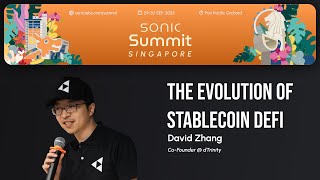


Interview David Zhang - From a Software Engineer at Amazon to the CTO & Co-founder of Stably