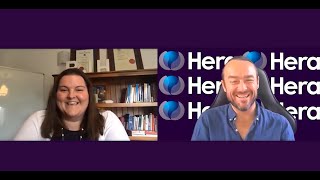
In this YouTube interview, host Dax Stanley talks with Ruth Hibburt, a numeracy specialist, teacher, author, and founder of RJH Education Solutions. Ruth shares her 15‑plus years of experience working with vulnerable students, especially those struggling with numeracy in senior secondary years. She explains how the COVID‑19 pandemic has amplified uncertainty, stress, and anxiety for teenagers, and outlines practical homeschooling strategies for parents: establishing certainty through routines, time‑blocking, limited device use, and stress‑reduction techniques like meditation. Ruth emphasizes the importance of fostering self‑belief and a growth mindset, encouraging students to discover their personal “why” and adopt a “find a way, not an excuse” attitude. She promotes her book “Don’t Make Mistakes,” mentions free events and online resources, and provides contact details for further support.
Chapters
G', day, everyone. Dax here again. I'm here with Ruth Hubbard. Hi, Ruth, how are you?
Hi, Dax, how are you?
Awesome. Look, there's parents all and students all over Australia facing these challenges of homeschooling and I'm doing it as well. You can probably hear in the background my son. I've connected with Ruth here from RJH Educational Solutions and she's an expert in numeracy improvement as a numeracy improvement teacher and an author today. And she's here to give us some insights on how we can help our kids during this time. I hope this works out for everyone. So, Ruth, I've got a couple of questions for you. Is that okay?
Yeah, sure.
Excellent. So, Ruth, just tell us a bit about what you do to start with.
Yeah, sure, Dax. And it's an honour to be speaking to you today. I know what great work and how passionate you are was herea and I come from the education industry and I've spent over 15 years as a teacher and as an author, as a public speaker and I currently work in the education within the education department in schools and I work with the most vulnerable kids in numeracy who are the lowest in the state. So the kids that do all the Naplan testing, the kids that come out the lowest in numeracy in year nine, I work with in year ten to basically fill in all the gaps of their learning since prep. So it's a really challenging job, as you can imagine, having to backfill all the content with this child that has not been successful in the education system.
Wow. Wow. Yeah. That's a big challenge.
Yeah, it is a challenge, yeah. But it's something I'm really passionate about is improving education, which is why I wrote my book do you make mistakes? And I went into education consulting to make a difference in positive mindset in young people.
That's right up our alley around social responsibility and social sustainability as well. Now, is that your book up the back there behind you?
Yes, sure.
Have a quick look?
Yeah, sure. We'll go back a bit. So it's do make mistakes.
I love how you put the cross on the don't make mistakes because that's the way that school is usually. Don't make mistakes.
Yeah, yeah. And look, I always believed in students and the individuality of that person and to the potential and the unlimited potential that everybody has inside them to be successful. And so this comes from my mistakes. And I work with over 2,000 students, so I've worked from students who have disabilities through to gifted education of students who are in accelerated learning programs and my specialty in education. So that's my book there's. Which is available online at the moment and hard copy, we'll put a link.
In there for you.
Yeah, for sure. So, yeah, I basically spent the first 10 years becoming an expert in the language of maths and was able to get improvement with students that other teachers couldn't get improvement with. But I also had personal challenges that meant that I was constantly trading my time for money. So that led me into personal development and really refined my practice as a teacher. And I stepped out of it and went back into the industry with a new mindset and just a full growth mindset around improvement in schools.
That's awesome. So with the current thing with this C word that's going around and everyone's having to go home and stuff like that, and I know you specialize in year 10 to 12. What are you seeing? The major challenges that these children, these students are facing in secondary school and.
Bce the biggest challenge is uncertainty for teenagers, especially in the senior years, years 10, 11, 12. Teenagers often get a really poor reputation of not caring, but they care a lot. And the students that I work with in particular, who are at the lower end of the scale in terms of numeracy or literacy ability, they're so sensitive to change. And I'm very concerned, extremely deeply concerned about stress, anxiety and overwhelm. And I mean as a parent, I'm a parent, I've got a 12 year old and a 9 year old. It's hard for me to stay calm and not get overwhelmed and have a strategy to deal with the uncertainty of the future. And if you imagine when we were teenagers and we were in high school, we didn't know what we wanted to do when we grew up, we were trying to experiment with different things. Our social network was everything to us. We were developing our identity from our parents. And so combine that with hormones and being on devices, getting all the social media influence. Yeah. Is it any wonder that they're struggling?
Wow.
Yeah.
Okay. That clearly outlines it, I think the hormones and putting it all together as one and then putting this virus and working from home and studying from home has just probably added a totally another level of challenges and stuff. So I guess that leads me into. Have you got any key strategies for the parents that are listening today around, you know, preparing they've got their kids at home or they're just about to have their kids at home? Yeah, if you could label a few of those, that would really help out.
You've got to bring certainty into your home. And certainty can come from stress reduction techniques such as meditation, visualizing. If your child doesn't like to meditate, it could be a good time to start. I know Dax, you're an expert in that area.
I do like to meditate, yes.
And so certainly come from routines. And it can be something very simple like is having, you know, certain times of the day when you do the same thing. Because at school I know that I am not a fan of it, but it runs like clockwork. You know, the bell goes or, you know, at 9 o' clock they're in this class and then at 9:50 they're in chemistry and then biology and then. And if you have younger students too, there's a certainty around routine. So if you can bring that into your house. I know it's my kids. I have a chart on the wall and it has like blocks of one hour time. And the best way to learn is to do it every one hour. You study or you learn something, you need to take your 15 minute break.
Okay.
So I alternate my. So I've made like a program for my kids at home during school days so that they have certainty around, okay, I have to read now and then I have to do some maths and then I have to do this. And like all the teachers and primary and secondary schools have put resources on virtual places or software. So for example, in secondary schools that I know and all the teachers that I'm connected with daily, they have got virtual classrooms operating which has, you know, like daily teachers are on their daily giving work for their students. Also there's teachers like me who are making mindset videos and sending them out to keep everybody in good spirit. Devices are a huge distraction. So I have certain time limits with my kids and they get their free time after they've done the work that they need to do. But I've also been very creative about it because one of my, I have two, two very different children. And so one is very academic and loves and I hate that word academic because everybody's academic. But I have one child who loves and thrives on information and he does very well at school and he's on a scholarship and he's doing really well and he's very involved in leadership. But I have another child who suffers with some personal belief and has low literacy and he's extremely creative and very extroverted and he hates school. He does not like school. And so he has just gone to town with his creativity. Like he's taking stuff apart in the house, rebuilding it. He's making stuff out of boxes and he's really learning on his own. Yeah. So he's. I don't know about you, Dax, with your kids at home, what you're doing with them.
Yeah, look, I think I resonate with that. Routine is very key. I mean, we've even started making lunches in lunch boxes and having a lunch together and get the lunchbox out and also at recess. So just keeping them into that, that routine is key for that. And having a bit of a celebration at 3:15 when school finishes, that's really important, I think, for us. And I like how you've said that the structure is key, but also fun as well. It is a stressful time for people and things like that. We all love to have fun and go to the park and stuff like that. We just have to be careful and do it. But we're home now, you know, and so as a family, I think it's a really good thing. We just. If we put the structure around it, you know, we'll get through these things and come out better.
Yeah, for sure.
So that's really cool. And I think if there was one thing that would be the most important thing that a parent could teach their child. After all your years of experience and all the students and, you know, you've got some amazing wealth there and you've already taught us a lot. But what would be the one most important thing that a parent could teach a child?
It has to be self belief. I've worked with thousands of students and taught VCE for a long time, and I've taught prep as well in my English language specialty. But it has to be self belief. You have to teach your kids to believe in themselves, and mindset is critical and teaching them the tools and techniques to be able to cope with challenges. I've got a chapter in my book called Shit Happens, and it's a picture of like a guy with a bird pooing on his head because it's supposed to be a bit funny to lighten their mood. But I spend 95% of my day teaching kids to be resilient, believe in themselves, finding their personal why. Like, no point telling a kid to do something if they don't believe in it or they don't know where it's gonna get them. And, you know, I'm very creative about finding a why for anything. Like, I can find a why for getting my kids to do the dishes.
I think some people would like to know that with everyone at home now, time to do that.
Yeah, but you have to. As humans ourselves, we need a personal connection to why should we do something? And it's not just because you got a test on it or you've got an exam coming up or you need to pass your VCE or you need to get through grade six to go to high school. That's not a reason for anybody to do something. So if you've got older kids at home, it's because they're really feeling more overwhelmed than the younger ones. Spend some time for them to explore their why. Like, why? What do they want to do? This is the time of inherent change, and it's the learners that are going to inherit the earth. And the learned are beautifully equipped to deal with a world that no longer exists. That's Eric Hoffer. Quote, I think. Eric Hofta. And it's a time of change and jobs are never going to be the same again. And I wrote a couple chapters in my book about money and about careers and young people onto it. They know what's going on and this is. This is just rattled cages and they. What's going on in the world. And they. A lot of them don't want to be employees anymore and they've seen what's happening with jobs and now is the time to monetize your passion, you know, and that's what I tell everyone in me. What's your passion? And cutting through. Sorry if I want to say the bullshit of excuses and all the stuff, you know. So I always tell kids, let's find a way, not an excuse. And that's a really good question.
Can you say that again?
Let's find a way, not an excuse.
Yeah, that's great. I love that. That really helps, I think. Yeah, you've really resonated on the why I like that. Trying to find the wine, everything. And I think I might follow up on another video on how you got them to do those dishes and find the wine. But look to wrap up. Thank you so much. Lots of challenges for VCE students at the moment. Sounds like that book would really help. Also, is there a way that people can contact you if they want any more information?
Yeah, sure. My, my. I'm on Facebook and my. I've got a website that's just been released. Just. I've got a chain. I actually do events, free events in Geelong. I live in Geelong and I actually had a lot of events coming up, free events for teenagers. But I'm going to go online now. That's not happening.
Yeah, fantastic. Well, thank you so much. It's so good to have this conversation because I think a lot of people are worried about having the strategies and you've really outlined it. So, Ruth from RJH Education Solutions, I just want to say a big thank you and congratulations. You're doing a good job. Keep up the good work. Fantastic.