Step 3: Town Planner Lloyd Anderson huntingdale
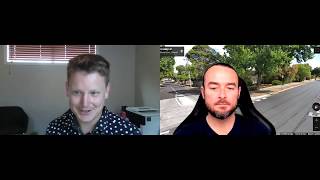
Lloyd Anderson walks through planning a 1,300 m² development at 13-15 Franklin Street, Huntingdale, covering zoning rules, tree conservation, and parking for townhouses. He explains how VCAT decisions can override council rejections and stresses getting a planning brief done before design work to avoid expensive changes.
Chapters
And I'll just wait for Lloyd to jump onto Instagram. We have.
Yep.
Adam. Adam's just joined as well. Excellent. We got a town planner for our development site that we've got for sale at the moment. Hey, Lloyd. There you go. Excellent. Lloyd's coming on today. We'll just let him connect up. Ah, there we go. Perfect. What's happened here, Lloyd? We get him in. Okay, I think that's worked.
Cool.
Let's see. He's on. Is he there? Waiting for Lloyd to accept that.
Oh, excellent, Excellent.
We may need to take the audio off Zoom. I think we're getting there. Hey, Tegan, great to have you on.
Turn the audio off.
If you turn the audio off on your laptop, just so there's no feedback. Okay, everyone. Everyone on the member site, which is here on Zoom, because I keep looking at people. Member site. This is the growth program. You know what we're looking at? Rica Tour. Good to have you on. We're looking at this site behind me, 1300 square. It's for us to go through and have a look how we do it, how people develop. So this is the main focus for your growth is looking at renovations, developments, all that sort of stuff. One of the members in the group in the growth program has this site, as you know. His strategy was to talk to his neighbor, which is the one on the corner, and they've come up with an agreement, signed, exclusive agreement with me to look to sell it, To work through this and see what I'm up with.
That.
That will help a potential buyer. So, Lloyd, I don't know what's happened to you. You're either upside down or not sure, but we can. We can just live with that. It'll. It might sort itself out. What's it doing on your phone?
It's just like absolutely not working at all.
Okay, maybe I'll send you another invite. Let's try that. We've got the time remove and we'll just see if you can come back in. Bruce. Hey, Bruce. We're just having a look at development site. We've got Lloyd here from property change and his town planner in the. In Melbourne. And he's gonna give us. Let's get on today and have a look. Give us his review. So we had the builder last week. We've got Lloyd this week. The builder is really. Okay, We've got Lloyd here. Let's have a look, kids.
Freezing. And it doesn't freeze on a pretty image either.
That's all right. We might have to drop the live Instagram let's have a look anyway.
Let's, let's.
I'll drop you out of that because it seems like it's. There we go. I can leave it on me. They can hear you. I can probably almost do that. Wonder if that'll work. No, that doesn't really work, does it?
Can you hear me?
Where is he? Anyway, I won't play with it anymore. Let's get onto it. Okay. So, Lloyd, thank you for coming on. You can get rid of the phone?
Yeah, I could.
Oh, okay. I better turn the sound on. There we go. Are we good?
Is that. Is that. Can you hear me?
Yes. Okay, take two. Let's do it.
Yes.
Just turn off Instagram now.
Again.
So, Lloyd, thank you for coming on. You can get rid of it both. All good.
Oh, okay.
Just turn off Instagram.
Yeah.
Okay. Just turn your phone. Is your phone online?
Yeah.
Okay, cool. Okay, cool.
That's much better. Sorry, I'm only Zoom compatible. I haven't had the ability to do the live stream on Instagram. It would have been great. So definitely something to work on. Yeah, cool.
So, Lloyd, thank you for coming on. We'll cut this video up because that's why we're doing live for people that aren't in the group. With the live group, we'll cut it up so it's. It's seamless and they won't see any of that. So we can go straight into that. Joining us, I'd love to start off with just giving the growth members and the people online here a bit of a bio on who you are about your business and what you like doing.
Yeah, okay. Well, yeah, so what do I like doing? Well, I guess at the moment it's running, so I've just been out running and enjoying the Merri Creek. It's basically the three times a day kind of thing.
Three times a day. How many K's are you doing?
Oh, probably about 10, I reckon.
A day.
Yeah, probably. So we've got a little puppy. So, yeah, Joey and I take. We go out there and he can go off, lead most of the way. So basically it's just like. It's like having bush in the middle of Melbourne.
Merri Creek's magic, isn't it? I just love it. What sort of dog have you got?
I've got a little whipper.
Oh, fantastic.
Thanks, Joey. He's like a blue gray kind of dog. So. Yeah, he's named after a kangaroo, actually, because he's got like leaping capacity.
Yeah, I love it. I love it. We'll have to go running. I've just. I've got a border collie, so we go running, running a lot. But on the beach road, I'm always.
Looking for new spots.
We'll swap soon when all this stuff's over. So tell us about property change.
Property change started in end of 2017 and it came about because of a need for me to try to get a little bit out of just the town planning space into I guess a lot around this kind of work. So that in the acquisition space and also in the development management space, I guess in terms of handing over to builders and getting a complete picture of the development game. So I essentially spend, I suppose wanted to be more out of just writing town planning reports. And that's a core part of my business. But it's understanding those other two sides of where you fit in the process that I guess is what I wanted to explore. So last couple of years has been pretty much in that space and involved in kind of acquisitions like this side and seeing those kind of transactions take place and the interaction that the developers have in that space, it's just a fascinating space to be in. And then obviously dealing with builders at that other end as well. So understanding that I guess my background is not just town planning. I've got a property degree, so a lot of my contacts are in that kind of property space around valuations, around development and also sales. Knight, Franks, Colliers, those kind of. They're the people that I studied with and asset management. But obviously no, we don't really. I don't get too involved with that space. So yeah, that's good. I mean, I'll probably. Change is essentially you think about your business name and you're like, okay, well what would I call a company that does town planning? And then I started to think about change and the dynamic of change because, you know, it's very scary for people in that kind of that space. They're kind of like neighbors or you know, dealing with those interactions or I suppose and having to massage those or try to work out when, you know, someone might have a valid objection to something or, you know, okay, so we really need to be on point with this or, you know, maybe back away a bit if they've got some. Even, for example, another town planner that might be representing them. So you're coming up against another town planner in that space, which obviously that's when you go, okay, well yeah, I've got to work with them. But taking it back to a human element, so having coffees with the neighbors and coffee shops and negotiating outcomes. I've done so many deals that way because it relaxes it. It's not on a developer's term, it's not on the neighbor's term. It's in a mutual setting and it's a Melbourne way. So, you know, the coffee shop negotiated outcomes. They work.
They work. They so work. And I love how property change now sticks in my head. Like you're changing property, you know.
Yeah, yeah, great. Yeah, I suppose one of my future. I'm always working on understanding change and I want to be doing more reading and change dynamics and fixing kind of like, okay, well, if you're changing something, you want to change it real quick as quickly as you can. Because if you drag out the process, you basically. It really does impact on people's wellbeing. So quick change is a good change and for both parties, I guess.
Yeah, definitely. I like that. Hey, generate property. We've got some guys that have just joined while we're talking. So Lloyd 13 to 15 Franklin Street, Huntingdale. We had the builder on last week. He pointed out a few key things that he's conscious of. It's a different lens. You're the next person in the rank that I usually go to when we're talking about these development sites. Thank you for having a look at it. I appreciate it. Now I've got a couple of questions for you around that I'm guessing you reviewed it and everything, so I really appreciate your time on that. Can you go a little bit into about the planning policies that are overlaying this property in general as well?
Yeah. So where I've been taught to look at properties from a planning perspective is to look at the entire town planning scheme. So you're not discounting any part of it.
Right.
So you're starting off, you're looking at. So a town planning scheme is structured in a way where you've got your state planning policy that sits at the front. Right. So understanding where the site sits in terms of Plan Melbourne is probably the first step that you should start to look at. Plan Melbourne is a really good document around just identifying the site. So with this site, it's kind of sitting between the Monash University and the Huntingdale Activity Centre. So it's kind of like between two really key activity centres in Plan Melbourne and kind of, you know, like it's looking at the 20 minute neighbourhood. So that's a really important document I think anyone should get their head around in terms of planning policy to start with, position the site in its context. And I mean, John Will talk next week, I guess, about. Or later this week, I think, but he'll talk about the context plan. So you're starting to put all this document, all this information that I'm taking and putting it into a plan for the planner in council. So that neighbourhood context plan, or probably more of your bigger context plan, is put in as a first page, I guess, to your document. So then you're going from that into your local planning framework. So the local planning framework, you're putting it so that then 21 policies. Right. So you're going from your 10 policies to 21 policies for MSS. And then MSS is talking more specifically about this site. So.
And what's, what's MSS stand for?
Municipal Strategic Statement. So that's kind of like your. Okay, well, what, what is Monash goal? So.
Yes, Monash strategic goals. Where they, where they want to head with, with the whole municipality.
Yeah, yeah, that's right. So, you know, they want to increase their dwelling ratio. So, you know, where are they going to do that? How are they going to manage that, where they're going to put those? And possibly, you know, if you're looking at this site, you're looking at going, okay, well, yeah, they want to put that in areas which are close to activity centers, which are close to, you know, your universities, which are, you know, well positioned, close to activity, close to, you know, major roads, railway lines, those kind of things. So positioning the site in terms of MSS as well, which is directly related to the plan Melbourne. So that's kind of like the first couple of things that I would be looking at in terms of the planning framework. And then you say, next you're going down a little bit in terms of.
My mic is just full. My mic is just falling over, so I'm just putting it back. Sometimes those things happen. Sorry, sorry. To get your train of thought. So after the mss, then you work your way down into the planning code. Is that the next.
Yeah, the basis of the. So you're going from your 10 policies down to your 21, which is the MSS, and then you're going to the 22s. Right. So they're the local. So they all relate to each other. So they all talk to each other as you go down. So bigger picture, little picture. Little picture. But the big. The little picture then kind of merges a little bit more clearly as you get into the 22s. So Monash has the 2201 policy relating to neighborhood character. They break it up into north and south. So this One's in the southern region.
Good to know.
I suppose within neighbourhood character, you're also starting to. I think you're looking at the interrelation to the zone as well. Right. So when you bring in the zone requirements, so general res, max height, 11, three stories, all these kind of places where developments start around garden area, maximum site coverage. They're all part of defining enabled character. So the bigger picture is set. You're starting to talk about the numbers now. You're talking about 75 square meters of SPOs, 35%, 35 square meters, that is SDOs, minimum density of five. Those kind of things. Or you can, like. I mean, they've actually, there's an amendment that just come through a couple years ago with Monash that all these requirements came out of. And I can, you know, if someone wants to have a separate conversation about that, I'm happy to do, but probably not something I want to go into too much information on today. But there are a lot of. There's a lot of Talk about the POS SBOs and the dimensions and how rigid they need to be applied. So there's a lot that. In reviewing this, I look at a lot of, like, VCAT cases as well. So you can see where council might not be exercising discretion, but VCAT is. So they're saying, okay, well, you know, in relation to the dimension of the SBOs, it might be that, you know, in some cases that could be less or you could say, okay, well, the total area isn't achieved for a couple of dwellings. That's okay, because it's got a northern aspect and there's plenty of. There's plenty of. If you look at the area, there's plenty of public open space in the area.
Yeah, it's everywhere. It's all over the place, isn't it? It's a great spot. And between the university and the community areas, there's a lot of space out there. So just to clarify there for the members, sometimes counsel says no, but people like Lloyd understands that there's a bit of flexibility there and if there's a case that can be made at vcat, then that can be overruled. So don't always go into council. And I know when I. That was a trip for me, when I started was that when the council says no, I'm like, oh, I can't do anything. But there's an. That you can go to vcat and people like Lloyd know what things can be flexible and whatnot, so that there's a chance that it'll get overruled in va.
I think that's like the correctivity is that, you know, you need to have a look at what has come before you in some aspects. Right. And because the benefit of VCAT is they keep a documentation of all the decisions that have come before. So if, obviously, if you're dealing with a barrister, you're dealing with someone that's like, they're going to tender all these decisions up to vcat, say, well, hang on a minute. You know, you need to. Obviously in every case it's based on its own merits, but if you put forward all those cases, you're okay, well, you know, there's some discretion here. Why not? I mean, obviously there's no discretion in relationship garden area. So that's something, you know, I've heard some debates around garden area and whether an eve is included in garden area and all these, you know, like, technicality things that haven't been well defined in the scheme. And. And you get some case law around that coming through as well when you face these kind of issues. So you can refer to that, but it's just a really good place to start because you're ending. I've in the past found VCAT decisions that are. The site next door, for example, that site next door is very, very similar. Like 100%. Like, you could never pick a more comparable case and that got refused by vcat. And you're looking at doing the same thing. You're like, not touching this site. Let's go to the next one. So, you know, just. Yeah, it's just, it's a no questions asked cross check.
Yeah. And to engage somebody like you, that is part of the service, isn't it? That's all pulling it together. It's really. And that's one of the reasons why I tell the members is talk to a town planner straight away, like, get. Have a look at it. If you've got a builder, let him have a look at it straight away and they'll find things out. But Lloyd, someone like Lloyd will really understand what's next. And then that would apply perfectly with the architect to go, okay, we've got our boundaries, we know what's flexible and what's not. Let's work together.
Yeah. And I think, you know, I'm going to put together a letter that anyone can. I'll send that to whoever wants it. And it was just outlining my kind of due diligence advice. And what I like to tell people is that you kind of have, like, okay, you have your own brief and you have your own market desires and whatnot, but also have the town planning brief that goes with. To the architects and I guess, you know, and vice versa. Like, you know, you do. Architects and town planners need to talk to each other from day dot basically. So as it's kind of moving forward. So there's no anomalies in terms of design or town planning as it moves through. So yeah, it's very much an iterate process in terms of talking to each other.
Good. Well, yeah, I mean that's key is once you, when you're building your team. Sorry, my phone's falling off. We've got resi buyers at auctions and Gen T. We've got some bad Internet issues at the moment. She's telling me. Okay, so that's really good. From a planning policy stuff. Have you covered all that? And we started neighborhood character, but that was question.
Yeah, there's a specific policy in relation to naval characters. Like with this site you're looking at generous, spacious, open landscape character. And I guess that's kind of what they're trying to look for. So, you know, it's very leafy kind of area. And I think that's fair enough. They're trying to minimize kind of continuous blank brick wars. Those kind of things are what the policy calls for. So there's. If I was doing the assessment on this, you know, in terms of the design, you'd be calling out that relevant part of the policy and saying, okay, well putting in one side what the policy says and then looking at the architectural plans and going, okay, how do our plans relate to this policy? And that would form like a, I guess a part of the report. So you can go, okay, well hang on a minute. Whoever your architect is, you haven't addressed this part of the scheme in terms of the front fence or something along those lines. You can go, you need to come up with a solution to this so that when we go to council, I've got a direct response to anything in the scheme. And if it's something that's not in the scheme and I go to look at the scheme and the planner says to me, or you haven't done this. I'm like, well, what part of the scheme are you referring to? Because I don't have that bit. And you know, if it's under the table, I'm not considering it. And neither is vcat or neither is, you know, any other person that has, you know, the relevant counsel policy.
So that's great. I think that's a key point. Lloyd, you've brought up is that a lot of people will take counsel and I have it in the past for rote. They'll just go, these things you need to change. You know, there's, it's not aesthetically pleasing to the street front. I'm like, and if I had that answer for the times that I went, okay, I need to change the plans without even going, well, where does it relate to the code?
They might have a relevant answer. So they might say to you, look, and obviously they're dealing with their town plans game all the time. So you have to be careful. So if they're dealing with it and they say Lloyd or whoever, you know, you need to refer to section or page. So and so of the town planning team and I look at it and go, you're right on there. Okay, respect that. You know, go, okay, well, yeah, we do actually, you know, this is a legitimate question.
Excellent. But it helps to have someone on your side doing that because I've done a lot of this at the start when I was learning all by myself, you know, and you. And I've, I've made mistakes all the way through it for many years. Yeah. Once you've got a good team, it's great and people can see that. So the next question is around amenity impacts. What do you, what have you found in, in terms of this site?
Yeah, okay, well, so look, you know, you starting to hypothetically think about your design, right? So you're talking about visual vault, you know what, what like you're looking at the context, you're looking at like the properties to the north, properties to the west, you know, like what, what. And obviously you need kind of, you know, start to think about your feature survey, where are the habitable rooms on the adjoining properties kind of thing. Like where's your, where are you going to position your bulk so you don't impact on the neighbours in terms of their rooms, their backyard space going through like looking at like overlooking. So where you might like. So with this side, I've started to think about maybe minimizing or keeping the trees and working with the trees, but also possibly reducing the SBOs in some areas to try to maybe have some balconies that address the street so you get some good outlook to the streets. And I'm not too worried about having some south facing balconies, possibly addressing the secondary street because it's quite a sort of bad street and we've got some access issues on that boundary as well. So there's some ability there to be flexible around having Possibly some of these kind of active spaces. I won't really talk too much about reverse living because I don't really like. The discussion has been that it might not be appropriate for this site. So you kind of want to keep your outdoor areas but not technically comply with all the SDOs and POS provisions under the scheme. So it'll come down to a little bit around discussion around the design with the architect and then obviously you're looking at open. So if you, if you've got your, your balconies addressing the street, you can really open up to the street and have some really active kind of space.
Especially with those trees. We've got jacarandas on there, we've got a massive jacaranda on the back which just turns purple. You know, this beautiful tree here. I'm not a weatherman, but that's magnificent, you know. And you know, I could just see a balcony opening up into that and just, you know, because all the trees, all the leaves will drop this beautiful frame. John, I hopefully we were talking about keeping that tree and I'm like, yes.
Yeah, that's a good aspiration. Yeah. And then obviously moving on a little bit in terms of overshadowing. So. But with this site obviously, yeah, we don't have any overshadowing issues and like all your typical rescode kind of amenity questions coming out. So you're starting to think about that B17 diagrams, you know, setback diagrams, boundary on wall boundary requirements, you know, you name it. Like all those kind of res code requirements are coming out there and with regards to the impact of the trees. So I guess with this site you've really got to be careful around. There is a tree conservation policy that they've got and that policy talks about looking after semi mature and mature trees. So council is likely to use that policy relation to retention of those trees. So we get these. That policy needs to be addressed, I would recommend. But it would probably be beneficial if someone was purchasing the site to get an arborist to look at those trees and how, you know the TPZ to those trees, how much. Obviously you know, the 10% is the rule of thumb, but I've known we've got more than 10%, you know, based on a root investigation. So yeah, those kind of things should be called out straight away around shoots your building envelope.
I think there's, there's two that we saw in the backyard of both of them that the diameter of the width of the tree may be under that. But we've got Kelly coming on at the end of the week who's awesome landscape gardener and she's looking at vertical gardens and stuff. So that'd be something we can negotiate. Like if I need. I hate cutting down trees but if I have to then we can replace them with native vertical gardens and low maintenance, low water gardens as well.
Yeah. The arborist report will detail the tpz, the dimensions of the TPZ in them and whether the trees are worthy of retention. And you know, so that forms part of your site plan, I guess. And you can work out your mass on the basis of that canopy spread. That's also something that I'm dealing with regularly around whether you've got some cancer leaving of your site. But you might be within the canopy spread but you're not within the TP Z. So you're kind of negotiating with trees and working with them.
I love that. I love that.
Yeah, isn't it?
It's awesome because. Because that big tree there, the guy Craig who's in the growth team, he. He said that whole street, both sides of it had those beautiful trees and it's the last one so it'd be really nice to keep it jacarandas and stuff like that. But yeah, offsetting and I love rooftop gardens and all sorts of stuff. I could go crazy if I was allowed to. But.
I worked in Perth as a junior planner and trying to like that city is not as good as like they basically just bowl the whole site and just start again. And then they put in these products that are non responsive to the site and the context and you know, I think Victoria does things a lot better in relation to trees. And also the BPP is very good documentary. It's very well structured and easy to navigate once you get your head around it.
Okay, good.
You know, you look at like Tasmanian town planning schemes or West Australian town planning schemes. They're all over the place. You can't, you don't know where you need to go to do what. When you're a consultant you basically, you've got a. You know, there might be some back pages that you know. I mean there's also within the schemes, there's. With Victorian schemes this is quite an important point. There's at the end of each policy there's a section that talks about incorporated documents and reference documents. So the difference between incorporated document is it's incorporated into chunks. It might not be sitting there, but it's incorporated. Right. So that is part of the scheme. But then you've got another thing called reference documents which is not incorporated Scheme but helps to inform the scheme. So those two things, you'll see them at the end of every policy and it's just the basis for working out that relevant part of the scheme. So when they're doing the scheme amendment that would be going, okay, well do we need to incorporate a structure plan or. It's not relevant to this type. But just a quick note to say, you know, if you want more information in relation to say neighbourhood character. There's no incorporated scheme but there's Monash Urban Character Studies, Monash Neighbour Character Guide, Monash Future Housing Directions paper. So landscape Guidelines for Multi Unit Developments, Neighbourhood Character review plans for it 2015. So those documents and then you can, on the left hand side of policy, you've got, under the policy reference, you've got a date and then you've got a reference number. So that if you want more information relation to how the policy came about, you can just that and you know, you can chase more, more and more deeper around a particular issue if you.
Want, but it's actually to get your head around it. So you know what's best for that site, isn't it? It's all about. They're putting these guidelines in to tell us what they want in that area and how to do it the right way so that we can get a smoother transition through to council plans and permits.
Yeah, I mean it's a bit about trying to understand because all the time the planners, you know, may, they might not have been in that council for long. You don't know whether they're experienced or not. You've got a, you might get a council planner when you ring up and go, they might go, they might not really want to talk to you. They might have something that's outside. They just want you off the phone basically and they're just going to say, okay, we'll refer to this policy and then maybe fit you the document and you can try and work it out for yourself. I mean you might get some good planners that really talk you through it. I personally don't really find that in council. You basically, if you ring up a council, they're going to just send you the relevant document and yeah, I mean they might talk you through it and that's a really good town planner in council and they're the ones you want to try and keep hold of.
Yeah, keep hold of. I love that. We've got build images on. Hey guys, this is the site we're talking about and Lloyd, I think that hits on me. I found if you know I'm going into council a lot on a new site and having a talk to the town planners and I know they're not allowed to say yes, but they're allowed to say no. And you've got to be careful of that. They will never say, yeah, well, they never have said yes to me. And I say, can I do this, this and this? And they're like, we can't answer yes. But you can't put, you know, three stories on this site. You know, you got to be very diplomatic when you're working with them.
Yeah, I think I got really high with cricking in council because if you just did what the manager wanted and, you know, I mean, you get some planners in council that will question everything with the management, you know, they'll say, oh, you know, but this is a really good application. We should really be for. The management's like, well, no, we can rev that. Balancing that with a political agenda. And this is the way that the council wants us to act, in which case we still have to refuse it. And so it's like, you just have to. I kind of. That's. I mean, I did enjoy my time in council, but it's very much a learning experience around you. Basically, you are there to facilitate the political agenda of that council if that council wants to take the fall. I think Casey might have had something recently or. I mean, you know, you see it from time to time where, you know, that's the council's decision to take the fall on that matter. Like, I mean, councils have been dissolved over planning issues because, you know, they're too onerous around their political agendas and.
Yep. Yeah, I mean, that's the best thing about you being. You've already. You've been on the other side of the fence. And that's really key for, you know, when you're choosing your town planner, is to understand their experience around that and, you know, it's good to have that. So we've talked about trees. Was there anything else you wanted to talk about? Trees, before I get into the next.
I don't really. I mean, I just. Yeah, I suppose, like I said, look, Kelly's. Kelly's coming on board to talk about landscaping and how that kind of existing vegetation will talk to some new vegetation. I think landscaping plan, you know, it is necessary to have it start to talk about discussion. And, yeah, it does help. So that's. Yeah, I mean, I suppose that will come out in the mix. Not much else, but it sounds like.
You'Re recommending we may need an Arborist report as well, on top of that.
I think so I would be engaging in Arborist to just keep a preliminary investigation in Washington. The site and just call that the tpz. So that will inform the site context plan or the site. Yeah.
Okay. The next important thing would be parking and access. I know we talked to the builder about some access issues.
Yes.
Down here somewhere. Yeah, tell us about that. What did you discover?
Well, yeah, I suppose it's pretty. You've got probably looking at some sizeable townhouses this site. So you're looking at family houses, so you're looking at double lockup garages. And I don't really think we'll be looking to bury that in this context. I think it's providing those kind of bigger houses. So you want to provide a double lockup garage in this context? I think so. You've got two cars and how you do that in terms of tandem arrangement or side by side? I suppose. Yeah. Look, I kind of think that we would be probably trying to run as many as we can in terms of separate accesses from the street.
That's the best thing about a corner block, isn't it? So we don't need a driveway. We can have everyone coming off the street, which is great.
If you think about the way that that will interact with the market demand. It's, you know, if you start to like. I mean, we did a site in St Kilda where we had like an access way in the middle. And this was my solution to the site. It worked really well. It's on Barclay street, it's under construction right now and it has an access in a narrower site. But you want to try and minimise your driveway dimension. So the best way to do that is to try to get as many cars off that one access way as you can and have a space. But this site, I think just lends itself a little bit more to the singular access for the townhouses. So just food for thought around access arrangement.
Okay, good, excellent. Any other issues around access? You can see there, it's pretty flat. It's pretty.
Yeah, some of the issues, I don't think so. And I just. I also don't think we'll have any challenges too much. Sometimes you would start to think about maybe if you had some access issues around modifications in relation to driveway dimensions or, you know, fitting in a smaller, like a B85 template or, you know, so you've got a small, like you might have, like people. You can. You can modify access arrangements to get variations on the basis that a person is using that carbide more regularly, in which case they then they get used to dealing with it. So I've got a site in Clifton Hill, Victoria, Northville that we're dealing with which has a B85 template run over it and you kind of. It's a real tight site, but because the person will get used to that, they might have a smaller car, you know, they can kind of get in and out more easily. So you can. In those cases you probably get some sweatpants done or traffic advice at that kind of point, I suppose. Or if you want to modify the width of the garage or the access way in some capacity, you start bringing a traffic consultant just to do some simple pass. They're not that expensive.
I like that. So we don't need a traffic consultant on this one. Hey, knowledge 2020, good to have you.
On.
At the moment. At the moment we're looking at having all the driveways off the front. And so those turning circles and those issues you were just mentioning, we don't.
Have any big road issues. So, you know, no forward gear arrangements. So that's a positive. Cool. Yeah.
What about getting on to sort of acceptable levels of eternal amenities? That's probably the other key thing. You know, we're looking at size townhouses.
Yeah. So. Well, I mean, I'm probably going back to this kind of pos, kind of these POS requirements and I probably already touched on that kind of before. So you know how the dwelling is going to function on this site. And I guess I am trying to really open the dwellings up to the street as much as you can, but not as a backyard space. Just I still think, you know, you really do want to get some good sized backyard space because that's really attractive.
Well, you can see if I move this over here, if I sit over here, you can see there's like, that's the back of the block there. So there. It's quite a long front there. We can, we can do a lot of stuff with it. And also down that side as well, the edge of end of the blocks just about there. So we've got quite a lot of frontage, which is great and also a lot of depth. So I like that idea of, you know, having the backyard as well, leafy.
Green sort of area. So that's, I think, you know, like you start thinking about whether you should. The reverse living product. You speak to people in that marketing space is, you know, something to be considered because it allows you to do more with the site. But obviously the market is a Bit different right now. People, if they get a choice, they're going to be going for a bit of a backyard and particularly the family, just ideal to have some backyard space.
I like the idea. And you know, we've got the real estate agent who does project marketing for the end product coming on tomorrow. So I can see him maybe advising one of them opening up that canopy which would be just magnificent, or opening up to the jacaranda at the back. And that frames that whole lifestyle of the young executives. They don't need a backyard, they can just drive in, go up and the other two or three could be a better appeal because they'll appeal to the retirees as well because they don't want to go unless we put an elevator in and then it blow the budget. So they're the discussions we can have. We can have maybe one or two in there. Alicia, hey from Orbit Homes. Good to have you on.
Excellent.
So. So I guess that wraps it up, isn't it? Lauren, is there anything else you wanted to add about the site?
I think, yeah, I mean, yeah, it is like that and those kind of last minute things. They're all the storage areas you kind of like, you know, if you've got a clear. If your access way to the pedestrian access way to the street is clear, well defined, you know, you're hitting all that kind of design out crime principles around interaction with the street and those things just resonate so well when you get a proposal like that in county, you don't go, okay, well it ticks off on all the boxes. It's just, there's no, it's not a no brainer but it's just pretty much like, you know, and you present it and you market and you sell it to council, you know, has been. And it complies with everything. There's no way that they can go around and go it doesn't comply. But you know, like, I mean, yeah, who knows sometimes. But if we get them, you get.
Some strange responses, don't you?
If you've got everything, you know, and you've got a pretty report and you've got a. And it's not just a pretty report, but it's actually a report that talks to all the relevant provisions and it doesn't skip over anything in terms of, you know, like you don't miss. Like if you're going for a variation for something, you're spending a lot of time. I mean I've seen some reports which have gone for variations but they've skipped over everything else and their argument is that it complies with the balance of the town planning scheme. So therefore should have variation. But don't think that map, that's how if you're going for a variation form, say a 75 square meter SBIs, you're addressing that and you're going, okay, well what is the decision guidelines around a variation? You're spending the bulk of your report addressing that. And then it's just a kind of a complete. That you've complied with everything else as well, but you've addressed that. And if someone says to you, okay, well have your address, the SPS and you can go, okay, we'll refer to section X of the report, which is.
Great.
It'S been good.
Yeah. So Lloyd, thank you. And look to the members. I hope you've got a lot out of it. I've got a lot out of it. Lloyd's an expert in this field. As you can see. He's been on both sides of the fence. He's picked up some really key points, which is fantastic. We're going to cut this video up so you've got a copy of it in the member's site. Everyone on Instagram. Thank you so much. Lloyd. How do people contact you? What's the best way other than through me? But.
Yeah, so lloydropertychange.com or give me a call 043 894-1783 or just visit the website www.propertychanged.com and for our members.
You'Re happy to take a half an hour discovery call, I think.
I mean obviously I'm going to send you this advice and you know, you can send it on. I mean this is a preliminary advice that you know, I would do for a site. And then, you know, these. It's always kind of, it's kind of like, okay, well you're kind of going through a process and then an architect might call out and say, okay, well you might get some more information that's fed into the advice, in which case you kind of go, okay, well need to spend more time on this particular issue. So as it goes through, the core issues will start to identify themselves and you'll start to put like a plan together, a mud map around areas and then you can start working out your feasibility around construction costs. And, and if you've got everything talking like exactly what you're doing, which is that's why it's really good to be involved, is that you're doing it, you're talking to all these people on the way and everyone's feeding in their info. And there's going to be a couple of things that conflict with each other and that's where the plan comes in because, you know, you've got to make a call which way you go on that conflict. So, yeah, it's very dynamic.
So just to wrap up, we've had the builder, we've had Lloyd, town planner, we've got the project marketer who's going to tell us what products we should be building on the site. We talked to the architect, we've got landscape gardener. Lloyd. Thanks for the advice of bringing in the arborist. And like we said throughout, you may have recommended traffic engineering. You might have brought stuff up for different sites, but that's the main key.
One there, which is really, they need to address the 2205 policy. So I'll be putting that, you know, saying, okay, well, you know, your advice at this point needs to relate to that policy.
Good, excellent. And when's the best time to get you? After we've talked to the architect and we're starting to get a plan together to put it in place. Hey, Marine designs.
My view on that is that my brief and the client's brief should, should inform the design. So that's. And that's, you know, I think you're doing it logically because, you know, putting the builder first is you're calling out any cost elements, you know, immediately and.
Then just kill the project straight away.
Yeah, but, you know, I mean, the architect will also have some town planning, you know, they always do and they always will, you know, kind of. It is a bit of a toing and throwing, so, you know, wherever you go with the picture. But my kind of thing is, you know, this written document will inform the design. So if you put it after the design, you are going to have to possibly come back.
I've done it before, Lloyd.
I've been to meetings with the architects, insisted on certain things and the plan shut it down and I've confirmed the plan's position and they've wasted money on the plans. I mean, I just. I mean, in all fairness, if everything's just lining up, but it's in relation to the planning scheme, then I would put it before the design or before the bun map, essentially.
Yeah, yeah, perfect. Well, Lloyd, thank you so much. The team thanks you. I think we've got a lot out of it. It's been a great discovery piece. Let's keep on the journey. We'll talk to John and everyone. I'll keep you in the loop with everything. Yeah, excellent, thanks. Man. We'll sign off now. Let's stop.
More from Dax

Unlocking Real Estate Wealth Why Skipping Survey & Assess is a No-Go. S.E.C.U.R.E. Method Explained
"Uncover real estate secrets with AI! Use ChatGPT prompts to decode lingo, negotiate deals #chatgpt
ChatGPT: Your personal real estate research analyst! AI can give you an edge in property investing.

Dive into ChatGPT Property Mastery! Your 24-7 mentor to navigate real estate market. Tune in
Unlock the AI power with ChatGPT for smarter property investing. Subscribe for the property series!
Unlocking Property Investment Trends: NSW is leading the game in mortgage lending!
Share housing on the rise! Dive into the 3 key insights that impact you as an investor. Watch now!

Revolutionize property investing with Chat GPT! Sneak peek into my new book. #chatgpt
Property crash looming in Logan & Ipswich?📉 Discover why in a quick 60 seconds! #propertyinvesting