Bend the World to Your Will: How To Use the PHYSICS OF PROGRESS to Create Success w/ Tom Bilyeu
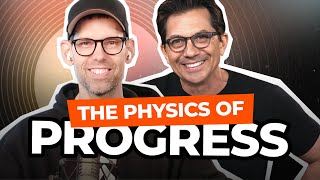
Tom Bilyeu explains his "physics of progress": adopt a learner mindset, separate your worth from outcomes, and use emotional regulation to fuel ambition. He contrasts his Quest Nutrition brand storytelling with direct-response marketing, and argues that learning finance and AI are essential skills for the future.
Chapters
The only difference between the average person and somebody who accomplishes something extraordinary is a set of ideas. They are universal, they are timeless. And it just comes down to are you able to construct a frame of reference that allows you to take in those ideas so that you're moving in a way that I call the physics of progress.
Own your future. Because if you don't, someone else will. Welcome back to the Own youn Future podcast. I'm so excited today because we get to talk to someone who I consider not only a friend, but one of the best interviewers I've ever seen in my life. And I've been in this business a really long time. In fact, when I go on his show, I'm always overthinking it because I know he's going to ask such great questions. And I'm overthinking it today because I'm so excited to be on the opposite end. Ask this man question and why you're going to love this episode. Is this a man who built a billion dollar business, One that, you know, when you go to the store, you see it with his amazing wife and they just have done amazing. Starting from nothing and then exiting from that and starting in this industry of impacting others. In fact, his podcast is Impact Theory and How to Start over in a different Way. And I want to talk about that contrast today to building more of a brand centric product company and now on the other side, building, building something that's on the information side and impacting people in a different way. So I could go down the list of credentials. Our guest, Tom Bilyeu built Quest Nutrition. You see Quest bars everywhere you go. I just had one about two hours ago. He has Impact Theory, one of the top podcasts on the planet. He has an amazing relationship with his wife Lisa, and I feel blessed to call him friends. And it's incredible to have him here today because in a time of separation, in a time when we're uncertain, in a time where we feel so divided, it's great to have people who've been through the journey, who've started with nothing, who see the experience of others, get to interview others and then translate it back to us. I'm so excited to have my dear friend Tom Bilyeu welcome.
What's up, brother? Excited to be here.
It's so good to have you. I mean it. This is probably the 10th one. I feel so blessed as I sit here today. We're the number one podcast in the world in our category. That's because of the viewers that's because of people following and subscribing and liking. And I feel blessed. And I have to tell you, I was so excited. You and I are friends. We've known each other for a long time. I love when we get a chance to be together a couple times a year. But even before we started today, I'm like, I want to ask some good questions because I do admire you on the way you think through your questions every time I've been on your show. It's different, it's unique, and it delivers value. And I hope I. I hope I get to do that with you here today. So before we dive in today, and I do want to hear, I do want to talk through that contrast of building the brand that you built with Quest and then kind of exiting, which is amazing, and not starting over, but starting anew. And there's probably things in that transition you don't expect. You don't feel. It's different type of marketing. It's different type of sales brand marketing compared to kind of direct response marketing. So there's lots to unpackage. But this podcast started again about 10 weeks ago, and we call it the Own youn Future podcast because it's just personal to me. I feel like if. If we don't own our future, Tom, someone else will. If we don't own our decisions, our calendar and. But that means something different for everyone, which I've seen in these podcasts for you before we get started. What's that mean to you, Tom, to own your future?
All right, so I'm pretty ferocious about this. My whole thing is getting people to understand that the only difference between the average person and somebody who accomplishes something extraordinary is a set of ideas. They are universal. They are timeless. And it just comes down to, are you able to construct a frame of reference that allows you to take in those ideas so that you're moving in a way that I call the physics of progress. So the reason that I call it the physics of progress is physics are like the base reality. There's nothing below them. Once you understand that, you can unlock literally the power of the universe. And there's a similar thing that happens with human accomplishment that you are. You're going to have to be on an iterative process. And the only way that that works is if you have the right frame of reference to effectively see yourself as the learner. So not value yourself or being smart or right or any of that stuff, which are all traps to see yourself as somebody who, I don't know enough yet, but I'm going to learn and I'm going to exist solely in this iterative process with data where I'm seeing the outcome of my actions. Did they take me where I wanted to go or not? And once you get a frame of reference that allows you to exist in the physics of progress, then you can actually own your future. Because you can. That's a cheesy way to say it, but it's so close to true. You can bend the world to your will. And getting people to understand, like, you do not have to blow around with the winds of difficult things happening to you. Difficult things are going to happen to all of us. But you really can get a large degree of control, of autonomy. Even in moments where everybody else is running around saying, oh, there's nothing we can do. This is happening to me, man. And I just. The whole reason I started Impact theory is to intercept people right at that moment and to say, no, no, no, like, there is still something that you can do. And if you have that mindset of, okay, maybe I'm not good enough yet to take control of this situation, but I can get good. Everything else changes.
God, I love that, you know, bend the world to your will. You know, you get to look through the lens of not only questioning yourself, right? As you are building Quest. I'm sure there's 100 times in the invisible now, 100 and definite undershot, a thousand, ten thousand times, where you're like, can I? Should I? Is this possible? You know, and being in the game, that's why I love man in the arena Roosevelt speech, right? It's about you don't know until you're in the arena getting bloodied and marred. You can't judge from the stands. I think of it, in today's world, you can't sit in the stands with someone else's name on your jersey complaining if you're not in the game and you don't get to bend the world to your will by being in the stands, you unfortunately got to be in it. So as you share that today, and I mean this, I've had conversations behind your back. I think you understand personal growth, personal development in a way that most people don't. The depth of it. And I think you just shared that in two minutes. But your life experience got you to the point where you realize you could bend the world to your will by focusing on being the learner to recognizing patterns. What doesn't work, recognizing patterns in other people plus yourself. You built an amazing company then you built multiple companies since then. And you get the unfair advantage of interviewing so many amazing people. And I know you're a crazy learner as well from them, so you could state that today. And there's. I know for a fact there's so many people that listen and go, God damn, that sounds amazing. But. Right. There's always that. But my experience, but you don't know what I've been through or, or I try, but then I fall back. And if you go all the way back to the starting point and I don't like there's so many times on a podcast I get asked, if you go back and talk to your 20 year old self, what would you say? I don't want to ask that. But what are some jump starts or maybe some tricks to get in that frame of mind of being the learner to bending will to understanding the psychology of progress. Is there some jumpstart things that you would have wished you knew back then?
Oh yes. Oh yes. So here we go. So this is like the core question of my entire existence. So what I really want people to understand is you were having a biological experience. So you are a product of evolution. Your brain works in a certain way and once you realize that you don't need to be special, you just need to be average. And that was a, that was a devastating realization for me in the beginning was that I was really just average. And I, my mother didn't think I was going to be successful. When I asked for my father in law's blessing to marry his daughter, he said no. My best friend just, he was like, oh, I just assumed you were going to marshmallow your way through life. And he was like, because you're so lazy. The same thing my mom said, you're so lazy. And so I realized, okay, I really am average. Like there's nobody, even the people closest to me did not expect me to go on to be successful. And so by realizing that I was average, that let me off the hook. I didn't need to be extraordinary to do extraordinary things. What I had to do was figure out what I call the only belief that matters. The only belief that matters is not that you're exceptional. You're different, you're better, you're smarter, faster, stronger. It's that you are the average human. The average human is designed literally by millions of years of evolution. The average human is designed to grow and get better. And so to say the only belief that matters succinctly, if you put time and energy into getting better at something, you will actually get better. And you will get better by acquiring skills that have utility. And so if I can just get people to understand. You don't read a book to impress your parents or to have something cool on the bookshelf.
You.
You read a book to get a skill that lets you do something in the world that other people can't do. And so all you have to do to bend the world to your will is be consistent in learning skills that matter towards the goal you're trying to accomplish. That's it. And then if you're just relentless about that, you can get somewhere. But the. The big thing that I think has really been my superpower is that I can be laughed at a lot longer than most people.
God, I love that. Yeah. That. That is a superpower. Right. Because we already question ourselves. Right. We already. In today's world, they call it imposter syndrome. It's just been inner self doubt since the beginning of time. So we're already questioning ourselves. And if you let the outside voice that questions you compound on top of that, that's usually the point you don't even realize when you gave up, oh, I had this dream. How did five years pass and I just let myself go back. Right. I love. We said have the ability to be laughed at more than most. And you said that's a superpower. I was going to ask you. And that is a superpower. Sometimes I think people believe, I love that average grow. We're all just average humans to grow and get better. And that's the only belief that matters. I also believe when someone sees your success, Tom, they must think, I know they think you're good at everything. You must have been good at marketing and at branding and naming and the. I love looking on the shelves and I don't know if it was you and Lisa or the team, but I love looking at all the names of the different bars that you guys had through the years. And I've been. I've been following Quest for long before I even knew you. I think we have this belief that you must be good at all of it. And I've been around you enough to know that you are the first person to point out the spots that you're weak at. But you had some unique abilities or core competencies that were strong enough to overshadow all that. And I'd love to talk a little bit about that. Is like. But. But I'm not good at reading. But I'm not good. People will immediately default to their weak spot rather than shining light on what they could get Great at. Were there some points you were weak and strong at?
Yeah. So I think the important things is to understand if you want to leverage the only belief that matters and you want to acquire skills, it really does come down to can you emotionally regulate yourself? And so I would just look around and realize, oh, business is a game of attrition. Most people just break, they give up, they quit, they, like you said, the outside voice compounds in their internal negativity and they never get anywhere. And so what I realized was, oh, self awareness is going to be my superpower. And so I never lie to myself. So even when my motives are petty, they're based on insecurity. I might lie to other people, I'm not going to pretend that I've never done that, but I'm not going to lie to myself. And so that's created. The biggest breakthroughs in my life is like, I remember one time having an argument with my business partners where I just needed to convince them that I was right because my ego at the time was being built around being smart. And honestly, maybe even a subset of that, which is having other people think I was smart. And so I just needed to convince them so they'd be like, yeah, wow, okay, he really is smart. We should do what he thinks. And as I'm doing, trying to convince them that I'm right for that reason, there was a voice in my head screaming, you know, that the idea that you're fighting for is worse for the business. And so I end up winning the argument. And I'm like, wow, I just debated for an idea that I know is worse for the business simply because it was my idea and because I was willing to take an unflinching look at myself and say, well, that's petty, that's insecurity, that isn't going to move you towards your goals. But hey, no judgment. What do you really want? Do you want other people to think you're smart or do you actually want to achieve your goals? Because clearly having this competing value system under the surface where I say I want my goals, but in reality I'm acting like I want people to think I'm smart. And maybe that is a secret goal that I didn't even know I had.
Yeah.
And so in that moment I was like, okay, those are both very real. And I'm now going to completely change what I build my self esteem around. So instead of trying to be smart, I'm just going to learn faster than other people. And so that self awareness, the willingness to not lie to Myself, the willingness to be laughed at and to understand, look, it's going to take me a long time to figure this out. So all of that became the. The thing I'm good at. Right. Which is I. I am very good at creating the frame of reference of somebody who can handle the emotional difficulty of recognizing that you're not good enough yet. And that's a very hard place to live. I feel like I've lived there my entire life. No amount of external accolades gets rid of my insecurity. The only thing that gets rid of my insecurity is going, it's okay to not be good at this thing. Don't value yourself for that. Value yourself for the sincere pursuit. And so that. That gestalt, which is hard to put words around.
Yeah.
Sustained towards anyway. But that thing is like the thing has. Yeah, it's the thing. Perfect.
Yeah. No, it's the thing. And, and isn't. It isn't the hardest person to admit to the person in the mirror? Right. It admitted.
Find I'm the easiest person.
No, train yourself. Completely honest, but you've trained yourself to do that A lot of times. We will like for you to have the, the vision of saying, I won the battle, but I might have lost the war, that I want to make this company magical. Right. And admitting that that was because of maybe an ego or from where you came from. You said your mom, your brothers, other, you know, people in your life didn't think, he'll never make it. He's lazy. We're still fighting those things 20, 30, 40 years later, sometimes without realizing where they, where they come up. You know, Michael Singer is amazing at talking about the, the scars that we look through. It's the lens of our glasses, and we don't even realize it until you've evolved past that, where you could say, hey, wow, this. I'm fighting for the wrong thing. But I think admitting to ourselves those things, at least I've seen, in my experience, is difficult. And, and what allowed you to gain that superpower of saying, whoa, wait a minute. I mean, was it. Were you recognizing patterns that your. Your, Your ego, your thoughts, your beliefs were getting in your way?
I mean, that is where it ends up, because you have to process through to figure out what the next step is. But the honest answer, man, when I fell in love and decided I was going to get married, the thought that ran through my head, for better or worse, is there is now a witness to your crimes. And because before that rhetoric was enough for me, it was enough to say, I was trying to do something, and other people believed I was trying to do something. And I thought, I can keep this ruse going forever. I'll just tell, hey, I'm doing something, and it feels great. And you see this in Hollywood a lot, where it's like, as long as you're, like, working on something, then people are like, oh, word. Like, he's really got something going. And so the echo was what I cared about. Right. I didn't worry about what the shout was. So if you're. If your life actions are the shout, and then what people think about that is the echo. Most people live in the echo, and I lived in the echo. And as long as the echo came back and it was good, it didn't matter that the shout was fake. Then I fall in love and realize, whoa, whoa, whoa. There is someone hitching themselves to me and saying, I'm betting on you. Because when we got married, my wife was, like, going to have kids, and, like, it was going to be a pretty traditional thing. And I thought, oh, shit, like, you can't now fake it. That would be unfair to her. So you actually have to accomplish this. And that reality of, like, if you act in this way, you will drag this woman down. If you act in this way, you will, then you really can elevate both of your lives. And so the. The absolute crushing desperation to actually win and actually accomplish my goals was so sobering, I couldn't afford to lie to myself. And so the fact that I felt so much obligation and potential in my marriage really changed me, man. And this is one that I doubt this is where you want to go on your podcast, but this is one of the reasons that I'm so freaked out about. People have to be very thoughtful about. Like, what's your dynamic with your spouse? Are you trying to be a leader? Like, because those things come with. With real stakes.
Yeah.
And can be powerful if you lean into it.
Wow. I love, love that. And only because I recognize it in my own space. Like, in life, to make big shifts, we need big leverage. Right. We need to get the leverage, whatever that is. And there's something you and I talked about one time, and I want to go. Go there in a second about. Sometimes you got to lean into the dark side. Right. So many times we'll listen to inspirational, motivational, and I love inspiration. I love motivation. And you're looking into that bigger future, the compelling future, the perfect life, or that better version of you. Sometimes you got to look at the dark side of it. If you don't do it. Where the hell is your life going to end up? And. And I just want to reiterate because you and I have had these conversations. My wife's name is Lisa as well. And the impact my wife, Lisa, had on me was as dramatic and as amazing. But what I felt is I had gone through a divorce and I had made some mistakes, and the commitment I made to myself in my relationship with my wife. Now, what changed me, what allowed me to look in the mirror made. Allowed me to admit, you know, we can use a lot of words around it. Like you said, it's hard to frame that, but for me, I use the word admit. I have to admit I made the decision that if my wife magically had a hidden camera on me for two weeks and she was able to watch every second of those two weeks, I could get emotional thinking about this, the commitment I made to myself. I said, I want her to watch that. And when I come home, she runs across the room and jumps in my arms and says, I love you even more. And I would say in my last relationship, if that was the case, I wasn't congruent in a lot of ways. So that was my admitting. And when I look through that lens, for me, of the camera's on me, I get to make different decisions, to not lie to myself, not to be incongruent. And so it was. It happened to be your wife, Lisa, and your own reasons for doing that and mine has shifted in a certain way. But all of us can find that compelling leverage or that shift. And that's why I want to lead into. Sometimes it's. Even if we lean into the dark side. You called it the dark side. I said, you know, moving away from pain. But I loved. You're like, hey, if you got to go to the dark side to make something happen, to get the inertia, to get the momentum, to get the rocket off the ground, then go there. So what do you. When you say the dark side, what do you mean by that?
So I believe that every emotion that we are capable of has an evolutionary reason for existing. And the. The dark side is a place. You want to spend as little time as possible there. But it is that really acute thing when the compelling future won't work anymore. When you're tired and you're just. You're covered in blood, man, you've just been really going at this, and you're at that point where you want to give up. That's when I remind myself that there are people that want me to fail. There are People that knew this moment would come. There are people that are cheering for my demise, and I will not let them win. I won't let them be right. And so evolution gives you that wind now. It's a very corrosive energy, and so people have to be really thoughtful about how much time they spend there. But in the hardest. I mean, when people say in the darkest moments, the dark energy is going to be the thing that gets you back out. And so you want every tool at your disposal. You want love, you want optimism, you want hope, but you also want anger, righteous indignation, hatred. You want all of that. And then it just becomes, all right, be careful when you use what tool, Right? So that's where I think people go wrong, is they realize how powerful the dark side is. They spend too much time there. It begins to dominate their personality. No one wants to be around them. They can't have loving relationships. They can't do what I call broadcasting and receiving love, which is way more rewarding. But in those acute moments, very powerful.
Wow. So powerful. And as you were saying, I was thinking of it when I was a kid, I was into. I worked on cars, and people would get nitrous oxide put on their cars to go faster, right? You hit the nitrous button if you play video games, you know, you hit the turbo or the nitrous button, and it goes faster. And that's how I see the dark side in my life. I try to use love and forward, you know, looking into the future and a compelling future. But sometimes I need the nitrous oxide button. And to me, that's the dark side of me falling back to who I used to be or me not succeeding, or the same thing when my dad said, now you think you're a big shot, you're never going to make it. Like, I will move to that or move to what it felt like to, you know, not have lunch money when I was a kid. Right? But if you hold the nitrous button in a car nonstop, you burn the engine out. So I think it's a. It's a great. It's great to have. I love what you said. To have tools. Sometimes love will get you through. Sometimes not settling will get you through. Sometimes you got to hit the nitrous button of the dark side. At least it's been the juice to push me through when it feels like it's time to quit. And for those that think they're alone in that, Tom, you've done so many amazing things, and I mean it. And I Hope you feel my heart. I think one of your greatest accomplishments is the relationship you and Lisa have. You're able to build multiple companies. You work your ass off, for lack of a better word. The work you put in to do what you do, you make it look easy on the outside. I know what you do in the invisible. Right? I do. I know what you do in the invisible. But how many times have you got to a point, I think, just for reference, I don't mean how many times has it been frequent? You got to a point where you're like, I don't think this is going to work, but you still move forward and did it anyway. Right. I think there's a point where.
Specifically in my marriage.
No, in your life. In your life in business and building Quest and building the multiple companies you have now.
I think people feel alone all the time.
Yeah. I think people feel alone because I still have those feelings today. Like, those emotions still come a week ago. Tackling new things. I don't think they ever go away. I think you learned to dance with them, or you learned to partner with them, or you learn to learn from them.
I agree. I think, honestly, like, there is a point at which you get into business and you realize death is always like an inch away. Like, keeping a company alive is very, very difficult. And so it is an adaptive response to be like, can I do this? Should I be doing this? And to have that gut check. Now, the difference between the people that end up pushing forward and the people that don't is they understand it, that this is part of the game, that that's an evolutionary voice in my brain that is trying to make sure I don't get eaten by a tiger. And it was interesting. One of my. One of my employees was asking me the other day, he's like, given AI and the level of disruption, how do you keep moving forward? And it's like that question is the difference between an entrepreneur and somebody who's not is, like, you can be in this incredible uncertainty. And by the way, no, like, I'm trying to build the next Disney, okay? And. And I understand that the odds of my Success border on 0%, but the ability to keep moving forward in the face of that is. Is how you end up building something. It's also how you end up crashing and burning spectacularly, by the way, which is why people cannot value themselves for accomplishment. You have to value yourself for sincere pursuit. So I'm like, look, I'm going to learn something in this. No matter what, my value is to myself. Is all predicated on my willingness to learn and to try things and to move forward in uncertainty and all that. So I'm not trying to get rid of that voice that is worried. I'm not trying to get rid of the voice that's paranoid. I think it's really important. And Ray Dalio has a quote. He built the largest hedge fund in the world for people that don't know him. Incredible, incredible guy. And he said, if you're worried, you don't have to worry about. And I think it's good that people have a part that not only worries, but that questions themselves. Because if you're questioning yourself, you're gonna, you're gonna stay honest, you're gonna stay very clear headed.
Okay, I love what you said. The value of sincere pursuit. Because that's, that's the, I mean it was Winston Churchill said, right. The definition of success is going from failure to failure without losing your enthusiasm. And that's just a easier way to say what, what you're sharing. You know, I know you mentioned it before and I want to get to some questions on, on kind of brand marketing compared to what you're doing now. I just think it's, it's intriguing. But what, what would be one thing you, you kind of touched on before? What would be one thing that's reoccurring that you worry about in the invisible? That no one would think with your success, your relationship, starting a new business, even you have feel like there's zero chance it's going to work, but you're going all in anyway. What's one thing that maybe you would never have thought you still would have pop up as a fear or a worry that other people wouldn't know about you?
It's interesting. There's two things in there. So the thing that I constantly worry about is I'm just not smart enough to solve these puzzles. And so I've literally structured my entire company, the culture and everything to hedge against my limited intelligence for most entrepreneurs is going to be a far smarter strategy. We all admire people like Elon Musk or Steve Jobs that seem like they can almost be dictatorial and clamp down on people because their ideas are so right that it's just like, you know, they're a once in a generation mind. I recognize myself, I'm not a once in a generation mind. So I have to create a different structure where we become a super organism and we're all trying to learn. And so people are critiquing me and they're criticizing my approach that helps me refine my approach. And so that's. That's worked really well. And so I think people think I'm trying to be modest when I say that I'm not impressed with my level of intelligence. And I'm just saying empirically, like, I've. I've hit too many roadblocks. I've not been able to think my way out of a problem. I've had to rely on other people too many times to be overly impressed with my intelligence. But that thing where I can orchestrate a group of people, I can intoxicate them with certainty. I can get them moving in a direction, know when to pivot. I understand psychology, all of that. I can emotionally regulate. I can build culture. So I'm not saying that I haven't gotten to a point where I've built my skill set into something that's formidable. I have. It's just that I'm very realistic about what my skill set is. So that's something I think about a lot. And then on the other side is when. When I think about what is it about me that would surprise people. Um, it's really that to this day, I am still convinced that I am just smart enough to realize how smart I'm not. And it bothers me a lot. And so that is something that I really have to. I have to contend with that on a daily basis of, like. Because I can. I can paint the picture of how I've addressed it, but the reality is it really bothers me. Like, it really bothers me. And so, yeah, I deal with that on the daily.
And thank you for. For sharing that and being vulnerable and sharing that. Because here's the thing. Compound your personal traits. Am I good enough? Right. Am I smart enough? Do I have the right brain to do this? And. And, you know, I used to have a feeling. It's like, will they find out I'm not that smart enough? Mine transcended to, like, well, they realize maybe it was lots of hard work and luck that got me here, not intelligence. So I can remember feeling that over and over. So let's. Let's take the fact that we all have one or two, if not five, inner insecurities that. That we adjust with, then compound the fact of. Is China taking over the world? Will the currency switch? Will America not be the world currency? You know, our school systems are failing. You know, we could go down the list. The media portrays us that if you're Democrat and I'm Republican, or I'm Republican and you're Democrat. We should hate each other, that we don't have things in common and they're just, like, pushing us around. We're rewarding people for participation. I mean, there's so many things you could do that all you have to do is take your own inner, inner secure insecurities, compound it with just one night of news. I don't watch the news anymore. I haven't in a long time. But one night of three hours of news and your own insecurities, and how the hell could you not feel frozen? Then go Google your chances for your business to actually make it? And why wouldn't you freeze? Right? And if you don't have that entrepreneurial, crazy mindset, whatever you want to call it, if you've gone through the lens of a career mindset and you're trying to switch into an entrepreneurial mindset, man, that is the world stacked against you. And the reason I'm sharing that and not looking to go deep on it, we've shared a lot of things that help give you a compelling future to go to the dark side. If you have to focus on what you need, the relationship with your wife, proving other people wrong while simultaneously wanting to grow as a human. Right. We need all of those tools in our toolbox so we can ignore the inner and the outer noise. And I think it's just facts, and I think we're in a place in time where all of it's magnified. And why I love doing this podcast and having you as a host. I love what you do with impact theory and the business you have and helping entrepreneurs and all the new things you're working on is because we need to learn from people who have already been through the war, still in the war, still learning. Right? We did, we had. You did an interview with Matthew McConaughey, and we did some fun stuff here in the studio with him. And what, what. I love what he said, and it'll probably stick with me for life. He'll talk about something, you know, with all the. And then he'll go, and by the way, I'm guilty. I'm just trying to learn a little bit faster. I'm trying to work a little bit harder to get through it. And if I figure it out, I'll let you know. And that's kind of what we get to do. People think, you know, maybe if you're successful, you got it all figured out. It's like, no, we're just maybe figuring out a little bit ahead. But we're all in this together. And you know, just. Just sharing what you do, Tom, for the world and what you give back and how much you care. It's. It's amazing to watch and it's inspiring. One of the reasons my team has been asking me to do a podcast for five years, and I have not committed because we have so much going on. And, you know, it's a commitment because you don't want to let anybody down. Any week of any show that goes out, you don't want one to be a dud or not deliver value. If someone's going to take an hour of their time, you want to deliver value. So thanks for being that. Seriously, thanks for being that inspiration and forging a path and, And. And giving back to the world in a way when we need it the most.
Amen. Truly one of the greatest joys of my life.
Yeah. Well, I appreciate it. So here's what I want to ask. I'm intrigued. This is personal. Personally, what was the difference between marketing a brand like Quest? Kind of. I look at it as brand advertising, right? Getting. Getting awareness. Compared to some of the stuff that you do now, not all of it, but some of his more direct response. It's more personal. They're buying you in some cases, not. Not some of your other new businesses, but your education business and helping entrepreneurs go even faster. What would you say is the biggest difference between the two? And was there one more fun, more easier? Did they have both have their own challenges?
They definitely both have their own challenges. But you mentioned something earlier, which is the role that luck plays in all of this. And there really is a reality to timing. And so with Quest, the timing was just so bang on. So we were doing social media before it was called social media. Nobody knew what to make of it. Everybody was saying, Facebook is like a waste of time for businesses. I was like, no, no, I think this is going to be huge. And so we really leaned into that. And then I have a background in storytelling, which happens to just speak to that moment of brand marketing and all that. So it was just a crazy rocket ship of just. I wasn't trying to be clever with my timing. I was rebelling against the previous company. And it was just like being slick marketers and all that. And I was like, it's so funny now because these words are so common, but at the time they were not, man. That's why when people ask, what'd you guys do? How'd you make Quest successful? I'm like, I'll tell you. But it won't work now because the context is so different. So anyway, we're being these slick marketers, and I'm like, look, I want to build community. I want to be authentically myself. I don't want to be a slick marketer. I don't want to use fear selling. Like, I want to, like, lift people up. And so now it's like, yeah, that's all anybody talks about. At the time, I sounded like a lunatic.
Yeah.
And so that. That was really interesting to intercept social media right at the right time, with the right product, the right mentality. All the things that now we're just like, I mean, these are table stakes. Like, if you. If you don't have a mission, if you aren't trying to help people, if you don't have marketing that tells your story and puts yourself out, you're not in business world. Yeah, like, but, dude, back then, it was so weird. So I remember when I started the podcast back at Quest, my partner's like, what are you doing? Like, this doesn't make any sense. And so, like, it just. None of it seemed logical at the time, but it was exactly what I needed to feel good about who I was as a person and what I was putting out into the world. Yeah, great irony. Stop thinking about business, stop chasing money, and it just. You blow up, make more money. It was crazy. So now flash forward to I'm building a media company where I'm probably three years behind, where if I had been early with my podcast, like, when I started my podcast, people were like, bro, it's already played out. All the major players are already there. What are you doing? And of course, my punchline to that was, there's always room for the best. Not saying I am the best, just. Just saying that you're really putting your energy into becoming great. Like, there's always going to be room. But I feel like I started that later than I would have wanted to if I wanted to catch the kind of wave that I did with Quest. And then on top of that, now I'm trying to tell stories through the AI disruption, which is going to be seismic in nature. So there's. There's the timing, sort of luck element that's going to be very different. But then just to speak purely to brand versus direct response. So brand to storytelling definitely fits better with my. My natural inclinations. Not having to put myself forward was far easier. Getting into direct response, I didn't know it, I didn't understand it. And that's really been a learning game for me and still feel like I have huge area of Growth there need to get better at that, where you're just in the data all day, every day. Psychological, what is the. The Persona of the person I'm trying to speak to? What's the context? What are they going through in their life right now? How do I show them that I'm going to help with that problem? So it's, you know, the difference between storytelling and funnel marketing is like, the easiest way to, like, really state that and getting to know what a funnel means and how to, like, use the data to tell you what's working, what's not working. Go in, get obsessed about, you know, micro tweaks and understanding what the frame is, how to say this in a way that they're going to hear, and then delivering on the product that's actually impacting people's lives. But for me, and this is where I suck right now, and this is like, the thing I have to get good at, and you're so good at this, and I'm so bad at this, is really getting people to understand, okay, there's the thing that you want, right? So, for instance, when I look at the way that Tai Lopez was marketing, it was like, or. Or take Andrew Tate, right? Sort of same idea, different era. And you've got, here are my Lambos, here's my house, all that. And so my team was like, bro, we've got to do the same thing. You have way more money than him. Like, you should be out here, like, show the lifestyle. And I'm like, oh, God, that feels so.
You would die. You would die.
Yeah, 100%. I'm like, if people are chasing money, they're going to be miserable. So that that's what they want, but it isn't what they need. And so in my business teachings, okay, it's the worst product of all time from a sellability perspective, but it's the best product Dean ever. And I call it business decision making. It's terrible. I get it. Like, that product is so hard for me to sell, but I believe in it so much because what it is, is, okay, what. What is an entrepreneur? What most people are going to teach, or they're going to teach you copywriting, they're going to teach you sales, they're going to teach you funnel building, all that stuff. And all of that is great, but you can outsource that. The one thing you can't outsource as an entrepreneur is thinking through novel problems. Now, how do you make that sexy? How do you put dollars and cents so that people understand, like, hey, take this course, you're going to make X amount of dollars. And then when you get in the course, what it is, is basically me saying to a small group of entrepreneurs, bring me your hardest problem. We're going to solve it in real time. And in any one case study, you're not necessarily going to understand what I'm doing, but when you watch me do it over and over and over, you're going to start to understand these. Yeah. And so the story that I always tell people, and forgive me, I'm being a little indulgent right now, my apologies, but I think this is worth it. So World War II radar comes online. The English have this terrible time telling the difference between a flock of birds and a fleet of airplanes coming towards them. If they get it wrong, people die. If they get it right, they can stop the bombing. And they find that some of their operators are brilliant at it and others are terrible. And so they're like, okay, we're going to take all of our new recruits and send them to these, like, five people that are really good at this and just explain to them what you do. They explain to them what they do. The new recruits go back and they're no better than the terrible people. So, like, wait a second, you train the best. So somebody comes up with a brilliant idea of, don't tell them what you do. Don't try to make it like, you know, simple curriculum. Just let them watch and just flock of birds. Planes, planes, birds, planes, birds, birds, right? And then they go do their own thing, and they're just as good as they are. So once they stop trying to say how they're doing it, which is the conscious mind grappling with this unconscious pattern recognition. It's like, I just want to get people into business because I can explain to you what I'm doing, but to some percentage, it's going to be a lie. What it really is, is I've been building businesses for 25 years, and so it does not matter what problem you bring me, it can be the most novel problem in the world. I'm going to be able to help you think through that problem. Now, I can reduce it to a set of principles, but then you're going to bring me another novel problem, and I'm going to contradict exactly what I just said. You could be like, wait, you just said to do this, but now you're doing this. I'm like, yes, it's the only way to solve these novel problems. So you need to hear this over.
And over and over.
But I Don't know how to market that, man. So it's like, look, brand storytelling, nice and easy. And if you've got the right product at the right time with the right story, bang, you're golden over here. Direct response. Now, it's like you're constantly walking this balance between what I can explain and what you already. The problem you already know you have the problem that you're already willing to pay for the amount that you're willing to pay for it. But I know from having done this so much, what you really need is this other thing. And so.
Well, listen, here's the best way, if you don't mind. I'm going to take a minute and share because you and I have had such great conversations. What I love is when we go to dinner and I get to sit next to you. It's a definite treat because if you notice what we do, I pick your brain on your core competencies. And then about halfway through dinner, we switch and you pay. It's such a. We have such a reciprocal relationship. I really mean that. And I appreciate you and your wife so much. And my wife and I, when we get a chance to see each other once or twice a year, we always leave in a great mood because we do share. And I want to share here, you see, because you've been in it and you have depth and breath, and I want everybody to hear this. Tom overthinks this so much because not only does he have a heart to serve is he honestly knows what you need. And his contradiction is he doesn't want to market like others just to get you to say yes. He just wants to deliver. If in Tom's ideal world, he would never sell this once, he would just put a hundred, a thousand, a hundred thousand people in this class. Change your life. Show you how to think through bigger problems. When people tell me, I want, I can't wait to be successful for my problems to go away. I said, the most successful person in the room that you're in right now handles bigger problems than you do. That's just it. Don't. Don't wish your problems go away. Get better at handling bigger problems. So Tom is coming at this. Maybe he doesn't feel the name is sexy. The way it's treated sexy. The way he wants to market is sexy, when in fact it is the absolute thing you need. Because he's got 25 years in this industry. He's got the depth and breadth. And now, and so many of you will face this. It's the. It's now it's the conversion of amazing fulfillment that you need. How do you create that into something that people want? When there's people out there with Lambos and fancy watches and, and. And, you know, I made that decision years ago. I. I bought a plane two years ago, my dream plane. I have not put it on social once. It's not in an ad once. I don't even tell anybody. It's probably the first time I've ever said it publicly because I don't want people following me because I have a plane, because it took me 25 years of killing myself to get that, and lots of learning. I want them to learn the processes that got me there. So here's my advice for you, Tom, if you don't mind me sharing, because you get to share with me, every.
Word you give me, I will take.
You know, I love that thought. I've told the story a couple different ways, but I love the thought process of going upstream. And I want everybody to hear this. You know, I. It's. There's a bunch of people drowning in a stream, and the Coast Guard is going out there in the lake, in the river, and they're grabbing people, and then more Coast Guard people are coming and coming, and finally they're calling more people into the water to save him. And one guy gets to the edge, sees the people, and he starts running up the river, and the guy yells at him, he says, hey, yo, where are you going? We got people drowning. He said, hey, I'm going to run up the river and see who's throwing these people in and stop it. And that's the way I look at marketing. You know, I started in the infomercial business, Tom, 27 years ago, and people say, why'd you go into infomercial? They're kind of cheesy because you're old enough to know, too. 27 years ago, there was no Internet. AOL dial up didn't allow you to stream video. It was either carrier pigeon or, or direct mail or an infomercial. Right? And in that journey, I had to learn the human psychology of people upstream because I couldn't target market. You just had to be on a TV and you hope someone stopped and would listen to a. A cheesy infomercial. Right? And hopefully it wasn't cheesy, but I. I had to learn that psychology. So the upstream thought process has always been in my DNA for 27 years. Also is there was a certain point, a decade ago, maybe 15 years ago now, I decided, even though we had so Many successful stories. We weren't going to use money claims in any of our marketing. There's nobody here that'll ever, if you ever work in any of our products, there's, we have thousands of videos. You'll never see one video of I made $4 million by working with Dean or I just, we decided not to do that. So in that it taught me how to go upstream. Because I want you to think about this in my marketing for my book Millionaire Success Habits. When I first launched that book, Tom, it wasn't selling and I think I'm one of the best direct response marketers there are. And I, and I couldn't get momentum on this book until I obsessed and went upstream and my ads changed from the habit you need to and I just basically said how many six figures and six month marketing strategies have you tried? How many widgets, how many gaming systems have you tried? When you realize the only way to success is to go upstream and shift the habits that allow you to go downstream and get the work done. Yes, you need great marketing, yes, you need copy, you need all those things. But if you're not a good in your terms, if you're not a good decision maker, if you don't know how to handle bigger problems, if you don't listen, sorry to share this compelling future, you want a bigger future, make more money, you're going to have bigger problems, shit's going to go sideways, people are going to let you down, you're going to have arrows in your back. That's it. So if you know that you could go upstream and work with someone like Tom, who's built Quest with his co founders and his amazing wife who's built multiple companies after that, wouldn't you want to learn the real tactics behind success? So if we had more time, Tom, I would go upstream and think about the mistakes they've made by trying to get the end result right. I mean, how many people have jumped from business to business thinking, oh, it's the wrong business, it's the wrong timing, it's the wrong promotion, it's the wrong president, it's the wrong government, it's the wrong economy. No, you just haven't gone upstream to learn how to make really hard decisions and solve really big problems. So what you have to do where you'd feel really amazing about it is just allowing people to see that what they've been focusing on is wrong and they got to do a little bit of the harder work and have to go upstream. And because you got 25 years of doing this because you built Quest in these multiple companies. You have the patterns and. And not only the patterns and the steps to help them solve bigger problems. I love the fact that you're doing it in real time because you're right, that's the biggest breakthroughs in the world is when you solve multiple problems. And people's brains, just like seeing the geese and the fly and the planes, their brains bring it together and go, oh, shit. This is how I got to approach these certain things. So I would say for everybody listening, when I think my biggest breakthrough is meeting people where they are entering conversations, going inside on their mind, finish their conversations, not trying to start new conversations. Of course, you know that and to understand their pain, understand their desire. But I really think, Tom, we are in a time in history like you were with Quest. When you said community and truth and storytelling, it was novel. It was different. I really believe the next decade, we could call it whatever you want, but I think it's going to be called honest marketing. People want to know they got to roll up their sleeves. They got to do the work. They know that. They've tried the quick Lambo, get the get rich overnight. It's never worked in the history of the world. And I feel this big shift that you won't have to market as hard as you think. I think you just have to storytell about going upstream. I hope that helped. I only had a few minutes here.
No, it's amazing, man. I love it the most.
Well, Tom, how do people find you?
I mean, ombilyu on all the socials and then impact theoryuniversity.com I love it.
Before we go there, there is a lot of uncertainty in the world, and I hate using that word because I think it's evolved past uncertainty. It almost feels like chaos in some places. And I find myself having to avoid certain conversations with people more than ever before because I feel like I'm on the threshold of going, man, I did all this work my whole life. What if the dollar changes? What if the dollar devalues? What if China, China is, is out there hustling, getting other countries to work with them, and it's like it's in the invisible and we're not even seeing this and, and we're seeing what's happening in schools. I mean, there's so many things going on that I find myself having to put a filter up stronger than ever before because it's, it's, it's hitting old fears and old beliefs inside of me more than ever. So I'm Listening to more personal development, I'm immersing myself in all the things that I've been teaching for years. Is there anything over the next year, if we go into a recession, if the news gets worse, is there anything that people can do to help protect themselves so they can focus on becoming the best version of themselves? And we shared a lot of it today. I just didn't know if there was something else that you wanted to leave us with.
The. The big thing in terms of where the world is going. I think it's incredibly important for people to figure out what's going on in the world of finance. I think that's very, very important. People need to understand how to leverage AI in their life. I just cannot stress enough that people that know how to use AI are not going to get replaced. People that don't know how to use AI are going to get replaced. That's going to be a transformation over the next, call it three years. That is going to be brutal for people that have a fixed mindset and are not prepared to get better. I think we are in a moment of massive disruption financially. And so people need to understand that. They need to know how to position themselves, protect themselves from that. And unfortunately, there's not going to be any simple answers there, but very, very important to pay attention and I will shamelessly plug. So I started covering finance content on my channel about three years ago now because I saw with COVID and the printing of money that everything was changing. And I wanted to make sure that people had an avenue to hear from the brightest minds on what the average person can do at a very tactical level. So, yeah, check that out. But those, those two things are the things that weigh most heavily on my mind. For sure.
Yeah. And I think that boils down to preparation versus reacting. I think we're in a place if you don't prepare, you're going to react. And we never make good decisions when we're reacting or are caught off guard. And, you know, it's. That old saying is like, I don't want to. I wouldn't want to go to the doctors and know I was sick. Right. You know, I wouldn't want to know if I had an illness. I don't want to do that MRI that'll find cancer that could come out. I think that's. That's what some people do when the world shifts. Some other people figure it out. And I don't think we're at a time and place in history where you just hope to figure out when it happens. I would encourage you to. To follow Tom, to get the capabilities, get the wisdom, follow other people and form and create your own preparation, whether you're starting a business, scaling a business. There's always been adversity. There's always been ups and downs. But the people who gain the skills, who look for opportunity, not obstacles, who find a way to appreciate what they have, not what they lost, where they see where the world is going, not staring at where it used to be, wishing it would go back. Those people have thrived. No matter if the dollar collapses. Warren Buffett said, if we go to Reichmarks or seashells, just be the person that invests in yourself so much that you just get more of the seashells than anybody else else. And I think that, combined with preparation, can allow you to have the confidence as we move forward. Tom, it's been such a blast. I appreciate you hanging out. It was good to see you again. It's been a little while. Definitely go find Tom Bilyeu and. And follow him. And lastly, I've been asking this too, and I already know the answer. If there was someone you wanted to thank in your life, who would that be?
Oh, God. The person that I owe the deepest amount of gratitude to is my wife. And this is talk about something that I hope people hear me on. All the success, all the accolades, all of that, it will always pale in comparison to sharing a life with somebody that you love and respect and that loves and respects you. It is unbelievably rewarding. I don't know who I would be without my wife, and quite honestly, I don't want to know. Yeah, she's just really, really shaped me. It's been already an incredible journey.
Yeah. Well, I have to agree with you on your wife. She's an amazing woman and we're glad to know you guys. Well, guys, thanks for tuning in to this month's this week's own your future podcast. If we earned it today. Follow, subscribe, share it with somebody you know, and let's keep the momentum alive and deliver capabilities to people when they need it the most. We'll see you next time on Own your future.









