Counterintuitive Success Secrets w/ Jesse Itzler
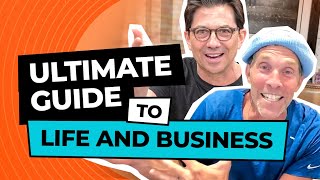
Jesse Itzler talks about building businesses, raising kids to embrace failure, and his yearly challenge called masogi. He credits persistence over talent, designed his life for simplicity, and takes mini-adventures every two months to stay sharp.
Questions this video answers
October 8, 2023.
He says his birthday is 8/22/68 (August 22, 1968).
Four children: ages given as 14, 9, 9, and nearly 8 (described as 14, nine and nine, and a seven-year-old almost turning eight).
October 17–19 (dates cited in the interview) in Kingston, Georgia.
alldayrunningcode.com.
Chapters
Yes, I've had success in business and I've sold companies. Yes, I've also suffered the defeat of having to call people and be like, we're out of business. But while those journeys were happening, what I'm most proud of is I never neglected this side of me. This, like I'm building up an unbelievable life parallel to building these businesses.
Own your future. Because if you don't, someone else will. Well, welcome back to the Own youn Future podcast. I'm really excited about our guest today. I love the fact that you started out as a rapper turned entrepreneur. You are, you are the quintessential entrepreneur, man. You know, we, we're not dear friends. I. I don't know when your birthday is. I don't know any of those types of things about you. Our guest is Mr. Jesse Itzler. I'll share more about him here in a moment. Founder of Marquee Jet and your incubator helped start Zico Water and the all day running company. I want to talk about your book, Living with a Seal that had such an impact on my life. I love that book. One of my favorites of all time. Lots of things to talk about. Jesse, you're married to Sara Blakely. You guys are such a power couple. It's great watching what you do, but I want to tell you, watching you from the outside, I love your energy. I love what you give out to the world. I love the example you are. I love when I see how you guys parent and you just put such good material out to the world. I want to say thank you for sharing a part of your life with all of us, man. It's been cool to watch. So, Jesse Itzler, welcome to the podcast.
Thanks so much, Dean. 82268. My birthday. Now, now.
All right, now, now I got to remember, I got to send you to 8-22-68. You want to hear something crazy? I was born 11, 2068. We're two months apart.
Nice. So you're a puppy man. Younger than me.
You got me by two months.
Youngster on.
Jesse, seriously, you know, we have mutual friends and you always help out Tony. Tony loves you and your wife and you know, we have lots of mutual friends. So many times I meet somebody and they just spent time with you. But I have to tell you, when I read your book Living with a Seal, man, it was so good and you wrote in such a fun, light way that I visualized what you were going through. I know there's lots of cool stuff we're talking about that's know that book was. It's a, it's a few years old now, but you wrote in such a fun way that I could picture you when, when Goggins. You didn't share. It was Goggins at the time. Right, right. Hopefully it gives you a little credit for planting the seed for him. Right. But you didn't share it with Goggins. But I could picture like the snowy winter. I remember you were in Boston or something. You were going to go for a run and I could just picture your face like really? I don't know. I just wanted to say thanks for that book. It inspired me.
Well, you know, I never, when I was growing up in school and they said, what do you want to be when you grow up? And you know, I wanted to be a basketball player, I wanted to be an astronaut on a long list, but Arthur wasn't one of them. And so to me, that ended up being a great, a great gift because no one taught me how to write, told me how to write. So it came out really with my own voice. And for many people, you know, not knowing, being new to something, not having a lot of experience can be super scary. But for me, it was a great gift. In all my entrepreneurial things, it's been a great gift because it guaranteed that it would have all my businesses and even the book would have a different twist. So you basically read a book that was written by somebody that you know, didn't break a thousand on their sat. That had to be very in what happened. So.
Yeah, well, we're on the same page there. But that was fun. He. He definitely pushed you to the limits. What byproducts besides health is such an important part of your life. I want to talk about the Running man festival that you have coming up in October and all the other cool things you're doing. But since my book, that was my first introduction to you, to understand you a little more. Besides seeing you online or knowing some of the things you do or watching you at an event with Tony, it got to get me to know you a little more. And I have some byproducts of that book. It pushed me to, to be more focused, even more focused on exercise and pushing through the hard parts. Is there anything from that experience that still lives with you today?
Yeah, well, you know, they always tell you to surround yourself with like minded people, and I've always felt the opposite. I've always been attracted to people that were. Had an expertise in something that I was interested in, but it was a little bit Outside of my comfort zone or whatever. And this was the, this was the same case. I didn't go into this to write a book. I saw Goggins at a running event in 2006. It was a 100 mile race and I was running it as with a group of five guys really style like, you run a mile, I run a mile. The next guy runs a mile, you run, I run, he runs. And whatever team runs the most wins.
He.
He was running by himself.
Oh my God.
And that's. This is pre Internet, pre Instagram, pre everything. And I saw him have a really tough moment and then get back up and finish the race. And I thought to myself, it was a small field, there are maybe like 40, 50 runners. Whatever secret sauce this guy has that got him out of his chair in misery. Some of it I want, some of it I want to teach it to my kids. So I just cold called him and got him on the phone and he came and spent some time with us. And literally six years later, I wrote the book. So it wasn't like, I want to write a book about you. And it was really interesting. And it was originally the book was going to be a memoir. I got approached by someone. I've had a very unconventional journey as an entrepreneur. And a book agent came to me and said, you've been in music, you've been in aviation, you've had a coconut water company, you sold to Coca Cola, private jet company. Had no experience in it. It would be a really cool entrepreneurial book. Why don't you write it? And as I started to write it, I wrote a chapter about living with this Navy SEAL and that. And then I said, you know what? This is the book. And that became the book. And to answer your question, you know, as you get older, Dean, I'm sure you've experienced this too. You know, your life can get more complicated. It evolves. You know, you have. I have children, four children. I have a wife. I used to eat dinner at midnight when I was hustling my businesses. And now I eat dinner at 5:30 with. With a family life system evolve as you evolve.
Yeah.
You know, and it's easy. As you get more, life can be. Get complicated quickly. People always think that more is better, but better is better. More isn't better. Better is better. What I learned from, from him really, I mean, not even the physical stuff that we went through was just the simplicity of how he conducted himself. I wanted more simplicity in my life. And I started, forced me to look around and say like when I Think of the people I go to advice. They're usually older, my parents, my elderly, you know, like people that have done it before. And what do they all have in common as they get older? They downsize, they simplify their life. And I just, I love the way he lived his life. It was simple and, and I didn't want to get rid of my swimming pool, but I wanted to have the simplicity of what he had. And I know that's a weird answer, but that's really the truth. I love the simplicity of how he lived.
Yeah, no, I got that out of the book. I felt that. And sometimes we overthink how to get certain things done. And sometimes, not to quote Nike, sometimes you just have to do it and, and find something that drives you to do it. Simplify so you can amplify. Right? Yeah. How old are your kids, Jesse?
I have four. So we have four, 14, nine and nine. And our seven year old daughter almost turning eight.
Gotcha.
Going on 15.
Yeah, exactly. I have a 14 year old too. 16, 14. And I have two little ones, three years old and almost a year old. That there's some of the greatest learning lessons in life right there, especially the teenage years is fun. It's a new chapter for sure. Definitely a new chapter. You know, in that journey. I love the whole. Started out as a rapper. I love that 50 Cent was an intern for you, is that true?
Yeah, he was. Well before he was 50. 50 was interesting. Was actually behind me for anyone watching is a picture of Run DMC. I used to manage Run DMC. I grew up in New York in the 80s right when hip hop was really exploding. I was super into it and I ended up managing Run DMC for a small part of their journey and which were like, they were like my Beatles growing up, you know, they were my Beatles. And 50 was, was working with the DJ from Run DMC, Jam Master Jay. And Jay was like, you know, I have this kid, he's a boxer and he was looking to learn a little bit about business. At that time I had my own business. I was 24 something and 50 would come in and, and, and he would help me work on these things student these jingles I was doing in the studio and, and all this other stuff. And he had a partner named Ksan. And I'm like Jay, Ksan is so talented man, you gotta sign Ksan. So I signed Ksan and 50 became Curtis, became 50 years later. I saw I, I signed the wrong guy.
But that's a great story.
What's interesting about that is 10 years after 50 becomes this international star. And I have a private jet company at the time called Marquee Jet. And he was a guest on our plane. I would get a manifest every day of all the passengers and saw he was flying. I hadn't spoken to him in literally 10 to 12 years. And I sent them a note saying, you're never going to believe this, but this is Jesse Itzler from the jingle company. Twelve years ago, you on one of my airplanes, we started this private jet company. And the next day he wrote in all of his riders that he would only fly on Marquee Jet.
Oh, what a cool story.
So damn cool on so many levels. And, you know, recently bumped into him in an airport, hadn't seen him in a long time. And we were talking about it, but yeah, you know, you never know. You never know. You never know who in your 20s who, who is going to be the next 50 cent, the next CEO, the next mobile, which is not a reason to be nice to everybody, obviously, but you just, you really just never know. I remember when I was writing theme songs for professional sports teams in my 20s, that was my business Gotcha. And Adam Silver, who's now the commissioner of the NBA, was working at NBA Entertainment. We were kind of friends, but when I got involved, my wife and I, with the Atlanta Hawks, years later, you know, our. The approval pro process for MBA ownership is very, very hard to go through. And he had to approve it. And, you know, we have this relationship going back 30 years. You just never know someone in your 20, in your group of friends in their 20s. Yeah, it's going to be the commissioner of something.
Yeah.
And you never know who it's going to be. And sometimes it's unlikely who it becomes.
Yeah. Such a good call. No, that's such a. You have such a fun journey. You know, we are two months apart. And there are things, there are, there are things that you practice to be a hustler in your 20s, to move the needle that now you probably could get more done with your pinky in your 50s than you could in your 20s with such a heavy lift in that journey. What mindset shift. Like, I grew up in New York. I grew up an hour out of the city, so I didn't grow up, but I spent a lot of time in the city that New York hustle, the grit, the grind. I always felt I could outwork anybody. I could fail a hundred times. You could kick me, run me over the car. I'll keep going, doesn't matter where you come from in the world doesn't mean because New York we have more grit. I just mean I've always had that feeling of moving forward, but it adapts over time and you have to have a different mindset and a different practice and different things. Because I'm not big on meditation, it's hard for me to shut my mind up. So I found other practices to get through. And I know I keep myself busy with, I'm either I exercise like crazy, I work like crazy, or I extreme parent like crazy. I, I, I wanted, I gotta be on the move all the time and, and you realize as you evolve, you have to find new mindsets or practices to kind of fill your heart, your soul, your bucket, keep you moving forward. And some of those I wish I could lend to my 25 year old self. Like, hey, hey, hold on, take a breath. Right? Take a breath. There's some things, what are some practices that you use? Morning rituals, practices, meditation, mindset, tricks that keep you, I mean, you're motivated as hell. Dude, I love watching the way you exercise. I watch you with friends doing ice baths or running a hundred miles or driving a bike across America. Like you do stuff to keep you moving forward plus business, plus four kids, plus being a husband. What are some of the practices you have now that maybe you wish you knew sooner?
Well, I think a lot of people talk about morning routines and morning routines are definitely important, but I'm a much bigger believer in evening routines. So my day starts the night before. I don't think anybody listening to this podcast podcast is good enough to wake up and just wing it. The competition is too fierce to like be like, oh, today I'm, I don't know what I'm going to do today. So like I map out my day the night before. So it's super efficient and I just follow my script, you know the best. The top CEOs in the country have multiple CEOs and they walk in. Dean, 11 o', clock, you're here. 11:30, you're here. 12 o'.
Clock. One.
We don't have three assistants, so we have to map out our day. So it's super efficient. I try to layer in early wins first thing in the morning to get momentum. I'm a big believer in momentum both ways, negative momentum. If you're spiraling down, you got to stop that right away. And that could be the easiest way to stop it is creating a small win or helping somebody. If you have, if you're in a rut, go into Starbucks and anonymously Buy someone coffee, go pay for, pick up someone's. Like, do something that makes you feel good about you, you know. So I try to start my days with early morning wins. I plan my day out in advance. And you know, I used to think in, in terms, this is probably the biggest thing I think that I've done shifting from my 20s to now my 50s. In my 20s, I put a lot of pressure on each day. Like I gotta, I gotta run, I'm a runner, I gotta run five miles today. I'm an author, I gotta write 10 pages today. There's already enough pressure on all of us. We don't need to put that much more pressure on ourself. So Dean, I shifted that into thinking in terms of weeks. So like this week I'm going to run 35 miles, I'm going to write 50 pages. So if I miss a day or if life gets in the way, that's good point. No, it's big because I'm. Otherwise I'm setting myself up for failure. I didn't run today. So am I going to beat myself up or be like, I couldn't even run for one day, I quit. But now I've given myself the opportunity to make it up tomorrow. So creating like thinking in terms of weeks versus days has been a really big thing for me. And you're right, as you get older, you know, the greatest gift I gave myself in my 20s was allowing myself to be 20. You know, like when all my friends, a lot of my friends were working on Wall street, they could go, I made $35,000 till I was 27 years old. So watching everybody get rich around me and saying to myself, like, that's okay, that's their journey. And still believing in the end of my story while all that's happening around me.
Yeah.
Instead of trying to push it and force things was a great gift because it allowed me to experience a lot of different things in my 20s. And you know, my wife and I always say, the more you experience, the more you have to offer. And having those experiences may be a little bit more interesting to help me get a job, to get me get, help me get meetings. You know, you haven't even brought up any of my businesses. You talk about 100 mile runs and cold plunges and this, and that's because there's an enthusiasm around those experiences. So that was a really big gift that I gave myself. And just to close the loop on the thought, you're right. In your 40s and 50s, it becomes a lot easier, you know, the mistakes you've made, you have a bigger network, you're better at what you do. Like, you know, I think the process is always the same. Figure out what you love to do, get really good at it, and then monetize it. It could take five to 10 years to figure out what you're really good at and get good at it, and then you monetize it. So your 20s and 30s are a great time to try that. Figure out what it is, get really good at it. And in your 40s, I found that most people will make four or five, six, 10 times as much. I don't even know your journey, but I made, I bet you made 10 times as much in your 40s that you did in your 20s. 30s.
Fact. Yeah.
Yeah. I mean, everyone. So, you know, if you're out there in your 20s and 30s, like, it takes time. Be patient and just and believe in the end of your story.
And yeah, you know, I, I so many, so many. I, I love that. And it's so true. You know, again, looking at your list of, of accomplishments and companies you've created and, and, and accomplishments and your so many great. I mean, literally, it's. My team gave me four pages of things that you've got done. One that I love that you wrote though is business or my team found and you must have quoted on this is one of your, One of your rare failures was Sheet's Energy strips. And I love what you wrote here. Is it taught you the lesson of marketing is one thing, but if your product is not a 10 out of 10, it's the balance of the two. And I think that's such a powerful thing in today's world. Sometimes we see really great product. Right. I always use the analogy of Barnes and Noble. Right. You've written multiple books. You know, I've written six. It is the most painstaking thing on the world to get the, to write the book. And then you get it back from an editor and they shift things and you're like, no. And then you rewrite it and you send it to them and they send it back to you. And then you read it and go, ah, that chapter kind of sucks anyway. Maybe I should rewrite the whole chapter. It is up. I don't want to swear. It's a, it's a, it messes with your brain. It's like, I just want this thing done right. All that work that goes into a book and then you walk in like a Barnes and Noble and there's hundreds of thousands of books, especially if you Go one of those big stores. And 80% of those books don't sell over a thousand copies. And out of the, the, the 20% that sold over a thousand, 80% of those don't sell over 5,000 copies. And you realize on that side, people built it, they created something good, passionate, and just thought it's gonna be so good, this thing is gonna go viral. And it doesn't. And on the opposite side of that, we both know great marketing products that were marketed great, but they were crap and they don't get the momentum. And I hate to oversimplify it, but an amazing product with incredible marketing is the longevity, the value, the sale if you want to, or the 40 year old business. What have you learned on that? And then I'd love to dig into sales a little bit, but what have you learned on that combo since. Since you wrote it or at least my team found where you said it taught you the lesson that you need both.
Yeah, I know a little something about competition. When we had Zico coconut water, by the time we started Zico and launched It in that eight year window, there were 27,000 other beverages launch like Coca Cola North America bought seven. In that window, we were one of seven. So I often ask myself of the, what made us different than the 27,000 other brands out there? And you know, at the end of the day, you have to have a good product, for starters. And because when we had Sheets, I started sheets with, with LeBron James and my partner Warren Struhl, we were equal partners. A third, A third, a third. After I had built Marquee jet with my partner, sold it to Berkshire, to Warren Buffett's Berkshire Hathaway, and we sold Zico to Coca Cola. Now I have, I'm coming off two big wins. Coke and Buffett. Yeah.
Amazing.
And I'm like, I'm invincible. I could put out a widget and it's going to work.
Yeah, yeah.
So I put everybody in that I knew in this deal. My college roommate, my sisters, my brother. Everybody was in this because I was so sure. We're buying a house in Aruba. We're all going to be neighbors in Aruba. Grant, your boat is next to my boat in Aruba.
Yeah.
And we put out this product called Sheets. They were oral dissolvable strips, like a Listerine strip you put on your tongue, except they were infused with caffeine. It was like a Red Bull in a Listerine strip. Went right into your blood system. No calories, instant energy. At a time where Five Hour Energy was selling 10 million two and a half bottles of Five Hour Energy a week. I'm like, we're in the best category at the right time. We were in 40,000 stores at launch, which no consumer product has ever been. If you're not Coke or Pepsi or the disco, you're not in 40,000 doors. And week, week, week two we get the sales report, it's through the roof. Week three, I'm doubling up the ad spend with my own money. National ads. I'm like Aruba baby, Aruba. Week four we get the sales results and this on the basement floor. And the reason was caffeine is really bitter and getting it tasted bitter and getting people to change habits is really hard. We were asking people to put down their coffee and take a strip on their tongue that was bitter and it didn't work. And at the end of the day you can have the best marketers, the best advertising team, the best every, you know, brains behind it. But the product has to work and has to stand on its own. It has to be shared friend to friend. You sold six books because people like Dean. Did you read Dean's book? It changed my. Did you reliving with the seal man, you gotta go read. That's why that book sold. It's friend to friend. So marketing will get you can get you somewhere for sure. Especially in our space. You want to be cards up in coaching. Marketing can get you pretty far. I've seen a lot of people with not a lot under the hood get really far with great marketing. But ultimately the product has to be good and has to stand on its own. And people tend to cut corners on producting and I understand that they want to get out there fast and this and that. But before my wife launched Stank, she spent almost two years working on that product to perfect it before she brought it to market. You don't want to use the shelf space of retailers as your R D department with your product.
Such a good point. And, and there's something else you said in there that I, I've been preaching for a long time. Sometimes we build things that we, we know people need, but people don't buy things they need. They buy things they want. People need to go to the gym more, they need to eat less bread, they, they need to stop sugar intake. They need to be active listeners with their significant other to bring intimacy back in their relationship. They don't do any of that crap until they want to do it right. Sometimes it's the pain, sometimes it's the pain. The doctor Saying you're sick, lose weight, or your wife saying I'm going to leave you, or right. That that's when you, or you have to quit smoking because you have emphysema, then they need to. But most people don't do it until they want. And like you said, people didn't want to switch from a Coke or a, or a coffee that soothed them, even though they might have needed it. It's not what they wanted.
What we learned was, like I said, the sales the first couple of weeks were through the roof, like unbelievable. And marketing will get people to buy it once, but the product will get people to buy it twice.
Great point.
And you know, also like, it was very humbling, man. Like, you know, when you raise money, I've done it several ways. I've bootstrapped things, I've raised money, I've sold companies and I had a loss, this loss and the loss hurt. When you raise money, it comes with tremendous responsibility.
Yeah. You know, it's so funny, on my little white card I wrote, how did you handle, how did you handle that? Whether it's a failure, a mistake or a letdown of the people, that's a big one. I'm sure I could tell your personality just because I know you a little bit through watching you present, watching you at Tonys, I know you and your wife both have big hearts. I'm sure besides the money and besides the no going to Aruba, I'm sure the pain of man, I got my family, I got my friends to invest in this, that's got to be a heavy burden.
I mean, it never goes away. And I built all of my, I've had, I've sold five businesses and I've had egg on my face too. And all of everything that I've built has been built completely on soul. It's been built on caring the most, giving the most, not being the best, not. I'm back of the pack sales. You said you wanted to talk about sales. I'm probably the wrong guy. I'm back of the pack everything. But, but you know, you can't outsource soul and it doesn't live on a spreadsheet. It's something that customers feel, my team feels, the culture I build feels, hopefully the audience feels it when I speak. And, and it's a, it's a two edged sword because it, soul and enthusiasm and passion is something that everybody has. Anybody can want it the most and care the most, but when it doesn't work, that soul and passion haunts you. And you know, you make a guy a hundred thousand dollars, a dollar, five dollars, ten dollars, you're a hero. You lose a hundred thousand dollars, five dollars or ten dollars, they never forget it. And money's funny, man. You know, it's. Could I. It's.
It.
When you lose people money, it's not like. It's the weirdest feeling, Vivian, because part of me wanted to write a check back to everybody that invested. And then part of me is like, well, I lost the most amount of money. This comes with risk. And then part of me is like, if I did pay people back, which I don't, I had no responsibility to do that. That's just in my nature. People react weird to that stuff, you know?
No, it's just, there's a, you know.
It'S that relationship with money. That relationship with money.
It's a weird thing because if it went well, you wouldn't hold back and say, hey, it went better than I thought. I'm not going to give you all the money that it made. Right. I, I just, I just let somebody off the hook a month ago, somebody I invested in. I love their idea. It didn't work out. And I could tell. I felt the, the guy hiding from me, and I, I, I didn't even think about it for a year. And then I thought about it. I'm like, I know why he's hiding. I reached out. I'm like, hey, listen, if this thing knocked it out of the park, I wasn't going to ask you to pay me less than I deserve. You gave it an effort. You're not a drug addict. You didn't blow the money. You went all in. You probably have had sleepless nights. You did more in the invisible to make this work than I could ever imagine. I can't even imagine what you went through, and you have to deal with it. Take me off your list of worry. I was in for the ride up or the ride down. I knew both. But I could feel his energy. So I'm sure I could tell your heart and soul, Jesse. I'm sure that that's not an easy thing. And maybe how do you. I get a great lesson. I guess a lesson would be, how do you teach your kids to rebound when things go sideways or things don't work out for them?
Yeah, I mean, we, we really pray, we really make it a point to praise the effort versus the results, good or bad. So if our kid scores four goals in a soccer game, it's not like, oh, my God, you scored four goals. I love watching you hustle. All that hard work is paying off. You're an amazing team. So, like, everything's around the effort. So if there's. And encouraging our kids to participate, like, you know, we really want our children. And this goes for my friends, for my coworkers, for everybody around me. I really encourage people to be participants in life, not spectators. And when you're a participant, good things happen. Or, or, or, or you, you could win or you could lose, you could fail, you, you, you could succeed. Nothing happens. Watching the Kardashians on Sunday night at your house, right? You know, instead of. So, you know, we encourage our kids to put ourselves in those situations. And, you know, I'll just give you a quick example. I took my son when he was 6 to a polar plunge in at Lake Lanier in Georgia, where we live. And we'll listen to Rocky on the way there. I'm getting crazy. He's six. He doesn't even know. A cold plunge. We're going nuts. We get there and all, all the people up, it's like all the police officers, the local fire department, they blow the whistle, everybody runs in. My son sitting on the, on the beach, hysterically crying. So I get out of the water, I'm like, no, this is amazing. You got the cheer on your dad. You got to watch this. You're the youngest kid here. We drive home. He had to live with that disappointment for a year. A year later, we go back, Rocky in the car, we're blasting the music. We're going, he's grabbing me. I'm going crazy. They blow the whistle. He's the first one in. They blow the whistle to come out. He won't come out. Last one to come out. And that's a really good lesson. It's a lesson in, you know, living with disappointment. Disappointment's been stripped for most kids. Participation trophies make every team. Where I live, it's mandatory. You get invited to every birthday party. Like, what happened to disappointment, man, when I was growing up, if they threw a baseball and my mitt was down, my dad let the ball hit me in the face. So I knew, put your damn mid up. Like, kids have experience. They have to. As hard as it is, it's so important for kids to experience disappointment so they can dust themselves back up and say, whoa, I can handle this, because we will be disappointed. I still get disappointed all the time. So we praise the effort. We try to put them in situations where if they get disappointed, they live with it. And then they come back and, and try to figure it out on their own.
Yeah. God, I love that. It's so true. I just wrote down, live. Live in disappointment. Like, they need to feel that. And I. And you're right. We live in a time where we're not letting people, we're not letting our children especially feel the other side of abundance. Right. To feel the disappointment. And I love that. You know, there was a. I was backstage and watched your. Your wife share on. On. On a stage. We were someplace. And I love the story she tells about her dad asking her if she failed that day. Just stuck with me forever. There's a lot of great things both of you shared that have stuck, but that one really stuck is. And. And I brought that into. If you. If you tell Sarah, I. I brought that into my own house. Like, I. I asked my kids, because if they haven't failed, then they're playing safe, they're playing it comfortable. Just what everybody has that. They're just walking in line. They're on the same path as everybody else. So that was such a great lesson. Switching gears a little bit, Jesse. You guys have, both of you collectively as a couple. What a power couple. You've both accomplished so much financially. Seems things are great in so many different areas. Four kids. What still drives you? You still got that same hustle as you probably did when you were making 30 grand a year in your 20s. And it's more mature. It's gone from knowledge to wisdom, from just effort to. To accomplishments and all those great things that happen over time when you stay in it. But what still drives you?
I think, you know, I just turned 55. You're going to feel what that feels like in a month or two, and you'll feel it double nickel. And it changes everything. You know, look, I. I lost my father last year. I lost one of my sisters in the last year. Um, I'm at an age, at a very interesting age now where some of my friends are waking up, getting with, diagnosed with things. Life changes, you know, And I just. I think the biggest thing for me is one of the drivers. I don't want to be in my 80s, 90s and look back and be like, I was the 80% version of myself. Like, I don't. That's a B minus. I don't want to be a B minus. When I look back on it all, and I feel like that's really important to me. I also, like, I have a. I don't live in the past. Like, I don't own a marquee jet hat. I don't own A zico hat. I have no pictures of that stuff around. Like, that's all old news to me, man. Yeah, it happened. I mean, I celebrate it still. It's in my DNA, but it's. I'm a what next guy. And I'm a big believer in building your life resume more than your traditional resume. And I think that matters equal. I think that gets neglected a lot while people are trying to. Obviously, it's important to make a living. And I'm a capitalist. I want to make a living and make money, but building your life resume is equally as important. And I'm an underdog man. My dad owned the plumbing supply house he lived in, a house with three generations and one roof where they had a paint shop. There's a million stories like this, but. Well, I feel like, you know, Rocky and Rocky and Rocky 3, and Rocky 1 is hitting the meatbags, and it was like, oh, my God, Rocky's hitting the meat bag. But in Rocky 3, he's getting powdered down and Clubber Langs coming up in the clubs, knocking everybody out. I don't want to be Rocky 3. I don't want to be Rocky 3.
Yeah.
I want to be.
Oh, God. You and I, you kind of are cut from the same cloth. I never want to be the guy that used to.
No, I don't want to be that. And I feel like, you know, I just feel so lucky to be in this position, you know, And I feel like I have a lot. I don't know what the driving thing is, but a lot more in me. And I never want to lose that hunger. I never want to lose that. And I'm not. I'm not talking about financial. I'm not. I'm talking about. In all the way I look at success is there's so many definitions, but, like, I take the buckets that matter the most to me, my family, my work, my wellness, my friends, charity, whatever. I want to be as good as I can be in those buckets. Yeah, I don't think the best in the world. I don't think. I'm not competing with this one and that one. But for me, those are the buckets that matter. And if something doesn't fit into one of those buckets, I'm usually not doing it. It's like a waste of time.
Yeah.
So I'm trying to just focusing on those buckets that matter the most and spend. When I turn 50, I made a promise to myself to put more on my plate of the things I love to do with the people I love to do them with, you know, so, so great. That's it, man. That's my driver.
I love that. And you know, I think, I think as someone who's still in the grind or still searching for just another level of success, right, and they get hit with a couple obstacles externally or they have those ins. Internal blocks, that internal fear. In today's world, they call it imposter syndrome. It could be self doubt, the thing they worry about when no one's watching. And I think because, you know, we get to be around a lot of people, I think they feel that that goes away. I still have that voice of self doubt. I still have the same fears as a broke kid in upstate New York wondering if I was ever going to make it. Hustling cars at 17 and 18, selling firewood and all this kind of stuff. I still have those. I've just learned how to dance with that voice or overcome that voice. Is there still something that scares you or something in the invisible that you still worry about that no one would.
Ever think, well, you know, it's really hard to play scared. You know, it's hard to play scared. And you hear that sports analogy all the time. Like, don't play scared. Play to win. You got to play, you know. Yeah, you got to win. Yeah. I mean, I think everybody suffers from that. I think. I think as you get older and, and you get some wins, you get a confidence and a conviction. That's really important. And I think that little edge, swagger, whatever you want to call it, I think is really important. And people feel that, but there's always the doubt. I think everybody, I mean, that's human nature. I think. I'm pretty sure that Oprah said this, that she's interviewed the biggest names in the world. Everyone's been on the Oprah show, that is been on the COVID of every magazine and everything. And what are the four words that everybody that comes off stage say to Oprah? How did I do? The most brilliant in the world Are insecure.
Wow.
Even Oprah. Or when she. I don't want to speak for Oprah, but I'm sure she comes off the stage, she says the same thing. Dale, how'd I do? You know, people want to be liked, they want to be expected, they want to be good. So that never goes away. But what I love about that too is there's a major weed out process with that Dean, because it weeds out a lot of competition. A lot of people get too scared over that, and it knocks them out of the game. And the people that just have. Think of this. There's. What are there two. There's 2 million podcasts on Apple TV, I think, and 500,000 of them. I want to make sure I get this right. 500,000 of them only do one episode, and then they quit. So, like, I think it's like 25 are out of the game just because they. Where are the advertisers? How come I. Why do my Instagram followers. It takes a bazillion. Like, you know, how many people pass on living with the seal until I got a record, until I got a book deal? How many people record companies passed on me until I got a record deal, how many doors I knocked on before I got a manufacturer with. I mean, like, if it was just one podcast, that. So I love my chances knowing that, you know.
Yes, that's a really good point. I love.
I think I posted. I'm pretty sure it's either a million or 2 million, but it's a big number. It's like 25% are out. Like, they're out. They're off the table right away. And then the number keeps going up. Two episodes, four episodes. Then when you get the five episodes, it's like 90% or something of the people are out of the game. I'll do 1,000 podcasts.
Yeah, same. Yeah. You know, there's. There's that book.
I don't even have a podcast.
Yeah, exactly. There's Ogmundino's book, the World's Greatest Salesman. I love that book. It's really not about being a salesman. It's about the human.
I saw you. I saw you quoting it on a couple of things.
Yeah, Yeah, I really. I really love that book because one part, he said, I will persist until I succeed. If you just adopt that, the word persist is probably the only word in the English language that can guarantee your success. Like you just said, if I have to do 100, a thousand, or 10,000 podcasts, if I decide I'm going to be a successful podcaster, I will persist until I succeed. But then he goes on to say two things I. I think you'll like. He said, the. The prize is not at the beginning of the journey. When did anybody tell you that? The prize is at the end of the journey. And during that journey, you don't know how many corners you need to go around until you find the prize. Like, I picture someone's like, I worked hard. I did three podcasts. They look around the corner. It's like, hey, no advertisers. It's like there might be 70 more freaking corners you go around and you don't know how many it's going to take. And if the other guy only took 5, it doesn't matter. You might have to take 50.
If working hard, everybody works hard. If working hard was, was the ingredient to success, everyone would be successful.
True.
So simple. Just work hard that I mean my dad worked his ass off, you know, and like it didn't, it didn't work out like that, you know, working hard. And I'm sure he, you know, felt great about the effort he put in. They did it. There was an old famous speech about a guy that worked for Prudential insurance back in 1940s and he wanted to distill success down to one thing. And he gave a presentation in front of his, all of his, the whole company about. He spent like years. What was the one thing that leads to success? And he dummied it down into basically the people that did things that other people didn't want to do. So like nobody wants to when happy hour is going on, people watching the Georgia football game. No one wants to stay home and return every single email that came in that day or, or not go with their friends and go, but this guy, these guys that were willing to do all the things that the other people weren't willing to do was biggest, was the biggest differentiator. When I think back on my journey as an entrepreneur, it's been a remarkable journey. And I don't mean remarkable in terms of success, just what I've gone through. It's really like I've been really thinking about it a lot lately of. I'm proud of myself, man. Like I didn't have a lot of help, you know, my dad, I didn't take a business class. We didn't talk about money, we didn't talk about business growing up, nothing. And I've been able to kind of navigate and I've had partners in almost everything I've done and they all dropped, dropped out. Just before I got a record deal, my partner quit. He was like, it's not working. Just before this, someone quit. Just before this, the guy bail. And it's, it's, it's, it's that, it's just that persistence is, and that resilience is really, is really important. It doesn't guarantee success but increases your chances. It's a, it's a big component. And I would just say this, you know, I do a lot of ultra long distance running. I've run several hundred mile runs and What I found is, what's interesting about that is when you line up at the starting line of 100 mile race, it's not like everybody looks like an Olympic athlete. You have all shapes and sizes. And sometimes the people that look like they could never even finish a marathon finish way before way in front of you. And. And sometimes the strongest looking people drop out after 10 miles. And what I found is the one thing that everybody has in common that completes these race. And I would hire anyone that finished 100 mile run can come work for me because like, they have an incredible will. And they just have a will. It's like, it's, it's unbelievable. And I'm like, whoa, that's. I have will. I have will. I started running two miles was my goal when I started running. But I'm like, when I saw that, I'm like, I have will also. Why can't I run 100 miles? Same body that ran 2 miles took me to the finish line of a hundred miles. Because I have, I have will. So when I had Marquis Jet, people used to. Sales reps used to come into me. I'd be like, how'd the meeting go? They'd be like, oh, it was so tough. I got beaten up on price, I got beaten up on competition. And I'm like, you're a sales rep. What'd you expect? Your job is to sell. The customer's job is to push back. What did you expect? And for those people that you mentioned that are going through these challenging times, like you're an entrepreneur. That's what you signed up for. What did you expect? Like, did you expect that you're just going to cruise through it with no blemishes? It doesn't work like that.
Sure.
So for me, when I hit, when I get in pain in 100 mile run at 57 miles in, my response is, what took you so long? That's all you got? Pain. That's it. Because I know it's coming. I'm not going through that without being in pain.
Yeah.
It's not a surprise to me that business is hard. It's not a surprise to me, you know, that, that, that's going to happen. And part of that is the gift that my parents gave me of allowing me to be disappointed. They didn't strip that from me. They didn't take that away from me by silver coating everything and, and saying yes to everything. You know, they, my parents allow me to be disappointed. And my parents didn't over schedule me. They allowed me to sit in A room. And when they had a meeting for three hours and think and dream and figure it out and envision myself in different roles and visualize. That's what. I put my mom at a board of education meeting. She took me with a pen and a piece of paper and said, we'll be done in three hours. And I would sit there like, you know, it's very different than, than today's world. But those were gifts that my parents gave me and I didn't even realize it. They were massive gifts.
God, Jesse, so many great takeaways from what you just shared. So many great takeaways. I love that perseverance in the 100 mile race. 100 mile race. We're all running a 100 mile race, right? We're all in it right now. Especially if you decide to do your own thing. And what's harder, the struggle of getting through the self doubt, the pain, the things that go wrong, the people let you down, or getting to the end of your life like you said earlier, and being 95 years old and realize you missed it. You just want. You took the flat road, right? You took the walk rather than the run because it was comfortable in the moment. But like the, like the Theodore Roosevelt man in the arena speech, right? It's like you get to the end of your life and realize you never got out in the field. You just judged from the stands. You wore someone else's name on the back of your jersey and never knew what it was like to feel alive, to feel disappointed, to feel scared. But on the als, on the opposite side, feeling what it's like to sell Marquis Jet or have the company or have the accomplishment. I love that. So before we go here, there's a couple things I want to. I know you got the Running man festival coming up October 17th through the 19th in Kingston, Georgia. That's coming up soon. So we'll get this out to make sure we can help get some of our people there. How do people find out more about that?
Yeah. If anyone's looking for an amazing event that combines kind of like being outside, camping, running or walking and saunas and cold plunges and speakers and music, we're having a little mini festival. You can go to alldayrunningcode.com alldayrunningcode.com and check it out. It's going to be a great way to experience new people and new things.
Well, I want to tell you one more thing and then tell me just before you share that. Is everybody I know, Jesse, that does any of your running events Comes back transformed. Not just because they ran and had some exercise. That's a part of the journey and the willpower. But you've set it up in such a great way. A friend of mine, Stu McLaren, and his wife went and they were telling me how they got done. And it was just the whole experience you put together that was transformative. So October 17th through the 19th, I would highly encourage you to go check it out. You're going to say something, Jesse?
I was going to say that, you know, you talk to me a little bit about regret and the end of the road and what drives me and this and that. And if we have two minutes, I just want to share the two things.
Yeah, yeah.
So one thing that I do that's been really helpful, and if for anyone listening here, you know how, like, you know, Sarah and I have busy lives, like, everybody and our kids have glitches like other kids, parents have glitches, and we have issues like other people, nothing changes just because you've had some money. And you know that better than anybody. But, you know, we've been able to design, do things that almost guarantee that while we're building our businesses, we're building our life resume and the personal side of the journey. So the first thing that I do is there's this old Japanese ritual called the masogi. And the notion around it is you do one big thing a year. Like one year defining thing every year. So this year, I rode my bike across America. In 2015, I wrote Living with the Seal, as you mentioned, 2018, I launched this company called 29OH 29. You should have something, one thing to show for it. At the end of the year, 365 days, there should be, like, if you don't have one thing to show for it, that, like, whoa, look what I did. What do we really do? So every year I try to do one big thing and then the other thing, and I schedule.
I love that.
And the other thing that I do is I had a friend, I have a friend named Kevin. And Kevin coined this. I coined this Kevin's Rule because he kind of created it. But I was camping with our kids. They were eight at the time. Like, Mount Washington, which is. It was like minus five degrees out. We're sleeping in a minus 40 sleeping bag and snowing. I'm like, Kev, there's eight billion people here, man, in the world. There's no one on this mountain. Like, this is amazing. How often do you do this? He's a police officer, and he lights up. He's like every other month I do something I normally wouldn't have done. I go, what are you talking about? Since college. He goes, well, like instead of watching the football games, I might go fishing, I might go to a conference, I might watch one of your webinars, Dean, I might do something that I normally wouldn't have done. And I said every other month? He goes, yeah, take like one day every other month. I said, well, why? He goes, well look, he goes, if you're 30 years old and you live to be 80, so that you live 50 more years and you do six mini adventures a year, that's 300 mini adventures. So if you do what? If you do one big year defining thing, right, I'm calling them a SOGI and you're 30 and you live to be 80. That's 50 year defining things you've done and 350 year defining things and 300 mini adventures. Like that's a heck of a life, man. Forget about your riches, forget about your businesses, Forget about that is an unbelievable life lived. So yes, I've had success in business and I've sold companies. Yes, I've also suffered the defeat of having to call people and be like, we're out of business. But while those journeys were happening, what I'm most proud of is I never neglected this side of me. This like I'm building up an unbelievable life parallel to building these businesses. It was never a goal of mine to be like, I want to be the richest. I want to be this, like, I don't even, I don't play that game, you know, But I did want to be the richest on this side of the equation that or at least as rich as I could be.
Yeah.
On that side, I feel like anyone can win that game. And for people listening that say, oh well, you have, it's easy. You have. That is true. It makes it a lot easier. But our trip to Mount Washington cost $18. To park our car, it cost $18 to park the car. You know, when I was 21, the Polar Plunge with my kid free. There's stuff that you can do, local races, challenges. You know, you're in the forefront of webinars and, and your coaching programs and products. You're in the forefront of, you know, you guys have really revolutionized the modern day coaching business. You and Tony have revolutionized through a variety of, of ways. And there's so many ways to learn now and there's so many ways to get better through, you know, through social media, through webinars, etc. And there's so many ways to experience life. You know, we live in an amazing country. I just rode my bike across it. I saw it 15 miles per hour at a time. I saw this whole country, west to east, 15 miles per hour at a time. And there's a lot that it has to offer that's free. There's a lot that it has canyons and rivers and mountains and don't tell me it's money. It makes it easier for sure. But don't use that as an excuse.
Jesse, you know I love doing these interviews. I just started this podcast about 14 weeks ago. I don't run advertising on it. I don't do it as a money thing. I feel blessed that it's one of the. This morning when I woke up, we were the number three podcast in the world in our category. I feel the momentum this thing is getting is amazing and it's what people don't realize. I love to be able to share. I love that those listening today got so many great gifts, but I get the gift too. What you just shared, I just want to tell you the one big thing in the 300 many things. It's a reminder to me because success without fulfillment has got to be the emptiest thing on the planet. And reminding us that, you know, at 50 soon to be double fives, right. It's going quicker. I hope it hit everybody like it hit me. It was such wise words and to push ourselves out of the comfort zone. One big milestone a year and 300 mini adventures by the time we end our lives. Six a year. What a great. Or 12 a year. How many? You said every two months. So six a year. What a great lesson. Jesse, this has been amazing. I appreciate you spending the time today and sharing your knowledge. And if you're home listening right now, take what serves you. I know there's a lot of noise. There's a lot of podcasts you can listen to. I'm grateful you're listening to this one. But listen to this. Take what serves you and throw the rest away. But take at least one thing Jesse shared today and implement it. Think about it. Journal on it. Think about it at night, think about it in the morning. Be disturbed within action. And when you're done listening to share this with somebody who needs this message as well. Make sure you check out Jesse's run that's coming up October 16th through the 18th, the Running Man Festival. I'll make sure I put the link in the show notes. Jesse, thanks for taking the time. Thanks for being such an inspiration to so many.
8, 22, 68.
82268. It's written down right here at the top of my paper. 8, 22, 68. I can't miss.
You're 1120, 11 something.
68, 1120, 11, 28, 1120. So every, every birthday now, I'm just going to look back, go, ah, Jesse got me by two months. Hey, man, I appreciate it. Anything I can never do to support you. Let me know if you when you're going to do something else. Write a book, anything you got going on, make sure you reach out. I'd love to support you in any way I can.
Thank you, Dean, man, thanks for having me.
Appreciate you guys. Thank you, Jesse and everybody. Until next time. We'll see you.









