How to Serve First, Scale Fast | My Sit-Down with the School of Hard Knocks.
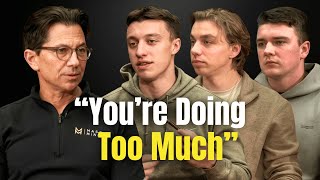
Dean Graziosi consults with School of Hard Knocks on hitting $10M revenue through their subscription community, brand partnerships, and ad revenue. They map out membership tiers, how to scale without the founders running everything daily, and messaging to grow from their current audience.
Chapters
Most of the time when we think we want to serve our clients, we add more stuff. People that are really good take away. We wouldn't be here without the content agency. It's like, right, yeah, it got you out of Egypt, but it's not going to take you to the promised land. You can go into 2026 doing 20 million bucks. In this episode, you're going to see behind the scenes of a consulting session I did with the boys from the school of hard knocks. They've done incredible things. They have over 10 million followers on social. Their videos go viral. You see them everywhere. But transitioning those people from followers to clients, paying clients who you can get a massive impact, well, that's a different story. And I showed them a path to $10 million in revenue and 20 to $30 million next year. And you get to sit in on it. What's going on boys?
How are we doing here?
Good. So I think the best way to start, and I'd love to start with the end in mind and then go back to what you've achieved like where you're at right now. So if it was a year from now and we're back here, hopefully we hang out again in a year from now. And it was the best year of your guys life and your company making the impact you want, the income you want, the growth is there. What does that look like? What's, what's a year from now best year of your life look like?
Yeah, I think, you know, our biggest goal right now is to be doing, I could say from a revenue standpoint, $10 million. I think it's kind of like the goal that we've set by the next year. And I think that, you know, we want to kind of translate what we did from a media side of creating one of the biggest, you know, finance entrepreneur media channels in the world. But translating that to our entrepreneur community that we have, you know, Our channel has 10 and a half million followers across all platforms. We're doing 200 million views a month. Our community, amazing. Just by having a couple thousand people and having a great base in there of consistent engagement and a lot of those like good indicators of like a community that's like growing and doing well. I think that we want to find a way to kind of, you know, you know, bolster a lot of that growth within the community that we're currently running.
Gotcha. And so 10 million bucks in revenue. Great. How reverse engineer that for me. How do you get to the 10 million? Right now you have a monthly what's what's your monthly called?
The School of Mentors. That's a community.
Yeah. Private community. Are you reverse engineering thinking that 10 million comes from that or like if you put it in buckets, I'd love.
To hear a big piece of it. So last year was our 2024 was our first year that we did seven figures in revenue across the whole business. Yeah. A big part of that was because we launched the subscription service with the School of Mentors. Yeah, I firmly believe that the school mentors will make up a big majority of that 10 million. And the reason why is because right now we have the community at a about a $40 $39 a month price point. But I think what we can do, and that's a great entry point for a lot of the people in our audience to be able to join. What we would want to do is be able to take it further and be able to ascend people to, to other.
More people in the original. And also the evolution we'll talk about today. Right? Yeah, that kind of escalation model, like a value ladder.
Yeah.
And just to kind of also give you like transparency to us, like we, we have four real extremes of income. So number one being obviously on all platforms, ad revenue again, doing couple hundred million views a month. You know, we're monetized through ad revenue. We do a lot of like brand partnerships or campaigns. We've done some with foreign governments, you know, so, you know, we've done a lot of campaigns. And being that because of how big our reaches is that like we get a pretty good amount of money for that as well. We have a content agency where we work with a lot of top entrepreneurs to do their content. But then the subscription model, you know, the recurring revenue of the community is something that, you know, we're really passionate about and I would say is our baby that we're really looking to grow. But, but those four things are just to give you kind of like full, you know, transparency as to like what. Exactly.
So, so if you did the 10 million bucks, what do you think? The, the monthly mentorship, what do you think? Is that 50% of that 10 million? Is it 75% of that 10 million? What would you expect?
I think we could probably get the load ticket to around 150,000 and I'm sure we could get some sort of ascension program to 150,000amonth as well.
I would say probably like 25% to 30% of that could probably come from the, the community community.
So added the other ones, ad revenue, brand Partnerships and content agency. Which one of those is the most profitable?
Brand partnerships for sure.
By far.
Brand partnerships. Okay, cool. So this is probably number one brand partnership. Number one, yes.
And has the highest margins of anything as well.
Gotcha. Ad revenue, that's just the byproduct. You don't do much for that. Right. You don't infect it just it happens because you guys get lots of views. Right. So and what about.
And the other thing about ad revenues and you got to make clear to all creators is that you cannot build a business off ad revenue because one month, they can pay you in one month. They don't. Because when you post that content, that platform owns the content. So we've kind of. Obviously, it's great. It helps pay for the team, it helps with payroll, but we really don't want to factor that into. You never want to be relying on our platform.
You know the time right now as well. It's like you just never know, you know, TikTok, at the time we're speaking, this could just be gone. And you just never know when your account can be taken away. And that's why we've started to expand and grow things like a newsletter to where we can start to own our.
I love that. I love that. Tell me about the content agency.
Right, so right now the content agency does about 30 to 40k monthly recurring revenue. I firmly believe that we. That can be piece of our business that scales really heavily, but that. That is part of, probably the part of the business that has the least amount of margin for us.
And what.
What is that?
So you take on other creators and help them.
Yeah, do the models, entrepreneurs that we interview because they're busy running big businesses, but we send them traffic by going super viral with them on our page. We, you know, do their content right away. So it's completely done for you. So all the filming, editing, manages that. We have internal teams of like account managers, editors, videographers as well. Yeah, stuff like that.
It's great. It's great to break this down because I'll give you a little advice as you guys grow. Sometimes we get stuck in a success trap.
Right.
And doesn't mean this is it. This could, this could scale, like you said, maybe it could scale to 200 grand a month with the. Right. But that content agency was a great way to start. You guys are getting eyeballs. You're helping people get traffic. They don't know what they're doing. You're serving the people that you interview. And it might have been the thing that got you liftoff. Right. But you might fast forward three months from now, and you got 300 grand coming in monthly. You got an ascension ladder, and you go, is the juice really worth the squeeze? Right, right. So just sometimes we stick with things. And I know I've done that. It's like, no, no, no. That baby got us that. We wouldn't be here without the content agency. It's like, right? Yeah. It got you out of Egypt, but it's not going to take you to the promised land. Exactly. So. So I love that it's okay. It's okay to have.
It's.
It's literally okay sometimes to have creative destruction. You guys should write that down as you grow. Creative destruction is one of the best terms ever. And it also, also, there might be things that you three boys do that got you out of Egypt that you're doing a great job, but it might get bigger than you. And sometimes that creative destruction is taking yourself out of the role. Because, like, there's a lot of times when I was launching my businesses, I'd be spinning all the plates, and you get to 10 million, 15 million. And I realize I can't go any further. There's no more time. I have to destruct myself in these three and hire somebody better than me in that department. And you got to, you know, so just think through that lens as you're growing.
One thing we would realize, and you might be touching this as well, we know in order to keep the content agency, we have to fully remove ourselves.
Got it.
Makes sense. We know.
We. We know, like, if we were still in the weeds. This business doesn't get to 10 million this year.
So over the next 60 days are pretty much our game plan is to, like, he kind of said, we're big believers in a slice of the pie, not 100% of the grape.
Yeah.
So to completely remove ourselves, just really spend the next 60 days, at least on my behalf, we're just creating systems, putting the right people in place so that way it can continue to grow without us, and we can still kind of have an advisory kind of role on it, but it's kind of worth taking more of a backseat and letting that grow on itself.
Again, not to go too far off topic here, I'm curious to get your perspective on this. I will say that our knowledge of the algorithms, our placement in the market being like the size of the channel that we built, the reach that it does, we disproportionately understand content better than 99.9% of people is There almost like a different. Whether it be consulting done for you. Like. Like, do you think that we're. In regards to whether we were to keep the agency or at least have that as a sector of our business? Do you think that we should be going a different route with it as far as, like, hey, you're working with big entrepreneurs that are already running eight figure, nine figure companies. Do you think that we should shift to go the consulting route, keep that as an option? I'm just kind of curious to get your perspective on that as well.
Really great question. You know, a lot of that you're working with know how to build teams, right? They're not afraid to hire people, and they have the money to do so. So you might be able to generate the same exact revenue for consulting a team that they build rather than you doing it for them. I mean, if that's. If that's less heavy lifting for you guys, or is it more of a pain to try to get them to train the team? Is it easier just to get it done? But I would bet to say, how do you charge for that? Is there a monthly charge? Is it.
Yes, there's a monthly charge. So, like, primarily, like, two packages.
Got it.
Depending on, like, the amount of videos that they want to do.
Yeah. I mean, you sold me on it when you said you understand the algorithm and such, which is true. Right. You guys are in the weeds, and you did it. I mean, ten and a half million followers across all platforms is freaking insane. It's incredible what you guys done. So I think it's. I think it's a worthy thing to keep. But simultaneously, I just want to make sure, if you. If you looked at number one and number two in my, like, brand partnerships and School of Mentors monthly with an Ascension model, could those two can get you to 10 million with nothing else?
Right.
A year.
Right.
And beyond. So the only thing I would say, as you grow, sometimes all of them are viable, but if you spread yourself out, then all of them grow slow. Like, I love the analogy. I just shared this with my team. Like, sometimes we have five really important projects going on, right? And it's like five snails going across the desert. Because you work on this one, you go, oh, no, I got to go over to content. Oh, it's a little messed up over here. Oh, the brand partnership. We better keep our friendship with that guy. I better fly out there and have dinner with him. Oh, no. How's our membership going? Oh, we should launch that coaching program, but I don't have time and all of a sudden you got all these things and you got diluted focus and all of them are growing slowly. Where if you said, hey, all of our energy is going on brand partnerships and school of mentors. If it gets all. Because let's just take it to the simplest approach to get to 10 million. Have you figured out how many people you want in school of mentors? Like how many members do you think you'd need by the end of the year?
I think members, I should say, I think, I think probably at least 10. 10 to 15,000.
Gotcha.
10 to 15,000 I think would be the number.
Right. So if you think about this, not to oversimplify, but if 10 to 15,000. Here, let's go over here. Follow me on the whiteboard. Actually, really quick, right, if, if you want 10,000 members, you guys can, you can hang there, you guys can work. I mean if you want to. 10,000 members, wherever you want to hang, it's good with me. 10,000 members, right? If that's your, if that's your big goal, what would you say is the number one constraint that would stop you from getting there? Like what's the, you guys shared some of it in there, but what's it, what's the number one constraint problem?
That I think it's just awareness at this point, just continuing to build that awareness.
Okay, so awareness. Okay. What else?
Promising. Messaging maybe?
Yeah, the messaging.
The messaging.
Because so the people that come into the program, they absolutely love it. We're connecting, you know, the person, the average everyday business owner to maybe someone who's looking to leave their nine to five with a seven figure mentor as well as resources to where someone can start and scale that business. And the average person doesn't have the ability to access these connections. So when they come in, they love it. But I just think it's sometimes speaking to that person accordingly.
Right, so, so it's kind of like elegant marketing. Right. You don't want to slam them into it, but it really is marketing. Messaging is marketing. Right? Yeah. I'm going to go backwards here. So let's say messaging, what else?
A slight concern, but I feel like we have really good solutions to handle. It would be you get too many members in there, they feel like there's just too many people, like they don't get as much touch with. A lot of the people are bringing on live calls, things like that. Because there's so many people, they don't get a chance to interact or speak. And the solution with that would be, is that like, hey, you're coming to hear this great entrepreneur speak for the price of a couple of sandwiches. So just. And you're surrounded by, there's so many people, they don't get a chance to interact or speak. And things like the solution with that would be is that like, hey, you're coming to hear this great entrepreneur speak for the price of a couple sandwiches. So just. And you're surrounded by 9,999 great other entrepreneurs on the same journey. Like that to me is worth the price of the membership already. But right now, part of the experience is that people get to get called up on the call and talk to a 8, 9 figure entrepreneur and ask them a question about their business or life or business advice, stuff like that.
And when we were initially starting to kind of again grow the community, it's like, okay, maybe you'd have like 60 people on a call, 70 people. But then, you know, it's like we're getting people like Neil Patel who owns one of the biggest marketing agencies in the world and you're getting like 400 people on the call. So then it's like, okay, well Neil Patel is giving us an hour and a half to two hours of his time. But then again, it's like, you know, maybe 20 to 30 people get called on out of the hundred people that raise their hand to try and ask them a question.
Okay, so we'll get to the solution. But most of the solution to that is framing. It's how you frame it, right? We have big memberships too and we say most people and we're going to get to it. My next question here, most people have the same problems, they have the same questions. Your, your people who follow you are like minded. And when you frame it in a way you might not get picked, but make sure you realize that when someone else asks a question, your answer usually lives within it. So there's, there's subtle things you do as you, you can create zoom. You can put, if you Evolve to get 10,000 members, you can financially make it. So how do they watch you now on YouTube?
What do you mean?
How do they like if some, if you're doing a live, we usually have.
Like a zoom call. You have a zoom call and then we'll post, we'll obviously build a lot of hype for it.
Every, like, so you put every, all members on a zoom call, correct?
Yes.
Okay, so do you do breakouts with them?
So we have a couple of different zoom calls.
So our main, real quick explain to him the different parts of the Community.
So our community model is kind of broken up. Our main value driver is that every week we bring on a millionaire mentor entrepreneur to come and speak to the community, answer questions. We also have an on demand classroom where we filmed a bunch of different masterclasses with a lot of the entrepreneurs that we interviewed. Then obviously the community chat for networking on there. And then we also have some extra calls, like networking calls, consulting calls. We have a lot of workshops where more six to seven figure level people that they can maybe relate to a little bit more will come on and teach more of a hands on skill. But really the value driver is that millionaire mentor call. And essentially we build hype around that all week for people to come on. Whoever can attend live comes, they can ask their question. If they can't, then we post the recording a couple of days later for people to go check out.
So something to think about and just make another. So we could talk more about it later is if you, if you drive them as you grow into zoom and you have the ability to push them into breakouts with five or six people and give them a topic, it'll feel more intimate. Right. So Neil talks for an hour, hour and a half. Neil brings up a lot of stuff. They're taking notes like crazy. You come up and say, tell me one takeaway Neil shared that wowed people.
Yeah. One big thing that he pretty much told people is that like hey, if at least one tip that he gave us that a lot of people really loved is that like you need to go global with your content. So don't think about just like once you start getting big with your content, think about maybe serving other markets because at some point you max out your total, total addressable market. So you're. Yeah, so you're tam. And then so you need to expand to other channels like Spanish, French, German, whatever.
Great.
Yeah.
So say you take a big takeaway at the end. You could say, okay, we're going to put you in a group. You got three minutes each, five minutes each to share what you learned from that call and what your next best step is. And if anybody in the room has, has an answer to help you, it's many masterminds. It's the collective wisdom of a small group. It is absolutely one of the most powerful things we've done in our bigger groups.
So instead of, because typically what we'll do is we have a community manager that we hired at the end of the call, we'll have him host like a post call discussion with all the members you would Rather break that out.
Yeah, I would test it because I test it and if they like it, because there's something. So we'll set up. We'll set up a breakout of three or five and say you got eight minutes each, two minutes to share your biggest problem or challenge, and then six minutes for the group to help you collectively solve it. So you go in and say, hey, I'm just starting out in business. I'm a little insecure. My parents told me I'm crazy. You know, it could be the lowest level thing, but I know I'm an entrepreneur. What do you guys think? Somebody in the rooms are like, I was there too, but this is what I'm doing. And then all of a sudden, there's this collective group of everybody trying to support that person, and the time's up, it goes to the next person. We've been doing those for years, and we found nothing more powerful. And it connects the group. And sometimes they build friendships and they know each other. So now they're more. They're not just the whole collective. They'll meet friends in those little breakouts. But I would test it. What you're doing sounds great.
So when they first join the community, we have them. You know, not everybody does this because some people, when they book a subscription, they don't want to hop on a live call, things like that. But we offer a new member welcome call, and we now have two community managers that run those. And what they've done because we've had so many more members join, is sometimes you'll get a welcome call with like 30, 40 people on it. And so trying to, you know, provide a really great welcome experience for 30 to 40 people all at once is like going through a presentation. It's not as intimate. So we started doing the breakout rooms on those. But I think your suggestion about the mentor calls, when that's the really key value driver, not just like the new.
Member, it really anchors it in. And you can set the intention. Go in the room. You got two minutes to start, five minutes of this. Here's the question you're going to ask, or here's the help you need, or here's the go in the room and share for two minutes one of your greatest core competencies that could help the other room so you could set these intentions. And then every week or every month, if you do it monthly, they get to meet other people in the group.
Something I love about that as well. It's like, I feel like sometimes the. Where the person is and where the mentor Is at is sometimes hitting them with like a fire hose.
Yeah, it is. Brings it down to, hey, I'm dealing with the same stuff. I still not sure if I want a career or be an entrepreneur or if anybody will, you know, who's going to follow me. Like all those things get solved down here.
Correct.
Right. You see Neil and other people, you bring in millionaires and sometimes it's the gap and people can't see the gap. You'll have more people quit who can't see the bridge from where they are to where they want to go than they were that they don't like your content. It's not like they don't like your content. They just don't believe that they could achieve it. So one of the biggest things you have to do is give belief. Right. So you can provide the greatest content in the world. But if you don't believe you can, you won't. Right. You guys know that you've interviewed so many great people. You understand this, but most people don't. Let me ask before we talk about the problem that you need to solve or the constraints you have, who is your ideal client? Tell me who should be in that group?
Yeah. And so this is where, this is why, like we want to do a bit of an ascension plan because I think that right now we're addressing a lot of different entrepreneurs. And so we ran a poll in the commute in the community to pretty much see, like, where does our audience lies? And the four categories we ran it as was, you're interested in entrepreneurship but you have no idea what you want to do. You just know you want to go into business. The second one was I want to be an entrepreneur and I know what I want to do. I just haven't taken action on it yet. Third is I run a business or I'm an entrepreneur, But I'm under 10K.
Questions? Yeah.
And the fourth, I'm over 10K. Over 10K. I want it. I think next time if we did it, we would add a fifth one. Hey, I'm over 20, 25 or more 50 to get more intel on who would be more ideal for the high ticket one. But I think so how did that.
Break out percentage wise?
So majority of the people were in the bottom two categories. So under 10k or over 10k. But it was pretty, pretty people that had actually, it wasn't like, it wasn't like One of the four categories was like 80%.
Right. So it's like so the people who didn't know what they want to do they just want to be an entrepreneur? 20%? Yeah, 20% people, I know what I want to do, but haven't done anything yet.
25.
25. And then entrepreneur. 10 grand was that another?
Under 10 grand was the highest one. So.
So they're in it, but they're just not collecting revenue yet.
In what percentage would you say was over 10 grand?
Maybe like 30%, something like that.
Okay, so your ideal client, I know it's, it's broad, but if we can narrow it down, aspiring entrepreneurs, rather, whether they're in first sale, next sale, or consistent sales, I like to break it down that way. Like, there's some people coming in. It's like, how do I get started to make a sale? Some people are coming in and said, I've made sales, but I want to make it consistent.
Right.
And so what are the common threads that you guys provide, which you obviously do the common threads for all of them. Right. You need to write, you need a success mindset. You got to overcome obstacles. You want to see, you want to innovate.
Yeah. So we recently put together a bit of a curriculum. Originally, it was just like we labeled the Netflix for entrepreneurs where we.
Consistent.
Right.
And so what are the common threads.
At a bunch of different masterclasses from people we've interviewed. But we realized when people joined, it was kind of like a buffet. They're like, oh, this is great. There's a lot of great stuff here, but I have no idea what to put on my plate first. And I don't even know if this is going to solve my problem. So I got with the community managers and we came up with the curriculum.
Start outs that you guys provide, which you obviously do. The common threads for all of them. Right. You need to write, you need a success mindset. You got to overcome obstacles. You want to see, you want to innovate.
Yeah. So we recently put together a bit of a curriculum. Originally, it was just like we labeled the Netflix for entrepreneurs where we. If you don't have a business model yet, we give you some options and some masterclasses to get started in A business model. Had a bunch of different master classes from people we've interviewed, but we realized when people joined, it was kind of like a buffet. They're like, oh, this is great. There's a lot of great stuff here, but I have no idea what to put on my plate first. And I don't even know if this is going to. Then we have a business essentials checkpoint where we go over things like, are you incorporated? Are you do you have like your taxes set up? Do you have funding? And we have affiliate partnerships with those as well. And then what would then take them to is like once you start your business, go over the Mindset fund to solve my problem. So I got with the community managers and we came up with a curriculum start out. If you don't have a business model yet, we give you some options and some master classes to get started in a business model like Fundamentals of Entrepreneurship. And then the last two modules are get to 10k. Then we have a business essentials checkpoint where we go over things like are you incorporated? Are you. Do you have like your taxes set up? Do you have funding? And we have affiliate partnerships with those as well. And then what would then take them to is like once you start your business, go over the Mindset Fund a month, which I think addresses a lot of people. That's more the sales and marketing. And then the last one is for the overlap of people that like, it's more of the systems, delegation, hiring, things like that. But a lot of that stuff you can't, you don't really need to address until you start making money.
That's great. Now this is all good stuff. And then we'll get to laying out.
How to get there like Fundamentals of Entrepreneurship. And then the last two modules are get to 10k.
This is all good content because when you market to too many people at.
Once and we're a month, which I think addresses a lot of people, that's more the sales and marketing. And then the last one is for the overlap of people that like it's more of the systems, delegation, hiring, things like that. But a lot of that stuff you can't, you don't really need to address until you start making money.
That's great. No, this is all good stuff. And then we'll get to laying out how to get there. Let's say market, even though, and I'm gonna, I'm gonna start because if I start talking about marketing and sales, I know you guys also we've had some great conversations about how much you care about your followers. Right.
You know?
Right.
But this is all good content because when you market to too many people at once and we'll ever want to be perceived as the person that's just slamming somebody into something.
However, I'll say this is an area where I would love to hear what you, what you think about it because this is something. Because again, like this is our first.
Let'S say market, even though, and I'm going to going to start because if I start talking about marketing and sales, I know you guys also we've had some great conversations about how much you care about your followers, right? You don't ever want to be perceived as the person that's just slamming somebody into something.
However, I'll say this is an area where I wasn't really ever like, no, I get it. You know what I mean?
And that transition going, you had to build such an amazing please. Here's what I want to share. How old are you boys?
26?
22, 24? Yeah, love to hear what you what you think about it. Because this is something because again, like.
This is our first amazing what you guys have created, right? Think about if you rewound five years ago. You never really ever like no, I get it. I get something.
You know what I mean?
And that transition going, you had to build such an amazing. Please. Here's what I want to share. How old are you boys?
26?
22, 24.
Yeah. Amazing what you guys have created, right? Think about if you rewound five years ago, you never would have dreamed you'd be in this spot. True.
We. We always joke about like if we were to go back to when we were in like other would have dreamed.
You'D be in this spot. True.
We. We always joke about like if we were to go back to when we were in like 11th grade in high school in physics class and and somebody, you know, your future self was telling you that you wouldn't believe it.
You were doing this.
You're like, yes.
So. So first off, what propels us into the future?
Something 11th grade in high school and physics class and and somebody, you know, your future self was telling you that you wouldn't believe it.
You were doing this.
You're like, yes, yes. So. So first off, what propels us into the future sometimes is having to look backwards and see the progress we.









