Release Overwhelm, Anxiety and Stress w/Alex Ortner
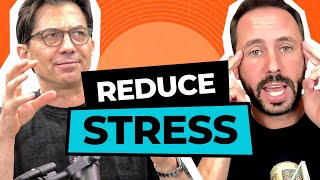
Alex Ortner teaches tapping, a technique where you tap nine meridian points while repeating a setup statement to release stress. His app has 3 million downloads, and users report a 41% average reduction in anxiety after a 9-minute session. He started tapping after entrepreneurial failures and now helps people build the habit through challenges and daily practice.
Chapters
How often are we just limited from really being ourselves? And so much of the work you do, the work that we do, is not to necessarily get people to become somebody different. It's to get them to become the full expression of who they are. To release the things, the traumas, the overwhelm, the stress, the anxiety that holds them back from being the amazing, beautiful person that they are.
Own your future. Because if you don't, someone else will. Hey everybody. Welcome back to the Own youn Future podcast. I am so excited for our guest today and you are going to be too. If you'd like to learn how to reduce anxiety, reduce stress, why be an entrepreneur? How to create a business that thrives with monthly charges, how to create an app, how to give back to the world, how to be the best entrepreneur on this journey, then you are not going to want to move. Our guest is Alex Ortner. He is the co founder and CMO of the Tapping Solution app, an app that's been downloaded over 3 million times. Over 17,000 reviews, close to a 5 star review and just the releasing anxiety tapping meditation has showed an average of a 41% decrease in anxiety in just nine minutes. I know it sounds too good to be true, but he's a dear friend and I know how him and his family obsess on changing lives. And it is a privilege and a pleasure to have Alex Ortner on the show today. What's up, Alex?
What's going on? Dean, I am very, very excited and very grateful to be here with you today. Not only just to get to spend time with you, but to be able to share what we do. And I really appreciate that. Nice introduction there.
Yeah. Well, you know, here's the cool part. I know you outside, just business outside, doing a podcast. I know your heart. I know how much you care. I've. I've seen you. I hope you don't mind me. Sharon's I've seen you with tears in your eyes, on your depth of caring for the people you serve. I'm sorry. I hope that doesn't embarrass you. I love that.
I love that I have a reputation of being a crier and I am totally okay with that. I wear my emotions on my sleeve. I am proud of it. And I'm proud of people being able to see my heart because I do.
Well, listen, I still cry at Disney movies with my kids. They know the parts I'm going to cry out. They feel me shaking and I can watch my kids lean forward on the couch and look over and go oh, my God, dad, are you crying again? But I've. I've watched you be transparent and have such a huge heart, but I've watched your depth of caring for the people you serve and here on this podcast. And if anybody follows me, they know when everybody asks me, what's the secret of selling? How do you do these big events and these huge launches? I said, you gotta start first with love for the person you're serving. I know that might sound a little too foo foo for some people, but I've never seen anybody excel at the highest level and stay there without that connection to serve, without that connection to care and deliver value. And you and your family do it at the highest level. Before we get into that, though, what inspired you? Because we have a lot of people watching that are starting their business, thinking of starting their business, or they're in that scale momentum and, you know, going from job, career, where you kind of do your thing without the spotlight on you, and then all of a sudden you're doing your own thing and it's more like, hey, there's nobody coming to save you. The spotlight's on you, right? It's you win based on you, you lose based on you. And in that first transition, as you know, Alex, it can be scary for people. So what was your drive to do your own thing?
You know, I'll tell you, I was really lucky that at a very young age, I was one of those people who got to go to a Tony Robbins seminar at age 20 years old. And I think, you know, way back then, I'm lucky. My dad was an ENT entrepreneur. I saw some of his struggles. Remember, he worked for a company, worked his butt off for years, and he got laid off at one point when they laid off about a third of his company. And I remember him going through those struggles of having that lack of control over his own financial future and seeing him go, you know what? I've got to take control of my own life. I want to become an entrepreneur. And I saw the ups and downs that he had as an entrepreneur and at a, at a young age, for me, when I was a teenager, he was listening to Tony Robbins tapes. And when I was about 20 years old, I was lucky enough to go to one of his events and this, that, you know, I was in college at the time, during a time when everyone's trying to figure out what, what's the internship I'm going to get, what job am I going to get, what industry am I going to go into? And I just always felt Like, I wanted to have control over my own destiny. And I was so incredibly lucky to go to Tony's unleash the Power within seminar in person when I was 20 years old. And that absolutely transformed my life. And from that moment on, I said, I'm never going to work for anybody. I want to work for myself, and I want to be able to do the work that he does to a certain degree. I think all of us, a lot of us that have been to his events have. I want to do what he does, but I'm not Tony Robbins, so how do I do this with my own way and just found my way there. And I was so inspired by watching him transform the lives of people in those events. And I said, I want to be able to make an income and I want to be able to have that type of impact that he had. And I wish I could say that my journey started right there with, with personal in this industry. But I went, you know, as many people do in. At a young age, I was worried about the finances, and I went into real estate investing because it was something that I also had an interest in. And spe 5 years doing that, and I enjoyed it. And at the same time, for me, found that there wasn't enough personal connection to people in that industry. And eventually, after five years, I had my whole world come crashing down in 2007 when the market crashed. And I had a choice to make at that time, and I said, do I want to do this, or I want to go back to something that I know is a passion of mine, which is being able to help people in this industry. And that's when I made a shift to go back into this and, and. But I, I. There isn't a day that goes by that I'm not grateful for that failure that I had over those five years. I could have made more money working at McDonald's for five years than I did in that business. But what I learned by those failures, I could never measure in dollars.
You know, before we go on to what's next, you know, in that moment of transition, the moment of post failure.
Yeah.
Because I've been there. Guilty. I'm raising my hand. For those of you listening, I can remember the voices of saying, hey, Alex, nice try. You gave it your all. But maybe this isn't cut out for you. Right. It's cut out for the other person, the person who dreams more, the person that can handle failure deeper and stronger. Maybe they're more. They have more risk tolerance than me. Maybe it's Time to go do something safe. I think sometimes when you see somebody, like where you guys are now, your app's doing amazing. You're impacting people all over the world. You're living in, you know, talking to you, I know you're living into your full potential. This summer, you took off more time than ever before to be with your kids and play golf and lean into you. When you see that now, you think, ah, his Runway was greased. It was easier for him to get there. But I'd love for you if you took yourself back to five years. You went all in on real estate. You know, you got amped up because of a Tony Robbins event. I can do my own thing. I'm in state. Yes, right. And you went, yes, into real estate. And then the outside world threw you a curveball that no one saw coming. At the depth that came in that transitionary period, did you have those same voices of, hey, maybe this isn't for you?
Yeah. And I can. I can still remember the most, the toughest part I had in that transition, where I remember when things were turning and things were going bad, we ended up going on a vacation in Argentina. I was actually born in Argentina, came to the US at four years old. And I remember being down there with very little money. Thankfully, things were very inexpensive. We actually went with my. With my brother's current girlfriend's father, who was paying for everything. And I thought, okay, well, things are going tough and maybe we can make our way out. And I remember getting these calls from a town in New Jersey where we had all these properties, and they were threatening legal action and telling us that we're. They're going to find us tens of thousands of dollars that we didn't have. And I just remember sitting there feeling so powerless and going, why am I doing this? You know, am I just not cut out for being an entrepreneur? Because I spent five years down this road. I've, you know, told everybody that I knew at that time how I was going to be successful in real estate. And I put myself out there and to just have this massive failure sitting on my shoulders and just questioning myself and. And at a deep level, who I. We tie so much of our identity around what we do, and when we tell people this is what we do, and then all of a sudden we go, well, I'm going to fail at this, and I'm going to have no money. And I. I, at that point had to stop paying the mortgage on my house and. And was considering going, oh, I got to move back into my parents house and we're, we're going. Well, I think my brother and my sister and all of us are going to have to move back into our parents house and try to make one mortgage payment work. And that's those moments of decision where we have to decide, well, what are we going to do? Are we just going to quit here or are we going to keep pushing forward and just find our way one day at a time? And it's just a, it's a day by day decision. Just like all the things we do in our lives are. It's a day by day decision. There's some days where you don't do them as well as you would like to. And there's other days where you go, I'm going to take this pain and I'm going to push it forward. I'm going to use it to push me forward, to become the best version of myself.
Yeah. God, you know, I know that story. But now that I'm sitting here realizing why the tapping solution is probably such an important part of your life, with having that angst and worry, you know what that felt like, you know what that desperation feels like. And sometimes you don't know how to get that, that angst, that worry out of your body. So with that, that's a great segue. Segue into why the tapping solution? Why'd you guys create that? And then I'd, I'd love to get in a little bit of how people listening could not only utilize it where they can find you all those things, but I'd love to know how you got into it because again, there are people listening right now in that transition. Transition. Maybe they didn't experience what you did for real estate. Maybe they did, but they're at that point where it's like, it's the moment when the resistance gets the highest, that you're the closest to the transformation. We know that, but you only know that when you're in it long enough. Right, Alex? When you're not.
Yes.
When this is new, you're like, oh, it's not. I don't think it's supposed to feel this way. I'm going to go back and I'm just going to urge you. No, no, no, don't go back. Because if you're feeling that you're closer than you could ever imagine. So why the tapping solution?
And you know, on that I would say I don't think there's any successful entrepreneur that I know that did not go through that same struggle where they wondered if they were going to completely fail and be on the street and they had to make those decisions. And I'll tell you, I wish I had a tool like tapping at the time to help me in that transition process to move along faster. Because, you know, for us, I know, you know that I work with my brother Nick and my sister Jessica, the three of us family business with the tapping solution. And when my brother first started looking into tapping, he was really looking, looking for solutions for a problem that he had. And his challenges were health related, he was having health related challenges, allergy challenges, and he was looking for solutions. And when he found this technique, and at the time, this was, you know, decades ago, before there was all the science and research there is behind it now, he just saw that person after person after person was talking about how much it was impacting their ability to release stress and release overwhelm and release anxiety and to release all these emotions that we feel on a daily basis. And when I was going through that absolute failure with my real estate investing business, that's what I felt. I felt self doubt, I felt anxiety, I felt stress, I felt overwhelmed. And those emotions can be crippling in those moments and they can keep you from taking any action. And really what we're looking to do in those moments when we feel like we can't go any further, when we feel like we're down on our luck that everything's down, we need to be able to move ourselves forward. And those emotions of stress, anxiety, overwhelm, fear, guilt, shame, they hold us from being ourselves and from moving forward. And I wish I had this technique known as tapping eft emotional freedom techniques, tapping to help me to release those emotions, to be able to be myself more quickly in any given moment.
So, so tell me a little bit then we'll lead into the tapping solution business. Yeah. But for those, you know, we'll, we'll have. Most of our listeners are listening on podcast.
Yeah.
Right. So we can't do a visual for most. Some people watch it on YouTube, but tens and tens of thousands of people be listening to this the week we, the day we, we launch it. How do you explain tapping to someone if, if they can't see you? Because I think that would really help. When I have those moments, I still tap in the way you taught me. Probably five years ago we were in, I think we were in Puerto Rico the first time we were doing a mastermind together and Alex was kind enough to share. And there's moments that it's my default that I go to and I'm like, God, I wish it needs to be in your life even more. So how would you describe it?
Sure, yeah. And the wonderful thing is we've been doing this for so long that we initially were teaching tapping without the video, right. We've done 15 annual Tapping World Summits, and the first 10 years of that was all audio because the video was not there at the time. So that's not a problem at all. So tapping is, is essentially, if, you know, if you've ever heard of acupuncture, it's putting needles on different parts of the body. Acupressure is actually tapping with our fingers lightly on specific meridian points of the body. And what that is doing when we are tapping on these specific points is it's send a calming signal to the amygdala of the brain. Now, the amygdala of the brain is the fight orf flight response. And I think all of us, the example I love to give when it comes to this is I think all of us have had the experience of having to speak in front of a group. You know, not, not many have had to speak on a big stage. But whenever you have to speak in front of somebody or a group and you sit there, you know, the day before and you practice and you practice and you practice and you know all your material and then you get up there or you get up in front of the class in fifth grade, and all of a sudden you just freeze and you can't remember anything, even though you know, you know the material. And that is that fight or flight system activating that amygdala, activating your brain. That literally keeps you from accessing the prefrontal cortex, which is the front part of the brain, which is where you access that information of that you need in order to make that presentation or whatever you're doing. And so when we actually tap on these specific meridian points of the body, it sends a calming signal to the amygdala, lets it know it's safe, that it can relax and it allows you to basically be yourself. Right? Because how often are we just limited from really being ourselves? And so much of the work you do, the work that we do, is not to necessarily get people to become somebody different. It's to get them to become the full expression of who they are, to release the things, the traumas, the overwhelm the stress, the anxiety that holds them back from being the amazing, beautiful person that they are. And that's what tapping allows us to do. And so in that process, when we're Doing the tapping. We're tapping on these specific points. There are nine points. And if it's okay with you, I'll actually, you know, explain them to you quickly. Let's do it for anybody listening, you know, really easily to do. So the first point is actually on the side of the hand. If you imagine a karate your karate chopping a board, it would be right on that side of the hand. So you just tap on that side of the hand. And that's called just the side of the hand, the karate shot point. And what we do when we're tapping on that point and is we have what we call a setup statement. And it goes something like this. Even though. And we state what we're actually feeling. Right? Because so often the challenges that we have is that we don't acknowledge what we're actually feeling. And so let's say that you, you know, have a busy day, work, you got lots of stuff going on, or you want to take on a big project, and you're just overwhelmed. And you know, Dean, if you know, overwhelm is an emotion that can just keep you stuck, got all this stuff going on, you just can't move forward because there's too much stuff racing through your mind. So let's just say we're tapping on the side of the hand. We go, even though I'm feeling all this overwhelmed. And then we say the rest of the statement. I acknowledge and accept what I'm feeling right now. Right. So even though when you state the problem, I acknowledge and accept what I'm feeling, just that part alone of stopping and pausing and acknowledging what we're feeling has a huge benefit in just allowing us to release it and move ourselves forward.
I got a question.
We start there on the side.
Let me ask you.
Yep.
So you're tapping on meridians and you're making a statement simultaneously. What I realize what it's done for me and Tony Robbins is part of your company plus loves what you guys do. Loves you and your brother and your sister and your.
And.
And still uses tapping to this day. And that's cool. By the way, you went to his event and now he's part of your company.
I think that's, believe me, it's a dream come true, full circle moments for us.
It also, what I feel, and maybe this is just me, is when it comes to meditating, we have the busy mind. How could you not in today's world? But focusing on the tapping is almost like focusing on your breath. When you're focusing on the tapping between the Tapping. And what's the statement that you might be saying in your head? I can find a place of meditation without the busyness. Is that a byproduct that other people experience too?
Absolutely. I'll tell you. One of the reasons why tapping is used so much in schools is when you try to get an 8 year old kid who's struggling with ADD or ADHD to sit still and meditate, that's a real challenge. But when you get them to actually do something physical, when they're actually moving their body and doing the tapping, it's a lot easier to engage in that. We actually have tapping meditations in our app that are fruit for preparing for meditation. So when you feel like you can't get your mind to calm down, you can't get yourself to be still, you can do the tapping to just calm yourself. Because the tapping process alone will just calm your brain, calm your body, and just bring you into a calmer state where you can be more of yourself.
Got it? No, I. Great. So you're, you're here. What's the next one?
Yep. So we're tapping on the side of the hand. We do that setup statement three times. So we go, even though I'm feeling all this stress and overwhelm, I acknowledge and accept what I'm feeling. Even though I'm feeling all this stress and overwhelm, I acknowledge what I'm feeling right now. And the next point is going to be on the eyebrow point. So it's right on the inside of the eyebrow. You just tap. You can do it with one hand, you can do it with the other hand. You can do with both hands. I recommend doing both hands right on the inside of the eyebrow. Right. And what we do as we go through these points, if we're doing the simple version of it, is that we just acknowledge, we continue to acknowledge what we're feeling and we can kind of talk through it. We can talk through the different aspects. One of the things I would recommend is just imagine you're talking to a friend, you know, a girlfriend, a friend, just about what you're feeling. And when you, if you're doing that, you'd be telling them, oh, I can't believe this happened at work. And I got so much going on. So you kind of almost complain about what's going on because you're acknowledging what you're feeling. So you start on that eyebrow point and you tap there just a few times. You go, all this overwhelm in my body. Then the next point is on the side of the eye right on the bone there. Not on the temple, but on the bone. All this stress in my body. Next point is going to be under the eye. All this stress and overwhelm in my body. Next point is going to be under the nose. All this stress and overwhelm in my body. Next one's going to be under the mouth, right in that crease and the chin point. I'm feeling all this overwhelm about all the things I've got going on right now. Next point is going to be on the collarbone point. Collarbone point is if you find your collarbone, you go down an inch and out an inch. You can really use all five fingers on each hand to just kind of tap around. You know, I have a kid's book and on the. In the kids book, we call this the gorilla thumb points because you're just kind of tapping like a gorilla. You know, kids love. In my kids book, there's all these animal points that make it fun for kids. But it's easy. If you just kind of use all five fingers on each hand and tap around, the next one's going to be under the arm. So it's about the bra line for women, about a hand width under the ar. You just tap there. It's generally easier to just do one side here. It can be a little bit tougher to do both sides at the same time because you're kind of giving yourself a hug. And then the last one's going to be on the top of the head. And there's lots of meridian points on the top of the head. You're just kind of tapping around all over the place. And so those are the different points you'd go through. Right. So you do that setup statement of even though I'm feeling all this stress and overwhelm or whatever the problem is. And then after you do that three times, you tap through the different points, just acknowledging what you're feeling. You can talk about what's going on. All this stress and overwhelm about work, you know, I can't believe my boss is acting like this. Go to the collarbone point. Oh, I'm just. I can't believe what's going on at home. There's just so much going on, you know, under the arm. And I just can't seem to get anything right. I'm just so overwhelmed with everything going on in my life, you know, top of the head. So you just go through that process, like that of acknowledging what you're feeling and tapping on these specific meridian points. And the points do matter. There's a number of studies that actually show where they actually have a group doing the these points versus sham points. And when you look at the research, the sham points do not work the same as the actual real points do. So the points do matter. So, you know, as you kind of brought up there, there's a lot of different things about tapping in terms of why it works. We've got. I'm actual tapping.
I'm sorry, I mean, interrupt you. I want to. So you're expressing it. Is there a solution statement or is it really. Is tapping better just because you're putting it out there? Because so many times we're putting it. We're just. I feel a lot of times in life the thing, we haven't resolved the thing or acknowledged the thing, we just decide to tuck it inside a box and put a lock on it. And it feels like tapping says, no, no, I feel this way. I acknowledge I'm stressed, I acknowledge I'm overwhelmed. How does it tie together at the end for another outcome?
Yep. No, I think that's a great question. And we do that process. And what you're bringing up is really important because I know a lot of people think about the law of attraction and they think, oh, I don't want to think negative thoughts. I don't want to think about the things that are going wrong. I don't want to complain about things because then I'm going to attract that into my life. But it's the opposite. What we're doing here is we're just acknowledgin for a small period of time what we're feeling, what's going on, and then we shift to the positive. Now whether you can go to those positive statements right away really depends on how you're feeling. If you're, you know, one of the things we do actually always, which I didn't mention here, is before we tap, we measure on a scale of 0 to 10. So let's say you're feeling overwhelmed and you just feel into your body and you go, I'm at a level nine right now. I'm just so overwhelmed I don't know what to think. If you're at a level nine, it's going to be really difficult to come up with positive statements and have them feel real. Or, for example, if you're feeling angry at a level 10, try telling yourself to calm down.
Right.
Or try having somebody else tell you to calm down. You'd be like, no way, not a chance. Right. And so what we do is we, we do the tapping where we're acknowledging what we're feeling, what's going on, what. What the truth is of what's actually going on. And once we get down to maybe a level 5 or so, what tends to happen naturally is you start to look at things differently, you start to reframe things in your mind.
Yeah.
You start to say things differently and you start to give yourself positive affirmations about what's going on. So if I were to continue that process, let's say I just, on the first round of tapping on, being totally overwhelmed, I could continue on. And I go, eyebrow point, go, you know what? It's not as bad as I think. And go to the side of the eye and go, you know, I'm doing a good job with everything that's going on right now. And go under the eye and go, you know, I'm. I'm doing well with my business and moving things forward under the nose. And my kids are doing pretty well right now. Chin point. You know, I know I've got the resources to make this.
Yeah.
To find the solutions here.
Yeah.
And we just kind of go through the process and we find the solutions in. Part of the reason why this works is, as I mentioned, the beginning is that when that amygdala is triggered in the blood brain, you can't access the parts of your brain where you're going to become that better version of yourself. You're not going to find the solutions easily. I don't know anybody who had a level 10 who. They're angry that you're going to be able to find a solution. This is why we have some of our best solutions in the shower, when we're nice and calm and relaxed and we're thinking like, oh, I had this idea and this idea. And what we're doing with the tapping here is we're. We're acknowledging what we're feeling, lowering all these negative emotions that hold us back, and allowing ourselves to move forward, to become the better version of ourselves.
God, I love it. I love it. And I love that journey as we're doing this interview. You know, here's the cool part. I get to hang out with people I respect and admire and I'm friends with and reminds me to bring this back into my life more. There's. I use tapping when I'm dealing with something that's heavier than usual. But through the years, I've, you know, it's threshold of control. Right. Like, I've been able to deal. I can deal with a lot more now with you know, 500 employees I'm responsible for between the two or three companies that I, that I manage or run or help with run and. And new businesses and new companies. And when I find a threshold, I'll go, oh, I better, better tap. But as I'm listening to you today, it's like, I need to do this every day. Like, what a great meditation. I love the fact of putting it out there. It probably comes and like, yeah, it's out there. I said it. And then bringing it back in in those. In those moments, it allows you to find that. That peace. Because we make better decisions. Right. As parents, how many of you have ever made a great decision when you're angry? Like, it's usually you're back up in the bedroom an hour later and going, hey, what you did was wrong. But the way your dad handled it, completely wrong. Sorry about that one. We've all been there. Right? So I love that. And I'm gonna encourage all of you to test it, tell me what the app does. And I want to get into. Not only do I want to get into the app of why there's so many people using it, why so many people love, love it. I'd also love to pick your brain a little bit on the marketing of the app.
Love to.
And because it's not an easy thing to market. Like, when I think of, I'm like, literally, if you said to me, you know, I'm going to show you how to tap on your forehead, under your nose, by your ears, and it's going to change your life. It's like a lot of people immediately like, yeah, yeah, whatever. Right. Like, you got to get past that barrier so you have a harder job of marketing than most. So I'd love to pick your brain. And then once people are in, in what's the greatest way to keep them? Because if you get. If they utilize it, my bet is your best clients. Just like my membership site, my best clients are the ones that actually use the stuff we give them. When they use it, they stay forever. Right. So I'd love to ask those questions, but maybe a high overview what the app does.
Sure. Let me first start off because you talk about having a morning practice. And let me just start off by saying that, you know, first, for you and me who love Tony Robbins, want the things we love about the app is there's a morning tapping meditation with Tony Robbins and an evening tapping meditation for Tony Robbins. For those like me and you, who are so anchored to his voice in listening to him over for over 20 years. It is such an amazing way to start your day. So if you're saying to yourself, you need to do more tapping, Dean, just go find that meditation, that morning meditation with Tony. I know he's so beautiful in the language he uses there to guide you in that process. So let me, let me. What was, what was your question there again in terms of where we're going?
There it start is the app. So I, I join the app. How does that, how does it come into my life? And I'm asking for two reasons. Not only I hope people go check out your app, you could show us how to find it later. I'm sure they can. They. But secondly, those want to create an app or want to create a membership site. It'd be really great to see how you thought through the utilization of that.
Yeah, absolutely. So I would say, you know, first off, what, what the app is, right. So the app is a combination of tapping and meditation. You mentioned there was a particular tapping meditation that's been our most popular one on releasing anxiety. Nine minute tapping meditation where you literally open up the app, it shows you where to tap, you tap along on those points and we measure. So in the beginning of a tapping meditation, you measure 0 to 10 and then at the end you measure 0 to 10 where you are. And from all the data we have, there's a 41% reduction in anxiety in nine minutes. And that is in the app. There's study after study after study that also show just how effective tapping is. So it's a technique that works so, so well. And the reason why we decided to make an app and as you know, I mean, we've got 10 different books, two New York Times best selling books, we have a membership, we have different programs. But the reason why we wanted to create an app is because like all of the information products that there are in the world, it's how do you get people to use them, Right? How many times have you ever bought a program and then never opened it up or never listened to it, Whether it's a marketing program or a personal growth program or a book that you bought that you didn't read, Right? And so our thought process was, you know, how driven we are on wanting to help people is to say if it's on their phone and all they gotta do is click that button and open it up, how much more likely are they to actually use that app? And the great thing about an app is, is that ease of use. But when you talk about developing an app and from a business model. It's the, the amount of it does take a lot of effort. I'm not going to pretend like it's an easy thing. I think it's getting easier and easier as technology is improving and AI is coming into it with coding and all sorts of things like that. But it's, it's that meticulous process of going, knowing how can I best serve people and make it as easy as possible for them to use whatever I'm teaching, whatever information I'm trying to share to get them to transform their life. And I think an app is an incredibly powerful thing to be able to do that.
Yeah, no, I love that. And it's at their fingertips and it gives you a pattern and it gets, you can have consistency and congruency. Let's talk about the marketing of something that's not common. Right? That's a, that's a big hurdle. So what are some marketing techniques you can share with anybody who says, yeah, my, my thing's different too. But if people use that, if they, if they ate the way I tell them to eat, their life, if they found intimacy in the relationship in this unique way, if they, you know, there's always those outliers that someday become the norm, but before they come the norm, what have you guys that you've done an amazing job of, of making and tapping more mainstream? I'd love to hear some insights on that.
You know, the first thing I'd say, and I've, you know, we get to hang out generally once a year or so with an amazing group of people, and I always like to joke around going, well, if anybody thinks they, they have a tough job with their marketing, try marketing tapping. Try convincing people to tap on their face in different parts of their body and tell them it's going to change your life. And luckily, nowadays we have so much science and research. We have videos from people like Tony and different celebrities that use it and all that great stuff. But 15 years ago, when nobody knew what it was and they were thinking we were crazy, we had to show people how to use this. And the number one thing that has helped us is that it works, is that it gets results and person after person after person gets results from using the tapping. And so what I would say for anybody out there who's, who wants to market a product, wants to put themselves out there, I think it really is so much about showing up honestly and authentically as yourself to have honest conversations with people, to share the benefits of what you're doing. I think that over the years you know, my brother and I joke around saying we're not amazing marketers, but what we are good at is we've always been great at writing emails and talking to people authentically and recognizing where people are with the challenges that they're currently feeling and offering them a solution from the heart from us 100% of the time.
Yeah, I know that with you guys and your family. And when people ask me, I think they want a sexier answer, then care more.
Yeah, deliver more.
Make sure your product works. If they utilize it, they get such great benefit, they get such great outcome, they can't help but to talk about it, share it. And sometimes that's not quantifiable. People like, yeah, yeah, but what is the thing? It's like, well, that really is the thing. Let me ask you on the other side. With an app, you want people to stay as long as possible. And we know if someone utilizes it and they get results, they're going to stay. Stay. What are some of the things you learn to help someone stay longer in a membership longer in an app to help people get the results they want?
Yeah. I mean, first off, I would say that if you want to get somebody to stay longer, you have to get them to stay in the first place. Because the toughest part, definitely with an app, and I've, and I've run a business where we're selling online programs and books and things like that, but especially with an app, that day one experience is more important than anything else possible. And if you can't keep them on day one, if you don't have, for us, with an app, an onboarding process where you're educating and getting people to actually take a step forward. Right. Talking about little micro steps that we get every single time to take a little bit of action. If you can't get them to take action on day one, you don't have a chance of getting them to take action on day two, day 30, six months later. So the first place to get them to take action is on day one and to be really clear and meticulous about that process from your, from your initial sales process of selling something to then when they actually buy the product that you have and making it really clear and understandable for them how they use it and making those little experiences simpler. I mean, I've gone through your programs and I'm always amazed with how you deliver them and the quality of the programs. I mean, you put such a much effort. I don't think there's anybody in the industry that puts as much effort into delivering quality programs than you do.
Well, thank you for saying that, but I feel the same. That's why it's easy to have these conversations and the millions of or the hundreds of conversations you and I have had when the camera's off. And I think that's so important. I really want you to hear that. You know, I know when it comes to memberships, when it comes to an app, we, we can have so much to give them someone that we want them to see everything. We want them to have everything. And one thing I want to share, and I think Alex will confirm this, is if you don't know where to start. We've been talking about Tony. Tony always says, one, two, three, many. And if they get to the many part, they're out. So someone says, I give them so much in my membership, I don't know why they don't stay. It's because they come in and they don't know where to start. They didn't have a great experience day one. It's like going to the restaurant, right? And you walk in the restaurant and there's a thousand things to eat. If you don't say, hey, this is the first place to start. Here's your appetizer. The bread's really good. The olive oil is amazing. Like, you want to, you want to get people to take the first step, where to sit, what to eat, what to eat next and what to do. Sometimes you leave somebody with a million choices, they dabble with a few foods and then they leave. And that's, that might be a silly analogy, but you got to get them to digest what you, you have. You got to give them.
You know what, if I can share another analogy that I love is that, you know, for all of us who have been around long enough to have watched movies on TV, right, 20 years ago, you'd find some amazing movie you like on TV and you'd stop and go, oh, this movie's on tv. And you'd watch the whole thing. You wouldn't complain. Nowadays you open up Apple or whatever app you're using and you sit there for 20 minutes trying to pick a movie of what you're going to watch with your family. Or then you end up watching nothing because there's too much choice.
So true. I could watch my, my 14 year old son this weekend, went on Netflix and said, dad, let's do a movie. Forty minutes later he's like, dad, let's skip a movie. I don't know what to watch, right? I was like, wow, wow. What a. What a perfect analogy, Alex. So I would want to share with everybody, remind yourself you can deliver everything you want, but you got to do it in a systematic way where they digest and they start utilizing. If someone comes into Alex's app, you go, do the Tony Robbins morning meditation app, and tomorrow morning, you feel better. The day you get it, you feel better that day. Then you're like, what else is in this app? Oh, my God. But if you're like, hey, you got 20 different meditations, pick one. Ah, not sure what to do. I love that.
And you know what? If I can share another. Another really great thing that we've done to get people involved is challenges. You know, we have a number of different challenges. And what I love about challenges and keeping them is that the goal is to get them to do one thing once a day for a certain amount of days to build a habit. We've got challenges. Like, my favorite one is actually called the you are enough challenge, where they listen to one tapping meditation eight days in a row. And I know sometimes people are like, what? They'll comment going, it's the same meditation on day two, same one on day three. Yeah, do this one eight days in a row. Because the repetition of that will have a dramatic change. And we have people on day seven, day eight, that, you know, they're commenting going, oh, I get it. I get why you guys were saying to do the same one eight days in a row, to not only really ingrain what we're trying to get across in that process, but also to just create that habit, that repetition, that muscle memory, to be able to continue to do it going forward.
Yeah, so true. I want to shift gears here a little bit. I read a stat this weekend that right now there's more people. There's more people on in America than ever before, but there's more people right now starting their own business than ever before in the history of American America. Well, simultaneously not the same day. But I know that anxiety stress anti anxiety medication is at the highest it's ever been in history. So the two can really wreak havoc on each other. I want to start my own thing. I don't want to be stuck in this thing. That doesn't serve my heart. It might give me some money, but it doesn't serve my passion or my purpose. Life is going by too quick. You know, Covid gave us a lot of negative. It gave some gifts, too. It made some people really realize, hey, I'm in the wrong thing. It's time for me. I need Time for me. So we got this desire to do your own thing, to have more control, more freedom, to have a part of living into your full potential simultaneously. Worry, angst, stress is at an all time high. Why do you think? Let me reframe that. How can people stay on the path? Alex? I know I started this in the beginning, but there are so many people dying to do it, but I'm not sure they have the wherewithal that like it doesn't happen quick. So I think the stress is, I'm trying, I want to do my own thing. They try, they, they go six inches when they need to go a foot and then they resort back, then they regret the life they have, then they try again and they're dabbling. How, how have you found in your life to commit, to not be overwhelmed and stay on the path?
Well, first off, I would say that understand, understand that for anybody who's feeling that way, that stress, that anxiety that overwhelmed, that, that is normal, that there's not something wrong with you. I think one of the things that we need to understand more about ourselves is that there's nothing wrong with us. It's not, you know, with their, I mentioned the you are enough challenge because so many of us have that challenge of not feeling like we're enough. And there isn't a single person that doesn't doubt themselves, who doesn't limit themselves. And I think that we are currently in a world where our brain, I mean I saw about tapping and what it does to the brain. Our brain is not equipped for the busyness of society today where you are constantly getting information everywhere. So you're trying to start a business, but then you're also going on an app and checking out the news and reading your emails and getting a million emails from your school about what's going on with your kids and all this stuff. And it's overwhelming. That's the reality of the world that we live in. And if you're not utilizing tools and strategies like tapping to combat this influx of busyness and information, it's going to overwhelm you. It's going to be a wave that washes past you and knocks you out over. And so when we talk about, you know, what are the things that we do to combat that. Having a morning, for me, having a morning process, morning routine where I, I connect, I literally, I do it in my planner every single day. I ask myself, what am I feeling? Because if you go into your day not acknowledging the stress, you overwhelm the anxiety. What's going on in your world, if you're like me and you have. Sometimes I laugh about morning routines because I go tell a parent to spend 90 minutes in the morning meditating and then doing all this kind of. I go, oh, it's not always easy, right? And so. But if you don't take the time, time to recognize what you're feeling, calm your brain and your body, to let yourself know that you're safe, you're starting off at a limitation, right? You're limiting yourself and your own ability with your own brain and your body, so stopping to acknowledge what you're feeling. And then I also go through a process where I go, how am I doubting myself? Right? How am I doubting myself? And am I worried about what other people are going to think? Am I worried about how other people are going to doubt me? Because we spend way too much in our society in this Instagram social media world worrying about what other people are going to think. And so we don't move ourselves forward. And so we either have these big anxieties about putting ourselves out there because we're going to be judged and people are going to laugh at us and all this kind of stuff, or we're judging ourselves, thinking we're not, I'm not enough. Who do I think I am? I'm not smart enough. I'm not good enough. So by, by first calming ourselves down in the morning, doing it, having a tapping process, and then just thinking to ourselves, going, these are the things I want to do today, but am I worried about what somebody else is going to say or think? Am I worried that I'm not good enough? And when we stop and acknowledge those things, we can, we can tap on them, we can find a different way to look at them, we can build in a new belief for ourselves. These things for me are so critically important to have that 10 to 20 minute mental and emotional reset in the morning to set ourselves up for success. Because it's not about the number of hours you work, it's about the quality of the work that you're doing and how you're bringing your full energy and attention to your work and what you're putting out of the world. I've had days, I think all of us have had days as entrepreneurs where we work three hours in a day and we're like, holy cow, I did such amazing things. And we have other days where we work 10 hours and we feel like we failed that day, like we just didn't do enough. And that's because we weren't we weren't fully present in the work that we were doing and perhaps we weren't actually doing the work that matters for us.
Ah, so good. It's like a pre game, right? It's you, you want to be in the right state to address the day. I've said for years I want to face the day in an offensive mindset. Mindset, not defensive. Right, defensive. You're just waiting for things to go wrong, waiting for the bad email, waiting for the marketing not to work. And you're there fixing it and we can get stuck in that fixing mindset rather than the innovation creation and looking into who we could become. You know, I love how you share this and I know how much you care about your family and your children and your beautiful wife. How are you passing this legacy down to them? As the father of the A16, soon to be 17 and 14, soon to be 15 and a three year old and a one year old. It's not always the easiest to hand off. I, I, I watch it happening with my children and I'm so blessed in so many ways. But you also hope there's enough in there you wish the things you wish somebody would have downloaded in you. So how, how about in your family? How are you handing this legacy off?
Well, two things. Number one, I'm going to do my best not to cry during this point. You joked in the beginning, but if you start talking about my family, family, I'm going to start to get emotional about it because I care about them so much. But I've had this question a lot in my mind lately. You know, I've got a 10, 12 and 14 year old. I feel like when we hang out, my favorite topic is always to talk about our families and about parenting because it's what I care about first in the world. Number one, I'm a dad. Number two is everything else right. But number one is I'm a dad. You know, I have very consciously chosen to give my kids challenges. I, you know, could put them in private school and I, I actually purposely put them in public school and we've got good public school systems here in Newtown, Connecticut. And I love it when they're facing challenges. It's one of the reasons I love sports with my kids. I can tell you both of my kids are having challenges with sports and their soccer teams and what's going on there. And these challenges I think are amazing because those are the moments where as parents we can kind of guide them through those challenges and guide them in the mindset of how they can shift things. But above all else, the number one thing even, no matter how much we try to influence our kids, the number way we influence them is through our own actions. It's how we show up as parents. And, and with tapping. For example, whenever parents go, oh, I've got my child and he's struggling with distress or anxiety and all this kind of stuff, I go, great. The first thing we're going to do is we're going to work together. I want to work with a parent first. Right? It's the, you know, you're on a plane, put the mask on yourself first before you put it on your child. First thing you want to do as a parent is to go, well, if I, how do I get my kid to be more emotionally regulated, to be more balanced, to be more confident? Work on yourself. I can't tell you the number of beautiful stories. I've got some that we have videos on where we documented a person going, oh, you know what? I started doing the tapping and I've changed my life and it's crazy, but my kid is doing so much better in school. There's so much more confidence.
Isn't that true?
They're showing up in all these different ways because you showed up better as a parent. And I know that puts, sometimes I can put pressure on ourselves. And what I would say is go, look, none of us are perfect. If you're, if you're going, well, my kid isn't the way it is, that means I'm messing up. None of us are perfect. But all we can do is make decisions in this moment to show up better for our kids. We can show up, we can choose to do. If you're not willing to do the emotional work to grow yourself for you, do it for your kids. Become the best version of yourself. Become that entrepreneur if you want to have, have them build their confidence. Confidence. You show up and do that video that you're scared to do. You show up and do that podcast that you're scared to do. You show up in bigger ways to do things so that they're willing to do it themselves.
God, so true. You know, I, I, when I, I've shared this before, but when I, when I married my wife Lisa, who you know very well, I remember thinking to myself, I challenged myself and I said, I want to be the type of man in this relationship. I was married before, and I would say I'm at least 50% responsible for that not working out. She's a dear friend now. We co parent extremely well. But I remember Thinking to myself, there's a lot of invisible. There's a lot that no one can see. But I want to. I want to be in a relationship that. If my wife had a way to have a hidden camera on me for a week straight and she watched the entire thing, when she got done, she'd have tears in her eyes and tell me she loves me more. And I've been living by that since the day I met her. And then I remember, about a year into it, I'm like, it's not the same with my kids. I feel the same way about my kids. You and I, we go to talk about business, then we geek out on kid talk for hours, right?
Yep, absolutely.
But my. Our kids don't become who we tell them to be. They become who we are. And even in the invisible, when they're not seeing the things we do in the invisible, invisible still come out in mannerisms, in actions, in the way you treat other people. And I remember saying, a year, I'm like, I want to make it so. If my kids had a video on me and they were 40 years old, looking back at this video and go, my dad was a good man in front of us and when no one was watching. So I have to thank my wife and my children for making me a better man, because I want to be the same man in the invisible as I am in the visible. And I see that with my kids. The only reason I'm anchoring this in, not everybody. Everybody listening has kids. But you're so right. When I'm in an off mood, I can see it immediately in my children. When I'm confident, when I take action, when I do something risky, when I do something big and I share it with them, I know it pushes them to want to take action, to be risky, to more confident when we do challenges. And I challenge myself to certain things. I'm in the middle of a health challenge for myself to take my health to another level. I went out in the gym two nights ago, and both my kids were out in the gym working out without me going, hey, go, get out in the gym. Like, love it. Wow, this is so consistent. And I think, what. What a great lesson here as we come towards the end of this podcast, is being a mirror. You know, the reflection we give can allow us to take on that responsibility. If we want to be better to our family, better to the ones we love, better to those that we do business, business with, then we can look in the mirror and start there. And I love the opportunity for people to have tapping as a solution. How. What's the best way for people to find you, Alex?
I mean, there's a couple different ways. You can go into the App Store or to Google Play just to download the app, right? You can go to App Store and download it. And I recommend read all you mentioned, you know, 17,000 reviews. Read those reviews. You'll see just how powerful tapping is in changing people's lives. So you can go to the, to the Google Play or the App Store. But the other thing I want to do is, you know, if you go into there this, there's a lot of free things in the app. There's about 50 different tapping meditations in the app. But of course there's a paid version like so many different apps. Of course we want to have to make money to make these things exist in the world, right? And so if you go into the app, if you're on your Apple device, it's normally you can do a free trial and it's normally $95 in there to do it. But what I want to do, because, for starters, I just love you, Dean. Love Tony. I'm so grateful for Tony and everything he's done for the, for me and how he's impacted our lives. If you want to get a discount and still do the free trial and get that premium version for half off that regular price, you can go to the tappingsolution.com forward slash, own your future. So the tapping, tapping is spelled T A P P I N G. So it's a thetappingsolution.com own your future. Go check out that page. You want to hear what Tony think about tapping? We got a video on there you can check out. But above all else, whether you want to do the free trial or not, please go download the app. Go do the free versions. There's so much good stuff in there that you can get. If there's one thing that de knows about us that we've been doing for so long is, look, we have the paid stuff to make it work, so we can help everybody. But what I care most about is that people go into the app, use the free stuff, feel how it impacts your life, and allow it to change your life.
Alex, thank you so much. You know, for those you listening right now, you know that we hardly ever promote anything, but we promote the things that are in our lives. We promote the people that have changed our lives. Alex and his brother and his whole family have something amazing here. And I would encourage you, if you're still listening, you know that it's it could be an amazing tool in your toolbox on this journey of going from where you are to where you want to be. So go to the URL. We'll put it in the show notes below. Below. Take advantage of that opportunity, anchor it in and challenge yourself to utilizing Grab one of the challenges that are in there. Challenge yourself to do it every day for the next 30 days and watch the difference. Tony wouldn't support it. I wouldn't support it if it's not amazing. Alex, thank you for an amazing interview. Appreciate you so much. Keep up the good work. I look forward to seeing you on our once a year trip and catching up on family. Any last words before we go?
No, just thank you so much Dean. I just so appreciate you our friendship. Please say hi to Lisa for me and your kids. Give them a big hug. I just know how much that matters to you and I always love hearing about your kids doing well. Really, nothing makes me happier in the world than to hear somebody's kids doing well. So thank you so much.
Alex. You're amazing. Everyone else, thank you for being a part of the Own your Future podcast. If you know someone who needs to listen to this, which I'm sure you do, send them a link right now. Make sure you subscribe, leave us a comment and we'll see you next week.
Weekend.









