The SECRET to Winning when underestimated | How to Succeed in Life
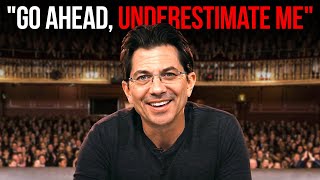
Dean Graziosi (speaker) argues that being underestimated is a strategic advantage. He gives concrete examples and tactics — e.g., dressing down, listening in negotiations to let others reveal fears and desires, then using that intel to close deals — and ties this underdog mindset to the need for innovation and immediate cash‑flow when starting companies with little or no external funding. He emphasizes "quiet confidence," creativity, and reframing scarcity into fuel for action.
Chapters
I know you might be facing stuff that I don't even know about. I get that. But here's what I know. Did you ever have a headache and you go online and you Google for what could this headache be? And by the time you're done, you feel like you got a tumor and you got three months to live? Right. We find what we were looking for. I. At this phase of my life, I love being underestimated more than anything. I don't know if you guys have known the last couple years. All I wear is T shirts, by the way. This isn't one T shirt. I have, like 20 of these, and I have, like, five colors and 20 of these shirts. I used to. I feel blessed. I had a partner that we did really great business together, real estate and a whole bunch of other stuff. And he was a watch person, and he bought me some of the most amazing watches on the planet. Watches. I mean, I had a watch on yesterday. It was almost $50,000 or $42,000, something crazy. I would never spend that for a watch, even If I had 17 gazillion dollars. But I had on yesterday. It was the first time I had a watch on in almost two years. I'm in this place in my life where I want to be underestimated. It makes life easier because it empowers me. I found a way. I know some people teach, you know, perfect suit, dress sharp, pointy shoes, shiny. I own all that stuff. And maybe in six months from now, a year, I'll go through that phase. But where I'm at right now is I like to be underestimated because they never see me coming. I've had big multimillion dollar companies with board of directors and CEOs. Look at my. You know, I run my companies. I own my companies, have about 13 companies. I run them. And I know for a fact some of them are like, that they won't get to us because we're a big conglomerate, and I love that. And they never see me coming. And I drive right past them like I have nitrous and they're dragging concrete blocks behind their car. I love that. But let me give you an example. I want to give you this, and I want to give you as many examples as I can today because I want you to frame this in your whole life. Like, I want you to think about, well, they don't think I can do it. Instead of, oh, they don't think I can. I'm nervous about saying what's on my mind. I'm nervous about Asking the partnership, no, if they don't think you can use that as fuel. I love when people look at me like, who's this guy? Does he know? Again, framework. Flip the framework. So, example, conference room. Now, I could share an exact scenario here. I wrote down conference room story that I want to share with you. But let's just think about this. In every single negotiation, I go into everything. You know what I love more than anything? I love when everybody's dressed in suits and dressed sharp. And I love people dress nice. I love to dress nice when I go out. But if I'm going into a really important meeting, the more important the meeting. I just closed a 14 million dollar deal, I don't know, six months ago. And I wore this T shirt, not this exact one, but one just like it. A pair of jeans and some Nikes, literally at the deal on purpose. But I want to tell you, so here's what I like. I want you to visualize a conference room. I close a lot of deals in this phase of my life. A lot of partnerships. I'm buying into a couple companies right now. And I love negotiating. I love to make it a win win for everybody. Never looking to take advantage of anybody ever. But here's what I know. I love going in and everybody's dressed to the nines. Couple attorneys, right? Couple CEO, Everybody's dressed nice. I like walking in like this because I know at first, like you get the memo is when you're supposed to dress up. And then secondly, I like the fact that I don't wear a watch. That helps me in my loving being underestimated. And then third, I never talk when I first go in. I introduce myself and I sit and I let especially listen. I'm not. I'm a dude. I'm a guy. I love being. I have testosterone, I'm a driver. I'm enthusiastic. I love closing deals. I love winning. As long as it's a win for everybody. But what I've come to realize is most men especially want to come in and just vomit up everything they're all about and what they want. Hey, listen, this deal, I want to tell you, I'm going to go first. We've been doing this for 14 years. We've compiled this together and this is what I want. This is what we can do. We can take the numbers and I just sit and listen and just sit and listen. And I even get to the point where it's uncomfortable, especially if someone's trying to sell me or I want to buy from them. If I get to the point where I don't ask many questions or don't talk. I can feel they're underestimating me. Like in their head, they're doing one of two things. They're like, everybody said this guy was smart. He shows up in a T shirt and he hasn't said two words. But what happens is that uncomfortableness or that underestimating you? What happens is people just continue to talk. And here's what I know. A couple strategic questions. Like, so I don't understand, if we did this deal, what would that look like in a year from now? That's like maybe I say that 15 minutes in OR, and if this was a complete win and we were celebrating a year from now, what do you think that would look like? Like the silly questions, like the old Columbo questions. You ever watch that old show Columbo on tv? My whole point is what will happen is because they underestimate me, because they're uncomfortable, because I haven't said much, or maybe they think I'm an idiot. They start to talk about the things that, that I'm using as my fuel. They start telling you what their desires are, what their fears are. And people get say, you know, if I don't close this, I'm not going to get the promotion. If we don't close this deal, we really don't have the cash flow to get to the next level. If I don't close this deal and people just talk and talk and talk and then I come in at the end and being underestimated all of a sudden flips when I close the deal in about five minutes when I go, because I accumulate all this. I know your fears, I know your worries, I know your desires, I know your dreams. And the cool part is I don't use it unfairly. I want to make fair deals for everybody, but else is being unfair and I need to get them where they are. I will win every time because I walked in and I was underestimated and I listened and I listened and I accumulated. And when I regurgitate it back, it's a win. I want you to think about that. Where are you underestimated? Where do they not see you coming? Where could you jump in a company, jump in a business, ramp up your real estate, do things. Don't, don't feel like. Here's the thing. I hate when people say what they're going to do. I love when they just show me be that person that just shows people have that. I love the word quiet confidence. Like you don't have to wear the. I mean, if you love it, that's great, but you don't have to wear the Rolex and drive the Rolls Royce to be successful. Success could mean anything you want. You got 2 million bucks in the bank or whatever that number is, or you get to retire your wife or help your parents out or be with your kids more. That's success. Let that fuel this again. Why am I going so deep on this? Because especially in the last year of being around so many people around the world, I know we all feel like an underdog, and I did my whole life, and now I look back and I thank God I was the underdog. I do. I thank God that things didn't go my way because I had to find new ways. I had to transform those feelings that were anchors and into gasoline. Do you feel this? Do you see the shift? Do you see how you could change the framework? Let me know if you're liking this stuff. What's up, Liberio? Deborah Wallace, Ken, Irene, Sally Francis, everybody. Deborah. Good to have you guys here. Okay, number three, innovation is a must. Underdog advantage. Number three, innovation. Think about that. You see, I don't know how to. I don't know how to start a company that's not making money and raise a whole bunch of capital and use other people's money to see if you make it work. Now, I'm not knocking that at all. It's because I'm limited on my knowledge on that. That's it. I'm just not smart enough to know how to do it. And I have so many friends that are in Silicon Valley, and everybody's fighting to come up with the next thing, the next widget, the next app, the next Facebook, the next Instagram. They're fighting for that. And a lot of these companies will go raise 20, 30, 50 million. Some of them raise 400 million before they've made a dollar, before they've made a penny. And then I look at, you know, if now, again, I'm not knocking this. I don't want to seem like I'm bitter. I have so many successful friends that their families were successful and they just carried it on. That's what I want with my kids. I just want my kids. I don't want to have to make my kids suffer. I want to teach them the right value so they take on what I've done and start off where I left off, right? But just think about if everything went smooth, you weren't an underdog. Nothing went wrong in your Childhood, perfect parents, perfect income, perfect location. Then you went to the perfect college. Then when you got out of the perfect college, you had the money to start a company. I've watched this happen. Sometimes when you have money to start a company, you're setting yourself up for failure because you don't need it to cash flow. So I'm going to use this one example, this one thought process is every company I've ever started. I sold firewood in high school, fixed wrecked cars out of high school, fixed wrecked cars for business, fixed wrecked cars to sell. And then I started buying run down houses and remodeling them and putting apartments in them. Then I started subdividing land and building houses. Then I went in the education business and then the book business and the live event business. And then, you know, sharing now in masterminds and trainings like this, right? As I went through all those companies, never once in any of them did anyone ever give me money to start. So guess what? I had to be unfair advantage number three. I had to be innovative. I had to create cash flow, profitable companies. So now what you could say is, oh man, I have nobody in my family that's got money. I have nobody that's got faith in me to lend me money. I can't get any money from the bank, damn it, I can't go in business. Or you can say, hmm, I have no money. Banks won't give me money. I have no friends that will lend it to me, no partners. I gotta be innovative. I gotta find ways to cash flow right away. My company's cash flow two weeks, three weeks into the company because I have to. That's how I grow everything. But that started because I was a broke kid with nothing. Now I know no other way. I'm going to launch two new companies, you'll see over the next six months, going to blow your mind. One partner with a great dude in the fitness world. Something else that I gotta wait and tell you when it's done. But both of those companies, I could fund both of them with millions of dollars. Just being honest. I'm not. I'm using the same model, that same innovativeness, that's the word, being innovative, coming up with unique ways to say, no, no, I'm not one of those guys that's gonna run a company for five years and get a great evaluation, help themselves. I don't know how to do that. I was an underdog with nothing and I had to use that to my advantage. And that advantage turned it into I had to find a Way to be innovative. I keep using that word to be cash flow right away or I would be broke. So now take that underdog disadvantage and make it your underdog advantage. You don't have money. And if you don't think you can make something work without using money, then Google people that have Google. Richard Branson, Tony Robbins, me. So many successful people started with nothing. I know you might be facing stuff that I don't even know about. I get that, but here's what I know. Did you ever have a headache and you go online and you Google for what could this headache be? And by the time you're done, you feel like you got a tumor and you got three months to live? Right. We find what we were looking for. If you went online with a headache and wanted to search for someone that said, ah, you just didn't have enough water, drink a glass, you'll be fine, you can find that in two minutes. But our brains want to go towards the tumor and what could be worst case scenario. So we do that in our own lives. Like, I don't have any money. My friend tried with no money, it didn't work. You're just searching for what went wrong. Your subconscious is looking for security so you can feel safe about your inaction. Get disturbed, get uncomfortable, go online and Google and find successful people who started with nothing, that had massive fear, that were scared. And all of a sudden you'll see all these people, all these millionaires, all these great, hugely successful people that started with nothing. And all of a sudden you start building momentum and then you say, I'm going to create innovation here, I'm going to create cash flow, we're talking about business. But could that be the same in every area of your life? Of course it can. So think of the unfair advantage we have of being an underdog because we get to be creative.









