Why Calling It A.I. Is Really A Lie. (It’s So Much More Than That)
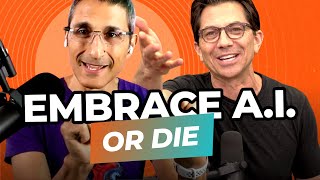
Dean Graziosi interviews Eben Pagan about building a future and using generative AI. Pagan argues calling it AI is misleading and coins the term "intelligy" for digital intelligence. He warns the technology hallucinates confidently and works best as an augment when you craft prompts carefully.
Questions this video answers
ebensevent.com
Wednesday the 28th at 10:30 Pacific / 1:30 Eastern
Plan for a couple of hours (they may go a little long).
Chapters
It's like a crazy genius uncle or something. It's like a, like a little bit of a schizophrenic Einstein that you get access to and you can go talk to them. Don't take everything that it says perfectly seriously, but take, you know, be willing to go like 80 or 90% is absolutely going to freaking blow your mind.
Own your future. Because if you don't, someone else will. Today we're going to learn how to make AI easier. Today we're going to learn that one of the most valuable assets you have is your life experience. Experience. And I'm so excited for this episode of the Own your Future podcast. And we have an exciting, amazing, incredible guest. Yes, it is someone you're going to want to listen to every word. This is someone I've known for nearly 20 years. He had a business online doing $25 million, I think, two decades ago. A guy who started, as you'll hear today, with an idea, sick of being in a rock and roll band making $75 a week, locked himself in a room for a week and wrote an ebook that led to a $25 million company. But how did he get there? What obstacles did he overcome? How did he make this real? He doesn't have a PhD. Didn't even quit high school early. Without further ado, I would love to introduce you to my dear friend, someone who's made an incredible impact on my life. His wife Annie is amazing. I'm proud to call them friends. And I'm so happy to have Mr. Eben Pagan on the podcast.
Great to be here, Dean. I'm really excited. Congratulations on your, on your success of your POD podcast.
Oh, yeah, yeah. I'm stoked. I think today when I woke up, we were number one in the world in marketing and really high up on the list with business. And that's because of all of you listening and watching. So if you like this today, share it with someone you know or make sure you follow and subscribe. But today, Eben, I really want to dig into what you've done. You have evolved into. You know, when we look at the self education industry, what Tony does, what I do, what you do, so many others do, there's different niches. And one thing that you really have been impactful in my life, and I hope I've been impactful in yours, in the way we get to share with each other. But where you've been impactful, my life is realizing all of it starts foundationally as really being a coach. If you learn to coach, really well, you're better at parenting, you're better in a relationship, you're better if you create a course. You're better if you do a podcast. You're better if you write a book. If you're better if you actually do coaching or group coaching or workshops or retreats. And when you look through that lens of foundationally, if you learn to be a good communicator, a good coach man, the opportunity to stack businesses on top of that is endless. So I'd love to talk through that lens of coach first than anything else in the self education industry. And I'd love to share some of your biggest secrets when it comes to selling through service. But first, I would love to start this off because I've asked every guest this and I've got a different answer. So I got to ask you. We named this the Own youn Future podcast because we did an event a few years ago called Own youn Future, Tony and I, and it went viral. And people were saying, hey, because if I don't own my future, someone else will. When I say own your future, what does that mean to you?
Well, I mean, most people are not very good at what my mentor Wyatt calls futuring. They're not actually very good at looking into the future, imagining something that they want to create, and then coming back to now and putting the things in place so that that future becomes real. So when you say own your future, to me it means to kind of take responsibility for your future and to realize that you have some power, you have some agency, you have a say in what happens to you. And you might as well own it, because if you don't, someone else is going to.
Yeah, and. And I love the thought because, you know, I heard Tony says it a lot, but so is Bill Gates. And I think Warren Buffett said we all overestimate what we can do in a year and underestimate what we can do in a decade. And when I think of own your future through you, you have always been someone. I mean, heck, we've been masterminding together for over a decade, and you've always looked into the future, but you planted the seeds today to hopefully meet the future where it's coming. And I love talking about the future with you because you've always seen it, but you're always planting the seeds today. And I think that's what a podcast can be today. I'll tell you, when we go through this podcast, if there's just one thing today that inspires you to plant a seed today, to Be prepared for tomorrow then. Eben and I, we did our job, taking an hour to spend with you. You know, you've had so much success in your career from me watching. And I don't just mean the financial success, but the friends you have, the amazing wife you have. Annie is incredible. Your daughter. Love the father you are, the friend you are. It's been fun to watch, brother. And I mean that with. With all my heart. When people see that from the outside. And you are so confident on camera. You're so confident when you coach people, when you teach your clients, when you teach your students. You're doing something amazing on the 28th of June. I want to tell people about that here later. You're so confident. I'd love to share. I'd love for you to share. What is something that still bothers you, scares you, is a little bit of a fear in the invisible, that no one would ever think that this thing still pops up, that you could suppress. You know how to beat it up, you know how to overcome it. You even. Heck, you even know how to smile about it like you just did when I mentioned it. But it's still something that no one would think still bothers you.
My wife, you know, you should have seen me this morning fighting with her in the kitchen with our daughter, trying to get our daughter ready, going to. She's going to this nature school this week, and we're all running around and all getting excited and. Yeah, I have these, you know, because Annie is, you know, the great love coach. She's so amazing at this. And in a past life, I was a dating guru. And when she and I get into arguments, I leave them and I go, how is it possible that we have not figured this damn thing out yet? How do we keep doing this? And then, you know, then something happens afterwards. We always try to do like, a, you know, postmortem and come back and talk through our arguments and figure out what happened and listen to each other. And they wind up being, like, the seeds of my greatest insights, you know, some of my greatest realizations and the, you know, the foundation of a better relationship. And so I guess I would put that one out. That's the one I kind of feel, like, ashamed to say. And yet it's just what's going on.
Yeah. Yeah, me too. Right? I mean, the things we teach the most are the things when it happens to you, like, still really. Right. Like. But that's what makes us human, and that's what allows us to keep growing together. I love that. And thanks for sharing that. All right, so we get to be in the same business, Eben. We get to figure out things in our lives. Trial and error, businesses, life. Take the worst and learn from them. Take the best and share them. Being in the self education industry, the knowledge industry, you right now are coaching coaches, coaching people and sharing. Maybe I'd love to start with, what is this journey in this industry meant to you at this phase of your life? It probably was something different 20 years ago and 10 years ago, maybe even three years ago. What does this industry mean to you now?
Well, you know, in our world, and you know this, teachers and coaches and consultants and people that want to speak and just get their message out to the world, we all have. We all have trouble trying to figure out, like, who we are and what our niche is and who our audience is and so forth. And, you know, when I teach people this, I say, look, it doesn't get easier as you go on. It actually becomes more of a challenge because your niche evolves just like you do. And, you know, my wife and I, we have a, you know, a couple of programs where we teach people coaching. You know, like you said, we teach coaches. It took me 15 or 20 years to realize that that's actually my real, like, I'm really passionate about being a coach. I coached people in all the different things that I've done in the past and all the trainings and, you know, mentoring people and whatever. And I've studied coaching for a long time, but it was, I don't know, six or seven years ago when I realized, oh, coach, that's the through line. I just kind of thought it was something that I did. And so one of the things is I just keep waking up, realizing who I am more, and it keeps kind of changing and evolving. And that's, I guess, what I'm grateful for. I mean, the way I succeed in life is I learn something and then I go and I teach it. I learn something and then I go create a course and I teach it. And that's how I evolve.
So what are the key aspects that a coach should learn? If you say a coach, are they good communicators? Are they listeners? What are some of the key outcomes your students have?
Well, I like to say that the coach is the new adult. That if you had to summarize what it means to be an adult, in the shortest phrase, the shortest word, it would be coach. Because to grow up means to become a guide, you know, to others, to become someone that helps them get to the next Level. So you have to, you have to kind of let go of the wheel yourself. You have to evolve. Coaching is a grown up profession, you know, it really is. It's when you've gotten to the point where you've succeeded, you know, you look around in your life and you say, okay, you know, I've done that. Now I want to help others succeed. And so there's a, you know, you have to become not just okay with, but you have to celebrate when others go past you.
Yeah.
You know, I like to kind of say that leadership, like real true leadership is when you celebrate people going past you.
Yeah.
You know, sometimes I like to say you want to be the one that feels envy more than anyone else in your life because you want to be around people that are just going. Right. They're just going beyond you in different ways. And so coping with envy, you know, develop that one and then just develop the hell out of other people.
Wow, that is so good. If you think through that lens and if you can make that a practice that you want them to, especially if you're helping them pass, you go faster, go quicker because the backdraft pulls you along with it anyway. And you get to grow and learn exactly as you go. So you get to coach on a regular basis. You get to do it with your wife. And here's the thing, you know, the cool part about it is because you have your Ph.D. and since you were in second grade, you knew you were going to be a coach and you had your whole life figured out. And by 12th grade you're like, mom, dad, I'm going to be a coach. And I. No, it's like everybody I know in this industry because so many people say, yeah, but you have this thing. It's like every great coach I know has such vast backgrounds, but none of them were ever. My whole life is going to lead here. Now, I know you were in a rock band for seven years, long hair.
You said in bands.
It was a metal band. Wow. A metal band.
Yeah, I was in metal bands. Yeah.
Yeah. And you told me when the camera was up, but you said you had to repeat kindergarten twice.
Yeah, I got held back in kindergarten.
That's a first. Didn't graduate high school. Right. You said you left high school early.
I dropped out of high school. Yeah. When I was a sophomore.
And then community college went off.
Went to a community college, dropped out to go on tour with a rock band. That's true.
Yeah. No, so we were joke before the camera went on and said, imagine his daughter love getting A bad grade and Eben trying to sit down and getting halfway through. You know what? Forget about it. Right? It's like, follow your dreams. It'll work out, I promise. Right. The only reason I say that is because I think when people think about entering this industry. Evan, we've both been doing this long enough to know they go, that sounds amazing. I could help people go faster, create impact on them, and success for myself. I'm in. But then immediately, oh, but I don't know if I'm qualified. How could I help others? I'm not a doctor. I don't have my PhD. I didn't do that well in 10th grade. I'd love your take on that. Without me seeding what I think.
Yeah.
Yeah.
You know, when I. So I got started online, Dean Jackson, our mutual friend, he showed me what he was doing with ebooks, and he said, dude, you should write a book. And I wrote a book of dating advice, which was an absolute literary masterpiece that I knocked out in three weeks sitting at my computer. And I put it online and had a bunch of typos, and I figured out how to make a webpage and stuff and put it up there. And people would come to me, and sometimes they email me, and they'd say, what are your qualifications to teach people dating? Do you have a PhD or are you a psychologist? And I'd say, my qualifications are that I can get a date. And if you'd like to learn how, then buy my book. And if you wouldn't like to learn how, then you could just go on your merry way. And, you know, every once in a while, I'd have people that would be like, you know, I want a refund. Like, you don't have any credentials or whatever else. And I'd say, you know what? That's totally fine with me. And what I learned from this, though, because I became very successful as this kind of unknown underground dating guru. This is 20 years ago. This is a past life. And I actually learned that when people would say to me, you know, what are your credentials? Or whatever it is, I would just say, like, my credentials are. I'm here, and I can help you get the result that you're trying to get. And if you're. If you're down, let's go. Let's make it happen. And if you're not, then we don't need to talk about it. And let's move on, both of us. You go find someone that you'll be more happy with, and I'll go help some people that Want to get results? You know, let's do it.
Yeah. I love the entrepreneurial story, especially in this industry. Sitting at your computer for three weeks knocking out an ebook with typos and it turned into a $25 million a year business like and not overnight and stress in between and failure in between and worry in between. So please know I'm not painting the picture. It was like, oh, ebook to 25 million. It's a journey. But how cool is it the double kindergarten dropout rock band to that. I love that story and it's just such a prime example of so many people have a life experience or something they could coach. And I love that answer. Hey, I could help you get a date if you don't want to do that. I could help you go vegan. I can help you sell better. I can help you find true love. I can help you have a child centered divorce. I don't have the credentials, but I've done it and it's worked pretty damn well for me and I'd like to help you do it quicker. That's, that's a coach. And I know there's a bunch of fundamentals around it, but that's the emphasis that, I mean, that's the foundation of it. I love that journey. And again, I love the fact of saying we're all coaches deep down. How we share that could be a lot of different outlets, but foundationally it's being a coach. I love that epiphany because when you gave it to me, I feel the same way. I'd like to bridge the gap a little bit. I'd like to go over because you wowed Tony Robbins and myself. We were on a call. In fact, you started sharing with me and I said, stop, I'm going to get Tony on a call. And we did and we jammed out. I remember I was at my house hiding in my bedroom because I got. My 3 year old was trying to find me that night. I promised him I'd play and I'm like, no, I got to listen to Eben about AI AI. I think for early adapters are really excited and see what's possible. I just, I've been jamming out on it. It took me a little while. I'm jamming out every day on it and it's, it's like the greatest executive assistant, the smartest executive assistant in the history of the world. And she's teaching me or he's teaching me to get better on what questions I should ask him or her. And the better I get at questions, the better it's helping me. Unlike confusing technology that I still can't figure out, this is the complete opposite. But still, if you're an early adapter, you're like, no, I'm using chat GPT every day. If you're not, you might be thinking another one of those things. You have such an elegant way on how you explained it to Tony and I, how you're utilizing it. And I believe I have a lot of people right now that are on the edge, just starting dabbling or ready to start. How has it, maybe a couple questions. How has it impacted your life? But how is it also helping your business and the people you teach go faster?
Yeah, well, it's, it's a really interesting thing to be alive when this is emerging because it's something totally new. I think a big mistake that people are making is that they're calling it technology. So everyone's calling it. It's a new technology. It's technology. It's technology. And I think that's kind of like calling your computer a fancy typewriter or something. Yeah, that's like, no, it's not like that or like calling a person a monkey. It's like, well, yes, but no, no, no, no. This is way, way, way at the next level. And so like I've even coined a word, right? So we have biolog life, right? It's the field and the study of life and then technology, which is essentially the study of applied science, like applied, you know, research and science and. Right. I'm calling this intelligy, right, which is the field in the study of intelligence. Because now we actually have, we've made digital intelligence and you get access to it. So I think the first thing to do when you approach it is to realize that this thing is way smarter than you think it is.
What?
However smart you think it is, it's way, way, way smarter. It's, you know, I already test smarter than 99% of people. But it also has all these problems, right? It has what they call hallucinations. It just makes stuff up, right? It's what they call confidently wrong. Like when it makes stuff up, it's confident about it. It's like, oh, yeah, yeah, whatever. You know, like you remember Tony was saying, like I did a search and it said all these quotes for me and then it like threw one in there and I'm like, I didn't say that. That just made that one up, you know, and of course there's all the other dilemmas, you know, people thinking that it could you know, destroy us all. And so there's, you know, things to be concerned about. But the point is, I think the way you approach it is it's like a crazy genius uncle or something. It's like a, like a little bit of a schizophrenic Einstein that you get access to and you can go talk to them. Don't take everything that it says perfectly seriously, but be willing to go, like 80 or 90% is absolutely going to fricking blow your mind. So it's kind of like a stance like that, and when you start there, then it reminds you that you have to keep your wits about you. This is not something where you're like, okay, great, I'm just going to let it do all the work.
And.
Because if you say to it, like, here, just write my email and then I'm going to send it out. You'll send out the email and you'll miss that. Two thirds of the way through. It said, I have a big green nose and whatever. And you're going to go, that's not what I was trying to do. So I think that there's a danger, which is that it could make a lot of people lazy. It can make a lot of people just be like, oh, I'm just going to have it do everything and I'm not going to worry about it. We don't want to do that. Okay? We're all into self education here. This is, I think, the greatest personal evolution accelerator that the world has ever known. What you want to use this every day for is to make yourself smarter and better and faster. And I think who we need to look to and we need to look up to is the chess community. Right? 25 years ago, they got beat by AI, right? Gary Kasparov, he got beat by deep blue in 1997. And that was like a big blow to the whole world. Like, what you know, and the whole chess community. Did they go away? Did they get weak? No, they've gotten stronger. They're using the AI to train and be better and faster. They used to be like, you know, whatever, you know, a grandmaster. I don't know chess that well, but, you know, I used to play a little bit, you know, grandmaster used to know, like, whatever. 17 moves into the game, no matter what you do now with training with AI for 20 years, like, they know a whole bunch of moves. They know everything because they're training with something so powerful, but then they play against each other because it's still the spirit, like, of that you want to.
Yeah.
You know, you want to make yourself strong with it. And so I think that's where you want to go, is you want to just say, I'm going to use this to make myself stronger, not weaker. And. And I also think that we all just need to learn it because it's a really big deal.
Yeah. And it does make you smart. I guess that's a great distinction. It's not. This is not a replacement. This is an enhancement. Right, exactly. It's a. It's a. It's a way to go faster and quicker. I got more done this weekend using AI going deeper, and I challenged myself to ask better questions. You know, we do a couple big events a year and I was talking about the ideal client and the outcome I want to get and the fears that they might have. And I kept narrowing down who this person was and what and the feedback that they get. Like you said, 10% was a little wonky. 90% allowed me to just keep going deeper. Well, we caught. We've just spent the last couple of decades saying, google it. My kids come to me and say, hey, dad, what is the third president, United States? And how were they in two term, like, Google it. Right, Go Google it. Yeah, we're evolving to prompt it, right? That's the word.
Yes.
And I'd love for you to explain that for those testing, working, tweaking, or those that have never done it yet.
Sure, yeah. So when you use this. So we're talking about AI here, which stands for artificial intelligence. And I think that that's an old term and it's an unfortunate term because we really calling a digital intelligence. They call it generative intelligence because it's generative, it's creative. And so the term, like you said, Dean, it's prompting. So what you do is you prompt the AI. It's like search, you know. So how you put the words together really matters. Now, the cool part is that these platforms like ChatGPT and Dall E and Mid Journey and some of the others, they're actually building them so that they run on natural language. They're optimizing them so that you can just talk to it and then it'll give you back what you're looking for. So just jump in and just talk to it and ask questions and just try to get a feel for it. But when you learn prompting, or what's sometimes called prompt design or prompt engineering, or the cool term is prompt craft, it's like witchcraft kind of. Right. It's got a kind of little bit of woo. So when you learn prompt crafting, you can actually get much, much better results. So think of it like you can use your language to speak to it, or you can start learning its language a little bit more and you can get more refined. And the more refined you get, the more powerful it gets.
Got it? No, I, I love it. And I'm just going to encourage everybody. Go sign up, go go to chat gbt, get an account and just play with it. Anything you want. Last thing I'll say in it, because I don't want this to be all about AI. Lots of other great questions for you and I want to talk about your event coming up, which I'm so excited for. But I love the first day when you were on and I said, I think you said my. You talked about my son. You said my, my little boy Luca loves playing baseball. He loves a couple of things. And you said, write a nursery rhyme for him. I know this is just one example, but it was so cool. You're like, write a nursery rhyme. And, and, and it was unbelievable. In one second, it wrote this incredible nursery rhyme that I wanted to read to him. Like, I did it. And then you said, you said, do it in Shakespearean. I think you like language. And then do it as a rap, do it as a poem, do it in France, French. And in seconds it did it. So just go in and play with it. Because the term that I love, that I heard from you and others as well, you were the first one that shared it is it's not gonna. I hate using sports analogies, but it's not the touchdown, it's not the whole field, but it gets you to the 50 or 60 yard line just like that. It gets rid of the blank page. And I think if we just look at it through that you won't be intimidated and it's time to utilize it in your business. All right, switching gears again. Sales. We help you as well. We help a lot of new people get into the self education industry, take a life experience, a skill, a hobby, a passion and coach on it or something they're passionate about. They've been reading about it fore. It's time to coach on it and go from just the, the, the absorber of knowledge to now understanding how to frame, how to put a framework behind it, teach it and impact lives and turn it into a business. The second biggest sticking point, the one first is I don't know what I can teach once you break that and they go, oh, I could teach that. I picture people with their arms crossed, Evan, like, well, I don't know what I'd teach. And then you explain to them, they go, well, hell, I could teach that. And then they go, oh, but wait, I'd have to sell it. And I've found in my experience, at least 60% of the people that are a part of a program, read a book, become part of a course, part of coaching, are all in but apprehensive to selling. How do you frame it in your mind? You, you and your wife are amazing. I said this. And, and you know, sometimes when you, when you brag on friends, it feels like it's just, you're just saying it. Evan's wife Annie is a love coach. She's been a coach for me. They're just an amazing couple. So if you think salespeople, maybe they don't have a heart. I've never met people with more of a heart than this man and his wife. And still, to impact lives, to create a business that thrives for himself while he's serving others, you still have to sell. True or not, you still have to get people to pull out a credit card and say, yes, I want to be a part of your coaching program. Yes, Eben helped me.
So you have to do it even more. It's not just that you have to do it. You have to do it more and more and more into the future. Yeah, that's the key.
So how have you framed, maybe we start that. How have you framed selling? Or how do you look through the lens of selling in your life?
Yeah. Well, I'll tell you, Dean, when I first got into selling, Okay, I was 22 years old. I was a long haired rock and roll guitar player. I was making $10 an hour in my manual labor job and I made, at my height, $75 a week as a guitar player. I was broke. I lived in a little trailer. And I mean, you know what this is about. You get to the point where you say, I just need to figure out success. And I went and got a real estate license because it looked like, you know, realtors all drove Lexuses and wore nicers. And I was like, man, maybe they're going to give me a Lexus and whatever. And I get there and there's no Lexus waiting for me at all. No Lexus and no clients. And then you learn, oh, you've got to learn this thing called sales, which sounds horrible. It sounds absolutely terrible. And I'll never forget, you know, I went and tried to knock on doors and one fateful day I was sitting in my real estate Office. I don't think I've told you the story. And I was sitting there and I had. I was listening to Tom Ferry tapes, and it said, if you cold call 50 people a day, one of them will give you a real estate listing and you'll make like five grand. And I said, well, that doesn't sound too bad. So I got out this piece of paper and I printed out all the listing or all the, you know, the phone numbers of people in an area in Eugene, Oregon, where I lived. And I sat my phone. I'm like, okay, I'm going to call these people. And I looked at the phone and I looked at the list, and I just got sick. And I just looked and I kept getting sicker and sicker until I got so upset, like, I almost threw up. And I just went and got my car in the middle of the day, went home and laid down and went to sleep. I was just defeated. I just felt, like, absolutely terrible. It was such a low point. And because I'm broke and I can't figure out how to do this seemingly simple thing. And so this led me to start really studying sales and marketing and understanding it. And when I discovered what they call consultative sales, when I discovered that there's actually this thing called professional selling, which is not about manipulation. It's not about lying to people or pressuring them or any of that stuff. It's actually about becoming more interested in them and their situation and their motivations and their challenges and their vision than anyone has ever been, and helping them get clear about their vision. And then if you believe you can help them, then saying, hey, I have a solution. I'd like to help you. When I learned that, it was like, no, that can't be sales. That can't be what it is. And then a couple of. A few years later, I was in a situation where I'd moved to a new place, lost this great job that I had, and I had to start over, and I had to sit down and make cold calls, and I made a list of people that I was going to call. It was real estate agents and mortgage lenders. And I looked at my phone and I just literally looked at the list and looked at the phone and called and started getting appointments one after another. And I'll never forget the first person that I met with in San Diego. His name's Gary Kent. He's one of the top real estate agents down there. He's still one of the top ones. And I sat down with him and I did my new process where I asked him about what his biggest challenges and frustrations and problems were in his business. And then I followed those down, and I really drilled down and then asked him what he wanted to achieve and what he was trying to go for. And once I really understood it, and then I believed that I had tools and things that could help him, I presented them, and I repeated back everything that he had said to me. And I walked out with a check for $1,500.
Wow.
I got paid in advance. I got paid 1500 bucks a month to go to work with him. And that was my first kind of consulting coaching client. And then I got another client for maybe 1,000amonth. And then I got one for 2,000amonth, and then I got one for 5,000amonth. And then I got one, my highest pay. I got $12,000 a month for one consulting coaching client. And I would spend one day a week with them. And when I. When I learned that there was a new way of doing sales, it really. It changed everything. And it's the same thing goes for marketing. I went to. I went to a bunch of marketing seminars. I used to buy the books of marketing and the courses and all that stuff. And, you know, back then to go spend, like, 300 bucks on a, you know, program. This is like weeks of income, you know, for me. So I bought them. And I'll never forget, I mean, all the marketing I did in the beginning didn't work, right. I bought the book and I. My first ad that I ever ran, I don't think I've ever told you about this. It was a picture of a director's chair, and it was empty, and it had a spotlight on it. And so I ran this ad, and it had a headline, and it said, eben Pagan is too busy helping people buy and sell homes to pose for pictures. And then had, like, the company logo at the bottom. And I was like, dude, this is cool. People are going to get it. You know, zero calls. Nobody. Like, one of my friends called. He's like, dude, I saw your ad. That was so good.
You know, I heard somebody say once, it was clever but not clear, right?
Well, yeah, exactly. Mine was just ridiculous. It was so lame. And then I bought the book where it said of the postcards. And they said, if you take these postcards, which had, like, soup recipes and dinner recipes, and you mail them to people that live in apartment buildings, if you just keep mailing them, eventually when they want to buy a house, they'll call you. So I used to go and Copy them in my copier machine. And I got the bulk mail stamp because I was broke. And I would sit up late and I would send out these postcards thinking, yeah, yeah, people are going to get it. Nobody ever called me and said, hey, Evan, that was a great soup recipe on that postcard. We want to buy a house. Nothing ever worked. And then I found direct response marketing. And I ran an ad offering a guide to help people. The headline said, free report reveals how to save money for buying or selling a home in Eugene, Oregon. And I ran an ad offering value, just offering to help people that they could call. And the phone rang off the hook. It was the first time, I'll never forget. I was home sleeping in my little trailer, and the phone started ringing. And the point is to kind of answer your question. When I learned that there's a different way to do sales and marketing that isn't pressure. Manipulate people, harm them, talk them into something like, there's none of that. It's all actually using all of your intelligence, all your creativity to understand their needs, understand their problems, their pain, help them to, you know, to speak it out loud, help them to get clear, and then to help guide them to a solution. It changed everything for me, changed my life.
And if you had to share, if there was a common thread, just what you shared, a common thread between shifting the way you feel about sales and shifting the way you feel about marketing, from what I heard is value in advance, consultative, actually care, listen. And isn't that, Isn't that the biggest game changer when you realize if you're selling drugs, if you're selling, you know, cigarettes to somebody and they're. They're getting sick. Like, if you're selling a bad product to somebody, that doesn't make selling bad. It makes the human bad for doing something like that. But when you learn that you get to serve people with your product, you got to serve people by coaching them up to $12,000 a month. You got to. I'm sure you. That guy wouldn't have paid you month two, Eben, if you didn't help him in month one. So you got to repeat your value every single month for him or each month when he wrote that check, he's like, it's worth More than $12,000. You got to serve him. And if you never would have asked for the money, you both wouldn't have been benefited. And I think, I think, I think when people get that in their mind, then you can go forward and say, I need to learn marketing. I need to Learn sales now because it's the only way I get to serve. It's the only way I get to impact. What do you think? What do you think people's biggest hesitation is, especially now? I guess I'm going to back up. I. I see with uncertainty in the outside world, it's great to say I live on the inside. I don't let it affect me, but it does affect people. And I see people shrinking a little bit more now. I've been in this groove for a long time, and I see people a little more uncertain than ever before. Maybe uncertain is not the right word. Maybe it's chaos, you know, maybe it's beyond uncertainty now. It's like, when is this going to snap back? Like, Covid started this craziness chain, and the chain, the dominoes just keep falling. What have you noticed either in selling or in business in the last 12 months that you're helping people with now that maybe you haven't in your last 20 years?
Well, something's happening right now, Dean, where people all around the world are waking up and they're starting to kind of like it's all starting to click for them. For the first time, 8 billion of us are all connected so we can all talk to each other directly. And there's a lot of noise and they're starting to realize, like, if I don't figure out how to get my message out into this world, no one's coming. There's no one going to be banging on my door saying, hey, what do you have to say? And so there's like a dawning that's going across professionals and entrepreneurs and people that want to be successful, people that want to lift themselves up, and they're realizing, I am going to need to learn how to do this. I'm going to need to learn how to get my word out to the right people. And so that that's also happening. And I think that that's cool.
I love that and that that's such an optimistic approach, and I love it. I mean, we have to look through that lens because I see it as well, this, this industry that we're in is growing exponentially because people want their voice, they want to be heard, they want to be in control. They realize, you know, so many people take what they feel is a safe road, might not fulfill their heart, but it's safe. And I think the last three years have proved, which I'm sure it's been proved for decades, for generations, that nothing is safe. So if nothing is going to be safe, you might as well do the thing that fills your heart, fills your soul, gives you freedom, gives you more control. I'd love for you to talk about what are you doing on the 28th? If that's. I think that's the day we were going live. You're doing a training I love when you, when you go all in, tell me what you're doing.
Well, what I found, Dean, is, you know, this generative AI, this digital intelligence, it's so powerful, but it's really scary for a lot of people and that we all need to learn the basics, you know, and so we, we kind of. Our specialty is that intersection of helping people who, you know, have a message, have a passion, and who know in their heart that they're already coaches, they're people who want to teach. And so what we've been doing now is teaching them how to get started using these generative AI tools, teaching them a little bit about how to prompt, Showing them some of the tools that we've built. And so we're going to do an event for a couple of hours where we're going to be showing just what these technologies are, you know, taking you behind the scenes, showing you how, how they work, doing some prompting, showing you some of our tools that we've built and just really helping people get up to speed, because that's what I'm becoming passionate about. I mean, it's really about making yourself, like I said, making yourself stronger, making yourself more independent and. And like you were saying, extending your abilities, like augmenting yourself. And so we're going to be teaching people how to use these. These tools and how to get started with them, you know, and how to use them to, you know, make your dream a reality.
Okay, so Eben is very humble. I'm telling you right now. The team gave me the URL, so write this down. Ebense B E N S event.comevans event.com the first thing you should do when you're done listening to the rest of this podcast is gonna register, get the emails, get the reminders, and show up when Evan decides to teach. And it's live. I promise you what you got today is amazing. It's a glimpse when he's all in and focused on one thing. You'll leave there not being intimidated by AI, seeing how it can merge with your current desires, passions, or how it can amplify something that you're currently working on, or just decide it's time to shift. It's time for that next career, that new business. And I Promise you'll thank me when you're done. Ebensevent.com what time does it start?
It starts at 10:30 Pacific, 1:30 Eastern on Wednesday the 28th.
And should they reserve a couple of hours?
Yes. Yeah, we're going to be on for a good solid couple of hours, you know. Yeah. Plan to be there for, you know, learning for at least a couple of hours. We might go a little bit long. We'll have some great free gifts for you and some tools as well.
Here's the cool part. I think this is episode, I don't know, three, 13 or 14. I've been blessed to have all these great interviews. I'm so grateful that you're making this the top podcast in the world in its category. But I've been on 14 weeks. I've never shared someone else's training, someone else's URL to go to an event. I know the the value that Eben delivers. It will not be a waste of two hours. Be the greatest couple hours you spent gaining new skills. So I'm going to do it the for the third time. Evans event.com. it's also in the show notes. Go reserve your spot. Okay. Before you go, we've done this on the podcast since day one. Is there anything you'd like to ask me? Something that's in my core competency that might help with business life or other?
Yeah. You know, I was thinking about it. What is the biggest mistake that people make when getting started with marketing and what should they do instead?
Oh, that's a really good question. I would think there's a lot of answers that come to my mind. I've really geeked out on who we've been serving, Tony and I, for the last five years. I would think the number one mistake is not understanding the critical importance of that part of the whole plan. When people come in and I've watched people, I say this a lot, Eben, but if you ever walk into a Barnes and Noble, there's hundreds of thousands of books, right? Especially if you go to one of those big mega Barnes and Noble and there's three stories. There's one in Scottsdale, three stories. You walk in, it's like, oh, you feel like music. And I look at these books, hundreds of thousands of books. And the time. I've written five books. I know the time, the energy, the effort, the sleepless nights, the re edits, the re edit of the re edit of the re edit. And then question yourself if that re edit of the re edit is good enough. And Should I do it again? All this work, all this passion. Tell your friends 2 years, 5 years, 7 years, and then they get done and they write it and they think people will come. You look at hundreds of thousands of books in a Barnes and Noble. 80% of the books in a Barnes and Noble don't sell a thousand copies. 80% of the 20% don't sell over 5,000 copies because they put the emphasis on the book, the energy, the message. And I think people are unfortunately delusional. Delusional in thinking that if I build something amazing, it will come. If you are the best coach in the world, if you learn from Eben or anyone, or you are, you're the best coach, you're the best course creator, you're the best restaurateur, you're the best at writing whatever it is you do. If you're the best in the world, I wish you could just be rewarded for that. The people who are rewarded, the ones that are the best in the world and care about people, simultaneously get unbelievably good at marketing, obsess on marketing. And the reason I push so hard for people to fall in love with service is because if you fall in love with impact, if you fall in love with service, if you really want to change lives, if you really want to feel fulfilled and have a thriving, successful business, you're going to have to convert that same passion, that same energy, and that same commitment to marketing. So I would say, what is the biggest mistake is not a deep enough commitment and marketing stamina. If I turn that question on you, what would you say? What would you.
Yeah, well, okay, so I just have to make a comment on what you said there, you know, because when I think about some of my friends, I mean, I have a friend that runs a big successful charity, famous, like you've heard of them, and he is always out hustling and marketing and figuring out direct marketing, whatever. And when you hear his story, you just think to yourself, he doesn't have to do any marketing. He just has to say what he's doing and people will throw money at him. And guess what? Not true. Even the best. Yeah. So we all really have to learn this. So you're right. Okay, so what do I think is the biggest mistake that people make when they get started with marketing? You know what it is, is they don't realize that this is just another thing that you can learn. It really is that we grew up in a world where they didn't need to learn it because everything was just set, you Know, you get your education, you go get your job, you go through your career. And no one knew when we were growing up that the world was going to be changing this fast and that we were going to need to understand how to get our message out to the world, get the attention of people, and to establish new relationships with people in a way where we can do it quickly and effectively and then figure out how to do value exchanges. They just didn't know, so they didn't teach us. And you can start right now. You can just start learning, and then you can.
Such a good point. It's just another thing to learn.
You just gotta go learn this. We never learned it, man. And now you need to, and we all need to, and you can. I learned it when I was an adult. I teach people it all the time. Just go learn this stuff. Go learn marketing, and go learn sales, and know that there's a way to do it where you actually help people more, and that the way to do it is you ask people, you start the conversation with, hey, what are your big challenges right now? What is the. What are the things that are really upsetting you? And where do you want to go? What do you want to achieve? And then if you can help them, you say, hey, I want to help you, and we can do this together. Let's go do this. And it works great, and you will love it.
Yeah. I had a kind of intervention with one of our students a couple days ago. I'm watching you on our big old zoom screen right now and had an intervention. And she was talking about sales. And I said, just wait a minute. I said, are you a good friend? Think of someone. She says, yeah, I'm a great friend. I said, you sit down with a friend who's having trouble with their relationship, and they say to you, hey, this is what's going on my life. What do you do? She's like, oh, my God. I listen. I said, what do you say? I asked the questions like, what is going on? Why did this happen? How can I help? And what do you do? I said. She goes, I listen. I said, that's a good friend. You listen. I said, do you give advice? She goes, only the advice I know that can really help her. I don't want to be one of those people that give advice about things I don't know. And she went on eben of sharing. And all of a sudden I'm like, well, what are some of the things she'd say? I'd say, you know, I learned from Tony Robbins that If you treat the end of a relationship like the beginning, if you just gave 90 days of just going all in to being a listener again, to not get edgy again. And she gave this amazing advice. And I said, well, how would. How would you help her friend? And then she shared these five principles that she had put together about fixing a relationship. She gave me the greatest sales pitch in the world, and I got done. I said, well, that was the greatest presentation and sales presentation I've ever seen. She goes, no, no. You asked me about talking to a friend. I'm like. And she literally went. She went like this. She went, oh, my God, I'm just helping people. I said, hallelujah. And the chat went crazy, and everybody's clapping. And I think when we realize, take the two things that Evan and I coming to an end here, what we said is, I believe is true. Emphasize on marketing more. Don't think if you build something amazing, they will come. They will just come build something amazing and then get amazing at marketing and sales. And secondly, it's just something you may not have learned yet. And you can learn it. It is teachable, and you can do it through your heart, and you could do it better than most when you fall in love with your product. I always like asking people towards the end, I know your answer is probably, I don't want to be obvious and say, your amazing wife, Annie, but I love asking, who would you like to thank? In this journey, in this crazy world, we all have people that nudge us or get us back on point. Anybody you'd like to thank?
Yeah, I mean, I'd like to thank my parents, you know, for having me. First of all, my. My father passed away a few weeks before my daughter was born, in fact. And the last conversation that I had with him, miraculously, was sitting down with him and his mother, my grandmother, and thanking him for having. Thanking him for giving me this life. And this was actually due to Annie. She's the one that helped me put this all back together. And so I want to thank my parents. My mom is. My mom's still alive. And I also want to thank my daughter, you know, because Annie, you know, she told me, she said, you know, we're going to learn more from her than she's going to learn from us. And I. I said, yeah, whatever, you know, like, she's a little kid, you know, and, man, she was born. And within, you know, within weeks and months, I was already learning so much from her. And so, yeah, I want to thank my parents and my daughter and of course, my wife and you, Dean, thank you. Thanks, buddy. This is, this has been a really great conversation.
Well, I love it. And before we end, remember, ebensevent.com go register, put it on your calendar, show up. I give you my word, I will be there with you. We are going to email to our entire list to go and join this, so we hope we can get a bunch of people to learn from you. Eben, thanks for being such a great friend through all these years, for all these years. Thanks for always being there. Please thank your amazing wife. Tell her I said hi. Everybody else, thank you for being a part of this episodes of Own your Future podcast. If you loved it, share it with someone you know. Follow, subscribe, and we'll see you next week.









