Josh's Story

Joshua was diagnosed with schizoaffective disorder after a psychotic break and arrest at 18. Five years later, he identifies his relapse triggers as conflict, isolation, and low energy, and credits family and his therapist with keeping him stable. He's working toward a peer-specialist internship and wants people to stop seeing mental illness as someone's whole identity.
Chapters
Would you like to introduce yourself?
Yes. I'm Joshua. I'm 23 years old. I was diagnosed with schizophrenia about 5 years ago now. That's about it.
Yeah.
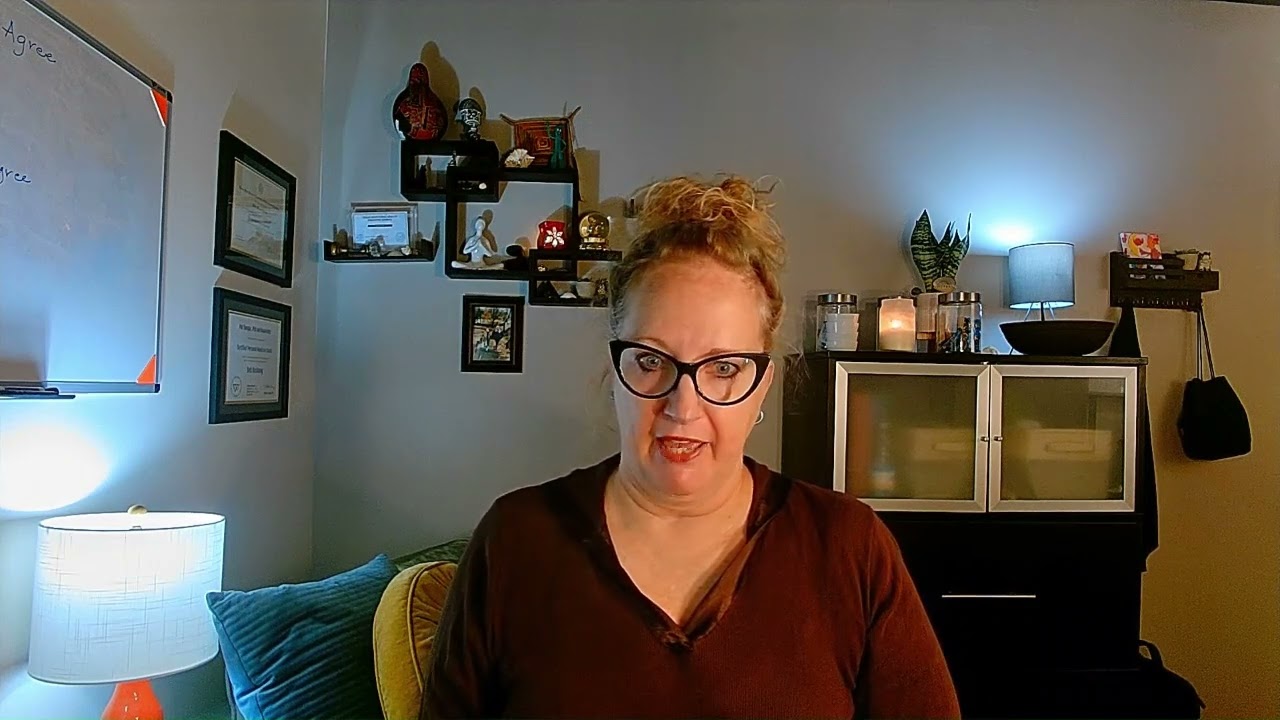
Okay. I'll introduce myself. Hi, I'm Deb Bushong-Song. I am the owner, founder, and therapist at Conversations Therapy and Supervision. And we're gonna do, we're gonna talk about Josh's recovery story. So where do you think your recovery story starts?
I'd probably say about 5 years ago when I was diagnosed actually. I was diagnosed when I went to my first treatment facility in Colorado. That's where they diagnosed me with schizophrenia. I've been rediagnosed since then with schizoaffective, but I think that's really where my recovery story began, when I realized that I had, you know, things that I need to work on and things that I need to focus on to become better and, you know, recover.
Okay. What was the thing that brought you into treatment?
Um, it's a little embarrassing, but I was actually arrested. When I had a psychotic break, which kind of really opened my eyes to the severity of my mental condition. So that's really what made me start realizing that I did need to recover and I needed to improve my health, my mental health, so that I could become better.
Yeah. And unfortunately, you and I both know that happens to a lot of people. Get started. So what does recovery mean to you?
I'm currently— I currently have an internship for mental health peer specialist with Peer Academy, and they harp on the fact that— and I agree— they harp on the fact that recovery is, it's a journey. It's not really— there's no set endpoint for it. It's a lifelong journey that people with psychosis and other ailments are gonna be going on for their entire lives. So I think that recovery for me just means a lifelong journey of self-discovery, I guess.
Yeah, oh, I like that. I really like that a lot. I think that's a great definition. How important is the concept of hope in your recovery?
I think hope is really what it all boils down to. I think not only the hope of getting better, but seeing other people succeed in their recovery and, you know, it's aspiring to be like them, you know, gives you a sense of hope. I think hope is quite critical to continuing in your recovery and continuing to improve your mental health. And I think, I think hope is just the one of the foundations that recovery is built on.
That's really good. Yeah, I agree. How important is the concept of acceptance to your recovery?
I think similarly to hope, I think that's one of the other foundations that, um, you know, Foundations of Recovery, I think for me at least, I had a hard time accepting my diagnosis at first. So I struggled with completely diving into my recovery and into my treatment and cooperating properly with my treatment team to allow me to be able to improve the way that I needed to improve. So I think once I did accept it and There's a term that they use at Pure Academy that I can't remember, but once I did learn to, I fully dove into my acceptance. I really began to improve and truly recover in the way that I needed to.
That's cool. When you've gotten stuck or when you get stuck, what helps you get unstuck?
I think hope. I think hope helps me see a brighter future, um, helps me see, you know, that things can get better. And just because I'm having a rough patch at that time, that's not the— that's not indicative then of the entire situation. It's not indicative of, you know, who I am, what I'm my situation completely. I think that hope helps me push forward and continue to recover and continue to go through these, the trials that I'm going through and the hardships that I'm going through.
I agree. That's really good that you kind of brought it back around to hope again. How do you get the support you need?
Support's a little difficult for me, especially with schizophrenia. I think that a lot, not only me, but a lot of other people with schizophrenia can probably agree that we often see everybody around us as kind of oppressors and people that are trying to attack us. So it's hard to trust the support system. So to get the support that I needed, I really needed to trust them and accept, back to the acceptance, that I was schizophrenic and it was just a condition that I had and these people weren't actually out to hurt me or out to get me or whatever. And then I could really get the support that I needed from my family and my friends. Good.
How do you keep going even when you feel uncomfortable?
I think what keeps pushing me forward is the admiration I have for others that have recovered. And not only that, the admiration I have for my parents. Who may not be diagnosed with schizophrenia, may not be going through the same things that I'm going through, but, you know, they have very admirable careers that allow me to have a sense of pride in myself, which allows me to push myself a little harder sometimes and allows me to keep on going because I want to live up to their to what they have built for themselves one day.
So yeah, that's nice. That's good. Do you have things that you recognize as triggers for like a decline in your mental health?
I think my triggers are mostly come from other people.
I think when I feel that my safety is at risk, I feel like there's a breach of my safety or breach of my boundaries or breach of my autonomy. I sometimes get triggered in a sense, which kind of can put me into a hole in a sense. But like I said, I think that acceptance and hope, the foundations, really help me continue forward in my recovery and not really get stuck in those dark times that I sometimes face.
What are, what are 3 signs of, or 3 warning signs of like relapse for you?
My warning signs would probably be isolation, low motivation, and probably low energy. I think when those things kind of hit, I kind of know that I'm, you know, falling back into my old ways.
Yeah.
And I can, you know, it's— I think it's good that I can see those things happening and be like, you know, I may not be feeling well, and I can open up to my therapist and say that, you know, these things are kind of affecting me more so than they usually do, and be honest about that and kind of allows me to continue forward in my recovery rather than take a step back.
Yeah, that's really good. I'm glad you have someone you can tell. Yeah. Talk about a time that you were in denial.
Like I mentioned before, the first time I was actually diagnosed with schizophrenia, I argued with the people that diagnosed me at Colorado Recovery for about a week. And I was like, I'm not schizophrenic, I'm not schizophrenic. I'm not. And, you know, that went on for a week, maybe more. And that was really, really tough for me because I was scared.
Sure.
And, you know, like I said, once I did accept it, things started to become more comfortable and make more sense to why I was feeling the way that I was. And but I mean, it did take time to fully accept it. To have full acceptance of that. And yeah, I think that's probably it.
I don't know. What stressor are you grateful to have put behind you sometime within the past few years?
I think for me, the stress of school was probably a little too overbearing, a little too much, a little too heavy for me early in my recovery. Taking a full course load would've been probably detrimental to my health at that point. I think at the point I am now, starting with one class and building my way up slowly through the journey of recovery, I think, allows me to kind of progress the way that I need to progress rather than rushing through things.
Yeah, that's hard to figure out. Yeah. What's a hard lesson that you were grateful to learn?
Hard lesson I was grateful to learn is that Although people aren't necessarily out to get me, not everybody is on my side in a sense. Like there are people that are potentially manipulative and potentially toxic to my recovery. And learning that made me feel a little less crazy. 'Cause at first my parents didn't really know exactly how to communicate clearly with me and to make sense of my situation for me. So they told me to trust everybody. But, you know, once I kind of realized that not everybody can be trusted and it's not just in my head, it kind of made me a little more comfortable.
Right. Finding that balance. Yeah, exactly. Do you have a daily schedule that you stick to?
Not right now.
I usually try to, I have a loose schedule that I try to stick to. I usually get up, usually get breakfast, get some food in my body. Then I usually like to go work out or take a walk. And then I'll either apply for jobs or do my internship after that. But other than that, I don't really have a schedule. I need to probably work on that some more. I think that really helped me with my recovery. And kind of improve my recovery to a large degree, probably. So.
Well, I was gonna ask you if you set goals, but the way you, what you've been talking about sounds already like yes, you do set goals. You sounds like you've got quite a few goals set, so I won't ask you that. But talk about a value that's important to you.
I think a value that would be most important to me would be probably respect. Um, I think once my parents started to respect me, as far as respecting that I wasn't just— because they, like I said, they had no idea about schizophrenia. They had their Their stigma-filled minds were just like, schizophrenia is bad. You know, they're— people are, you know, crazy. They're, you know, they, they don't know how to control themselves and stuff like that. Um, and respect, really, once they started to respect me as a person and realize that I'm not my diagnosis, and rather my diagnosis is just a part of who I am.
Exactly.
That's when I started to really improve my relationship with them and started to trust them a lot more to a larger degree.
That's a really good point. Yeah, that's a really good point. Who is someone who really listens when you talk and then how does that affect you?
I think my therapist and my partner. Both listen to my talk. And I think, you know, being heard is really important to my recovery because it allows me to feel loved. It allows me to feel comfortable. It allows me to feel, gives me like a warm feeling. It's kind of hard to describe. There's not really a word for it, but maybe there is, maybe I'm just blanking on it. But I think that those people, you know, They really help me feel more comfortable with who I am and make me feel accepted for who I am also.
That's good. That's a nice— I guess it is a warm feeling. I think that's a good explanation. Tell me about something that you do really well.
I think I've gotten really good at listening. To people. I used to struggle with it quite a bit. I still do a lot sometimes, maybe a lot of the time just because of ADHD, but I've gotten quite a bit better at empathizing with people and listening to them, especially when I need to, when it's important that I do. And I think that that's probably something that I do well. I could definitely improve on it, but nobody's perfect. So maybe one day I'll be better at it. So that's my, that's my dream right now.
Yeah, but that's a good skill. Like, a lot of people struggle with that one. What's an aspect of your personality that you're grateful for?
Um, I think I'm headstrong. I don't fold to pressure very easily. I think I go through hard times quite a bit. I I mean, this recovery journey for me has been very difficult and I've struggled through it quite a bit, but I've kept pushing on. I haven't, I'm still alive, so that's a blessing. And I haven't really, yeah, I haven't really folded under the pressure. So I think being headstrong has really kept me focused and given me tunnel vision on my recovery and allowed me to, continue to improve and adapt when I need to and kind of keep pushing forward.
Nice. What are some career, career goals that you have?
Uh, like I said, I'm working right now as an intern for Pure Academy as a mental health care specialist. I'd like to continue to do that even in the future when I do have a more serious career that I'm working on. But my main career goal for me is I want to be an architect one day. I have a very creative mind, not to toot my own horn, but it's okay to be proud of yourself. I like to design buildings and I think I have some good ideas, so I'd like to be able to do that one day on a professional level. And kind of hopefully make an impact to whoever's buildings I'm creating. So that's my dream right now.
Yeah, that's cool. I love that. Who do you admire and why?
Who do I admire? I think, like I said, I think I mostly admire— I admire a lot of people, probably too many to count. But I think for me right now, Um, it'd probably be my dad, um, because he's, he's gone through a lot of stuff in his life. He lost his father at a young age. Um, he had cancer that he had to get removed at a young age. Um, and he's worked very, very hard for where he's gotten to in his life. And he's very, very successful for himself, and he takes care of his family the way that he needs to, no matter what, no matter what happens. He never leaves us. He never thinks about leaving us. And I think that's very important. And I admire that very much. I hope to one day be like him.
Yeah, I mean, that's a lot to look up to. That's really cool. Um, you've kind of talked about like stuff you look forward to in the future already, so I'm not going to ask you that one. Tell me something that made you laugh or smile today.
Probably my partner probably said something funny that made me laugh. We have a good time shooting the shit. So can I cuss?
Sure.
Okay. We have a good time shooting the shit, but you know, he probably said something pretty funny.
So, um, that's, that's, um, yeah, like laughter and humor is a really important part of a good relationship.
It is.
So yeah. What's the one thing that you wish everyone knew about mental illness?
I kind of mentioned it before, but I think mostly that it's just a part of a person, you know, it's not who they are.
Yeah.
And I think once we— people realize that, uh, society realizes that as a whole, yeah, that's when the stigma— it will be destigmatized and there will be more acceptance for people with schizophrenia and people with depression. Um, and people will maybe stop judging us as much as they do. Um, and once we get to that point, I think our society will be a lot better off.
Yeah, yeah, I totally agree. I absolutely agree. Is there anything that you would like to add as we're wrapping up and closing? It can be anything you want.
No, like I said, I think recovery is a journey.
And throughout that journey, you'll, you know, your tire will pop, you know, you'll hit a pothole, you'll run out of gas in the middle of the road. But it's not about the journey. It's about the journey as much as it is about the destination because the journey's important. It is, and the hardships that we face on the journey are just hardships. But once we get to that destination of being in a place where our recovery is just a vacation, it's just a happy place for us that we have recovered in a sense, mostly. I think that that's when we do become more comfortable with ourselves. Yeah, yeah.
Definitely watched you become more comfortable with yourself in the past, just in the past year or so.
Yeah, hopefully I'll continue to.
Yeah, I think so. I think you will. Well, Josh, I just want to say thank you very much and I love your recovery story.
Thank you.
And I've loved watching you grow over these past 4 and 5 years.
Thank you.
So nice work.
I appreciate it.