Delian on Varda's space drugs, Founder's Fund, Silicon Valleys' history of mentorship, + more.
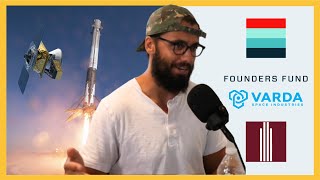
This is a YouTube video titled "Delian on Varda's space drugs, Founder's Fund, Silicon Valleys' history of mentorship, + more." It features an in-depth interview conducted on August 28, 2023, between Sabrina Halper, an investor at Hoff Capital, and Delian Asparouhov, co-founder of Varda Space and partner at Founders Fund. The conversation covers topics including the founding and operations of Varda Space, challenges in space manufacturing and reentry licensing, the evolving relationship between Silicon Valley and defense tech, Delian's personal background and immigrant mindset, and reflections on startup lessons and company building strategies. The discussion is detailed and technical, focusing on space industry innovation and entrepreneurial insights.
Foreign Hi everyone, I am Sabrina Halper, an investor at Hoff Capital, a venture capital firm based in New York. And you are listening to Tomorrow Talk, a show where I bring on individuals who are building and defining what tomorrow will look like. Please take a second to subscribe today. I am so excited and honored to have Delian as brujav on the show. Delian is the co founder of Varda Space and a partner at Founders Fund as well as many other things. So I am so, so excited. Delian, thank you for taking the time to be here today.
No problem. Thanks for coming by to Varda.
So we're in the Varda hq. It is sick. I'm looking on something being built down there. My first question is Varda is named after Queen of the Stars from Lord of the Rings, as are Palantir and Anduril. What is the sort of like founders fun and teal connection to Lord of the Rings?
So I think Peter's connection is just like an obsession with the series originally. Funnily enough, I've actually never read Lord of the Rings and I maybe have like watched one of the movies when I was a But when I was thinking about naming the incubation founder sun has done a handful of incubations where they weren't named after Lord of the Rings references and all those did not work. And so I thought best to stick to the tradition, stick to sort of what's worked. And so I basically just like, it's funny sometimes in my life I've named various things. Some things you name in 30 seconds and you just know it's the right name. Some require months of negotiation. You get to something mediocre. Vardo was very much so the former. I'd met my co founder. We were starting to think about what should this be called. I was like, well it has to be a Lord of the Rings reference. Literally got onto Google and was like space manufacturing, Lord of the Rings, Varda. This Elvish queen came up. I was like, cool, is the dot com available? I was like, yes. And I was like, cool. It's done. So from like needing to name project to knowing that it's going to be Varda.com took me about 30 seconds.
Okay, well when I was driving into, I'm in like the aviation area of Los Angeles right now. It looked very like space and it's working well so far.
So we have cool building. We got very lucky. Yeah, well, the Globe Skateboard company, you know, building, which is Rodney Mullins Skateboard company. So the bones of the building are very cool. We just transformed the interior to be a little bit less skate park and a little more aerospace factory.
Awesome. So you guys launched in June and the space factory is currently up in orbit, which I think makes it the first space factory in orbit. Congrats. I was like reading along on Twitter and like all of your updates throughout that day and I felt so excited. It is still up in orbit and it was supposed to land on July 17th. What, what's going on there?
So as a part of bringing basically the space factory back, we have to have a reentry capsule that basically lands in the Utah desert and basically comes back from landing. That type of reentry capsule does require a couple of different sort of, you know, government and partner, you know, sort of both government and commercial partner approvals in order to come back. So one is our commercial partner Rocket Lab. They actually basically control the engine that actually basically brings the capsule back. And so basically planning out when those engine burns happen, how they happen. That is something that is basically still ongoing as you can do a ton of analysis before you get up into flight. But once you're up in flight, where the vehicle is, where SpaceX drops it off is all very different than like what you actually simulated. So one part of it is that the second part of it is around the faa. So basically Varda is subject to this new regulatory regime. There was the part 450 regime. The FAA created this regime, I want to say in 2020, maybe 2019, to basically just create a formalized regulatory structure both for launch and reentry, which up until then were a little bit more loosey goosey or a little bit outdated regime relative to like how often things were flying. And so while there have been a handful of companies now at this point that go through, have gone through Part 450 launch licensing. We're actually really the first company to get to this point with Part 450 reentry licensing. And so we did not have our license at the time of the launch, but the FAA did give us sort of preliminary approval to go launch. Obviously we would not have launched if the FIA had told us not to, with the goal being that we would continue to work with them. Another part of the FAA is what's known as like the ato, the Air Traffic Operations Office, basically people that are responsible for routing around commercial air traffic. And then the third part is the actual physical range that we're landing on, the Utah Test and Training Range. It's a military range that's co owned basically by the Air Force and the Army. And there we basically need a book time both for clearing out the military range as well as personnel that are actually going to help us retrieve the vehicle. Basically a couple helicopters stationed at various parts of the range that are going to go retrieve the vehicle. And so we definitely knew that July 17th was an ambitious date, you know, when we set it, and we obviously were really hoping to aim for it. This first one's definitely the trickiest. We're definitely trailblazing, and we recognize that sort of whatever precedent we set with the FAA today in relation to reentry is what both we will use in the future, but also all other companies will use in the future as precedent for licensing. And so, you know, we definitely want to make sure that we set a really strong and safe precedent.
It's a complex project that you. You've taken part on. Like, at what point do you think the crystallization or, like, what you've done in that space factory that work might be. Might be hurt if it's still up in orbit?
You know, it's unlikely that the actual pharmaceutical crystals themselves, you know, sort of get damaged all by, you know, sort of radiation or vibration or anything like that. At this point, they're in a solid state form that kind of looks like a table salt or a crystal. And so if you think about it, like, you could take a table salt and you could go run it in a centrifuge at 100 GS. You could vibrate it. As you look at it, it still looks like table salt. Basically, what could get damaged is the spacecraft's ability to actually bring those table salts basically back. Right. So you can imagine something where, look, this vehicle wasn't engineered to last indefinitely in space. There's potential leaks from certain valves, batteries having potential issues, radiation faults that cause some of the computers to go offline. There's just always risk as you're operating in orbit, extended periods of time. So our goal is definitely to ideally bring it back as soon as possible to minimize risk. But there's nothing immediate like, hey, in the next week, two weeks, three weeks, that something will, like, obviously sort of happen. It's just a question of, like, you are just kind of tempting fate. The longer you.
Yeah, there. You guys have done such a good job at working with government agencies. You got a $60 million contract, and then I think yesterday you announced another contract with NASA, and now you're working with the FAA for reentry. I think there's probably a lot of, like, huge pros. There's Also probably a lot of bureaucracy. What's your experience been like and what's your advice for other founders that are working in highly regulated industries?
I think Varda is standing on the shoulder of giants, especially in the world of like aerospace and defense. You know, the story that I always like to give is in sort of the 2005-7 time frame, if you wanted to start a company that worked and collaborated with the government, you both had to be a billionaire and you had to be willing to sue the government in order to get them to work with you. So both SpaceX and Palatir sued our government to actually get them to award them contracts. Now, thankfully, that precedent then made it so that by the 201516 timeframe, you no longer had to be a billionaire willing to sue the government, you just had to be a billionaire. And so Palmer Luckey then started, you know, Anduril and again sitting on the shoulder, you know, him being the giant and us sitting on his shoulders. Now it's, you know, in 2020, when Varda was started, you no longer have to be a billionaire to start a company that collaborates with the defense community and the government. You just have to have be friends with a billionaire or have a billionaire back from you. You know, like Peter's involvement in Varda. So it's definitely, you know, I think improving a lot. I think the defense industry in particular is obviously looking to sort of collaborate with Silicon Valley a lot more. You know, 15 years ago, there is an active, let's say, like combative relationship between the two. You have things like the Maven project at Google that only sort of furthered that. And then I think really around the 2016 timeframe, you both had companies like Anduril starting, but then you had these explicit sort of like DoD innovation groups really pushing forward on their end. And so I think at this point, you know, people always make this joke in some of these like DoD dinners where it's like Silicon Valley and DoD need to bridge the gap. Bridge the gap, Bridge the gap. And I kind of made a joke recently at one of these that I was at where I was like, I actually think the gap has been bridged. Like Varda doesn't have any, like, you know, I think I'm pretty cool co founder, but I'm like, I'm no billionaire. I'm no like super successful prior founder. And we've gone from like founding day to, you know, we basically got awarded that $60 million contract basically exactly two years after we, you know, opened our doors, which I think Highlights like yeah, I think, you know, it's not, you know, I'm not saying it easy per se, but it is far more accessible. And the DoD is interested in collaborating with defense tech companies. I think the regulatory side of things, whether it's faa, like what Barda does, or drug development companies that have to deal with the fda, I think that is still as high of a burden in some ways as it's ever sort of been. And if anything, maybe at times with groups like Lisa Khan at the FTC that is actually trying to stifle innovation. I think in some ways, maybe even right now, regulatory bodies and their enforcement on tech companies is even more stringent than ever before. So I'd say pros and cons in terms of sort of trends. But in some ways having the DoD support and a $60 million contract also gives you the resources to then have enough capital on the balance sheet, have enough employees where you can now actually handle what it takes to actually engage with some of the co founders of Andrew, who's also a general partner at Founders Fund. Trey Stevens was on our board basically from the very first day and was guiding some of our sort of federal strategy. And so I think if I were to give advice, it's, you know, sort of get people involved in the company that have sort of built these types of companies in the past as early as possible. Given that this stuff is. If you think enterprise sales is difficult, the DoD or the US government is the biggest enterprise with the most complex enterprise sales.
Yeah, definitely. Also on your previous point, I think that like Ukraine, Russia, war definitely made whatever part of Silicon Valley was like anti defense tech investing sort of like I'd say like probably see the flaw in their thinking. So I think that that gap, at least on the Silicon Valley side is like definitely bridging. I'm sure you've probably received a lot more people reaching out about like co invest, defense investing maybe. One question I have is Rick Rubin wrote this book called the Creative act recently, got a lot of attention. And there's this concept that like ideas have their time. So like if you don't do it, they're probably going to happen anyway and there's greater powers that be forcing that forward. And then I think kind of separately in 0 to 1, Peter Thiel talks about this idea like go after an idea that if you don't do it, it's not going to happen. I'm curious like your thinking on space. If you look at someone like Elon, like what he's done for the space Industry as a whole. If, if he didn't exist or if he had died 20 years ago, what, what do you think space would be like today?
It's a good question because sometimes I think about this in relation to, you know, Varda a lot where the idea behind in space manufacturing is not a particularly novel idea. You can find people even from like pre the Apollo days talk about the theory of basic microgravity, how that would affect chemical systems. There's been, you know, Senator Bill Nelson, you know, that's a current NASA administrator, there's photos of him and I think it was like the late sort of 70s on a space shuttle mission doing protein crystallization experiments. So like this idea has existed for a very long time. But in some ways, you know, sort of summer 2020 was the perfect combination of factors of both, you know, and some of the results on the International Space Station, especially in pharmaceuticals, were like finally compelling enough. And so it felt like you had this like, you know, bonfire that was ready to be lit at the same time. I had originally started this as an investment thesis looking for somebody to light that bonfire and couldn't find anybody to do it. It felt like I finally had to do it myself. Even though there had been prior attempts at lighting this bonfire. There were VC backed companies in the 201011 timeframe that tried to sort of work on this idea. But I think we're just not the right time. It wasn't the time for that particular idea. Just like I would argue today it's not the right time to be doing lunar ice mining. That's probably just like in space. Manufacturing wasn't right in 2011, but it was right in 2020. Lunar ice mining was not right in 2023, but it may be right in 2030. And so when I think about sort of the question on Elon, it's like, okay, well there's sort of clearly this, in some ways bonf ready to be lit in that the space shuttle program was clearly not delivering on the economics and the reusability that it was expecting. The relationship with both China and Russia was probably default going to be fraying. And so us being dependent on them was very unlikely. And then if Elon was dead, you still had P. Beck and Rocket Lab obviously creating commercial launch company that I think was going to create it. Irrespective of Elon's success in that he started around the same time as Elon, it took him a lot longer to get to where he is today. And obviously they're not launching as big of rockets. They're not doing it as regularly. And so would the space industry be as transformed today? Probably not. But would somebody have created some sort of commercial launch company in space would start to be commercialized more? Yes, I think it's a question of like, you know, would reusable rockets. I think Elon sort of in some ways pulled them forward and they like happened in 2015 versus humanity. De facto path towards that might have been like 2035. And sometimes I think about that in relation to Vardo where it's like I'm not even 100% sure that 2020 is the right time for an in space manufacturing company. It was at least, you know, the right time where a VC had the capability to raise enough capital to create it. But probably a founder off the street wouldn't have been able to. But maybe Varna was supposed to have been founded in 2027 and that's when it was much more likely to succeed. But by forcing it through in 2020, even though it was like very painful and you know, maybe Starship isn't quite online and if it were online we'd be more likely to succeed, but we actually create the world's first space factory sort of faster than it was expected to. And so I don't know, I sometimes have a little bit of nihilistic sort of viewpoints around this, which is very much in the, I think more oriental way of thinking of like the individual does not matter. What matters is like sort of the community and the whole. And so I think somebody was going to create the world's first space factory at some point. It might have just taken sort of a little bit longer, but we just tackled it a bit more aggressively. So anyways, long winded answer. Point being space would be different today. Maybe Varda wouldn't exist today. But there's all moot points because Elon's alive and Varda.
Yes. On that point with Starship, can you explain like how Varda's business model sort of relies on like Starship's ultimate success?
I wouldn't say relies, but is accelerated by. Yeah, you know, if you think about, you know, sort of the fundamental. If you were to break down sort of Varda's business model at a very simplistic level. It is send the things up to space and they cost a certain amount of, you know, per kilogram, bring those things back from space and they are more valuable than when they, you know, were down here on Earth. And ideally they are more valuable by enough such that you can actually pay for all the Cost of like the logistics and everything. And so if the logistics go down, the amount of value that you know, sort of create in space, you know, can be much less in order to justify, you know, your existence. So we feel pretty confident that Even with today's Falcon 9 sort of rideshare economics, we can build a business around slightly more high end pharmaceuticals, you know, oncological neurological compounds. Things where the total amount of dosing you need on a per patient basis is closer to like milligrams than it is to grams. But you know, I think Starship would accelerate that where it just opens the aperture both in terms of the complexity of hardware that you can set up there, the amount of basically sort of pharmaceutical compounds that you can create, and the economics that you need to be able to sort of target in Tadville, where you can now tackle things that are consumed on a, you know, grams per day basis rather than a milligrams per day basis. And so I'm super optimistic obviously about, you know, the continued sort of increase in cadence in launch and a continued decrease in cost. Now, even if Starship were online today, I don't think Elon is necessarily incentivized to immediately flow through the benefits of that to all of his customers and that he doesn't really have competition. And he lower his prices by 10x.
Yeah.
And lower his revenue potentially. I think you'll test price elasticity, see. Well, what does happen, like if I offer some ride at you know, 4,000, 3,000, $1,000 a kilogram, you know, does the increase basically in volume make up for basically the sort of decreased headline price? That's not obvious to me. So at least at Vardo, we are not baking in any assumptions around massive launch cost decreases. We'll only do that when we start to actually see that there's not an obvious path to that. Even in the next two, three, four, five years, in my opinion.
You've spoken about the Hollywood movie approach to building Varda. Could you explain that?
Yeah. So this framework for building companies is very much stolen from my primary mentor, Kitra Boy. The sort of one liner thesis is when a Hollywood director and producer are coming up with a movie, they don't necessarily go beta test with the sort of public audience. And for a Mission Impossible film, they try a version with Tom Hanks and they show people some clips and then they do one with Tom Cruise and then they do one with, I don't know, Ryan Gosling or something like that, right? No, they just know this is a Mission Impossible movie. We need Somebody that looks like a badass. Ryan Gosling is a fucking Barbie. Tom Hanks is a fucking schmuck. And so we're going to Tom Cruise and they know that Tom Cruise is like the right actor for it. And they might develop a brief trailer, but that brief trailer is like a well produced, basically version of the final product. And then effectively they really just release the final product into the world with the pre specified cast that are filling each individual role that is necessary to basically bring that, you know, project to success. And then they release out of the Wild and they make ideally hundreds of millions of dollars. Our general shared thesis on how you build companies is relatively similar, which is not this sort of like iterative approach. You get together with your buddies and you like, you know, iterate your way into a company and try and you know, build something. It's a sort of very well researched. Here's the particular project that I'm trying to build. Here are the core necessary skill sets that are required and the risks that you need to burn down. And then here are the particular people in the world that are going to be most world class in that skill set. And I'm not saying it's impossible to build companies the other way, right? Like you could argue things like Slack for example, started off as like a gaming company that then shifted into internal comms. And there's no reason why necessarily Stuart Butterfield is like world class internal comms. So I'm not saying it's impossible, but at least for the style of company building that we really like, it is much more sort of enforced approach from day one. And so that relates to basically how I decided to build Varda, which was I went out and I'd spent basically a decade thinking about this idea and one of the things that I found that was lacking and anybody else that had really thought about this was how to basically decouple given the now Falcon 9 to decrease the basically access to space economics so much. How do you decrease the rest of the sort of space manufacturing supply chain in particular, how do you move things up in these government run human rated space stations and where it creates instead these autonomous manufacturing satellites. And there are sort of two sort of major risks that identified one was the scientific background needed to actually figure out how to commercialize basically this type of microgravity manufacturing. And two, in some ways much rarer, more painful skillsets was how do you operate these independent manufacturing satellites from the iss? And most importantly the ISS gets you these free rides down via the Soyuz, the Dragon, the Starliner, Back in the day, the shuttle, how do you make your own ride down, for example, a like small scale, commercial, cheap reentry capsule. And so that's what I identified. And when I would talk to people about this idea, they would always be like, well, maybe you could make a manufacturing satellite, but who the hell is going to bring the materials back for you? And so it was clear that you had to go do that and tackle it yourself. And so as I was thinking about what the initial cast of the team would look like, I wanted one person that was like a chief scientific officer that had a really strong basic material science background and knew how to commercialize those types of products. And then ideally, given that the biggest risk in some ways was this reentry capsule, a CEO that had specifically worked on reentry capsules had leadership and entrepreneurial experience. And when I thought about who had ever basically built reentry capsules, the only people in the world that had ever built a commercial reentry capsule were SpaceX. Thankfully, I had a lot of friends that have worked on that program at Dragon. And so I basically reached out to a bunch of my fraternity brothers from MIT that, you know, were working at SpaceX and I was like, hey, who fits the bill of like, worked on Dragon? Prominent leader is excited to start something, but doesn't necessarily have something they're working on today and will brewing. My now CEO and co founder was by far the sort of top of everybody in Flisk consistently. And so that was eventually sort of how I found him. And our chief scientific officer actually came from Cornell where he had previously worked with our co founder and CEO. So that was sort of how we put together the initial, let's say cast. And I think it's played out in some ways quite well. If you look at the people that are behind you, it's a lot of the leaders and executives and the top people from that dragon team at SpaceX that have the exact skill set and things you need to burn down. The risk of basically creating a reentry capsule, which obviously, fingers crossed, will hopefully be landing, you know, later next month.
Varda is like a very engineering intense company, so the talent is so important. When you've thought about getting these people to leave NASA Space X, different big players in the field already, like, what is your, like two minute pitch to them?
Yeah, what I'd say is when it comes to engineering recruiting, that is very much so the expertise of my co founder, less so, you know, mine. But I'll give you sort of his pitch that you Know, he gives, which is a lot of the engineers, especially at SpaceX and even, you know, sort of more broadly. NASA and other companies had always been marching towards this goal of like cheaper access to space. And now that's finally here, the question is, well, what next? Like it's not going to be this immediate jump to Mars, moon, et cetera. And it's always Varda has one of the most compelling answers to what's next, which is it's no longer just Internet communication satellites like Starlink, it's no longer just taking photos of the Earth like Planet Labs. This is clearly sort of the next most viable near term business model, which is very close to home, that is you only have to go to low Earth orbit. This isn't like lunar ice mining, which is a very complex longer term project. You can do this in a relatively short time frame, which was the pitch in 2020 and then now we can pitch, hey, we did it in the short time frame. And there's these clear sort of commercial need and scientific proof points on the International Space Station. So you're not taking this sort of like crazy out there risk. And so that message is really resonating given that most engineers, especially coming from SpaceX, they're not that interested in working at like a, like next tier or lower tier launch company. They're not that interested in working at a lower tier satellite company. Right. And so there wasn't really an interesting option, you know, for a lot of these most ambitious, highly qualified people from SpaceX, until basically Varda came around. There was a completely sort of off access project relative to just repeating launch or repeating satellites. This was something that they saw as distinctly different and could kick off this economic flywheel that was in some ways much grander than what you can do just with satellite Internet or with satellites that are basically taking photos of the Earth. Given that neither of those projects would ever really require having humans on board, versus if you look at pharmaceutical manufacturing today, that happens on the ground. While most of it is very automated, you still have these machines that require a human to come in and do maintenance, you know, once every six months, eight months, nine months. And so VARDA has the first potential path of actually economic justification for humans in space, which basically hasn't ever existed. Up until now it's only been governments basically paying for the justification of humans in space. And so I think that's been the sort of one to two minute pitch that has really resonated or the one liner, which is basically the core mission of Varda is expand the economic bounds of humankind, make it so that there's economic activity outside of Earth and bring the humans along for the ride.
That is a compelling pitch. I feel like with the news coming out of like Varda and increased Space X launches, a lot more people are going to start trying to build startups in the space. I think a lot more venture funds are going to look to be investing in it. What are the key ingredients for a space company to be successful?
Yeah, to go back to, you know, sort of Rubin's book it's Right Idea, Right Time and some ways. If you study how Founders Fund has invested into aerospace in the past, I think it's reflective of in some ways the ideal investing strategy. You obviously before my time in the 20078 through 2011 era, we were relatively heavy investors in aerospace, investing in multiple rounds of SpaceX and then Planet Labs. And then we effectively went on pause for almost a decade until 2020. Why? There just weren't that many business models that were viable back then. It was basically only launch Internet satellites and Earth observation satellites. That was it. Everything else, including in space manufacturing companies that were started in that same timeframe that Founders Fund did not invest in were just not viable at the time. Now that you have those Generation 1 companies that have succeeded and created a new infrastructure layer that is similar to what AWS did to the Internet. Now there is a second generation of companies, but there's an infinite set of use cases that are viable. So I believe in space manufacturing is viable. I do believe, you know, sort of the, you know, let's say rigorously, you know, improving the, you know, supply chain of aerospace now that there are enough users of it, whether it's components that go into satellites, metals that go into, you know, those types of components like companies like Hadrian that built or in space servicing and sort of refueling and movement like the space tug that we funded, Impulse, there's only a handful of those use cases that I think are particularly viable. But most investors are not only investing in those, they're investing in sort of what I see as the equivalent faults of what people did in the 201011 timeframe where I see investors investing into lunar ice mining, regolith processing, these types of use cases that are just not commercially viable today. And so if I were to give basically feedback to investors that are thinking about sort of diving into aerospace, it's make sure you recognize what is the right idea at the right time. And there's not an infinite set of those. There's a reason why Founders Fund may go on another eight year break in aerospace investing because there are only a handful of ideas that are viable today. I think we funded some of the most interesting ones in those various areas and we're going to wait until Now. This tier 2 set of companies have succeeded and have built infrastructure that then makes it so that something like lunar ice mining is actually commercially viable. If VARDA is operating something that is like a 10,000 kilogram pharmaceutical manufacturing facility up in orbit, we have humans there on a regular basis. Lunar ice mining is a much more attractive proposition because now rather than us having to bring water from Earth's surface up to orbit every single day, I would much prefer to buy from a commercial entity that is providing it to me from the lunar service inside for much cheaper versus today there's not really any money that can buy any lunar ice. Even if you were to make mining operation, who the hell is going to buy all that water? There's not a ton of consumption of water right now. Low Earth orbit, you know, and people that can readily sort of use it. And so yeah, this is definitely an industry where there's not going to be an infinite set of winners. And so I would caution against sort of a spray and pray strategy that might work in like enterprise SaaS or AI where there's like you know, 30 plus interesting bets because this technology has a wide set of applications, at least within aerospace. There's only a very limited set of applications in any one moment in time that are commercially viable.
Makes sense. I would like to bring it back to the day one inception of Delian as a human. So your early life, if I have this all correct, I believe your parents left Bulgaria in 1996. You were born in Bulgaria. There was an economic crisis going on then. Right. And hyperinflation. I think that's a very unique like context with which to be a young person growing up and like move continents. What characteristics do you think that whole like first decade and a half of your life instilled in you?
I think it gave me an appreciation for a very different, let's say culture, economy and philosophy on life. You know, I think Bulgaria taught me both the pros of its culture and philosophy in that I much more strongly prioritize my mathematics and computer science education relative to my, you know, sort of American peers. But I also had an appreciating feeling for how much communism and hyperinflation and corruption really destroyed that economy and how much that really killed opportunity. So both maybe much harder working in relation to sort of my academics and my tactical skills, but also gave me a much deeper appreciation for how much opportunity I'd be able to realize with those skills in the United States because of the system that we sort of have here. And I think it's in some ways made me sort of much more ambitious because I recognize even if I was just as smart as I am today, but I was stuck in Bulgaria, there's no way that I would have founded something like Varda. But it's because I have this combination of both technical skills because of the Bulgarian background, but also appreciation for what's possible in America. It's a combination of those two things that I think has sort of made me willing to take a risk and build something like Varda in that, you know, sometimes people would ask me, especially when I dropped out of school for the first time, like, aren't you worried? Like, you know, what if the first startup doesn't end up working out? Isn't there a ton of downside? I was always like, I had full time offers to like be a computer scientist for like 130k a year as like a 19 year old. I'm not particularly worried about being like homeless, on the streets. Like, I think that's a pretty fine downside, you know, outcome. Especially when I compare it to like, you know, you don't have to go that far up in my lineage to just find like peasants in Bulgaria. Like my grandpa, like lives in the middle of a farm in the middle of nowhere in Bulgaria with like, you know, only recently has like actually decent Internet and you know, most of the day is just, you know, sitting there on the farm. And so, you know, I think, I think it makes my, you know, sort of risk appetite a lot stronger given that I think people in the United States perceive downside as failure versus I'm aware that downsides can mean literally being a peasant in Bulgaria.
Definitely when you think about so you were born in Bulgaria, say your kids are born in the US and to successful parents, how do you think about passing down that immigrant mindset?
It's definitely something that's very top of mind for both me and my wife. My wife was born in the United States, but her parents were both very much so fresh off the boat type immigrants. You know, that I think did imbue that mentality in her, even though she was born in the United States. Like in some ways I always have to forget that she isn't an immigrant given that she, I feel like has that mentality. So I think it's something that you have to you know, sort of proactively, you know, design around. And I do think a lot of immigrant parents struggle with this. I think it's a combination of both feeling that connection to the culture and, you know, speaking. I will attempt to speak, you know, basically Bulgarian with my children and have them understand that culture, taking them back to Bulgaria on a regular basis. So they have that appreciation of, you know, how does life there basically compare to. They take. Improved a lot since 1996 when I left. But still there is a obviously huge delta in terms of, you know, the different, you know, cultures, countries and so the opportunities that are available to you. And then I think, you know, the thing that will be most difficult in some ways is thankfully due to, you know, humanity's progress. I am much wealthier than my parents generation. My parents are far wealthier than their grandparents, et cetera, all the way down the line. And so how do I, despite having, you know, much more, let's say, creature comforts, not allow my children to become sort of too, too soft. And I don't have super sophisticated philosophies on this yet other than this one quote from Shaq that I'll use which is, you know, Shaq will take his kids and fly cross country and he'll put himself in first class and he'll force the kids to be at the back and coach and they'll always complain and he'll always make it very clear to them. He's like, look, to be clear, we are not rich. I am rich. You, my children are poor. And so, you know, I think making it clear to them that, you know, just because I have had success in my life and just because I've been able to, you know, generate some amount of wealth, that is not something that is, you know, at all sort of, you know, guaranteed to them. But you never know. There's a reason, let's say, why succession was such a popular key.
Yeah, definitely, that's a, that's a good anecdote. I definitely think that Americans like, I saw this a lot at college. I feel like people like start losing context as you become like second, third generation Americans and so everyone becomes like more self hating Americans, honestly. And yeah, I have an idea that we need to like bring back the American flag into like mainstream media and as it to be something that's like beautiful again and people wear, I like never see people.
This is why Miami is the greatest city in the United States in that on every single block you'll see an American flag, people like proudly waving it because these are you know, Cuban, Argentinian, European immigrants, they recognize how amazing this country is. That's a part of why I love living there is like it is a deeply proudly American city, even though it has the only in the United States, it's the only metropolitan city that has the majority of its residents being foreign born. And so I do think there is this dichotomy and maybe it's a part of in some ways like American culture, that the reason that we improve so much is that we do become self hating. But the difference between sort of hating yourself at your core and not being proud of it, and hating yourself for your flaws and working to improve them, but being proud of yourself. And I think that's where you sort of, you know, third, fourth generations sort of lose their way a bit. They forget why the, what the point of the self critique is. The point of the self critique is for improvement, not for actually hating the core of who you are.
I just want to go back to your story. So you were at mit, you got the Thiel Fellowship, you dropped out, you started Nightingale. It ultimately didn't work out. If you just take like a quick look at Nightingale, what were some of the mistakes now that like with sort of your more experienced investor and founder lens, you can just like identify, I.
Think pretty like two core and obvious sort of mistakes that we made. You know, one was in some ways DNA, a founding team relative to the core, you know, risk and skill sets. So we really try to tackle the autism therapy industry that had a poor set of sort of software tooling. And I do think having an MIT sort of software engineer product, etc. As a CO founder was valuable. But we end up just both being that. I think it could have been very valuable if we'd had basically a third co founder that had a bit more of this sort of distribution and like, you know, sort of customer engagement, you know, expertise. And so having more of the founding team sort of with that DNA I think would have been a huge change. And then I think the other thing that we really made a huge mistake on is early on we got really great traction with what I would call like SMB basically smaller clinics. Think like 20 to 50 patients with, you know, called four to 10 clinicians. And we were building actually a pretty decent muscle of like getting them relatively organically. And then rather than figuring out how to scale that distribution to that customer set, we instead got very distracted trying to tackle very large enterprise clinics that had like, you know, a thousand plus clinicians versus these types of SMB clinics are all over the place on like, you know, Facebook, LinkedIn, etc. There were very obvious ways where we could have basically taken the preexisting product, the preexisting sales vision, scaled it up with even super small scale marketing budgets. And I think it actually could have, you know, grown and had a decent amount of success. And so, yeah, I think, you know, sort of DNA and then getting distracted and losing the flame of product market fit to go focus on a different customer segment rather than fanning that flame and turning it into a bonfire. And so I always tell sort of founders that today when I see them basically get the early sparks of product market fit, a lot of the times they'll be like, okay, well now that I've kind of solved this, let me go work on this. Other things, like, no, no, no, go repeat this, have this happen now 100 times, a thousand times, get a bunch of them and then we can think about what are the other market segments or different products or etc. You want to build. Like the goal is like, you know, scale your like initial success first before trying to like find other success.
At 19, you were an MIT dropout, you were a teal fellow, you had started this company, it got into yc, it didn't work out. Did that feel like a really hard moment like to be put on this pedestal and then like, it didn't work out?
Yeah, I mean, I definitely would say I kind of went on a bender, you know, for a year or so. It took me a while to even accept that it was not working. Like I. We kept like, you know, I think we had something like nine months where we had less than, you know, we basically hovered at like 40k in the bank or something like that where you basically like burned through, you know, fired people. We were doing some consulting on the side. We were just like scraping from one contract to the next, basically getting customers in. But then like certain other ones were churning, we weren't focusing on them. And so, you know, we were trying to scrape around for a long time. Then eventually it kind of came to this self admission where I actually had a couple of mentors sit me down on this like, you know, July 4th trip and we're like, dial like you've given it a solid go. Like at some point you should like think about moving on to something else in your career and just like have more shots at that. Like you probably learned what you're going to learn, even bashing your head against the wall. Trend sale, the same problem. And so it was definitely difficult to both accept that, communicate that to my team. My co founder, et cetera, did my best to try to help folks find basically their gig. And then I think, yeah, the next nine to 12 months were definitely this sort of reflection of what the hell am I doing with my life. Why did I sort of drop out and waste two years of college on this startup that didn't work at all. Now I'm just this failed one time founder and what am I ever going to do with anything? And I definitely, there's a part of me that was like I need to hop right back into the next, you know, company and started again immediately. And you know, I think thankfully in some ways life just led me on this journey where you know, had this like nine month vendor where you know, I was at Teespring as like a, you know, sort of executive there it was the highest paid salary I'd ever had in my life and you know, probably, you know, had too much fun during that time period. And then thankfully in some ways stumbled into this like, you know, sort of investor, EIR type role that I think in some ways was way better than, you know, I had some idea that I debated jumping into at the time and now reflecting on it, like thank God in some ways I didn't work on those ideas and that they would have prevented me from working on Varda at the appropriate timeframe. And that gave me the latitude to build up more understanding, expertise and network and aerospace that eventually led to Varda. So even though 23 year old, somewhat depressed alien that, you know, is frustrated with his career diving into the Coastal Ventures role, it was probably non obvious at the time how it led to Varda. But there's a part of me that is like, you know, maybe I did have a good instinct and just like follow the flame towards aerospace and I didn't want to work at SpaceX as a software engineer, but something at Coastal Ventures would give me a little bit more perspective, breadth, etc. They invested in Rocket Lab, I was like, I just need to go towards and one day I'll figure out what to do with it.
On the Nightingale point of like working on it for nine months even though it wasn't working, I think it's confusing because if you're like a motivated person your whole life, you just hear this thing like don't give up, like make it work, right? And so you're like, I will make it work. But I think as a founder it's this really fine line between like knowing when to grow quit and knowing when to persevere. And back to the story of when you're with mentors that told you, like, this might not work out. Paki McCormick wrote about it in, like, the, the Varda piece, and he said that you were with like, Sam Altman and Daniel Gross and, and Keith Raboy. I am curious, like, having these mentors on your side throughout your that period, how. How much time have they sort of like, saved you in, in terms of, like, helping expedite, like, your personal growth?
Yeah. It's funny, for a long time in relation to the Nightingale period, I was very resistant to anybody's advice. Keith at the time had tried to convince me to like, sort of quit earlier, potentially join the open door founding team, you know, sort of a few other projects that he tried to rope me into when he, you know, saw that it wasn't working. And I was very resistant to it, I think partially because he was an investor at the company. So I was like, how dare you? Like, this is your capital. Like, I'm trying to figure out how to return your capital. I don't want to, you know, just ditch this quite yet. And so, funnily enough, on the July 4th trip, somehow hearing that same message from Sam and Daniel, who are not investors in the company, felt just much more convincing. Where I was like, okay, like, you know, I don't know. Yeah, somehow the third party, you know, it felt very convincing. So that was definitely a moment where maybe I would have arrived to an ideal conclusion. But I'm sure that would have maybe taken me another year, who knows how long, six months, etc. So there's definitely some amount of time saving there, I'd say, with, you know, Keith, especially as a mentor, I think, where it really accelerated in terms of, you know, sort of how quickly or how long it would have taken to learn how to build a company like Varda. In some ways, which is the penultimate goal, you know, it really kicked off. Being a chief of staff, we're just getting to learn from him via osmosis, like, effectively 24 hours a day. Like, I would shadow him to every single meeting we'd spend, you know, I mean, it probably was like, on average, almost like, you know, I don't know, minimum eight to nine hours, sometimes 12, 14 hours. Basically, you know, sort of a day together for, you know, almost like two years straight. And that was like a massive accelerate. I mean, that, you know, probably saved a decade of working on other startups, doing other things. Like, you just learn so much because, like, and it's not even necessarily Always, even from Keith himself. It's just getting to be a shadow of him where he's going. And I get to go watch Max Levchin's like, affirm board meetings pre ipo and you know, watch, you know, fair Max Rhodes, the CEO there, take the company from like zero to a billion dollars evaluation over the course of three years. Like, there were just so many different founders that I got to learn from in that role. And then also Keith's interpretation of those founders, the feedback that he gave them, his input into discussion how he would evaluate investments into those various founders. And not only, you know, I'd say, you know, obviously a large portion of it was from him during those Coastal Venture years, but then it was also from other partners at Coastal Vent, like Vinod, like Sven Strauban, like Samir Kahl. And so there, I think was like by far the biggest learning ever. Had that sort of like year and a half, sort of two year period where I felt like I basically gained a decade of experience in those two years. And I think a part of it is that that role in that firm are highly structured for mentorship learning and, you know, sort of growth. And so that was, that was definitely the period where I learned the most.
How do you decide, like, when to take someone's advice and when not to, assuming that person is like, best in class at their thing?
I'm not very good at taking advice. I very rarely do it, I think. But I am good at osmosising other people's like, experiences and opinions, let's say, and reflecting on it over time to come to a conclusion that I feel like is well reasoned through. So I've never been particularly good at somebody approaching me and being bluntly like, you need to change X, Y or Z. But if I hear X, Y or Z over the course of like many, many months and from a multitude of people, all whose opinion is respect, it's not a lot easier to like, you know, there may be a particular moment where finally the 15th person that tells me X, Y or Z, I'm finally like, okay, yeah, you're fucking right. But it's not only because of you, it's because of like 15 other people. So in some ways maybe that's why it's indicative of like that old July 4th trip. It's like, yes, Sam and Daniel were the ones to finally tell me, but. And it felt like they were the ones that finally convinced me. But it was actually the fact that like, I had heard that 15 years prior from Keith and others that made Them sort of like this rod that broke the camel's back. I always actually think about this in relation to Varda in that, you know, about a year and a half ago we were in somewhat of an existential crisis around basically what was going to be our commercial business model and which sort of material to work on. And that we were more explorative in the early days between a couple of different materials that have been studied on the International Space Station. And it was funny because there's this one very particular investor that really pushed us on certain sort of critiques of, you know, our strategy around material selection. And it pushed me so hard that I ultimately on that very particular day, finally felt like I had had this strawberry camel's back where I was like, we need to be a pharma company. Like I. I've been trying to avoid this conclusion for three or four months, but it is now penned ultimately like very, you know, clearly obvious that Vard is a pharma company. And that was roughly like, you know, whatever. May 15, 2022. And so I do credit in some ways that investor. But when they think about it, it's not that that investor's particular is more, you know, compelling everybody else. It was that my co founder told me that we needed to be a pharma company like 15 other advisors had told me we needed to be a pharma company. Our chief revenue officer was like, I can only close this pharma deal, so we should probably be a pharma company. And so in some ways, you know, it sometimes is like that 15 person x, y, Z. So anyways, long way to. I think I'm not good at taking advice from any one particular person.
That's probably a good thing. People have like different views on the value of advice. Okay. I have a specific question about your time at Costa. You worked on a investment in Sword Health, which is doing phenomenally well. Go Dalian. In your memo you speak about how the founder was an amazing scientist and an amazing engineer, but he was like pretty open and naive in his go to market and like super open to your feedback about his team and how to proceed and things like that. That sort of goes against the grain of this idea of these empire builder like know it all Personas of a founder. So that I think a lot of funds are like searching for. How do you think about what the right model is?
Basically, I think, I think if you actually study Silicon Valley, even the people that people perceive to be these sort of like empire know it alls.
Yeah.
If you look at all the best of them. They all had deep relationships with strong mentors that were prior, basically titans of Silicon Valley. You very rarely find anybody that truly comes to success without some level of, like, mentorship expertise, et cetera. Like, there's a reason why Zuckerberg very early on, like, had Sean Parker's involvement in P. Marca's involvement and like, as much as it's the one man show, he deeply respects and values Mark Andreessen, Shan Rashawn Parker, Peter Thiel, etc. And goes to them, you know, sort of regularly to, you know, for their advice. Even today, I find that coachability is highly correlated with success in the companies that I at least have been involved with. But it's a specific type of coachability that isn't. I am desperately looking for you to validate my opinion or I'm not going to do anything unless basically, like, my mentor tells me to. It's more of like the version that I feel like I just articulated, which is, I'm going to be very open and vulnerable with you. You can share your advice with me. I'm not guaranteeing that I'm going to immediately basically take your advice, but I will sort of like open the kimono. The times where I see founders be guarded with like, you know, everything from, like, how they're doing, the company's doing, their personal emotions. Like, one very tangible example that I always like to provide people, and it's very counterintuitive, is if you look at like, the correlation between how much a founder shares about how a financing process is going and the quality of that founder, there's like a perfect linear correlation between basically the top tier founders are the ones that are the most transparent. And it's funny because it goes against the grain. A lot of the times of what I think people will advise and talk about, they were like, you got to negotiate, you got to do this, you got to get vc, you got to get them to play off one another, et cetera. And it's like, those things are generally all true, but you need to do it from a place of like, transparency, honesty and openness. Not for a place where, like, I think some founders are gonna be like, oh, yeah, I've got this term sheet, but, like, I'm not gonna tell you who it is, I'm not gonna tell you who it's talking, like, who I'm talking to or how things are going, versus, like, anytime I've done a Varda financing, I'm like, extremely clear. I'm like, I'm talking to these six firms, like, you know, the partners that are there, I think here's how generally they're thinking about it, here's where we are in process with them, here's what we're trying to optimize for, and here's what we're looking to get out of this, like, you know, financing process. And in some way that actually has the effect that you know, the sort of more guarded founders are looking for. But it just can't even like, you know, realize it, you know, in order to get that effect that they want to, like VCs treating them very honestly and also, you know, getting very excited to invest their company, they have to be, you know, more vulnerable than what they expect.
And today when you heavily invest in a founder, like what are the non negotiable characteristics of that person?
I think there's a handful. You know, the first is basically like, why is this, this person's life's work? You know, I think there are many times where it's very clear when a founder is starting a company for sake of like the status or they're running away from something in the past. And it's not that this is something that sort of, they've been building up for their entire life and is like very clearly the thing that like they should work on for the next decade and they're going to be proud to, you know, sort of tell their children. And so I think that's always a very sort of quick and easy sort of filter on founders. There's either a story for that or sort of there isn't. The second is some level of like emotional resiliency or just like you can't like take critiques too closely to the heart and then like lose your mind about them. Like you need to recognize that a part of being a founder is like people are going to be brutally honest with you. You're going to get told no to a lot and you need to like roll with the punches, recognize it, iterate it, fix whatever problem you're having either in your personality, your company or the team you have and like keep going, you know, sort of towards the next goal. And then, you know, I do think that the other one is this sort of like, yeah, you know, open honesty, you know, coachability, where I find there's a really strong correlation between when I bring up an issue to a founder, how quickly they go solve that issue is always, almost certainly directly correlated to their success. Like I'm always very impressive. Like I don't mind a founder to Be naive. I expect founders you to sort of be naive, especially if you're like a first time founder. You've only been an engineer before, why would you possibly know what the job of a CEO is? That's my job to help you sort of through that and hopefully coach you through to be an effective coach. And so I'm always really impressed by founders that can come and start off as very naive, but have a really, really strong slope. Right. In a lot of the ways what really matters is not like why intercepts very rarely matter in Silicon Valley. All that really matters is slope. And coachability is almost always a portion of that slope. But again, it's the coachability that's not like, oh, I want to do whatever deleon tells me to do. And for his validation and feedback it's like, no, I'm going to operate my business and when Delhi gives me feedback, I'm going to consider it, reflect upon it, see if others have that same feedback and if I agree upon it, I'm going to execute on it. I'm going to do it very quickly.
Yeah. And looking at your time at Founders Fund, you recently became a partner. Congratulations. That's awesome. You guys are at your core a fund built from founders. I'm curious, like that interplay of founder and investor, like why is that actually important to you? Is it like deal flow, is it respect, is it being able to give like tangible advice? Or is it is venture a part time gig as was on Twitter recently?
Maybe a little bit of all the above. Although what I'd say is when you look at the incubations that we've done at Founders Fund, all the most successful ones have come when the investor has an idea that they're passionate about that just isn't going to exist in the world unless they incubate it. Nobody was going to be creating a next generation defense prime if Trade didn't start Anduril. Nobody was going to be creating Palantir or Peter to start Palantir. And there wasn't going to be a Varda unless I basically like started Barda. And so I did it for the passion of the project and knowing that there's really big opportunity costs in building a company rather than just continuing to invest given the amount of time that it takes relative to just being able to make another 5, 10, 15 other investments. And so it was more motivated initially by the idea. But it does have this side benefit on the investing side where despite the fact that over the past year, sort of almost now three years since starting Barda, I've explicitly spent way less time on investing relative to obviously pre starting harder. That's obviously a no brainer. Despite that, I would argue that basically, like, you know, if you're going to study both the periods of my IRR and basically like how I performed over time, I think that like post var to time has been by far the best in terms of IRR deal flow conversion rate from when I want to invest to actually getting a founder to basically take a deal. And I think it is because, you know, in some ways the man in the arena is the most interesting man to have as your coach effectively. And that my ability to tell people about what the financing market is like how to close a seed through series A, B, C, D, et cetera, you know, what it's like to actually negotiate DoD contracts is so much more fresh and relevant relative to an investor that is just like, you know, sort of sitting on boards. And I think, you know, you know, Peter, in some ways, you know, sort of takes this to the extreme in the ethos of the entire firm. Right. It was originally literally what the name of the firm was and it definitely took us some time. You know, sort of post Palantir, there wasn't actually a lot of incubations for quite some time versus now at this point we almost have like half the investment team effectively working on incubations. And so I'm very proud, I guess of where Founders Fund is today in that I think it is at a moment where it is embodying the original founding ethos in some ways more so than I think ever sort of before. And do you think we've proven that you actually don't want venture capitalists on your board that have too much time on their hands? Because it's a lot better as a part time job because that way they just let you run your business and help you advise when it's appropriate rather than, I think a lot of venture capitalists that have too much time panic. Yeah, Having a VC that panics is definitely the worst thing that you can have on your gap table.
Fair. Okay, looking at AI today, are you interested in making new investments in the AI space?
Me in particular? No. The firm as a whole, potentially, but it's not an area that I particularly focus on.
A lot of people think that if you just start investing in AI now, you're already kind of too late. Right.
It started the same thing as in Defense and aerospace. All the returns in defense and aerospace were to be had investing in 2016-2020, not after the Ukraine war before.
Do you have any thoughts about like what that next thing is that people aren't paying attention to yet?
You know I always talk about, I think they're like sort of chapters in careers and especially in venture. Your job is to, you cannot rest on your laurels for particularly long. You always have to be reinventing yourself. And so chapter one for Delian was you just sort of mentored under Keith and discovered some interesting healthcare tech and fintech deals like Sword Ramp being that sort of first chapter. Chapter two is very much so this current chapter of like dominate aerospace investing and you know, sort of incubation and company building. Chapter three, probably I have another four years before I need to think about that and I might have some theses around fertility and how that affects society.
Yeah, me too.
I think there's some interesting companies being built today. In particular Martin Varsovsky, probably the most prominent entrepreneur in that area and I think has started a lot of the most interesting potential ideas in that area. But that would be maybe one area that I would some point like to contribute to both as an investor and as a founder.
Your colleague Trey Stevens wrote this piece around with Marky Wagner about good quests. What do you think is like you kind of just touched on it but like what was your quest? Pre varda and post varda?
Yeah, I guess pre Varda it was always just, you know, find a way to both generate generational returns but not by investing in just boring software companies that don't affect the world that much. Invest into things that have some level of impact on the real world even it's relatively simplistic like consumer hardware, like the eight sleep. It still is like hardware that affects your day to day, you know, sort of life that I didn't think most investors working on. And so I feel like that was sort of the core mission professionally. And the core personal mission was still, you know, sort of focus on marriage, family building, sort of legacy building. I'd say post Varda. I don't think the personal sort of mission has particularly changed and the professional investing mission I don't think has changed. But for sure there's always been this mission. And I had struggled to figure out how to contribute to it for a long time. But I do think that the best path to making sort of humanity a multi planetary species isn't just building larger and larger rockets. While that is a prerequisite, it is necessary but not sufficient. One of the analogies that I provide, which is in that sort of packy piece is if you look, in the 1500s both the Portuguese and the Chinese started to build up their naval fleets for the first time basically ever. The Chinese took the approach of these massive beautiful sort of battleships that they take to Africa. You know, capture a couple elephants, bring them back as like, you know, gifts for the emperor. The Portuguese basically took the polar opposite approach. They started off in Portugal, set up a couple of basically small naval merchant ships, set up trading posts in like the north of Africa and they basically would only expand their routes as they basically started to create more and more trading, trading posts and had economic reason to expand. You fast forward basically by the end of the 1500s the Chinese have basically decided to focus in whereas ditched all the basically, you know, ships that they had because they were providing no long term value to the empire. The Portuguese on the other hand instead had basically economic activity across the entire globe and basically had the largest naval fleet. And so I think you basically take that same Portuguese versus Chinese analogy and apply it to space where it's like this sort of Chinese analogy is like these government run big missions, lunar space station, lunar base. But ultimately what I'm focusing on is those small merging ships making sure that you basically have this in space manufacturing sort of economic activity created. And that's basically that first trading post for humanity so that you can basically create those future trading posts that when we reflect in 100 years how do we actually explore the solar system? It isn't just these like one off. Yeah like Apollo and maybe we do a one off mission to Mars but it's this sustainable economic presence that really sort of creates long term human presence across the universe. And it took me a while to figure out obviously how to turn that mission from a mission to something I got to work on in reality. And Varda is very much so the instantiation of that mission.
On the point of your, your first quest. I think it's interesting because a lot of investors like get into investing thinking they want to sort of invest in the spacexes of the world and then you end up getting like beholden to LPs and you're just looking for like SaaS multiples and it's, it's way less interesting or like the quest becomes maybe less interesting.
I have definitely prioritized the interesting quests.
Yeah.
Over superficial returns. But a part of it is actually that I believe that the interesting quest is actually the best way to know the returns and that I think people can get deluded into. Oh well, software is so easy. So there's going to be these really like the low marginal cost for each individual customer. But it turns out because the software is so easy, none of these things are actually monopolies. You're going to get outcompeted because even if you're snowflake, you have a million basic competitors nipping at your heels that are going to try and basically you steal away your bargain. And so, you know, in some ways I think by having a quest over IRR you actually generate better irr.
Yeah. On the more personal side of things you've spoken about like in 2020 when you were contemplating starting Varda, speaking to your fiance then at the time, who's now your W wife about whether to start this. And she was incredibly supportive. She's super accomplished in her own right. I'm curious, like no one really talks about sort of the framework of choosing a life partner. It's debatably one of the most important decisions you make in your life. How did you think about that?
I can't claim, you know, I think generally life, I'm more instinctual than I am sort of frameworks related. So I can't claim that I'd like come up with some perfect framework. And even the like pre existing framework that I had before I met my wife was I need her to be a really good skier. That was the incentive. It turns out my current wife is not as she's a fine skier, she's not like a really good skier. So clearly my prior attempts at a framework ended up sort of being totally wrong. I think if there were any advice that I would give is I think what made me sort of ready when I met my wife and know that she was the one was that I just had prioritized meeting a lot of sort of potential relationships and had very serious prior relationships basically pretty consistently since I was almost like 15, 16. And I think across all those just learned a lot about how I changed based off of each individual relationship and how different people could affect me. So that by the time I met my wife I was like, this is the person that makes me the best possible sort of version of myself. And so that's how I know that this is, you know, by far the best sort of life life partner. And so yeah, I can't claim that I have some, you know, perfect framework other than I think it's something that you do have to sort of proactively work on and prioritize alongside your sort of your professional career. And it's not something you can sort of discount and be like, oh, I'm going to just Figure this out when I'm older. A part of it is like you kind of need to be doing this sort of from sort of day, day zero in order to know when the time is right.
And also on that, I know a lot of people that are hyper successful later in their career, have done amazing things, still feel like they haven't or still are unhappy. How do you think about success and how you get your self identity? Those ideas?
I think something with getting beaten up after I was put on a pedestal for so long helped me decouple my personal identity from professional success and where that was at in that I feel like nowadays if I think about my personal mental health and identity, I identify it in a lot of ways. More so for my personal life, the marriage with my wife, my personal hobbies like flying planes and kite surfing and prioritizing my family. And so irrespective of how things are going professionally, I always have that sort of core base that is always sort of there no matter what. And so I think my general advice to people, sort of decouple it. Because in some ways that is also going to be the thing that makes you more professionally successful. Because if you can decouple, you know, sort of the fear of failure because of how they will affect your personal self, you'll be much more willing to take large risks and that it's actually going to be the thing that makes you much more successful.
That's a, that's a good answer. Okay, we're running out of time, so I will just ask you like five really quick paced popcorn questions. Okay. What's your favorite Twitter account you follow?
Oh, that's a good one. This is like such a recent one that I like. Is this like account Science is strategic. It's like this anonymous account. It just tweets great new scientific news, but with great geopolitical framing and things like that. And it's blown up from like zero. I think it has like 50,000 or 100,000 followers in like the last like six months.
Okay, I'll find it and I'll link it. To borrow a question from the teal playbook, what important truths do very few people agree with you on?
Well, for a long time it was that, you know, sort of microgravity manufacturing was going to be commercializable in the like early 2000s. And so in some ways I think that idea we have succeeded in hopefully making that more consensus. I think my current, maybe more contrarian viewpoint is people are underappreciating how quickly humanity is going to speciate and that if you define a species as one that has. When you take two members of a population, they can no longer procreate. I think people underappreciate the fact that we're in this very rare moment where humanity is a single species. If you go back even 10,000 years ago, we were a multitude of species. And I would argue that basically the selective pressures of modern society, especially as we start to get into basically genetic sequencing and genetic editing of embryos, I think we will much more rapidly speciate than what is going to take 10,000 years. I think it's a possibility that we speciate over the course of 500 years or 250 years. And they sort of geopolitical, moral, philosophical applications or hell, you can even argue that maybe AI is going to cause even more near term speciation. I think most people are underappreciating the sort of risks and effects of that.
Yeah, I think that whole area is so fascinating. You tweeted about Nucleus today and what happens when you can basically identify genes that are associated with sexuality. And all these ideas really, I think like crazy times where we're coming in on. Do you believe in aliens? Yes. No. Yes. No. Maybe so.
Maybe so.
Maybe so. Okay, and we're gonna go with like the last two. What's one thing you've changed your mind on in the last five years?
I think I have become much less interested in what I previously perceived as like sort of mental health maintenance therapy, self reflection, et cetera. I used to spend much more time sort of like journaling, self editing, you know, trying to.
Why? Why have you.
And why have I changed my mind on it? I think that those activities were more destructive than productive in the grand scheme of things. I'm not saying they had zero effect on me, but if I look at it over the grand scheme of how much time, effort, et cetera, I spent on it, I think I would have been better spent just not thinking about it at all. And I've become more pro not thinking.
Wow, that could actually definitely be your controversial truth that is so against the grain of the conversation today.
People should think less.
Yes, it's interesting. Okay, last question. If you could spend one year of your life in any time throughout history, in the past, what would it be?
I mean, it would almost certainly have to be 1969 Apollo days. That'd be sick.
That would be sick. Okay, well, that is it. Delian, thank you so, so much for being on the show. I really appreciate it. I am gonna let you get back to everything Varda and thanks so much everyone. Please subscribe and I'll link all of Delian's socials. He is a very fun person to follow on Twitter so I highly recommend it.
Hopefully some entertainment on there. Sa.
More from Delian



Vinod Khosla & Delian Asparouhov | Venture and Valor: Building the Future from Silicon to Steel


Delian Asparouhov & Nadia Asparouhova on building a relationship, family, and legacy



Delian Asparouhov: Inside the Walls of Founders Fund: What the World Does Not See | E1183


Varda's Landing, Peter Thiel, & the Future of El Segundo, Delian Asparouhov, Founders Fund
