LK-99 breakthrough with Varda’s Delian Asparouhov & Andrew McCalip | E1788
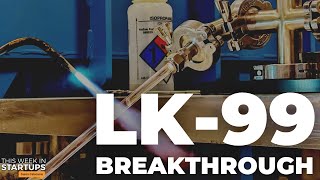
Delian Asparouhov and Andrew McCalip from Varda discuss attempts to replicate LK-99, the claimed room-temperature superconductor. They cover the technical challenges, what the breakthrough would mean for space manufacturing, and why Varda is positioned to test the claims.
The one liner that we always use is we take ourselves not particularly seriously, but we take our work very seriously. We want to be pushing it. The frontier. I think Andrew in some ways is the true embodiment of that culture at Varda. And it's great to see the world finally recognize that. And I think you'll continue to see us basically talk about even more so than before, basically the very interesting type of engineering that Varda is going through on a day by day basis that isn't just the floating rocks, but all of the very interesting things that are necessary for us to bring basically space drugs to the market.
This week in Startups is brought to you by OpenPhone brings your team's business calls, texts and contacts into one delightful app that works anywhere. Get 20% off your first 6 months at openphone.com twist Crowdbotics Great ideas can change the world and Crowdbotics is the fastest way to turn those ideas into code. Get a free scoping session for your next big app idea@crowdbotics.com Twist & Superside Design and creative are crucial for growth. Tech companies like Shopify, Amazon and Meta have found the perfect Solution. Superside get $2,000 off with Superside startup accelerator package@superside.com twist all right everybody, in case you've been living under a rock, LK99 experiments have completely taken over the dialogue on X formerly known as Twitter. For those non scientists in the audience, LK99 is a claimed method of creating the first ever room temperature superconductor. If you want to have maglev trains or maybe reduce the amount of friction and lost energy when you're sending electricity over cables, man, if you could have a room temperature superconductor that would could possibly 5 or 10x the efficiency of energy as it moves around the planet. From what I've heard, this paper was released about 10 days ago by a group of South Korean researchers. It's called LK99 because the scientists Lee and Kim who performed this experiment and research did it back in 1999. Here we are almost 25 years later paper was released on a website called Archive or a pre release. Apparently people are kind of racing for their Nobel Peace Prizes or whatever you'd get for this reportedly. So one of the interesting things is that a team that we all know well, Varda, which is a company that's building factories in space, backed by the folks at Founders Fund, our friends over there, full disclosure, I'm an lp in a couple of their funds they decided that they would work on this. And so, Delian, welcome to the program. And Andrew McCallop, welcome to the program. How are you doing, boys?
Thanks, Jason. This has been an absolutely wild ride. This started about, like you said, eight days ago. Just reading a paper in my spare time the evening and here we are a week later and it's absolutely blown up into probably the most wholesome trend on, on Twitter or X that we've seen in years. So it's, it's been super exciting.
And Delian, I take it Andrew works for you. He's the head of R and D at your company. He reads his paper and says, hey boss, instead of, you know, hitting our milestones to get these factories up and running in space, can I work on this at night? And he came to you with this proposal to put some resources to work?
Yeah, Andrew's always working on sort of crazy stuff at night. I think he's shot off some tweets of he made this like, massive Doge starship Grid Fin and was trying to convince Elon to fly that as his first payload on starship. So I think it's, you know, Andrew's going to work on crazy on nights and weekends. You know, either way, this one is going to be a good recruiting event since it's a bunch of cool material. Scientists will be following along and that's basically the exact type of talent that we need to recruit. And by the way, we have like all of the equipment and expertise in our lab already to go replicate this and, you know, 500 bucks of like materials. So, yeah, no brainer.
So this has been eight, eight days of this. And last night you achieved the replication of this, I guess recipe is what people are calling it. So explain where you're at right now as of, I think 9 or 10pm last night.
Yeah, you're right. So this is a replication attempt. So we are taking their procedure as described in the papers and the patents, and we are trying to replicate that. This is the classic scientific process. So we're not trying to improve it. We're simply trying to show that it's a real physical effect and validate that the work is indeed valid. And so we, we take their steps and run through all the processes. It's a multiple step reaction. So we've been posting Updates on reaction 1 reaction to reaction 3, and we just got through the third reaction late last night. I think we might be the first ones in the United States to at least acknowledge that we've gotten all the way through, which is super exciting. I can't believe that you Know, we're the first ones to. To talk about it. And so we've got some material that matches some of the properties that have been reported online. So obviously the entire world is racing to replicate this result because the implications are absolutely huge. And so we've got some weird and interesting first results. And so now we're going to try to put those into the hands of the scientists. We're not qualified to make judgment calls on that. That's the big PSA were some enthusiastic engineers, not the subject matter experts. But it's actually been really cool to pull together spaces and collaborate with all of these people in the fields.
That's kind of the most interesting part to me is that when you started putting the steps out, Delian's got a big following. He started retweeting it. All of a sudden you had material scientists, chemists, I suppose, people who've procured different chemicals that might be used for various products in the world, some of which might not be legal in most parts of the world. And you go on this incredible Indiana Jones for Nerds adventure of trying to do this. And I guess we should pull up the video here of what you published six hours ago and you could tell us what we're seeing here in the laboratory, because you had some amount of materials in a test tube and you broke it open and then you took those materials and put them on this platform. I don't know what the platform's made out of, but tell us what we're seeing here.
Yeah. So this is a very small sliver of material that we extracted from one of the test tubes last night. This was showing some magnetic response. This material is more like a ceramic and shouldn't show any magnetic response unless it's superconducting or possibly some other novel magnetic phenomena. And so this is just us on the microscope trying to get a good view of, of this little sliver. So we've got a magnet underneath the platform, and we are putting the magnet underneath and removing it, showing that it is indeed responding to this magnetic field. This has been one of the demonstrations that people ask for that have been. Has been shown in some of the replication attempts. And visually it's pretty intriguing. Uh, we don't have the, the equipment to really characterize it like some of the material labs do. We want to put the material into the hands of the scientists, but this is sort of what we can do. Is the first pass quick and dirty.
Yeah. And so when we look at this replication that you've done, attempted, succeeded to some extent you obviously have to test all this and we see other people replicating it. What is your take now, Delian, about? And Andrew just is this, is there legitimately something going on here or is as some people have sort of said, yeah, maybe this is just some other magnetic property or is it just too soon to tell?
I think it's like opened up a like class of new superconductor research that is closer to like shaken bay chemistry and alchemy that I think almost certainly will lead to some very interesting materials. Like is the, you know, sort of small fleck of metal like you know, you know, I think one thing to help viewers understand is Andrew probably you know, created. Andrew, correct me if I'm wrong, but on the order of like 400 grams or so of this material, of the amount that actually had these actual sort of, you know, properties was like, you know, maybe one or two milligrams. And so our yield is obviously super, super low to date. And so you could not like transfer this into, hey, we're now going to immediately in a year make massive maglev trains. There's clearly like a lot of work for you in this material where you'd have to make yield improvements. And there's also been some papers in China where they've showed that by doping it with than copper they've been able to achieve potentially higher performances. So I think what I'd say is the materials definitely exhibiting even in our lab, I think some interesting properties, whether it's a superconductor definitely to send it to like you know, a real scientific lab, you know, to validate. But I think irrespective of sort of where any of these results land, I think it's just very clear to me that even if this is like an extremely off the charts strong diamagnetic effect, I still think this is like the path to eventual mass scale sort of room, you know, room temperature superconductors. And so I know the manifold markets are this very like, you know, binary thing that they're betting on is like, is the LK99 paper a room temperature superconductor? It's like I still answer would be like maybe, probably not. But is this like a field that is going to lead to room temperature superconductors over the next decade? I feel pretty confident at this point saying for everything that I've read it's like 90 plus percent chance that this is a field that will lead to that path.
You're, you're nodding in agreement there, Andrew. You think that this is a path to a new. Maybe not discipline, but, but a new path to this outcome.
Yeah, yeah, Delian absolutely nailed it. The superconductors typically occur in families of materials, so there's been six or seven families discovered over the, over the years. And so this is absolutely not the formulation that's going to get us to a commercialized product, but it is in the ballpark. And so with the renewed interest, with this huge swelling of attention that this is getting, it's. We're going to make discoveries very, very quickly. You know, it took the original authors decades of work and thousands of experiments. Now we'll run through those same amount of iterations in the next month. Now that everybody is looking at this. So this is probably not the thing, but it is certainly going to put us on a path to realizing some really interesting new physics.
Are you still using your personal phone number for your startup in 2023? Is your sales team really your ops people, customer support? This is a huge mistake. You have your precious customers, your clients, your partners in one of your team members. Personal phones and team members last, what, one year to five years on average, and then all that knowledge is gone forever. And maybe they go to a competitor. Well, Open Phone will solve this problem. OpenPhone has rethought every detail of what a modern business phone will look like. It's just magic. You download an app or you log in on your desktop and you're done. It's amazing. My sales team, my ops team, they use it every single day. And we've recently found that it's valuable for when we do conferences. We have a phone number for when we do something like Angel Summit. All of the communications goes through there. If anybody needs to call us, our VIPs, they call that. And then it can do like a round robin kind of thing where it rings multiple phones at once so different employees can field those calls and nobody gets to the fourth, fifth ring. It's the number one rated business phone on G2 for customer satisfaction. And that's really hard to do if you're in the SaaS business. You know how hard it is to beat competitors in the ratings game. OpenPhone is already affordable to you at a starting price of $13 per user per month. But Twist listeners, you always get a better deal. You get 20% off any plan for the first six months@openphone.com twist and if you have an existing number with another service, Open Phone will port them over at no extra cost. Head to openphone.com twist to start your free trial and get 20% off. Just to go back to this, you know, I remember on day two or three, you were trying to get a certain chemical or a certain compound. People said, hey, that's unlimited supply because it might be used in meth, the street drug meth, but you could get some matches and maybe you could boil the tips off or you could get it from, you know, some other locations. That, that was part of the Wired story, tracking your progress. And I saw it on Twitter. Talk about just the securing of the chemicals for this and the securing of the equipment. How difficult was it?
Yeah, yeah, this is, this is the problem with soliciting advice from the Internet. So you're right, one of the materials was very difficult. And so what we did is we partnered with a third party laboratory, somebody in town that had the proper licensing and expertise to actually handle all those materials. So they performed one of the reaction steps for us. So we've performed two reactions. They performed the third. And so that allowed us to not have to bring any of that material under our roof and made it a lot easier. We also pursued a parallel path where we actually, 30 minutes after I read the paper, I was scouring the Internet trying to find the product that the regulated material turns into. So got some from Poland and thought this is, you know, a nice easy shortcut that actually came in and that's what we made the first batch with. So that was really nice that we didn't have to deal with some of the more dangerous side of the chemicals and we just got to do the two reactions. So that worked out really, really well.
In terms of recruiting, you know, this as a, you know, modest marketing and time consuming event. I know Varda is, you know, researching building factories in space and what, you know, the impact of that would be. What is the impact been on people wanting to come work with you when they see you doing this kind of fun stuff, staying up all night. You know, there's obviously a contingent of people in the world who would want to know if they got overtime and oh my God, how much suffering and pain did those poor people who were thrilled to work through the night on something compelling and that they're interested and passionate about. So I'm sure you're going to get some of the haters coming at you for working past 6pm but what about the, you know, the inbound of intelligent people from around the world who were inspired that your company chose to do this?
Oh, oh, yeah. That's going to be one of the biggest wins in this whole effort. The, the outpouring of support, like I said, has been the most wholesome thing that I have seen on the Internet. My inbox is full of literally hundreds of messages from scientists all around the world. The most interesting people in the world are reaching out and saying, you're, you know, no matter how this ends, we love and support what you're doing. And so we've already seen a huge influx of resumes. It's been great for recruiting and it's exciting for me because these are the people that I want to be hanging out with online as well and just having those really interesting talks. And so now I think we're at 60,000 followers and 60,000 of the type of people that will stay up till 3am watching a live stream of magnets or a furnace running. It's incredible how much did their.
Go ahead. Delian, you were going to add.
I was going to say, I think a part of what is going to make Varda successful in the long term is just this combination of just top tier engineers, top tier material scientists, top tier aerospace, and combining that all under one roof is I think actually a very unique place where you actually don't typically see aerospace plus material science really ever mixing together, that most aerospace companies aren't trying to build drugs in space. And I think just like showing that we have this culture here where the one liner that we always use is we take ourselves not particularly seriously, but we take our work very seriously into the fact that we're able to after 6pm, stay until 3am and have a ton of work. And then I saw one of the engineers that I know was at the lab until 3am responding to a space factory alert at 9am this morning and was going back to his sort of regular work immediately. I think it just shows this culture of, you know, we want to be pushing it to frontier. I think Andrew in some ways is like the true embodiment of that culture, you know, at Varda. And it's great to see the world, you know, sort of finally recognize, you know, that. And I think you'll continue to see us basically talk about, you know, even more so than before, basically the very interesting type of engineering that Varda is going through on a day by day basis that isn't just the floating rocks, but all of the very interesting things that are necessary for us to bring basically space drugs to the market.
And based on the collaboration, how much faster did this go for you, Andrew, running through all this? Because I saw people giving you a lot of detailed feedback on how to do each step. So would you have been able to do this without x.com and the community that sort of grew out of, you know, this, these trending, this trending topic, or would this have taken you 80 days and, you know, you just wouldn't have been able to complete it this quickly and effectively without the crowdsource nature of it.
I think I probably would have run through it equally fast like I was going to do this when I had 600 followers, but I definitely wouldn't have done it as well. The, the support and the theory and the sort of collaborative critical thinking around the problem has been great. I put some questions up this morning about, hey, how should I feel about this? And that I've got a spreadsheet going where people can throw in ideas for. Here's the next set of settings that we want to run. I, I probably have to wrap this up fairly soon because we do have, you know, spacecraft to get back to. And now that we finally, we've got the national labs on board and I know that like Argonne is working on it. I heard that they were very supportive of our effort, which is, you know, strange to have the National Lab cheering you on and, you know, effectively your garage. So we've really, we've done what we set out to do and we brought a lot of attention to it and now we're probably going to like off ramp this to the, to the real scientists now that it's become this sort of phenomena that everyone is just rallying around.
Feels Delian like there's a little bit of a culture shift going on here as well. Oppenheimer comes out, people are like, wow, science cool. At the same time, this drops. I can't separate the two happening in the same moment in the simulation. It almost feels like, yeah, nerds doing science projects have a big impact on the world, obviously pluses and minuses to nuclear power and weapons, obviously. But here I think this is inspiring a bunch of people to maybe uncloak and to maybe say, hey, I am into this and maybe you could speak to that. And there, there seems to be a little meme or cult going on based on the effective altruism movement, which was like, how to give money away effectively, how to give other people's money away, you know, in an optimal way, which sounds nice and delightful, but now there's effective accelerationism. Is that the word acceleration or accelerationism? I'm not sure exactly how they're doing this, but people are putting E slash. So maybe you could talk a little bit about the culture shift. You're pretty vocal on the Twitter. I wouldn't quite call you an ish poster, but it takes one to know.
What I suppose exactly.
You do like to mix it up. So maybe talk just culturally if it feels like something's changing.
Yeah, I mean it feels like in Silicon valley like the 2010s were basically the era of just like, you know, apps, software, enterprise SaaS, the light touchings of basically like AI. And it was also the era of like stagnation theory. Everybody thought like, look, nothing's changing in the world. We're just building like, you know, bits that just like, you know, make people more addicted to their phone. But nothing's actually like improving people's, you know, sort of lives day to day. And I think like, you know, in some ways sort of post Covid, it's just been this like huge swing back basically where it's like real tech is back. We're having massive impact on the world. You know, it's everything from like, you know, orbital rockets landing every single day to space factories going up to like, you know, I think the breakthroughs in some ways in compute and AI are like far more interesting than any of the breakthroughs in enterprise SaaS over the past decade. And I think in some ways it's just like breaking Silicon Valley out of the stupor of just not investing just in like boring software, but investing the things that like really have massive impact on the world. And I think in some ways investors also recognizing like this is actually where the true IRR is. Like I always get these critiques in some ways, you know, over the past decade where I was like, why are you investing in all these things that are like hardware and low margin and this and that, where you can just like, you know, make easy returns, just investing in like Stanford grads, you know, building like, you know, software for plumbers. And I think that like you know, resounding, you know, sort of results over the past year, sort of two, three years in the markets have shown actually because software is not that defensible, it turns out it doesn't have as good of margins as you thought. And if you look at some of the companies that are performing best in the public markets, it's like Nvidia, Tesla, Apple, these are all companies that are like very difficult hardware companies that are having sort of long term success in moats because they tackle these much more difficult problems. And so I do think you're seeing this cultural shift to this techno accelerationism that is like this is back to Silicon Valley's roots. In the early days, we were building the transistor, we were building the chips, we were building, were working with the defense industry hand in hand to advance the industrial complex against the near peer adversaries of the Russians. And now people have recognized Russia's going to invade Ukraine, China is going to invade Taiwan. We have the responsibility of the people that are the most sophisticated in technology in the world. And technology is going to be what rules on that battlefield. We have a moral responsibility to contributing towards advancing technology in real ways, not just like, you know, whatever, you know, donkey photos, trading on the Internet.
Well, I mean, a lot of roads lead back to Peter Thiel, but mimetic theory, which he was kind of obsessed with at Stanford, it states basically, people have a desire to be like each other or be accepted into groups. It's tribalism, it's copying. And you know, if you look at the success that occurred because of Google and Facebook, there was a little bit of, I think a generation said, oh, wow, apps. The Internet has built this incredible platform. Let's build apps that delight people and make their lives better. Now, you know, getting a taxi faster, getting food delivered to your house, sharing photos, all these things are great creature comforts. But I do think there's, it is fair to look at it and say, yeah, did we take it too far? Did we exhaust it? And I think we exhausted it. And that's. The VCs are. And the entrepreneurs are kind of in a dance. Andrew, I think where, you know, oh, we made money on this. What's the next this +1 or this in this vertical. And I would always make a joke with people where I'd be like, on demand. You know, here's your X axis and here's your Y axis of like every topic in the world on demand, food on demand this, on demand that, hotels, travel, whatever. You just go down the list. And that's, I think getting broken out of that, it feels like it'll be great because new platforms will emerge, huh?
Yeah, Absolutely. And to your previous point, we've, I think, I feel like we've really tapped into something. There's something inside everybody that wants to believe. That's, that's definitely come out in the last couple days is there's just this huge desire to believe in the magic. And the feeling that I got reading that paper for the first time was the feeling that I had when I was using Chat GPT for the first time. It was just this realization that, like, oh my goodness, I feel like the world is possibly changing at this very moment. This is sort of the, the things that make humanity go exponential. That magic feeling that you get when it's just sort of this undescribable enthusiasm. And so I've had that feeling twice now in the last three months, you know, reading that paper and, and chatgpt for the first time. And so that I feel like is alive in so many people and it's just not, not expressed. And so we're, we're slowly bringing that to more of the public eye.
Yeah, it does seem like when you, you know it, when you see it, you know, when you might be too young, I'm not sure how old you are, but to remember the first time you got on the Internet, or in my case, Bitnet and arpanet, but it was kind of like, whoa, I've been on a dial up modem, but there's no modem connection here. It's just all these universities are connected and you're, you're sending files in the top ages. Your mind just goes, whoa, this is gonna, this is the game changer of game changers. And it's been a while and yeah, the iPhone, I guess, arguably smartphone gave you a little bit of that feeling. All right, we all know the one thing that separates great startups from the good ones is product velocity. What does it mean? Product velocity, fancy term, right? You already got your product and you have velocity speed. The speed in which your product improves. So can you ship updates? Can you release new features? Can you do bug fixes? Can you iterate on the interface? Can you solve problems for your customers? And can you do it quickly? Because you're not alone. You have competitors and your customers have choices. They may solve their problems by writing their own custom code, or they might use your solution. This is what startups are about. How fast can you get that product velocity going? And so you know, how do you supercharge it? Everybody says, okay, yeah, we want to go faster, but you got to go faster intelligently. And Crowdbotics is going to help you do that. They're your CTO as a service. Basically, they provide you with the most optimal architecture to get your product to market as fast as possible. You'll have access to an on demand product manager and developer talent and they will help get your app into production 10 times faster than conventional development. Crowdbotics can work with your in house dev team, or you can just have them work independently. And you own all the ip, you own all the source code. Let the folks at Crowdbotics supercharge your product velocity today. No more waiting. Get a free build plan@crowdbotics.com Twist that's a 499 value just for the Twist listeners. You get that for free. That's C r o w d B-O-T-I c s.com twist for a free build plan. Let me ask you about these, the authors of these papers. What's going on with these outside rogue people making this discovery? What can you take from that? Delian, if you, if you look at it, and the fact that they've been at this for like 25 years and to varying degrees this thing went to bed. Anything. You can read from that in a broader thesis on how innovation is funded or emerges because you have academia, you have the venture route, then this seems to have fallen between the two.
Yeah, I think in some ways this discovery is the like, you know, sort of pure antithetical thesis of what everybody was, you know, a proponent of over the past 10 years, which was just like centralization into like large institutions and everything's going to be software run. If you look at the type of chemistry they're doing, it's explicitly the opposite of what's been done in these types of superconductor experiments for the past 15 years where everything was, you know, sort of theoretically simulated, modeled, etc. Versus these types of like mesoscopic solid state crystallizations are effectively like impossible to predict via software. The only way we really know how to do it today is like effectively like mass experimentation, which is a very like unsexy version of science. Where do we really kind of understand what's going on? Not really. Like, you know, we're sort of backing.
Into a little brute force.
Yeah, it's just like brute force. It's back to the old days of like, yeah, decentralized. Like, you know, if you look at like, I mean, in some ways, I think Oppenheimer revealed this. Like, if you look at like the way they, you know, sort of built the first bomb, you can't claim that there was like, you know, some super, you know, sort of fancy, you know, software simulations they were just throwing together, seeing what stuck and just doing like true brute force science. And it's a return to those days of in some ways, I think like everything from like, you know, starship is like truly like brute forcing an orbital, you know, single stage, fully reusable rocket to a lot of like the net, new nuclear reactor companies that are like pushing through and you know, making sure that regulators aren't going to hold things up. It just feels like it's like, you know, the Korean paper is emblematic of this sort of like, return to just like brute force science and engineering and full decentralization. Anybody can innovate and less and less sort of reliance on like, we need to perfectly understand the world and perfectly simulate it.
Andrew, your thoughts?
Yeah, to that point, there's always these two sort of factions that are going forward. You've got the theorist and the experimentalist. And so if something is truly revolutionary, it is by definition advanced from the theory. We do not have a great grasp of how to describe something that's completely brand new. And so some things come about because, you know, theory, like Einstein, for example, described relativity. And it was only years later that it was experimentally confirmed. The guy went down to Australia and measured the bending of the light rays. But other things are experimental first and the theory comes later because there are just that revolutionary. So this might be one of those examples where maybe somebody got lucky. You do get lucky. It's such a huge solution space. And so this happens all the time in physics. I believe nature was quoted a couple years ago saying that the next superconductor breakthrough will probably be made by accident with a graduate student in a university that nobody's ever heard of. This is the nature of research in this field because humanity doesn't have a great grasp of these lower level quantum effects. We're just not there as a species right now.
It's fascinating to think of this. It's like if you think about like food trucks, like, people lowered the bench. You didn't have to go to, like some culinary institute. You didn't have to have a bunch of millionaire friends to open up a restaurant. You just kind of get this old, you know, truck and you, you put two or three recipes together, you park somewhere. If people like the food, all of a sudden you got a crowd and people are going acoustic. They're testing things. And this feels like some sort of a new movement. Is, is there a way Venture can participate in this or is it just, you know, because it's two or three decades to get there, it's not really something that Venture can participate in.
I think it's probably a little too early. Like, I'm obviously like highly interested. This is the exact type of work that I love where it's like complex material science. Like, you know, it's something where in order to refine these processes less, you're going to want to go to national labs, but eventually somebody is going to have to create the equivalent of like a semiconductor fab. People are going to have to create the first like superconductor fab and create tight process control, try a bunch of recipes, figure out how to like mass manufacture this with super high quality and yield. I still think though, it's more like, you know, minimum, call it two years, probably more like five years away from like the first venture investments making sense. And I think it'll be a combination of basically like infrastructure, the people building those first superconductor fabs. And I think in some ways this is going to be more of a, like in the Clayton Christensen style, you know, sort of disruptive innovation where I don't think incumbents will necessarily know. Like, I don't think it's going to be like the incumbent MRI machine companies that are going to really think through how do I make this now so that rather than having to be inside of hospital systems and liquid nitrogen delivered every day, how do I instead just like send people home with like a, you know, mri, you know, basically to their house. And so it'll probably be like, I don't know, like companies like Eight Sleep that like build MRIs into their like sleep pods basically are going to be the ones that like probably take advantage of this, you know, the most. Like yeah, that'd be, came up with another probably go text Mateo, be like, yo, you should go make this.
I mean, literally, if you think of it like an eight sleep taking MRI of you every night, it'd be like, hey, we found this like nodule might become a, you know, this could become a tumor. But we're going to just monitor it every night you sleep and tell you, you know, at what point it's growing, at what point you get, you know, it's, it's pre nouveau in your, in your house, right? It's pretty, pretty sick when you think about the possibilities. But again, this thing's been going on for 25 years, quarter century, another three, four or five years now that people have put a spotlight on it, that's 30 to round it up to about 30 years of work on and off. And then you probably got the 10 year venture cycle after that. And so this is where I think, like, I don't know if you know Steve Jurvetson, but his future ventures, he just told his LP is 15 years. So you know that that's a little bit to swallow for people to get a return. Even if that's what happens in reality for some venture firms, you say 10, you maybe get it done in 15, say 15, maybe get it done in 20, it's interesting if the venture model could continue to evolve. I'm not sure if you guys have thoughts on that or how much Runway you're being given at Varda. And what's the expectation there in terms of commercialization and revenue generation? Six, seven, eight years out?
Yeah, I mean I definitely think in some ways that you sort of founding of Varda was explicitly with that partially having a venture capitalist as a co founder was with that sort of seven to ten year time frame, which is Varda basically needed to generate significant revenues in year three. Because if you're not by doing that by year three, then by default you're never going to be able to return capital in like that seven to ten year time frame. And we are basically now in year three and you know, sort of generating significant revenues. We'll probably end the year like 9 to 10 million, you know, in revenue, which I think most deep tech companies obviously get nowhere near that at year three. But that's not to say that I don't think we're like tackling an unambitious, you know, project per se. I think it just requires you to think through the engineering of, you know, in some ways the early days of, you know, sort of SpaceX were not Starlink and Starship. They had to go through the very boring days of like in some ways Falcon 1 disposable Falcon 9s. And so even if you are thinking on this 15 to 20 year time frame, like how Elon thinks about companies and like he builds them, I still think some of the most successful companies, even if you have people like Jurvidson willing to think in those timeframes, I think in some ways employees want to just feel like there's momentum and there's progress being made and revenue is obviously a significant basically like indicator of that. And so I think you'll see some sort of bleed into longer and longer timeframe thinking. But at the end of the day, in order to attract the best talent, you need to be able to show them there's this continuous momentum. And I think revenue is basically the easiest way to do that. And so I always kind of keep this rule in my head anytime I'm evaluating. Like a deep tech investment is like as much as I want to tackle really ambitious things, like is this just something that can generate revenue at the year three, year four mark? Otherwise it's probably not quite a time. Like I would love to invest in something like lunar ice mining or a superconductor fab today. It's just probably not quite the Right time. Maybe like five, six, seven years ago. You know, from now when Varda is super successful and we're consuming tons and tons of water in our space factories every day. Great. Then lunarized mining makes a ton of sense because we're the obvious customer for that versus today there's not that obvious customer.
All right, if you are listening to this podcast, you care about innovation, obviously. And one sector that really needed a shake up was design. I'm always on and on and on about the beautiful design about apps we've invested in, but it's hard to do. In the past, you either had to hire this expensive old school agency, boom, all your startup funding burned and then there were freelance marketplaces. It can get messy. Let's just leave it at that. There's got to be a better way, right? Well, let me tell you about that better way. It's called super side, Super S I D E. It's a new way to get great design done quickly and consistently and at a high level. They call it caas Creative as a service. And I want you to remember caas, it's a fully managed end to end service and it's completely hassle free. What you basically do is you subscribe to Superside and then you get an amazing dedicated design team that's built out specifically for you. Brands like Amazon, Meta, Salesforce and Shopify use Superside as well as a bunch of fast growing startups like mine. And Superside only hires the top 1% of designers from around the world. Maybe you want to do a landing page, maybe you got ads you're putting up, maybe you want to do motion design or custom illustrations. You get a range of skills and that's all done in Superside. Super fast, super consistent and at a very high level. It is the best way for you to solve this problem. And Superside has an exclusive offer for Twist listeners. Save 2000amonth with superside startup accelerator package@superside.com Twist that's superside.com Twist for two grand off. Quick question from the audience that's watching live. What type class of superconductors do you think further research on LK99 would lead to? Andrew?
What? What class or what particular applications.
He asked for? What type of class? But I'll go with applications as well.
Yeah, okay. Applications. I mean it's so many things. It's probably the most useful thing, is probably something we haven't thought of. I'm obsessed with anything to do with energy. So the ability to store energy more effectively. Can we do A superconducting battery system. Can we use superconductors as a solid state heat engine to extract energy from low temperature differentials? Can we do something like that? That is not well served by the current market. Can we, can we do something that's not steam turbines? Can it help phase shift energy from solar production to the demand curves? That, that I think is the, the real game changer for humanity is getting something going in energy. Whether it's the consuming, using the distribution of it all comes down to energy at the end of the day.
All right, two quick questions before we wrap here. Were the testing methods used in the LK paper malicious or non professional? Why is the paper so controversial? Just because it's not peer reviewed. Any thoughts on that?
Yeah, the paper is lacking some details. It's hard to critique it because we're not, we're engineers, we're not scientists. So we're kind of coming into this with a very different perspective. But it's, it's a little bit light on details. That doesn't mean it's wrong. But we should be, you know, be a little bit guarded in our expectations and we should try to reproduce it.
Elaine, you're going to be on the pod in a week or so to talk about Varda and we'll tell that whole story then. But just your thoughts on the government supporting this. Another question came in from the live audience. Are we at the point where the government should quickly be able to look at innovations like this and deploy some capital into it? Because private markets probably won't, but clearly, or maybe private markets will. I don't know, we'll see if some lunatic, you know, billionaire gets frisky and just says, you know what, this is worth a flyer. You do have that kind of weird behavior. If the venture community won't do it, A high net worth individual might. But maybe you talk a little bit about the government support of this or. Because that process of getting grants and stuff like that is just so slow compared to how this is moving.
Yeah, I would hope. You know, if you look at like the 2002, 2003 time frame, there was a similar sort of mass rush to basically, you know, industrial scale automation into solid state screening of pharmaceuticals that made it from this like you know, previously very manual pipetting individual X ray crystallography process to something that like obviously, you know, wasn't fully automated but like largely automatable. You could see basically that exact same analogy applying here where I one would hope that like the NSF or you know, some equivalent Government agency is applying billion plus dollars of funding to effectively encourage roboticists, material scientists, metallurgists to basically take, you know, it is more complex, you're talking about basically, you know, much more, you know, let's say dangerous, you know, sort of or maybe equivalently dangerous, you know, chemicals. But these ones can potentially explode. Much higher temperatures, much more sort of stringent, you know, process control that's going to be necessary for these types of superconductors. And I hope that basically encourage, you know, academic facilities to create the equivalent, basically mass screening that you saw in pharmaceuticals in like the early 2000s, doing that equivalent basically in superconductors in order to rapidly advance this rather than like, you know, as awesome it's been to. You have Andrew doing this for the past 10 days, it's still definitely like shaken bake, you know, sort of chemistry and you know, people manually moving quartz tubes around that should definitely be like super precise, you know, sort of robots. Everything should be like fully automated. So you're getting really consistent results.
All right, listen, great job, lot of fun. Congratulations on the tens of millions of views to your tweets. I saw this last night's tweet. Storm has millions and millions of views already. You can follow VAR to Space yeah on Twitter Varda Space. Andrew is Andrew McCallop. McCallop McCall I P and Delian is Z e B u L G A R on Twitter. Go follow him and you can see all this crazy meshuggahna and excitement. It's thrilling to watch you guys work. Continued success and Delian will talk all about Varda next week and we'll see you all next time on this week in startups. Bye bye.
Thanks for having us.
Next up, Jason interviews Launch portfolio founder Liam Jurada, the CEO and founder of Krepling, a startup that enables merchants to build e commerce websites from scratch using a drag and drop interface. Stick with us. A lot of you ask me, hey, Jason, what are you investing in? Well, I like to bring you once in a while the companies we've invested in or we're planning to invest more money in. And today we have Liam Girarder on the program. He's the co founder and CEO of Kraepling. He went through Launch Accelerator's 23rd cohort. We're on our 28th cohort. If you don't know what the Launch accelerator is, it's just like Techstars or Y Combinator. It's an accelerator, it's about 14, 15 weeks long. We help you raise money, we help you perfect your pitch. We help you get product, market fit and scale your customers and generally accelerate the pace at which you're growing your startup. We put $100,000 in for 6%, just similar to I think Y Combinator puts 125 in for 7%. That's pretty much a standard deal in Silicon Valley. And Kraepling went through our program and has grown nicely since then. It's a no code platform for creating e commerce websites. Welcome to the program, Liam.
Awesome. Thanks Jason for having me.
So just give everybody a brief overview of what your idea for a startup was and how it's gone. Yeah.
Awesome. Yeah, I think we started off originally as e commerce merchants and found out that today merchants are maintaining increasingly complex ecosystems using a huge number of integrations from across the entire e commerce stack such as multiple payment gateways, email tools, marketing platforms, shipping and logistics services. The list is really and truly endless. The problem is that the current world of e commerce enablement is just simply not set up nor incentivized to allow merchants to use this modern stack to its full capabilities. E commerce integrations, we found were often tightly coupled to individual e commerce services which presented a huge problem for merchants and companies that were not engineer focused or didn't have the ability to build out multi year roadmaps, which is typically the ICP or the 90% of the modern mid market e commerce merchant. And this is the exact problem we're solving. We built Kraepling in a real and direct response to this problem. And simply put, as you said, it's a no code platform that just allows merchants to unbundle and rebuild their own e commerce stack from scratch without writing code to build the most beautiful e commerce experiences their merchants and their customers have ever seen. And essentially, yep, we're growing and we're looking just to solve that problem, solve that shift, solve that issue within the mid market e commerce category.
So if I'm understanding the problem correctly, I'm starting a commerce site. I'm just doing it for fun. Hey, it becomes a real business. I decided I would go with Magento. I decided I would go with Shopify, whatever platform I chose. Now I'm kind of locked in and. But I want to use different vendors or different tools for my e commerce site and I'm kind of stuck on my island, either the Shopify island or the Magento island. Is that correct?
That's it. And the other issue is unfortunately most of the e commerce players out there are trying to take you away from your island. You know, you've built this Amazing site. Now you're thinking, right? I want to use these cool and exciting tools, I want to create these new distribution channels, I want to allow customers from different parts of the world to interact with my store. I want to deploy different storefronts. How do I do that without having to graduate from Shopify or grow into a headless or developer focused solution? And unfortunately you're left with two choices. You either forego the opportunity entirely or you suffer the pain and just move away from your island. And essentially you're in this new realm of essentially technology enablement where you're no longer building an E commerce store, you're building an E commerce machine. And the thing we always say to merchants is even if you have the ability to create these sophisticated e commerce channels, are you really prepared to invest the time and effort into building out multi year roadmaps hiring engineers? And that's essentially the issue merchants begin to face is they don't really have the capacity or the want to to hire six, 10 engineers. They just want to sell their products and reach their customers better. So we really are trying to allow merchants to essentially create these astounding e commerce experiences the same way Nike or Adidas are doing without having to invest hundreds of thousands of dollars of capital into something that's that they shouldn't be investing into.
So are most of your customers already on Shopify Magento and then they use you and you wind up replacing them or becoming the front end to them or are people, are you just going after people who are the new merchants and trying to catch them before they make the decision to go with Shopify or Magenta?
Yeah, we started off initially going off to those newer merchants. Obviously you know, you're a startup, you don't necessarily have all the capital and the resources to handle so the bigger brands who already integrated with a very cool intuitive solution. So we were after of course the hope, the up and coming brands, the first time entrepreneurs are going to start at the new store and just hopefully they're wow, this is really the right way to do, gave us initial traction and then we eventually side started going after the larger, more established mid market brands. Brands not necessarily to the size of Nike or Adidas just yet. So they are smaller than the typical enterprise customer but they already as you said, they're already set up on Magenta Shopify. Sometimes they've been set up on headless. And we're just saying look, you know, you thinking about the next 10 years of your company, you're thinking about how E commerce landscape is becoming all the more evolved and there's now this so called E commerce stack. You got to think about why not just use a platform that can allow you to manage that and build that and win in your category without having to write code or remigrate. So, so yeah, a bit of both. Bit of a split now. It definitely started off with the earlier guys, the first time entrepreneurs we like to say.
And how has this pitch been received by the venture community? You went for more accelerator. I know you had some other investors in the company along the way. How has it been building an E commerce platform with the Shopify's and Magentos out there and obviously folks like Squarespace now support E commerce. You got just tons of competitors. How do you convince investors that you got something unique here and get them to invest in the face of 800 pound gorillas everywhere?
Yeah, no, I think, I think without a doubt the Shopify's and the Woocommerce of the world are, are the best of breed solutions. And I think for us it's more so speaking to the complexity of the space as it is to date as opposed to saying look, we're not just going to come and come out with a unique twist and be the next Shopify. We're not just going to say look we're faster than Shopify, we create better looking stores in Woocommerce. We really are just looking to solve the merchant problem. We aren't necessarily saying look, merchants need to make a full switch to, to solve this problem. In fact we're saying they don't. And that's initially our pitch. We are essentially after solving the merchant problem, use a lot of players out there as you said, very crowded space. A lot of players out there making noise and saying look, we're headless, we decoupling the front end and back end. We're giving you better foster working websites, we're allowing you to just make things easier, so on and so forth. We are just saying look, this is what merchants are facing to date. This is where E commerce is going to. We're betting on the future of what the merchants, where the merchants are heading. And Krappling essentially is solving this problem of how do you manage a modern E commerce stack. The space is going to become more crowded, is going to become more of a sort of wide ecosystem similar to the way SaaS became just that. And we want to be the sort of AWS of E commerce for the long run. And yeah, I think how is AI.
Playing into all of this now?
Yeah, I Think as you can imagine, as most industries are, it's having its toll. I think you look at the other sort of the spectrum. Shopify are thinking of the AI approach more as the chatbot approach. How do we ensure our customers can maintain their stores? How can we ensure customers find success? I think the long play or the way we're thinking about it is how can AI play a role to actually allow customers to deploy these multiple storefronts and tech stacks? We're dabbing in the sense that most merchants have multiple customer data layers. They have millions of data points for their customers. How can you leverage AI to help merchants better reach their customers? I think that's the big choice and the big race in E commerce now when it comes to AI is when does AI sort of take that toll on customer data? And I think as you know, E commerce retailers have more data points than any other industry to date. So how can the enablers sort of leverage that data to allow merchants to better target their customers? So I think that's where the gold race is within AI when it comes to E commerce, the customer data.
Fantastic. So if you want to learn more or you want to come work for the company, we're investors and we're big fans of the project and what you're working on. It's K R E P l I n g.com krepling.com thanks for coming on the show, Liam.
Awesome. Thanks a lot, Jason. Most of the e commerce players out there are trying to take you away from your island. You've built this amazing site. Now you're thinking, right, I want to use these cool and exciting tools. I want to create these new distribution channels. I want to allow customers from different parts of the world to interact with my store. I want to deploy different storefronts. How do I do that without having to graduate from Shopify or grow into a headless or developer focused solution? And unfortunately you're left with two choices. You either forego the opportunity entirely or you suffer the pain and just move away from your island. And essentially you're in this new realm of essentially technology enablement where you're no longer building an E commerce store, you're building an E commerce machine. And the thing we always say to merchants is even if you have the ability to create these sophisticated e commerce channels, are you really prepared to invest the time and effort into building out multi year roadmaps hiring engineers? And that's essentially the issue merchants begin to face is they don't really have the capacity or the want to hire Six head engineers, they just want to sell their products and reach their customers better. So we really are trying to allow merchants to essentially create these astounding e commerce experiences the same way Nike or Adidas are doing without having to invest hundreds of thousands of dollars of capital into something that they shouldn't be investing into.
So are most of your customers already on Shopify and Magento and then they use you and you wind up replacing them or becoming the front end to them or are people, are you just going after people who are the new merchants and trying to catch them before they make the decision to go with Shopify or Magenta?
Yeah, we started off initially going off to those newer merchants. Obviously you know you're a startup, you don't necessarily have all the capital and the resources to handle sort of the bigger brands. We've already integrated with a very cool intuitive solution. So we were after of course the hope, the up and coming brands, the first time entrepreneurs looking to start up their new store and just hopefully they click on crappling and go wow, this is really the right way to do it. That gave us initial traction and then we eventually started going after the larger, more established mid market brands, brands not necessarily to the size of Nike or Adidas just yet. So they are smaller than the typical enterprise customer, but they already, as you said, they're already set up on Magenta, Shopify, sometimes they're even set up on Headless. And we're just saying, look, you're thinking about the next 10 years of your company. You're thinking about how e commerce landscape is becoming all the more evolved and there's now this so called e commerce stack. You got to think about why not just use a platform that can allow you to manage that and build that and win in your category without having to write code or remigrate.
So.
So yeah, a bit of both. Bit of a split now. It definitely started off with the earlier guys, the first time entrepreneurs we like to say.
And how has this pitch been received by the venture community? You went for more accelerator. I know you had some other investors in the company along the way. How has it been building an E commerce platform with the Shopify and Magentos out there? And obviously folks like Squarespace now support E commerce. You got just tons of competitors. How do you convince investors that you got something unique here and get them to invest in the face of £800 gorillas everywhere?
Yeah, no, I think, I think without a doubt the Shopify and the Woocommerce of the world are the best of best of breed solutions. And I think for us it's more so speaking to the complexity of the space as it is to date as opposed to saying, look, we're not just going to come and come out with a unique twist and be the next Shopify. We're not just going to say look, we're faster than Shopify, we create better looking stores and woocommerce. We really are just looking to solve the merchant problem. We aren't necessarily saying look, merchants need to make a full switch to solve this problem. In fact we're saying they don't. And that's initially our pitch. We are essentially after solving the merchant problem, use a lot of players out there, as you said, very crowded space, a lot of players out there making noise and saying look, we're headless, we decoupling the front end and back end. We're giving you better, faster working websites, we're allowing you to just make things easier, so on and so forth. We are just saying, look, this is what merchants are facing to date. This is where ecommerce is going. We're betting on the future of where the merchants are heading. And Kreplin essentially is solving this problem of how do you manage a modern ecommerce stack? The space in the.
More from Delian



Vinod Khosla & Delian Asparouhov | Venture and Valor: Building the Future from Silicon to Steel


Delian Asparouhov & Nadia Asparouhova on building a relationship, family, and legacy



Delian Asparouhov: Inside the Walls of Founders Fund: What the World Does Not See | E1183


Varda's Landing, Peter Thiel, & the Future of El Segundo, Delian Asparouhov, Founders Fund
