The Man Speed-Running the New Space Race | Delian Asparouhov
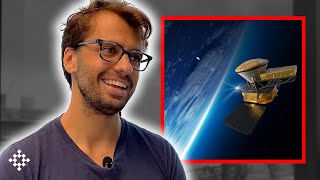
Delian Asparouhov went from Square intern to founding Varda, a space manufacturing company. He explains why manufacturing in orbit makes economic sense and what it takes to build a startup in an industry that barely exists yet.
Why did you hop on the phone with me within like, you know, 24 hours. It's just so odd. And he basically said, well, it was mostly because of your performance at Square. And I was like, well, what do you mean? Like, you know, you weren't, you know, on the Android engineering team. You didn't see anything? He was like, no, but I did see that, you know, at the office you would come in and you'd wear these like literally, you know, short shorts or even shorter than these that I'm wearing today, like, you know, tank top. You'd like be super loud. You'd be like climbing on like the like, you know, air ducts, you know, doing like pull ups on them in the middle of like the workday. And he was like, despite that and Square being an. That is extremely particular. Right. Design lab, these designers will complain if the smoothies in the morning are too thick, basically. And the complaint and coo. I get all of the complaints from smoothies to personnel, et cetera. And he was like, the behavior that you were exhibiting almost certainly should have come up with behavior complaints that I would have seen. And yet nobody complained about you. And so the conclusion that I made was like, man, this guy must be a really good engineer if everybody on his team is willing to tolerate the fact that he's like barefoot, tank tops, pull ups, etc, like, you know. And so I should just take the phone call because like you're you know, very quirky and very talented engineer.
All right, Dylan, thanks for coming on the pod man.
Yeah, no problem. Thanks for having me.
Yeah, thanks for inviting us to record out of the founder's phone office.
Welcome to paradise.
Yeah, no, this is pretty sweet. Amazing view. Yeah. So you arrived to your family, arrived to the US with a couple hundred bucks, then you interned at Square, you did a bunch of things in between. Now you're a partner founders fund and started a space manufacturing company. Tell us that story.
Yeah, my parents basically managed to immigrate to the United States away from the sort of like post Soviet Union collapse Bulgaria which definitely had a lot of issues at the time. And a part of why they were able to is they both basically got into originally my father into Caltech and then my mother basically like a year later, two years later. And yeah, basically arrived, I mean I think epitome of American dream in some way. Literally arrived with 100 bucks in their pocket. And early on my mom is now a professor basically in what I call like behavioral economics. Effectively it's got a lot of like psychology in it but Also, you know, economics. And part of the reason why she got interested is because there were these basically advertisements up on campus where if you basically went and participated in these behavioral economics experiments that basically were almost like, you know, like trading experiments. They basically set up these, like, artificial markets and they would introduce news about, you know, inflation or some company's earnings report, something like that. And basically studied how people reacted to that in actual trading environments where if you traded the best out of class, the we actually basically got the real cash. And so my parents started going. Cause they were like, we need a way to make cash on the side in the evenings. What's a better evening job than using our mathematics and statistics skills to try and game these markets and become really good traders, basically. And through that, my mom got fascinated and ended up basically going to go study under that professor and ultimately ended up making that her whole career. So anyways, yeah, it was fun growing up as a kid, basically on Caltech's campus, basically surrounded by academics. We ended up moving to Utah.
Were you born here in the States or born in.
Born in Bulgaria. Okay, gotcha. I was basically there until three and a half. It was funny actually the summer after. So basically came here for, I think, preschool effectively, then went back for the summer and then came back for kindergarten. I remember coming back into the classroom and literally just realizing like, oh, shit. I definitely learned English last year, but I cannot speak it anymore because I was back for three months in Bulgaria. Completely forgot it. And of course, you're young and so it picks back up again very quickly. But yeah, very much. Was sort of an outsider.
And you guys moved straight to California?
Yeah.
Why California?
My parents were graduating to Caltech.
Okay, that was the connection.
Yeah, Pasadena. That was where I grew up. And yeah, I was just like surrounded by just the wonders of true academia in some ways. I always had this life path. I got fascinated with aerospace early on. Caltech of course, has jpl. And so I was always thinking, like, okay, I'll do an undergrad and something, math, computer science, engineering, and then come to grad school at Caltech and then go work at JPL and do something and you know, robotics, you know, deep space something. And that was sort of like the, you know, default path. Especially because when we then moved to Utah for my middle school, my mom was a professor, or still is a professor at the University of Utah, which was the impetus of moving there. And again, continued to be surrounded by academics, like you asked, you know, seventh, eighth grade. Delian. He basically thought everybody had a Ph.D. and everybody was a professor because that was everybody that I knew, you know, the adult world. But yeah, I think, you know, started to come to the realization, you know, once I got into college that, you know, maybe academia was not the best place for impacting the world of aerospace and ended up taking a hard left turn. But yeah, moved to Utah for middle school, ended up getting pretty deeply involved in a lot of basically robotics, math, computer science projects, did math competition since a very early age and did pretty well at those in 10th grade. Basically started there's this high school robotics competition called FIRST Robotics. And so I started or helped start the First Robotics team at my high school. I also took a bunch of basic university classes while I was in high school. So the University of Utah, most people don't appreciate it, but it's actually in the top 10 of computer science departments. Interesting. If you actually look early on of the DARPA intranet on the west coast is basically like UCLA connecting to Stanford, connecting to University of Utah and then east coast was like Harvard, mit. And then I forget, is that in Salt Lake? Yeah, in Salt Lake City they had some of the best early computer graphics department. So it actually still has, if you want to be a game designer. University of Utah, specifically in that type of software engineering is actually like top two basically amazing. And so like EA Sports, all the basically big video game companies, all massive offices downtown in Salt Lake. So anyways, I started taking all these computer science classes on the side. Got my first software engineering internship the summer between 9th and 10th grade and I did another one about two summers later. And so pretty early on just started to realize I was picking up things more quickly maybe than I thought. And also I was starting to get into the world of real world development of software and products, et cetera, rather than just the pure academic version of it. And so by the time I landed at mit, it's like I'd already been basically a professional software engineer. I'd already taken all the freshman and sophomore year equivalent courses at a very good school, the University of Utah, and already knew at that point I was like, I want to do something in aerospace and I want to do it via robotics software, et cetera. And so had a pretty at the time I thought clear path of like, okay, great, I'm still going to do this undergrad at mit, grad school at Caltech, get to jpl, but do it very quickly. Ideally graduate from MIT in two years or something like that. But yeah, that's a brief summary of childhood epidemio. Died in any particular Areas.
Yeah. So speed seems like a theme throughout your career, your childhood.
I've been saying John Coogan said, use speedrun. Silicon Valley.
Yeah. Yeah. I mean, it's probably more from less of a focus on speed and more of, like, impatience, I guess. Yeah. Maybe high energy level.
Yeah.
So what was that pivot from academic track to say, hey, I want to start a company, do Nightingale that whole split.
Yeah. It's funny, I always think of life, you know, for me, at least two major pivots. The first one was in 10th grade. I basically had this realization to my dad, phenomenal mathematician. He, in high school, was on the Bulgarian national math team and went and competed at the International Mathematics Olympiad. Got a gold medal there. In 10th grade, I basically had this realization where I was pretty damn good at math, for sure, whatever, like top 0.1% in the United States. But in order to get a gold medal at the Mathematics Olympiad, you basically have to be top.001%. And I was not quite at that level. And I met those types of people and I could tell I have an okay different brain than they did. It is very impressive to meet those types of people. And so my first pivot was, okay, I want to go do something that I can be top.001% at. It's not going to be mathematics, but I'm pretty damn good at computer science. I like the world of software applying to the world of hardware. What better place, basically, than to basically start this robotics team? And so first pivot was like, screw math. Let's go into, like, robots, space, et cetera, and make that basically the thing, since I think I can be like, top 0.01% on that. So that was like sort of first major pivot, and then, yeah, second major pivot was. It was definitely not at one particular moment, but pretty rapidly at mit, I started to realize, like, two things. First was I did have this interest in entrepreneurship in the world of startups. I got somewhat lucky in that I had this friend of mine, Romy Kadri, who I think my second week at mit literally stopped me in the elevator and said, hey, I've heard about you, high energy, et cetera. Do you want to go to computer science? Do you want to come join for these weekly dinners that I do with the business school, where we basically bring together undergrads, business school students, and we just talk about the local Boston startup ecosystem. They have speakers come in, et cetera. And I was like, yeah, free dinner. Why not? That could be way better than when I get in the Cafeteria. So basically started going to those and started getting pretty hooked on the idea of like, man, maybe this is a world that I want to go into and intern at a startup. And so that was probably the first seed of it. Actually ended up working on my very first proto startup that I very rarely talk about with this guy, Romy Kadri. I was sort of supposed to be like a data driven touring manager. Effectively we would basically analyze YouTube, Facebook, Internet traffic, et cetera. And this is like, this is in fall 2011, spring 2012. This is like early days of Google Analytics and stuff like that. But we basically take artists and then used that to actually determine their tour schedules. He'd actually worked at a top tier basically artist management company that, gosh, I should know the name of, but it's been now long enough that I can't quite remember the name. But they manage, they're definitely the top three managed major artists. And he had been there as an intern the prior summer and he basically realized he was like all the touring managers just completely guessed. So that was the first step into it. In spring of freshman year, I literally in the midst of exam season, was flying out to go to our first data driven tour, basically stage that we had set up and show that we had set up and so was clearly hooked on the idea. Realized that spring that we were probably not quite going to become a massive startup, et cetera. So stopped working on it and then got lucky in that I'd always wanted that freshman summer to go into the world of Silicon Valley, go work in an interesting startup. At the time I was by far the most fascinated with Jack Dorsey and so literally got pretty lucky in the square interview process in that both they weren't typically considering freshmen as internships and then two, even when they flew me up and interviewed me, they originally actually passed on me as an intern because he had not impressed a couple of the engineers in terms of SQL query ability, which I thought was very stupid and that clearly was a very good engineer. Just hadn't written that complex SQL for years, but got lucky in that I really made a strong impression on the CTO of Square. Bob Lee, RIP he unfortunately passed away earlier this year, but he made a really good impression on him and he was really willing to sort of take the bet on me. And so he actually reversed the recruiting team engineering team's decision on passing on me and basically said I could come be his personal intern.
How big is square?
At the time, at the time I interviewed, it was probably like 60, 70 people by the time I got there, maybe 110, 120 and it had grown enough and Bob Lee started to take on more like let's say like non pure engineering responsibilities that once I got there he was like, look, I'm probably not gonna be that interesting of a mentor cause like I'm mostly working on like not engineering projects. Go choose your sort of favorite team. And so I spent like probably three hours with the hardware team and I was like, oh my God. These like projects, like it is low level firmware and I do like software plus hardware. But like everything that we're working on is like, you know, at the time this would have been like summer 2012. Everything we work on is like 2015 shipment dates. I'm not going to be around for that. I want to work on something we can ship in the three months. And so I was like, well what else am I good at other than firmware? I've developed a decent amount of Android apps and the Android team here is like the world class Android team. Basically the founders of Android, a decent chunk of them basically had left Google and come to work at Square. And so you had this just literally probably the best Android team by far anywhere in the world basically. And so I was like, I want to go work for those guys. And so I managed to finagle my way in. Even though they were originally full on interns basically. But yeah, I managed to finagle my way in. Yeah, that was just. That summer was just like a complete blast. Like, you know, you just like go from reading about Silicon Valley to like was like living in Alamo Square. Thousand bucks a month rent, like you know, living in a bunk bed in like a hacker house type thing, you know, biking to work every day and just like such a cool commute. Cause like even on the bike in you're like going down Alamo Square, going through like Hayes Valley. Way before like Hayes Valley became what it is today. Through soma, you like see Uber Square, all these like, you know, cool startups along the way. We were in the old like San Francisco Chronicle building. So it was just like this beautiful, beautiful building. And then like I got to like, you know, see Jack give his like, you know, corporate presentations and Keith Rapport at the time being coo and like watch the company go from literally like when I like interviewed was like 80 by the time I joined it was like 120. And I think by the time we left it was like 300 or something like that. Just like over a summer, over the summer they were literally like I mean it was something like 10, 15 people basically like starting a week, they were just like really in this rapid user scale up mode like the Android team. When I joined we were like maybe like four people, five people. And by the time I left we were like 13 or 14. And so when I left for like the internship, people had assumed I was a full timer because they were just like, he's been here, you know, he's like more senior than the rest of us in terms of time here. And then like, I don't know even like got to do like a one on one with Jack Dorsey like back in the day.
Oh, sweet.
Impact on me.
That's awesome.
Back in the day when like, yeah, a lonely or a lowly intern was allowed to ask for a one on one.
And that's where you met Keith Raboy as well, right? So what was that process of. Because then you were his chief of staff years later, right?
Yeah, yeah. So I didn't actually meet him during the internship, you know, one on one or anything like that. You know, obviously, you know, knew his name and watched his presentations. You know, he knew of my name basically. Given that 120 people, you kind of know everybody's like name, but didn't necessarily, you know, ever, you know, chat. He made a really strong impression on me. Basically it was like the, you know, I want to say like August 10, 2012, roughly around then, basically it was like the first week effectively where Square just hadn't experienced consistent week over week growth basically since the company had launched. Because for a long time the company just had this magical organic growth engine that actually took them a little while to figure out. But it was basically when you actually had merchants with a plugged in Square. People would basically physically see the merchant take your card via this Square headphone jack thing and then they would get hooked. And one out of every 100 customers would actually also be a small business owner that could use Square. And so you had this very natural, you know, basically like my wife did that. Yeah, like the K factor was literally like, you know, 1.15 or whatever every single day. And people would just like consistently sign up. And so, you know, August 2012, the company's now been launched. For about two years it had been growing super consistently and then all of a sudden for the very first time it's not growing and everybody's panicking because it's like, you know, has our golden goose somehow stopped laying eggs? You know, has the fountain of youth basically what has happened? And Keith went and did this really in depth analysis that at the time, I have to admit, I was obviously an unsophisticated 18 year old. Yeah, I was 18, relatively unsophisticated 18 year old that did not know that much about statistical analysis of companies. And so he produced and presented what I now know as a cohort analysis. But at the time I was like, holy shit, this is amazing. He basically showed like, look, we do have this magical K factor that introduces these net new cohorts that are always basically slightly larger than the prior one because we now have more and more merchant base that is making it so that we just keep growing more and more. There's a larger base for that K factor, however, despite the fact that that's normally been able to outweigh any seasonal factors in the United States in August, there is actually just less local merchant volume because people are on vacation, people travel, etc. And to the local cafe just makes less money. And so we're now just large enough for the first time where the seasonality of the base actually outweighs the growth that you can get, even though the base is larger from that K factor. And so he basically perfectly predicted, he's like, look, by third or fourth week of August, we'll actually see growth return. It'll actually basically catch up because there will be a bunch of merchants that had seen it out and on the go while they're on vacation, whatever, and when they come back, they'll basically sign up for it. And lo and behold, obviously, third week of August, everything came back and it was ripping. And I just remember seeing that moment because my dad is a statistician. I remember just like seeing this moment of like, whoa, you can apply, like, mathematics and like statistics and like logic to the world of business and actually use that to, like, influence the decisions that people make. I just remember thinking, I was like, I had no idea. You know what I mean? Like, anytime you're watching movies, you never see, like, you see it in the trading world. But I was not interested in that world. But I never thought in company building that statistics had applications, basically. And so I was very fascinated by that. And he made a really strong impression on me there. And so didn't talk to him or anything for a while until basically after leaving Square, he was like, I want to come back to Silicon Valley asap. I happened to have roomed basically in that hacker house with a guy that was friends with the Thiel fellows. They brought me to a couple of Thiel Fellowship basically events, and so started to think, okay, this is maybe my way back to Silicon Valley. But rather than just being as a software engineer, let me basically go build something. And so basically winter of my sophomore year applied for the Thiel Fellowship and then as a part of that application process, basically reached out to Keith off a cold email, basically saying, hey, would you be willing to chat with me and give me some advice on this Thiel Fellowship? I know that you know Peter and give me some advice on my startup and would love to meet because he basically transitioned from Square to being a venture capitalist basically roughly that same winter. And I was like, hey, since you're now a venture capitalist, would you be willing to give me advice as a founder? And sort of funny story, three or four years later after I got to know him, I was the chief of staff, et cetera. I'd then seen how he responds to various cold emails because he basically, from the cold email, basically was willing to hop on the phone with me basically 24 hours later. And I asked him a couple years later, I was like, hey, normally when a random intern sends you a cold email, you never hop on the phone 24 hours later. Your response rate probably is only 50% or 25%. Even then you're normally scheduling them a week or two out. Why did you hop on the phone with me within like, you know, 24 hours? It's just so odd. And he basically said, well, it was mostly because of your performance at Square. And I was like, well, what do you mean? Like, you know, you weren't on the Android engineering team. You didn't see anything? He was like, no, but I did see that at the office. You would come in and you'd wear these like literally, you know, short shorts or even shorter than these that I'm wearing today. Like, you know, tank top, you'd like be super loud. You'd be like climbing on like the like, you know, air ducts, doing pull ups on them in the middle of the workday. And he was like, despite that and Square being an office that is extremely particular, these designers will complain if the smoothies in the morning are too thick, basically. And the complaint and coo, I get all of the complaints from smoothies to personnel, et cetera. And he was like, the behavior that you're exhibiting almost certainly should have come up with behavior complaints that I would have seen. And yet nobody complained about you. And so the conclusion that I made was like, man, this guy must be a really good engineer if everybody on his team is willing to tolerate the fact that he's like barefoot like you Know, tank tops, doing pull ups, et cetera. And so I should just take the phone call because you're very quirky and very talented engineer.
That's hilarious. That's very interesting. So what's the gap between when you send the email to, or rather when he remembers you at square two, when you send the cold email, it's like a year, maybe nine months, seven months.
Yeah, I left square probably third week of August and I would guess probably like February 1st the following year, roughly when I sent it. Yeah, I think I tweeted that email somewhere.
Okay. Yeah, that's the time. So is this like an interesting transition where you grew up in this math heavy home?
To say the least.
And then all of a sudden you are in a space where math goes from abstract applications to you can use it to invest, you can use it to build companies, you can use it to build software, you can use it to all these things. Is that kind of an accurate read of what you're thinking at the time as you're entering Silicon Valley?
Yeah, I mean, all this stuff, it's easier to paint it retrospectively. Obviously, as a 19 year old that's sophisticated to present that framework. But yeah, generally I was interested in the application of my engineering and mathematics skill set. And when I look at my venture career today, you know, if there's one thing that I've really learned from Keith, is just like the fundamental question you should ask whenever you're making any investment is just like, why are you going to be the investor that appreciates the most? And basically in the sort of like, you know, second order effect of that question is why won't other people basically appreciate it as right? And I have a multitude of answers for that. You know, sometimes it'll be like, hey, this is a company that is based in Eastern Europe because of my Bulgarian background, I'll appreciate it. But if you look at the commonality of the majority of the investments that I've made, one of the core ones is I can appreciate this because in order to understand it, you need to have a core engineering and mathematics background, but also be able to understand how that will apply and not get lost in an academic problem. And so when I think about where I tried to lean into on my career, sort of the overlap between those two is just like, yeah, background in mathematics and engineering, but also understanding how does that actually apply to the real world and where does it have effect, given that if you get too stuck on either end, it's very easy to basically find people that work on these super academic ideas that will never have business applications. And then obviously there's plenty of investors that can understand business but have no clue how to underwrite mathematics or engineering.
Yeah, I heard you say somewhere that the Rabois chief of staff position was like 10 years of experience packed into two. So now that you've done Varda and you've had more experience as a founder on top of that, looking back, what are the things that stand out to you that you learned from Raboi that then you've applied later?
Yeah, I mean I'd still say it's still the segment in my life that I've had the biggest step change in growth, learning and opportunity. I'm pretty skeptical I'll ever experience that type of step change ever again, honestly, because the next step change is so high that it's probably impossible to do in a short period of time. It'll take like decades to hit. I think it was just an extremely unique opportunity for Whenever I was 23, 24 at the time to get from going from being a first time field founder to working at Teespring for a year or so and getting to see a larger company and having let's say a bit more executive authority there and larger projects to all of a sudden going from that to the day to day tactical tasks that the role involved were not that interesting or strategic. You don't necessarily learn a lot from that. The chief of staff is mostly air traffic control in some ways. That's how I describe it. But the exposure that you get in terms of like, you know, I got to sit in on like Max Lupchen running his affirm board meetings and not just like once but for like years on end. So I could watch how the company was like, you know, problem solving, how Max was communicating to his executive team, to his investors. And not only that, but then also Max was probably one of the very few where I didn't get to actually, you know, whenever Max and Keith would do their one on ones I wasn't allowed to, you know, be in those just because, you know, sometimes a little awkward professionally to bring in a chief of staff into a relationship that you've had for like obviously 25 years, but let's say for other founders they were still very high quality. Keith would bring me in for this one on one. So it's not only like the board meeting but also like the one on one with their like closest confidant, mentor, etc. You know how he was like helping them problem solve and it's just like you know, over the course of two years, you encounter everything, you know, lawsuits where the company is getting sued, you know, acquisition channel that totally shuts off, you know, regulatory action, you know, that like, you know, again, resulting in, like, you know, lawsuit, you know, fundraising that totally fails, fundraising that has 15, you know, offers from every single startup or every single investment firm, and everything basically in between executive hiring, executive firing. I mean, it's just like, you know, and you're going to get new experiences across, like, 25 different companies over the course of two years. And so that's why I describe it, like decades of experience where it's like, I literally got to watch 25 different companies basically go through two years of challenges in an extremely intimate level that you don't get if you're like a reporter interviewing them, if you're even an IC employee working at these companies. You go get the level of exposure that you get from being basically in the room and shadowing the lead investor that is the prime confidant and mentor basically of the founder.
Certainly don't get that in an mba.
Yeah, definitely don't get that in an mba. Case studies pale in comparison to being in the boardroom, basically. So, yeah, if I were to point out basically, the biggest couple of lessons that I think have applied to, let's say, my time at Vardo, the first is probably Keith's philosophy around company building, which the analogy that he likes to use that I really enjoy is the best startups look more like filmmaking than they do AB testing in that, let's take something like Top Gun. When they're writing the script and they're thinking about the actors, it's not like they go to audiences and say, hey, should we have, like, Tom Hanks as the fighter jet pilot or should we have Tom Cruise? He's like, no, like, I love Tom Hanks. He's great. Like the Apollo film, things like that. But it's not the fighter jet pilot, right? Like, that's not. He's not the badass doing the stunts, doing the crazy things. It's like, obviously, Tom Cruise. It's like they write the script, they catch, like, the perfect character for each individual position that is, like, you know, most appropriate. They understand how they're all gonna complement one another. And, like, you don't like, go like, you know, preview it or do like an MVP or anything like that. No, you, like, you go fund and you build the whole film. You might make a trailer that is a component of the whole film to use it as marketing material, but you're not a b testing your way to the startup. You know the script, you know the people, you know exactly what you're gonna do, and then you go like, go do the damn thing. And so his example of this is like in Opendoor, if you look at it like the four co founders, Ian Wong, Eric Wu, Keith Radboy, and JD Ross. Keith, obviously he knew all of them for a decent amount of time, but basically the rest of the co founders had effectively never met. But he basically cast each of them individually for their exact same skill set, what they brought to the table, and basically how it related to the basically sort of top four basically core risks of the company. And each of them was basically world class and helping de risk that very particular user risk. And so when it came to Varda, I basically just applied that exact same framework to how I thought through the company, what are the core risks of the company and what would the archetype, what would that actor look like that would basically perfectly fit into that role that would basically de risk that risk as much as possible, and basically then went and and hunted down people that sort of match that profile. So that I would say is probably the most impactful lesson from that time. The rest are all around just, let's say everything from storytelling and how important that is, both to raising capital, but then also attracting talent, attracting customers, attracting attention when appropriate, and then some amount of just the tactics and incentives of Silicon Valley. There's one thing to know. Here is the list of the top 20 venture capital firms to raise from. There's another thing to know. Here are the team dynamics internally, here's how large they are, here's how they make decisions, here's what their LP base looks like, here's how they report, here's where they are in their fund cycle. Right. Just much more deeply understanding the rules and incentives of Silicon Valley, both from LP to investor to GPS to founders to executives to individual employees, and understanding all layers of that stack, because through exposure from him, you got to basically watch all layers of that stack. And I really, really deeply understand them. Yeah, those are probably the two biggest areas.
So we're at Varda now, I heard you say also another podcast, I think it was, with Jason talking about how you had the idea for Varda for, I think it was like 10 years, but certain things were lining up to make it possible for you to actually build it. Is that right?
Yeah. I'd always been fascinated with just like the industrialization of space and that thought that the only way for humanity to truly become Multi planetary was not just like exploration, but you ultimately needed like economic incentives and economic means in order to have humanity out there. And it was just clear that obviously industrialization was going to be that economic incentive. It's not going to be like tourism or exploration, et cetera. Those come after you basically have sort of industrial incentive and manufacturing in orbit and like lunar ice mining and asteroid mining. Those being like the population of ideas that I was interested in in 2011-12 when I was, you know, doing the Thiel Fellowship. I definitely did like explorations on nights and weekends. Hey, should I like, you know, instead of building a company, should I like go be an engineer at SpaceX? Should I go work at some of the first generation, let's say industrial space companies? You know, groups like Made in Space, Deep Space Industries, Lunar Express, probably being like the top three basically at the time definitely debated basically, you know, working at all three of those. But at the time partially came to the conclusion one, I don't know that I want to be like an individual contributor engineer either at SpaceX or some of these other companies, and that I'll build up a great resume and experience. But again, I was more interested in merging the world of business plus engineering rather than just being an engineer alone. And then two, it did just feel like those first generation of industrial space companies. It was just like wrong time. Access to space was still super, super expensive. These things felt more like academic R and D projects than they did something that could commercialize quite quickly. And so ultimately ended up shelving the idea for a while, still would study. I watched every single press release. I would try to meet the founders whenever I could, but ultimately didn't act on the idea. And then the next time it really popped into my head again was probably like late 2017 or so. Basically been tracking SpaceX for a long time. And it was very clear to me that if you looked at basically their mast orbit since 2009, it basically followed a perfect exponential equation. You definitely had some blips around some of the rockets failing. But in 2017, to me it felt obvious. If you extrapolate this out for another three, four, five years, these business models really start to do make sense. And so December of that year, I actually was meeting with a couple friends for drinks and dinner and made a bet basically with one of them. By January 1, 2022, somebody basically five years later, somebody will create a product in space and bring it back and it'll have more economic value than it did when it left and it will cover the cost of basically of the mission. This is way before like starting Varda. So it's fun to sort of be able to point back to that bet in some ways of showing Bookmark this. I've really been thinking about this for.
Quite some time.
And then again picked up the idea once I moved over to Founders Fund Q4 2019. Basically at that point a Falcon 9 rocket had launched and landed for the first time. I think like three times, four times in a row. And so I basically pinged a couple of my friends from MIT that had gone off to work at SpaceX. It was like, hey, how much wear and tear are you seeing on these rockets? Can these things get up to 20, 30, 40 times? Is reusability really going to be a thing? And the resounding answer that I got was like, absolutely. These things are seeing less wear and tear than we expected. We can definitely engineer for the areas that are experiencing wear and tear and make the refurbishment cheaper, faster, more effective. And by the way, we're definitely working on Starship and it's a serious endeavor. And so at that point I was like, okay, the economics for this like really work. Like not in like, you know, like future timeframe. Like no, like in the next year or two, this stuff works.
And the economics here being specifically the cost to launch payload like a kill, basically the cost per kg sent to space is gonna drastically drop.
Yeah, you think about space manufacturing like the fundamental input is basically just like of the, you know, do it like lemonade stain style, you know, economics. The product that you bring to orbit has some amount of mass, it has some value generated while it is up in orbit. Is that value generated greater or less than the cost of basically sending it up to orbit. Obviously the biggest input into that being launch costs. For sure there's like the satellite cost, everything else, but all those in some ways are predicated. Like the way that I like to describe it is like if it costs you 5 million to send something to orbit, you're not going to send something that only costs 100k, you're going to spend 5 million because you're going to make sure that you like really freaking work and like a super high quality, you're going to look like an idiot if you spend 5 million to send something 100k that is up there and then it fails after like a week or two or something like that. But all of a sudden when like launch costs are 100k and then you're incentivized to just send like 50 100k things and like yeah, whatever, half of them fail, they'll burn up in the atmosphere totally fine. And so in some ways again launch costs predicate the cost of basically the entire supply chain. And so yeah, it felt like there was economics work. Finally the business model was really in like a, like one to two year time frame made sense to tackle. And so ultimately you decided, hey, let me go explore basically all these companies that I had studied back in the day in 2011, 12, see what they're up to and let me go do a wider, let's say open the aperture set of companies, given that more had started basically since then. So I spent about four or five months meeting with everybody that had worked on this idea. Everything from academics that had done small experiments on the ISS to venture backed groups that were trying to attack this as an actual commercial business, to some folks in big biopharma that had done work up there. So they were within commercial entities, but this is more like a nights and weekends project. And after six months or so ultimately came away with the conclusion that just none of these groups were tackling it quite the right way. They were all sort of too academically oriented and focused more on developing basically research papers and they were productizing and commercializing and bringing something to market. And partially the reason that they all felt that way was because so many of them were so hyper focused on basically only operating within the confines of the International Space Station rather than actually building something that could live outside of that. And my sort of first principle thesis, not that I'm a phenomenal space engineer at the time, but my fundamental thesis was you just cannot scale up this business model on the International Space Station. There's just, I can't think of any human history when has there been something that has scaled a large commercial business atop a bureaucratically run piece of infrastructure that is very risk intolerant given the humans on board. And so everybody seemed to be afraid of that because they were like, well one, NASA's not going to pay for anything that's not on the iss and two, I can get up there just fine, but how am I going to bring myself down basically once I'm done with my manufacturing. And so idea went down the shelf again, but this time it went on the shelf for a very frustrating reason. I put the idea on a shelf now probably four or five times over the past decade, but this time I was like, this is frustrating, like this idea, I have not found anybody for a long time. It was easy to discount it because of launch costs, right? So it didn't make sense. But this time I'm like, the fundamental discount reason is no longer there, and yet now nobody's working on it. And I have this fear that it's gonna be like, 2026 and, like, Starship's gonna be online, all these things are gonna be working, and still nobody's gonna be doing space manufacturing the right way. And so we definitely felt a little more motivated for the problem. Covid hits. We basically decided to really clamp down on our investment pace at Founders Fund. And so I went from having a very intense job to basically kind of not having a job. And so for the first month of COVID basically just played video games for, like, 12 hours a day. And then at some point, I was like, I can't just do this for, like, the next year, however long this last, find something to do with my life and be a productive investor. And so Keith took me out on this little retreat out of Malibu where we did this whatever distance house. We went on this hike. And I remember very clearly on this hike, just asking, what the hell do I do? We're not really investing. I have a ton of free time. And he basically was like, look, the most strategic thing you can do is create your own proprietary deal flow. Like, you're a former founder. Go start another company. And I remember just thinking, I was like, man, I did not enjoy. There's a reason why I'm an investor now. I just think I'm a much better investor than I am founder. Why would I put myself through that pain again? But I was like, well, there's only one idea where I'm motivated enough. I know enough about it. I know that nobody else is going to do it. And so it's like the perfect confluence of factors that I think should be required for any incubation as an investor, given the massive opportunity cost. And so starting that day, basically starting to take it more seriously of, like, okay, if nobody else is going to do this thing, right, I'm just going to go do it myself instead.
Yeah, that's awesome. And so Founders Fund incubated. Has incubated Varda. Is that right?
Yeah, yeah. I mean, I'd say if you look at it relative to, like, groups like Center Hill or like, Atomic or things like that, there's much less, like, support infrastructure here. So I describe it as, like, well, you get to keep your job. Yes, exactly. Delhi did it, but he got to keep his job is probably the proper framing. Less so than, like, there's a whole infrastructure that was very helpful, right?
Yeah, that's awesome. So what customers do you guys focus on right now at Varda? Because there's a whole host of things that could be manufacturing space, but strategically, what are you guys focusing on right now?
Yeah, we were more. The company originally started off with just like this fundamental thesis of there's been a wide variety of products that have been proven out on the iss. Let's go deeply, more deeply explore these, talk to commercial customers, and like, lean into sort of where we have the sort of highest hit rate. So early on was very explorative. Two things basically happened. One, China launched a hypersonic missile that was successful summer of 2021, about six months after starting the company. And all of a sudden, reentry capsules that reenter at hypersonic speeds and are able to test out hypersonic technology went from being like a, like, you know, boonies project, all of a sudden a national security priority. So one, Varda leaned much more into the defense angle. And so some of our primary early customers are groups like the Air Force, Navy and NASA to assist them basically in utilizing our reentry capsule as a methadone or a test bed, let's say, for testing out hypersonic attack. The one liner that I basically like.
To give is reentry capsule as a service. A new.
Yeah, yeah.
Total new category of startup.
Yeah, that was not an interesting business model three years ago, but because of the China missile, it became. Became one. And the way that I like to describe it is sort of the one liner is imagine you're Boeing trying to build 747s, but there's no wind tunnels. And so whenever you build it, you just chuck it in the air and hope that it flies. Basically. That's basically how we're building hypersonic technologies today. Varda is basically that wind tunnel where rather than just chucking it out in the air, you can test out all the subsystems, see how it actually reacts in that environment, and then once it's all ready to go, then actually go fly the damn thing. So that was sort of an initial, let's say, set of customers. And then the other area where, as we were more explorative in materials, clearly by far saw the most resonance basically in pharmaceuticals. And so our commercial business is entirely focused on, call it like mid cap, let's say, and large cap, basically biopharmaceutical, either publicly traded and effectively utilizing microgravity as a way to help them solve formulation problems. And so you can think of that as effectively like the fundamental crystal structure of the drug and that Having a huge effect not on it doesn't have a structural effect in terms of like hey, it helps attack this tumor cell or anything like that. But it can really fundamentally affect basically the delivery of the drug, the shelf stability, the viability of the drug effectively in terms of being able to pass certain solubility barriers. Call it like the blood brain barrier. Basically being able to affect performance characteristics that most people under appreciate when you're bringing a drug to market, that being actually one of the most critical things on a lot of drugs dying on the vine. Even if they know that it actually attacks the tumor cell, they just never end up finding a way to actually consistently deliver it to the tumor cell in a way that is like non toxic and easy for the patient to actually take every single day. And so we basically like you know, effectively partner with top 20 biopharma. And in some ways, unlike the simplicity of the lemonade stands dial economics that I was trying to describe earlier of like value generated in space, this is how much it costs. Obviously your drug formulation is a little bit more complex and if the economics are specific on a drug by drug basis, so you kind of have to reanalyze for each individual drug candidate is space basically appropriate. So definitely more complex business model. But partially because of having the hypersonic business line that allowed us to scale the company to the extent where we could tackle that type of more complex business model. And this business model having been proven out by companies like Ginkgo Bioworks, Appcelera, Halozyne, all publicly traded. And so we're not the first to try to take this model. It just happens to be that our technology is microgravity rather than synthetic biology or enzyme technology.
Yeah. On that note I just had a question. When the reentry capsule comes in, the hypersonic speeds Mach 20 or Mach 25, does that have an effect on the drug that you just mixed in microgravity? Are there any effects there that you have to then account for that if you're building here on Earth, you're not going to run your mix through a hypersonic Mach 25 re entry sector.
The first problem you're really solving for is basically like thermal control. That one is like relatively solid. So actually literally 18 hours ago, NASA landed a small reentry capsule in the Utah desert with a asteroid sample that has been traveling for about two and a half years called the Osiris Rex mission. They have a sort of similar problem in that they want the asteroid sample inside basically to not be melted during reentry so they can Study IT Control. Controlling the thermal environment inside a reentry capsule is definitely a solved problem. Obviously in the Apollo days we had to not have the astronauts melt and a small reentry capsule, basically sort of same thing. So the first problem, thermal control, relatively solvable. The second one is more around like G forces and shock. So that one is harder to sort of solve in that you are literally decelerating through the atmosphere. And so you need G forces in order to decelerate because it's literally acceleration. So in the early days, Varda primarily focuses on small molecules, pharmaceuticals, partially because those drugs are far more stable even at very intense G forces and shock regimes. But as you start to work into larger molecules or eventually things that start to approach, not quite cells, but closer to cells, those start to become more sensitive to G forces and shocks, similar to how a human is. You and I would pass away if we tried to re enter and rip ten G's for three and a half minutes on end. A small molecule that looks effectively like table salt, that thing can rip 100 GS for 10 years, comes out on the other side and it still basically looks like table salt. And so it's right now, let's say the current version of the reentry capsule definitely has limitations on the drugs that we can go after. And so over time we will start to have to create, call it v2 of the reentry vehicle that more precisely controls G forces and shock so that you can actually start to take on sort of more complex, you know, drug targets. That type of vehicle likely looks sort of like a mini space shuttle or a mini X37B. Again, no humans on board, fully autonomously controlled, but is able to actually have active aerodynamic control surfaces versus our current reentry capsule, it's basically like, you know, it's a brick, basically. It just like, you know, comes into the atmosphere. It does not glide or anything like that. You know, it doesn't use. The Apollo air capsules use the trick of basically like slightly offset center of gravity. They'd basically rotate the capsule and they would actually use that as a lifting versus a non lifting basically force. So even though the Apollo capsule does not look like it's got wings or anything, it actually kind of does effectively sort of have a wing. Then obviously the space shuttle literally obviously looks like a plane. So yeah, one day we'll have to work on that in order to eventually expand into a larger set of molecules that we work on.
Okay, cool. And so broadly, if we go one like one step up and you write a lot about this on Twitter, Varda itself, Founders Fund is you're interested in building in the real world, like tackling reality as it is. And there's a lot of companies, especially coming out of the 2010s that take advantage of insane venture capital markets, zero interest rates that are building or build or their culture is not grounded in reality. So how do you think about as you're building in the world of world of atoms, in the real world, what kind of companies are you guys interested in building? What kind of founders are you looking for? Like what kind of people are you interested in collaborating with? Especially in a world that's more and more, it seems like disconnected from reality in some ways.
Yeah, I mean, I think in my job especially so as an investor, but then even as a founder, you're ultimately aiming for long tail outcomes, right? Like the only way that you make generational returns and build a generational company is to aim for that. And if you look at the top 10 companies currently publicly traded on the NASDAQ that are tech companies, a much larger proportion of those deal with software plus hardware than the average proportion of a Silicon Valley investor. Apple, Tesla and Nvidia are all pretty phenomenal companies. Those are definitely not software only companies. And then Amazon and Microsoft for sure obviously started off more it's a software remote focus. But even then Amazon very early on obviously had real world logistics. And even Microsoft at this point, Azure being, let's say, a significant portion of their revenue. Azure is obviously very much so a hardware problem in addition to software. I think when I think about it as an investor, in terms of the types of companies that I'm looking for, not only, but if you look at my portfolio, it's probably 80, 85% basically combination software plus hardware innovation, innovating in the real world. I do sometimes do things that look closer to pure software, but they will be in, let's say, special circumstances where I just have a personal connection with the founder or something like that, but not something that I'm, let's say default looking for. Then obviously Barda obviously fits in that same category. I just think despite the fact that professionally I am trained as a software engineer that writes code all day, even since my earliest days of software engineering, it was always software that was interacting with the real world. In the early days of robotics in high school, it was software that was literally moving sort of a robot around. The goal one day was to become a software engineer that was on deep space robotic missions again, or software interacting in the real World Square was probably the most pure software in some ways that I did or my first company, Nightingale. Those are definitely pure software. And I quickly learned that it's just not a problem set that I personally am deeply interested and motivated by. Now I'm speaking purely for myself. Founder, Sun Quad, founder's son. We have everything from Ikea, Joey investing in blockchain, that's obviously almost entirely, almost certainly 100% pure software. Or Sam Blonde, former CRO Brex VP of sales benefits. Obviously his background also in pure software. So definitely have a diverse set of interests across the team. But at least for myself, I prefer to jump off that balcony than all day just working on software.
Because you've invested in real estate related companies and pharma and like traditional tech like sleep hardware. Sleep hardware, yeah.
I think you're one of the biggest or used to be one of the biggest, the people on my timeline that would post the most about eight sleep, I think it was you. I was this close to buying eight sleep. My wife was like, hey, why wouldn't my laptop? I was like, there's this one, I know about it because of Dellene.
Yeah. By the way, the reason I don't post about it anymore, not that I don't sell Love Money Sleep is that the company's at 100 million in revenue, which doesn't matter tweet anymore. In the early days it did matter like for customers and investors.
So are you coming to those from a macro thesis when you're sourcing investments or are you just more organically, how do you think about I need to go develop deal flow or target new investments. What does that process look like for you?
I definitely today don't have the time to be thematic given that I need to be building my company, not sitting around reading market maps. And then generally I just don't believe in that type of investing. I'm not saying it's not possible to be successful. There are plenty of obviously very successful thematic investors. It's just not my style. I'm a very founder driven investor and so ultimately the assessment that I'm making is just is this founder's vision that they're presenting extremely compelling and is it something that can become sort of top 10, 20 company in the world? There are obviously sectors and industries that I'm more comfortable in and can underwrite more quickly than others. And so I'll have a predisposition to investing in the aerospace, investing in robotics, investing industrial logistics and things like that. But I can't claim that I come to the World with a, hey, I have this thesis that XYZ thing needs to exist in the world. Let me go survey the landscape. And I'm not saying it's never happened. Obviously Varda in some ways is an outcome of that, But I'd say 90% of my investing is more. Am I compelled by the vision of this founder? Typically, I'm obviously not that compelled by pure software visions. But sometimes, as a classic example, Lula here in Miami is an example of a very successful pure software investment that I made. And partially there it was just the epitome of what I was looking for in Miami of Cuban immigrants that wanted to build their company here. Even though everybody in Silicon Valley told them that they were complete idiots, the complete underdog. Everybody thought, what is this API for insurance, etc. But it was just something that I just really believed in the founders in some ways and wanted to be involved in their journey. And lo and behold, two years since that series A, they're like north of 40 million ARR close their series B at a significant up round, et cetera, sort of off into the races. And so, yeah, it's like if you had told me, are you going to have a thesis on insurtech? No, by default I'd be like, that's the most boring thing in the world. But do I have a thesis in backing two Cuban immigrants with a chip on their shoulder?
Speaking of Miami, you were kind of instrumental in literally all of us being here, right? Because you tweeted, hear me out, guys. What if we move Silicon Valley to Miami? And then that kicked off Francis Suarez co tweeting and then being like, let's the migration. How do you see this is connected to another question I have. Maybe you can time off together. Part of how I think of you and founders in general is one of the best venture firms in the world, but also in some ways contrarian to the traditional ethos of like, you know, Silicon Valley. And you know, in many ways a lot of super aligned with us and what we're trying to build and how we invest too. And a lot of founders appreciate this. You know, no di. You have to be in office. Like no nonsense and disconnection from reality. Like, we're here to build. We're here to build, make money. We're here to invest. Where a lot of firms were still tied to San Francisco in almost this disconnected from reality ways and building companies in ways that were kind of counterproductive. So talking about moving to Miami and also being contrarian in the broader Silicon Valley ethos How do you think about yourself in that space and founders in that way?
Yeah, I mean for me moving here was somewhat of a no brainer decision in that I'm an Eastern European, pro immigrant, pro capitalism, pro growth, pro tech founder that loves to build and Miami is the epitome of all of those values. Right. You can probably see behind me the shit ton of cranes that are in the landscape. Everybody here is extremely pro capitalism, anti socialism, very much so. Unlike San Francisco and a lot of the woke libtards of California effectively. And so to me it just felt like when I came here I just felt so at home. And in some ways Keith, moving here first sort of opened the Overton window to the idea that you could be a professional, highly ambitious and also live in Miami. Those were not sort of discoherent things. And I think reflecting on, let's say call it, we're almost like three years to the date since the original Founders Fund announcement of basically opening an office here. I think the bet has played out quite well. Is San Francisco going to suddenly disappear tomorrow? No. To be clear, it does seem like there are parts of San Francisco. The energy, the maybe takeover of local politics by people like Gary Tan seem to be pointing towards a positive direction. So I'm not claiming that Miami is going to somehow supplant San Francisco as the number one tech ecosystem in the next three or four years. No. But does it have the opportunity to present an alternative vision for the future relative to San Francisco and show that that vision can make it into a top three tech hub? I think so, absolutely. Over the course of the next decade. I think right now, if you look at it in the United States, there's really only three particular particularly interesting tech hubs. It's basically like San Francisco for all things AI, Enterprise, SaaS, et cetera and a few other areas. Los Angeles for all things like you know, consumer, social, CPG and then like deep tech, aerospace, industrial, etc. And then new York for all things like you know, fintech, insured tech, healthcare tech, et cetera. I think they are really strong in that after those top three, it really is a huge, huge drop off once you start looking at things like Austin and Miami, etc. We're like nowhere close to any of those top three ecosystems. But when I look at basically outside of those top three, I think which potential, which tech hub has the most potential to potentially supplant Louisiana or New York or something like that and becoming ahead of them? I think Miami is really by far the best shot over that next decade, I think three years in, pretty happy with how that bet is playing out. Has it been perfectly smooth exponential growth up into the right. No, there's for sure some people that have moved back that have been friends of mine from my to San Francisco or back to New York. But at the same time I think if you study the fundamental inputs into what's required for growing a phenomenal tech hub, it mostly just comes down to company building, investors and founders being here. And that has really dramatically grown over the past three years and relative to any other tech hub that has ever really been built, phenomenally ahead for year three and continues to have really positive momentum in some ways. I just look at call it our top three portfolio companies here, Open Store, Lula Trava, all of them are basically approaching call it, some of them have cleared it or are Approaching Call it 80 person headcount here, based in Miami, all in person together. I think it's basically 100% chance that one of those three companies ends up becoming a thousand plus person company over the next three to four years. And that's what will really cement a tech hub. Because if you look at prior tech hub, it's those first handful of unicorn mega companies that just create campuses within the city, then they spin off the next generation of founders. It then also attracts the mega tech cap companies like Microsoft, Google, Amazon, et cetera to start opening offices here. Spotify has an office here. And so it's definitely, it's still got a long ways to go. But do I think it has the potential to be that sort of top three over the next decade? Absolutely. And I do think there's some world wherein again it's not going to be in the next decade, but in the 20 to 30 year time frame. Is there a world where Miami actually becomes the number one tech ecosystem system in the United States? I don't think it's a 0% chance. I'm not saying it's 100% chance either, but I don't think it's zero. I think if you just continue to extrapolate these trends of like effectively socialism in California versus capitalism in Florida, there's definitely only one that I would want to bet on over the course of the next 30 year time frame and climate change aside, people think Miami's gonna have problems. So is fucking every other sea level city in the United States, New York, Boston, et cetera. So at least here you have these hyper wealthy people that are probably very willing to pay for whatever sea walls, et cetera that we need. Or you just elevate the city effectively as ocean levels rise. And so I think it's a very interesting place to bet on. And so the thesis was let's bet on it. And then if it becomes a thing, we very disproportionately will get to capture the returns of this. If you look at the most interesting Miami companies, founders fund gets first look and obviously the founder prefers to have us leading the round over anybody else basically in this ecosystem. I think it's a really great bet that Keith basically made. I'm happy to hopefully help accelerate it some amount on a professional level than on a personal level. Just this is the place that feels like home for me. There's the closest that I can get to Bulgarian food, Bulgarian mindset, Bulgarian culture sort of here. And I don't have to deal with I can't say the word libertard on the streets of San Francisco versus here. I can.
Yeah. And increasingly founders are excited about that. What you just said there at the end, like they see all these things happening and they just want to partner with capital that can sees the world the way they see it.
It's very self selecting for the people that are turned off by the idea of being pro capitalism. Please, I have no interest. My job is to be a venture capitalist, not a venture socialist.
Yeah, end of our time. But last question. So it's a dual question that we ask everybody. It's sort of the black pill and the white pill question. The black pill is like in your space in terms of the investing company building, what is more challenging or harder than people realize right now, broadly speaking, in investing or in company building attracting.
Talent, it's like the number one thing I love being involved in companies from the very early stages. If you look at all my best returns, they've all been basically where I was the first institutional check into the company. There might have been some angel investors, etc. But in terms of top 50 venture capital firm, we're basically the first one. And almost always what I spend my first year, six, six, nine months a year with the founder on, it's just like how do you build that early first ten sort of employees? Because after that everything else is just off into the races. And so I think people always underappreciate the difficulty of that. If I've ever struggled in terms of mentoring a founder, it's just been convincing them like no, you literally, I know it sounds crazy, but you need to be a recruiter 80% of your time for the first year after you close a financing round. Yes. Work on customer product, et cetera. But ultimately, I very much believe the Vinod Khosa quote of, like, the team you build is the company you build.
Absolutely. And on the other side of that, what's better than most people realize in the space you're in space.
You know, I think on the investor side of things, the thing that I do really love is just, like, when you do have those moments of, like, you know, I'm not saying, like, they haven't all the time, but when you have that moment of, like, you can very clearly see a company's trajectory that is, like, you know, shifted based off of, like, you know, advice or mentorship or a board meeting or something you, like, provided. Those are very gratifying moments. I generally would say I don't love the job of venture capital. I, like, actually hate probably, like, 80% of it, but, you know, there's that sort of 20% of, like, getting to work with a founder and, like, really grinding in on a problem and actually, like, seeing how you could, like, influence a solution. That stuff makes up for, like, the 80% that, you know, I really despise.
It feels good to win.
Yeah, exactly.
Dalian, thanks so much for coming on, man.
Yeah, of course. Thanks for having me.
Yeah, absolutely.
Sam.
More from Delian



Vinod Khosla & Delian Asparouhov | Venture and Valor: Building the Future from Silicon to Steel


Delian Asparouhov & Nadia Asparouhova on building a relationship, family, and legacy



Delian Asparouhov: Inside the Walls of Founders Fund: What the World Does Not See | E1183


Varda's Landing, Peter Thiel, & the Future of El Segundo, Delian Asparouhov, Founders Fund
