Want To Get Into Venture? Trust the Process | Delian Asparouhov
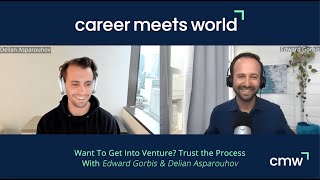
This is a YouTube video titled "Want To Get Into Venture? Trust the Process | Delian Asparouhov" published in June 2021. It features a conversational interview between Edward and Delian Asparouhov, where Delian shares his immigrant background, educational journey, entrepreneurial experiences, and insights into venture capital. The discussion covers his family's immigrant hustle, his decision to leave MIT for startups, his path into venture capital, challenges faced, and his optimistic outlook on Miami's tech ecosystem growth.
Welcome Delian. It is so good to have you on today. First and foremost, how is life treating you in Miami?
Not too shabby, like we were just saying. You know, I like being in a town filled with people that hate communism. Feels like I'm back in Bulgaria.
Speaking in Bulgaria, I know you know that a big part of what I love to do is help people who are of the immigrant or first gen descent and, and being somebody that moved here early on from an Eastern European country, it has had a huge impact on your identity. Can you kind of share what it's done for you and kind of what your parents afforded you early on?
Yeah, I mean we moved to the United States when I was 4 years old from Bulgaria. My first memory as a child was actually when we arrived in the United States. Cause that's just jarring and in some ways shocking moment for a kid. But there's a couple of different things that I've learned from my parents experience during their time in the United States. We moved for my dad to go to grad school, Caltech, with my mom joining him shortly thereafter on the order of 300 or $400 in our pocket. My parents would grind on two or three jobs outside of their PhD. Actually the way that my mom got into the type of research that she does now, which is experimental economics, where she actually, rather than just like observing the macroeconomic environment, creates sort of miniature trading experiments and has people actually trade back and forth and affects market conditions and sees how they react. The reason that she even got into that research was because my dad had saw a flyer for economical experimental economic experiment on Caltech's campus, run by my future mom's PhD advisor, where it's like you basically get paid 100 bucks if you show up for a night and do a bunch of trading. But then by the way, if you trade well, you actually get to keep your profits. That way you're incentivized to actually be good at trading. Of course, my dad, being a very good mathematician, statistician, goes into the class and is furiously scribbling down, okay, this thing's going up, here's this alpha, here's this option, okay, this stock pays out at this amount and then we're just gaining the markets and then made a bunch of money basically trading really well via these experiments. Then my mom started joining him and they were just trading nonstop. That's actually what got them originally interested in economics. And so um, sort of finding these just like, I don't know, side hustle jobs when you basically are Coming from nothing to like, you know, find, you know, find your way up. Um, and I definitely, like, I grew up poor. Like, you know, I grew up in a family that, yeah, had very little money. We lived in like a shitty little apartment in like downtown la. I joke. Like, I was the, you know, for whatever preschool through like third grade, I was like the only light skinned kid in my class. Like I, you know, definitely, you know, grew up in a like, colorful part of, you know, colorful part of Los Angeles. But it was amazing to get to like watch my parents go from, you know, having a couple hundred dollars in their bank account to, you know, over the course of my childhood. By the time I was like graduating high school, we had like moved to Utah. My dad had gotten a full time job that paid quite well. My mom became a professor at the University of Utah. We like bought our first house in Utah. When we like moved there, there was just, you know, to me was like astoundingly large. Like I remember our first night, we just like did not have, I mean we just, we were poor grad students before that. We had like no money for real amounts of furniture. And so I remember my like first night in our Utah home. Like we like slept in a sleeping bag because we were like, okay, we gotta like wake up the next morning cause we like just moved here. We gotta like go spend mom's like signing bonus on like actually buying furniture for this place and like, you know, figuring it out. And then there was just like this just, you know, it was so grilled into me that like, one, success is of your own making, right? Like, you know, my parents had plenty of friends from Bulgaria that, you know, were stuck there. Or maybe they moved to the United States and didn't have nearly as much success. But my parents had more success because they just, you know, worked their ass off. And two, they just, you know, printed that upon me. Like, you know, my dad was you know, doing sort of, you know, multiplication table flashcards with me before I could even like, you know, fully speak English. Like, I knew my whole times table in English before I honestly knew most of the rest of the English Alphabet. You know, when I was in, you know, kindergarten through whatever, 10th, 11th grade in high school, I would, yeah, go to eight hours of whatever school a day. And there was additional four or five hours at home immediately afterwards. It was just like, you know, deep amounts of like, you know, math competitions, robotics projects, physics classes. There is always right. Like during the summers I would get shipped off to Bulgaria every single year as a kid. And then, you know, while I was there, I was constantly being tutored in math and Bulgarian history. The, like. Somewhere between my, like, seventh and eighth grade, my dad reached back out to the Bulgarian national math team coach because he'd been on the national math team when he was in high school and basically convinced him to have me be a part of their, like, basically national math team summer camp they do every year. And so, like, as a whatever, you know, I'm like, 12 or 13 at the time. I'm, like, 1, living entirely alone in Bulgaria. Like, they dropped me off for, like, three months. And, like, I have to figure out my way around, like, you know, the country. Two, I'm going to these, like, you know, these, like, the people in this camp are, like, all mostly in high school and way better than me at math, right? As like a, you know, whatever, you know, seventh slash eighth grader, trying to figure things out. And then I also, uh, you know, did the, like, you know, whatever national computer science teams, like, summer camp as well. It's. It just got, like, constantly inundated with just, like, academics, learning, pushing yourself was, like, always a priority, right? The only way to succeed in life is to just work harder than everybody else. And the best way to do so is just be working all the time. And so that sort of work ethic got instilled for me sort of, you know, from. From day one, but also sort of like, sense of independence as well, where it's just like, those summers in Bulgaria were always so fun because, like, you know, for sure, my parents would slit in and out, but they also had their own things that they were, you know, working on during those summers. And so I just, like, learned how to, I don't know, take care of myself. And. And, you know, hell, I was, like, clubbing when I was, like, 13, 14 and was, like, you know, out on the Bulgarian beaches and then waking up for, like, you know, math competitions, like, the next day. Whereas I feel like most of my peers, you know, that, like, stay in the United States just, like, you know, had their, like, American helicopter parents. And so a lot of my, like, in some ways, like, most formative, like, memories as a child, like, yes, I did, like, schooling in the United States, but there was, like, summers of Bulgaria where I felt like I learned a lot of my, like, early social lessons. Independence, you know, how to work really hard. We're actually all in Bulgarian, so I feel like a lot of. I remember actually when I finally, like, I had to. I unfortunately couldn't visit after that summer because I Basically just started having American, like, internships that I would do every summer after that, or like things that, you know, it's like a math camp in Texas one summer, etc. And so I didn't get to go back actually until like the equivalent of like the summer after my senior year of college, even though I did drop out. But like, that was the first time that I got to go back since, you know, that seventh and eighth grade summer. And I remember having this like massive like, aha moment where like after spending my cousin is my same age in Bulgaria and like spending a couple of weeks with him in Bulgaria, I this sudden realization where I was like, oh, all these things that like, were I thought super unique and weird and made me feel like I didn't fit into like America very well and thought like something was just like off in my brain. It was like, no, those aren't particularly unique. Those things are all just Bulgarian. Like, you just, you grew up in Bulgarian. All your like social norms were Bulgarian. And some of those just did not jive. When you like went to America and went to American high school and like, you know, American college, hell, even considering myself an American, honestly only happened like maybe freshman or sophomore year of college. For the longest time I was like, oh, no, I'm just Bulgarian. That happens to be like temporarily in America, but who knows. But I think it was actually through discovering the technology industry where I was like, oh my God. Actually the real level up is like, no, I'm not actually a Bulgarian. Like, I am, but like, I'm actually a proud American immigrant and I'm very proud that we have this country that allows anybody to succeed basically from nothing and is so welcoming of all high skills immigrants. That's partly why I love Miami so much right now, is it's the only metropolitan area in the entire United States that is like, you know, majority, you know, foreign born. Right. 55% of residents in Miami were not born in the United States. And so I feel so much more at home here than anywhere else that I felt in the United States. Because everywhere it's just like Argentinians and Venezuelans and Cubans and you know, French and Spanish and you know, Germans just like all over the place. My great. These are my people. Like the people that just like hustled, got their way into America and are working their ass off are like my types of people. Not the fucking like landed gentry of some Silicon Valley that just like inherited their parents house and grew up in Palo Alto and went to some $50,000 a year. School and then went to Stanford and then now are lecturing me on diversity. I'm like, you've grown up in the most whitewashed, constrained environment. I don't really want to hear you lecture me. So I feel very at home here.
So many fascinating stories in there. What I will say, I could totally empathize with you on the multiplication tables because that was probably the first thing you learn as an Eastern European immigrant, or any immigrant for that matter. But what's really important to distinguish is you're talking about two types of mindset, right? There's plenty of immigrants that don't actually succeed. They don't figure out how to actually make the transition, let alone assimilate into this American culture. Right? Your parents had that hustle, the tenacity. They clearly carried it over to you personally. Given that you have a really interesting perspective into the lens of founders and other individuals in today's world, and you have this front row seat to seeing a lot of immigrants, particularly in Miami right now, what do you think is different today for people coming to America who want to succeed? So if your parents were to come to America today, is it the same thing, the same type of mindset that they need, or is there different tools or strategies that they need to learn that will truly make them successful here?
I mean, I feel like in my parents era, it really was like the academic institutions that were the place where you could sort of be assimilated and have a sort of like, constrained environment where you could learn, grow, hustle, and, you know, then, you know, join sort of like, you know, the true, like, American culture. I feel like at this point it no longer feels like academia is the draw. When I hear of a lot of the, like, immigrants that I get most excited about, like when they're moving here, it's much less often around the academic environment. It's partially like the academic environments in the United States, I think, have also become somewhat intellectually stifling and have various, like, limitations. It's not like there's zero, obviously. There's, you know, clearly a lot of immigrants that are moving here for academics. But I feel like a lot of what I see it now is, you know, people that are maybe doing academia in their home country, but then are realizing that their home country isn't the best sort of economic setup for building their business, right? The number of immigrants that I now know that are building their companies through seed Series A, but then are deciding to relocate their headquarters where they're located, to the United States and Series B because they're like, I want to be in the big leagues. I feel like that has really shifted. And then obviously just you know, American culture is a lot easier to like access and understand from afar. Right? In my parents generation, like the way that my dad learned about Caltech was like literally an encyclopedia in his university library was like how he like learned and like got the mailing address and then like mailed them to ask for application forms. Right? Like seems like so archaic, but that's what it was in whatever 1994 versus now. Just like you know, having access to the Internet worldwide allows people to like sort of adopt this mindset and sort of become Americans far before they actually like you know, move here. And then once they move here they can sort of assimilate more easily. So yeah, I think a lot of the just both tools, habits, patterns have changed a lot. I think the underlying like ambitions that immigrants are able to and want to move to Bulgaria, move to America is still very true. There's some magic. Although speaking of, you know, Bulgaria, there's a little bit of like a Freudian slave. I am also excited by the fact that like Bulgaria is starting to mitigate its brain drain a bit. Like if you were the top 1% of Bulgarian, you know, mathematician, statistician, computer scientists, two decades ago, three decades ago, I guess for my dad there was no question all of them left, not a single one stayed versus now you're starting to actually see some of them stay. And I think that is actually exciting because it just provides for prosperity in that region. And part of it is just like Uber has a thousand person office in Sofia. Adobe, there's a bunch of venture funded startups. UiPath, just northwest of Romania is now a $37 billion company. And so I'm both excited that these opportunities are democratizing, but I'm also excited that America still appears to continue to be the place, maybe not as strong as it used to be, but still continues to be the place where sort of like they're truly top tier companies are like hell, let's take UiPath as the example, right? This is amazing. I didn't even think about this as I brought it up. The UiPath CEO now lives in Miami and he like shifted all of his U.S. operations here. And so it's like I'm really excited that now those companies can start there, but you'll still see at the very, very top tier people still want to move here because unlike in most other countries, we're not going to try to tax you to hell. We're not Going to jack ma you and just like suddenly make you disappear. You know, America allows you to succeed at a very top tier level.
I don't think that gravitational pull is ever going to go away from the us. It might shift around, as we've clearly seen over the last 12 months. But I think the theme there as you talked about is really adaptability. Right? Your parents would have had to adapt to today's world and people are going to have to adapt to a new world in five, ten years from now. I think that's also a common theme throughout your career and everything that you've done. Right. I want to kind of highlight the fact that you started your career in mit. There's something that you quickly did. And for those who might not know your story, I want you to be able to kind of highlight what happened and why you made some of those decisions early on once you got into mit in terms of actually leaving.
Yeah, I mean, when I entered mit, the original sort of life path was, you know, okay, my parents, like in some ways when I was like in high school, I thought Everybody had a PhD and was like an academic basically because like the only people that my parents hung out with were like other professors and PhDs and academics. Like, oh, everybody gets a PhD. Like, of course that's like what you do. That's how you succeed in life. And so I was like, okay, I'm going to go to MIT, I'm going to get a PhD. I don't want to do math like my dad and I want to do econ like my mom, I want to do like robotics, space, something like that. I was like, I'm going to go to J. You know, I'm going to do undergrad here, grad school at Caltech, and then I'm going to go to jpl and like, that is going to be my career. And then literally, like, you know, two weeks in, like, discovered the world of just like startups, entrepreneurship. That first freshman fall, I started going to this like entrepreneurship dinner that was hosted by the Entrepreneurship center at mit and like got to know a lot of the local founders, like the founder of Kayak, the founder of HubSpot. They would come and give like these like dinners and just like it opened my eyes like, oh my God, there's this like amazing world that is like non academia. And so I got obsessed with this idea of like, okay, man, I gotta go get an internship next year, I gotta go to Silicon Valley, I gotta go work for one of the best entrepreneurs in the world at the time. In my opinion, I thought in 2000, summer 2012, Jack Dorsey was the best entrepreneur in the world. So I was like, I have to work at Square. I have to work at Square. I gotta work at Square. And so I ended up getting to, you know, join Square. You know, I probably interviewed when it was like a hundred people joined at 120. And by the time I left at the end of my internship, we'd like tripled to like 300 people. Like we had 15 or I think 17 people starting a week or something like that. Like, the amount of scale that the company is going through while I was there was just like absolutely insane. And then that experience was what really just made me lock in on, like, I need to get out to seal time out as soon as possible. And so I thankfully, luckily happened to be roommates with a guy that was friends with a Teal fellow. And so he introduced me to this like, you know, program. I ended up going to like one of their, like summer events that summer. And I was like, oh my God, super cool. I have to do this. So, you know, applied for it, basically that upcoming, like, you know, sophomore winner. I basically proactively dropped out. Like my sophomore, like spring, I only took one and a half classes. I was like, basically dropped out already. But I was like, I'm going to focus all my time on starting to build a startup. It's got to be like ready to go for like the Teal Fellowship, get funding and like move back out. And then, yeah, May of 2013 was awarded the Thiel Fellowships and you know, bye bye to mit. My mom and dad were originally quite, quite unhappy with this. You can imagine, like them being East European, conservative PhD academic types, they were like, oh my God, what are you doing? You're throwing your whole life away. My mom had my like 4 year old sister at the time hand write a letter that was just like, you know, dear Delian, like, you know, what happens if mom and dad die in a car accident? Like, how are you going to take care of me? I'm going to have to go into like a foster home because, like, you're not going to be able to support me because you won't be able to get a job because you don't have a degree. Like, why are you leaving school? Blah, blah. It took, you know, my dad came around more quickly. Like, I remember maybe even like six months. And he was like, I get why you did it. Like everybody that I looked up to when I was in Bulgaria where like the, you know, professors at the university and so of course I was going to be there. But like, when I listen to you, everybody that you look up to is in Silicon Valley. So of course you know you're going to be there. My mom, honestly, I don't know, maybe she wasn't finally convinced until I started my space company was doing something I think a little bit more technical. But she eventually came around to it and has given up on asking me if I'm going back to MIT anytime.
I think it's definitely a good highlight into how immigrant parents operate and think. And it's naturally conservative, right? They want you to be successful, they want to protect the family, and you're gonna go down that pathway. What's interesting now is that as we have more information, digital economy is booming. I think parents are starting to see the opportunities. But now you have a new wave of startups, ideas that are coming that might seem foreign to the most innovative people. So there's still a transition happening. So let's fast forward. You went through that Thiel Fellowship, you went through those experiences. How did you know that you wanted to ultimately go into the venture capital space?
It was somewhat accidental. I originally was actually just grabbing dinner with Keith, our boy. One of my primary mentors from. He was the COO at Square. He had invested in my first company that I dropped out of school to work on. And we were grabbing dinner and I was actually just chatting about the fact that I had a friend who had dropped out of Harvard that actually went back to Harvard, finished things up and was ready to graduate and basically come out full time to the Silicon Valley. And Keith was like, hey, I've actually been thinking about hiring a chief of staff. Maybe he would be a good candidate for it. He was like describing the job to me and I was like, let me go pitch him on it. I call him up, I pitch him on the job. And they're about like halfway through pitch him. And I was like, oh, shit. I think I actually, I want this job because like, this is a great platform to then go co found another company by learning from Keith, getting exposure to a bunch of different potential CEOs and co founders and things like that. As I ran back into Keith's house, kind of doing a call outside of it, I was like, yo, what do you think about me being the chief of staff? Screw my friend. And so Keith was like, yeah, like, you know, talk about it, let's do it. And like, literally two weeks later, it basically started. And originally the goal of that was like, I was going to stay there for a year and I was going to co found a company again. And so again it was like I kind of dipped my toe into venture, but the goal was to just dip it in for a year. And then about maybe seven or eight months in, I had a couple of different realizations that just really hit me like a brick. The first was I'd always really wanted to work in aerospace and I had some friends from MIT that obviously gone straight to SpaceX, but that career path in life didn't seem like it was right for me. Yes, I think I'm a pretty solid engineer, but I feel like I'm best at sort of a breadth of activities of engineering, storytelling, finance, marketing, management. I feel like combining all those together is what I'm best at as opposed to. I felt like the SpaceX path was really pretty heavy purely on the engineering side, versus in month seven at Coastal Ventures, I managed to source an aerospace company into the firm that we end up investing in. And I was like, whoa, I don't have to do the SpaceX route. I don't have to do what I thought the only alternative route was, which was the Jurbison Chamath Musk route to make money in normal tech and then get rich and then you get to do space stuff. It was like, whoa, I get to do space stuff today, in my early 20s at age whatever, 23 I think at the time, rather than having to wait. Actually, I think it closed literally right around my 24th birthday. I can do it now, not decades from now. And so maybe I should seriously consider this. And then the other thing that really hit me like a brick was realizing that my personality and skillsets were just a much better fit for how a venture capitalist works than a founder works. I am super add. I'm super intellectually curious. I love context switching between a variety of different ideas. And I really hate management and don't really enjoy doing so, but I really do love storytelling. All of those things are generally huge cons as a founder versus huge pros as a vc. As a founder, you typically want to be monomaniacal. You want to really enjoy management. You have to be a very good storyteller. You have to be comfortable with not being able to context switch and be the opposite of add. And I was like, man, I always tell people in the career advice that I give is like, you should lean into your strengths rather than mitigate your weaknesses. And so I feel like I had this like, I don't know, coming to Jesus moment, where up until that moment in my life since that sort of like freshman whatever year to my T, where I was like, oh, maybe I should do entrepreneurship. And I was like, okay, I have to be a CEO. CEO. CEO. That's the thing I got to do. I got to be a really killer CEO for the first time in whatever, you know, the four or five years since then. I was like, okay, maybe I don't need to be a CEO and actually can have a pretty successful career not being a CEO, because I can lean into the things that I'm good at. And that will probably make it so that if I try to be a great CEO, I can probably work really, really hard. And maybe I can be a top 10% CEO, but that's trying to mitigate my weaknesses versus if I just lean into my strengths, maybe it makes it to that without even working nearly as hard. I can be a top 1% VC. I mean, if I work really, really hard, I can be a top 0.1% or 0.01% VC. And so I was like, you know, I prefer. I think it's like, in some ways, both makes me happier to be in the upper echelon of performance, but then also it's probably net beneficial for society for me to just lean into my comparative advantage and do what I'm best at. And so, yeah, kind of chain investments.
And we can talk about that in a second. But I think what you're alluding to is this constant hustle, this hunger that you've had consistently. I think for a lot of people listening as natural human beings, there's doubt that creeps in. There's scary moments where you start to wonder if this is possible for you. Can you share any moments throughout that period of time where you're like, oh, my God, I don't know if this is right for me, or something creeped in that might have made you think this might not work out?
Oh, my God, a million. In some ways, it's easy to now connect the dots and form this whole narrative that it's like, oh, it seems so natural, prove that I'm in the top 0.1% of people at the job.
I think you've made plenty of splashy investments, and we can talk about that in a second. But I think what you're alluding to is this constant hustle, this hunger that you've had consistently. I think for a lot of people listening as natural human beings, there's doubt that creeps in. There's scary moments where you start to wonder if this is possible for you. Can you Share any moments throughout that period of time where you're like, oh, my God, I don't know if this is right for me or something. Creeped in that might have made you think this might not work out.
Oh, my God, a million. Like, in some ways it's like, you know, it's easy to, like, now connect the dots and, like, form this whole narrative that it's like, oh, it seems so natural. Like Nightingale and then Teespring and then Coastal Adventures and then Founders Fund and then Varda. Like, obviously that was all pre plan and like, he's had this, like, life plan that is, like, clearly worked out exactly as you want. And it's like, not at all like, Nightingale, like, had periods where I was, like, extremely depressed, was banging my head against the wall. It was like, totally flatlining. Like, there were periods of time with Teespring where I was just, like, partying like crazy, going way too hard into, like, the clubbing, drinking, blah, blah. I was like, screw this. Screw the whole, like, you know, hustle, hard mentality. Maybe I should just, like, you know, go party. I lived in LA for six months and, like, just like, totally got into, like, the, like, I don't know, much more vapid scene of la, you know, I mean, like. And I remember even just like one time, like, you know, wa waking up at, like, this girl's house after I slept over and was just like, what am I doing here? Like, why am I around? Like, how did I go from like, MIT to like, three years later? I'm with all these fucking, like, lame LA people that, like, are super not intellectual, super vapid. All they care about is appearances. You know, to be like, there are so many times where I, like, faltered or felt like I was really making wrong decisions. You know, even at Coastal Ventures, like, it wasn't always clear to me that I was like, maybe I'm making a bad call here. Maybe I should just go back and be a founder again. And then, hell, even switching from Coastal Ventures to Founders Fund, I still had the doubt of, like, should I really be doing Venture in the long term? And I was like, okay. The one other thing that I would ever do would be, like, working at one of the portfolio companies that I really, really admire. And that was fair at the time. Cause I was like, I don't have any idea that I want to do. And so, hell, I kind of did a mini interview process. I kind of quickly realized it's one of those things where I was like, actually, I do validate going through that interview. I was Like, I don't want to be an operator again, I don't want to be a VP at a company or something like that. I do actually enjoy the investing job. And then, hell, even with Varda, there is definitely a time in like, you know, I don't know, maybe mid September, October of last year where I was kind of getting cold feet on it where I was like, oh my God, like this idea is just like too ambitious. It's too crazy. Like, this is just like a too difficult a problem to be biting off. And like, you know, I kind of had to like, these weren't like co founders that I'd known for a decade. We kind of like, in some ways we needed such unique and disparate skill sets on the team. There was no way that like we were ever going to have been friends previously to this. Like, I had to go hunt them down. I was like, I'm like betting my career and a lot of money and a lot of my reputation in Venture to convince people that we should like fund this thing. And like, you know, do I actually like, know them well enough? Do I feel confident in this idea? But I don't know. I think a lot of those moments is just like you go get advice from friends or you just kind of grit your teeth and hope that like, you know, things will sort of get better and work out in the long term. But I tend to think like, you know, I forget who's it is. I think it's like LeBron James was like, you know, trust the process in some ways of like, obviously you know, he's, you know, many orders of attitude more successful than me and maybe sounds silly to like, you know, use his like, you know, athleticism quote, you know, in the world of Venture. But I feel like that was part of it that like kind of kept me through those like darker moments, which is like if I just keep working 10, 12, 14 hour days, I keep just like pushing myself as hard as I can, eventually something will land. You keep taking enough good bets, you get smarter at the bets that you are taking, something will start to land. And so obviously still very much in the early days of my career, Varda, it still has a long ways to go to being successful, but at least happy that I'm taking a swing that I sometimes joke it's as far when you put your neck on the line, why stretch my neck as far as one possibly could with Varda, that is the furthest that I could stretch my neck out on the line in terms of convincing VCs to basically invest $9 million into effectively what was just a PDF of an idea. And I continue to only stretch my neck even further with Varda and hopefully one day it'll pan out.
Yeah, I think we'll have to do V2 and V3 of this podcast years from now to revisit the success. But you're totally right. The trusted process, this part is super, super important. A lot of time most people just give up because consistency is boring. Right. They keep going through a process and they realize, I don't want to do this anymore and they move on to something else. So for you to stay consistent, it's pretty impressive in what you've been able to accomplish. If you are looking at somebody today and they're interested in the VC kind of, maybe even private equity world, what's your advice to them? To really start pursuing that pathway? Because most VCs are pretty tight, small and they're not the most accessible to most people. But what's your recommendation to get started?
Yeah, and I think it actually does come back down to that, like, trust. The process, like getting into venture requires a very, very long term mentality. It's not something that you can like just grind towards for like three to six months and all of a sudden, like, you know, make work just by saying the right words or hustling your way in. Like, you actually have to build deep institutional trust with people that think that you actually have the operating experience and the knowledge to actually know how to both identify great investments, but then most importantly, actually help them become successful. And so I think the best way to get into venture capital is to gain the trust of a preexisting venture capitalist. And the best way to do so is by working at one of their portfolio companies that is their highest potential one and really showing that you have a significant impact there. If you look at some of the best investors of all time, they've all taken this path. Alfred Lane was the CFO and COO of Zappos. Michael Moritz was on the board of Zappos when he was considering leaving Zappos after the sale to Amazon. Michael Moritz recruited him to scoia. And it was that extremely deep trust relationship because Michael Morris had watched Alfred Land operate for years and years on end quite successfully. And he'd been investing on the side. Keith Rabbois had been Investing since like 2000, had clearly shown a capability of like choosing great founders and backing them. But he was a COO of Square while Vinod Khosla was on the board and got recruited into Khosla Ventures. Mine is obviously a much smaller baby version of that story. Right. But the way that I really got to know Keith, yes, he was an angel investor in my company. Yes, we had gotten to know each other as personal friends. But the thing that really formed that really close professional relationship was while I was the VP of growth at Teespring, he was on the board and so on a very regular basis was reporting into him as an executive. Actually got to understand how we work together at a high level strategic, professional relationship as opposed to something just like an angel investment. And so I wasn't intentionally going down that path to get into venture. But I do think that sort of relationship and time at Teespring is what really led to it. I typically encourage people, the best way to sort of get into ventures, go study the portfolios of the venture investors that you really, really admire. Go find that Series A that they just announced that you have the right skill set for, that you can make really impactful, join that company and just kick ass for three years, because I guarantee you that investor is going to notice. And who do you think are the first people that if you said, hey, we're expanding our team's headcount by one, I'm not going to some random person that the reason it's somewhat opaque is like, why would I take the risk on the random person that maybe has limited startup experience is trying to hustle the way into vc? Or do I go recruit one of the portfolio executives of a company that I've watched execute like crazy? I know that that person is invested on the side has been absolutely crushing it all. The employees of that company really admire that person. The founder admires that person. I'm like, great. I know that you have the nose. I know that you know how to build a company. I know all these things. It's much less risky. And like in venture, I think some of the times people don't appreciate how much more we have to trust our colleagues than in a traditional job. Like, in a traditional job, you're a customer support agent at Square. You see your entire customer support team every day. You see your manager every single day. You work for, you know, 12 hours a day in the same room right next to each other, desks right next to each other. Look around my room right now. There's nobody at founders fund within 40ft of me, right? And so they need to trust for the, you know, 12 hours that I am like, representing, you know, Founders Fund today to, you know, founders, to LPs, to potential audience members from this podcast that I am appropriately representing the Founders Fund brand. I'm making the right decisions, I'm helping the founders the right way with very, very limited oversight. Right. And so that's why it's such a deep trust game, is it's unlike other operating positions where you're constantly interacting with one another, venture by default is sort of like a, you know, team sport. But then everybody only reconvenes every week basically to like, just be like, how did your week go? Great. Talk to you in a week, basically. Which obviously would be very abnormal for an operating role.
Love it. Thank you for dissecting that. I think it was super clear for a lot of people who might be interested in that world. Look, Dillian, there is so much more that we can cover today, but before we go, I want to make sure we throw you into the hot seat. So I got to ask, are you ready?
I'm ready. Let's do it.
Let's do this, man. Look, I know we just talked so much about kind of the VC world, but if we had to give you an entry level job at any company today, which company would you pick? If you could go anywhere, I mean.
I'm obviously biased, but I would take Varda. If I had to remove Varda from the equation and it's like entry level, I don't know, I'd probably go work at one of the crazy Elon companies like Boring Company or Neuralink or something like that just for sake of getting a part of a crazy project.
Love it. Okay, if you and I were to hop on a plane right now, jet off to New York City, I give you an unlimited marketing budget to smear anything you want to across Times Square. What would you put up there?
Probably something along the lines of just like, I don't know, fuck communism and fuck socialism and like, you know, I don't know, I don't think, but probably something like both slightly distasteful and controversial. But that, like, is a core value of mine.
I love it. And given last question, given that you're in Miami right now, I know a lot of people have moved there over the last. Call it 6 months to 12 months. What's your forecast for the next 5, 10 years for that city?
Yeah, I mean, this might sound like crazy optimistic, but I actually think that Miami has the opportunity to become the largest tech ecosystem within the United States, partially because it represents an international metropolis that looks like a lot of the other extremely large tech ecosystems. Right. If you look at Singapore or Hong Kong or Shanghai, both the culture, the climate, they all look much more similar to Miami than they do to any other city. Look at Dubai, much more similar to Miami than any other American city. And it's largely extremely international, right? It's like, yes, it's American in its values, but like, you know, infinite number of languages that are being spoken on the street. The second is extreme propensity and willingness to grow. Right. If you look at San Francisco, I think part of what really prevented it from succeeding and becoming the metropolis or the utopia that it could have been was the complete unwillingness of the local government to actually continue to build. Right. San Francisco looks the exact same basically that it did a decade ago. Sure, Hayes Valley has a couple of three story buildings that got built up, up, but there's not much. The Victorian homes are still mostly the Victorian homes along most blocks in San Francisco versus if I walk around three blocks of Miami, there are more cranes than all of San Francisco combined. Brickell, where I'm sitting right now, this tower and this entire ecosystem didn't exist 10, 11 years ago. This was literally all two story buildings. And now this is effectively as large as all of SOMA in San Francisco and literally got built. Over the course of the next decade, the following decade, there's going to be just as much growth. And so because of that, I think it's going to be much more able to absorb the growth of the startups that are here. I think there's some really great ingredients that are here, Both top tier VCs, founders, people that are born and raised here, people that are importing engineers and founders and products here. But as those companies grow, like hell. Keith's open store, I'm sure right now it's 20, 25 employees. I guarantee you within five, six, seven years it's going to be north of 1,000 employees. Typically in the Bay Area, they would have immediately had to start to splinter things and put some people in Toronto, some people in Salt Lake City or something like that, versus because it's being born and raised in Miami, the entire company can stay here because you can actually grow into the city while keeping housing costs low. Because people here are actually willing to build, right? Like you can have something that looks like Facebook's Manila park campus and have most of the company there without driving housing costs through the roof. If you look, it actually got just released today, the MLS just released their house appreciation numbers. Florida's house appreciation is literally just the average of the United States. Like, you know, it is just, you know, there's, it's the equivalent of the supply and demand across the entire country, which means that we're actually making sure that, like, despite the fact that there's this massive influx, you're hearing about all these people that are moving here, the house appreciation now, for sure, if you take the Venetian Islands, like Keith's neighborhood, yes, that is appreciated like crazy. If you take the average home in Miami, it's only appreciated 12% over the past year, which is like the equivalent of the average in the United States. And so people here are willing to build, to absorb that growth. And that's why I think it's potentially going to become the largest ecosystem, because exponential curves, man, they move really fast.
Love it. You survived the hot seat. Look, Delian, thank you so much for spending some time with us today. Really want to make sure that people can connect with you. Where do you hang out on the Internet outside of Twitter itself?
Oh, man. Yeah. I mean, definitely, like, 90% of my online time is Twitter. I guess other than that, it's, you know, if you want to chat with me, it's. Delianoundersfund.com is the only other place I guess I really hang out. That's my other. Whatever, 90% of my time.
Beautiful. Well, thank you so much for spending some time with us today. And as we always say at career meets world, go unleash your wildest potential. Thank you so much.
Thanks for having me. Cheers. Edward.
More from Delian



Vinod Khosla & Delian Asparouhov | Venture and Valor: Building the Future from Silicon to Steel


Delian Asparouhov & Nadia Asparouhova on building a relationship, family, and legacy



Delian Asparouhov: Inside the Walls of Founders Fund: What the World Does Not See | E1183


Varda's Landing, Peter Thiel, & the Future of El Segundo, Delian Asparouhov, Founders Fund
