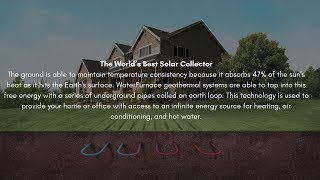
In this interview, Derek Cole of One Hour Heating and Air talks with geothermal heat‑pump specialist Steve Cole about why geothermal systems are the most energy‑efficient way to heat and cool a home. They explain that conventional heat pumps rely on outdoor air temperature, which limits capacity on very hot or cold days, whereas geothermal systems draw water from 85‑100 ft deep wells where the temperature stays around 56‑60 °F year‑round. This stable source lets a 3‑ton geothermal unit deliver up to 3.5 tons of cooling on a 95 °F day and maintain strong heating on the coldest days. They discuss performance ratings, noting that while conventional units are rated by SEER, geothermal units use the more precise EER rating, with top models achieving 54 EER. Modern geothermal heat pumps feature true variable‑speed operation with up to 12 heating and 12 cooling stages, providing fine control and superior dehumidification. Economically, homeowners can save up to 70 % on heating and cooling costs, and federal and state tax credits further reduce installation expense. The conversation concludes with a call to action for viewers to contact One Hour Heating and Air for more information.
Chapters
Hey, this is Derek Cole with 1 Hour Heating and Air, and today we have with us Steve Cole, and he is the expert on geothermal heat pumps. Now today we're talking all about energy, so the most energy-efficient way to heat and cool your home is by geothermal, correct?
Correct.
So geothermal is kind of misunderstood out there a little bit, and we get a lot of questions on it. So kind of go into what geothermal Yes.
Well, the standard heat pump, you have an outdoor unit for a reason. The unit's outside so it can use the outdoor ambient temperature. So when you're trying to cool your house, you're extracting heat out of your house and rejecting it to the outdoor air. So when you hear the word 3-ton unit, that 3 tons means 3 tons at 95-degree outdoor temp.
Right.
So that temperature is above 95 degrees, you don't have 3-ton capacity anymore. And then on the heating side, You know, you're trying to absorb heat from outside. So the colder it is outdoors, the less heat you get. So with a conventional system, the more you need it, the less you have.
So what is different about geothermal compared to that?
Geothermal, we're using the earth's temperature. In this area of the Carolinas, we have a lot of open-loop systems. The earth's temperature is between 56 and 60 degrees between 85 and 100 foot. We use an 85 to 100-foot deep well, and that water temp on the hottest day of the year, we're cooling your house using 60-degree water. On the coldest day of the year, we're heating your house using 56-degree water. Tremendous amount of difference in temperature.
So on a 95-degree day, which is very common around here, so now we're trying to cool a home with 60?
You're looking at 59, 60-degree water. That 3-ton geothermal unit, because we have great temperatures in this area of the United States, is actually giving you right at 3.5 tons capacity.
Amazing. So that's how you're saving so much energy on it. Now, when we rate systems for a conventional heat pump, we talk about SEER rating. So geothermal goes on something different. It's called EER. Now, what exactly is it?
Yeah, even a unit with a SEER rating has an EER rating. EER is a commercial rating. That's what engineers want to see. It's done at a set temperature of 85 degrees, the testing, so nobody can play with the numbers. So an EER rating is very accurate. A 14 SEER unit is going to be somewhere around 10 EER. Our top-of-the-line geothermal unit is at 54 EER.
Wow.
And that's like miles per gallon. And another big thing with the geothermal technology today, we have true variable speed. 95% of people in the United States have a single-speed unit. Can you imagine your automobile having— just one button you push to go, you couldn't control how fast your engine's going? Well, you have an accelerator. You can accelerate. The same with your geothermal heat pump. It has 12 stages of heat and up to 12 stages of cooling. Tremendous amount of control and dehumidification.
So, let's talk about cost.
It's the biggest no-brainer on earth. How many times is the government going to pay you to put something in your house? That's how efficient this is. That's how much energy it's going to save the United States of America.
And the reason they're doing that is because a report came out recently that said that Renewable energy was the most— it overtook fossil fuels on how much is around the world. And the same way with geothermal, they want you to be more efficient, so therefore they're paying you some tax credits to get it done.
Yeah, because most people save up to 70% of their cost of heating and cooling with geothermal.
Wow, unbelievable, guys. For more information— and thank you, Steve, for being here— more information, give us a call, 910-534- 4462 or visit us online at onehouraircarolinas.com.