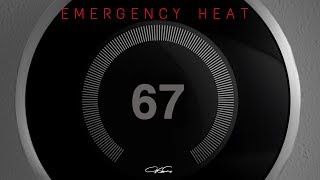
Derek Cole shows how to spot when your heat pump's emergency heat is running: look for a red light on analog thermostats or an auxiliary-heat indicator on digital ones. Unnecessary emergency heat can cost $400 to $600 extra per month, so schedule maintenance before winter and lower your thermostat early in the morning to keep the system in regular mode longer.
Chapters
One way to know that it's actually on is by going to your thermostat. It should indicate emergency heat with the red light, or auxiliary heat should be on the digital version. If you have an old-school thermostat, you see the auxiliary or emergency heat light on. There's one way to find out. Another thing to do, which I would recommend, is to get the unit maintenance before it really starts the heating season. That way, because some people can get surprised that their heat or their AC is running with the strip heat and there's some kind of malfunction. It's working correctly, you're comfortable, but the power bill comes in, it's, you know, $400, $500, $600. You're like, what in the world is going on? So I would get a maintenance done before the heating season, just like before the cooling season. Get it checked out and make sure everything's working properly. And make sure everything's good to go because you don't want to, you know, end the month, get that large bill where it's been kind of mild but the heat strips have been operating with the cooling or the heating and you didn't know about it and you're stuck with a $500 bill. So that's one thing I would recommend. I would also, you know, when your system is running, just kind of go back to thermostat, look at it, Make sure auxiliary or emergency heat is not on. One thing I do at my house myself is when it starts getting really cold outside, I do have a set point of like 68 or whatever. So maybe in the morning when I get up, the emergency heat might be on, so I kind of bump it down and turn it off because I'm fixing to take a shower and I'm fixing to get hot and it's fixing, you know, I don't need it at that point. That's just something I do. I'm kind of paranoid about keeping that emergency heat off whenever is possible. Now, if it's 20 degrees outside and I want to be comfortable, you know, it's going to run. So, uh, that is a tip I will give you.