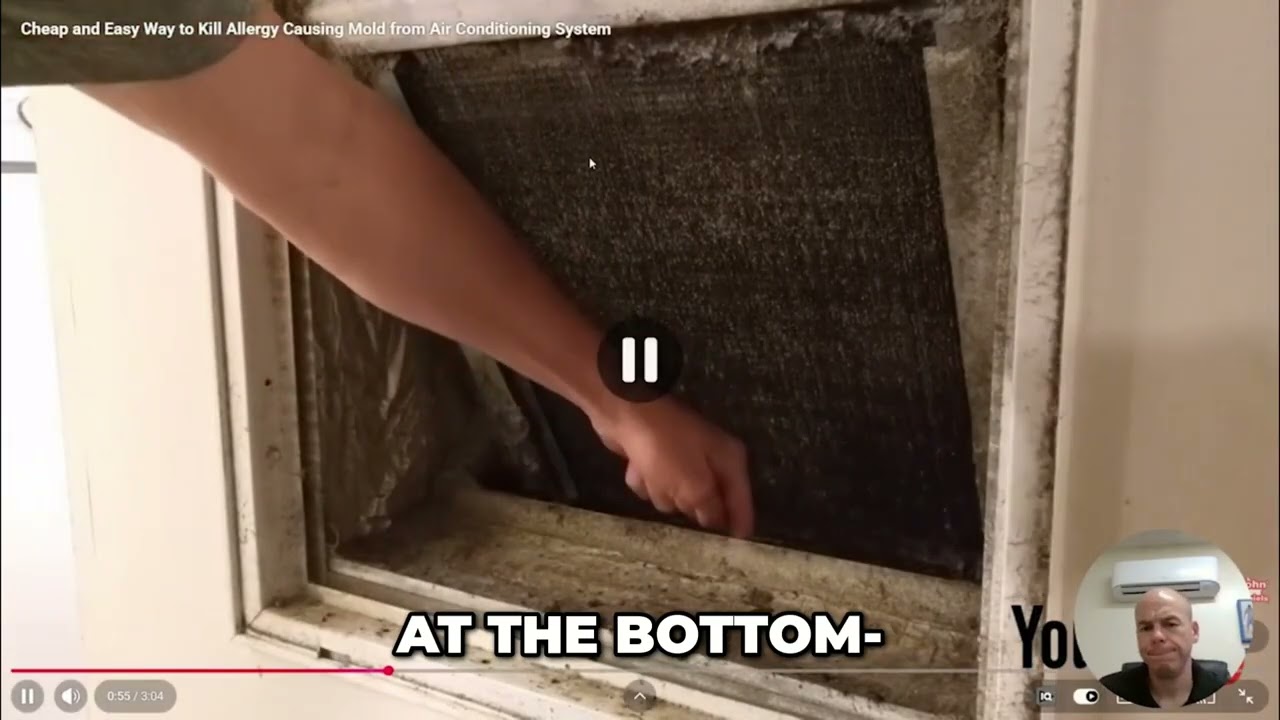
In this concise instructional YouTube short, a technician (Speaker A) and HVAC specialist Derek Cole demonstrate how to locate the return air duct in a split‑system unit, remove the air filter, and inspect the cold coil where condensation forms. They point out that the coil’s tray often contains standing water and a drain hole, and explain that this moisture can become a breeding ground for bacteria if the drain becomes clogged. The video emphasizes the importance of checking the coil and drain line, especially in apartment‑style installations where the handler is mounted within the wall rather than in an attic or crawl space.
The easiest thing to do is find your return where the air is being sucked in. And this is where, this is where the main part of the bacteria happens. And I'll show you why. Just take this off. And then if you look in there, this is where you're gonna—
He's in what we call an apartment-style situation where the handler is in the home through the walls, in the wall. Most split systems in traditional setups are in the attic or crawl space, and the return duct is going to the split unit. So you're not going to see that coil sitting right there like it is right here.
I'm going to change your filter, so you may be familiar with it. Go ahead and pull the filter out. Once you pull the filter out, if you look in here, this is the actual coils, and this is where condensation happens and it gets wet. And there'll be— there's actually a tray inside here, and this is— it gets wet all in here, and it usually has like a little standing water. There's a drain hole at the bottom.
He's right, because you're trying to remove heat. AC is about removing heat, not adding cold air. So that coil is going to be cold. That air is going to be warm. You're going to have condensation. It's going to drip down. So whatever's on that coil, if things are growth or dirty, that's going to drip down to the drain pan. If those items can't get through the 3/4-inch drain line, it's going to clog it, and then it's going to back up the water, which is a problem.