HVAC Franchisee of the Year Reveals the REAL Secret (It’s NOT Ads) ...
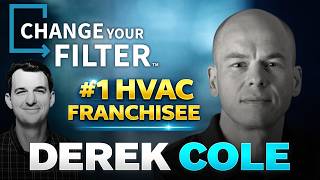
In this episode of the Change Your Filter podcast, host Speaker A interviews Derek Cole, General Manager of Simmons One Hour in Laurinburg/Fayetteville, NC. Derek walks through his 25‑year HVAC career, from early family‑run operations to joining the One Hour franchise in 2009 and being named Franchisee of the Year in 2024. He explains how the franchise’s structured systems, peer network, and relentless focus on customer service helped his rural 45‑mile territory thrive despite industry downturns. Derek details his prolific content creation (≈1,500 videos, 900 k words) and how he distilled that knowledge into an on‑site AI assistant, “Derek AI,” that answers technical questions for customers, dispatchers, and new hires. He also shares his pricing philosophy – transparent ball‑park estimates, a monthly‑payment “Club” membership model, and why getting to the price quickly wins trust. The conversation shifts to Derek’s personal battle with multiple sclerosis diagnosed in 2012, his treatment journey, lifestyle changes (high‑protein, low‑carb diet, regular walking, vitamin D), and how the disease reshapes his mindset, leadership, and resilience. Finally, Derek offers advice for contractors facing a tough economic year: double‑down on service memberships, maintain checklists, and use AI‑enabled content to stay ahead. The interview ends with a hopeful message about staying purposeful despite health challenges.
Chapters
Hey listeners, welcome back to the Change Your Filter podcast. Today's guest is Derek Cole. Derek is the general manager of Simmons One Hour around Fayetteville, North Carolina, which we'll get into. Couple things we're going to cover on this episode. We're going to talk a lot about AI and how Derek has used, actually created an AI version of himself to help his customers and his teammates. And we're going to talk about how Derek became the One Hour organization Franchise of the Year in 2024. But we're also going to talk about Derek's diagnosis and his battle with MS. Disclaimer and heads up, Derek slurs a little bit when he speaks because of his medication and the battle he's facing. And it's something that he, he'll mention on the podcast, catches a little bit of heat from audiences who don't understand his diagnosis. So I'm sharing that upfront. He will get to that in this episode, but I wanted to share that upfront because producers and I decided not to modify the way Derek speaks or speed things up or anything along those lines. Derek is also from the South, so give him a little bit of credit. But we wanted you to hear it as is because Derek's a real person who's fighting a real battle and he's just a real awesome guy. And I'm so glad to be able to share a little bit of what I was inspired by in my relationship with Derek and hopefully it inspires you too. So listeners, welcome back and enjoy this episode with my friend, Derek Cole. Derek, welcome to the Change Your Filter podcast.
Thank you so much for having me. Appreciate it.
I appreciate you being here. I know this is a busy time of year for a lot of people like you, and I wanted to follow up and have this conversation because when we met for the first time, I guess it was back in August, you know, you came out to the Charlotte area. And one, thank you for coming all the way out here and bringing your dad. That was a real night for a lot of contractors in that room. I got a lot of feedback that it was really special, really meaningful. I got a bunch of kind of 10 out of 10s and fist bumps as you were headed out to the parking lot. And that actually reminds me, I should have brought your dad on here because, man, that guy's got a story to tell. But one, I wanted to thank you for that. But two, I wanted, I wanted a broader audience to hear your story. So we're going to talk about your career story. We're going to talk about what you've done at Simmons. We're going to talk about some of the awards and growth and those sort of things, and also some of the more personal things that you're facing. You know, how to lead a company while you're fighting, you know, a disease. And we might throw some football in there. I know we talked about that a little bit too, but Derek, why don't you, for the audience who may have not met you before and isn't on your email list, which I would doubt is that many people, tell us who Derek Cole is. Tell us, tell us who you are and let's get into your career story.
Yeah, thank you so much for having me. And I appreciate you coming to Charlotte and talking to, to those contractors and anything I can do to help because I've been doing this for 25 years now almost, and everyone's been so gracious with help over the years. So as much as I can help and pay it forward, I would be happy to do it because I have no doubt of the shoulders I'm standing on, you know. Uh, it's not my own. I'm just, you know, doing what I was taught by people before me. Um, but yeah, so I started in this business in 2001, started part-time. Um, actually, I go back before that, '99, I worked in install department between summer, summertime between high school and college. And then my dad brought me on kind of part-time to help with office stuff back in, uh, '01. Um, it was then We had talked about, uh, inventory management, something very sexy and exciting. Uh, inventory. Uh, we did not have a computerized inventory. So, um, as I was progressing through high school and college, and, you know, my aspirations were, you know, a lawyer President of the US. Uh, it wasn't— it wasn't to be an HVAC company, but, um, here I am, uh, because I kind of fell in love with it, really. Uh, when I graduated in '03, my dad was like, I don't really have a place for you here. So I was like, I'm— I've seen the losses we incurred because the inventory problems Uh, pretty much if you hire me, I will pay for myself with what I'll save you in inventory. Um, so I did that and, uh, fast forward 2009, we signed up with, uh, 1 Hour Heating and Air as a franchise on the residential side. We still operate commercial side separately, the semi side, which has been in business for since 1953. So you don't really want to change that name too much because people still call and say, "Is this Simmons?" Simmons One Hour. Yes. So we did that in '09. They wanted me to lead it with being the general manager. I did that. Did the company advisor thing. I've done every role in the business except fixing heating and air because I'm just not a fix-it kind of guy, okay? I'm, you know, I got logical things in my brain, but as far as turning a screwdriver and, and doing that kind of manual stuff, you don't want me doing that. So, uh, anyway, it's been, uh, what, 25 years of, of passion and, uh, learning and When I was in customers' homes and I realized that as, as a kid, me and my brother would have yards and cut grass, you know, like every other kid. I hated doing that kind of work, obviously, but I loved stepping back after we got done and seeing the finished product. Yep. So I related, I felt that same way with heating air. You know, I would go into a customer's home, they would have this comfort challenge or this algae problem or filter problem or whatever it is. And then we left, that problem would be solved or that problem be fixed. And that was the instant kind of gratification I loved because I could help people. And see it like right now. I don't have to, you know, go to court and wait for a trial and wait for the outcome. You know, I can do it immediately, right now, today, handle the situation. Grandma's got no heat. We can get there right now. We can fix her problem. And that's what really attracted me and the reason I stayed doing what I was doing.
You know, you just reminded me of a time I was on a ladder on the outside of my house, which is not common, and I was cleaning out my dryer vent and my neighbor came outside and he's a professor of psychology and he was like, hey Paul, can I do that for you? And I was like, yes, but why? He said, because I teach entry-level first-year students psychology. I never get to see the product of my work. I never get to see the outcome. I just teach kids and then they come in and then they pick another major and they move on. He's like, I just want to see the job be completed. So kid you not, Jeff, shout out to the best neighbor. Climbed up on a ladder to clean out the dryer vent because he just wanted to see the completed job. So that's, that's what you reminded me of. You mentioned joining One Hour in 2009. What led you to that decision and what were you seeking in that relationship?
Yeah, we, we had gone— we at that point gone through a couple of consulting companies trying to better ourselves overall. With margins and with inventory and with technology and with marketing. And nothing was really hitting for us. It was all a big letdown. It was not happening. So we got a letter in the mail to visit Charlotte, the Charlotte One Hour for a Discovery Day. We went and visited and, you know, opened the doors and they showed us pricing and a few of the highlights and okay, let's see more. So we went down to Sarasota and met with those, those guys and, um, they kind of walked us through what the process, that structure is. And, uh, that was something that, at least for me, I need to be held accountable to, was a system, a structure, a process, because I'm very Well, let's just say I don't like rules. So, uh, this is one of those things that I needed to be in a box. I need to be put in that box to run the best business I could. And they offered the systems we were looking for, and they give it to us, and we implement it. For years and years, I went to conventions by myself. To learn because we didn't have the money to send people with me. So, you know, I had to make these connections with the— I was like, yeah, OpEx or franchise, the model says this, but these people are doing better at this. So what are they doing differently than what we're doing teaching? Um, so I built a lot of friendships over the years and, and really started understanding the best practice to move forward. And to me, that's the secret sauce of the franchise, is the franchisees, is the fellow contractors. You can get around and, and play with ideas, see what's working, see what's not working. I mean, people have these groups everywhere, um, but it was it always feels like it's a little bit of a, I'm not going to tell you everything because I don't want you to do better. With 1 Hour, it feels more like, you know, here's what we're doing. Try it.
Derek, thinking back, I mean, obviously you joined a franchise in '29. You're still with them today. So things must be going well. You, a couple of years ago, I think it's 20— is it 2023 or '24? You were the 1-Hour franchise of the year. Tell us more about that.
2004, 2024. Um, so last, well, February 25th, I accepted the award. Um, it was, uh, unexpected. Uh, we had been— this is— that was the third year in a row we got the President's Award, uh, President's Circle, which means, you know, 10% growth top line, and then, you know, at least that 10% net profit.
Yeah.
Um, so that was the third year in a row, and apparently we had a very good year, uh, compared to— I think they said the industry was down like 7%. Uh, we obviously were not down, uh, so that kind of, uh, made us stand out.
And how many One Hour franchisees are there in the U.S.?
Don't have an exact number for you. I know 400 to 500.
Okay, 400 to 500. And you're the number one franchisee of the year in 2024. And I guess we get to still talk about that until February, right?
Right, right. Until, until I, you know, they are awarded again, I guess we're defending.
Okay, got it. You, uh, is there a chance you could run it back this year, or does this need to be cut out of the podcast?
But yeah, we're, we're not gonna run a bet this year, but, um, you never know. I mean, they might say, hey, we really like this, these guys.
Good, good. Um, so it's usually based on numbers and based on those things.
It's usually not a feeling, right?
Yeah, yeah, unfortunately, right? Um, yeah, or fortunately, I guess, depending on, depending on how you make people feel. A couple of things. So you're, you're the top franchise, a top company in 500 companies. Tell us about your market. Tell us about where you live and where you operate. Just give the, give the listeners some context because they're probably thinking you're in Houston, Dallas, Los Angeles.
No. Yes, that would be probably, you know, a little better. But we're in Laurinburg, North Carolina. We cover Fayetteville, Pinehurst, We started covering Sanford, Bloomington. We cover about a 45-mile radius from Larnaberg. So if you kind of take Larnaberg and draw a 45-mile radius around it, that's usually where we're covering. So we got a big territory, which we have to because we're very rural. You know, I think our major city would be Fayetteville. But after that, I mean, you got a lot of what we call windshield time. You got 30, 45 minutes between calls usually. Yeah.
And Fayetteville, for reference, if those of you who don't know North Carolina, there's a couple of big cities, big towns, I guess, in North Carolina. And Fayetteville is, I wouldn't say one of them, it's a military town. So transient community. How does that play into, you know, you're not in Raleigh, you're not in Charlotte. How does that play into the opportunities you have and how you become the franchise of the year in an area that is, you know, a lot of people wouldn't think of?
It's just providing outstanding service.
Yeah.
I firmly believe, we firmly believe, yeah, that is the core to everything we do, which is customer service. And people say that, that's a buzzword, they got 24-hour, 7-day-a-week service. But do they? I mean, are we really answering the phone 24 hours a day, 7 days a week? Because, you know, customers are usually not saying, come to my house at 2 AM. But when they call at 2 AM, if you answer the phone, Yeah, come out at daylight. Yeah, that's fine. You know, they're usually not as big to come out, you know, on a holiday or Thanksgiving unless there's like a major situation going on. But just be there for the, for the clients. It doesn't matter where you are, if you're in Houston or Larenburg or anywhere. Yeah, answer the phone. Treat people with respect. Treat them right. We have a 4.8 Google rating. Yes, not 5.0, but we got almost 2,000 reviews. And so if you're like 5 stars at 2,000 reviews, I would love to know what you're doing differently that no one ever says anything bad about you, right, in history, because that's not possible. That's unrealistic. Even though I would love us to have the perfect call every single time, it's not gonna happen. We have people. We have people working for us. I'm a person. I'm not gonna be perfect. We're not gonna be perfect. But like I tell the team, it's not about being perfect today. It's about how you react to your mistakes. Make it right. The intent is always there to do the right thing. Will that always happen? Absolutely not. But how are you going to respond to it? Or are you going to respond to it? The biggest thing you see is there is no response. There is nothing. You know, talk to people, it's fine, it's okay. Everybody's gonna be fine, just talk to them. Communication.
Run to the fire is what I like to say. Like, run to where the discomfort is and you can usually work it out. If you were to go back to 2009 knowing what you know now, would you have joined One Hour again? Or— and it's a sort of two-part question, but yeah, what's your perspective on it now, you know, 15 years later?
Yeah, we, we renewed couple years ago. We are big believers in yellow and the brand. We believe the colors of the brand. I would, I would do it again. That was, that was the best. My dad, my brother and myself, all three own the company. That is probably the first time we all woke up the next morning in Sarasota with the same idea. We have to do this. Yeah. You know, I mean, it was, it was so weird because all three of us never agree at the same time. But for all three of us to just have a peace about doing it, it was the right thing to do and is the right thing to do. And it gives you that roadmap. And it keeps you on track with the industry and what should be done. And plus, as they keep growing, which they are, you're going to have more of these people from Myrtle Beach coming up to Lumberton, or they have a beach house here and they call the one out there, they use them there. And my house in Bon Air, they use— we're starting to get those phone calls more and more. Of people seeing the brands where they were and now where they are. And that's what you want.
So if you were at a similar crossroads today and One Hour was not an option, this is sort of a tricky question to answer. Where are the places you would look today? What are the resources that are available today that weren't available then that would have helped you kind of, you know, chart the course for the next phase of growth for you?
Yeah. Uh, I would probably go to some of the best practice groups. You know, I have no experience with like Nextdoor or, uh, CertainPath. Uh, I know there used to be Airtime 500, which we used to be part of when our, um, so knowing that now I'd probably go in that direction, but again, is everybody being transparent around you. And, and to me, that's where 1R comes in, especially with the territories. Like, I'm not worried about Jim coming over here to handle my customers. No. Jim, what are you doing, man? You're like 15% up. Tell me exactly. And, and Jim's telling me exactly what they're doing. And even sending me the marketing pieces. By the way, try this, try this script, try this call ticket thing, try this, you know what I mean? So it's like fully transparent where you don't have that holdback. But again, I haven't experienced those networks, but, uh, to meetings I've gone to before, it kind of felt that way. If it was true or not true, I don't know. It is. It just felt like there's a little bit of hold back because you're right down the street, literally.
Now, this journey from where you were to where you are today hasn't been without, you know, hardship and setbacks and, and, um, person— you know, on the personal level, fight against disease. Talk about what happened and when, and let's— we'll blend that into how you lead the company today.
As you can probably hear from my voice, a little bit of slurring is caused by my multiple sclerosis, MS. I've had that since 2013? 2012. 2012. Time flies, right? It's been almost 13 years, right? So yeah, that was a dark period. Uh, you know, you had, you know, 5 months of not really knowing what's going on. They, they'd finally tell you what's going on. You're like, great, all right, what's next? Like, oh, there's no cure. You're like, what? We can put a man on the moon, but we can't figure out how to cure this thing? Like, now you gotta do treatment and this and this. And, you know, it's progressed over years and gotten worse than when it started, but It's just that nature of the disease. And I'm speaking as clear as I can.
You sound great.
Yeah, it's one of the downsides among a lot of other things that happens. But yeah, it definitely opened my eyes to slow down a little bit, enjoy the time you have, enjoy the loved ones. To hit the good days, enjoy those, and the bad days will be there as well. So it kind of calmed me down a little bit, give me a little bit more perspective. But I will always give glory to God no matter what happens. I have firm belief that I was given this disease for a reason, just to do what I do or spread the word or serving the church more, you know, so be it. You know what I mean? But we're going to take them, take one day at a time and one step at a time.
If you wouldn't mind sharing, you know, how old were you and how did you, what were the first symptoms and what did that path to diagnosis look like?
Yeah, so I was 31, right? Yeah, 31. You start getting, you know, after like 25, you're like, I don't keep track.
Oh, that's fuzzy.
So I was like, uh, 31. But, uh, no, we're coming home from a concert, and, uh, if you know Highway 74 in North Carolina, right about Rockingham, headed back to Lumberton, uh, the road literally split into like My vision was two separate roads at one time. I was like, these contacts are acting crazy tonight. So I was like, uh, I just went to eye doctor, changed out my contacts. I was like, these new scripts aren't working. So I changed my contacts, kind of went away. It didn't really, but then I was playing basketball with some of the church guys. Within like 5 minutes, I mean, the whole thing was spinning out of control. I mean, I was so dizzy. Still hitting threes, by the way. Um, you've been doing it for like, you know, 20-some years, you know where you have some muscle memory.
That's right.
But yeah, I went to the, um, eye doctor. He, um, he didn't see anything, sent me to ear, nose, and throat doctor. He told me I needed that balance test. I was like, "No, I don't." So I went back to the eye doctor, um, and he did a little, uh, you know, chase your finger around kind of eye test. And again, I saw it. This only happened twice. The first time was in Rockingham. Second time was right here. His finger came to this section and it's literally like they split in two. I saw two fingers. But he saw my eyes when I saw it. So he said, I need to send you to Duke Eye Center to see if we can see what's going on. So we went to Duke in Durham to the eye center and was sitting there and the lady brings out the that thing of magnifying glasses or whatever it is and starts looking in the eyes. And she's like, did you see that? She's talking to her assistant and her assistant is like, yeah, I saw that. And I'm sitting there, I'm like, what'd y'all see? Uh, she said, well, we think we need to send you for an MRI. We think it's, uh, we think it's multiple sclerosis the way everything is, but let's get that MRI and see what's going on. So at that point, it was my third MRI. So 22 blood tests, couple of MRIs, they couldn't figure it out. Everything's normal. I mean, I got like my test scores, I am completely normal outside of this. So I did the MRI, came back, They saw it, sent me to neurology. He confirmed it. I've been with him ever since, by the way, which is kind of rare. The same dude, doctor, for 13 years. But we started on that path and started pretty aggressive treatment called Sabri because the places where it's at in my brain are at the bottom. Mainly and towards the spinal cord. So they didn't want it to deteriorate anymore because they thought it might go further down my spinal cord, which would be a problem. So started the Sawbury and I'm on my third medication now, Ocrevus. So it's been, it's been quite the journey. I've read more medical information that I ever wanted to.
As more and more information— I mean, over 13 years, the advancements in technology and medicine and information come out. Does it give you more hope, less hope? Is it confusing? What, what has that journey been like? Because 13 years ago was forever in the information age.
I don't know. Yeah, it was, uh, and you know, we had— the scary part is that the doctors don't really want to push you in that direction. They want to give you— I'm like, "So, no, I mean, I got 3 medications I can try. Which one should I try?" So I went to sobriety. But after a couple of years, you develop something called JC virus, which could lead to a brain problem. Which could kill you. So that's not good. So after about 3 years of that, tested JC positive. So then I had another drug. All right, we could do this, this, and this. So I went on Gilenya. I did that research. It was a pill a day. I said, all right, no problem. Well, it turns out that medication for me personally made me feel like I had a head cold all the time is what it made it feel like. And I had extreme wax buildup, uh, which I've never had a wax problem in my ears or everything, but it's like all of a sudden happening. I had some, uh, also bad, bad thoughts, um, That led me to tell the doctor, look, we need to get off this medication. I don't know what else is available. I did some research. I researched okra. Okra seems to be doing pretty good for people, but this medication is not making me feel good. Not making me mentally feel good. I need to get off it. So we switched, went to okra a couple years ago now. That's been going really well. I feel a lot better. I told the doctor, I said, "I didn't realize how bad I felt until I felt almost normal again," because you get used to it. I mean, it was another 2 or 3 years of just not feeling good. You get used to it. So yeah, reading all the studies and medical journals, it's a lot, but It's encouraging because now they are actually testing in mice a remyelination medication. And that's, that's the problem with MS is MS is, you know, you're trying to send these signals in your brain. Well, the coating on the brain is the myelin, the myelin sheath, so that flows the electricity path between toes to your arm. Okay. Or speech. Okay. You know what I mean? So what happens is the myelin eats away or the immune system attacks the brain, eats the myelin. So you got an immune system fighting against itself. So the purpose of the medication is to suppress the immune system so it stops doing that. Well, the downside of that is You get sick faster. I've had shingles. I'm 40— am I 44? Yeah, I think I'm 44. I've had shingles already. That's like an older person problem, but that's just what happens. It suppresses your immune system and you're, you know, I've had COVID twice. You're more susceptible to things and both times I end up in the hospital with COVID because it's a problem. Nothing. The last time I was in the hospital for the last COVID, she's like, she was like, no big deal. I mean, I had the temperature and I felt bad, but I knew it felt like what it was, right? And she was like, it was no big deal. Like, look, My temperature's like 100 and something. Okay, my body temperature runs like 94. Okay, so for me to be over 100 is a problem. Something bad is happening. He's doing my temperature like, yeah, barely over 100, not a big deal. But then they found out I had MS and they all started like, oh, okay, get him into a room. I'm like, oh, now we're in a hurry. You thought I was making this up, doctor? You think I want to be in the ER at 2 AM? No, I don't. I'm sorry, that was one off track there, but— Fun. But yeah, it's encouraging. There's been a lot of research, a lot of development. The main thing is with the medication now is trying to sustain and not progress. So what's exciting is the medication coming up is actually trying to get the myelin back in place or put it back where it was, uh, which is exciting because then you can have normal signals, then you can function normal, uh, because you're not short-circuiting. Right.
In your opinion, what is the best possible outcome as you try new drugs and continue to make progress?
The best for me right now would be to maintain. I did my MRI before my last treatment. My doctor finally said, he said, "Look, you've been stable MRIs for a long time." He said, "I don't see any reason why it would get any worse." Great. I'm like, Okay, so every day when something new happens, I'm like, okay, if we stop right here, I can deal with it. Then something else happens and you're like, all right, if I— if it stops right here, it's mine. I can deal with it. So now, come would be, you know, just to maintain. Obviously, I've changed my diet. I exercise as much as I can. I walk. The doctor was like surprised, but this doctor tells me to start walking because I have a, you know, one of my problems is kind of a leg drop in my leg. He's like, you probably need to walk like, you know, a mile or so a week. I'm like, okay. I come back and I'm like, I do like a couple miles a week. He's like, really? I'm like, you just told me to. Why are you surprised? I don't understand. I'm a rule follower, even though I don't like rules. I will follow the rules.
And you like to be held accountable?
Yeah. Yeah, it's like the eye doctor is like, "You take your contacts out every day?" I'm like, "Y'all told me to. You told me to. I don't understand. What are we talking about?" Yeah.
Tell me about, you mentioned you changed your diet. I mean, give the listener some tangible insight around, around what you eat and why and all of that?
Yeah, I eat a lot of, uh, high protein, a lower carb. I wouldn't say low carb, uh, usually I try to hit about 180 protein a day, 150 carbs a day, uh, nothing too crazy, but usually under just that 2,000 calories a day. But, you know, Healthy Choice meals. And, you know, I'm not, I'm not, you know, cooking and making my, you know, 5 plates at once. That's not happening. So I mean, Greek yogurt, protein powder, protein drinks, supplements, vitamins, minerals, trying to, you know, The big problem with MS for years has been low vitamin D, which I didn't know was a problem until it was a problem. So definitely make sure I get that on top of my other ones. But that whole thing's changed the way I've done life in the last 13 years for the better, for the healthier. Yeah, but I mean, I feel good. Sometimes, sometimes sound good. But yeah, people comment on social. Are you drunk? That's right. I own HVZ Company. I'm drunk and I'm making a video for you. Yes, that's what's happening. No, I'm not drunk. I have MS. I'm sorry. I'm doing the best I can.
I've actually seen some of those comments and posts and things like that and talk about what that's like. I mean, that, that happens not often but occasionally, right?
It's probably once a week. No, they—
wow.
But, but then again, I post, uh, live videos, so, um, it's all worth it. But, um, in the beginning it kind of hurt your feelings a little bit, but, you know, and after, you know, years and years of it, you just— dude, if, if you're making negative comments on somebody's post, for me to stop my day and to comment on someone's post negatively says more about me than it does about that person. So, dude, I'm sorry you're going through that. I know I have MS. Usually when I say that or that, you know, say that to a person, I apologize and I'm sorry, I didn't know. But, um, that's why when it's a really bad video, like really a lot of slurring, um, I start with, I have MS, I'm about to slur, here it comes.
Now let's talk about content. You mentioned you put a lot of content out there. I would argue probably more than anybody. Um, where did it start and how do you keep up with it? What's your strategy? I mean, there's, Yeah, give the, give the listeners some context for just how much content you're putting out there.
Wow. I definitely don't hit every day on Facebook, but I try to do about 2 to 3 per day on Facebook.
Videos or—
It could be both. Yeah. One day could be all videos, one day could be all pictures. Um, I'm trying a few different things, you know, obviously the Facebook Reels, YouTube Reels, those are getting more views than, you know, like a 7-minute video, uh, on YouTube. You could obviously get more reach with the Facebook, uh, Reel video, which will be, you know, 3 minutes or less. Um, but yeah, every day we're I'm trying to put something out there, but it started with— I was in a call center taking phone calls. Yeah, back in the day. And still today we keep getting the same type of questions every single year. So I was like, I'm just going to answer the questions. So that's all the videos are really, is me answering questions. It could be a a video of me back in 2016, which is very clear, fantastic audio. Or it could be a video of me from last week, which is not as clear, not as great. But the only time I do get sad is that there's so many videos. By like so many videos, I mean like 1,500 videos. I mean, there's so many. The only time I do get sad is when I look at a 2016 compared to a, compared to a 2022 or '24. I'm like, that cat ain't coming back. I wish he, uh, wish he spit more knowledge back then because he could really say it.
Right.
Um, but what today we have articles and We have more mediums than just video, but video is definitely the most popular.
And how has that played into your adoption and execution with AI?
Yeah, so we have something on the website which I just wrote an article about, which I'm fixing to drop a YouTube video about with the podcast about Derek AI, something we have talked about a few times, but something we don't use Nearly Enough, which is all my content, which is over 900,000 words into one AI. So you can go on simonis1hour.com, ask. He's right there on the homepage. Derek AI. Ask him a question. When should I change my filter? What kind of filter do I need? What's this noise making? What's this frost on my unit? What's— Any HPC question you have, it's going to pull that data from all that knowledge and answer that question like that instantly. And my favorite part, it'll actually give you a reference to the YouTube video or the podcast in which the answer came from, so you can then click on it and see the whole thing if you want to watch it. Right. But I was, funny story, was it yesterday? Was today Tuesday? Yeah, it was yesterday. I think it was yesterday. Anyway, anyway, I was with the dispatcher. A lady asked, what was the pantry? She didn't ask me. I was standing behind her because I had to tell her something. She went to Simmons' window, I went to Derek Cole. Type in the question, or no, sorry, hard start, hard starter. They had the question about hard start. Type in what is a hard start and it gives her the information. She starts reading it. I'm like, that is what Derek AI is about too, because I encourage the call takers, if you have the question or customer has a question about why this happens or that, I say you don't have to ask me, you don't have to wait on me. You can just tap it into Derek Cole. He's there 24/7. Yep. He's not in a meeting. He's not on the podcast. You can talk to him right now.
And you've used that with new employees and onboarding, is that right?
New employees, seasoned service tech, seasoned employees, everybody. I use it myself. I used it this morning. On TikTok, somebody asked about a rattling noise. I took the question, copied it, put it into Derek AI, and then copied the answer and then replied. I'm like, that's how I would answer it anyway, so might as well save a few minutes.
So I used it when I first found out about it to try to navigate to the particular air filter that I needed for my house, and we were able to— it was able to get me to the Contractor Commerce filter store on your website, um, where I could order the replacement filter. So tried to stump it, but it did a good job. Um, how, you know, for those listening to this, you know, the idea of them, you know, even creating content and flipping their, you know, recording themselves is a stretch. I think the idea of, you know, executing on an AI version of themselves is a stretch. Where would they start to do something like that?
I would just, I would just start creating content. It sounds like such a— today it sounds like such a big mountain to climb, but you gotta start. I mean, you gotta take that first step. It's like, uh, I relate this to MS and, and the guys we talk about, E R O, event plus response equals outcome. Taking advantage of my life, MS. What's my response? I can either exercise, eat better, take care of myself, follow the rules, and that's gonna equal the outcome, right? Or I could feel sorry for myself and sit on the couch and not do anything. It's probably gonna get worse, right? Yeah. So same way with your business and with even creating content. People want content. People want content. So instead of them going to Google to find the wrong answer, why not come to you to have the right answer? Why not tell them what the answer is? What, what are you scared of? They're gonna try to fix themselves? How many phone calls do we get with people trying to fix it themselves? Yeah, a lot. Would you rather have them call you or me? Who are they going to call? They will call the people they get the content from. So if you're gracious enough to put the content out, but you got to turn that camera around. You got yourself on your hand right now. Right now you got it in your hand. I see you. Yeah. All you got to do is turn that, turn that camera around, record a video. Could be something simple. What's the question in the call center? Go ask Derek Cole, Derek Cole. What's been the biggest question today? They want to know why their unit is steaming when it's cold outside. All right, let's record a video. Why is it steaming? Why does that matter? Why shouldn't you be alarmed? Or why should you be alarmed? That's all there is to it. The content is out there. You just gotta record.
So when you think about the types of questions you hear, how often does pricing come up and what's your philosophy on that?
Pricing comes up, I would say rarely. I know on our, our website we give, you know, when someone wants the ballpark price for a new unit, we always point them to the website, Contractor Commerce. Get their ballpark price, we give them a monthly price for how much the system would be. Okay. Do you want to go with it or not? Uh, yeah, I want to see a contractor. All right. Schedule a contractor. Oh, I can't afford that. What are you scared of?
What do you think about the, the argument that that takes away the ability to build value in the home, build value with the customer, and they're just going to price shop you and You know, you lose that customer.
No. Well, that's, that's your fault. If they price shop you, they shouldn't price shop you. Why would they? I mean, if you believe in your company, your standards, yourself, I don't understand why they would price shop you. Um, when I was at CodeVisor, I think I had an 86% close rate on the ones that were not good, the turn-downs.
Yep.
But it's just give people what they want and then having the passion to believe you are the best choice. It sounds like you're pushing. Yeah, I am pushing because I can't take care of you if you don't buy from us, right? If I don't take care of you, I don't know what's gonna happen. And I'm not talking bad about any competition. A customer called me one day and said, uh, you guys are like $2,500 for a call, and so-and-so, Heating and Air, is $1,700. Uh, I think I might go with them. Okay, well, go with them. Well, what's the difference in price? I can't speak for what they do. I can just tell you what we do. We vacuum the lines, we pull a vacuum, we put the right refrigerant in there. We don't guess. We sort it with nitrogen. I can't tell you what to do. There's a lot of corners you can cut to get a cheaper price, but if that's what you want, then that's the way to go. But we don't cut corners. This is how we do it. This is our standard. This is why I've been in business 70 years. Yeah, I get it done real cheap. You can always do it cheaper. Always. You can always get it cheaper. I mean, we're all hanging out at the restaurant, you know, is the guy buying food for everybody says, hey, I'm the cheapest in town. Come over here, I would. Let me know when that happens. Yeah, I'm Jubas in town. No, they understand things cost money. That's the good news about when I started versus where we are now, which is I felt like probably 10, 15 years ago, it felt like a shift to me where, look, people actually are getting tired of being taken advantage of. They're getting tired of the contractor not answering the phone, giving the runaround, no communication. They're actually starting to, in my opinion, starting to value what we're doing. But we got to communicate that to what we're doing to the client and tell them what and why it's different, why it's important. Otherwise they're going to price shop you. Because you're not a commodity, you're not a box somebody can plug in. You're not a fridge somebody can just plug in and be gone. No, we are installing technical equipment. And the most important day in the life of a system is the day it's installed. So who you want to go with to give you the best chance? A company with 70 years or the company that opened down the street with 4 years? Again, We're not bashing anybody. I don't know what they're doing. They could be doing the best install ever.
Yep.
But yeah, I mean, it was up in the price, I think. I mean, they go on Amazon and see, hey, this capacitor costs $30 on Amazon. Yeah. Oh, you're paying $30? You're paying too much because we're getting a lot cheaper now. How much do you— you're always with labor. All of it. Yeah, it's all labor, parts free. Yep.
You told me a story, uh, when you were here in Charlotte about, uh, and maybe an elderly lady, maybe a widow who came into your office that was really anxious and upset and came in wanting a price on a system. Do you remember that story?
I do. Uh, that was it. That was the biggest reason I went to Contractor Commerce and started with the monthly pricing. I started with that ballpark pricing and, and started leveraging that. By the way, somebody just did a quote on Contractor Commerce. So I teach the technicians or train them, if someone wants a ballpark price, take them right to the website.
Yep.
Give them the ballpark. That's fine. But the lady came in, she was almost hyperventilating. I mean, she was making me nervous. And I don't know where they get her. She was there just like, oh my gosh, I gotta get a new system. I don't know what I'm gonna do. How much is this thing gonna cost? You know, I gave her the standard speech of, "Conversa come out, measures on." Virtual sewer code, you know, the whole thing. She's still panicked. She's like, I don't know if I can afford this. My husband's sick and we've been on this. And she's like, how much is it? I said, I don't know, $250 a month. That's it? That's it? $250 a month? She said, "I could do that." A light bulb went off in my head. I was like, "Oh my goodness." All the anxiety went to ease. I think she ended up doing like 330 a month, but she was happy with 250. Okay, I can manage 250. And then I set the appointment up for the advisor to go out and then You know, talked about a new system and got her approved and got her financed and chose the plan she had. But that day was just the lightbulb. It's like, what are you doing? They want a ballpark. Let's give them a ballpark. I mean, this lady, the guys who went to— I'm not sure if he said the leader or not, but if he did, she sold the monthly price right there on the screen in front of her face. There is no surprise when that competitor comes out there and that's about the same price.
Yeah, I remember.
Again, I guess the information you're willing to give because they're going to get the information. Do you want it to be solid information or do you want them to guess?
You know, you also said something that I won't forget, and it was around this idea of the longstanding belief that you have to be in the home and telling your company story and spending 90 minutes before you reveal the price at the end. And you said they're not listening. So tell me more about that.
I'm just, uh, because I've had this. I mean, people are just like we are, okay? We should not think people are different. We scroll social media, we watch videos, we do the same thing with price. A guy was in my house I need to replace my windows. And he's talking about the company. Look, if I didn't believe in the company, you would not be in front of my face. Okay? I don't need to talk to you if I don't believe in you. I believe in the company. I'm listening. But get to the price, man. That's all we wanna know. Get to the price. So I'm not listening. I'm waiting for him to finish. The customer's in the same position we are. They're not listening. Get to the price. What is it going to do? I've done my research. You're in my house. Let that mission set the lead. You're in front of me. I don't need to hear about your 70-year history, about your 25 years in the business, about how so-and-so walked both hills in the snow with no shoes. I don't need to hear all that. I need the price. I need to fix. Well, let's go.
What have you lost since you opened up your pricing to the, the World Wide Web? Now your competitors can go on and see your pricing. What have you lost? What negative has come about?
I haven't seen any. Of course, they're probably not telling me what the negatives are, but, uh, all my competitors have gone there. I look, raise your standards. See ours, raise yours. Let's all get on the same page. There's enough business for everyone. All right, so how about we all get to the same standards and be up here and provide that higher bar for the customer? That would be awesome. Like I tell the team all the time, I said, look, the bar in HVAC Unfortunately, it's so low, so low. You just got to do a little bit extra. You just got to do a little bit of communicating. You got to show up on time. You got to show up clean. You got to not make a mess in the house. All these little things add up to big things. But after you experience contractors, you see why they're big things now. Yeah. So yeah, if we all raise the bar, to do 2-year parts and labor warranty for every install, uh, money-back guarantee for any, every install, or a UL guarantee, or a lifetime workmanship guarantee on every install. Meaning, Mr. Customer Paul, if we do anything at your home and it fails because of what we've done workmanship-wise, You will not pay anything. We're already doing that. Most good contractors are already doing that, right? So why not say it? Why not say we're doing this? Why not set the bar up? Put your money where your mouth is. Let's go. We can all do this. I mean, it's not that much of a jump. Just a little bit of extra effort and we'll be there.
Good. What is your perspective on how consumers use AI to search and search for pricing? Anything you're seeing or hearing in that space right now?
Not— I'm not hearing too much yet, but it is coming. Yeah. We need to be more intentional with ChatGPT. Those platforms, just like with Alexa and the voice, we need to be in those platforms to make sure we're pointed in the right direction when that question happens and not just a random Google search of, you know, here's 5 contractors and we're all bunched together. And then you get to the person saying, well, I'm getting 29 bids. I'm like, geez, what was this, 3? All right, yeah. Then how's that going for you? Have you enjoyed the 3 so far?
All right, yeah. Closing out here because you've been so generous with your time. We're coming up on, on an hour. I know you got to get back to work.
Yeah, see, I can, I can, I can go all day, right?
I know, I, I could too. Um, I didn't even get to like any of the questions I wanted to ask you, so we may have to run this back and do it again. I get the impression and feedback from contractors across the US, it's not been a great year. That 2025 wasn't materially better than 2024, and in many cases worse. People will be listening to this between, you know, before the new year. What's your perspective on the year? And then looking forward, what kind of advice do you have for contractors who are, you know, maybe trying to dig out of a hole coming into January?
I think the big thing to focus on for our business and anyone's business is what we call club. Memberships, having those maintenance customers. So when you have this kind of year we're just having where a lot of people probably aren't doing replacements because the prices have been crazy, or they might not get financing, um, they can't do $1,000 repairs, having that solid base to grow, to grow your company that way, which is You know, I call it lifetime value, lifetime value of the customer versus, you know, trying to win that click on Google for $35. Focus grassroots, internally, getting those service calls online, and then they need to be club members. You need to have a solid foundation, a solid base. That you can always dip into at least twice a year. You can show up at the house and do a maintenance. Yeah, at least. But on top of that, you can also tell them how they can improve things. Obviously, that customer is, we call it a free agent. Take them off the market, put them into the club, whatever we got to do to get them in the club membership. That is the goal. That is what I would focus on if I was opening a brand new business. First thing I would do, we got to focus on clubs. Yeah, big ticket replacements. Fantastic. Love it. Great. It's coming. It's coming. They have to replace their units eventually. But if you can get them to a point where they're loyal and they only talk to you you can start winning that clickbait war on Google, on AI search, building your own AI bot. If they want to go AI, hey, go Derek AI. Yeah, actually, you can probably send them to Derek AI now. I'm not going to take them. I mean, they probably live here, but it's a— yeah, it's financial Credit has been tough this year for us. A lot of credit turn downs. We tried multiple vendors, but you have to have that foundation.
You have to have that base because our listeners are going to want to know, how do you keep the, you know, memberships can be such a, it's a small item. It's like one of the last things a technician needs to be thinking about. They're in a crawl space or in an attic. They're trying to fix stuff. How do you keep that momentum and focus and energy around something that seems small? Are you doing it through the phones? Are you doing it through the technicians? What's— how do you keep that an everyday thing at Simmons?
Both. Um, we do both phones and with techs. I mean, there is no secret. If you were to pull a service tech from our company, what's the number one goal? No one goes in the club if they're smart club, lazy club. I don't care. Get them in the club. So yes, if you're in the house, that should be the first thing you're talking about is how to get them a club membership because you cannot explain to me how a customer cannot benefit from a clean operational system, which is achieved through membership. Right? There is no excuse for us not We're obviously not communicating something right, or we don't have a good enough club membership. Maybe that's it. But there is not a month, if not a week, goes by in that meeting in there every week where we talk about these club members need to get up, need to get better, take them off the market, take them off the market. If you can sell a repair, you can sell a club. You know, if you can sell a motor, they need to be replaced. Okay, how about a 15% discount? When you add the club to it, you're only paying like $100 more. Yeah. And you get a 2-year warranty, not a 1-year warranty, and you get priority service and no dispatch fees. You know, whatever your deal is, but it needs to be the primary focus of every single contractor. That should be that when that phone rings and it's a brand new customer, like, oh, another club member going down, get a club membership. And I tell the guys a lot, especially in the spring and the fall, look, I know it's tedious. You doing 4 or 5 a day, same exact thing, cleaning the coils, doing the thing. Hey, I get it. We're human, right? We're not going to be 100% every single time. For me to think that would be outrageous. But we should be providing our checklist and providing what we say we're providing to the customer every single time. That was the conversation we had. Caboose going there. The checklist is the standard. I, I like, for some reason I watched a, you know, a pilot video and the guy's like done like hundreds and hundreds of flights, but every single time he goes through his checklist. I try, I've gotten some guys say, I try to remember it and then I come back here. No, no, don't try to remember it. It is a checklist. I said that pilot who's flown so many times does that checklist every single time before he leaves.
Yep.
We do it every single time when we take care of a club member because those customers are gold. We need to treat them like royalty. They are important. We treat those people up here, everyone who does have a club membership, They're next. But the club members, when they know you, they're on top.
Yeah. All right, last question, I promise. Well, I don't want to make any promises that I can't keep, but the intention here is this is my last question. So, um, people may be listening to this who are going through a tough season of life, uh, maybe it's health-related for themselves or others, and you've been through that, you've navigated, and you're still fighting, and you still face, you know, a long road. How do you remain— you or they— remain, you know, hopeful when facing something that's uncertain and challenging? Any advice or perspective you can share?
Um, for me, you gotta lean on God. You gotta lean on God to direct your steps, and you have to take it one step at a time. Next Next rep. We do a lot of football coaching around here and like, dude, forget the last play. Next play. Next play. Next play. Next play. Do the best you can. Look, today might not have been a good day. You know, those hours might not have been great hours. Leave them behind you. Next one. Next rep. Next rep. And then you turn around and then You know, 13 years have happened and you're like, I've had MS for 13 years. Oh my goodness. Yeah. I mean, you can easily get lulled in thinking about all the bad stuff, or you can start looking for the good, the silver linings. What's good about— for me, what's good about MS? It has brought me closer to God. Closer to Jesus. It has brought me closer to family, closer to my wife. It has made me appreciate life more than I would've had before. 'Cause before it was just boom, let's go, let's go, let's go, running, running, running. Whereas now when you're facing something that's a challenge, step back. What's the good? What's the bad? Tackle the bad, move to the good, and keep moving. I mean, that's so important. And so, I know it sounds easy to say, but guys, I'm living it. It's easy to say and it's a cliché, but dude, just one step at a time. Eat an elephant. One bite at a time, one day at a time. Look, that workout session, I wanted it to be 25 minutes and it was 10 because I was tired. All right, give yourself a little bit of grace. I mean, you know how many people are not working out? You can only do 10 minutes? Good job. That's 10 more minutes than you had before. So yeah, next one.
More from Derek




How to Prevent Mold and Odor in Your Air Conditioning System with UV Light #shorts





