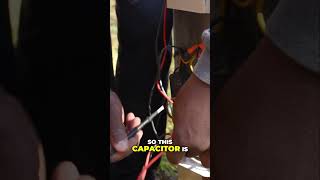
Derek Cole walks through compressor maintenance: what a start-assist does, how to read capacitor microfarad ratings, checking valve covers for oil leaks, and why a charged system shouldn't lose refrigerant.
Chapters
Older unit does not come with a start assist, which is called a compressor saver. So we traditionally add these to the capacitor when we find the compressor is drawing a higher amp draw. What this does, it helps the compressor in the startup cycle to make sure it starts and use, you know, it extends the life of the compressor. So at this point, I'm going to check the capacitor to see the condition and the ratings on it. Right now. So this is rated 4 to 5, and I'm getting 4 to 4. So that's telling me that the capacitor on the compressor side is still good. On the fan side, it's rated 5, and I'm getting 4.5. So it's still within that 5% range. So this capacitor is considered okay. Another part of our check is we check to make sure we have our valve covers on, and we look for any evidence of oil leaks anywhere. Whenever we see oil present, it usually indicates possible leak, which should prompt us to go a little further to make sure there's not a leak on the system. System typically should never have a leak. Once system is charged and in operation, it should never lose refrigerant. So if you ever lose refrigerant, you have a problem. That means there is a leak somewhere on the system.