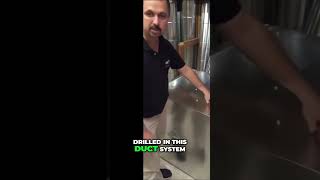
Derek Cole shows how aerosol sealing closes duct leaks that waste over 20% of heated or cooled air. The spray reaches joints and seams that manual methods like mastic and tape miss, achieving near-complete sealing where traditional approaches leave about 10% leakage.
Chapters
Hey, this is Derrick Cole with 1 Hour Heating and Air coming to you today to talk about your duct system. The duct system is designed to bring hot, cool air into your home when you need it the most. According to the EPA, over 20% of this air is being lost due to leakage, poor connections, holes in your ductwork. And you're actually going to see the sealing process happen from start to finish. I mean, this is an ordinary duct system. I mean, they got joints and grooves and screws, and all this needs to be sealed. So we're going to seal it from the outside, and we're also going to seal up this air seal logo.
Uh-oh, got some air loss. All right, you ready to go? And after a total elapsed time of gluing time of about 8 to 10 minutes, as you can see, every hole that we have drilled in this, in this duct system is completely sealed. You can actually see the cement coming through the lining. The actual air seal label is now 100% sealed. Joints and the seams that Derek pointed out earlier. If you look closely, you can see that they are completely sealed. I have no air coming out of any holes on this system.
And no matter how much you try to seal it manually on the way there, you seal it, seal the joints on the outside with mastic, you seal it up with tape, you seal it up with insulation, you seal that up on top of the mastic and tape, still you're at 10% leakage because there's No way a human being can actually seal all the places that air flows. Now with duct sealing with the aerosol, it works on pressure. There is not— it's an aerosol. There's not a human being, you know, putting mastic and painting it on the joints. No, it's a machine. It's all controlled by this aerosol spray. It's working on pressure and it's filling the holes as it finds the leaks. So that is the most efficient way to do it. If you're okay with 10% leakage and wasting 10% of your energy bill, that's cool, just keep doing it. But most people are not.