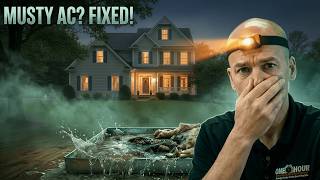
In this video Derek Cole explains why air conditioners often emit a musty odor when they run. He describes how an AC unit dehumidifies air, producing water that drains into a pan and out a drain line. When the drain line or pan becomes clogged, water can sit in a cold, dark, damp environment, fostering mold, mildew, and bacterial growth on the coil and in the pan. This microbial growth releases the unpleasant smell that circulates through the home. Cole outlines how to address the issue: clear and repair the drain line and pan, use UV lights or pan‑treatment chemicals to inhibit microbial growth, and perform regular maintenance to keep the system dry. He emphasizes that the problem is not random but a predictable result of moisture buildup, and that proper drainage and UV sanitation are the key preventive measures.
Chapters
So we hear this all the time. Every time my AC comes on, I get a smell. I get a musty odor, but it only happens when my AC is running. What is going on here? We're going to talk about it, and news flash, it's not random, it's your system. So what happens is you have an air conditioner, it is dehumidifying every single time it comes on. What happens— what that means is there's water being produced as it dehumidifies. Now, your system, as that water accumulates, it drips off the coil and goes into a drain pan. That drain pan goes into a drain line, which takes that moisture out of your home and puts it outside where you— there is no damage, there is nothing going on. Now When things go bad, that drain line gets clogged, that water builds up either in the drain pan or the drain line, either overflows or you have water sitting in the drain pan, which is not supposed to happen all the time. Because when water sits in that drain pan, it's in a cold, dark, damp environment. And what happens? Things start to grow. So what you're smelling and what you're breathing is whatever's in that water is coming up through the system and coming out of your system into the air in your home. That is what you're smelling. That coil is dark, damp, and cool. What happens? Things start to grow. Things start to grow in the coil. Things start to grow in the drain pan. All this is a recipe for a messy, messy soup. UV is the answer to solve that problem of growth. Fixing that drain line, fixing that drain pan is the problem to the water building up in that system. Here's what people miss, uh, once you fix that drain line, once you fix that drain pan The problem solved. Well, no, it's not, because your system is dehumidifying every day. Moisture is happening every single day. So you might have fixed the drain line so it drains properly. Moisture still passes through the system. What happens over time, again, it's in that damp, dark, cold place Things start to grow. So if you fix the drain line and getting the water out, which is good, you still have a moisture situation. You can handle that with UV. Things cannot grow when UV is present. If you want to prove this point, look at the side of your house that, you know, the front, the side, the back. Whichever side does not get sunlight, that is where mildew grows. Mildew cannot grow in the direct sunlight, right? So on the south side of the house, you don't have that mildew growth. Whichever side is getting sunlight, you don't have mildew. Whichever side is not getting sunlight, you have mildew. Same thing with your system. Your HVAC system doesn't have a UV light present until you make it present by getting one installed. Get one installed, handle the germs, the bacteria that's growing on that indoor coil, and you start to handle the smells. If your AC smells, don't ignore it. That smell is coming from somewhere. It's usually sitting right in your system, right in front of you. You can fix it You can fix the drainage, you can fix the growth on the coil. All this is fixable with the right tools. And you want to put something in place to handle it every single time, whether it be a pan treatment or a UV light, whatever is needed. Part of your AC's job is dehumidifying. When you dehumidify, you remove humidity out of the air. When you remove humidity, Moisture has to happen. You're getting moisture out of there. That water, that moisture has to go somewhere. First, you want to make sure it's going out of the house. Second, you want to make sure it's being handled with UV, a pan treatment, all the things to help prevent those smells that none of us like.