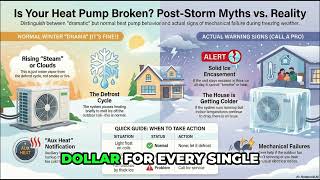
In this YouTube short, two speakers discuss a common HVAC error during winter storms: switching a heat‑pump system to emergency (resistance) heat. Speaker A warns that this is the single most expensive mistake because it disables the efficient outdoor heat‑pump unit and forces the system to run solely on electric resistance coils, which have a 1:1 heat‑to‑electricity ratio versus the heat‑pump’s 3‑4:1 efficiency. The dialogue explains the cost impact—dramatically higher electric bills—and clarifies that emergency heat should only be used when the outdoor unit is physically unable to operate (e.g., broken fan, ice blockage, debris). In such true emergencies, emergency heat acts as a “lifeboat” to keep pipes from freezing until a technician arrives. The speakers conclude with a cautionary takeaway: trust the system and avoid flipping the emergency switch out of impatience.
Chapters
It is the single most expensive mistake you can make during a winter storm.
I have to admit, when I'm cold and the house feels drafty, I have this strong urge to just switch it to emergency heat. It sounds powerful, like maximum overdrive.
I get it. It feels like you're telling the system, stop messing around and get me warm now.
Exactly.
And that is the wallet trap that Cole warns about. It is the single most expensive mistake you can make during a winter storm.
Why? What is it actually doing?
When you switch to emergency heat, you are overriding the system's brain. You're telling it kill the outdoor unit.
You're completely shutting off the heat pump.
Completely. The efficient scavenger outside, the sponge squeezer, it just stops working. And you force the System to run 100% on those electric toaster coils.
The expensive one, the.
Heat pump, can give you three or four units of heat for every one unit of electricity it buys. Resistance heat, the emergency strip, is a one to one ratio. You are paying top dollar for every single degree of warmth.
Like trying to heat your entire house with a space heater.
You'll be warm, sure, but your electric bill at the end of the month will be absolutely eye watering.
So when should you actually use it? Is there ever a valid time for emergency heat?
Only in an actual emergency, and call defines that very clearly. The outdoor unit is physically broken.
Broken house.
Like a giant tree branch fell and crushed the fan. Or it's a solid block of ice that hasn't melted in two days. If the outdoor machine fail physically, cannot or should not run, then you switch to emergency heat.
Just to keep the pipes from freezing until the tech can get there.
Exactly. It's a lifeboat. You use it to keep your family safe until help arrives. You don't use it just because you're impatient.
Okay, that's a huge takeaway. If the van outside is spinning, keep your fingers off the emergency switch.