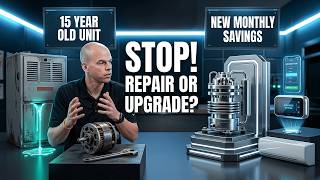
Derek Cole compares HVAC systems to phone plans: both decline over 12-15 years and cost money monthly through repairs and inefficiency. Instead of waiting for failure, finance a new system and roll the payment into your budget, just like upgrading your phone. You'll get better efficiency and predictable costs.
Chapters
Most people don't think about their HVAC system until it breaks. But if you want to understand when it's time to upgrade your system, don't think about HVAC. Think about your cell phone. That phone you're on most of the day. Think about your phone. The way you upgrade your phone is the exact same way your HVAC system should be handled over time. Now, nobody expects a phone to last forever, right? We've all held on to our phones too long, not wanting to upgrade. You protect it, you keep it updated, you fix the cracked screen, you might have even replaced the battery, but eventually it slows down, performance drops, repairs start mounting,, and at some point it makes more sense to get an upgrade and not pouring money into an old device. Not because it completely stopped working, but because it stopped working well enough to justify the continued cost. Your HVAC system is the same life cycle. Here's where homeowners get tripped up. They think upgrading their system means taking on some brand new payment, but the reality is that you're already doing that monthly payment tied to your HVAC system, and it's been tied to your system for years, uh, whether it be a maintenance plan, repair bills spread across on a credit card energy waste because your system is less efficient, and emergency service costs. I mean, you've already been paying to keep the system going, but just like a phone plan, the cost never disappears, it just shifts. HVAC equipment doesn't usually fail all at once. It declines. It runs longer to keep up. Comfort gets inconsistent, noises increase, repairs become more frequent. And once you get into that 12 to 15 year range, you start, you start seeing the patterns. Not because it was installed wrong and not because you did anything wrong, but because it's a mechanical piece of equipment that wears out. When you upgrade your phone You don't suddenly start living with a new payment. You just add the payment of the new device to your existing monthly bill for the phone. When the term ends, you're eligible for an upgrade of your phone. HVAC works the same way. The new system gets added into your monthly structure. You pay it down over the agreed term. During that time, you're running with better efficiency, stronger reliability, and protection instead of hoping the old system makes it one more season. When the term ends, the system has paid off, you've completed that cycle, and years later when time catches up again, you're positioned to make the next upgrade instead of starting from scratch. That's planning, that's not reacting. Repairs have their place. Maintenance matters. Stretching life out of the equipment is smart, but there's a point when repairs stop extending the life and start delaying the inevitable. When costs stack up and performance keeps dropping, the math changes. You're no longer protecting the investment, you're feeding an aging system. And when upgrading becomes a more stable move, waiting keeps you in reaction mode. You're adjusting your budget around breakdowns, around weather swings, around unexpected failures around surprises. Upgrading puts you back in control. You choose the timing, you structure the payment, you improve comfort, you improve reliability, you reduce surprises. That's how phones work, that's how vehicles work, that's how any major equipment works. So HVAC is no different. The real decision is whether you make the move with a plan or you wait for the system to make the plan for you.