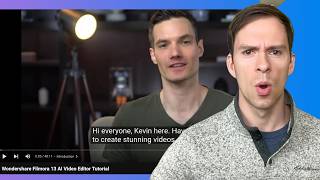
Ross Zeiger analyzes a range of YouTube video intros and what makes them effective for viewer retention. Using examples (My First Million, Girl with the Dogs, Joe Rogan, Marques Brownlee, Kevin Stratvert, and his own channel), he highlights tactics like front-loading curiosity hooks, rapid visual edits (zooms, on-screen text), reusable intro templates, and tailoring intros to channel type and audience. He recommends prioritizing immediate engagement over long brand sequences unless the brand is already extremely well-known.
The first YouTube intro I'm going to be looking at is from a podcast called My First Million. Let's see what they got.
Kelly, what's the problem with Ozempic?
Drugs? Like Ozempic and Ozempic Drug. Ozempic.
The topic. Ozempic.
What exactly is Ozempic? Ozempic.
So a couple things to point out here. They're taking scenes from the podcast that you're about to see and they leave you with little hooks. So they, they start off with like, what's the problem with Ozempic? Like that that's gonna catch anyone's attention. And then you're like, I gotta find out, I gotta watch to see what's gonna happen here. So this is a really popular technique. I see it in Diary of a CEO. I see it in a lot of really popular podcasts where they'll play a really interesting part where the guest is saying, this secret is the thing that I wish everyone knew. And then they stop it right there. They cut it off. And so then it leaves you with, like, with curiosity. That's what you're always trying to create with your title, your thumbnail, and then the hook of the video, the first 30 seconds or less. That's a very popular technique that you can take, is take something really interesting that you or the guests say, and then just chop it right at the beginning.
Actually represents to me the biggest issue in the country, which is the other.
Thing they're using is zooms. So he said, it represents to me. And then they do a zoom in and they have titles, they have words on the screen so that you can read it as he's talking about. So all these little visual elements that keep things moving and then also just changing the scene, changing the clip every three seconds at least. It's usually more. If you look at like Mr. Beast, he's changing like every second, half a second, super, super fast paced. And that all adds complexity and more time to your edit. But right at the beginning, if you can front load that kind of stuff, that gets a lot of retention for the viewer. That's the hook part of it. And then if I keep going a little bit further into it, the biggest.
Lie in healthcare is that the reasons we're getting sick are complicated. And the second biggest lie is that these things can't be changed quickly. They can.
So this is their standard intro. And this is, this is also what I want to show you. So this is something that you could do is have a standard intro that you just make a template out of in descript. And by the way, my first million does use descript, I believe. I don't know for sure, but I've heard that they're Descript users.
All right, let's rock.
So this, this layout right here is a template where they just have the three speakers and then you could just really easily apply this in descript. But that whole intro, that sequence with the music, that's something that you could make in descript. And then you would just apply it every single time with the click of a button. So that's one tactic. Just make like a 5 to 10 second cookie cutter type of intro that you play at the beginning of every show. Personally, I'm not a fan of that, but it depends on what you're doing and, and what you're going for. I bet they see a big drop off in engagement, especially among new subscribers or people who aren't subscribed. Because if you don't know, if you don't know them, then you're gonna click away in that. In that time. Okay, the next one I want to show you is this channel called Girl with the Dogs. She's a dog groomer and every single episode is a different dog that she's grooming. That's a different type of breed. And I really like her intros. They're standard in the sense that it always shows this door and her walking in. But let's take a look how it goes.
There is something about walking an American Akita that makes me feel like a powerful woman. This is the killer Kuma. He is five years old and he is one of my most favorite.
So it starts with her walking through that door with the dog she's about to groom. And she has a little bit of commentary. Every single one's different. Introducing the dog, like, this is the dog's name, this is the breed. Here's a little bit about what makes that breed interesting. Here's what makes this dog interesting. Here's the challenge I'm going to have with this dog. And, and every single one is unique and it captures your attention. Like, okay, this is. I'm meeting the dog. We're about to watch this for the next few minutes as it gets groomed. And she's also, she's also funny. She throws in her personality and she'll crack a joke oftentimes. So I really like that if you can somehow incorporate something that is unique and original for every single episode that you put out, I think that's a really powerful intro. Next one is back to more of a standard Intro. And I use Joe Rogan because he's the biggest podcaster in the world. So probably everyone is familiar with this. And it looks like this, the Joe Rogan experience. Train by day, Joe Rogan podcast by night, all day. So 11 seconds before it starts to fade out. I think that's way too long. And if it wasn't Joe Rogan, this wouldn't work. Do not try to replicate what Joe Rogan does, because I think anyone else, any new YouTuber is going to see a giant drop off in that first 10 seconds and what I would do is skip forward through that anyways. So personally I don't see the value in having an intro like that unless you're an extremely recognizable brand like Joe Rogan. Next is Marquise Brownlee and this is what he does for his intros.
Okay, so I was looking.
So that was like two and a half seconds before it fades out. We're at three seconds now. And he does every single intro a little bit different. And he throws in Easter eggs. So he'll do something related to the topic he's about to cover. And he has extremely high production quality. He does, you know, probably uses after Effects or something to create those, those motion graphics. So if you're going to do something like that, you could change it up and do it relevant to the topic that you're about to share. But he probably spends hours, or his team probably spends hours just creating those two second intros. So again, I think it's a low priority and you should just jump into the topic. This next one is a guy who does tutorials. His name's Kevin Stratvert. Three million subscribers. And this is how he opens his videos.
Hi everyone, Kevin here. Have you ever wanted to create stunning videos effortlessly that you can post to YouTube, TikTok or Instagram? Well, today we'll learn how to do that.
So this is a really effective strategy for when you're teaching something like this. Like it's a 48 minute show. His, his intro is hi, Kevin here. That's it, nothing more. And personally I think that's too much. I don't even do that. But if you're going to, that's the extent of it. Introduce your name and maybe a canned intro. Like if you have a catchphrase that your audience is used to or something like that, you could do that. But then he goes into a bit of a hook asking, like, have you ever wanted to? So that can be powerful. And that's his style. He uses that in almost all of his videos. Kind of a little bit boring. If he had something a little bit more like the girl with the dogs, I think that would be really powerful. Like maybe if it was him right off the bat demonstrating something cool you can do with one of these tools. But it's a 45 minute tutorial. It's not supposed to be super exciting. It's sort of a more dry topic. So this is where it depends on what it is that you're talking about. If you're an entertainment channel, obviously it's going to be very different. Can be something like Mr. Beast. But with the tutorial I think this is great. I think it works. And then this is what I do. So this is. I have the masking in the background there. My attempt to create a visual of how. And then this thing on the side. And this is actually one of my older ones. But I don't have any sort of intro scene. I just have my logo that pops up at some point. I used to. I was playing around with my name at one point early on, but just massive drop off in. In engagement when I do that. So what I found is to just overlay my. My logo and then just dive straight into the topic and that's. That tends to have the highest engagement with where people aren't dropping off like crazy right at the beginning. Let me know in the comments what you think about these intros and your philosophy on intros and if there's any other topics like this that you want me to cover in the future.