10 Unknown Dialectics to Embrace for Happiness
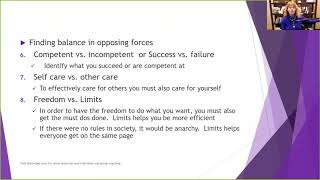
This is a transcript of a YouTube podcast episode (Happiness Isn't Brain Surgery) hosted by Dr. Dawn‑Elise Snipes. The episode explains the concept of dialectics (balancing opposing forces) and walks through multiple paired dialectics (e.g., happy vs sad; love vs hate; anxious vs confident; sick vs well; pain vs pain-free; clean vs slob; healthy eating vs junk food; competent vs incompetent; success vs failure; self‑care vs other‑care; freedom vs limits; rebelling vs submitting; speaking vs listening). For each pair she gives examples, practical reframes, and guidance on finding compromise and balance. The episode ends with resource links (Docsnipes.com, Facebook group) and an invitation to subscribe or support the show.
Chapters
Welcome to Happiness Isn't Brain Surgery with Doc Snipes. This podcast was created to provide you the information and tools Doc Snipes gives her clients so that you too can start living happier. Our website, Docsnipes.com has even more resources, videos and handouts, and even interactive sessions with Doc Snipes to help you apply what you learn. Go to Docsnipes.com to learn more. Hi, everybody, and welcome to Happiness Isn't Brain Surgery with Doc Snipes. Today we're going to be talking about dialectics. Dialectics basically means finding balance in opposing forces. Yin and yang, for example. There's always balance. When one starts to get stronger, the other one starts to get weaker. So when you're thinking about depression, for example, you may have too much negativity in your life, or you may not have a whole lot of negativity, but you don't have a lot of positive stuff either. So you want to make sure that you've got a balance going on. And yeah, you're not going to increase your negativity, of course, but you want to make sure that you don't have too much and you want to make sure you have enough happiness in your life. So we're going to look at some differences here. Happy and sad is one dialectic. You can have both at the same time. Yeah, I know it sounds weird. You can be sad that something happened, maybe your pet passed away, or your friend is moving. You can be sad about that, but you can be happy about a bunch of other things in life. So you want to look at what is going on in your life right now that makes you happy, have an attitude of gratitude, so to speak. What is it that's going well? What are you enjoying? Love and hate are also two opposing forces, and they can both be true. You can love somebody and hate the things that they do at the same time. So there's a love and a hate. So what you want to do when you find these seemingly opposing forces is ask yourself, how can both of these things be true at the same time? Anxious and confident. That's another thing that people experience a lot. You can be anxious or nervous about doing something like giving a speech, but still confident in yourself as a professional. So, yeah, you're going to be anxious about certain things, but where is your confidence in general? Where's your confidence in you as a person? Another concept that comes up is being sick versus well and oh my gosh, I have been struggling with this upper respiratory thing that's going around right now. For almost a month now, and I'm getting really tired of it. So sick versus well, how sick am I? Well, some people would want to debate that issue with you, but we're going to stick with physical health right now. Sickness, you know, I have kind of a scratchy throat and I have a little bit of a sinus infection and stuff going on. It's unfortunate, but, you know, my knees don't hurt, my back doesn't hurt. A lot of other systems and things are going fine. So am I out on the bed? Am I in the icu? Heck, no. Am I a little bit sick? Yes. The same thing kind of goes with pain and pain free. Expecting to be pain free 100% of the time is unrealistic. Nobody's pain free 100% of the time. So what you want to look at is, you know, yes, you may have pain, like in your neck. You know, maybe you have a kink in your neck. All right, well, it comes and it goes. It's maybe not going to be the best day. You may have some pain today, but it may be gone tomorrow. So you can focus on the fact that you're not in pain. Excruciating pain all the time. If you do have chronic pain, then you want to look at the degree of your pain, the days that are better, that are less painful, and the days that are more painful and figure out how can you increase the number of less painful days when. What's different on those days? I mean, if it's something like the weather, you can't do anything about it. But for me, for example, after I work out, if I don't lift well, if I lift and I don't stretch well, I'm sorry. Then I'll wake up the next morning and my low back will be killing me. It's really important for me to stretch. And all the rest of that day, my low back is going to bother me. So it's important for me to stretch after I lift. For some people, it's sleeping in the right position or sleeping on the right bed. You know, if you sleep on a really hard bed, if you've ever slept on your friend's pullout sofa or something, you know what it feels like. Yeah, that's a painful day. But is everything painful and are you in pain all the time? Let's look at degrees. You can have pain and also be relatively okay at the same time. Clean versus slob. If you've ever lived with children or roommates, you know that there's a difference in the way you define these things. Now, my version of clean is very different than my children's version of clean, for example. So we need to be very specific. Can things be clean from a certain perspective and messy from a certain perspective at the same time? Sure, because my kids will say it's clean, and I'll say, oh, no, we're not done yet. So we're wanting to look at dialectics and compromising here on what does it mean. If I want it to be clean to my standards, then I need to explicitly say what needs to be done and to what degree. But there's a balance in there. You know, is this a fight that you really want to spend the energy on? Eating healthy versus eating junk food is also the same way. Can you eat healthfully and still have junk food? Yes. You just have to do it in moderation. You know, obviously if it's contraindicated by a physical condition, you're not going to do it. But if it's. You're just trying to eat healthier and trying to stay awake from processed foods for your health. Can you occasionally have a piece of pizza? Unless there's a medical reason not to? Sure. A lot of people are going to stick to a healthy eating plan if they don't feel like they're deprived. So you need to find that dialectic. How can these both be true? How can you eat healthy and still have that pizza? Well, you can either give yourself a break that day and say, you know what, just going to splurge and have a piece of pizza, or you can look at having a pizza that's healthier, for example, that doesn't have as much saturated fat. There are actually some healthy gluten free pizzas that are in the frozen food area at a lot of grocery stores now. So you can look for healthier pizzas. Look for pizzas that have vegetables on them instead of meat that has a lot of nitrates in it. So you're finding a compromise. You're finding how you can make both things true at the same time. Another example that comes up is competence versus incompetence. And a lot of times people think in terms of globally, am I a competent person or am I an incompetent person? And then when something happens, they overgeneralize it. So I use this example a lot. I am not the best at math. You know, I can do it, but I'm not the best at advanced math and I can't do calculus at all. So am I incompetent when it comes to teaching my children Calculus? Yes. Darn right. Am I competent at a bazillion other things in my life? Yes. So I'm incompetent at a specific thing, not as a person. And we don't want to overgeneralize. When you fail a test or make a mistake or do something wrong, you don't want to say, well, I'm a failure. You failed at that task, so make it specific. Just like you can love a person and dislike what they're doing, you can be competent in general and really flub something. And it can even be something that's in your realm. For example, maybe you're supposed to do a presentation for. For your group at work, and you just did a really crappy job on that presentation. Well, you performed that task incompetently. However, generally at work, in whatever you do, are you generally competent? Yes. So then you need to look at how to fix it. The same thing is true in success versus failure. You're not always going to succeed at everything. You're going to have some failure. So how can you be both a success and a failure? Well, one way is to look at it as all the things that I succeed at and the specific things that I fail at. But you can also look at failure as a success. Stay with me for a minute. Failure teaches you all the ways not to do something. So if you learn from your failures, if you learn from your mistakes, then in a way it's a success because you learned something from it, you took something from it, and you became a better worker or more competent in whatever it is. Another issue that comes up for people is self care versus other care. A lot of clients that I work with, they're exhausted, they're caregivers, they're parents. Maybe they're caregivers for a living, or maybe they've got their parents living with them and they're doing caregiving and they're just exhausted. And they say, I feel so guilty if I'm not always tending to the children, if I'm not always going to every soccer game, if I'm not always doing this and I just don't have time for me and I'm exhausted. So there's a balance there in that dialectic. You're not any good to anybody else if you are completely worn down and burned out. So in order to give good care to those others, you need to give good care to yourself. You have to have both. So you need to figure out how to find that balance. And remember that sometimes you need to say no or empower People to do things on their own or find somebody else to do it because you have to rejuvenate and recharge so you can be there for them tomorrow. You know, if you wear yourself down, eventually you're going to wear yourself out. Freedom versus limits is another dialectic that comes up for a lot of people that can cause depression and anxiety. Let's think about it for a second. In order to have freedom to do what you want, you must also get the must do's done. So limits help you become more efficient. You know, if I didn't have limits, I would be, you know, all over the place and I would never probably get anything completely done. So limits help me structure my time. Limits help me be more effective. And you know, if I have all this stuff that I need to get done at work because, you know, and those are limits saying this has to be done for your job, that's a rule, that's a limit. Okay, well if I know that and I want to do all this other stuff over here, that theoretically my job is affording me the freedom to do. I need to get my stuff done at work, which is going to motivate me to be more efficient at work so I can have my free time as soon as the work day is over. Another way to look at it, if there were no rules in society, it would be complete anarchy. I think we've all watched one or two episodes of the Walking Dead or, you know, some of those other shows where something happens and it goes into complete chaos. Well, if nobody's on the same page, you don't feel very free. There's a lot of anxiety, there's a lot of stress, and it's hard to get anything that you really want. You're not going to be working to succeed at something. You're going to be working to keep yourself from getting killed or hurt or whatever. So limits help give our society structure which enable us to have freedom to live happy, healthy lives. So looking at limits, you know, yes, you can have too many limits, don't get me wrong. But limits can serve a good purpose. Limits can help you. So instead of looking at them as something that's constrained and oppressive, look at it and ask yourself, in what way is this helping me? When I was a teenager, I had curfew that was a limit. I didn't like it, but it gave me the freedom. Since I was obeying curfew, I had the freedom to go out and do what I wanted to. And as I earned trust, I got later and later Curfew, so my limits were pushed up. Now, if I would have started failing school or started coming home late from wherever I was and not getting there at curfew, then my freedoms would have been restricted. Is that fair? Does that help me? Well, yeah, because it helped me learn how to structure my time when I got out of high school and when I got to college so I would get to class and I would get my assignments done and I wouldn't flunk out in my first semester. So limits can generally teach you something, help you achieve your goals. If you look at it that way, instead of looking at it as an oppressive factor, it can make you feel less like rebelling against it, which takes us to rebelling and submitting. Holding anger and grudges can be exhausting. When somebody tells you you have to do something, well, at least for me, my first reaction is, oh, no, I don't like being told what I have to do. Don't tell me that. Okay, so I got a little bit of an attitude, but whatever. The more you rebel against other people, the more you're allowing them to control you. If you're angry at somebody and you hold on to that anger and you see them and you just see. And every time you think of them, you just, oh, every muscle in your body tenses up. You are giving them your power. You are giving them the ability to affect how you feel sometimes when they're not even in the room or even in the same city for that matter. So the more you rebel against them and try to push them and argue with them, especially if you're not doing it face to face, the more you're allowing them to control you. So what can you do? Well, submitting and being a doormat, you don't want to do that either. But what can you do? You can hear their side. You can accept that they have a different position. You can accept that they did something that was hurtful. Is holding on to anger because somebody hurt you going to serve you any purpose? Is it going to help you achieve your goals? Is it going to help you get where you want to be six months from now? Probably not now. It will remind you not to go back and do the same thing with the same person again. But it's probably not going to help you move forward. So what you should do with that anger or what you can do with that anger is take it and say, okay, thank you for telling me, brain, that there is a threat here, that something bad happened and I need to learn from it so it doesn't happen again, then you learn from it and move on. Holding a grudge against that person doesn't affect them. They probably couldn't care less. Holding a grudge against that person does drain your energy though. So are you submitting? Submitting is kind of up for interpretation. Instead of fighting against something all the time, figure out a way to work with it, to synergize with it. When a salesperson is trying to work with you and trying to sell you something, you know they're pushing something, they want you to buy something, which is kind of like rebelling. When they're trying to get you to do something instead of telling you all the reasons you need to do something, they're a lot more effective. If they ask you, what are your needs? In what way can my product help you meet your needs? You know, if somebody's out looking for a car, instead of saying, you need to buy this car right now, walking up and going, I see you need a new car, you know, what are some of the priorities? What are some of the important things that you're looking for in a car? And maybe I can help steer you in the right direction. That's a whole lot less off putting than telling somebody that this is the car for you. You've got to have this without even asking what they want. So it's all about understanding and listening and figuring out what a good use of your energy is. Sometimes you just gotta let it go. Finally, speaking versus listening. The more you argue for your position, the less you will be heard. So if you see find yourself saying the same thing 3, 4, 7, 20 times and not being heard, maybe you need to stop and take a different perspective. Maybe you need to do a little bit more listening. Because generally if you say something and you have to keep repeating yourself, the other person is not understanding or you're not hearing what their needs are. As a clinician, I can tell somebody that you need to do these activities between now and next week when we meet, or these will help you feel better. Read this book, do whatever. And they come back the next week and they haven't done it. I send them home with the same assignments again and they came back next week and they haven't done it. And I explained to them why it's important. I send them off on their way, they come back again and they still haven't done it. Well, I'm spinning my wheels, I'm wasting my own energy. A better way to approach it would be instead of telling somebody what they need to do to stop and say Hmm. I wonder what it is that is keeping this person from doing these activities. So instead of continuing to speak and assert my position why it's important for them to do this task, I need to drop back and say, what is it that you're needing from me? Or why is it that this is not working for you right now? If you like this podcast, you can subscribe on your favorite podcast app. Join our facebook group@docsnipes.com Facebook or join our community and access additional resources, including live chat each week on Thursdays with Doc snipesocsnipes.com thanks for tuning in to Happiness Isn't Brain Surgery with Doc Snipes. Our mission is to make practical tools for living the happiest life affordable and accessible to everyone. We record the podcast during a Facebook Live broadcast each week. Join us free@docsknipes.com Facebook or subscribe to the podcast on your favorite podcast player. And remember, Docsnipes.com has even more resources members only videos, handouts and workbooks to help you apply what you learn. If you like this podcast and want to support the work we are doing for as little as $3.99 per month, you can become a supporter@docsnipes.com join again. Thank you for joining us and let us know how we can help you.










