12 Strategies to Stop People Pleasing with Dr. Dawn-Elise Snipes
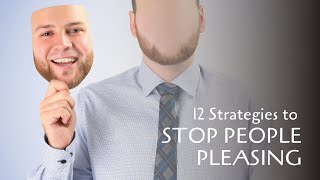
Dr. Dawn-Elise Snipes explains why people please (approval-seeking, fear of rejection, childhood survival patterns) and offers 12 strategies to stop, including building self-esteem, setting boundaries, practicing assertive communication, and scheduling monthly personal recharge days to prioritize your own needs.
Chapters
Welcome to Happiness Isn't Brain Surgery with Doc Snipes. This podcast was created to provide you the information and tools Doc Snipes gives her clients so that you too can start living happier. Our website, Docsnipes.com has even more resources, videos and handouts, and even interactive sessions with Doc Snipes to help you apply what you learn. Go to Docsnipes.com to learn more. Hi everybody and welcome to Happiness Isn't Brain Surgery with Doc Snipes practical tools to improve your mood and quality of life. Today we're going to talk about how to stop people pleasing. It's important to be able to set boundaries when we people please. A lot of times we negate our own feelings, our own needs and our own wants in order to please other people. Now, sometimes people pleasing is okay. We do things to make others happy and that brings us happiness. That's wonderful. But when you're people pleasing, to the extent that you're getting overly tired, you're getting worn down, you don't feel like you have anybody helping you out, then that's when it becomes a problem. So the first thing to do is figure out, why do you people please? Are you trying to get approval? You need others to tell you you're okay because you don't feel okay yourself or you're afraid of being alone. And that fear of isolation, fear of reject is huge in people who people please. A lot of times they're afraid that if they aren't actively people pleasing and doing things to make others like them that they're going to be alone. And I would encourage you to work on your self esteem and look at, you know, why are you all that in a bag of chips? Why are you a good person? And we're going to talk in a little while about the fact that everybody has strengths and weaknesses. We're all fallible. Nobody's perfect. So recognizing and accepting that, but also accepting that you're a good person despite the fact that you're not perfect. Just like your best friend is probably a good person despite the fact that he or she is, guess what? Not perfect either. So figure out why you do it. It could be for approval. It could be because you fear rejection. It could be because when you grew up, you were always told or you always saw others people pleasing because it was not safe to say no. It was not safe to set boundaries and say, no, I don't want to do that, or this is my preference. Maybe you grew up in a household where there was an alcoholic or an Addict or someone with borderline personality disorder. And you know, those parental units could kind of turn on a dime and go from being happy to being wickedly angry. So it wasn't safe if you weren't people pleasing. You were always walking on eggshells trying to keep them happy. Look at your current environment. Most likely that's not the case anymore. Most likely you're acting as you acted to stay safe when you were little and now the people around you are happier, healthier, and able to engage in more productive relationships. So taking a look at how much you want certain people in your life and what they bring to your life and what you bring to theirs, remembering that being told that people pleasing is mandatory is dysfunctional. You know, if you felt like you were having to walk on eggshells. If you still feel like you're having to walk on eggshells in certain relationships, you really want to evaluate how you can improve those relationships or buffer yourself from the stress that it causes so you don't feel this constant fear of rejection or somebody getting angry at you. The final reason people please is a lack of self awareness. They do things for other people because they don't know what they want, what they like. They have always grown up kind of being a chameleon for one reason or another. It may be because it wasn't safe to have their own opinions, or it may be because they weren't ever encouraged to figure out what their opinions and likes and stuff were. But there's a lack of self awareness. So you just kind of go with the flow even if you're not crazy about it, but you don't know what you want to do instead. So once you figure out why you do it, then you can start addressing it. When you stop people pleasing or in order to stop people pleasing, you need to have a good self esteem. You need to be able to look in the mirror and go, you know what? I'm not perfect, but I am a really awesome person. And if so and so has a problem with that, that's their problem. And that is way easier said than done. Don't get me wrong, but it's important to be able to do that. It's important to recognize that it is not your responsibility, it is not your responsibility to make other people happy. We are all responsible for our own emotions. So if you do something somebody doesn't like, you know, if you unintentionally did something to hurt their feelings, then apologize for it. But if you do something they don't like and it's something you feel strongly about, you know, tough tiddlywinks, you know, you don't want to intentionally hurt somebody. But for example, if you're a college student or you're somebody getting ready to go to college and your parents want you to choose a certain major and that just doesn't appeal to you, so you choose the major you want and they're mad about it. Well, let them be mad. That's more about them than about you. So, you know, that's what I'm talking about when I'm saying that if you do something that somebody doesn't like or they have a differing opinion, you know, there are ways you can work it out, but you need to be true to yourself. You need to live authentically. So the other the next step is to examine the benefits and drawbacks of people pleasing. Why do you do it? What does it get you? Does it get you? What kind of rewards does it get you? Some people, people please because they don't want to be cut out of the will. Some people, people please because they want to maintain peace in their household. Some people, people please in order to get approval from others and to look better in somebody's eyes. You know, what are your benefits and what are the drawbacks? Yes, there are drawbacks or you probably wouldn't be listening to this. People pleasing is exhausting because there's always other people who want to be pleased and you're only one person. People pleasing takes care of other people's needs. And yes, it can be rewarding, but it can also be very draining. So the drawbacks to people pleasing tend to revolve around you running out of energy, getting worn down, and not getting your needs met. The next step is to look at the benefits and drawbacks of taking care of yourself. And some people, the thought of taking care of themselves and putting themselves first is scary as hell. And I get that. But you've got to remember that if you are not there to people please, you know, if you are not there, you can't be there to people please. You can't be there to help somebody out if you're worn down and you're, you know, just a puddle of quivering. I can't function mess. So it's important to take care of yourself. So the benefit to taking care of yourself is that you can be there for other people and you can enjoy life. The drawbacks is it may tick some people off, you know, when you first start setting boundaries and going, I can't help you move this weekend, or you know what I can't pet sit for you anymore or whatever the boundaries are that you need to set initially. People are used to you not putting up any resistance, so they're going to kind of bristle and go, oh my gosh, she told me. No, that's okay. Part of the way to work around this and make it less of a drawback is to communicate effectively and to try to create a win win. We'll talk about that in a few minutes. But you want to make a list on, you know, four separate sheets of paper. The benefits of people pleasing. Another one, the drawbacks of people pleasing. The benefits of taking care of yourself and the drawbacks of taking care of yourself. And complete it and then go back the next day and see if there's anything else that you want to add to those sheets. So you get an idea of why is it that you want to stop people pleasing? Why is it important to your health, well being and welfare? The next step is to identify who and what is important in your life in order to figure out what's worth your energy and what's not worth your energy. What things that you know. If you're going to have to choose among activities and pleasing people, who is most important to please, You've got to know what's important in your life and that includes yourself. Again, if you are completely worn down, you're not good to yourself or anybody else. So you need to be happy and healthy. But what else? And who else is important in your life? And that will help you decide how to use your energy, what, what things to say yes to, what projects to accept, what you know. It will help you make more educated decisions about when do people please? Because we all do it sometimes, you know, it's just one of those things. We like to help other people, but there has to be a limit. There has to be some boundaries set. Start including yourself and your own needs on your daily to do list because you are important. So that means laugh for 15 minutes a day. That means eat a relatively healthy diet. That means do things that make you happy and help you move towards those people and things that are important in your life. You are important. Don't be afraid to communicate and confront people. Can't read your mind. Let me say that again, people cannot read your mind. So it is very important for you to communicate what your needs are. You got to know what your needs are first, but then you need to be willing to communicate them. So working on assertive communication may be really important. If you're not used to standing up for yourself or saying what you need, or if you're afraid to say what you need or you want, then working on those communication skills will help you start moving towards living more authentically, not people pleasing as much and having healthier relationships. Be willing within that to ask for what you need. You know, if you need time alone, you know, maybe you're dating somebody and you spent the past three months together every single day, and you just need a weekend to yourself to not put on makeup, to sit on the couch and watch a Netflix marathon or whatever it is. It's not that you don't like that person. You just need some quiet time. You need some time to yourself. That is not unhealthy request, that is not unreasonable. So when, you know, if that comes up, asking your partner for that and saying, you know what, I just need this weekend to myself, it's not because I'm angry at you or anything. It's just I need some downtime, some time to, you know, relax in my own skin. And they may not like that at first, but effective communication, helping them see that, you know, you're not cheating on them, you're not, you know, pushing them away. You just need some space to breathe. That's totally acceptable. So creating a win win, you know, letting them know, if I have this weekend to myself so I can recharge, you know, the next weekend, maybe we can do something more fun and propose something. And you also need to be willing to say no. You know, if somebody wants you to do something that you're not crazy about doing. Like if somebody asked me to go to a roller coaster park, even if I, you know, maybe it's somebody who's really important to me and they want me to go to this roller coaster park. The win win I could create is I could say I will go, but I'm not riding the roller coasters. I'm terrified of roller coasters, and that's my boundary. I will go with you. I will watch you have fun, you know, whatever, if that's really important to you. But I'm not riding the rides. So setting boundaries and creating a win win can be important. And again, not expecting mind reading if you don't want to go do something. And even if you kind of quiver your lip and make a, make a face that says, yeah, you know, that sounds really icky. People may not pick up on that. So it's important not to drop hints. My daddy always used to say that. He's like, I don't take hints. If you want something or you need something, you need to tell me straight out. And it was true. So a lot of people are that way and it makes life so much easier if they're not trying to guess. What are you going to like? You know, if you're dating somebody or you're married to somebody and you're trying to decide what to do on a vacation, it's a lot easier if both partners put in their ideas about what they want to do and why than one partner trying to guess, well, what might this person enjoy doing, you know, at Christmas time? I always encourage my kids throughout the year and my husband as well, to keep a list of things that they might want for Christmas or their birthday or whatever because I can't mind read. And the older they get, the more expensive their presents get. So I want to get them something they want, but you know, I don't want to just be throwing money away. So if they keep a list of things, then I'm more in tune with to what they may want and then I can choose from that list. So there's still a little bit of a surprise. But it makes it easier on me because I'm not stressed out trying to figure out what they might want. And it makes it easier on them because they don't have to act like they like something that they never wanted in the first place. Remember that social conventions are mostly arbitrary and you generally have no obligation to follow them. So if somebody, if there's an office party, you just really don't like office parties. You can turn in a I'm not going to be there rsvp. You don't have to go to every single party you're invited to. You don't have to do every single thing that people ask you to do. People are often going to ask you to do things in hopes that you will. But a lot of times it's not going to be the end of the world for them or for you if you say no. So it's important that you are willing to assert your own boundaries and not feel obligated to do something. You know, if somebody invites you to their birthday party and you go to their birthday party, but you know, for whatever reason you went and it was a really awful time. Don't necessarily feel obligated to invite them to your birthday party if it didn't turn out well, if it was oil and water, you know. So there are a lot of times when people, especially in social situations when, when people feel pressure to like, invite everybody at the office to their wedding instead of Three people, because they don't want to hurt anybody's feelings. You know, if you want a small wedding, you want a small wedding, and that is okay. And it's important to let people know that for whatever reason, you know, if you wanted a small wedding, you're not inviting everybody. It's not that you don't like people, it's just that you're keeping it to a very small number. Another thing you can do to stop people pleasing is challenging your inner critic. Because your inner critic, especially if you grew up where you were being told that people pleasing was necessary, your inner critic is going to say, you have to do that. You're a lousy person if you don't do that. You need to step up to the plate. And sometimes you need to step back and tell your inner critic to be quiet and address what you need in the here and now. Your inner critic is going off stuff that it learned when you were little, when you learned that you learned growing up, but that's not necessarily how it is now. Your inner critic could be driving you to get worn down. So sometimes you got to step back and say, no, that's not in my best interest. You are your own best advocate once you know what you need. So it's important to get in touch with yourself and figure out, what do you like? What do you dislike? You know, sometimes we'll go out to dinner and my husband will say, where do you want to go? And. And I truly have no opinion. I just want something edible. There are other times where we're going out to dinner and something does sound good, and I'm like, well, I really want to go to the salad bar at this restaurant or something. And that's okay. You know, it's okay not to have an opinion, but you need to have opinions sometimes, and sometimes you will have an opinion. So once you know what you need, then you can start saying what you need and what you want. And then when you don't have an opinion, people are going to be a little bit more likely to believe that you truly don't care. If you've asserted your opinions before and you could say, you know, this time I just. I don't care. Whatever movie you want to go to is cool with me. Try to create a win win situation, though. So when you are working with other people, when they're asking you to do things, when you're saying no, you always want to try to create a compromise that works for both. Maybe you're not going to, you know, help them move this Weekend or help them out with a project at the office. But you can do something else for them. Sometimes it's not possible, but win. Win is one way to use assertiveness skills to stop people pleasing, but to avoid ruffling feathers. Plan a day just for yourself, one day without any responsibilities for anyone else. And do just what you feel like doing for the whole day. You know, you need to rest, recharge and rejuvenate. I encourage people to do this once a month. Find a day, once a month that you can just have the whole day to yourself. Not doing laundry, not cooking meals, none of the chores. You are just going to do whatever the heck you please for that one day. And if you can't squeeze out a whole day, then squeeze out an afternoon or a morning. Everybody can find an afternoon or a morning somewhere where they just say, you know what today's about me. Share yourself with others. Instead of always focusing on what other people might enjoy, invite someone to do something with you that you're interested in or that you want to do. Relationships grow stronger, which means that they're also more resilient to adversity. And you know, anything else when each person shares themselves with the other person. So by asserting your opinions, you're letting people get to know you. You're letting people in so they're coming past those walls a little bit and forming a stronger bond. That's the way to build healthy relationships. Synergize, recognize and embrace the strengths and weaknesses, the human fallibility in yourself and other people. Because you know what, everybody makes mistakes. Everybody has weaknesses. So instead of trying to hide your weaknesses or cover up for them or whatever, capitalize on your strengths and then use your friends strengths that complement yours to get things done. So if you're trying to remodel a house, for example, and I've shared with you before that woodworking is not my strength. I am not that meticulous. So I know that that's just not going to work for me. I can paint. I'm good at painting. So when we're working together, we identify what are our strengths and how can we work together to accomplish this task that we both want to accomplish. And I can state my preferences. You know, I would rather do the preparation for everything, you know, pull all the carpet out and whatever and then paint. And I would prefer you would do the woodworking and this, that and the other thing over here. And we can talk openly about what our preferences are. If when you're doing something you're happy about doing it you feel confident about doing it, then that kind of spills off and people are going to enjoy working with you more and say how you really feel, even if you're not sure whether everyone present will agree. Because the only way for people to understand you and be able to support you is if they know you. And in order to know you, they have to know how you feel and know what your wants are. People pleasing is very one sided. You're giving, giving, giving, giving, giving and you're not letting people in. In healthy relationships, the people that you're in relationships with want to give back to you. But if you're constantly people pleasing then you're getting worn down and they don't know what to do to give back to you. So be open, communicate. Know who and what is important to you so you can choose where to spend your energy, figure out what's important to you and what you like so you can share it with others so they have an idea about what to do to kind of pay you back, so to speak. Because all relationships are give and take. People pleasing is give, give, give. Healthy relationships are give and take. Hopefully this has given you some ideas on how to stop people pleasing and start developing healthier relationships. Thanks for tuning in to Happiness Isn't Brain Surgery with Doc Snipes Our mission is to make practical tools for living the happiest life affordable and accessible to everyone. We record the podcast during a Facebook Live broadcast each week. Join us free@docsnipes.com Facebook or subscribe to the podcast on your favorite podcast player. And remember, Docsnipes.com has even more resources Members only videos, handouts and workbooks to help you apply what you learn. If you like this podcast and want to support the work we are doing for as little as $3.99 per month, you can become a supporter@docsnipes.com join again. Thank you for joining us and let us know how we can help you.










