15 Principles of Client Centered Care | Humanistic Counseling Theory
Dr. Dawn-Elise Snipes outlines 15 principles of client-centered care from humanistic counseling theory. The approach prioritizes client empowerment and autonomy through participatory decision-making, reflective practice, and trauma-informed, culturally responsive methods that lead to faster, longer-lasting change.
Chapters
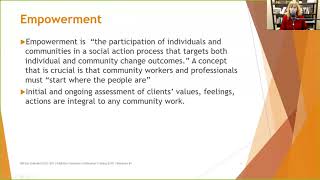
This episode was pre recorded as part of a live continuing education webinar. On demand. CEUs are still available for this presentation through all CEUs. Register@Allce.com Counselortoolbox. This episode was pre recorded as part of a live continuing education webinar. On demand. CEUs are still available for this presentation through all CEUs. Register@Allce.com Counselortoolbox you I'd like to welcome everybody to today's presentation on 15 principles of client Centered Care. Now this was originally written and based on the Registered Nurses of Ontario's best Practices guideline. But what was in there was so applicable to clinicians and medical providers and, you know, the like, pretty much anybody who works with clients in some way that I thought it would be really good to go over here. So we're going to start out by looking at some of the benefits of client Centered care. Client Centered Care empowers the client to actively participate in his or her care and develop an understanding of the interaction between his or her environment and herself. So, you know, obviously if you're a nurse and you're working with somebody who is going to be in a wheelchair or needs a walker, you know, you can see how that would impact the environment from a mental health clinician's perspective. We want clients, again, still to actively participate in their care, identify what they think is going to work, what they think is causing their depression, where they think it comes from, and develop an understanding of the interaction between them and their environment. So when you're depressed or when you're anxious, how does that impact your environment? Likewise, when you're, you know, taking you out of the equation, if you will, how does your environment impact you? If you walk in and you're kind of neutral and you walk in and you know, I'll use my stuff and the room or the house is just a complete disaster. It gives me a little bit of a nervous tick. It goes away after a while, but you know, it impacts me. It's not a huge impact, but I don't like chaos. I don't like we call it flat surface. Itis in my house where every flat surface seems to get inflamed or bigger over the course of the day. So we want to look at those things. And it can be everything from colors. Whenever I move into a new house, I've always had the walls repainted a really light yellow. It's called a straw color. I'm not big on real bright colors, but just a little hint of yellow makes it a little bit more Cheerful than some of the bland colors. I try to stay away from anything that had blue undertones because I like something a little warmer and more cheerful. And I know that impacts my mood. I know, for example, having lived in houses that are older, you know, back in the day when they were building houses, they didn't build 9, 10, vaulted foot or vaulted ceilings. And if you're living in a house that has these short eight foot ceilings, you know, we didn't used to think of them as short, but now you do, and you don't even realize how much it feels sort of oppressive or it can feel oppressive, especially when it's dark outside. If you're in an environment like that and you feel kind of cooped up. And maybe that's just because we've gotten used to being in places that have higher ceilings, but having people look around and go, what is it about this environment that feels icky? Or what is it about this environment that you really love? I really love open spaces and bright color or brightness, you know, light and windows and those sorts of things. But that's not everybody's cup of tea. Client centered care. When we start having clients take a look at that and say, oh, I see how I can make some of these changes here in my environment, or I see how I'm impacting my environment and that makes me motivated to change. So we're increasing treatment compliance. We're showing them that there are things they can do. We're giving them tools to empower them and make them feel like they can do something right away. And that's awesome. And we always talk, or I always talk about making sure clients walk out of every single session, including the assessment session, with something to do, some kind of tool, some kind of information that gives them some insight or something, a direction to go towards recovery. So that improves treatment compliance. It often leads to more rapid and enduring improvements because they get that momentum going and they just keep going. You know, think about if you've ever done one of the elliptical machines at the gym. If you can get it going and you can keep it going, you can go on centrifugal force or whatever it is that I wasn't big in physics, but the pedals will move for you. When I taught spin, I always used to tell people, you're not working out effectively if when you stop pedaling, the pedals keep moving. But you know, when we're talking about counseling, you know, if a person starts going, they start that pedal going and it's going to stay in motion. Because remember Something that's in motion tends to stay in motion. Something that's at rest tends to stay at rest. So if we have them making these changes, it's going to be easier to keep them engaged and keep them making small, small changes. And client centered care really starts with caring about yourself. You know, definitely we want to be able to be proud of the work we do. We want to be able to provide the best treatment possible. We want to have a good reputation in the community. But we also got into this because we want to help people. So, you know, obviously we care about people or we wouldn't be doing this. But there's also the other benefits, you know, you know, it makes people enjoy coming, sort of coming to counseling. Some days not so much, but they see the benefit in it. So what is caring? Caring can be listening to and empathizing with clients, points of views. And if we can get everybody in our office to do this, not just counselors. Because client centered care, when you really look at it, isn't just the clinician or the nurse. I mean, think about somebody in the hospital, they work with nurses and doctors and, you know, everybody comes in and out of there, even the maintenance person who's mopping the floor so they interact with people and a client centered environment. Everybody is going to care about the clients, ideally. So we want to help even our front desk staff who answers the phone, who greets people when they come in. We want people to feel welcome. We don't want them to walk up to the front desk and, you know, you have that little window drawn and the person just stands there. I had to do that last year at the doctor I was going to. I had to do that. And I walked in and I stood there and I wanted to check in and I just stood there and stood there. And she was just typing on her computer and she was not about to acknowledge me until she was finished doing whatever she was typing, whatever she was typing. So we want to make sure that our staff meets clients and greets clients in a way that they feel cared about. And they can listen to and empathize with clients. Points of view. If it's the front desk staff, they may need to empathize. You know, I'm really sorry that, you know, Dr. So and so is running behind. You know, I know your time is really valuable and you've been so patient, you know, just working with them. Good customer service, it recognizes clients are unique individuals. So we recognize that because of their culture, because of their age, because of their diagnosis, because of what Happened on the way to treatment today, they may present a little bit differently than anybody else that you see that day. So we want to greet people and meet people without having any predetermined notions. You know, sometimes you work with clients, and my grandfather was the perfect example. You know, God bless him. He was probably in a lot of pain for many, many years. He had an injury in World War II and ended up having to have a plate put in his head and because he had a skull fracture anyway. So he probably was in a lot of pain and, you know, he was a chronic smoker and, you know, was in law enforcement for many, many years. On top of the war in law enforcement, there was probably some ptsd. We didn't talk about that stuff back then. And on top of all that, he had some issues with alcohol. So there was a lot of stuff going on there. And generally he was kind of cranky to be around. But when he had his hospice nurse come in, she didn't react to him that way. She recognized him as an individual who was in pain, who was suffering, whatever. And as soon as somebody recognized that and met him with empathy and unconditional positive regard and all that stuff, it kind of changed. And little secret he told us later, he malingered for a while because he didn't want his hospice nurse to go away because he so enjoyed having her come over. I was like, oh, grandpa. But in any event, when we recognize clients as individuals and even recognizing that how they were last Tuesday may not be how they are today. So we don't want to go, oh, not that one again. We want to go, okay, this is a new day, new challenge. Let's see what we got. And caring means never allowing your values to interfere with the client's right to receive care. Now, does that mean that you have to provide services to every single person? You know, the jury's out on that as far as ethics goes. But, you know, sometimes there are issues that you are either not trained to deal with or because your personal state, stuff you cannot deal with. And you know, we all have stuff here and there, but being aware of that, but also being aware that we have to refer clients out, we can't just say, well, we can't deal with that. Well, okay, maybe you and I can't deal with that because, you know, I'm not. Don't have the training or whatever, but the client has the right to receive care, so I need to refer him or her out to, to someone who can. A client centered approach is one in which clients are viewed as whole people, not just recipients of counseling services for their depression. They have physical aspects, they have social aspects. You know, that biopsychosocial thing. It's not merely about delivering services where the client is located. You know, we don't necessarily. They can come to us, we can go to them, we can do video services. That's not client centered care. That's part of it. We definitely want to try to meet clients where they are physically, emotionally, yada yada, when possible. But that's only part of it. Client centered care also involves advocacy, empowerment, and respecting the client's autonomy, voice, self determination and participation in decision making. So we want to, instead of my pet peeve, which is why I bring it up a lot, we don't want to do treatment plans and hand it to the client and go, here, this is what you need to do. We want to start out by saying what's worked for you. What do you think is going to be effective? What do you think is causing your depression, your anxiety? When did this start? When you didn't have this situation? What was different? Help me learn more about you. Because you're the expert on yourself and that helps the person go, oh, you know, maybe I do know something here. And it empowers them. So after this episode, hopefully they'll have the skills to figure out what questions to ask and what research to do so they can problem solve on their own should they have a similar problem in the future. And we want to respect their autonomy. If they believe in adjunct practices, acupuncture, tai chi, herbs, internal medicine stuff, whatever it is, if they think that needs to be part of their recovery plan, then by all means, let's see how we can make referrals and make this a comprehensive treatment plan. Empowerment is another part of client centered care, and it's the participation of individuals and communities, not just the individual, in a social action process that targets both individual and community change outcomes. So empowerment isn't just about saying, hey John, you know, I'm glad we're working together, why don't you tell me what you think is going to be effective? That's part of it, but empowerment is much bigger. We want to get the communities to start saying, if you're depressed, counseling can help. If you're depressed, here are some tools. If you are struggling with domestic violence, here are some resources. We want it to be a social action process that involves prevention, early intervention, as well as treatment services. Because we want to reduce the prevalence of whatever that problem is in the community. And you know, we know that an ounce of prevention is worth a pound of cure. So we can go out there and say, talk about this. Now, does that mean, you know, if we go out and do prevention, does that mean we're not going to have clients? Oh, no. Oh, no, no, no. What it does mean is we go out and we make a ton of really positive contacts who go, you know what? I made this little change that you talked about in that workshop at the library, and it's been awesome, and it really helped. And then they tell their friend about the workshop that they went to with you, and, you know, it just kind of spirals. You get a reputation in the community, positive one, and then people start coming to you when they can't solve the problems on their own, those little tips and tools aren't quite enough. Then they go, oh, you know, I heard she's got a pretty good head on her shoulders. Let me go talk to her. So, yes, a lot of our prevention and advocacy and outreach is not billable. But if you look at it as business development and marketing, as well as an ethical practice, it's definitely something worth doing. Empowerment is a concept that's crucial because we need to help clients identify where they are. You know, the treatment services in Trenton, Florida are very, very different than the treatment services available in Orlando, Florida. Trenton is a very, very rural town. I think the county itself has 14,000 residents in the entire county. And Orlando, we all know about Orlando. So, you know, what services are available, what empowerment needs to happen, what changes need to happen, are going to be very different between those two communities. So we need to go into the communities, we need to talk to the physicians, we need to talk to the clients, we need to talk to the mom that's picking her kid up from daycare and say, you know, what services might be helpful. And empowerment also involves an initial and ongoing assessment, not just not at the beginning, not at the end, but initial and all the way through, of the client's values, feelings, and actions. In order to figure out what's going to work, we need to know because again, what someone in a super rural community, for example, may be willing to do may not be the same as something it may not feel comfortable as, you know, and somebody in a more urban area may go, oh, yeah, no problem, I'll go to the 12 step meetings or support groups or, you know, I'll go to online. You know, online counseling is very suspect in a lot of rural communities, even though that's one of the best ways for them to access services. A Lot of rural communities are still kind of iffy about that whole online thing. The humanistic approach kind of underscores the client centered care. It's based on knowing the client and the client's perspective through continuous dialogue. You know, think about Rogers. He said that if we clear that path and provide unconditional positive regard, we listen, we hear, we empathize, we provide paraphrasing so clients can hear what they're saying. And we're really actually a sounding board. Clients can often solve their own problems. You know, they may need a little bit of a nudge one way or another, or provide them a tool, but most of the time they can achieve their goals. The humanistic approach, if you remember, views the client as a whole and recognizes the interconnectedness and interrelationship between the client and the environment. If they're in a critical environment, if they're in an environment where they get conditional positive regard or where there's a lot of blockages to their growth, they're going to have difficulty. So what can we do to make this a supportive, encouraging, nurturing environment for that client? What does that look like for that client? And it focuses on restoring health, harmony and enhanced quality of life. So the nice thing about the humanistic approach is it's very human oriented, it's very interconnected. So it works well with both individualistic as well as collectivistic cultures. Participatory management is the extent to which managers involve staff in decision making regarding their work and aspects of the work environment. It's characterized by the manager seeking staff input and feedback about the work environment, involving staff and decision making about their own work and providing recognition and support and taking action on the input. Well, for client centered care, who knows the clients better than, oh my gosh, the line staff. So we want to get information from line staff about what's going to help, what's taking too long. I know we went to a particular online assessment tool that I won't name at the clinic I worked at in Florida. And our assessments went from taking anywhere from 45 minutes to an hour and a half to three, four hours to get through this online assessment. And you know, the clinicians were like, I can't do that. I mean, my billables were bad before, now they're just deplorable. And the clients were also obviously getting frustrated. So clinicians or line staff are in the perfect place to say, this is what we need, this is what the clients are asking for. Front desk staff, your check in staff are also vital components because they can tell you, you know, where there are breakdowns in the processes, what would make life a little bit easier for clients and clinicians and the flow of things. Because a lot of times I don't know about you, but I don't look at the flow as much as I just want it to flow. I want it to work. And you know, figuring out the process can get a little bit tedious. So people who are better at that can provide input. But we need as managers, if you're a manager, you need to seek input, then you need to act on it. So participatory management allows staff, line staff, front desk staff to have a voice for the clients. So it's still client centered care, even though we're talking about staff people. But this is how we get the client's voice into management's decision making. Reflective practice is an ongoing process that the counselor utilizes in order to examine his or her own practice, evaluate strengths, and identify ways of continually improving practice to meet client needs. So reviewing your tapes, going back over sessions, looking at case notes, getting supervision every once in a while. But I would encourage you to regularly look at how are things going, are they progressing? When you do treatment plan reassessments or updates, whatever you call them, where you're at, you know, this is a good time to reflect and go, how are things going? Other things that you can ask is, you know, what have I learned in this process? You know, maybe you're working with a new a client from a different culture that you haven't worked with before, or maybe the same culture and you're learning something new about him or her, or how to interact or deal with a certain issue. Identify what's been most useful in this particular case, in this process, what has been most useful with the client and what else do I need to fully support the client in achieving his or her goals? And if I were to have a similar situation again, what would I do the same and what would I do differently? Respect. Yeah, we need it. We need to respect clients, wishes, concerns, values, priorities, perspectives and strengths. Emphasis on the strengths. The others seem in my mind to be kind of no brainers. We would hope that an ethical therapist respects those things already. But we also need to remember to ask about strengths. One of the ways we can show respect is by asking clients what works, what helps you, or what do you think would help you? Or if they're not sure or they've never encountered this situation before, you know, in similar situations, or, you know, do you know anybody who's solved a Problem like this. But we want to talk to them about what their strengths are. And if you're still coming up short, you know, ask them, what are your strengths? What do you do? Well, and sometimes clients have a hard time coming up with these things, but it can be a good place to start with self esteem building and self efficacy building and all that kind of stuff. Clients are always the experts on their own lives. They know themselves best or they wouldn't be in this situation. They know they're depressed or they know they've got generalized anxiety or anxiety. We, we put labels on it. They know they need help. They know they've tried to fix it and it didn't work. Okay, you know, you're the expert. You've been living in that body for 30, 40 years. I've known you for 30, 40 minutes. So let's talk and you tell me about what works, what triggers all that stuff. We need to follow the client's lead with respect to information giving, decision making, care in general, and the involvement of others. Yes, insurance companies want us to involve the family. Now it can be the family of origin or the family of choice, you know, whoever they consider their supportive people, not necessarily always blood relatives, but we want to follow the client's lead. How much involvement they want with those people? Do they want them in the session with them? Do they want them to have no contact? What things do they think are important in their treatment? And have clients define the goals that coordinate the practices of the healthcare team. They're going to be a lot more motivated to accomplish goals they define. And you're like, but I need them to do this thing. Well, then find a way dialectically to write their goal so it accomplishes your goal. And I've used the example before when I worked with people that were on probation and parole, they just wanted to get off papers. They didn't think they had an addiction problem. They, you know, didn't want to be there. But they were stuck with me. And I said, okay, you want to get off papers, that is your goal. My goal is for you to stay clean and sober. For you to stay clean and sober or for you to get off papers. You have to stay clean and sober. So your goal is to get off probation. Cool. My goal is part of, integral to your goal. So let's just make that happen. Let's figure out how I can help you get off probation. And we would work together that way. I wasn't going to try to convince them that they had a problem and they needed to work on Their addiction because they were in pre contemplation, that wasn't the place to be right now. Identifying concerns and needs is important. Initiate discussions in order to understand the client's perspective regarding his or her health and quality of life. You know, what may be intolerable for some clients may be kind of a better day for other clients. So what is your quality of life? What are you hoping that life will look like? What is a rich and meaningful life six months from now or even in the next month? What are you hoping is going to improve? What does a good quality of life look like to you? Clarify the hopes, wishes, preferences, strengths, again, needs and concerns of the client from his or her perspective. So sometimes clients aren't going to want to do group or maybe they don't like reading. So we need to talk to them about what types of interventions, what modes work best for them, what they want to work on first. Because most of the time when clients come in, they've got multiple presenting issues. So what do we work on first? What the client wants to work on. That's where we start and seek to build the client's capacity or their ability to reach independence based on their goals. So we want to look at, you know, whatever this is you define as a high quality of life. So let's arrange your goals to build on one another to help you reach that higher quality of life. It also represents the client's community perspectives of health goals in life, as well as their concerns when making recommendations to others. So we want to make sure that any recommendations we consider or make reflect what the clients and community's perspective of health and goals are. And when we say community, it can be culture. So if it's independence, interdependence, we want to make sure that we're helping them achieve what's right for them culturally. Follow the client's lead when providing information or teaching what the client wants with respect to his or her health, illness or situation, and document the client or community's perspective with regard to health and quality of life, goals, wishes, choices and concerns. I'm working with a client right now who is Iraqi, and her goals are actually very much independent and more individualistic and less collectivistic. And her family is very collectivistic. So her family and her community of origin have different ideas and definitions about what she should be defining as her goals. So again, talking to her, if I would have just assumed that she was wanting to fit in with her culture of origin, I would have been going down the wrong path. So it's Important to open that dialogue. We want to identify priorities for change or action. When we're starting to make decisions, what are we going to do? First? Identify options from the client's perspective, you know, what things are here. And from the community perspective, what is available to you in your community. Again, what's available in New York or Nashville or Miami is going to be different than what's available in Gainesville or Trenton or Lebanon, Tennessee. Act as a resource for clients in deciding care strategies by clarifying and providing information and teaching clients to say what they need and to respect what they think, to respect their own values and wants and needs. And we want to support them in that. And we want to act as an advocate for the client's values and decisions. Caring and service involve mean involving the clients throughout the caring and service process. So if we're caring and we're providing service, we don't want to provide service to, you know, you don't go into a restaurant and sit down and the waitress starts bringing you food like, okay, here. No, you go in to a restaurant, you sit down and you order, you tell the waitress what you want to eat. Same sort of thing here. We want to listen, we want to ask, we want to figure out what we can provide to them that is going to help. We want to respect and honor client choices and decisions, though they may not be related to the illness, disease process or health services. And regardless of our own values, you may not agree with what your client's going to do, you may not agree with the decisions your client wants to make, but it's your client's decision. So we need to respect and honor those choices. And even if what they're getting ready to do, you know, they say you're working with the client on PTSD issues and they announced to you that they're getting ready to quit their job and do something else. Well, that's not really directly related to the ptsd, probably, however, you know, it probably is going to impact treatment and a lot of other things. But we need to respect and honor the client's choices and maybe stop and talk about what is prompting you to make this decision at this point in time. And we want to use trust building strategies to develop the counselor client relationship. We want to demonstrate respect and value for clients by listening with openness and use positive language to discuss clients. Instead of we want to eliminate depression or using negative terms like the client is always irritable or whatever, we want to use positive language. The client seems to be. The client's mood seems to Be improving instead of, the client is not nearly as cranky. Put a positive spin on it. Use positive language, use additive stuff. Instead of trying to remove a problem, we're adding something. What is the client working toward? And use the client's own words to describe situations. That helps because then we don't have to worry about, is it too jargony? You know, what is going on right now? I'm depressed, I'm anxious, I'm this or that. Okay, you know, cool. Involve family and significant others as the client wishes and ensure that the client's goals are central to the coordination, continuity and consistency of care. So again, coming back to the client's goals, your treatment center may be a mental health treatment center and you're working with the client on anxiety. Okay? The client's goals are to maybe improve her relationship with her significant other, but part of that is also helping her deal with her anxiety and improve her communication skills. Well, we're going to frame that in terms of the things I think may need to be done. How is that going to help you achieve your goals? Evaluating outcomes is also important. We can't just start throwing the kitchen sink at people and go, well, something here has got to work. We want to know what works and use what works with that client. So engage the client in evaluating care delivery and health related outcomes throughout the process. You know, when you do things the next week, when they come back, go, how did that feel? Did that work for you? If not, let's talk about why not. Maybe we need to scrap it and try something else. But we want to get their input throughout the process. We don't want to wait to the end and go, so, did the last 10 weeks do anything for you? We want to get it throughout. Support the client if or when goals cannot be met. Sometimes you can't completely achieve a client's goal of 100% symptom remission or something. Demonstrate an attitude of openness and willingness to change in order to improve the quality of care from the client's perspective. So if you're typically a CBT counselor and the client really needs something that's a little bit more humanistic in nature, you know, demonstrate a willingness to back off on some of the cognitive stuff and use an approach that's more conducive to that client's recovery. Demonstrate a willingness to make referrals for stuff that you're not trained for and change care plans and practice approaches in order to improve quality from a client's perspective. So if they feel like things aren't moving very fast or fast enough, we can talk about things that might improve, how quickly things are going. Successful implementation of client centered care requires organizational and managerial support, though everything we've talked about requires that some of your billables be probably brought down a little bit if you're going out and doing outreach and advocacy and that the management is willing to hear and act upon recommendations from staff that are based in client needs. We need to have organizational champions who are willing to stand up and go, let's, yeah, let's just take a step back here and see what's in the best interest of the client. We need to provide education and training for counselors and pretty much everybody on staff about how to show care, empathy, communication skills, and even some DBT skills. Because sometimes clients come in and they're already emotionally dysregulated. So how can we help someone verbally de escalate a client? And we don't want to wait till somebody's like in crisis. If somebody comes in and they're already stressed out, a few kind words from the check in person can go a long way. We want to provide care delivery that ensures continuity of care and continuity of caregiver. Have you ever worked in one of those places where the clinicians change over every six months? That's really frustrating to clients. So we want to make sure that clients can come in, ideally see the same caregiver through their entire stay, and if they come back, you know, for another episode, the same therapist is still there. Now, it's not always possible, but creating a positive work environment creates a situation where people want to stay. What's the benefit? Well, aside from reduced cost of training and everything, the client comes back and sees you again and they saw you last year, they don't have to tell their whole story again, you remember, because you worked with them already, so they can kind of pick up where they left off. If they start with somebody new. Yeah, that therapist has the notes and the chart and everything. But there's that whole process of developing the therapeutic alliance and yada, yada, yada. It just takes extra time. So it's more effective, more efficient, and more compassionate. If people can see the same person and there's, you know, continuity. We want to make sure that therapists aren't calling in and, you know, maybe they're there this week, maybe they're not. That's not helpful. Organizational and unit policies need to be congruent with client centered care. And there needs to be a positive work life environment. If you walk into a Mental health clinic and you look around and you're like, no, no, everybody around here seems miserable. That communicates an aura or an energy to the clients that says, these people are miserable. What can they do for me? So we want to encourage clinicians to recharge, to rebalance, to have a positive work life balance. So when they come to work, they're energized and they're enthusiastic and they're compassionate, not burnt out. And we want to make sure that the organization uses outcomes evaluation. Yes, Jane may not have had as many billables as Susie, but how many of Jane's clients, you know, came out, graduated, completed successfully, and what was her client evaluation rating compared to Susie's? Were they the same or were they different? You know, maybe Jane spent a little more time and did more client centered care. Key elements of a client centered system include making sure clients feel respected, making sure that they feel caregivers value their personal expertise. So we need to ask what works for you? Do clients say they're listened to and is there evidence of the client's or the community's view in the plan of care? And this is if you're JCO or CARF accredited, most of this is probably already there. Humanizing the physical environment, routines and the language of caregiving is also important to create a more humane and homelike environment. Let them have personal items and pictures and demystify routines. If you're in residential, let them have a little corner, you know, around their bed, for example, where they can have personal items. When they walk into your office, have pictures up, don't have sterile walls where it looks feels like they're walking into a cell. You want them to feel like they're walking in basically to a living room. So humanize the physical environment and provide freedom to choose the type of therapist they work with. Maybe they prefer to work with somebody of a different gender. You know, allow them the freedom to choose and maybe even where they sit. Not all clients are comfortable sitting like right across from you. Not all clients. So ask them what would make you comfortable. Values and beliefs of client centered care include respect, human dignity, clients being the expert for their own lives, clients as leaders, not followers, continuity and consistency of care and caregiver timeliness of care. So we don't want to do an assessment and go, okay, well you can get started six weeks from Tuesday. That's not timely. And responsiveness and universal access. So when they start having problems, if they do, can we make referrals to other providers to help them meet their needs for Medications or pain management or whatever it is. Core processes include identifying concerns and needs, allowing the client to make decisions, and involving the client in caring and service. So, you know, regularly communicating with them like they are someone you care about, which hopefully you do. Hopefully. You don't have to fake that. If you do, you're probably already feeling burnt out. Decisional coaching means monitoring decisional conflict, which is uncertainty about the course of action and related modifiable deficits in knowledge, values, clarity and support. So we want to look at making sure the client knows where we're going and what we're doing and why we're doing it. And if they start going, I'm not sure, why are we doing this? Again, that's decisional conflict. We want to monitor that and go, okay, let's step back and see the big picture. What's the function of this? How's it going to benefit you? We need to tailor decision support, tailor decisions to support needs. So whatever decision we make about the treatment processes that we're going to implement, obviously those are going to be designed around whatever the client needs. And if it's a client, for example, who lives in a rural area, they may need access to some telemental health because they can't get into the clinic every single week or something. They may need written handouts so they can process it. They may need written stuff that is in bigger font or on the computer so they can blow up the font because they have some visual problems. So we need to look at what types of things we're going to do and what the client needs in order to implement those activities. And we wanted to monitor progress in decision making and decision quality, with the goal being to help clients improve the decision making process and quality. So we want to monitor, when we ask them to do something, they try it. We say, how did that work? Did it help us move forward towards our goals? If not, let's look at why, let's adjust so we don't make that same mistake again. I don't want to keep giving you cognitive exercises if cognitive exercises aren't working for you. So we may need to change directions. We don't want to keep making the same mistake. Patient decision aids can be used to help clients figure out, okay, what tools do I want to use to work towards my goal? What's going to work best for me? We want to use evidence based tools designed to prepare clients to participate in making specific and deliberative choices among healthcare options in the ways that they prefer. So they may want to go to counseling but in what way? In group, in individual, via telehealth, what is it that they hope that they can achieve? So we want to use methods to help them make these decisions. We want to provide the information to them so they can make a reasonable, informed choice. We want to provide information about whatever condition they have, the options for treatment, associated benefits, harms, probabilities and any uncertainties. And this all goes in your informed consent. So that should be kind of a no brainer there and help clients recognize the values sensitive nature of the decision they're making. I can't make this decision for you. What recovery looks like for you, what happiness looks like for you is yours. So it involves your values, what's important to you, not necessarily what's important to me. And we want to clarify the value they place on the benefits, harms and potential uncertainties of any treatments. So maybe they want to try acupuncture or massage therapy or EMDR or whatever. And all of those have a fair amount of research supporting their efficacy. And we want to figure out, are you willing to try those things and does that fit with your values? Do you think that that will help you more effectively meet your goals? Other strategies we can use include describing options in enough detail that clients can imagine what it's like to experience that treatment. So if we're referring to acupuncture, you know, we want to help them understand what that might be like. Because some people think acupuncture and they're like, oh no, no, no, no. And other people are like, cool, let's try it. But we want to be able to explain to them what it might be like. And the cool thing with digital technology now is a lot of times you can have a video or, you know, something from a practitioner that shows them what a typical session in acupuncture looks like and answers some common questions. We can guide clients to consider which benefits and harms are most important to them. Is it more important to deal with this problem right now? And you know, if we're looking at the benefits, one treatment may be less expensive, but it takes longer, and another treatment is more expensive, but you're going to get the benefits like right away. You know, what's more important to you? The financial or the frequent, how quickly it happens. And then we can provide structured guidance in the steps of decision making and communication of their decision with others that are involved in the process. So, you know, once they make their decision, how do we tell family, you know, is there something that we need to do? We need to role Play this. So key concepts that we went over, identifying concerns and needs for individualized, culturally sensitive and trauma informed care. We want to make sure that. And we're going to talk about trauma informed in a couple of weeks. But not only do we look at the individual, not only do we consider that person's temperament, their learning style, their prior history, you know, all that stuff. But we're also looking at cultural issues that may impact treatment. What they need, what we need in the environment to make them feel comfortable. But we also need to consider the fact that clients may have been traumatized. So we do want to be able to provide trauma informed care. So client centered care really involves, really necessitates being aware of the impact that trauma can have on clients. Now, do all clients have trauma? No. Do all clients who have experienced X situation experience it as a trauma? No. But we do need to be aware of it and sensitive to it. I worked with one clinician who at the end of one of the groups that he did one of his groups, he always turned out the lights, lit a candle and played some music and encouraged clients to meditate. It was very ritualistic, which was problematic for a couple of clients who had had situations that triggered a prior trauma. One was ritualistic abuse and one was a rape episode. So we needed to talk about what modifications can you make. But being aware that prior traumas may be triggered and the client may not be willing or ready to work on it, or even really acknowledge that trauma is impacting them right now, and that's okay, but we don't want to re traumatize them. And another way we can re traumatize them is by telling them what to do, by not having care and compassion, by leading them around. So they come in and we're just like, okay, we, we will tell you what to do. We're in control now. You have no control. And that's traumatizing to people who have been victimized before. We want to seek to clarify the hopes, wishes, preferences, strengths, needs and concerns of the client from his or her perspective. So, you know, we can make all kinds of assumptions. Remember when we talked about cultural competence? Being aware of different cultures provides you a lot of generalizations and a starting point. But you don't know how acculturated or bicultural anybody is. So you have an idea so you can understand some of the concepts that you talk about. But in order to understand the client's perspective, you have to ask. We want to seek to build the client's capacity to reach independence based on their Goals. So whatever a rich and meaningful life looks like to them and how can we help them achieve the goals that will get them there? We want to clarify the client's wishes and follow his or her lead in determining the involvement of others in their health care and represent the client and community's perspective of health goals in life as well as their concerns when making recommendations. So knowing what's available in the community, knowing what the community usually responds well to, making sure that your lobby and your practices represent the community where you operate is really important. Follow the client's lead when providing information or teaching that the client wants with respect with his or her health, illness, and situation. So if they want to tell their family a bunch of stuff, well, great, you know, let me help you facilitate that. If they don't want people to really know much, all right, we're going to follow the client's lead. Same thing with accessing referral resources. They may be gung ho and ready to contact everybody and his brother, or they may be like, yeah, I know those resources are out there, but I'm just not ready to take on one more thing right now. That's okay, you know, let's follow their lead. And we want to teach clients in ways that are relevant to his or her personal reality. So we want to recognize, you know, if this client comes from an environment of oppression or violence or, you know, a college student, you know, that's a whole different reality than, you know, some other things. We want to help them learn in ways. We want to give them examples. We want to help them apply the stuff that they're learning to things that are relevant in their life. Document the client's perspective with regard to health, quality of life goals, wishes, choices regarding information and concerns. So this again should go in the informed consent and the orientation process. We want to make the client the key decision maker in planning, care and services. They are the one who decides, this is what we're going to do here. We can provide a menu of options, but the responsibility is on their shoulders for making the decision. The responsibility is for them to identify priorities for change or action. Now, they may not know which ones. They may be like, I don't know where to start. So we can provide insight. We can be the catalyst. We can help them figure out, but ultimately they need to decide what the priorities are. We want to clarify and provide information or teaching that clients want and say they need with respect to their health, illness situation, or possible health strategies. One example, when you're working with somebody who has an eating disorder. A lot of well meaning clinicians may start out by trying to educate the client about why eating a certain number of calories is so important and you know, different nutritional strategies and yada, yada, yada. And the client's just totally tuning them out because that's not what they want to hear right now. So we want to figure out what does the client think they need? What kind of information do they need from us? We don't want to just assume that they have a knowledge deficit or that they want knowledge about something. We want to acknowledge the client's expertise and encourage clients to share their knowledge and skills. We want to demonstrate respect and value for clients by listening with openness and use strengths based positive language and the client's own words to describe situations. When you're writing that integrated summary as well as when you're doing the treatment planning. So try not to get it too jargony, try to put it in the client's words. One of the things I do with my clients is I actually have them write their own treatment plan. So we do the assessment, we identify kind of what their overall goal is and maybe the three things or four things that they think they need to work on to achieve that goal. And then for homework, I have them brainstorm what it is they know about each one of those sub goals, what information they still need, what skills or tools might help them achieve that sub goal. And when they bring that back, you know, that becomes part of the treatment plan. And you know, in that way, not only is it in the client's own words, but it's in the client's own handwriting. And then each, at the end of each week we do treatment plan reassessments and I have them look over their treatment plan and identify which sub goals they've accomplished or how far, what they've done for whatever they've worked on and identify any changes that may need to be made. And then we talk about that. So again, they're doing a lot of the writing there because I want them to learn how to set goals and achieve them. And it's also when you're doing IOP treatment and you've got to do 16 treatment plan reassessments every week, it's also just a time thing, but it does empower and involve the client more. We want to engage the client in evaluating care delivery and health related outcomes by using specific processes and evaluations that provide continuous feedback from the client's perspective about the quality of care. So each week, how's it going? Do you think we're making progress? Where are you on a scale of one to five, whatever it is, so you can feel, get a sense of where the client feels they are. Because if they don't feel like they're making progress, their motivation is going to start to go down. Once their motivation starts to go down, their engagement goes down and before you know it, they've dropped out. So if we notice that they feel like they're stuck or they've hit a plateau or something like that, if we're continuously monitoring, we catch that early and we say, okay, what can we do to ramp this motivation back up and kick this puppy back in gear? And we want to demonstrate an attitude of openness and a willingness to change in order to improve the quality of care from the client's perspective. So we may need to learn, you know, if you have a client that comes in and they're from a different background and that's okay, you know, it's at this point you can say, you know, I'm really unfamiliar with your culture. Can you educate me? Like when I worked with the Hare Krishna's, I was very upfront with the, with the people that came in. I'm like, I know very little about the Hare Ka religion. Can you help me learn what's important in your life, what values are important and you know, learn a little bit more about, about your religion and spirit spirituality and you know, so that demonstrated that willingness for me to change, for me to use new tools that I hadn't accessed before or new approaches in order to provide culturally responsive, culturally responsive client centered care. Okay, so real quickly because we still have a couple minutes here. Let me see. Can I make this get bigger? So client centered care is an approach in which clients are viewed as whole persons, not merely delivering services where the client's located. And it involves advocacy, empowerment and respecting the client's autonomy, voice, self determination and participation in decision making. Reflective practice just to review is an ongoing process that the counselor utilizes order to examine his or her own practice, evaluate strengths and identify ways of continually improving practice to meet client needs. Things that you can do is question what you learned, what practices you can share with others. What's been most useful in this particular scenario? Caring and service includes all of the involving clients throughout the caring and service process. Acknowledging clients expertise, respecting and honoring client choices and decisions even if they're not related to the illness or disease or ones you would particularly make. Use trust building strategies to develop the counselor client relationship. Demonstrate respect and value for clients by listening with openness use positive language to discuss issues with clients and use the client's own words to describe situations, involve the family and significant others and assure that clients goals are central to the coordination, continuity and consistency of care. Core processes of client centered care include identifying concerns and needs, allowing the client to make decisions, involving the client in caring and service, and an emphasis on the evaluation of outcomes throughout the process. We want to make sure we're being effective. Decision coaching is used alone or in combination with patient decision aids and the strategies can include monitoring decisional conflict, Remember when the client's starting to go why are we doing this again? And they're having conflict about making the decision to implement or go through with a certain strategy, tailoring decisions to support client needs and monitoring progress in decision making and decision quality. So even after you make that decision, going back and looking at are we still motivated? Was it the right decision and are we headed in the right direction? Evaluating outcomes includes engaging the client in evaluating care delivery throughout the process, supporting the client if or when goals cannot be met, utilizing specific processes throughout treatment that provide feedback from the client's perspective, demonstrating an attitude of openness and willingness to change, and changing care plans and practice approaches in order to improve the quality from the client's perspective so we need to be flexible. Identifying concerns and needs includes initiating discussions or strategies in order to understand the client's perspective regarding his or her health and quality of life. If you're working in a community, you can even do focus groups here to understand what the community values seek to clarify the hopes, wishes, preferences, strengths, needs and concerns of the client from his or her perspective and build the client's capacity based on their goals, clarify the realities of the illness or condition with the client and motivate him or her to take the lead. Clients taking the lead again in determining the involvement of others in their health care represent the client's perspective of health goals in life as well as their concerns. When making recommendations, follow the client's lead when providing information or teaching regarding what the client wants with respect to his or her situation and document the client's perspective with regard to health and quality of life. Key elements of a client centered style or system. Do clients feel respected? Do they think caregivers value their expertise, do they feel listened to and is there evidence of their view in the plan or program of care? Making decisions includes having the client be the key decision maker, identifying priorities for change, identifying options from the client's perspective, acting as a resource for clients and acting as an advocate for clients in the community and finally, patient decision aids include providing providing evidence based information about a health condition, the options, associated benefits, harms, probabilities and scientific uncertainties. So your informed consent helping clients recognize the value sensitive nature of the decision and clarify the value they place on the benefits, harms and scientific uncertainties and providing structured guidance in the steps of decision making. So providing information about the treatment that we're looking at, helping clients look at their values and does it fit with this treatment decision we're getting ready to make and then helping clients figure out how to make that decision. You know, how do I figure out if this is right for me? All right, thank you for being with me today. Are there any questions? Okay, on that note, I will see you guys tomorrow, same time, same station. If you enjoy this podcast, please like and subscribe either in your podcast player or on YouTube. You can attend and participate in our live webinars with Dr. Snipes by subscribing@allce.com Counselor Toolbox this episode has been brought to you in part by allce.com providing 24.7 multimedia continuing education and pre certification training to counselors, therapists and nurses since 2006. Use coupon code counselortoolbox to get a 20% discount off your order this month.










