249 A Strengths Based Approach to Anxiety Treatment
Dr. Dawn-Elise Snipes teaches a strengths-based approach to anxiety treatment that builds on what clients already do well. She covers the biological side: sleep, nutrition, exercise, hormones. Then psychological tools like mindfulness, DBT, and cognitive restructuring. And social factors: relationships, boundaries, self-esteem. Includes clinical examples and screening advice.
Chapters
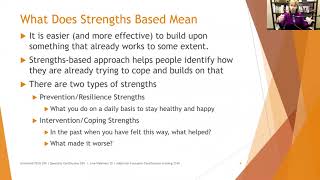
This episode was pre recorded as part of a live continuing education webinar on demand. CEUs are still available for this presentation through all CEUs. Register@Allce.com Counselortoolbox you I'd like to welcome everybody to today's presentation on using a strengths based biopsychosocial approach to addressing anxiety. Try saying that fast three times. We're going to define a strengths based approach and a biopsychosocial approach and we're going to look at how they work together. And this is one of the courses I do for sort of family education to help clients and their families start to see what it is that they're already doing and what they can build off of so they don't feel like they're reinventing the wheel and so they can start picking up things that they might be able to start doing to feel better already. So they walk out and they say, oh, okay, some of this is starting to make sense. So why do clients care and why do we care? Well, anxiety can be debilitating. If we're seeing somebody for fibromyalgia, for chronic pain, for depression, for something besides anxiety. But they also have anxiety, it can cause a lot of problems in progression of their treatment plan because they are exhausted, because they have difficulty concentrating and it's a major trigger for addiction relapse if they happen to have that issue. Increased physical pain Think about when you get anxious or sometimes we just call it stressed. But you know, it's all along the continuum. You know, where do you feel physiologically feel your stress? I know I feel it in my neck and my back. Some people feel it in their low back. I'm lucky I don't feel it there. Some people feel feel it in their gastrointestinal area. You know, it can really exacerbate Crohn's disease and things like that. Irritable bowel syndrome and can cause a lot of pain. So increased physical pain, it can cause sleep problems. When people are anxious, they're in a state of alert. They're in that fight or flight mode. Maybe not super high, but they're in that mode. So it's going to keep them from being able to get as much good quality sleep if at all. It's going to be keeping keep them a little hypervigilant even when they're sleeping, possibly. And again, think back to a time when you were stressed out or anxious about something. What was your sleep like? Did you dream a lot? I know when I'm stressed out or anxious about something, I tend to have really weird dreams and they make sense retrospectively, but, you know, it happens. So we want to have people be conscious of the fact that anxiety will impact their sleep. And when they start getting sleep deprived, then the neurotransmitters get even further out of balance. Their body perceives them as being fatigued, which it perceives as a threat. So it again intensifies that threat response system or HPA axis. And anxiety is a major trigger for depression. This is something we really need to get across to clients. Some clients can have simple depression, of course it exists. Many clients also have concurrent anxiety. They've been revved up, they've been sleeping poorly, they've been doing all this for so long and they're not getting relief. So they start developing a sense of hopelessness and helplessness. The fatigue is setting in, the lack of motivation, all those things that would characterize clinical depression. So we need to treat anxiety in addition to whatever else we're treating. And many times whatever we're doing for helping clients with depression or bipolar or addiction is also going to help address the anxiety issues. But we do need to make sure we're checking in with them if they've got some underlying anxiety. So strengths based just to kind of recap, focuses on guess what, people's strengths. And they may look at you like you're crazy when you say we're going to focus on working on your strengths. And they're like, I'm here because I feel hopeless and helpless. What strengths do I possibly have? Well, that's where it comes into the assessment and to really helping people take a good look at, wow, you're a survivor. So strengths make it easier and more effective for people to start their treatment program because they're building on something they already have. For kids, for example, think about as they go through school. They start out when they're in, you know, primary school learning basic math and then they move up to starting to do a little bit of algebra, solving for X, I mean, it's nothing huge. And then they build on that strength that they're good at that and they move into full scale algebra. If you don't have strengths in math, you're probably not going to continue on a mathematical track to where you're taking differential equations and advanced calculus, because that's not your strength. If it is your strength, you're probably going to continue to build on it and it's going to be easier to than saying, you know, after you've taken five years of math, hey, guess what? I'm going to be an English major. Okay, well you got to start all over again and reinvent the wheel and start with English 101. So we want to build on the strengths. Now, just like for the kid in math class, what you learn in primary school is not going to help you very much. To solve calculus questions, we'll just go with algebra because algebra has fewer letters in it and it still has some numbers. But when they get to algebra, you know, when they're solving for X for example, we say, okay, we're still doing pluses and minuses here. We just happen to have this little letter that's in the way. So we're building on the strengths that they already have. They already know how to do basic math well, we're going to add another step to it or skill to it and build on that. Strengths based approach helps people identify how they're already trying to cope and builds on that. So we ask them, when you're not anxious, what's different? We ask them when you do get anxious, what helps you calm yourself down, even if a little bit? Maybe they go from being a 9 or a 10 to a 7, they want to go to a 2, but they're able to go from a 9 or a 10 to a seven. So okay, something is working there. What can we do to help them come down? The other five points. Two types of strengths that we talk about. They're prevention and resilience strengths and preventing vulnerabilities, however you want to phrase it. But we talk about what people do on a daily basis to stay healthy and happy. Think about a time when you were tired or when you were sick or when you had too much going on and you know, how did that affect your mood? Physiologically, if we're not on our A game, then emotionally we also may be more vulnerable to anxiety, depression, anger, etc. So encouraging people to start understanding the mind body connection when they're in pain, how does it affect their mood when they're, you know, taking certain medications, how does it affect their mood? It's important for them to be aware of that and do what they can to keep a healthy body machine. Because we got to have this functioning in order to get it to output the information or the emotions that they want. A lot of people are not averse to looking at their health and wellness practices and I find that a lot of times this goes a long way. Intervention and coping strategies are the other types of strengths that we look at. And again in the past, when you felt this way, what helped you feel better. If they say, I've never felt this way before, then we ask, what about somebody, you know, when they get anxious, what do they do? And what helps them build on some strengths that they may have observed. So they have some observational learning to build off of, but they also know what makes it worse. And it's important to ask them this, not just what makes it better, because we definitely want to do more of that, but what makes it worse. Well, we want to do less of that. So if it makes it worse when somebody's anxious and they drink and it tends to make their anxiety worse in the long run, well, you probably want to avoid that skill. If you know, well, you can. You can speculate about what will make it worse, but when they identify things that make it worse, we want to make note of that and encourage them to minimize those things. And then we move on to talking about what a biopsychosocial approach is. And too often, even clinicians that I work with, they think of biological is just general. Are you going to the doctor and getting your annual physical? Well, that's part. That is an important part, because hormone imbalances and thyroid hormones, sex hormones, and certain conditions, physiological conditions, can cause mood symptoms. So no doubt it's important for people to go get their annual physical and. Or go to their doctor if they start feeling depressed or anxious all of a sudden so they can get some blood work, run around here. And, you know, I came from Florida where it was sunny all the time. And when I moved out of Florida, I realized that it's not that sunny a lot. And I realized that I am also a little bit sensitive to lack of sunlight. You know, I can get predisposed to seasonal affective disorder. And that's just being aware that I need to get outside and get some sunlight and get my vitamin D levels up. And when I lived in Virginia, the doctor I had up there said, you know, most people up here, especially during the spring, early spring, all of winter, and most of fall, their vitamin D levels are deficient because they're not getting outside at all. A ton of vitamin D receptors are in those areas in our brain that are responsible for mood. They don't exactly know how vitamin D plays a role, but they know it does. So, you know, we want to look at that. We want to look at people's nutrition, neurochemicals that are responsible for our mood and our focus and everything come from nutrition. While we're not going to recommend diets for anyone, because unless you're a registered Dietitian or medical doctor. We can't educate them that nutrition is important in order to help their body function. Just like you wouldn't drive your car without oil in it, you want to make sure that you're getting good nutrition to allow your body to do what it needs to do. We talk about the importance of sleep and good quality sleep. And some people will say, well, I sleep a lot and I'm just, I never wake up. Well, then we want to look at the quality of sleep and also maybe resetting those circadian rhythms. So we want to look at sleep hygiene. With my clients, I do an entire group on sleep hygiene because most people have really poor sleep habits. And I'll admit I don't have the best, but I have better than most if you want to look at it that way. And that's what I'm doing asking people to do. I'm not asking them to be perfect. You know, they may not be willing to give up this one thing or change this one thing, but any changes they make that are positive are going to be helpful in their recovery and encouraging people along with, you know, nutrition and getting that vitamin D in there nutritionally, but also to get out and get sunlight. Sunlight triggers your brain to say, stop making melatonin. It's time to be awake. Let's secrete some cortisol and let's get up and get up and go. Cortisol levels peak in the morning and gradually go down throughout the afternoon. Now some books that you read say that cortisol levels will peak again and then drop a couple of times. So it's not a steady like this, it's more of an undulating. But it's important for people to know when their energy levels are highest. But sunlight can help set your circadian rhythms so your body knows when it's time to sleep and it knows when it's time to eat. Psychological interventions include mindfulness, distress tolerance, coping skills and cognitive restructuring. And we're going to talk a little bit more about each of these as we go through it. And socially improving self esteem and your relationship with yourself is really important. And, and a lot of people when they think biopsychosocial, they think relationships with others. And that's true. But we can't have good relationships with others very easily unless we've got a decent amount of self esteem and a decent relationship with ourself. We know who we are, we know what we want in general, we know what our opinions are in general. We're able to set boundaries et cetera improving relationships with healthy, supportive others. So then we move into talking about what is anxiety. You know, we've talked about, you know, strengths based approaches and what we might be looking at for recovery. But what is anxiety? And it's important for clients to understand that it's half of the fight or flight response. You know, if you're fighting, you're angry. Generally if you are anxious, you're probably fleeing. But what are you fleeing from? It's an excitatory response. So it's going to keep people revved up. It's going to make your heart beat faster because your brain is saying there's a threat or there may be a threat. So you need to be able to run, you need to be able to fight. The function is to protect them from possible danger. And I encourage, instead of clients, instead of getting angry about the fact that they're feeling anxious to thank themselves, just say, you know, thank you, brain, thanks for the heads up. I will check it out. And I've used this example a bunch before, but it just is so appropriate. Fire alarms. You know, we have a fire alarm in our house and sometimes the fire alarm goes off for no apparent reason. Sometimes it goes off when the windows are open and the wind blows particularly strong. I don't know why. Sometimes it goes off because I forgot something in the oven. But when it goes off, it doesn't necessarily mean there's a fire. It could mean, you know, in the case of the kitchen, it could mean that there possibly will be a fire if you don't do something. Or it could mean nothing at all. So anxiety is the body's response based on past learning that says, okay. In the past, this meant that there might be a problem or that this meant that there might be danger. So the body registers anxiety and it says, okay, get up and do something. Check and see if there's a problem. That's all it's saying. That's all anxiety is designed to do. It's not meant to solve anything. Then you check it out and say, is this truly a problem right now? Anxiety is good. It's a normal feeling and we want to again embrace it. Just like anger, it's there to protect you because your brain thinks there's a possible danger. And I just keep emphasizing with clients that it's not always right. It's a possible danger, it's a warning signal. Anxiety can become a problem when it's overly intense and uncontrollable. So, you know, normal anxiety here and there, totally normal. It can become a problem. If people overgeneralize. So any situation similar to this, you know, maybe they had a bad experience when they were public speaking when they were in high school. And so now anytime they have to speak in public, they develop significant social anxiety because of whatever happened when they were in high school. Okay, that's, you know, overgeneralization, and it's having a significant, potentially negative impact on their life. So, you know, that's when it becomes a problem. It can become a problem if the person has poor coping skills, because then they take that anxiety and they don't know what to do with it, and they just hold on to it and they worry and they fret, but they don't know how to hand it off. If they use emotional reasoning or cognitive distortions, anxiety can become uncontrollable. Because if every time they feel anxious, they look for a reason to be anxious, you know, I feel scared, so this must be scary. Well, if their threat response system goes off, and every time it goes off, they say, I feel scared, so this must be scary, they're going to be anxious a whole lot of the time. So it's important for them to be able to separate from that and then biochemical issues, nutrition and hormones are two big ones that can kick in there. When people's blood sugar gets low, a lot of times they will start to get kind of shaky. And when the blood sugar gets low, the body secretes cortisol, your stress hormone, in order to make your body release glucose into the blood, so that stabilizes it. But sometimes when people start to get shaky, they don't know what's going on, and they feel like they're having a panic attack or they get anxious and they're trying to figure out where it's coming from and make sense of it. So helping them understand that hormones. When people start going. When women start going through perimenopause and menopause, as the hormone levels fluctuate, they've shown that it can't affect heart rate. And some people's heart rate will increase 18, 20 beats a minute for a while during a hot flash, so to speak. And some people can misassociate that with there must be a problem. And a lot of times when your body starts doing something funky and you're looking around going, I don't know what I'm stressed about, then people start getting stressed out that they might be having something going wrong inside, that they might be having a heart problem or whatever. And then they start worrying about that. They're trying to understand why Their body's doing this, which is again why it's so important to have an MD involved in the process. So they can look at anything that might be causing some of the symptoms. Anxiety can be caused by excess serotonin, excess norepinephrine, which is your motivation chemical, or one of them, or excess glutamate. These are norepinephrine and glutamate are both excitatory neurochemicals or too little gaba. Now, glutamate is your excitatory neurochemical and it's broken down in order to make gaba, which is your natural Xanax. So if you either don't have enough glutamate to make enough gaba, or if you have enough glutamate, but you don't have all of the other things needed in order to break it down to make gaba, then you could have somebody who has anxiety if they don't have enough serotonin. Serotonin is one of our common chemicals. It can cause anxiety. But according to a couple of studies that I looked at, and they're cited in the class, having too much serotonin can also cause anxiety. So we need to figure out what's going on. One of the best ways to do that is help people get their body as healthy as possible. Because the body wants to maintain homeostasis, the body wants to do what it's supposed to do. So if we make sure everything it has, all the tools and stuff it needs in order to function, it's going to naturally rebalance itself. And then you can figure out kind of what's wrong, if there's anything wrong after that. Some studies indicate that as many as 80% of adults have a neurochemical imbalance due to lifestyle factors. So poor nutrition, sleep problems and excessive chronic stress are the three biggies. But you can also look at, you know, other lifestyle factors that may be contributing to it. The question comes in, is it an oversimplification to assert that this anxiety response is the root of trauma responses like ptsd? PTSD as well as grief, both have anxiety components to them. And ptsd, I would add on that is a protective reaction when you look at the symptoms of PTSD that people have, all the way from emotional numbing to hyper vigilance and intrusive memories. If you look at it from a functional perspective, it's the body's way of trying to protect itself from encountering that again. So would I say that PTSD is related to anxiety? Yes. Now, if I remember correctly, the DSM 5 took PTSD out of the anxiety related disorders, but there's definitely some overlap in the symptomatology. We need to ask ourselves or have clients ask themselves, what's causing the neurochemical imbalance? We know if you're here and you've got anxiety, then there's probably some stressors going on out here that are triggering the stress response. And you may also have a neurochemical imbalance that's keeping. And we need to look at why, you know, why is your norepinephrine staying high? And it could be from stressors out here, it could be from biological factors, it could be from a lot of things. But we need to look at it. The example that I use sometimes is of a water heater. When you have your water heater and you have it set on 120 degrees and you take your shower and you know where to set the dial and it's perfect and you've got it. And then all of a sudden, you know, somewhere around late December, early January, you get in the shower and you turn it on and you put the dial right where it's supposed to be, and you're like, oh, this is way too cold. So is the water heater. The water heater is not heating the water enough. So what's causing that problem? Do we need to turn, turn it up because an element is out, you know, inside, or is it because the garage where the water heater is has gotten too cold and so now the water heater is having to work harder? So is it an external factor or an internal factor? Or maybe it's both. In order to get that water temperature to where you want it to be, you have options. And, you know, most people will crank up the water heater. Okay, well, that's one way of solving that problem. But then if it gets colder, you're gonna have to crank it up more, and eventually you're gonna have it cranked up as high as it'll go. So you want to look at what's causing the water to be too cold. You know, maybe it's not that you just need to crank it up. So we want to look at, do we want to just tell people and you know, you know how I feel about meds that take a pill and it'll help balance you out. Well, we know that that doesn't work in the majority of people. Only about 36% of people experience relief from medications. Now, it doesn't mean that medications can't help more people feel better, but it means, you know, they may not stay in long enough to find the right concoction. But, okay, so you start medicating somebody. But what caused that imbalance to begin with? You know, is it something situational? Is it something biological? Is it something that always existed, that needs to be medicated? So we want to look, help people look at that to try to figure out what needs to happen in order for them to feel happiest. Generalized anxiety symptoms can include persistent worrying or obsession about small or large concerns that are out of proportion to the impact of the event. So people just fretting about everything. Inability to set aside or let go of worry. And this includes people who are trying to do thought stopping and they're trying to not think about it. Not just people who are obsessed or consumed with their thoughts, but people who are trying to set it aside and they just don't feel like they can. Inability to relax, restlessness, feeling keyed up, on edge, difficulty concentrating, distress about making decisions for fear of making a wrong decision. Carrying every option in a situation all the way out to its possible negative conclusion. So this is another one that, you know, I ask clients, do you do this whenever something happens? Do you look at what, how could it possibly go wrong? And difficulty handling uncertainty or indecisiveness. So, I mean, we are familiar with most of those. People also tend to have, you know, sleep, changes in sleeping and things like that. Other physical signs and symptoms can include fatigue, irritability, muscle tension or muscle aches, trembling, feeling twitchy, being easily startled, trouble sleeping, sweating, nausea, diarrhea, irritable bowel syndrome, headaches. You know, there's a whole range of things here, and a lot of these symptoms overlap with PTSD and depression as well as grief. So helping people kind of ferret out what's going on here with kids, though. And I put this in here because kids demonstrate things or manifest things differently than adults do a lot of times. So we want to look for kids about, or look at kids who are having difficulty with excessive worry about performance at school or sporting events, being on time, you know, punctuality. If they're excessively worried about earthquakes, nuclear war, or other catastrophic events. Now, you know, there are things that they have every. You know, it totally makes sense to be worried about. If there's a hurricane coming their way and they're worried about that, totally understand that. But after the hurricane has passed, and if they continue to worry that another hurricane is coming and it starts disrupting their life, then, you know, they may need to intervene. A child or teen with generalized Anxiety disorder may also feel overly anxious to fit in, have a lot of anxiety about rejection and need for approval. They may be a perfectionist. So whenever I see these symptoms, I try to ask myself and ask the client, what happens if you're not perfect? Many times it comes down to I will lose so and so's approval. So there's abandonment anxiety issues to be dealt with. Lack of confidence. They strive for approval and require a lot of reassurance about their performance. A lot of times children or teens with generalized anxiety also have low self esteem and rely on others for external validation. Not always. And yes, you know the situation right now in the schools with gun violence and you know, not even just in the schools, but with the violence that's going on in the world. Yeah, it increases youth's anxiety. Is that anxiety overstated? You know, it depends on the child we want to look at. How is it impacting their life? Should they be a little bit concerned? You know, I would say that's a perfectly normal reaction. If it's to the point where they can't go to school, where they can't concentrate, where they're, you know, getting sick all the time because of their anxiety, then obviously we need to intervene and help them focus on what parts of it they have control over. But yes, I mean, there's a lot of anxiety in youth. Biological interventions, like I said, a lot of clients are really open to intervening here because it seems relatively easy, relatively painless, and it's usually something they can start doing today, the day that they learn about it. So encourage them to look at, you know, if your body thinks there's a threat, try to figure out why, you know, are you run down, are you tired, are you not getting enough of certain neurochemicals? Supportive care. Encourage them to create a sleep routine to help their brain and body rebalance. And it's not just about getting deep sleep. They need a certain amount of both deep and light sleep because different things happen during each phase of sleep. So they need good sleep. Do the same three things each night before bed. That helps cue your body in, just like you did with kids. They would come home from school, they would eat dinner, they would take a bath, they would read a book, they would go to bed. You know, it's da, da, da, da, da. And their brain started saying, okay. So by the time they were finishing dinner or getting into the bathtub, the brain was saying, okay, time to start making melatonin so we can go to sleep. That helps set circadian rhythms. It helps the body Know when it's supposed to secrete the sleep chemicals, it can help repair adrenal fatigue. And we want to look at that HPA axis, the hypothalamic pituitary adrenal axis. And when it is, that's your threat response system. And when it is always on, it gets worn down, you know, it gets tired. So we want to allow that system to relax. And good sleep is one of those ways. And obviously, if you're getting good quality sleep, energy levels tend to be improved, as does mood. Nutrition. Encouraging clients to minimize caffeine and other stimulants, which cause the body to dump cortisol. You know, if it, if you're telling your body to dump the stress hormone, then, yeah, you're probably going to feel a little more stressed. Try to prevent spikes and drops in blood sugar. This is one of those things they probably need to, you know, I don't want to make recommendations for any clients if they're diabetic or if they have certain nutritional recommendations. You know, there's all kinds of things that could be an issue. But it's important for them to figure out how they need to manage their nutrition in order to keep themselves from getting really low blood sugar. Where they start feeling shaky. Encourage them to drink enough water because lack of sufficient water dehydration can cause foggy headedness, difficulty concentrating and anxiety in some people. When you get really dehydrated, your heart will start beating faster. Medication people can take SSRIs, selective serotonin reuptake inhibitors and SNRIs. Selective norepinephrine reuptake inhibitors have been shown in higher doses to be effective with anxiety. Benzodiazepines, not my favorite because they're highly addictive. But this is your Xanax and your Valium. Those can be useful for some people. And buspirone is another one that's not exactly a benzo and it's not a serotonin reuptake inhibitor. It's just kind of in its own little world. But, but it has been found to help significantly with anxiety in people. And it's not addictive like the benzodiazepines are. So it's an option for people to consider who have, especially who have a history of addiction issues, who don't want to look at something more sedating, like one of the more sedating SSRIs, like Paxil or something even stronger like Seroquel, which is an atypical antipsychotic. So there are a variety of options out there to People is my point. And if one doesn't work, all hope is not lost. Sunlight. Vitamin D deficiency is implicated in mood issues. Sunlight prompts the skin to tell the brain to produce neurotransmitters, and it sets circadian rhythms which impact the release of serotonin, melatonin and gaba. So sunlight is important. And it doesn't have to be a bright, sunny day. You know, if you go outside, there's enough sunlight coming through the clouds most of the time that you're going to get the effect that you need. And it's not a lot. They say 15 to 30 minutes a day. So think about how much time it takes you to walk to your car, to drive home, or to drive to the office to walk to your car and to drive home. That's probably 30 minutes if you're doing it during the sunlight. And when the days are shorter, like during the winter, I remember driving to work when it was dark, working inside in an office that had no windows all day long, and then leaving when it was dark. And my body just kind of didn't know what to do with that. So if you're in that situation, especially during the winter, it's important to get out during the day at some point so your brain can see the sun and go, oh, it is daytime. Light therapy can also help with anxiety and depression. And it's not any old bulb that you can buy at Home Depot. There's a special spectrum that it has to be in in order to be bright enough to have the effect that it needs. But you know, you can get them. And it has been demonstrated effective in studies. And exercise has shown that it can have a relaxing effect. You're thinking, yeah, right, no, over exercise. You know, going in there and keeping your heart rate, you know, up for 40 minutes, that can be exhausting. But even just going out and walking the dog can have a relaxing effect. And exercise, especially if you can get your heart rate up a little bit for 20 to 30 minutes, has been shown to regulate estrogen and as well as increase serotonin secretion. So, you know, things to consider. Talk with your clients about what exercise is. It doesn't have to be going to the gym. It can be cleaning your house like a mad person. It can be mowing the lawn, it can be walking the dog or playing with the kids. There are a lot of things that people would think, you know what? I really don't mind doing that. Just getting up and getting your body moving for 20 to 30 minutes kind of at a shot. So all the neurochemical processes can take place that need to psychological interventions. Now, if you remember from dialectical behavior therapy, you have the two acronyms, accept and improve Accepts meaning accepting it is what it is, radical acceptance. And that stands for activities contributing comparisons, emotions. Find the opposite emotion, pushing away, which is thought, stopping thoughts, using cognitive distractions like playing Scrabble or doing something that occupies your brain cognitively and gets you out of that emotional mind. And sensations, which can be loud music, holding an ice cube, taking a hot shower and imagery or improve improving the next moment you accept it is what it is now. How can I improve the next moment? You know, instead of fighting with how you feel because you feel how you feel, how can you start making it better? You can use imagery, find meaning in it, pray, do something that's relaxing, focus on one thing in the moment, take a mental vacation and, or give yourself and, or get some encouragement. So we're going to talk about those things. But you know, you can Google DBT and acronyms or DBT accepts and improve and you can get these online. Those are handy things for clients to have around so they can identify what they do. But we're going to talk about them kind of tangentially here. So the first step for psychological interventions is mindfulness and acceptance. Clients need to start observing how they're feeling because a lot of times our clients who have anxiety let that anxiety get up here before they even note it. They are so used to feeling this low level of stress and anxiety that they don't even register that they're getting anxious until they're way up here on the scale. So encourage people to regularly stop and observe themselves. How am I feeling when they start feeling anxious just to accept it. Not I shouldn't be feeling angry. Not I should feel differently. Just I am anxious right now. It is label it, I'm feeling anxious and let it go. And you know, feelings can come and go just like thoughts can come and go just like clouds in the sky. If you've ever made a cloud animals, which I'm almost 50 and I still do it. But whatever you see this cloud animal and you see or whatever image you see in the, in the clouds and slowly it just kind of morphs away. And that's what our feelings can do as well. You know, we can, if we don't struggle with it, if we don't try to hold on to it and remember all the reasons we're supposed to be anxious, our feelings can just kind of gently morph away. So label it and let it go and watch it just kind of blow away. Identify trigger thoughts. Becoming mindful of the types of thoughts that people have when they get anxious. I'm going to fail at this. I'm going to make a fool of myself. I'm going to or it's going to whatever their self, their anxiety provoking self talk is if they can become aware of those. Keep a log for a week or so of their trigger thoughts and then develop back talk for each one of those trigger thoughts. If you say I'm going to fail, the first response is who says how do you know you haven't done it yet? How do you know you're going to fail? You don't know what's going to happen next. Focusing on, you know, if they have that trigger thought, I'm going to fail at this. Okay, well let's look at other times in the past where you've been afraid you were going to fail and it turned out okay. So let's look for exceptions to when you failed to kind of provide some evidence that it's not a done deal that you're going to fail. There's good hope that you'll succeed. And encourage people to differentiate between expectations. Current reality. If you've been in a situation before where it's been dangerous, for example, when you're little, your parents say don't talk to strangers. Stranger danger. Stranger danger. And when you're little, yeah, you know, strangers can be dangerous and so can people you know, but that's a whole different topic. But when you get to be older, you know, if you're still think you're 25 and you've graduated college and you're still thinking stranger danger, that's not the current reality. I mean unless you're in a really bad part of town or something, you need to remind yourself that, you know, most of the people walking around around you in Target or Walmart or wherever you are probably don't even notice you're there. So your expectation that strangers are dangerous hasn't been checked maybe since you were knee high to a grasshopper when strangers were dangerous. But now that you're older, the current reality is you're a grown up. You got this. Strangers aren't near as dangerous, you know, especially like in, at the grocery store or at the mall or wherever. Basic fears that people get worried about, anxious about, from of failure. So encourage them to explore the dialectics. How can failure be bad and good at the same time? And you know the answer to this one. You know it teaches you, you learn how not to do it. And failure also teaches you that you can try again. And it also shows you that you had strength to get outside of your comfort zone. So there are a lot of good things about failure. And so encouraging clients to explore the dialectics. Yes. Nobody likes to fail. That's just the way it is. Nobody likes to fail. If you take a pro athlete and they go out there and they lose a game, are they going to be bummed about it? Yeah. However, what are they going to do? They're going to go back, they're going to review the game tapes, and they're going to do it differently the next time. So explore the dialectics. How can. What are the. How can both things be true? It's a bad thing, but it can also be a good thing. And go out and seek encouragement. Give yourself encouragement for having the courage to go out and try to try to do something that you weren't guaranteed a success at, but potentially solicit encouragement from your social supports. It's easier to do things if you're afraid of failing. It's easier to do things if you've got people cheerleading you from behind. When I defended my dissertation, my husband came and sat in the back of the room while I defended. And it was nice just to have the moral support there. You know, it helped me get through it. Rejection and isolation is something else that people fear. You know, we don't like being rejected. Nobody does. Whether it's for a job or to get into a certain school or for a relationship, it hurts, it stings a little bit. Helping clients learn how to depersonalize from that. And looking at, you know, you've made relationships in the past or you've gotten jobs in the past. So look at the times that you've succeeded at this or you've been accepted. And, you know, let's build on those strengths. What have you learned from this particular rejection? You know, again, exploring the dialectics. What could be the positives from this? Maybe it'll give you more time to spend with your other friends, or maybe there's another job that you don't know about that you can apply for in six months or something. There's a saying that, you know, when one door closes, another door opens. But those hallways, they're a bitch. So getting through that hallway, that dark hallway, until that other door opens can be a little anxiety provoking. But encouraging people to again seek encouragement from their social supports. Look at how they've handled rejection in the past, because we've all been rejected. Even if you're talking to an 8 year old. They've been rejected before. Loss of control and the unknown. You can't predict what's going to happen five minutes from now, let alone five hours or five months from now. And that can be really freaky for some people. So encouraging them to focus on one thing in the moment. What can I do now if I want to get this promotion, if I want to, you know, stay in this marriage, if I want to have healthy, productive kids? Whatever it is you want that you're fretting about, you know, that's way out here. What can you do right now to help you move closer to that goal? Focusing on one thing in the moment instead of worrying about that, you know, focusing on worrying about whether you're going to make the cheerleading squad. Well, I don't know what's going to happen then, but what I can do now is I can practice my routines and encourage people to think of prior experiences where they approached something that they had no control over, or they didn't know how it was going to turn out, whether it's a tryout or an interview or whatever. And how did they handle it? You know, how did they deal with that? I remember when I was pregnant with my son, the initial test came back that, you know, he might have down syndrome. And so we had to go in for other testing. And, you know, I was out of control at that point. I had this little thing and I couldn't fix it. I couldn't, you know, make it better as I wanted it to be. So I had to figure out how to deal with that. So encouraging clients to look at times in the past, and maybe they don't have an example like that, but maybe they can talk about moving or starting a new school. When you start college, for example, or even when you go from middle school to high school, there's a lot of unknowns. When you start a new school, even if you're going with your same cohort, there's a lot of unknowns. So how do people handle that? Distress tolerance? It's not always about controlling your anxiety. And we don't want to control it. We want to figure out how to improve the next moment. Acknowledge it, accept it, distract, don't react. That's one thing you can do. Because some things are just. They're going to make you anxious. I don't like getting shots. I'm terrified of needles. So whenever I have to go in to get a shot, I'm like, oh, And I can fret about it, or I can choose to distract myself because fretting is not going to do any good. And again, I think about a time in the past when I went to the doctor and I got a shot and I didn't even know she gave me a shot. She was that good. And reminding myself that using emotional reasoning and get out of that. So distract yourself can help. You know, before you go up and do a presentation or try out for something is going to be anxiety provoking because you're putting yourself out there, you're taking a risk. It's the unknown. You don't have control over it. Once you're out there, you don't have control over the judges and you're risking rejection. So there's a lot of stuff right there. Should you. Is it reasonable to expect somebody to feel anxious? Sure. But does dwelling on the anxiety do any good? No. We need to encourage them to distract. You know, do something to keep themselves occupied until it's their time to try out. Ride the wave. And we've all heard this, you know, analogy that emotions come and go like a wave. They will come in, they will crest, and they will go out. Now, some people will say, ride that wave just like you ride a surfboard. Well, when you're riding a surfboard, you're focusing on that wave. What I usually encourage clients to do is know the wave, you know, know that it's going to crest and it's going to go out and rank it. So when they start feeling anxious, kind of rank it, you know, it's a three on a scale of one to five. And then they check in with themselves again when they start feeling themselves get really knotted up. Okay, we're at a five now. Well, the good news is it's not going to go up any higher and it's going to go down from here. So then they can distract again for a little while, and the next time they think of it, for whatever reason, they can check in and realize that it's down to like a 2 or a 3 now. So, you know, it's crested and it's going out. Use distancing techniques. When people are upset, when they're anxious, when they're fearful, they may say, I am scared. I am terrified. Okay? And again, there may be a perfectly rational reason to be scared about something or anxious about it that you're getting ready to do because you're getting ready to be vulnerable in some way. Anxiety is. Okay. Anxiety, when you have it for a second, that's your body's natural reaction to protect you. So what do you do with that? You feel it now? What do you do with it? Well, you can ride the wave or you can put the phrase in front of it. I'm having the thought that. I'm having the thought that this is really scary. Thoughts come and go. You know, a lot of us have thoughts that we need to get something from the kitchen. We get to the kitchen and can't remember what it was. Thoughts come and go. When we say, I am scared, that's part of us. If we say, I'm having the thought that we can take thoughts and put them over here and encourage people to use imagery. Encourage them to use imagery of whatever this is being successfully resolved. So, you know, closing their eyes, getting a shot, for example, imagining going to the doctor, having them clean your arm, give you the shot, and you didn't feel it. Using imagery to help you get through the situation. If you're getting ready to do something anxiety provoking, like ask your job, ask your boss for a raise. Before you go in there, envision doing it. Envision doing it successfully. Envision it several times, and then you can go in and do it. Relaxation skills. Relaxation is when we tell our body, you know, you have the fight or flight or the rest and digest. And relaxation tells your body rest and digest. So we want to help your brain know it's time to slow down. One of the ways that happens is when your heart rate slows down. Well, how can you slow your heart rate? If you're anxious and your heart rate's going faster, how can you calm down? One way is what I've always been taught to call combat breathing. When you breathe in for four and out for four. Some people also hold for four. But when you slow your breathing, your heart rate naturally slows down. So encouraging people to focus on their breath when they start getting anxious, so that, number one, they're not holding it. My daughter does that when she gets upset. She holds her breath. I'm like, Haley, breathe. But encouraging them to slow their breath down but still keep breathing. Meditation can also help. So encouraging people just to meditate on something, you know, an item, an object. There are multiple different styles of meditation people can use, but it helps get their body into that rest and digest sort of phase and turns off or turns down that HPA axis, that threat response system cued progressive muscular relaxation. This used to be my favorite unit to teach when I taught it at uf because I would go into class and I would say, all right, everybody clear your desk and get out a pencil. We're gonna have a quiz. And you could see everybody's eyes get like saucers because they're like, no, not a quiz, not a pop quiz. Okay, well, we didn't really have a pop quiz, but my goal was to show them how a word pop quiz could elicit a very strong physiological reaction in at least some of them. Cued progressive muscular relaxation is when people practice progressive muscular relaxation. Tense and relax and notice the difference between tense and relaxed, but they also pair it with a cue. So every time they relax, they say calm or breathe or whatever their cue word is. Eventually, with practice, and it takes a few months, they can just think that word calm or breathe and their body will start to relax. So acute progressive muscular relaxation can be a really good tool for people. Self esteem work helps people focus on their real versus ideal self and figure out which things are important. Encourage them to recognize, you know, what's realistic and go through and figure out what is important in my life, what things, people activities are important in my life. And then go back over that list of what their ideal self is and figure out if that matches what's important in their life. A lot of times there's a lot of extra stuff on that ideal self list that they can start marking off because right now that's not as important. They want to use their energy for what's important. Encourage compassionate self talk, not rejecting yourself when people get anxious. A lot of times there's a lot of really negative hateful self talk. You're stupid, you're a failure, you're going to fail, you're whatever, you can't handle this. Encourage people to be compassionate with themselves, to also not judge themselves for feeling anxious. They feel how they feel, and that's just the way it is. So they need to silence that inner critic and go, I am me. I am good. My feelings are what they are. And then move on to, okay, so how can we improve the next moment? If your kid comes to you and they've got a problem, you know, they tell you what happened, and hopefully you don't lay into them going, you are so stupid. How could you do that again? Instead you go, all right, that's unfortunate. How do we fix it? Very calm, compassionate, not critical, supportive. Encourage people to do the same thing to themselves. Don't be hateful to themselves when they're nice to everybody else. Encourage clients to spotlight strengths and accept their imperfections. Too often, clients with anxiety focus on the problems and the times they failed in the past and the times they've been rejected in the Past. Encourage them to focus on the times they've succeeded in the past and the times they've been accepted and balance it out. Yes, they're going to have some of both, no doubt, but encouraging them to get a more balanced view of the good and the bad. Cognitive restructuring helps address cognitive distortions. I love using this because a lot of times clients, well, we all have cognitive distortions. We can personalize things, think in all or nothing terms. Cognitive restructuring can help reframe challenges in terms of current strengths, not past weaknesses. So if you're getting ready to go on a job interview instead of getting anxious and think, think. You know, every time I've gone on a job interview, I failed. Nobody's going to ever want to hire me. Da, da, da, da, da. Well, you know, that's focusing on past weaknesses when maybe you didn't get hired, maybe it didn't work out, they didn't want to hire you. So focusing on current strengths, I'm going to try, I'm going to learn from this. I've already researched the company, etc. So looking at challenges in terms of learning opportunities, maybe you don't succeed completely, but at least you will learn and you will be a different person from there. Encourage them to create an attitude of gratitude and optimism. Instead of walking into an interview or walking up to somebody to ask them out on a date going, yeah, there's no way this person's going to accept me, thinking to themselves, you know what? Anything's possible. And having that attitude of optimism and gratitude for what they do have, you know, even if they do get rejected, focusing on the good friends that they do have in their life or the job that they do have or whatever it is can help balance out some of what's going on. Another technique is using the acceptance and commitment therapy. There's a matrix that they can use psychological flexibility. Now, in the center is how things are right now. So a storm's coming in and you're worried that it's going to bring a tornado. Okay, so that's where you are right now. There's a storm coming in and you're worried that it's going to bring a tornado. So what is your mental experience? What are you telling yourself a tornado could come? It's likely a tornado is going to come. Whatever you're telling yourself, what are you experiencing? Your physiological, what are you smelling? Feeling, you know, do you feel tension? Okay, that's where you are right now. That's okay. Now the next question is, what do you do with that to Improve the next moment. What things can you do to move yourself toward what's important to you, like the safety of your family and friends? So what can you do to ask yourself or to experience this? So maybe one of the things you can do in terms of the five senses is get to a safe place. If you think a tornado is coming, get to a safe place. Another thing you can do is turn on the weather radio so you're hearing and you're doing something that's going to help you protect yourself and your family. Instead of, you know, going out and having a cigarette or, you know, just worrying about it and not doing anything which would move you away, that would just be kind of spinning your wheels, so to speak. Mentally, what can you do that helps move you towards what's important? Remember good relationships and having your family and friends there. So mentally you can tell yourself it's going to be okay. Because if you're getting yourself all tied up in knots worrying, you're probably not going to be able to engage with them quite as well. So people need to first know what's truly important to them. What are they working towards? What is the most important stuff to spend their energy on? Then they need to ask themselves in the situation, you know, this tornado is coming, what am I thinking? And what thoughts can help me move toward what's important? Well, the thoughts are it's going to be okay, you know, if a tornado comes and rips off the roof, it's just a house, you know, we are safe. Those are mental thoughts, or those are thoughts that can help me move toward what's important. And what are you experiencing, Seeing, hearing, feeling, smelling? So what can you do? Say listen to or stop listening to. That can help you move closer to what's important. You know, I remember living in Florida when the hurricanes would start coming in. If you listen to the weather radio or the weather forecasters 24 7, it would keep your anxiety up because they'd be telling you usually the worst case scenario. So I would check, you know, once every eight hours until the storm got closer than once every four hours. I would check the path with the National Weather Service instead of listening to, you know, reports from all of the destruction. And that helped me feel calmer about what was going to happen. Recreation is important. There's always going to be stuff to do. But for people to deal with their anxiety, they also have to have some fun in their life. You can't be fun and anxious at the same time. But engaging in recreation generally helps people increase their happy chemicals. So to speak. And sometimes a break is what you need to get a breakthrough. Have you ever had a thought that was on the tip of your tongue? You're like, I remember. That's going to drive me crazy. And you just can't get it off the tip of your tongue. Or you're trying to solve a problem and you've been working at it for three hours and you just can't seem to see the solution, but then you take a break and you come back and you're like, it's so clear. Or whatever it is you were trying to say just comes right off the tip of your tongue. Sometimes a break is what you need. Get your mind off of it for a few minutes. So make a list. Encourage clients to have a list of fun things they like to do. So this engages those opposite emotions, activities that they enjoy doing, what they can do to contribute, volunteering, you know, even just neighborhood cleanup or sensations that they enjoy that help them recreate. Maybe they enjoy sunbathing or taking a hot bath. Anything that they enjoy that can help them relax and recreate can help deescalate anxious emotions. But if used preventatively, it can also help them prevent the degree of emotional upset. Social interventions encourage people to improve their relationship with themselves by identifying their needs and wants. This will help them figure out what they need to get upset about. You know, they don't know where there's a threat, if they don't know what's important to them. So if they know what their needs and wants are, then they can get those met and they don't have to worry about them. Be your own best friend. You know, if you were going to say whatever you're telling yourself, would you say it to your best friend? Well, if you wouldn't say it to your best friend, don't say it to yourself. And also be kind to yourself. If your friend goes out for a job interview and fails or breaks up from a relationship and is devastated, you know, okay, so how are you going to treat that person? Well, treat yourself the same way instead of beating yourself up over it. Encourage people to develop the ability to internally validate, not rely on other people to tell them they're okay, but to know all the reasons that, you know, I'm a pretty good person. And encourage them to be compassionate with themselves. They also need to develop healthy, supportive relationships. You know, anxiety. One of the greatest buffers against anxiety and stress is healthy social relationships. Emphasis on healthy. Sometimes they can also cause a lot of anxiety if they're not healthy or helpful. So it's important for people to be able to learn about boundaries and not get all caught up in what other people think or how other people feel to the exclusion of their own feelings. They need to develop assertiveness skills again so they can say what they need and not feel anxious that people are going to reject them. You know, your opinion is important and my opinion is important. Encourage them to describe the ideal, healthy, supportive relationship and separate the ideals from the reals. So when we think of the ideal relationship, you may think of Warden June Cleaver. Well, that's tv. You know, it's wonderful. But to expect to never fight and have Wally and Bev as your kids 100% of the time, that's not real realistic. So what is real? Let's look at what is real. And what is. What does it look like? You know, do people get into arguments and relationships? Yeah, they do. They get into disagreements. Is that okay? You know, and work through defining what a healthy relationship looks like and identify who the healthy support people are that clients have. Who is it you can call when you're anxious? Who is it you can call to get encouragement when you're feeling a little nervous about something? Who's the voice of reason, so to speak. And if you don't have somebody like that, where do you think you could find someone? You know, where might you be able to make some relationships with good, supportive people? At the end of group, I always ask clients, identify three ways you could have used this information in the past week. So we talk about at the beginning why this information is important, and then we go through it, talk about strengths. And I encourage them to think about things like I did through this presentation. But then we get to the end and I want to sum it up, and I want them to see how. What parts of this might have been helpful. So what was the situation? What did you do? How effective was that for you in the short or long term? If you would have had this new information that we talked about today, what could you have done differently? And how would that have changed the outcome? And finally, how can you start integrating this knowledge into your routine? So everything we talked about today isn't going to apply to everybody. You know, each person is going to pick and choose what's useful and helpful for them. But, okay, if they take one thing, if they pluck one thing out of today's lecture, great. Now how can you start integrating it into your routine to help you start reducing your anxiety? And yes, I've been watching this conversation in the chat room. Going WebMD. My doctor told me to quit reading it too because it always is death and destruction and doom. So yeah, you know, it's important to be educated, but it's also important to have, you know, some balance in there. Anxiety is a natural emotion that serves a survival function. Excessive anxiety can develop from lack of sleep and just feeling rundown and like you can't deal with one more thing, so you start getting anxious. Anytime anything else comes your way. You feel overwhelmed, stressed out. There's a lot of different words for anxiety. Nutritional problems can have you not having the building blocks to make the calming Neurochemicals. Neurochemical imbalances caused by a variety of things including hormones, hormone changes, medications and brain injury. Failure to develop adequate coping skills, cognitive distortions, low self esteem and a need for external validation. So all of these things we can help clients address. And actually each one of these is probably an independent group that you can do. Recovery involves improving health behavior so your body machine is functioning and balanced as well as it can be. Identifying and building on current coping strategies. What do you do when the going gets tough? Because it does sometimes addressing cognitive distortions so you're not adding fuel to the fire and focusing on the negative and developing healthy, supportive relationships with yourself, well as with others to kind of help bear the burden. When anxiety kicks in and you're worried about rejection or the unknown. If you're worried about rejection, but you've got a group of good friends, then a rejection may not hurt as much. If you are worried about failure, you know, being able to have people cheerleading you and saying, you know, what if you fail, we're here to catch you when you fall makes it a lot less anxiety provoking. Encourage clients to look at what they already do, what they want to do, and how to start making that a priority in their daily lives. Resources that I really Like The Anxiety and Phobia Workbook by Edmund Bourne. Acceptance and Commitment Therapy for Anxiety Disorders. The Anti Anxiety Food Solution. You know, I talked a lot about nutrition today. Really like this one. Coping with 10 simple ways to Relieve Anxiety Again by Edmund Bourne and by one of my favorite authors, Matthew McKay. 30 Minute Therapy for Anxiety. There are a lot of other anxiety books out there. These are just three or four that I really happen to like and I use a lot with my clients, depending on, you know, their temperament and you know, know what, which one I think would work best with them. Are there any questions? Do your clients need a little help staying on track between sessions? Are you looking for a great aftercare resource, look no further than Docsnipes.com for as little as $15 per week, Dr. Snipes provides concierge coaching services to clients through online weekly groups, chat availability seven days a week and members only. Resources Learn more at docsnipes. Com.










