277 Treatment Planning with MATRS and ASI
Dr. Dawn-Elise Snipes walks through using the Addiction Severity Index to build treatment plans. The ASI covers nine domains from medical to psychiatric history. She shows how to prioritize problems by client readiness and write measurable goals that actually track progress.
Chapters
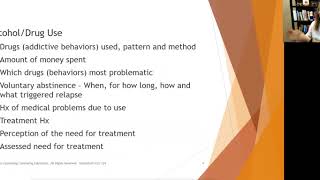
This episode was pre recorded as part of a live continuing education webinar on demand. CEUs are still available for this presentation through all CEUs. Register@allceus.com Counselortoolbox you I'd like to welcome everybody today's presentation on treatment planning with the MATTERS and asi. Now Matters is a different organization of the letters for the acronym smart. What we're talking about are SMART goals and the ASI is the Addiction Severity Index. So we're going to talk about how to use that instrument to guide treatment planning. We'll examine how the Addiction Severity Index information can be used for clinical applications and assist in program evaluation activities. So basically you're going to see when we go through the asi, it's a really good tool for meant for assessing biopsychosocial needs. So if you tie those to the treatment plan, then you're going to be able to see treatment progress. We're going to identify differences between program driven and individualized treatment planning processes. I've harped on this before. Going to do it again. Gain a familiarization with the process of treatment planning, including considerations in writing and prioritizing problem and goal statements and developing measurable attainable time. Limited, realistic and specific objectives or relevant is the other R that's sometimes used. And we'll define basic guidelines and legal considerations in documenting client status. So some of this is going to be a little bit of a repeat from what we talked about on Tuesday, but some of it's a little bit new. So the asi, like I said, is a really good instrument for getting a general biopsychosocial assessment for someone who's presenting with addiction issues. Now it can be co occurring. You don't have to have somebody who's only got addiction because we know that rarely happens. But you know, generally a lot of these questions are going to kind of be geared around somebody with either an addiction or co occurring disorders. So they start out with medical status. How much has this problem interfered with your life? How much of this problem, your medical problems are due to an addiction? And what is your assessed need? What do you think your need is for medical intervention? And what does the counselor think your need is for intervention? And they ask this question on each segment of the asi. Why do they ask that? Because when we're prioritizing goals, we want to identify the goals that the client is most ready to change. The one the client's in at least preparation, if not the action phase of change. So you know, if I ask them do you need medical Assistance with this and they say, no, I got it, then that's probably going to be down in the priority list. Unless it's something that, you know, for some reason, clinically I feel is really important to address. For example, if they are detoxing from alcohol or benzos, detox from either one of those can be life threatening. So if they say no, I'm going to detox on my own, I might push that issue a little bit because of the potential for severe outcomes. And at the facility I used to work at, if they insisted on self detoxing, we had them sign a release basically that they were informed that detoxing from those, either one of those drugs could be life threatening. And it was suggested that they be admitted to detox. So anyway, the next section that it looks at is education, employment and finances. So it's kind of lumping all this stuff together, but okay, so what's the person's level of education that's really going to help us in determining, you know, what kind of employment we can steer them to or you know, what kind of employment they might be able to get, which will affect what kind of housing they might be able to get, which is going to affect a lot of things. But it can also indicate if they need to go back for training or if they want to go back for training. And some people just don't want to. They didn't like school the first time around. They certainly don't want to go back. Occupational history, we're going to ask about forever. You know, what does your occupational history look like since you started working? And for a lot of people, they may have a decent occupational history up until X point when that addiction kicked in. And then over the last 30 days. What is your occupational outlook? Kind of Ben and I do want to point out with this that, you know, the majority of people who have active addictions are full time employees. They are not unemployed, they are not homeless. So I don't want people to have the misconception that, you know, the last 30 days we're expecting it to be, you know, a train wreck. No, you know, it can be that they're getting by. It can be that they're struggling at work, but they still have a job. So we want to know what, what it's been like. Do they have a driver's license in transportation? Obviously that's going to impact what kinds of services they can access, what kinds of, you know, wraparound services they can access if they're able to have a job, et cetera. Sources of Financial support, You know, are you able to maintain a recovery environment? And if you're familiar with the asam, one of the six dimensions that we assess on people is the adequacy of their recovery environment. We don't want them to be homeless and coming to treatment. We don't want them to be living in, you know, an environment in which there are lots of drugs or whatever the problem is when possible. So we want to look at their financial support. Can they even afford to get into an improved situation? Do they have dependents? Maybe we need to bring in some family counseling. What is their perception of employment and financial issues, and what is the clinician's assessed need for employment counseling? We don't do employment counseling. You know, that's one of those things that there actually is somebody out there to do it, unlike case management. So you can refer to your local workforce development board or One Stop, or whatever they call it in your area or where people can go get information about potential training resources, potential job openings, help with their resume, pretty much anything they need, which is kind of why they call it One Stop. And you can refer out to there. Now, if you've got somebody who is medically unstable, who is either intoxicated right now or recently came out of detox, they may not be ready to go back. So when we're talking about prioritizing, we need to look in the big scheme of this person's recovery. What is it that they need and how. What. What order do we need to do these things in alcohol and drug use? Obviously we're going to ask about that. So we want to ask about drugs, but we want to expand it a little bit and ask about addictive behaviors. We want to ask about gambling. We want to ask about porn addiction. We want to ask about any of those behaviors that are to trigger that dopamine system and potentially could cause some addictive consequences. How much money did you spend? Which drugs or behaviors were most problematic? If you've had a period of voluntary abstinence, when, for how long, and how, and what triggered the relapse. So we're getting an idea of the course of what happened and when we're talking about these drugs or behaviors. Most people are poly addicted. They're addicted to, you know, alcohol, they're addicted to nicotine, and they may have some behavioral addictions in there. You know, that's okay. I want to know, you know, what is your most problematic drug or behavior, which is usually the addiction of choice, and what are the other ones? Just so we know, because if we only treat this one over here, you know, if I've got somebody who's addicted to alcohol and occasionally uses LSD and marijuana and is addicted to online gambling, if the only thing I address is the alcohol addiction, we got these other ones out here that are just prime to create a relapse scenario. So we need to make sure that we're aware of what's going on. If they were abstinent, if they were clean for a while, great. When was that? You know, was it 15 years ago or was it last month? How long did you stay clean? That's good information to know. If they stayed clean for a week. Okay, well, they had some tools that helped them stay clean for a week, and we can build on that. If they stayed clean for six months, well, all right, what changed? What triggered the relapse? How did you go from having six months clean or six years clean to. To relapsing? That gives us information we need to develop that relapse prevention plan and to develop the treatment plan. I mean, if we find out that Jim Bob was doing fine for four years, was, you know, going to meetings, was, had a full time job, and then all of a sudden he got laid off and his wife left him. Okay, well, that gives us an idea about areas that we may need to assist Jim Bob with employment and with some grief counseling and maybe some relationship counseling, you know, figure out what happened there, help him come to terms with that loss. You know, I don't know, but you know, that's going to be very different than somebody who comes in, who's never been sober before and has no idea where to even start with sobriety. We want to ask about a history of medical problems due to use. Now, you already asked about that in medical, but ask about it again. We want to ask about treatment history. Why do we care? And too often I see clinicians skirt over this and it's so there's so much information you can get from this. When you were in treatment, what helped? You know, oh, my gosh. We rarely ask that question. We just ask, okay, when were you in treatment? Where was it? Who was your primary? Okay, where else were you in treatment? Stop. Ask what helped? When you were in treatment, what did you learn? What was useful, but also what was not useful? Because every treatment program people go through, there are going to be parts of it that are really useful. And parts of it, they're like, I have no idea why I had to do that. So we want to ask, because that helps us again, learn more about our Clients and what's going to work for them. When we get to treatment planning, we want to focus on doing those things that already worked and not redoing the things that didn't work. And it could be that the approach that was used was not a good fit, it could be that the clinician was not a good fit. Maybe it's a skill that this person is going to develop eventually, but it was just not a good fit with the clinician. So we want to explore that a little bit in order to give us the best chance of getting the best initial treatment plan. And then we want to ask about their perception of the need for treatment. Right now, what kind of treatment do you think you need? Outpatient, intensive outpatient, residential? What is it that you need? And then we're going to put our two cents in. And obviously, if, again, if you're familiar with the asam, you're probably going to do the ASAM here in order to determine the appropriate level of care that we're going to recommend. Now, I've had a lot of clients that have scored for residential treatment but have said, you know what? No, I can't. For whatever reason, they can't. They've got three kids at home and nobody to take care of them. They can't afford to lose their job right now. There's a whole myriad of reasons why somebody might not be able to commit to 30, 60, 90 days in residential treatment. So we want to say, okay, you know, how can we work with you if you can't do that? What can you do? And we also want to, if they say, I don't need residential, it's not that bad. Okay. You know, and sometimes you can share, depending on your rapport with the client, you can share your opinion about why residential would be a better or Iop or whatever it is would be a better choice. But ultimately it's their choice. And I tell them I'm more than happy to be proven wrong. If you can handle this with intensive outpatient or outpatient, that is awesome. And some people just want to do like a couple of times a week, outpatient and self help, you know, that's their call. Legal status. We're going to ask about if they're on probation and parole, if treatment is court mandated. If it is, there may be some requirements that they have to go to some level of treatment. And if so, okay. I remember when my first job out of graduate school, I worked with felony probation and parole. And for those of you who are trekkies, you'll understand this, for those of you who've never watched Star Trek, it's not gonna, it's not gonna hit. But I was working with these clients and you know, I was in there and I was trying to do the curriculum and we were gonna work on relapse prevention and we were gonna work on this. And I, I was going through this rigid curriculum that we had set up and they just were falling flat. And so I went to my supervisor and I said, mark, you know, I, I'm doing the curriculum and you know, I'm trying to be entertaining and everything. And it is, you know, a six o' clock at night group, but it's just, we're not going anywhere. And they sit there and look at me like I've got three heads the whole time. And he said, show them. And I don't remember the name of the episode, but it's the Star Trek with the Borg in it. And I looked at him quizzically and thankfully this one he didn't make me figure out on my own, but he was like, resistance is futile. They are on what we call on papers when they're on probation and parole. They're on papers right now and if they want to get off papers, they need to get with the program. So, you know, and we talked about what it meant to be feel like you were being assimilated in the next group and it became a decent therapeutic activity. But I also switched my approach at that point. You know, we talked a little bit about what they wanted to get out of treatment. And most of them that were in there just believed they didn't need treatment. They were dealers, it wasn't their stuff, you know, whatever. And so instead of, you know, continuing to hammer at something that they didn't think applied to them, said, okay, let's talk about what does apply to you. You're stuck with me for 12 weeks. What does apply to you? So when you're working with court mandated clients, you really want to find out what they're motivated to work on. And if their only motivation is to not have to see your face anymore, well, then you lay out, this is what you got to do to not see my face. You know, pretty simple. We want to catalog charges and frequency. And this is one of the easiest ways of determining whether somebody meets criteria, if you will. Because generally they say two or more problems in a six month period related to the addiction. Well, if you pull out their rap sheet and it's, you know, six pages deep of possession, possession with intent, use public in talks, whatever, even if they weren't convicted. We want to look at how many charges there were and you want to look at charges that were addiction related and then other charges that were there that, you know, the person may have been under under the influence when they were robbing the liquor store or whatever. Ask them how many times they've been incarcerated, how many days in the last 30 they've been in jail. What their perception of their legal problems are. Do you think they need legal services and counseling? Legal counseling? Some charges can be expunged after a period of time, which helps people get jobs. Some people will need a little bit more assistance transitioning to reduce their recidivism rate. The family and social history. We want to identify the history of addictions or psychiatric issues in first and second degree family members. Why? Because this lets us know what may be going on with our client that may or may not have been diagnosed yet. So we can keep an eye out. Marital satisfaction and status or marital status and satisfaction. You know, if they're single and they're happy with it, cool. If they are married and they're happy with it, cool. If they are in a dysfunctional relationship and they're not satisfied, then that could be a stressor, that could be causing all kinds of mood issues and predispose them to a relapse. So we want to talk about that. What are their living arrangements and their satisfaction with it? So again, this goes to that ASAM dimension of recovery environment. Where do you live? With whom do you live? Is it safe? That means are you constantly being exposed to addictions and drugs and chaos and all this stuff, or is it an emotionally and physically safe environment? Does anybody use alcohol or drugs in the household? Even if someone is an alcoholic, for example, or addicted to alcohol, okay, you know, and everybody else in the house is using crack cocaine, it doesn't mean that that's safe. That just means the other people are not using that person's addiction of choice, but they're still using and they're still using mood altering substances in front of the person. With whom do you spend most of your time and who are your close friends? We want to ask this because this helps us identify social support and this also helps us identify anything we may need to help the person with. In terms of interpersonal effectiveness skills, have you had serious difficulty getting along with any first degree family member, co worker or friend? Again, identifying any interpersonal skills deficits that may need to be addressed. Trauma and abuse history in the assessment and y' all probably know this and the same thing is true with the asi, we don't go into, you know, a deep dive on this. We just want to know if there's an abuse history and, you know, maybe the general idea if they were raped or molested or something. But we don't, we don't want to go into a deep dive because it's not a psychologically safe place right now. And sometimes it's important to help them put on the brakes when they start going into that because you don't want to precipitate a crisis before they're even, you know, in a good rhythm in services and have good rapport with somebody. But we want to ask about this not only because it will probably be an issue we need to address, but, but because we want to make sure that we are operating from a trauma informed perspective and we don't re traumatize the person. So if we find out that they have a history of verbal abuse, you know, one of their parents used to just scream at them and berate them in front of people all the time. Well, we want to make sure that, heaven forbid your staff should ever do this, but we want to make sure that never happens, that, you know, somebody doesn't yell at them or talk to them in a loud voice. And it could be staff or it could be other clients. But if other clients, you know, do raise their voice, then we may need to intervene more quickly than maybe, maybe with somebody else. So again, what's their perception? What's your perception? This will give us an idea where to start with treatment. Psychiatric. How many times have you been hospitalized for psychiatric issues? Schizophrenia, suicidality, homicidality, Any of those? The number of times ever and over the last 30 days have you experienced depression, anxiety, hallucinations, cognitive difficulties and suicidal ideation? So it goes down kind of the laundry list of the big ones. And we want to separate hallucinations that are drug induced from hallucinations that are not. Because that can also indicate that there may be some early onset dementia, there may be some alcohol related dementia. There could be a lot of reasons. Parkinson's also sometimes people with Parkinson's have hallucinations. So it's important to be aware of these things that may need to be addressed. Are you on or have you ever been on psychiatric meds? Perception of psychiatric issues and assessed need for mental health counseling? I have yet to work with a client who is presenting with addiction issues, who doesn't have some concurrent mood issues. Now, whether you want to say whether it was a long standing depression or anxiety or something you know, not necessarily, but as they start to sober up or come out of their addiction or get ready for change, they often hit a crisis period, and their anxiety and depression often increase. So a lot of times, clients do have some pretty pressing grief, trauma, depression, or anxiety issues that need to be addressed. But we also want to look a lot. There's a high correlation between substance misuse and adhd, as well as, you know, the mood disorders. So we want to look for some of those things and fetal alcohol spectrum issues as well. Okay, so we've done this asi. We've gotten a ton of information. Probably spent an hour longer in the assessment than we were supposed to. That was me. The assessments conducted, data and information are collected from the client. And then we have to go out, theoretically, and collect information from collateral sources. Probation and parole, criminal history, family members, if we have the release, and any assessment scales that you used, like the SASI or whatever. Problems are identified. Readiness for change for each problem is identified. So we go through that asi, and in each domain, we're going to sit down with the client and go, okay, it seems like in this domain you've got these pressing issues, and we'll write down all those issues, and then I'll give the client the piece of paper and I'll say, okay, rank them from 1 to 8. Which one's most important and which one's next? Next most important. And if there's a tie, that's okay. We can have a couple of twos in there or something. But I want you to tell me, in your perception, what do you think is the most important thing to work on right now? So we're prioritizing these problem statements, and then we create the goals and we go through each one. And usually I stop my treatment plans. We only address two or three problems at one time. Addressing more than that is just overwhelming, even if the client's in residential. So I say, okay, for these three problems that you've identified as the most important, what will it look like when they are resolved? This is how we state our goal. You know, what are we working towards? How are we going to know when you have achieved recovery? That is far too vague. Objectives to meet, the goals are defined. Remember those steps? We kept talking about recipes on Tuesday, and I got hungry, quite frankly. But we want to identify what do you need to do first, then what do you need to do, and then what do you need to do? Interventions are revised or changed based on client response to treatment. So we're going to choose those interventions. What we do based on the client's response. Treatment plans are developed at admission and continually updated. This is a pet peeve of mine. It's continually updated. We don't just do it when the client comes in and then sign off on it when the client leaves. Treatment plans should be guiding treatment. Just like a recipe guides your cooking. You don't look at it and go, okay, I got it and put the book away. You keep consulting back. You do a step, then you say, okay, what's the next step? And then you do that step and you go back and you say, what's the next step? That helps the person keep moving forward. It helps the person learn how to set goals. It helps the person see incremental progress which is empowering to them. Treatment plans are individualized. So even if I have two clients that have the same presenting diagnoses, they're probably not going to have the exact same issues or treatment. Problem statements are non judgmental and not jargony. We want to avoid terms like denial or resistant or codependent. We want to identify what the client is doing or not doing. Goals must be specific, measurable. So use as evidenced by client will achieve recovery. You know, that's kind of vague. As evidenced by being abstinent from substances for a minimum of 30 days by, you know, and I usually put three or four things in there that we can mark off they're achievable. We want to make sure the client can do it in the timeframe that we've got. You know, some goals are going to be achievable two years down the road, but that's not appropriate for this treatment plan. If your treatment plan is 30 days, then you've got to put things that can be achieved in 30 days. Who figured? So it's important to make sure that you keep your goals and your objectives small and incremental so the person can, when they finish treatment or graduate or whatever you call it, in your place they can go, I'm done. I did that. The goals are relevant. So again, make sure anything that you're going to have the client do, you can tie back to their presenting issue. And this is true not only to help the client stay motivated, but also to help the referral sources feel like they're getting what they need. And for insurance reimbursement, program driven plans are one size fits all. They reflect the components and or activities and services available in the program. And the first place I worked it was a program driven and I didn't know any anything different. It was A program driven plan. Clients would come in and we had a. We had groups six hours a day, every day. And each group slot, we had two different groups so you could choose. But that was as program, that was as individualized as it got. Clients had one individual a week, and they had six hours of group a day. And then they went to 12 step meetings four times a week. That was it. Everybody did that. There was no smart recovery. There was no pastoral counseling. There was no, none of that. It was, here's our program, we'll plug in. Well, you can see why that might not work for some people. We did have one client, for example, who had a very, very bad tic disorder. And the more stressed he got, the worse his tics got. And he had super high social anxiety. So being in front of people, being in groups, he couldn't even function. And so you couldn't call on him because he would just get really upset and couldn't speak. He couldn't eat in the lunchroom because eating in front of people was too stressful for him. And his tics would get so bad he couldn't get his hand to his mouth and, you know, eat effectively. So we had to obviously work with him. But unless something was glaringly obvious or reflected something more like a disability, a lot of times the program didn't adjust to people's individual needs. So, you know, that's a program driven plan. It's a good plan. It works for probably 60, 70% of the people, but the other 30% fall through the cracks. Individualized plans are sized to match client needs. Not all clients have the same needs or in the same situations. So we need to figure out what their needs are. The individualized plan is made to fit the client based on his or her unique abilities, goals, lifestyle, socioeconomic realities, work history, educational background, and culture. And for example, in this treatment program, we did a lot of big book work and we did a lot of worksheets and we did a lot of reading intensive stuff. Well, you know what? 10% of our clients couldn't read. So that's a problem. And, you know, we had to figure out how to adjust to help them out. But we need to focus on that. We need to appreciate their cultural backgrounds and their lifestyles and, you know, fit, again, fit their goals. Why are you in treatment? What are you hoping to get out of it? When treatment programs don't offer services that address specific client needs, referrals to outside services are necessary. So in that program that I worked in, you know, sometimes we just didn't have the services to meet all the clients needs. So we needed to refer out to the VA or to other providers or that would have been ideal. So what components are found in a treatment plan? Problems identified during the assessment. You know, obviously that's where we're going to start is the problem statement goals that are reasonably achievable in the active treatment phase. So while they're with you, the term objectives in the ASI format. And ASI has their own treatment planning sheet and everything if you want to use it. But in the ASI format the term objectives is defined as what the client does to meet the goals. And the term intervention is used as what the staff will do to assist the client. So remember on Tuesday I said the term objective and intervention gets a little wonky because it's defined differently in different places. This is one of those examples. But so here again the objectives are what the client is going to do is and the interventions are how are we going to help them, how are we going to facilitate this? So prioritizing problems, you will recognize Maslow's hierarchy. And you know, I love Maslow's hierarchy. Generally we want to stabilize biomedical conditions. Acute intoxication, any withdrawal issues. And don't forget protracted withdrawal, please. Protracted withdrawal can happen two to four weeks after the person actually stops taking using a substance. And some of you are aware of pause post acute withdrawal syndrome that refers to protracted withdrawal. Benzodiazepines, alcohol, methamphetamines and cannabis are four that you can experience protracted withdrawal with. So we need to make sure that the client is again safe in terms of any issues that may come up because their cravings are going to get really bad again, they're going to be really bad and they'll get better for a while. And then during that protracted withdrawal, they're going to start really jonesing again. Nutrition. We want to make sure that they've got the stuff they need to start helping their body and brain heal. And we want to address any concurrent health issues. If you've got somebody who is in just immense amounts of pain, who is malnourished, who is not sleeping and has hiv, you know, they've got a lot of other stuff going on, they're not going to be as focused on the rest of it. So then we move up to safety, their recovery and living environment. Suicidal ideation. Now, you know, I personally would probably put suicidal ideation down on the lower level, but you know, we're talking about the hierarchy here. Their ability for self Care, relapse, potential, continued use, potential functional impairment, and legal issues. Can they do activities of daily living sufficiently to be safe and to maintain a roof over their head? And, you know, the bare minimums, once they have those sorts of things, they're. They're safe, they're comfortable, they are healthy. Ish or on the way to being healthy, then we can start working on interpersonal skills. But up until then, they really don't feel well or they're exhausted. So we want to help them figure out how to get on a good footing so they can focus on these more esoteric things. So what do we do with goals? Like I said, recovery is not a specific goal. That's just how do I know if somebody's in recovery? What does that mean? That means something different for every single person out there. When a goal is specific, the person can objectively evaluate the data to determine that it's been achieved. And anybody can. They can read this and go, yep, Sam did that, or no, no, he didn't. He didn't meet that goal. So what problems are you experiencing as a result of your condition? And that's what the ASI really asks about a lot. Sa so in that medical section, for example, if they're experiencing high blood pressure or insomnia, that would go in there. Down in the family section, relationship problems in the psychiatric session, depression. And then in the educational financial section, you know, job loss. Those are all things that could be identified as current problems as a result of their condition, whether it's depression or addiction or both. How will you know when each of those problems is resolved? Measurable. And I know I harped on that on Tuesday. Blood pressure, if we're talking about, you know, those goals we just stated, blood pressure will be 135 over 80 or better. I will be able to sleep restfully at least seven hours each night. At least five out of every seven days. I won't get into fights with my partner. At least five out of every seven days, I will rate my happiness as three or better. And I will acquire a job that pays at least $15 an hour. So those are all very specific goals. Now, I don't think a person could achieve all of these goals in 30 days. They were just kind of examples to show you measurability and specificity. Measurable means a third person can look at the data and say yes or no. So. So when we're talking about behavior, we want to look at frequency of the new behavior. I went to work five days this week. I was free. And not incarcerated. 22 out of the last 30 days or whatever we're looking at. Or we can look at the number of times per day that somebody used a positive coping strategy or practiced mindfulness or whatever. We can look at measuring intensity. And a lot of times we use an anchored Likert scale. And why do we use anchored? Because if you just say on a one to a five, people are going to be like eh, and it wiggles. Even the same person may rate how they feel the same way. A two one day and a three the next. So give them words or pictures. One, extremely depressed, two moderately depressed, three is content, four is happy and five is elated. You know, I try to use different words instead of just saying less depressed and not very depressed in order to give them something to kind of latch onto and go, okay, do I feel content or less than? Or do I can feel content or more than? You can also use a 4 point Likert scale. In terms of confidence, you know, how confident are you that you can accomplish this goal or whatever? None. So one, I'm a little bit confident. Number three is I'm feeling confident and four is I got this. Make sure they have those anchors because that's, you know, it makes it more real if they have words to put with it, not just numbers. And they've shown that it really helps increase validity and reliability. The other thing you can look at, remember, frequency, intensity or duration. For duration, if we're talking about a panic attack, it will resolve within 5 minutes or 10 minutes. A child's temper tantrum will resolve within 5 minutes. The urgent to use will pass in less than 30 minutes. Grief, you know, a grief episode will pass in less than 30 minutes. What? However they want to identify it. But if they are, you know, just oppressed with grief right now, and you know, 15 hours a day they are crying and grieving, they're going to continue to have some grief episodes. But if those grieving episodes, when they have a memory that triggers a grief reaction, if it only lasts 30 minutes as opposed to three hours, that's some really good progress. You can also use numbers. List 10 examples of that. Gives you a way to measure or identify things. And you can use scales. Now, we don't often use scales in community mental health, but you can. The Beck Depression Inventory will drop two points, for example. And there are other scales that are out there that you can use and regularly retest the person to see if they're improving. You know, that's your call. The goals are achievable and attainable. What can the person realistically do in the given time? Can they enroll in school? Can they get a job? Can they stay clean for 30 days? Can the person get to the point of rating their mood as a three? Remember which is content or better on the depression scale? Five out of every seven days. That's a big ask. So you want to make sure the person can achieve whatever goal it is. Increase the frequency that unhelpful thoughts are identified and effectively disputed at least 70% of the time. You'd have to find a way to kind of log this with hash marks or something. But there are ways you can do has to be relevant. Objectives need to clearly relate back to goals which need to clearly relate back to the reason why the person's in treatment. Anyone reading the plan must be able to easily understand why each objective and intervention are there. You know, if the auditors come in and they're reading this and they see something about, you know, going to go bowling every Saturday. Excuse me, why? And yeah, that was a goal. We are an objective we used to have in our residential treatment program because a lot of our clients either never knew how or had forgotten how to have fun clean and sober. So bowling was something that they could do to get out of the facility and to have some fun. And they were clean, sober and safe. So we related it back. It was part of their recreational therapy. But you know, just seeing that, you want to know why, why are they bowling? In the goal statement after the as evidenced by add the statement, this is important to my recovery because. So this is important to my happiness. This is important to my sobriety. This is important to my. Whatever this end goal is because so if the goal is to get, get a job that pays at least $15 an hour, okay, this is important to my recovery because. And it's time limited. All goals need to be completed within the treatment period. Objectives need to be constructed so they can be completed. For children through fifth grade, which, you know, we're not going to be using the ASI with them, but just in general for children through fifth grade, daily, they need to have that feedback regularly because I mean, think about how little they are and think about how much time they've been on this earth. A whole day is a long time compared to how long they've been on the earth. So they need that reinforcement daily. For youth 12 and up weekly. And you can use a star chart with them or some kind of a token economy, which works really well. But generally the reward is only once a week. Documentation plans are constructed with the client. And clients get a copy of their plans. Clients cannot follow a plan if they don't have it, so you need to make sure they have a copy. Why is this important? Well, number one, it gives relevance to why we wrote it. Number two, it helps the client because they worked with you to develop it. So it helped them learn how to start setting goals that are achievable. But then it helps them follow through the process. If they're following it and they're marking off those steps, they're going to achieve their goal and they're going to feel empowered by that. It'll also help them see incremental progress. You know, they're going to look back and go, wow, I've already marked off 15 things. Well, great progress notes. If it ain't written, it didn't happen. Or, I'm sorry, if it isn't documented, it didn't happen. We all know this, but we can get slack sometimes when we're pressed for time. So remember to figure out a way to write down your notes. One thing that I've shared with you guys that I do when I'm doing groups is I have everybody complete an exit sheet for the day. So they write down, you know, there's a checklist that assesses how they're doing, if they need anything, when their next appointment is with their individual therapist, and what. What is one thing you got out of group today? So I have them write that down. That way I collect those and, you know, have something written in the client's handwriting. And then I go through. There's another section on that same sheet that I can do a mini mental status exam. You know, was the client oriented? Did he have future plans? Yada, yada. I can mark it off right there before I even, like, go back to my desk. I stay in the group room and I mark that off. That way it's easier for me to write my notes when I get back to a computer. Notes are dated, signed, and legible. Client name and identifier are included on each page. Referral information has been documented. Sources of information are clearly documented. Client strengths and limitations in achieving goals are noted and considered. So as the client goes through, you know, if we see that they've got some strengths that are really helping them in one area, you know, we want to note that. And if we see that they're struggling in another area, maybe they're struggling to get a job because of their social anxiety, we want to note that because we're going to probably need to modify the treatment Plan to help them deal with their social anxiety before they go out and start applying for jobs again. Entry should include the clinician's professional assessment and continued plan of action. Always end your notes with, you know, well, our notes used to have the status exam at the top. What was done in session, you know, generally. And then, you know, worked with client in individual counseling or worked with client in codependency group and then addressed problem 1A, blah, address problem 3C. And we talk about how we addressed each objective and that was the way Medicaid required us to do it, that each treatment plan or each progress note specifically identified which objective of which problem or problems were addressed in that particular session. So it helped keep us, you know, organized. And then at the end we had the for next week, clinic client will or client will continue doing so. There was clear communication about what the next steps were. And yes, Jason, I agree. I love to have client notes in the file, not only because it empowers them and it makes the file less mysterious, but it also, auditors love to see that. So they love to see that we're really involving the client in this process and we're paying attention. We're not just having them come into group and then leave and going, well, hope they got something out of it. We're really honing in and making sure that everybody's getting something. So progress notes, client review sheets can be helpful for individual and this is what I use. And you can complete at the end of the session with any client, identify the problems and objectives you worked on this week. So you're going to have a couple of sheets here. Problem number one, objective C. Did you complete it, yes or no? If not, why not? I will generally fill this out as we're talking, you know, and I go through why. Because I want the client to remember what they did. I also want to get my progress note done. But you can go through this and it just kind of is a big summary of what we talked about in session for the client. What help do you need with this objective? If any, was it useful? Yes or no? If not, why not? So help me understand so we can modify your treatment plan. What else could you do to address this problem that would be more useful? So sometimes clients are supposed to be going to 12 step meetings and some clients, it just doesn't work for them. It doesn't click for them. So did you go to your meetings? Yes. Was it useful? No. Why not? And they can tell you why not. Then you can ask, what could you do to address this problem that might be more useful and they might say smart recovery or celebrate recovery or women in recovery. There's a lot of different options besides just 12 step group that people can explore if 12 steps don't necessarily work for them. But we want to make sure instead of saying, well, just keep going and eventually it'll click. A lot of times they get frustrated and they drop out. So we want to make sure if they say this is not working for me, we figure out why. It also could be that the group they're going to is a bad fit because sometimes there are a lot of young people and very few old timers in the meetings or sometimes they're the new person and it's almost all old timers and they feel out of their element. Sometimes the meeting is too big and they do better in big book studies as opposed to the large meetings. So figure out why it didn't work and then address from there. It doesn't mean you have to scrap the whole thing. You may be able to make some modifications and then ask the client, what problems and objectives are you going to work on over the next week? By having them tell you and having it come out of their mouth, it reinforces it in their mind so it's easier for them to remember. Over the next week, I am going to do my mindfulness checks at every meal. I am going to go to my doctor's appointment, whatever it is, you'll jot that down, but there's reiterating it. And anything they forget you can point out and put in. Then give them a copy of it. So this is their go buy guide. This is their plan for what they're going to do. I haven't yet had a client get upset about going through this, going, why are we doing your paperwork right now? Because I make it relevant to them. Because when they are setting and achieving their own goals, not in counseling, they're going to probably do something similar and they may not write as much down, but they're going to have to go through it incrementally. So this is a learning process. Soap Progress Progress Notes Subjective the client's observations or thoughts and the client's direct statements. They talk about what they felt, what was going on for them. It's objective. The objective part is our objective observations during the session. If you must use a subjective term like withdrawn, follow it by as evidenced by. Because withdrawn, you know, does that mean the person was had poor eye contact, wasn't talking, you know, what did withdrawn look like for this client? So be as Objective as possible so anyone reading the note can understand what was actually going on. Complete a mental status to orientation, memory, language, and I always suggest future plans. That's one of the better indicators of suicidality. If people are refusing to talk about future plans, that's a huge red warning flag. A stands for assessment of progress, which identifies each goal and objective worked on and the outcome. And P stands for plans for the next session. Some places use the SOAP format, so this is what you would do. Two other formats, DAP is describe or the data assess what is your assessment of the situation and P is what is your plan. I haven't worked at a place that likes the DAP format, but you know, some of your places may and burp is behavior. What behaviors did the client's evidence, what interventions did you use or did he or she use over the past week? What was their response to the applied interventions? If you gave them homework over the week to address unhelpful thoughts, that was your intervention. What was their response to it? And then what's your plan to help them continue to address that behavior? Cart, I promise we're almost finished with these. These are really helpful for interns to help them remember what to put in their notes. CART stands for client condition. So that's your mental status, orientation, and suicidality. A is what action did the counselor do in response to client condition. R is client response to treatment plan. So what did they do over the week? How are they progressing toward their identified goals? And T is how does their response relate to the treatment plan. So if their response is good, then the treatment plan is going to continue. If their response is poor, then we're going to make adjustments to the treatment plan and we're going to talk about what adjustments you're going to make here. And chart is the client condition. But then we also add the H, which is historical significance of the client condition. So one client I worked with, for example, every time he would get out of treatment, he would be doing really well and then he'd get in a relationship, the relationship would end and he would relapse. It was like clockwork. Every time he broke up out of a relationship, he relapsed. So client condition. If he came in and he said, I'm in a relationship, I'm like, okay, we're in this honeymoon phase. Historical significance. Even if they haven't broken up yet, I'm going to be on high alert for trouble in paradise because I know that that can lead to a relapse. And I'm going to obviously make sure that that client is aware and putting in place stopgaps. A what action did we do in response to the client condition? So again, make the client aware of any concerns, any trends you see, R what is the client's response to the treatment plan? And t how does the response relate to the treatment plan? So again, those are just different ways you can figure out how to get stuff in your notes. I like the SOAP format better than any of the others, but, you know, your agency may be a little different. The Addiction Severity Index can be used for clinical applications and assist in program evaluation activities because it assesses multiple domains of functioning which can be linked to Maslow's hierarchy. So it really gives us a lot of really good information that we can say, is this a problem for you right now? And how motivated are you to work on it? Program driven plans fit the patient into services. They just plug and chug. Individualized plans fit the services to the patient. So this is more like a smorgasbord treatment plan. Goals and objectives should be positive. So we want to add something to people's life. We want to help them move toward happiness, not be less depressed. They're specific, measurable, attainable, relevant, and time limited. It's important to tie the treatment plan to the assessment and the interventions and client progress to the plans. So we want to make sure that anybody who's reading this plan could understand why is the action being taken? How does it benefit the client in achieving his or her goals? What was done this past week include client activities and referral contacts. You know, we want to make sure that it's clear in the chart how the client is progressing. You can give them a great treatment plan and if they stay on problem 1A for the entire 60 days, it's going to be a problem. So we want to make sure that we're charting forward progress. What was the client's response to those activities? So if they're on 1A and they're stuck, well, stuck is the response. So we need to look at why they're stuck and what to do about it. What are the plans for next week and what referrals were made, if any. So we want to make sure we get those in there. And I know there's just so much to do and we do what we do well. Most of us, I think I shouldn't speak for everybody, but most of us do what we do because we love working with clients and helping people and we love the interaction part. Most of us detest the paperwork part. Some people do it, they don't hate it, but it's not their favorite. But a lot of people detest it. And I get that. Like I said, there are ways you can use check sheets, get client feedback, get client exit response sheets to get client feedback so you're not trying to have to scratch your head and go, hmm, what did I talk about with that client at 9 o' clock this morning? And you can get it done in session. So it's just bada Bing. And if you make it a matter of course that you're doing this at the end of session and you help the client see how it's integral to helping them, then you know, so much the better. There are additional videos on our YouTube channel, all CEU's education. There's one on treatment planning, another one on treatment planning using clinical history to identify motivation and reinforcers, goal setting and motivation, and then there's a whole series or playlist on behavior modification. So if you're working with interns or students that need assistance with any of this, please feel free to tune into some of those videos. They might give them some helpful tips. Anybody else have any questions? Alrighty, everybody. As you can tell, I really love talking about treatment planning. I like writing them too. That's, that's the one piece of paperwork that I actually enjoy. So if you have any questions, feel free to message me and we will go from there. We're going to switch gears next week and do a series on working with infants and toddlers with developmental delays. And I believe that's four sessions. And then after that we're going to go into individual and group activities for addressing depress. Alrighty everybody. Well, you know, I see Jason's going to be out next week, so that's a bummer. And if any of the rest of you are going to be taking vacation before the 4th of July, I will miss seeing y' all in here. But I will see you after the fourth. If that's when you come back. Everybody else, I'll see you on Tuesday. If you enjoy this podcast, please like and subscribe either in your podcast player or on YouTube. If you want to attend and participate in our live webinars with Dr. Snipes, you can subscribe atoolbox. This episode has been brought to you in part by allce.com providing 24.7 multimedia continuing education and pre certification training to counselors, therapists and nurses since 2006. You can use coupon code counselortoolbox to get 20% off of your current order. If you're a podcast listener, especially on an Apple device. It would be extremely helpful if you would review Counselor Toolbox. To do this on your Apple device, go to the Podcast app, search for Counselor Toolbox, select the icon for the podcast, tap the Reviews tab in the middle. You should then see an option to click Write a Review. We love to see five star reviews, so if there's anything we can do to make this podcast even better for you, please email us at support at allce. Com.










