324 Individual and Group Activities to Teach Coping and Defense Skills
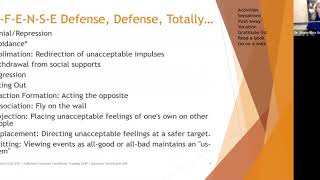
Dr. Dawn-Elise Snipes presents 324 individual and group activities designed to teach coping and defense skills. The resource covers practical exercises for helping people manage stress and build resilience through structured activities.
Chapters
This episode was pre recorded as part of a live continuing education webinar on demand. CEUs are still available for this presentation through all CEUs. Register@allceus.com Counselortoolbox you I'd like to welcome everybody to today's presentation. We're going to continue the Journey to Recovery series. Today we're talking about defense mechanisms and coping skills, specifically how to teach them to clients and, you know, what function they serve. We're going to differentiate between coping skills and defense mechanisms and identify the purposes for each now. Well, we'll talk about that in a minute. Explore common defense mechanisms and how they can assist as well as hinder treatment. So defense mechanisms are not bad. They're useful. It's just, you know, like anything in excess, they can be problematic. We'll identify cognitive, physical, environmental and interpersonal coping skills and explore how to teach these concepts via individual and group activities. So defense mechanisms are behaviors designed to protect you from a threat until it can be dealt with in some way, shape or form. And this is one thing that just kind of gets under my skin when I look at a lot of these lists of coping skills online. A lot of them are defense mechanisms. A lot of them are things that are meant to distract the person, to help them get in their wise mind or whatever, but they don't actually do anything to address the situation. Coping skills are behaviors that help you change the situation or change the way you feel about or react to the situation. You know, when something happens, you pretty much have three choices. You can change it, you can change the way you feel about it, or you can continue to feel the way you feel right then. But there aren't really a lot of other options. So one activity that I do with clients at the beginning is I call it draw a card. I don't. I'm not creative with titles. So on index cards I write different types of defense mechanisms and coping behaviors. And I have clients draw a card after I've given them this little intro and identify if it's a coping strategy or a defense strategy and explain their choice. Now, if you've got clients who don't like being put kind of on the hot seat, you can break them up into groups. So you have team one and team two, and that team one can draw a card. And they are trying to decide whether this behavior on the card is an example of something that helps protect you from a threat until it can be dealt with, or helps you change the situation or change the way you feel about it or react to a situation. So then they can talk among themselves, decide whether it's a coping or defense mechanism, and then present the answer. And then the other team has a chance to challenge if they disagree. So that's one way to get them really starting to think about, am I dealing with things, or am I just pushing them away and avoiding them? Now, sometimes, you know, changing the way you react to a situation means saying, you know what? This isn't worth my effort. But that has to be a conscious choice at that point. So bringing out the cheerleader. We're going to talk about defense mechanisms, and some of the ones that we talk about or all of the ones that we talk about in group are listed here. So denial and repression, these are defense mechanisms where you go, it just didn't happen. Like, if you get a phone call and you get bad news, you may hang up the phone and go, okay, I didn't just hear that and try to pretend it didn't happen. Repression is when you take something that happened and you push it away, just lock it up somewhere because you don't want to deal with it right now. It's just too overwhelming. Can't deal with it. So when I go through these defense mechanisms, I give people a handout that describes them. So your vision. Our visual learners have something to look at, but then we go around the circle for each one. And I. I typically call on people to give an example of how they have experienced or expressed this, remembering that none of these are bad reactions to something. You know, they can be very protective right in that moment where you go, okay, this is too overwhelming. I need to put it in this little box over here until I can get some social support and really think about what's going on. So, you know, that's really important. So that denial and repression, asking clients how they experience that or express that, how they've used that defense mechanism. And the reason is we do this is I want clients to really see that they operationalize. They use these defense mechanisms every day. And again, they're not bad or good. They just are. It's kind of what you do with them. Like duct tape. Duct tape is not bad or good. It's what you do with it. I mean, you can use it to do some really, you know, helpful things, but if you put it on something you're not supposed to, like the wall, it tears off the paint. That's bad. So, you know, it's how you use it. And with younger clients, you know, obviously give them multiple examples of how they may have used this and really Young clients may not have used all of these, probably haven't. So you want to focus the defenses that you present to your group based on how old they are. By the time they get to be teenagers, they've probably used all of these at least once. Avoidance is one that, you know, it's a perfectly okay defense mechanism. It's pushing that thought away for the moment. It's going, I can't, I can't, I can't and I won't deal with this right now. I know it's there, you know, but I'm going to avoid dealing with it until later. And that's really helpful if you get upset at work or if you get, you know, bad news when you're, you answer the phone when you're driving somewhere and you get bad news and you're like, oh my gosh, you know, having a breakdown on the middle of. Emotional breakdown on the middle of the interstate, probably, probably not a good idea. So figuring out ways to avoid dealing with that until you can focus on it is really helpful. And you know, some things that people do with avoidance, they can go on a mental vacation, they can change the topic. You know, if it's something they just don't want to talk about, I'm going to avoid it, you know, and we talk about different ways that people have experienced this. Sublimation is the redirection of unacceptable impulses. So if you get angry and you just really want to rip somebody's head off, obviously that's not okay. So what do you do? What are some examples of things that you do when you get really angry? To take that energy that you've got just bubbling up and put it into something positive. One thing, and even, you know, it's not. Well, it does work as sublimation when people get really upset. On our residential unit, I used to, you know, we would go and the first thing we would do is break them up and say, okay, you know, let's go and let's move. Because their heart rate is up, their breathing is up, they're in that state as if they were working out. So what do we do? We go outside and we walk. So then their body starting to get in sync with their heart rate and their breathing and things start to mellow out a little bit. They will start breathing more slowly because we're not going to go out and run, we're going to go out and walk. So it's kind of like a cool down after a hard workout. Other sublimation activities, you know, if you have a Lot of anger about something. You can use that in advocacy activities. You know, these are the kinds of things that we're looking at. Withdrawal from social supports. Sometimes, you know, you're just overwhelmed, you're exhausted, you're angry, whatever it is, and you just can't. You push away. And that's sometimes okay if you just can't take any more input. Sometimes you just need a break and a breather. And this is especially true for people who are more introverted because they like to think about things for a second before they share with others. And, you know, they're not. Extroverts tend to like to talk things out and they think while they're talking. Introverts want to think about it, ponder it, get grounded in it, and then discuss it. So sometimes people just need to. They need a minute. Regression. We've all done it. You know, we have all thrown a temper tantrum at one time or another, even when we were way too old to throw temper tantrums. But we've all done it. And I think everybody understands a temper tantrum. And if you're talking with parents, you know, helping them see how their children might be acting out, some of these. How might their child regress when he or she gets really stressed out? You know, did they become more whiny, become more disorganized, become more irresponsible? How do these things work? Acting out kind of. Well, it's not the opposite of regression, but acting out is just, you know, taking that energy, those anger or anxiety impulses and just throwing them out there. Hitting, biting, you know, things that are not going to be acceptable behaviors. Acting out can also be yelling and throwing, again, throwing a temper tantrum. It can be things like, you know, fine, I didn't get the promotion. I'm just going to quit. You know, really impulsive behaviors designed to sort of try to hurt someone or something in some way. Reaction formation is acting the opposite. So if somebody tells you something and it really upsets you and you're like, okay, you know, that's. That's fine. Not a problem in the world. That's reaction formation. If you're trying to convince yourself and. Or convince that person that. That everything's fine. And again, this has its place. You know, when your boss tells you something and it really makes you angry right then, and there might not be the best time to have a discussion about, you know, why it makes you angry and all that stuff. I mean, boss employee relationships are different than, you know, other relationships. So it may be that you need to act the opposite and go, okay, it's all good. Go and think about it. Because if you act the opposite, it gives you a chance to de escalate again. Get in the wise mind. This is what all of these defense mechanisms are supposed to help you do. They're supposed to help you get into a safe place emotionally, cognitively, and physically. So you can better choose the best choice of action for you. Dissociation. And, you know, a lot of people who are trauma survivors dissociate. It's becoming a fly on the wall, separating from your body, you know, feeling like you're just not even in that body. You can hear what's going on, but you're not there physically. And. And people dissociate in a variety of different ways. Projection is placing unacceptable feelings of one's own on. Onto other people. So if I feel that, you know, somebody is very, very judgmental, you know, maybe it's because I'm being very, very judgmental. So projection is taking anger or, you know, unpleasant feelings or thoughts and attributing them to someone else. Displacement. And I don't like the example, but it's one that people use a lot. If you have a bad day at work and you come home and you slam the door, and we'll say you get mad at the dog, and the dog's sitting there going, what did I do? I didn't do anything. Displacement is taking these impulsive feelings, anger or anxiety, you know, these fight or flight feelings, directing them at a safer target. So if it's not safe to scream at your boss, which is generally not, then maybe instead of dealing with it in a healthier way, you take that anger and you take it home and you scream at your family all evening long. And so they're a safer target because they can't fire you. But that's not really fair to them. So we want to look at how are people acting? And you people can displace emotions in the present as well as, you know, from past experiences. So if you had a bad, bad reaction to something in the past and something in the present triggers it, you know, you may have that sort of transference reaction and displace those feelings onto the current person, which happens in relationships. If you've had a bad breakup and something in this current relationship triggers that feeling, you may take it out on that person, all the feelings and hurt you had from that past relationship. But more often than not, displacement is more in the present. You get angry at somebody in the present, you get off the phone with Your mother or father, and they just ticked you off. And you just go through the house like a terror. And everybody's like, ooh, you know, mama's on the warpath. Stay out of the way. And splitting. Viewing events as all good or all bad, which we remember a lot of young children, cognitively, that's where they're at. They're not using it as a defense mechanism. They just don't see that middle ground yet. They don't have enough experiences. They don't have the ability to think abstractly. But. But viewing events as all good or all bad as adults maintains an us them philosophy or us them stance. So it can be seen as being protective. You know, us, the employees, the laborers, are defending ourselves against you. Big bad management or, you know, us, you know, whoever. The children in the household are angry at you, the parent, we all see you as the bad one. You're the parent, you're the bad guy. So looking at splitting and again, sometimes we do it, we see things as all good or all bad and encouraging people to figure out how to find that middle ground. Yes, this sounds horrible. What's the potential contrary argument? You know, it's not necessarily the truth, but what is the potential balancing argument to it? These are things that we go through and we talk about. And sometimes we can talk about ways that people have seen this if they've never. Don't feel like they've ever done the defense mechanism, if they've seen somebody else do it or if they've seen it on tv, you know, what kind of examples. Another thing that you can do, and it takes more time. Obviously this is like a homework assignment. But if people like to watch a lot of dramas, you know, I'm old, so I think of things like ER and Grey's Anatomy and things like that. But watching those shows and identifying examples of these defense mechanisms, and you can give each person in the Group 1 defense mechanism and have them, when they're watching TV over the week or interacting with people, identify three examples of how somebody used that, how people used that defense mechanism. So they start becoming more aware of defense mechanisms, other defenses that I, you know, see people use. And again, they're. They can be very helpful. You know, a lot of the accepts activities for dialectical behavior therapy, doing other activities. Something upsets you. You're like, okay, I'm gonna get out and I'm gonna go on a walk or I'm gonna go shopping or whatever. You're not changing whatever it was that made you upset. You're just getting Away from it for a minute. Opposite sensations. You know, in dbt, there's one activity that they suggest. Putting your face in a bowl of ice water because your facial nerves are really, really sensitive. I tend to hold blocks of ice or pieces of ice if I'm trying to distract myself from something. Or you can go and take a cold shower. I'm not one of those who really likes a lot of pain, so a little bit of a sensation is enough to distract me. Pushing away the thoughts. And I encourage clients to use their hands when they. When they think about it. You know, I've had things come up that I couldn't get an answer to right away, and they were worrying me, and I knew there was no good reason or no productive reason to just sit there and fret about it, so I would push it away. No, I'm not going to think about that right now. It helps me to use the hand. I don't know why. Making a gratitude list. Again, that doesn't change the things that are making you upset at that moment, but it can get you in a different mind space. Now, you might argue that if something bad is going on in your life and you make a gratitude list, it shows you all the things that are going right. So it can help you react differently, you know, either way. Which is why when we do the drawing card activity, there's room for argument about whether something's a defense mechanism or a coping skill. Read a book or go on a walk. Those are two other things that generally don't do anything to fix the problem. But they get you out of that mental and physical space for a moment so you can get more into your wise mind. So after we go through those activities, I ask clients, you know, okay, we've all done these defense mechanisms, and I've said they're neither good nor bad. So how can they reduce stress and unhappiness? And that. That's the easy one to answer because, you know, it makes. Takes your mind off it. It makes it go away at, you know, something, some version of that. But then I ask, how can they increase stress and unhappiness? Why don't you want to just use these? And ultimately, I'm wanting them to get to the point or get to the understanding that if they just defend things, all they're doing is filling up their proverbial closet with skeletons, and eventually they're not going to be able to get the door closed or, you know, the floor is going to fall out. So it's important for them. Another metaphor I Use is a pressure cooker. You know, it's going to get progressively hot, and if it gets too hot, the top is going to blow off. So everything that they defend against is like turning up the pressure cooker a degree and eventually, you know, it's going to get too hot. So we want to turn down the temperature. Whatever metaphor your people like. And with kids with defense mechanisms, you can do it in terms of water. You, you can put a container on the desk and you can fill it. Each problem that they defend against is a half a cup of water. And so we just keep adding those. And eventually, if they're not dealing with any of them and removing the water, eventually that container is going to overflow. And that's when they start feeling really stressed and unhappy. So activities that they can do, act it out. You know, they can act out different defense mechanisms after you've talked about them. If you want to do it that way or give an example of a time is the other one that we already talked about. Okay, so defense mechanisms are there. They help us get into our wise mind. They give us a break until we can get into a place where we are emotionally, physically, cognitively safe to deal with the issue. Then we move into coping. You know, this problem is still here. It didn't just spontaneously go away. So how do we deal with it? So A, B, C, D, E. And the DE that people forget about a lot is the dispute and evaluate. So activating event, what happened? And I always start out with getting cut off in traffic because we've all gotten cut off in traffic and it irritates most people. So this is one that most people can relate to. If you're talking to younger kids, you know, use something that is appropriate to them. For example, the activating event, you see that one of your classmates is cheating on a test. What are the consequences of that action? You get upset, you know, it's unfair, you get angry, whatever. So but in between that, when that happens and you get upset, your brain has gone through these beliefs. So we want to talk about what are your beliefs about the situation that are leading you to get upset? And we'll just list those out. And you know, with getting cut off in traffic, I could have been killed. The person was rude. They have no respect for anybody else. You know, how dare they? Whatever. Lots of things go up there and then we go through and d dispute them. So could you have been killed? Well, maybe. But what is the probability in that particular situation that you could have been killed? You know, it was likely an Inconvenience and you had to put on the brake, but highly unlikely that it was that close that you could have been killed. So we may tone that one down a little bit. The person has no respect for anybody else. Possible. It's also possible that you were in their blind spot and they didn't see you, or they were talking on the phone or, you know, playing with their radio and they didn't see you. Now, you could argue that that shows a lack of respect for other people, or you could argue that that's distracted. But you see how we go through and talk about each one of these beliefs. And I am open to what people think about with, you know, what their automatic beliefs are and whether they think it's appropriate to mark it off or not. And, you know, we can debate those. That's fine. And it opens up a lot of good discussion to help people not only understand their perception of things, but also to understand that it's only their perception and to maybe get the idea of what other people's perceptions might be like. So when we dispute, we ask, are the beliefs based in fact? Did it actually happen? Do we know this to be actually true or are we assuming. Are we considering the whole situation? Maybe the person that cut you off was trying to needing to get over because somebody else was getting ready to T bone them. You know, we don't know. Well, maybe you do, but you want to consider the whole situation. Are you thinking in extreme terms, like, I could have been killed? Well, yeah, you could have been, but that's kind of extreme for somebody, you know, making you apply your brakes a little bit. And is it a high or low probability, whatever your thought is, that this actually happened? And again, I could have been killed? That's probably pretty low probability for most times that we get cut off. Not every time, but most times. Okay, so we've disputed all those. We've toned down some of the extreme ones. And then we evaluate and we look back to helping people be authentic and use their energy to move towards their goals. So does getting upset over this, Is this a good use of your energy? Does that help you get towards your goals? And I think I've shared with you guys before. You know, there was one time that somebody cut me off and my toddler was in the backseat. And, you know, I was like, you idiot, what are you doing? Or whatever. I said something. Thankfully. I don't think any expletives were in there. And he's like, mommy, why are you yelling at the person? They can't hear You. I'm like, yeah, you're right. They can't hear me. It doesn't do any good. But it's important to recognize that sometimes we just exert an extreme amount of energy on things that we have either we have no control over or are irrelevant to our goals. You know, maybe we could control them, but is it worth the energy? Or is your energy better spent focusing on something else that will help you get closer to your goals? Let's see. In situations where clients are able to back up their belief with facts, well, then by all means, that belief is accurate. And, you know, let's hold on to that belief because it was. It was accurate. And so we're not going to dispute that. We move down to the evaluation. And, you know, maybe they. Something happened with their friend, they got into a huge fight, and they're really upset about it now. Maybe whatever they got upset over was very real and, you know, whatever. But then evaluate, you know, is staying upset at this person going to help me achieve my goals? Whatever those are, whether it's repairing the relationship or being true to myself or whatever it is, is staying angry. And that's the key. Anger, anxiety, even happiness, they are natural emotions. We're going to feel them. But sometimes they're not accurate. Anger and anxiety tell us to fight or flee. That's our body's way of saying, hello, there might be a problem. Kind of like a smoke alarm. And, you know, it can be faulty. You know, when a really strong wind blows and we've got the windows open, our smoke alarms sometimes go off. There's no smoke, there's no fire. There's no problem. It's, you know, dust getting in there or something. I've never figured out what makes them go off, but the smoke alarm tells me, hey, pay attention, there might be a problem. And that's what our feelings are. That's our internal smoke alarm going, is there a threat? Doesn't mean there necessarily is one. And then helping people evaluate, you know, is this thing a threat right now? And if it is, is it a threat that's worth my time? You know, is it something worth me getting wound up about when we have. And we do frequently have tornado warnings around here. Yeah, I could get all stressed out. I could. But there's no point in it because the tornado is either going to hit or it's not. So we go down into the basement, we do what we need to do, and we sit with it. That initial flood of anxiety, you know, gives us the energy to get up and move and get everybody and the cats and dogs and birds down into the bathroom. It's a cozy little place, let me tell you. But we evaluate the best course of action. Is staying anxious and worried about this and fretting over it going to change anything? And if not, what is the next best thing we can do to improve the moment? Radical acceptance and backward chaining is another coping skill. When we have people identify and I stick with the acceptance and commitment therapy verbiage for unhooking. Instead of saying I am angry, I have the phrase or the clause. Been a while since I was in English 101. I am having the feeling that I am angry or upset because. Or they can even shorten it to I am feeling this way because we know that feelings change. Feelings come and go. So I am feeling some way because like I am feeling angry because my car broke down. Okay, you feel angry, you know, it's interrupting your day. It's, you know, there's, it's probably going to cost a lot of money to get fixed, yada yada, it's inconvenient. Okay, so you feel angry. What contributed to me getting upset over this? So encourage them to think, what are my thoughts about this in the present moment? So they're looking at in that immediate past, what were my thoughts that contributed to me getting angry that my car broke down. But then I also have people go backwards and say what else happened during the day that made me more reactive. So if they're going along and they're having a pretty good day and they're not pressed for time, you know, whatever, and their car breaks down, they're probably going to have a different reaction than if they got up, they stubbed their toe, they forgot to eat breakfast, they're running late for work and then their car breaks down. You know, there's lots of things that led up to their, the intensity of their reaction. But the first part, you know, the radical acceptance. I am feeling this particular way because it is what it is. I am mindful, I'm aware that's the way it is right now. So then let's look at what contributed to it and then what can we do about it? Psychological flexibility is another one and it kind of builds on everything else. And we start with that mindful acceptance. Being aware in the moment of I am feeling particular way because, you know, I'm feeling angry, I'm feeling guilty, I'm grief stricken, I'm feeling grief stricken, whatever, alright, that's how you feel in this moment. Now what can you do you know, you take a breath, you kind of step back from it and go, okay, this is the situation going on. Almost like you're watching it on a tv. This is the situation going on. These are my goals and dreams. These are the things that are important to me. So given where I'm at right now, what's the next most logical step, most logical thing to do, to think in order to move towards those things that are important to me. So, you know, and you want to look at things to do and things to think. You want to help them really think about their actions and their reactions and their thoughts. So if they're upset right now, you know, they could have thoughts telling themselves that they're stupid or they're useless or that Is that helping them get closer to what's important to them? Probably not. Beating yourself up is just, you know, not usually a really effective use of energy. When you feel guilty over something, you feel guilty, it hurts for a second. But beating yourself up isn't going to change what you did or didn't do. If you feel guilty, then you decide, okay, what do I need to do to fix the situation or to learn from it and not do it again or to, you know, figure out how I feel about it. So I give, you know, give people some examples when we're working with this. And for mindful acceptance, I'll just start out and I'll go, okay, give me a time that you felt guilty about something and we'll talk about that. I always have, you know, five or six things in my back pocket just in case. Nobody wants to share an example of something which is rare, but every once in a while you get one of those groups. It's kind of like pulling teeth to get them to share. But mindful acceptance can help them see what's important. I remember, and it's not a wildly difficult concept to get. You know, I remember my, my daughter, when she was 10, bless her little heart, I was doing something and I was, I was getting upset over it and I was getting frustrated and it was something that was not important. And she just looked at me very matter of factly and she said, you're getting upset over that again? And I said, yes, I am. And she said, now is doing that and getting upset over that helping you meet, move closer to or further away from your goals? I was like, really? Really? A 10 year old throwing my own words back at me. I'm like, further away. So I quit doing what I was doing. But you know, a 10 year old, she got it she understood. She saw what was going on. So this is not a concept. I mean, if you get into the act matrix and all that kind of stuff, it can get a little overwhelming. But it's a pretty. Psychological flexibility is a pretty simple concept. If you accept how you feel, and that's okay. That's the hard part going, I feel how I feel, and that's okay. But what do I want to do? And one thing you can do with coping skills and the psychological flexibility is have people create. And if you want to do an art project, create a collage. Any way they want to represent what are their goals and dreams, you know, when they are happy, whatever that means for them, what people are in their life, what things and experiences do they do? I mean, are they healthy? Do they get to go to the. You know, for me, being healthy, getting to go to the gym regularly, having a productive garden, having my animals around, doing animal rescue, all of those things are important to me. So those go on my Goals and Dreams board. And it can be a poster, it can be an online collage, it can be a wall with pictures, whatever it is for that person. It can even just be a narrative about what's important to them. But that is their destination. So when they are feeling a feeling, they can stop and go, all right, is this issue, whatever this issue is even worth my energy? Even worth the energy that I could be using to move towards my goals and dreams? Now, if it's something that's blocking you from getting to your goals and dreams, maybe you got passed up for a promotion for the third time and one of your goals and dreams is to be a CEO, you know, well, maybe it's not a good fit at that organization. So it's worth the effort potentially, to put in your resumes elsewhere to figure out why you didn't get promoted and to start working on some of those characteristics so you can get promoted whether it's there or at another organization. So, yeah, that might be a reasonable use of your energy because you're upset, you're angry, you're however you feel, and that's valid. That's your body again, saying, you gotta do something. We don't want to stay right here. This is uncomfortable, this is threatening, this is unpleasant. You got to do something. So what are you going to do about this situation that moves you closer to your goals and dreams? Then there are other things, like getting upset over, you know, a hurricane coming in. I used to live in Florida, and oh, my gosh, whenever the hurricanes would start being forecast, you Know, they tell us two weeks ahead of time, and you start watching the spaghetti models and the projected paths, and you can get all freaked out about it. And, you know, it's easy to do because you're inundated with it on the media. And sometimes you just have to turn off the tv because watching the media and watching the news constantly about that's doing nothing but increasing your anxiety. It's not increasing or decreasing the probability that a hurricane is or is not going to hit your locale. So sometimes you've got to say, all right, I'm scared about this hurricane coming. So how am I going to use my energy? Am I going to keep watching the news and getting upset, or am I going to take that energy and, you know, get some sandbags to put around the house and board up the windows and then go on about my life and do other things that make me happy? Because there is nothing I can do to make that hurricane go away. No matter how hard I blow, I ain't going to change the wind direction, Change my reaction. And, you know, sometimes we can't change the situation. It's just the way it is. And I agree with Tom. A lot of times I tell people if they're feeling stressed out, to turn off the news. It doesn't matter what news station you listen to. It's adversarial, and it focuses on the negative. Every time I turn on the morning news here, literally every time. And I'm from a smaller town, so moving to Nashville, it's a little bit different. But every morning news, they talk about somebody getting shot somewhere, and I'm like, really? If you listen to the news, you would think that it's a really dangerous place to live, and comparatively speaking, it's not. So, you know, turning off the news, if you need to get an idea of what's going on, only looking at it for a specific period of time every day, like 20 minutes, or asking Alexa to give you your rundown or whatever it is so you don't get sucked in can be helpful. But changing your reaction, embracing the dialectics, what is the benefit and the curse to whatever's going on? I mean, this is an unpleasant situation. However, you know, what good can come of it? So if you get passed over for that promotion, or if your spouse files for divorce or whatever it is, okay, that's gonna hurt, or it may hurt, whatever. But then you want to look at, all right, it is what it is. How can I improve the next moment? I don't have to sit in this unpleasantness so what opportunities does this open up for me or this hurts right now? But I've managed to get through other things. I've got social support. I've got people I can rely on, even though this person is walking out of my life right now. So there are a lot of different ways that people can change their reaction from feeling disempowered, hopeless, and helpless to feeling empowered, encouraged, and motivated. That's where we want to go. So when clients are talking with me about things that are extremely distressing to them and obviously empathy and reflective listening and all that, but ultimately, I want to get to the place where they can go, okay, this sucks. But how can I look at this, you know, from both sides? Or what can I. How can I get stronger from this? What can I learn from this? So they're not seeing it as all bad. They're not seeing it as a negative. They're seeing how they can take this and use it in some way to help them, and I sound like a broken record. Move towards their hopes, goals, and dreams, making comparisons. You know, this is one of those DBT things, and it can be helpful if you're feeling, you know, dejected and you feel like everybody's against you and everything is going wrong and, you know, you're in that negative mindset. Comparing yourself to other people can sometimes put a different spin on it. You know, if. If you're like, you know, things are going really rocky right now. However, you know, I still am doing better than this person who has paranoid schizophrenia, is addicted to opiates and living on the street. You know, you're doing better than them. So getting perspective on how bad things really are is another way to help people feel a little bit smidge more optimistic. Some people. Lacy points out that some people journal, and that's definitely something you can do to take a look at what's going on. And actually, that's one of the. One of the ones we'll get to. But I'll jump down to it now. Journaling, and I call it journaling for understanding. There's journaling just to unload. There's journaling just to write, but then there's journaling. You write something down, and then you go back and you look at it to try to understand why is this bothering me so much or why am I nervous about this? In order to help you identify your cognitive distortions or your unidentified beliefs yet. And yes, when you're doing any of these, whether you're embracing dialectics or using comparisons, using a. As you put It. Sarah, it could be worse. Perspective could make people feel like they shouldn't be upset because the situation could be worse. Which is why, you know, it's important to start by focusing on how they feel and empathizing and go, yes, you feel how you feel. Like I said, I don't like the comparisons. One, but it does work for some people. And even dialectics, you need to tread very lightly sometimes, because I don't want people to hear me saying, I hear you're suffering right now, but what's the silver lining? Because that's very invalidating sometimes. So, you know, definitely using these techniques when they are most helpful. We want to help people get out of their emotional mind. We want to validate how they're feeling, help them get into their more logical, wise mind, and then say, okay, what are the facts? Let's look at what's going on here. Shifting or having opposite thoughts. So if you're thinking that you're disempowered, if you're thinking that you're helpless and hopeless. Having opposite thoughts, in what ways do I have power in this situation? In what ways can I make this situation better? So focusing on how the person is empowered or can be productive or whatever, and using those opposite thoughts is really important. But they've got to get past the feeling first. Because just telling them to have opposite feelings, that doesn't really change much. But if they can have opposite thoughts about the situation, it can help. And even shifting just a little bit, like taking a different perspective. So if you're standing in line at a store and it's a really long line, and the cashier is going really slowly, and you start to get irritated that there are no other lines open and this cashier is going really slowly, and you're just stuck. And, you know, there are a lot of people who hate being in lines. You can get angry at the cashier, you can get angry at the store. Probably not going to do a lot of good if you have opposite thoughts. If you remember, well, you know, they're keeping prices lower by not having as many cashiers. And, you know, maybe this cashier is doing the very best they can. You know, not everybody has the same talents and abilities that everybody else does. Or maybe this cashier had a really bad morning and they're just. They're struggling to keep it going. So trying to have empathy for that person instead of getting frustrated can be helpful at having opposite thoughts. Imagery, visualizing the opposite. So if you see somebody as threatening, you know, and there are people that I'VE encountered in my past and worked with in my past that, you know, I was scared to death of. And being anxious and scared of them didn't do any good. So visualizing the opposite, visualizing myself as powerful and that person as less powerful, helped me approach those situations a little bit more. You can choose not to invest energy in it, and that is a way of changing your reaction. If you say, okay, this is how I feel, it is what it is, but you know what? It is not worth my energy. That's a choice, and that's a way of changing your reaction because you're not going to hold on to it anymore. Explore alternate explanations for why it may be occurring. You know, if you didn't, I keep going back to a promotion because most of us have been passed up for a promotion at least once. So explore alternate explanations for why it might be occurring. Not, they always try to keep me down or they're never going to let me advance, but why might it be occurring? Or maybe, you know, there was somebody else that was actually better suited to this particular position. Hopefully the supervisor was trying to put the best person in that place. Prayer works for some people. And Sarah points out that the serenity prayer can be really helpful. Grant me the serenity to accept the things I cannot change, the courage to change the things I can, and the wisdom to know the difference. Well, if you sit there and you think about a situation like, okay, what things in this situation can I not change? All right, I'm just. I'm going to put those in the acceptance bin in my head. What things do I have the power to change? So that long line at the store, for example, you could go over to self checkout, or you could leave your buggy and go out and come back on another day. There are different things that you can do. You don't have to stay there and be miserable. Seek social support. Sometimes just bouncing ideas off somebody else can help you change your reaction because you feel validated. And then you can, you know, get different perspectives, problem solve a little bit easier. And then like we talked about earlier, journal for understanding journaling with a mission to get into your own head. Freud used to record himself, and I don't. I don't think they had recording devices back then. I think he probably wrote it out, wrote out his thoughts, and then went back and reviewed them. It's kind of like when we tape our sessions and we go back and we review those. We're not journaling during the session, but the videotape, an archive or a Journal, if you will, of what happened in that session. Then when we go back to review it, we question ourselves and we go, okay, why did I ask that question at that point? Or why didn't I hone in on this particular issue or whatever the case may be, whatever questions you ask yourself. But journaling for understanding can be really helpful. Remove yourself. Changing the situation is another thing you can do. Just get the heck out of there. If you are at a family gathering and we're getting close to holiday season, so those come up a lot and Uncle Bob is just really pushing every single button that you've got. Remove yourself from the situation. You know, you may have to go back in, but at least you can remove yourself so you can get into a clearer mindset and then figure out how to change it. Or you might choose to change the situation by leaving looking at how to use your energy. Is staying in this situation important to helping you move towards your goals and dreams? And if it is, then you may choose to go back in. But if it's not, you may say, you know what, I'm done, I'm out and leave. When I used to have to do chamber of commerce mixers, oh, I hated those. I am not a good mixer type person. I get really uneasy in those situations where there's like 60 people I don't know. And I would go because I had to and I would stay there as long as I had to. But then, you know, when I just couldn't take it anymore, I would remove myself. I'd say, you know what, I did what I had to do, I'm out of here right now. So sometimes we've got to do things that are uncomfortable, but you don't have to keep, necessarily keep doing them indefinitely. And finally make a plan. Encourage people to learn about the problem and alternatives. Identify what they can and cannot change. Seek consultation and brainstorm. You know, for a lot of parents around here, they switch to, they call it year round school even though they have two months off in the summer. But every nine weeks students have a two week break. And you know, thinking back to when my kids were in public school, I'd be like, oh my gosh, you know, parents are constantly having to find childcare and that would be frustrating and irritating that every time you turn around you're trying to find something to do with your kids and it gets expensive. So you could get angry about it and stay angry about it. Doesn't do any good. Kids are still going to be out of school. But you can make a plan. So you know the problem. So you look at the calendar, figure out what days they're going to be off throughout the school year and what are the alternatives? Can they go to camp? Can they go to the next door neighbor's house? Can you alternate, you know, what, what friend's house they go to? So everybody, you know, every parent ends up taking a day off instead of having to take the entire two week period off. Whatever. There are alternatives. Identify what you can and cannot change. Well, at the moment you can't change the school schedule. You can potentially go to the school board meetings and see about getting it changed, but that's probably not going to be very effective. Seek consultation, Talk to other parents and figure out what have they done to, to deal with this relatively inconvenient school schedule. And then brainstorm, you know, if you still haven't come up with any ideas or ones that you think will work, brainstorm what are the possible options for what to do with Junior on all those days? The school are closed. Schools are closed. Other coping skills. One thing at a time. You know, too often when people start getting upset about something and maybe they defend against it and that's okay, but too often when people are upset, they try to fix six different things and they're distracted. One of the best things for coping is to be very mindful and know how you feel in the moment, what you need, and focus on one thing at a time. I talk about this with a lot of my clients when they are having difficulties with a significant other and they're fighting a lot, I'm like, okay, when you have a disagreement, instead of throwing out this litany of done me wrongs, let's start with do one thing at a time. Talk about it, work on it until it's resolved or finished, and then move on to the next thing. You know, if you just unload 17 things on somebody, they're going to feel overwhelmed, you're going to feel overwhelmed, and nothing's probably going to get completely resolved. Mindfulness, encouraging people to be aware of how they feel and what they need and want and getting encouragement. Sometimes this is one of the best coping skills because getting somebody that's there to just cheerlead you on as you're using some of those other coping skills, somebody that goes, you got this, you know, I'm here, you can bounce things off me, whatever you need to do, but you got this. Sometimes that helps people feel more empowered because they feel like they've got the wind at their back. Coping and defense activity. I've Made a board game. And, you know, it's crude in terms of what it looks like, but it does the job. On this board game, people roll the dice to advance. You know, it's kind of like you can use Candyland or any of those board games if you don't want to make your own. They roll the dice to advance. Whenever they get to their landing spot, they pick a card. There are three types of cards. One of the cards is the healthy use of a defense, and each card has a scenario on it. So Sally was angry. She got passed over for a promotion, so she started looking for a new job. So name what was going on and identify why it's a healthy response. You know, so this would be potentially sublimation and you don't necessarily need to have them name it if you're. If you don't want to get all fired up in that. But identify why it's a healthy response. Okay, if they do that, then great. Then they get to move forward one space. So they roll the dice, they move forward however many, and then they move forward another space. The other type of card is a health, unhealthy use of a defense mechanism, such as Jim was worried about a mole on his back, but forced himself not to think about it. So he denied it, he repressed it. It just, it wasn't there. That wasn't really helpful because that mole ended up getting worse and, you know, whatever. So he moves backward. 1. Then healthy use of a coping skill is also a one step forward. Jane got upset about something someone said on. So she completed an ABC worksheet to try to understand why it upset her so much and get a clearer idea on the best way to handle it for her. So, you know, those are the types of cards in each stack. And then the group just keeps going through those until one person ends up at the winning place. It's simplistic, but it does help people move or integrate these ideas. One thing you can do if you've got a lot of time or if you've got an intern is have the interns listen for examples of healthy and unhealthy uses of defenses and healthy uses of coping skills in client discussions and make notes of them. And then you can continue to make new cards regularly so you have situations and scenarios that are applicable in general to your client base and your client population at that point in time. And then people can talk about it. Finally preventing things from building up journaling. If you journal, it helps keep things from cluttering your closet because you are getting stuff out and you are realizing, you know, what's going on. Daily mindfulness, asking yourself, how do I feel? What do I need? If you feel upset, then figuring out, what is it that I feel upset about and how can I handle it. Talk it out. It's really good for people to have social support and talk it out just to, you know, hey, how was your day? Oh, let me tell you what happened at the office. You know, just letting things out so you're not bottling them up inside. Sometimes it's just getting them out and getting some sort of validation or encouragement is enough to help people say, you know what? That's not worth my energy to worry about anymore. Any other defense mechanisms, coping skills, or prevention techniques that you can think of? So defenses are essential to helping people get into their wise mind and avoid impulsively reacting. It helps them get into a safe space where they can effectively solve the problem or solve the situation so they can feel better. Coping skills help people review situations that have happened and identify how to change the situation or change their reaction so they're not just stewing or holding on to anger, resentment, guilt, anxiety, depression, any of those dysphoric feelings. There are a variety of tools for coping and defenses. You can suggest to clients that they create an emotion emergency card, which usually focuses on effective defenses that can be used in the moment, sort of like emergency first aid. So if people at work trigger you and make you angry, what can you do until you can deal with it? What can you do to keep yourself from lashing out at them? People need a plan for how they're going to address the issue, whatever it was, after they get into their wise mind, when they get into their safe space. So we don't want to just stop with the defenses. It's like, okay, you defend against this stuff. You behave at school all day, you or at work or wherever, but you're taking in stress and you're taking in stuff. So once you have all that stuff, how do you unload it so you have turned down the temperature and you're ready to start again the next day. Alrighty, everybody. Thank you for being with me today. If there's any questions or comments, then feel free to hang out. I am yours as long as you want to talk. Otherwise, have an amazing weekend. If this podcast helps you help your clients or yourself, please support us by purchasing your ceus@allce.com or getting your agency to sponsor an episode. A direct link to the on demand CEUs for this podcast is@allce.com podcastce. That's allce.com podcastce to sponsor an episode of Counselor Toolbox and reach over 50,000 clinicians per week, go to allce.com sponsor. Thank you.










