327 Finding Meaning with Acceptance and Commitment Therapy
Dr. Dawn-Elise Snipes teaches Acceptance and Commitment Therapy, a method that aims for a meaningful life while accepting pain. ACT has six core processes: acceptance, cognitive diffusion, present-moment awareness, observing self, values, and committed action. The webinar includes mindfulness exercises and metaphors like the haunted-box to show how to stop fighting unwanted thoughts.
Chapters
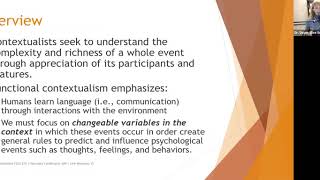
This episode was pre recorded as part of a live continuing education webinar on demand. CEUs are still available for this presentation through all CEUs register@allceus.com counselortoolbox. I'd like to welcome everybody today's presentation we're continuing the Journey to Recovery series. We've got a few more episodes to go in this series. Today we're going to be talking about developing meaning and purpose with acceptance and commitment therapy skills. And a lot of what ACT involves is looking at developing acceptance of what's going on and choosing our behaviors to help us work towards that rich and meaningful life so our behaviors have meaning and purpose instead of just kind of flopping around out there. So we're going to go over the goal of ACT. Talk about destructive normality, experiential avoidance, therapeutic interventions, etc. As we go through this. So why do we care? Well, Kabat Zinn said you can't stop the waves, but you can learn to surf. So we can't stop bad things from happening. We can't. And we probably wouldn't want to stop unpleasant emotions because if we remove those, then you can't have the happy too. You have to have. You kind of have to have both. So we do want to help people learn how to manage those emotions by distracting people's ourselves from distress. It's akin to constantly running away from our shadow. You know, we can't. It's. It's attached to us. In the attempt to control the negative or to run away from that shadow, you're at a loss for control. In other situations, you're just kind of running wildly. So instead of trying to work towards something, you're always expending your energy running away from something. And that's a semantic difference that I really want to drive home with a lot of clients when we begin this activity. I really want them to embrace the concept of instead of recovering from addiction or depression or whatever, what are you working towards? You're working towards being happy. And how is that different? Well, if you eliminate something negative, if you eliminate a unpleasant behavior, for example, if you're talking about a child or a dog or something, if you eliminate that behavior, okay, that behavior is gone, but there's nothing to replace it. So the person may be left without resources. And one of the principles in behavior modification is you don't want to just punish behavior because if all you do is punish and eliminate that organism's repertoire, then eventually they're going to have no behaviors left to use. So we want to encourage the positive. And when you're doing the positive, then the negative, you know, when you're happy, then there's less room for unpleasant things. So it balances, kind of balances itself out the same end goal. We want to be happy, but instead of just removing the unpleasant, we want to add the pleasant and help people use their energy to move towards that. So the ACT acronym stands for accept your reactions and be present. So that whole mindfulness thing and radical acceptance of it is what it is. And I'm going to say that a lot today. I know I usually say it a lot, but I'll say it a lot more. It is what it is. So being present, accepting, making room for that distress, and saying, okay, this is really unpleasant and I'm not liking it right now, then you choose a valued direction, and that choice is helping people move toward what's important to their rich and meaningful life. And then take action. I mean, I can choose what I want for dinner tonight, but if I don't take action and get up and either make it or order it, then I'm never going to get my belly full. So you can think about things, but then you've also got to do them. So when we're talking about acceptance and commitment therapy, one of the things we want to realize is that it's based partly in contextualism and contextualists. And I don't focus on this with clients. This is just more for the therapists out there and to give you a little bit of background. But contextualists seek to understand the complexity and richness of a whole event through appreciation of its participants and features. Well, this kind of throws me back to something that we've talked about many, many times so far, and cognitive processing therapy. When we're looking at a situation in cpt, one of the things we ask is, what are the facts for and against the situation? What else is involved in the situation? Am I just focusing on one aspect, or am I focusing on the whole aspect? What other things am I not considering that might have contributed to this situation? So cognitive processing therapy really helps people appreciate the participants and features of a particular situation in a particular context. Because what may be a healthy response in one context may be an unhelpful response in another. Functional contextualism emphasizes that we learn language through interactions with the environment. So as we interact, and I told y' all before, I'm terrified of roller coasters. When I get on a roller coaster, I have this feeling, this rush, this some people may label exhilaration. I label it Terror, but that is the word that I've assigned to it. So in order to choose behaviors, in order to choose actions and reactions that move me toward a rich and meaningful life, I want to figure out how do I want to spend my energy. So I want to focus on what they call changeable variables in context. So in this context of being at the amusement park, you know, what are the changeable variables that I can focus on so I feel less distressed? You know, one of the changeable variables would be not riding the roller coaster. But so we want to focus on what's going on in this particular context with this particular person. Because every situation, the environment, the people, the time of day, what you bring to it that day makes the situation. The goal of act is to create a rich and meaningful life, hence creating meaning with it, while accepting that pain inevitably goes with it. And this is emotional pain. This is physical pain. When we love things and they go away, it hurts. We get depressed. When we have a bad day, it hurts, it stinks. But we appreciate the good days even more because there's that contrast. And we accept that there are going to be hiccups and bumps in the road. So it's important for people to ask, you know, all right, you know, when I'm looking at my life, when I'm evaluating in the big scheme of things, do I have a rich and meaningful life? Who is important in this life? And that can be human people and that can be animal people, you know, but the who's who is it that I envision as being important in my life? You know, I can't imagine my life without my critters. That's just one of those things. Or my kids or, you know, my family. But that goes in the who and what is important to me. Then we move on to values, things and experiences. And I have other videos on the YouTube channel that go through identifying all of these things and go through ACT in depth. We're going to really talk more on a meta concept level today. But what is important in terms of values, things and experiences? So when I envision my rich and meaningful life, if I envision what it would look like if I were happy, you know, that's another way to put it. Where do I live? What do I do from day to day? Who do I hang out with? What things are important to me? What types of activities do I do? How do I behave? You know, those are all things. Like patience is one of those values that's important to me in a rich and meaningful life. And it's not one that's one of my strongest suits right now. You know, patience is always something that I've struggled with a little bit, But I know in a rich and meaningful life, patience is one of those values. So when I accept something that's going on, I can choose to think about. Okay. You know, I could be impatient, I could be irritable. I could lash out. There's a lot of things I could do. Or I can choose that behavior that is more in line with the me and the reality that I want to work towards of being patient. So we want to constantly have clients think about, you know, that jug of water that I keep talking about. We have that jug of water that is our energy, and every time we do something, we're taking a little bit out of that jug. You only have so much energy. You can use it for whatever you want. If you want to get irritable and cranky and yell at people and whatever, Sure. I mean, you're gonna be pouring out the water towards that, or you can use that same water for patients and to do some other activity that's going to be more important and help you move towards your goals. Act as a good abbreviation, because this therapy is about taking effective action guided by our deepest values in which we are fully present and engaged. And in some ways, in recovery circles, we have a term, fake it till you make it. And that kind of goes with Act 2 in some ways, because we are accepting life as it is, and then we are choosing the happiness path. And even if you are not feeling happy right now, you are choosing activities. If I were happy or. Or in order to get happy, in order to improve the next moment, what can I do? So in act, the first concept or the first step is mindfulness. We've got to know how we feel and what this context is. So we consciously bring our awareness to the here and now experience with openness, interest, and receptiveness. Well, that's a lot. And most of us, not just clients, but most of us, are not very mindful. Our society, we tend to be very pressured and hurried and don't pay attention a lot. We tend to be on autopilot. So in order to be mindful, we have to live in the present moment. Think about your drive home yesterday. Were you living in the present moment? Were you focusing on your drive and the clouds and the animals on the power or the birds on the power line and whatever else? Or were you thinking about work and what you were going to cook for dinner and, you know, the past and the Future, even if it's the proximal past and future, you know what you're going to do in 20 minutes, that's still the future. That's not the present. So mindfulness means getting into the present moment. I encourage clients to start identifying times each day where they can practice mindfulness. We do. I have what I call mealtime mindfulness. So that's generally three times a day. When they sit down to eat, they check in with themselves and go, how am I doing? How do I feel? What do I need right now? What's going on in this situation? And am I using my energy to move in a positive direction, move towards my rich and meaningful life? I also encourage them to take other times during the day, and I usually suggest they start with times like when they're driving, because that's a perfect time to be mindful, to focus on what they're doing right then. And not everybody's visual. Not everybody wants to look at the clouds and the birds and stuff, turn on the radio. You know, you can sing along with the radio and be very mindful of that song that you're singing and how you're feeling in that very moment. But encouraging them to be mindful and live in the present moment instead of always in the past or in the future. Because, you know, another one of those sayings is when you've got one leg in the past and one leg in the future, all you can do is crap on the present. So we want to pay attention to what's going on in the present and get off autopilot so we can make better choices. We want to engage fully in what we're doing rather than getting lost in our thoughts. So when people eat, encourage them to practice mindful eating. What does that mean? That means tasting their food. You know, when my son was little, he had reflux, and, you know, somebody constantly had to be holding him for a while until we discovered the magic of Zantac. But so I would, when I would start to eat, you know, I would, like, wolf everything down, be finished with my dinner in 10 minutes. And then I could take the baby again and developed that habit where I was just like, yeah, I'll taste dinner later. You know, whatever. I'm full now. It's good. That's not mindful eating. We want people to focus on what they're eating. Smell it, taste it. Now, not everybody's willing to chew 24 times or whatever it is that you're supposed to chew. I find that to be a little bit stifling or Whatever. To chew that many times or to focus on counting. But I do try to focus on tasting what spices am I tasting? Am I tasting the garlic or the oregano or the basil, or what is it that I'm tasting in this food? Or what does it taste like? So focusing on what I'm eating. Smell. That's the other thing when I drink coffee, smelling it. I love the smell of coffee, and I'm really particular about the smell. And if it's old coffee, I'm not going to drink it because it smells. Smells icky, but I'm aware of it. Allowing your feelings to be as they are rather than trying to control them. So that's the other facet of mindfulness. Instead of saying, all right, I'm angry right now, I really should be happier, or I should let it go. No shoulds. Quit shoulding yourself. What we want to do is say, I'm angry or I'm unhappy. Okay, I'm going to accept that. Now. What are my choices to improve the next moment, to move me toward that meaningful life, to use my energy with purpose instead of just randomly. Mindfulness doesn't require meditation, so it's important to help clients differentiate between mindfulness and meditation. You don't have to meditate in order to be mindful. You just have to become aware. One of my most favorite activities, I love teaching mindfulness, and you can do it anywhere, is to have people walk into a room. Preferably not one that they're used to being in, but walk into a room for five minutes and look around and pay attention to everything that they see, hear, smell, yada, yada, and then walk out. Give them another five minutes to write down everything they remember seeing, hearing, smelling, yada, yada, and then have everybody in the group compare notes. And generally, people notice different things. Obviously, you want to put them in a complex environment. When I was teaching at the university, we would go outside into the plaza so they would see people. There's trees, there's sounds, there's the breeze, there's all kinds of stuff. But encouraging people to practice this and be aware of how they're feeling, and I would want them to focus, to identify also during that period, how were they feeling? Were they feeling impatient because they thought this activity was stupid, or were they feeling excited because this was something that was fun to do and being aware of how they can address it. Mindfulness. Andrea points out that there's chocolate tasting, evidently, at Hershey World, but there's also, you know, wine tasting. If you know. Obviously, if you don't have issues with alcohol, but any kind of tasting that you do helps you pay attention to the different flavors and aftertastes and overtones and whatever else you call them. I don't know, food. You can do it with cheese, you can do it with chocolate. And if you've ever gotten chocolate at Easter, you know, especially if you get it from different manufacturers, chocolate tastes very different. There's good chocolate, and then there's really bad chocolate. Yeah, I know. What a concept. Bad chocolate there is. So understanding what you like. Some people love dark chocolate, some people like milk chocolate. Honing your palate in and, you know, ideally not focusing all your mindfulness activities on food, but encouraging people to be more aware of things. Another aspect or activity you can do for mindfulness, if your clients are good with it. You remember back when you were younger, you may have gone to a haunted house or one of those things where they had these boxes and it had a circle cut in it. You can get boxes at Sam's Club or Costco or anything so you don't have to buy them, cut a circle in it, and then put something in that box. And people have to reach in and touch it and feel and try to figure out what it is. Being present in the moment, but also being present with their feelings about how they feel about reaching into a dark box. And each time, you don't know if it's going to be something gross and slimy. Mindfulness skills are divided into four subsets. Acceptance, cognitive diffusion, contact with the present moment, and the observing self. So the first part is acceptance. And that is so hard for most people because we like to should, but we accept or we encourage clients to just start accepting it is what it is. I feel how I feel. The situation is how it is. There's. There may be ways I can improve the next moment, but in this moment, this is how it is. Okay? So instead of struggling with it, you know, like if you're in quicksand, instead of going, oh my gosh, I'm in quicksand and freaking out, you would say, all right, I'm in quicksand. This is. This is bad. This is probably not a good thing. Acceptance of the moment. And then you start figuring out, okay, how can I get out of the quicksand? And choosing behaviors from there. ACT can be used in a wide range of clinical populations, and it allows the therapist to create and individualize their own mindful techniques or even co create them with clients. And this is really empowering to a lot of clients to start to Become aware of. And it's a huge change encouraging them to become aware, because then they can start identifying before they get angry or at the beginning of when they're angry, when normally they wouldn't have noticed until they just had an explosion. And then they look back and they're like, yeah, I guess I was getting a little irritable. This helps them identify proactively and be aware of how they're feeling so they can mitigate it before it becomes a problem. Have clients identify particular situations where they may often be on autopilot and then have an unpleasant outcome. For example, mindless eating in the evening. A lot of people do that. They come home, they eat dinner, and then they just kind of graze the rest of the night. So how could somebody become more mindful about eating? Eating for not only the taste, but paying attention to why are they eating? Acceptance and commitment therapy does not have symptom reduction as a goal. Oh, my gosh. That's that whole paradigm shift that I talked about. We're not removing. We're not running from the shadow. We are moving towards the sun. The ongoing attempt to get rid of symptoms creates a clinical disorder. Because when we label our private experience, this unpleasantness, this anger, this anxiety as a symptom, as something pathological, then we struggle with it. I don't want it. You know, it's bad, it's icky. I want to get rid of it. One of the things that act helps us recognize is all it is, is a feeling state. It's a physiological reaction to a current experience. That's all it is. And in reality, if you think about it, and our brain wants us to survive. So when we feel anxious, you know, yes, it's unpleasant, but when we feel anxious or angry, it's our brain telling us there might be a threat. You probably need to take a look around and see if there's a problem. Great. You know, thank you, brain, for letting me know that there might be a problem. Even if it's not accurate, at least our brain was helping us, trying to help us survive. Okay, so now we have this anxiety. Feeling we feel this way tells us we need to do something. It doesn't tell us to hold on to it. It doesn't tell us to try to rationalize it. It tells us to do something to improve the next moment. The aim in acceptance and commitment therapy is to transform relationships with difficult thoughts and feelings to perceive them as harmless, although uncomfortable and transient psychological events. If we don't feed anxiety, if we get anxious about something again, that's the brain going, fire alarm. There might be a problem. Take a look. Okay. That's all it is. That is our body secreting those neurochemicals that tell us to prepare to fight or flee doesn't mean we have to fight or flee. And if we don't feed it, if we don't dwell on those things and have all these negative thoughts, if we get into our rational mind or our wise mind, we can choose the next step, which then those feelings start to go away. When we start to feel that there's no threat anymore, then those feelings go away. If you don't feed anxiety, it generally goes away in about 10 minutes. If you don't feed anger, it generally dissipates in about 10 minutes. ACT assumes that psychological processes of the normal human mind are destructive and create suffering for us all sooner or later. And the root of this suffering is human language itself. Because we create our memories and our perceptions and our schemas through analyzing, comparing, evaluating, planning, remembering and visualizing things that go on. Now back to my roller coaster. You know, some people see it as an exhilarating, exciting, fun experience, and that's how they've labeled it. I see it as a death trap. That's how I've labeled it. So when I envision it, you know, obviously I'm envisioning worst case scenarios. So one of the things with destructive normality is the way we interpret things. Another semantic issue that we have is the I have or I am step. When we say I am stupid, you are stupid, or you are a bad boy that tells somebody that they as a person or we as a person are bad people. Instead of I made a bad choice. One of the things that keeps us stuck in feeling unhappy. And when we feel unhappy, what do we do? We frantically try to make it better. We frantically fight with it. Like that person in quicksand. Remember that jug of water? The more you fight with that quicksand, the more you fight with that unpleasant feeling, the more water you're dumping out and you're still not moving towards your happy goals. You're stuck and you're actually probably getting stucker. So human language sets us up for a struggle with our thoughts and feelings through experiential avoidance. We feel a feeling, a problem, anxiety, anger, that's a problem. I don't want it, I don't want to feel this way. So I want to figure out how to get rid of it or avoid it completely. I'm just, you know, going to stick my fingers in my ears, you Know little monkeys, see no evil, hear no evil, speak no evil. Well, that doesn't generally make the problem go away. The more time and energy we spend trying to avoid or get rid of unwanted experiences, unwanted feelings, the more we're likely to suffer quicksand and get further and further stuck in addiction, anxiety, depression. So the ACT interventions focus around two main processes. Developing acceptance of these unwanted feelings or private experiences which are out of our personal control. You know, again, this is like a faulty fire alarm that goes off, you know, more often than it should. It's going off and going. There might be a threat. Okay, so we want to help people develop acceptance of that faulty fire alarm and go, okay, it's going off again. Let me see if I should check and see if there's really a problem. Once you've accepted the fact that you may be anxious sometimes and you may get angry sometimes, and that's part of living a rich life, you know, it's not possible just to feel happy all the time. So you're going to feel lots of different things, and then commit themselves to choosing actions that move them toward their valued life. So the first step is confronting the agenda. We want to help clients undermine, if we can, their sense of emotional control. Have them identify the ways they've tried to get rid of or avoid unwanted, private experiences. And in the book they call creative hopelessness. When you are anxious and you drank, for example, did this reduce your symptoms in the long term? No, probably not. As soon as you sobered up, you were probably anxious again. What did this strategy cost you in terms of time, energy, health, vitality, and relationships? You know, again, you know, if you were anxious or you've had a bad day and you drink, or you're depressed and you drink, yeah, it may make it go away in the short term, but what are the long term costs? And did it bring you closer to the life you want? Or was it just, to use a different phrase, spitting in the wind? And likely it did not. These steps people were taking did not move them closer to the life they wanted or they wouldn't be in our office. Help clients see that control is the problem, not the solution. And this is a challenging thing for people to understand. Clean discomfort is accepting an emotion as it is, and, you know, recognizing that maybe you got a diagnosis back from your tests and that came back and you had cancer, okay, that is devastating. You got that. And then this is a natural level of physical and emotional discomfort. If we try to avoid the devastation or pretend it's not happening or run from it, then it becomes dirty discomfort because we're struggling with it. Clean discomfort is acknowledging the emotion, feeling it, making room for it and letting it go. You know, we feel this way now. What can we do to change the situation, to improve the next moment, to help us work towards our rich and meaningful life? You get a diagnosis of cancer and it's devastating, okay, Accepting that, that feeling, holding, you know, embracing it in the moment and going, this is how I feel now. What am I going to do? Am I going to go to chemo? Am I going to, you know, am I going to go drink and pretend it's not happening? Am I going to go, you know, do something else that's unhealthy or unhelpful? Or am I going to choose to go to chemo because there's a good prognosis that if I do, then I'll be able to spend time with my family doing the things I want for the next 20 or 30 years. So encouraging people is kind of practicing the pause, if you will, accepting the feeling and then going, okay, instead of trying to avoid it and run from it, let's figure out what to do to deal with it. Six core principles of act diffusion. Helping people separate from their emotions a little bit. So they are not their emotions. They are having an emotion. They are not their thoughts. They are having thoughts. Acceptance, contact with the present moment, the observing self, values and committed action. So we've gone through acceptance. We've talked about contact with the present moment and being aware of the entire situation. Cognitive diffusion means learning to perceive thoughts, images and memories as bits of language and pictures, as opposed to what they can appear to be as threatening events or objective truths. What we see is just an image, and it doesn't have to be scary going to get a shot. It doesn't have to hurt. You know, that's just how we are perceiving this. When the rain starts coming in, you see those big clouds? It doesn't mean it's necessarily going to rain. The rain is threatening, but it doesn't mean that it's necessarily going to rain. All we're seeing is clouds in the sky. We don't know what's going to happen in 30 seconds or 30 minutes. Cognitive diffusion means stepping back and recognizing that thoughts are just transient events. We have these thoughts, they come and they go. And then we want to dare to separate ourselves from our thoughts and fears, to step back and go, okay, I don't have to get stuck in this feeling right now. So fears fusion. Feeling that we are I am bad. I am stupid. I am terrified. If we get stuck in that, then it's hard to get rid of it because it's part of who we are. I am an addict. I am depressed. I am. Excessive goals can keep people hooked on to their. To their feelings and keep them stuck. If people's goals are too big or they lack the skills or resources, then they're going to constantly be hitting that frustration with failure. Avoidance of discomfort is another thing that keeps us stuck if we're unwilling to acknowledge it and deal with it. Yes, you got this devastating diagnosis. You got to deal with it now. You can't just pretend it didn't happen. Well, you can, but it's not going to help. And remoteness from values, when we're doing things that are not helping us move towards a rich and meaningful life, then it's generally not in connection with our values and the things that are important to us. So what do we do when people feel an unpleasant emotion, that unpleasant, private event, when they feel unhappy? The antidote is dare diffusion. Have people say, I'm having the thought that this is the worst thing in the world. I am having the thought that I could die. I am having the thought that with addictions, I am having the thought that I. I have to have a cigarette. I'm having the thought that. You get my point? For feelings. And you can go through this with clients and things that they feel like, thoughts that they think are real, thoughts that they think have to happen. You know, I am having the thought that. And encourage them to start using that instead of saying, I am or it is. I am having the thought for feelings. I am having feelings of, you know, I am not necessarily depressed. I am having depressed feelings. I am having feelings of anxiety right now. Okay, well, I'm having feelings of anxiety. I can put those feelings over here for right now, or I can accept what they are and figure out how to deal with them, to dissipate them. My behaviors were, you know, sometimes people make poor choices. It doesn't mean they're a bad person. My behaviors were unfortunate. My behaviors were hurtful. Doesn't mean I am a hurtful person or I am a bad person. And this is one of those things that we talk a lot about in addiction recovery, because a lot of times when people sober up, they're looking back over choices they made going, oh, boy, I made some really bad choices. And I really want them to embrace the belief that they are a good person. They made some bad choices, but they are a good person. So Helping them unhook from thoughts, feelings and behaviors, acceptance of the discomfort. You know, I may be having the thought that this is devastating or this is the worst thing in the world. Okay, well, I need to accept that discomfort. I'm having that thought. It's causing feelings. All right, let me accept this discomfort. Instead of trying to run frantically, think about getting a car stuck in the mud. You know, if somebody gets stuck in the mud, if their first reaction is to try to hit the gas, what's going to happen? They're going to get stuck. So they need to accept that they're stuck in the mud, accept that they're in a bad situation, and then set realistic goals to figure out how to get out of the mud. Generally, that means finding a stick or something to get traction with and embracing values. So those goals that you set for, you know, moving forward, for getting out of the mud, if you will, those goals are going to embrace your values. Your values are to be able to live a rich and meaningful life, spend time with your family, yada, yada. Well, you can't do that if you're stuck in the jungle, in your jeep, in the mud. So you need to get out of the mud so that getting out of the mud helps you move toward those things that are important and meaningful to you. So encourage clients to put this on index cards or on their mobile device so they can remember that, to separate themselves from their thoughts, feelings and behaviors because they are a good person. And to remember that they can accept discomfort. And you can use a lot of distress tolerance skills from dialectical behavior therapy to help people ride the wave, deal with this, the discomfort in the moment, until they can get into their wise mind, which is generally about 10 minutes or so, you know that that feeling comes in, it crests, and it goes out. If they don't feed it, then they can set realistic goals that embrace their values and helping helping them move more forward. So one activity that we do just to kind of drive this home is I have people think of a negative self judgment, such as I am stupid. Think about it, believe it as much as they can, and notice how they feel. If they say I am stupid or I am ugly or I am incompetent or whatever it is. If we keep telling ourselves that we feel pretty bad and most of our clients, and if not most of the people in the world have a lot of really negative self judgment, they have a super critical inner voice, we need to make that inner voice go away. That inner voice is the thought. It is not reality. It's just a thought. So instead of saying I am stupid and encouraging people to correct themselves when they do this, when they say, oh, I'm such an idiot, no, I am having the thought that I am an idiot. It helps change the dialogue a little bit. So instead of saying I am stupid, I'm having the thought that I'm stupid. When people start to think about it this way, then they don't embrace it and they don't feel. As attached to it. Other diffusion techniques treating the mind as an external event, almost as a separate person. Especially if it's that really critical voice in your head. You know, my feelings, my thoughts, that's over here, you know, it's a separate person. I'm going to separate from that. I am who I am. It is what it is right now. Thoughts are not causes. It is possible to think a thought and do X who's in charge here? Treat thoughts as bullies, telling them, you know, I'm not listening to you right now. You are being ugly. You're being a bully. Reminding the client or encouraging the client to remind themselves that they are in charge. Sometimes our inner voice has something to say that's worthwhile. So the other diffusion technique may be to say, okay, you're right. Now what? That's kind of a twist on it is what it is. Now what. The now what is Helping people move to acceptance and making room for unpleasant feelings so you recognize how you feel and it's unpleasant. Now what? Allowing these feelings to come and go without struggling with them or giving them undue attention. Remembering that thoughts and feelings don't have to lead to action. I can have the thought that I have to have a drink. I can have the thought that I want to yell and scream, but it doesn't mean I have to do it. It's just a thought. Identify the problem when we battle with our inner experience, when we battle with the anxiety. I shouldn't feel anxious. I wish I didn't feel anxious. Well, we're not going to get anywhere. What's causing that anxiety? Identify the problem and then try to figure out how to address it. You know, parents whose kids go out on dates or whatever and they're driving themselves. I have a son who is getting his driver's license and it's a little bit terrifying. Now I could struggle with that terror or I could recognize what I'm terrified about and figure out how to address that aside from never letting em drive. But I digress. We want to explore with clients the effects of avoidance and how it has or hasn't worked in their life. Because generally avoidance works really well in the short term. And, you know, you can push it down, but eventually it comes back to bite you in the butt. Define the problem. What you struggle against can be barriers towards heading in the right direction. So we want to define the problem. And then, in line with the serenity prayer, encouraging people to change what they can and learn how to accept the parts that they can't. Remember when we talked about locus of control, in every situation, there are things we can change and things that are totally out of our control. But recognizing which is which and addressing the things we can change is important in acceptance and commitment therapy. Thoughts, feelings and behaviors are interconnected. But what we're trying to do is help people distance from them so they don't feel pulled or controlled by those feelings, by those feelings and thoughts, helping them recognize that, yes, when you're having unhappy thoughts or unpleasant thoughts, they can lead to unpleasant feelings and behaviors, no doubt when you're having pleasant ones, vice versa. But recognizing that these are things you're having, the person is different. We want to help people bring full awareness to the here and now with openness, interest, receptiveness, focusing on and engaging fully in whatever they're doing. How do I feel? What am I thinking? What physical sensations am I experiencing? And encourage people to describe the environment, and that helps them get grounded. And this is what I have clients do at their mealtime mindfulness sessions. Go through these questions and yes, I have them describe the environment because it makes them stop and look around. If they're in the cafeteria at work, they're going to look around and maybe they're going to see John, who works two floors up that they haven't seen in, you know, three months or something. Or they realize that Carol's pregnant and oh my gosh, where did that come from? Encouraging people to be more aware because that'll help them start developing more social connections as well. Moving on to the observing self, accessing a continuity of conscious that is unchanging, ever present, and impervious to harm. From this perspective, you know, the fly on the wall, it's possible to experience directly that you are not your thoughts, feelings, memories, urges, sensations, images, roles, or physical body. You are you. You are an essence, if you will. Because these things, your urges, memories, sensations, all of these things change constantly and are peripheral aspects of the essence of you. Having clients think about, you know, some science fiction shows where they have a person's essence as this kind of glowing energy ball. That's one of the things we kind of talk about and then all this other stuff is in the periphery. Help people clarify their values, because in order to choose which direction they're going, they need to know what's more important. So is power and getting even more important, or is patience and having energy to work towards their goals and persistence in their goals more important? You know, some people have really strong values and we want to help them look at what's important and why, what sort of person they want to be and what they want to stand for in this life. A lack of values or confusion about goals with values and underlie the inability to be psychologically flex, psychologically flexible. If you don't know where you're going, it's kind of like getting in the car and going on vacation without having any clue where you're going. It's like, do I turn left, do I turn right? What do I do? And if you think of your energy like the gas in the car, you know, if you keep turning left, you're going to go around in circles and spend a lot of energy. The next step is to choose a direction. So they've been mindful, they've gotten aware of what's going on, they've accepted what is. They've unhooked from their feelings for the moment. Now they're going to choose a direction. What is the next thing I need to do to keep me moving toward my destination of a rich and meaningful life? Have them identify their motivating values. You know, this direction that I want to go, what are the values that keep me going there? Their patience, persistence, loyalty, family, values, whatever it is. And encourage them to establish a willingness to regain control of life, not necessarily just to control thoughts and feelings. Thoughts and feelings are going to come and go, but they can choose the next step in their direction and you can plot this out like a map. And those of us who are really old remember Triple A, and we used to get something called triptychs before we would go on vacation because GPS didn't exist. And it would tell you the route along the way that you would go. It would tell you where the construction was and all of those things. So you had a route planned out to get you there the most efficient way. This is what we're helping people see. Their destination is their rich and meaningful life. The path along the way they need to choose. And sometimes when they feel those unpleasant feelings, when they have those unpleasant personal experiences, that's like hitting a traffic jam and they've got to figure out what to do. Should they be patient and wait through the slow traffic, or is there a workaround? But if they go on that workaround, is it going to keep them moving forward, or are they going to end up taking a wrong turn and going back? If they just, like, randomly get off at the next exit and start driving, which is what I would probably do because I have no sense of direction, which is why I love gps, then they set goals guided by their values and take effective action to achieve them. So maybe they get passed over for a job promotion or a relationship ends and they're devastated. And it feels really awful right now. Okay, it feels awful now. What's important in your rich and meaningful life? And what kind of person do you want to be? So how can we move? How can you use your energy to move towards that? How can you write your narrative to move towards that? So you want to look at the matrix, if you will. In the middle is the here and now. This is how I feel. It is what it is. Over to the right is you're moving towards your goals and values. So the things that I can do right now that are. That move me toward my goals and values, if I am doing this, it is helping me move towards my goals and values. Instead of reacting on autopilot, what else could I do? And who else could I consult? Could I call a friend? Could I start applying for new jobs? Could I, you know, get on a dating app, whatever it is, you know, what things can I do that would help me move towards what I envision as a rich and meaningful life? And those are things, those are behaviors. But we also want to consider what am I thinking or emotionally experiencing that's moving me towards my goals and values. If I'm having thoughts that I'm useless and I'm a loser and nobody will ever love me and all these other things, that's probably not moving me towards a rich and meaningful life with important people and, you know, healthy relationships and all that kind of stuff. So looking at those thoughts and addressing those, and it doesn't mean just saying, okay, I'm not going to think those. Obviously we want to help people process. Why are they having the feeling that they're going to be alone forever? Why are they having this? Where's this anxiety coming from? Because they are alone at this moment. We want to help them process this. I'm not saying we just want to say, you know, ignore it. But we do want to help people recognize, you know, other thoughts that they're having that may help them move towards their goals. And values like, you know, I've been through things like this before. I can get through this. Or I'm better off now anyway. I can apply for other jobs. Whatever they're thinking, any positive thoughts they're having that help them move towards what's important and any accomplishments, successes, and things in their life right now that make them happy, what is going right in their life. And if you think back to, I think it was KIELBASA in the 70s, I created the theory of hardiness, commitment, control and challenge. And she identified the fact that when anything's going on in our life, you know, there can be unpleasant things, but generally, you know, context, our whole life is not in disarray. There's this aspect here that's terrible, but other things may be going well. People who are displaced after one of the hurricanes or. And, heaven forbid, lost their homes, that's devastating. That's awful. And that part is really challenging and can make them angry and stressed and all kinds of dysphoric emotions. However, many of them also are in a shelter where they were able to bring their pets and their children, and they're together. So if that part is important to them, well, then they've got something. It's not ideal, but encouraging them to focus on the totality of the situation, not just the negative. We don't want to minimize the negative because that's devastating. And I don't want to negate their feelings, but having them figure out and how to weigh the balance, you know, do they want to focus on all the things that are going wrong, or do they want to focus on their energy, on all the things that they still have left that are going right? Their choice. So the goal of ACT is to create rich and meaningful lives while accepting that pain inevitably goes with it. We want to. My daughter and I do a lot of animal rescue, and we bring in fosters and we love them, and then we adopt them out. And that's one of the things that, you know, I debated doing, but it. I made the choice, and I think it really helped her because she learned how to develop attachments and then also say goodbye. She was able to love a little life and save it, but also she had to say goodbye to it, and that was. That was painful. So she learned how to incorporate that, and that's important to her. Animal rescue and all that stuff is really important to her. Being aware and present in the moment is really important to understand why we feel what we feel. If we're on autopilot, then it seems like relapses whether it's addiction or behavioral health, come from out of the blue. And if we're aware in the present moment of what's going on, we can be more aware of how we're feeling and vulnerabilities we may have and address things before they become a big issue. If you get a cut on your arm, you know you're not going to just let it stay dirty and fester. You're going to treat it before it becomes a big problem. Same thing with mindfulness. If we're aware, then we notice when we get cuts in our heart and we can start addressing them. Destructive normality is the psychological process of a normal human mind that can be destructive and create suffering because it says, I am helpless or this is depressing, not have it not. I'm having the thought that this is depressing. But it is. And if it is, then it is what it is. So accepting and separating from that, actions designed to avoid the experience in the present can contribute to unhappiness because we're avoiding it. So we're often running from it, like running from our shadow. And it takes away the energy. It uses up energy we could use to go to spend on something meaningful, but it also often ends us, ends up leading us somewhere where we don't want to go because we're not thinking, we're just trying to escape or avoid. Therapeutic interventions focus around two main processes, helping people develop acceptance of these unwanted private experiences that are out of their control. Feelings are feelings, and they're going to happen. They're not good, they're not bad, they just are. Now, they may tell you something, but they just are. They're feelings. So once people start accepting this instead of fighting with it, you know, if you wake up in the morning and you're just, you got up on the wrong side of the bed and you're grumpy that day, and we've all had those days, you know, you didn't sleep well, whatever. Accepting that instead of fighting with it and trying to avoid and pretend you're not grumpy, accepting it and then going, okay, why? Why do I feel this way? What can I do to improve the next moment? Goes a lot easier. And commitment and action toward living a valued life. So once you accept those unwanted experiences that they are, then you commit yourself to taking action to improve the next moment. And that goes back to that CBT triangle. You know, you accept what is in the moment. But just because you're feeling a feeling or thinking a thought doesn't mean you have to act on that behavior. You feel it, you accept it, then you make a choice about which direction you want to go. And if you choose thoughts or behaviors that are going to move you towards your goals, hopefully that will create that triangle of happiness, if you will. So you're going to start feeling happy or you're going to start having more empowered thoughts and you're going to start doing things that you find are meaningful and purposeful. Helping people confront the agenda to administer to eliminate distress. Help them explore their sources of distress and explore prior attempts at removing their distress and the effectiveness of those things. Because their agenda when they come into counseling is usually to control this feeling and they want you to make the depression go away. Well, what are we going to replace it with and what have you done in the past? How effective has it been and what might we try? And finally, the six core principles of act. Diffusion. Separating self from feelings and experience so you don't feel like you're being controlled by them. Acceptance of what is contact with the present moment. Using mindfulness. Observing the situation. That's kind of like that wise mind thought. Being the fly on the wall who's just kind of taking everything in and going, all right, here's what's going on. Identification of values that will guide your actions and then choosing an action that helps you move towards a rich and meaningful life. Okay, there are a couple things that I didn't see or that I didn't get to somebody with a narcissistic personality. You know, again, they, I'm sure they have a rich and meaningful life. Obviously this is more to deal with emotional, more to deal with feelings. You're probably not going to be super effective with a lot of the PD symptoms. Now, somebody with borderline personality disorder might be able to examine a lot of their emotional dysregulation using the ACT principles and help identify what's purposeful and meaningful in their life. And yeah, if somebody has panic disorder, you're not going to just throw them into a situation that causes them panic, like being around spiders or wasps or whatever it is and go, okay, I want you to accept your discomfort. No, you're going to go with something like systematic desensitization, where you start out with, okay, I want you to imagine being in the same room where a wasp is flying around now, you know, accept, make room for that discomfort and then figure out what you're going to do. And then you would use the act, the psychological flexibility activities, to help them develop skills to de escalate and then work them through the desensitization process. Alrighty everybody. Have an amazing day. Day. Yeah, it's Tuesday, not Thursday, and if you want to come to the discussion group at this time tomorrow, then I'd love to have you. Otherwise, I will see you on Thursday. If this podcast helps you help your clients or yourself, please support us by purchasing your ceus@allce.com or getting your agency to sponsor an episode. A direct link to the on demand CEUs for this podcast is@allce.com podcast that's allce.com podcastceus to sponsor an episode of Counselor Toolbox and reach over 50,000 clinicians per week, go to allce.com sponsor thank you.










