7 Habits for Recovery from Anxiety and Depression
Dr. Dawn-Elise Snipes adapts Stephen Covey's seven habits framework for treating anxiety, depression, and addiction. The webinar walks clinicians through each habit with concrete exercises: crisis planning, SMART goals, motivational interviewing, active listening, and self-care strategies for client recovery.
Chapters
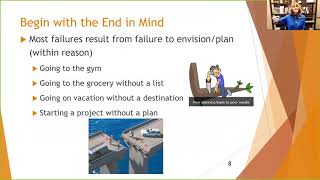
This episode was pre recorded as part of a live continuing education webinar on demand. CEUs are still available for this presentation through all CEUs register@allce.com counselortoolbox. Okay, we're going to go ahead and get started. I'd like to welcome Everybody today's presentation 7 Habits for Effective Recovery. And as you can guess, this is based loosely on seven habits of highly effective people and how they apply to recovery from health and addiction issues. So the first of those seven habits would be to be proactive. And one of the things being proactive means is being responsible. Responsible means acting ahead of time in order to prevent problems. Think of your life as sort of like a vehicle and you want to keep your vehicle in the best working condition that it can be. So you want to do things ahead of time, preventative maintenance on that kind of stuff. So one of the things we want to have our clients answer is what people thinks and activities are important in their life and what is their destination? What is their good orderly direction, if you will, what thoughts, attitudes and self talk can help them move toward that destination? And we're going to look at things that are. We're going to encourage them to identify self talk that's empowering, accepting and compassionate. We also want to have them ask themselves what actions will help them move toward that destination, such as what self care things can they do? How can they build support? Do they need to maybe go to therapy? Or maybe they're in a really unhappy job and they need to look for a new job or a new position in that company. So we want to ask them what things can they do preventatively or to address current stressors to keep things from getting worse and ideally help things start getting better. And what challenges or adversities can they plan for and mitigate, such as illness? We all know we're going to get sick at some point in time. So what can they do to plan for illness? Maybe make sure they have enough sick days saved up. Maybe make sure they have nyquil or decongestants in the medicine cabinet so when they start feeling ill they can medicate that, whatever they need to do. How can they prevent as much as possible financial stresses? They know they're going to have bad days, they're going to get up some days and they're just not going to be on their A game. So what things can they do during those days to cut themselves some slack so they feel a little bit better? You know, they're not going to be able to do what they Would, quote, normally do? So what could they do on those bad days to get through and be able to go, you know what, I made it, people are going to die. So how are they going to handle that? What can they plan for and mitigate? So you know, do they need to have a little extra money set aside so they can travel to be with family? And how do they handle holidays? Holidays are big stressors for a lot of reasons. Not only financial, but also interpersonal reasons. So thinking about those things ahead of time, what can they do to make themselves as strong and healthy and able to handle these challenges as possible? We also want them to look at their recovery. So their life is like their vehicle, but their recovery is like the engine in the vehicle. Without the engine, that vehicle is not going to run. Without recovery, they're not going to be able to work towards happiness, whether it's recovery from depression or anxiety or whatever it is. So I want them to further kind of narrow down what they're looking at and look at what people thinks and activities are important to their recovery, not just their life. And what do they need to do to maintain their happiness, which is what I kind of use as a garbage term for the opposite of their depression or their anxiety or their addiction. How is their recovery important to their overall life goal or destination? Because I mean, recovery is not easy and doing the healthy things aren't always the most fun. So it's important for them to remember on a regular basis, why is this important? Why am I doing this again? And in what ways does their recovery impact the people and things that are important to them? So again, looking at all the reasons, the motivations for continuing to do things that are not necessarily as pleasant sometimes as they would like to do, and in terms of their recovery, what challenges or adversities can they plan for and or mitigate? Some days there's going to be bad days. Sometimes they may run into old friends that trigger bad feelings. So how can they plan for that? How can they mitigate that? What is their crisis response plan? Encourage them to focus on what's within their control. And you know, there are only certain things that we can control. Our thoughts, feelings, reactions, how we care for ourselves and prevent vulnerabilities. But there's a lot of other stuff out there that we can't control, like other people's thoughts, reactions and behaviors. If somebody is mean to you, you can't control that. You can only control how you deal with and react to that. You can't control the weather. You can try to look at the bright side, you can't control traffic. So encouraging people to make a list of things that kind of stress them out and identify which parts are within their control and focus on those, their zone of influence, so to speak, and the things that are not, not in their control. How can they deal with those? One activity I like to do with my clients is to have them imagine a blizzard or a hurricane is coming, depending on what of the country you're in. Ask them what is and is not within their control. You know, you can't control the weather, you can't control the fact that the storm is coming, but you can board up your windows and. Or that's what we do in hurricanes to prevent as much damage to your. To your house. You can make sure that you're stocked up on groceries to make sure that you're not hungry. If you're going to end up being there for eight days, you can make sure the cars are gassed up. There's a lot of stuff you can do for proactively, responsibly in order to reduce stress when that hurricane does come. We want to also look at, in this situation, how can you minimize the distress? Obviously, being prepared is part of it, but other things you can do include, you know, if you're going to be in there. We went through a couple hurricanes, and I had a toddler and an infant. And yeah, that can be kind of challenging. So we had plenty of Elmo videos and we had plenty of games and looking at different things that we could do to kind of minimize the fact the unpleasantness of being without power, Being without air conditioning in Florida was really important to helping us get through it. So it wasn't just the basic necessities of food and shelter. We had to look at how can we make lemonade with this? And how can you maximize the happy and build your reserves? And these are things you want to do ahead of time if you know a hurricane's coming. If you know you're getting ready to go into hurricane season, you know, stocking up ahead of time so you're not running around at the last minute fighting with people over that last loaf of bread. Encourage people to really continue on a daily basis and maybe even on an hourly basis to focus on what are the things that are in your control. Develop skills to help them regulate their emotions, urges, and actions, and choose those that help them move toward happiness. So this can be distress tolerance and problem solving skills. This can be cognitive behavioral interventions. It really depends on your client, but we want to ask them that when you get upset, what do you do that helps you navigate these emotions? And when, when you look back over your life, are there certain situations or conditions that have been there when you've tended to overreact to things? So, you know, if they were exhausted or if they were had taken on too much stuff at work and they were burning the candle at both ends, then they might be able to identify things that need to be taken care of proactively. So if something does come their way, they can prevent it. Encourage them to admit and learn from their mistakes. You know, that's proactive. It's looking at it and going before anybody else says it, I know I screwed up, but I'm going to learn from it and I'm going to move on. And that's the challenge is to help people quit being, beating themselves up over stuff and move on. And I also encourage people to do something I call practice the three finger rule. Whenever they're pointing at somebody else, they've got a thumb and an index finger going out this way, but three fingers are pointing back at them. So in any situation they encounter, whether it's good or bad, encourage them to look at what was their part in it, what were their three fingers? They can control their part. They can't necessarily control this other stuff. ACT stands for Action Changes things. So in this guise of being proactive, asking clients each time they come into your office, whether it's for daily group activities or once a week, what can you take? What action can you take right now to start changing things for the better and have them give you something concrete. When I have clients who are going to meetings or going to groups, one of the things I want to know at the end of every group is what is one thing you got out of this that you can use over the next week? So making them take this information that they've just gotten, mull it around for a second and come up with a little gem, a little kernel of usefulness will help them start applying it, beginning with the end in mind. Most failures result from failure to envision or plan. And I say this within reason because some people like me, we're kind of rigid, we love to plan, and other people are more spontaneous. And planning too much can be kind of a drag. So it's important to figure out how much you need to plan. But there is a certain amount of planning that's necessary. I'll give you an example. I go to the gym a lot of times, I will shower at the gym and come to work. Well, If I don't plan ahead of time and think of what we call mission critical items, I may not remember to pack all the essential things that I need to get dressed to come to work. So it's important to stop, even for something as minor as going to the gym. We did the same thing when my children were younger and we had to pack a diaper bag. You know, you had to go through all the mission critical items, make sure you had diapers, extra pacifiers, bottles, whatever, before you left the house. Otherwise, almost without fail, you would find out that you got there and you were missing something. Another example that people can often relate to is going to the grocery store without a list. And I do this all the time. I'll go to the grocery and I'm like, I'll remember what it is, and I will get out to my car and I will remember the one thing that I forgot to get because I didn't have it on a list, and it wastes a lot of time and energy. Going on vacation without a destination is another kind of more abstract example. You wouldn't take vacation time and go, all right, we got a week off. Where do you want to go? Let's just get in the car. Most people wouldn't. Most people want at least a destination. They don't have to have everything planned out to the minute, but they want a destination. Or in this example of the bridge, starting a project without a plan, you know, they built looks like two really nice pieces of bridge, but they didn't plan it out well enough to have it lined up so that failure to plan resulted in a major catastrophe. So encourage clients to envision in their mind what they can't currently see. So envision what happiness looks like, envision what recovery looks like. Envision what not being depressed looks like. And some of the questions. You can start with a miracle question. If you woke up tomorrow morning and were happy, what would be different, but also what would be the same? This is pulling on that attitude of gratitude and encouraging people to look at the things that are going okay in their lives right now. Another thing that Covey suggests is writing a personal mission statement, which is going to be revisable. Things that were my mission when I was in college obviously changed a lot once I started having children. And now that I own my own business, it's a little bit different what I do, how I do it, and why I do it. But ultimately, we want to look back at our mission statement, just like you would do in a business before you take on a new project before you start down a new venture. Is this helping me get towards what is really important, what I want out of life and what I believe my purpose is? I find clients tend to have a little bit of difficulty with this because it can be either too abstract or too, they can get too far down in the weeds. But it is something you can do. And if you go to Covey's website, the link is in your additional resources in the class, he has some in his community, he has some activities that will walk you through Doing a personal mission statement. Encourage people to plan ahead and set goals. Now reminding them that goals need to be specific. You know, not I'm going to lose weight, it's going to be I'm going to lose 20 pounds, not I am going to be successful. Well, you need to tell me what does successful look like to you? Measurable. So how will anybody on the street that you meet, how will they be able to look at it and know that yes, you've achieved that goal. So you know, with losing weight, obviously you look at either inches or pounds or kilograms. If you are talking about being successful, it's measurable in terms of how do you define success? Is it by your income bracket? Is it by what position you hold? So measurable in terms of if you've gone from being a line staff person to middle management, that's obvious. Progression, achievable. You know, there are some things that you may want to do and they're just not achievable. Losing 60 pounds in two months, not achievable. Becoming like at my age, becoming an astronaut, that's not something that's achievable. Becoming a Grammy award winning singer, not achievable. So encourage people to set these goals that you know, they really actually can achieve. And I'm not saying don't look for the big picture because you know, five, ten years from now, you can accomplish a whole lot of stuff. But let's look at some time limited goals that are in the here and now. You know, what can you do this week and in six months from now, what are you hoping to achieve and how is it helping you move toward your ultimate goals of what's important? And meaningful goals need to be realistic. So you know, again, setting them with a realistic timeframe and something that's achievable and they need to be rewarding. If you are not doing something that makes you happy in some way or you can see the benefit of in some way, you're probably not going to continue doing it. So encourage People to look at their goals and make sure they're rewarding. This is why a lot of New Year's resolutions fail, because people set goals that they're like, well, I'm going to get in shape. And they don't really know why they want to get in shape except for, you know, they want to be healthier or whatever. But they go to the gym, and it kind of hurts, and they don't really enjoy it, and it's not real rewarding. And by the end of February, they're not doing it anymore. It's kind of fallen off. So we want to help people figure out why these goals are rewarding, encourage them to envision reaching that destination on a daily basis. You know, in their mind's eye, see themselves getting in shape, see themselves getting that promotion, and have them keep track of progress toward that destination. And we can even be talking about something as sort of ambiguous as being happy. So having them look at, you know, how many hours today were you happy? Or on a scale of 1 to 5, what was your happiness level today? On an average? And you want to have more three fours and fives and increase that. So you want to have obviously more four and five days as you go on. But even just using a Likert scale, it can help people see incremental progressions, which maintains their. Their motivation. And yes, rewards are really important, because if there's not a reason to do it, I mean, as humans, we do things that are of the most benefit. So what you were doing before had a reward to it. And if what you're trying to do now is not as rewarding, you're probably going to go back to what you were doing before. So we need to help people increase the reward. And really, even as silly as it sounds, even for adults, we need to make sure that reward is frequent, like daily and weekly at first. Because behavior change is hard. Put first things first. Recognize that not doing everything is okay. It's important to look at things and prioritize by practicing what I call mindful discipline. And that's obviously being mindful and checking in and going, is this going to help me move toward my goals, or is this a distraction? Remind yourself why you do the things you do so you can be like, yeah, you know, I'm getting up and I'm going to the gym today because I want to be healthier, because I want to be around for my grandkids, and that's important to me. Okay, so we can see how it connects to your future goals when new opportunities come along, ask yourself, does doing this, whatever this is, get you closer to the things that are most important to you so you don't end up wasting energy going off on a wild goose chase? Organization reduces stress and energy expenditure. So think about it. Do you have time and energy to do it over if you don't do it right the first time? The best example I can give you is outlining and think back into high school English and even college when you were supposed, you were given a topic and you were supposed to write an outline and then you were supposed to write your paper. Well, I always skipped the outline because I thought that was a waste of time. But generally it ended up, ended up taking me more time because I'd write my essay and then I'd have to rework it. So you want to look at, you know, sometimes it takes a little longer to do it the right way, but it takes a lot less time to do it the right way than have to do it twice. Which is where, you know, again, organization comes in and helping you really plan out what's important to do. Remind clients that it's all right to say no or ask for help when, when it's necessary to focus on their highest priorities. So, you know, maybe they're not feeling well right now, maybe they've got some other crisis at work going on, but their family is super important to them and their kids, ball games are super important to them. So maybe they need to say no to a certain project or set a boundary and say, you know what, I'm going to take three hours off and go to my kids game and then I'll be back to work. Now that doesn't always work in every organization, but it's important to encourage people to really look at the decisions they're making and make sure that they're working towards their highest priorities. Practice time management. This is one that we do in my groups a lot because a lot of people think they have to do too much. So I have people list the have to's for an entire week and then we go through and cross off anything that doesn't get them closer to their goals, such as, you know, social media, you know, paying bills. You don't like it, it's not fun, but it keeps the lights on. And for most of us, one of our goals is to have a safe and comfortable living environment. So paying bills is necessary. That gets us closer to our goals. Getting on Facebook or Instagram for three hours a day, not so much. Do we like it? Yeah, maybe. But you know, of the things that we have to do, that's probably one that can be crossed off when things start getting, when time starts getting really tight. Prioritize everything that's left after you've crossed off the things that don't get you closer to your goals. Then look at that list and say, what can I delegate? You know, that's the great thing about having kids. Now my son has just started mowing the lawn, which is awesome. You know, that frees up an extra three hours for me each week. So I'm looking at what can I delegate to other family members because I don't have to do everything, you know, I don't have to do everybody's laundry anymore because they can do their own laundry. Simplify when possible. You know, I've got a lot of stuff going on right now and normally I'm really obsessive about having these meals with three colors on every plate and balanced and yada yada. You know what, last week I went to the grocery store and I bought a bunch of stuff that was basically pre prepared family dinners and stuff that could be made really quickly. Is it something that I feel great about serving my family on a regular basis? No. Is it nutritious and is it going to get us by for this two week period? Yeah. So simplify. You don't need to every day go home and make a seven course meal. You don't need to necessarily do that deep cleaning on the house every single week. The baseboards can go. And then make a plan to balance the tasks with your goals. So you have what's left, your simplified, delegated, prioritized list. You want to look at it and go, okay, these are the rest of the have to's that have to get done or there's going to be a significant negative consequence. So from there how do I prioritize? You know, there are other things in there that I need to pay attention to. For example, like I gave on the last slide, if you have a project that you need to finish, but your kid also has a baseball game, you know, both of those are have to do. So how can you balance those tasks and kind of get both. Well, not kind of, and get both done in a reasonable fashion. And that's where the planning ahead of time and social support can come in. Help handy, address procrastination. A lot of times putting first things first. We can have a great plan, we can have it written out and we never get started either because we fear success. You know, if we succeed then people might expect more from us. So we talk about that in group. And the same is true for recovery with depression. If you start feeling better, then what's going to happen if you relapse, what's going to happen when you have a bad day? You can't imagine feeling that bad again. So some people may not even want to start working on it because they fear the fall. Some people may fear failure, that if they try it's not going to do any good. So we want to help them look at times when they've been successful and make sure we help them break down their goals into manageable parts. And sometimes it's a lack of motivation and you can look at motivational interviewing techniques, which are really helpful. But really the thing that I want you to remember, and we talked about this a little bit earlier, is that motivation we're going to do what is most beneficial and whatever you were doing before had some benefits to it. So we need to make these new behaviors more beneficial than the old ones and we need to address the drawbacks to the new behaviors. If you are going to start addressing vulnerabilities by getting in shape, living healthier and getting more sleep, well, that's wonderful. But that also means that you're going to have to exercise and maybe not be able to go out with your friends until three in the morning and some other things which you may look at and go, you know, I don't know if I really want to give that up. Helping people see that making a change and increasing motivation isn't just simple. They need to really understand why they're doing what they're doing and take all the benefits of the old behaviors and figure out new ways to meet those same needs. Think win, win. There's four vital self respect, sticking with your true feelings, values and commitments. Respect and compassion for others, ideas and feelings. So we want to be able to be in a relationship where I know what I need, I know what I think and feel and I'm going to set my boundary here and I'm okay with that, but I'm also going to respect your ideas and feelings. The abundance mentality is believing that there's plenty for everyone. Just because you succeed doesn't mean I can't succeed. You know, it's not an either or proposition. And the wisdom is the ability to walk the middle path and look for that both and how can we both be happy? How can we both succeed? So three steps in this problem solving process include helping clients see the issue from the other person's point of view and identify the key issues involved. And, you know, this can be relationship issues, this can be work issues. A lot of our clients, you know, they come to us and they're depressed, but it's not necessarily a biological thing. There's a lot of psychosocial stuff that is compounding the stress and their feelings of helplessness. So we want to help them learn how to more effectively problem solve. Once they identify the key issues, determining what a successful resolution would look like for everybody involved, then identify and effectively communicate those options. Not just identify it and go off on a tangent, but identify and effectively communicate the options to achieve those resolutions, which may include compromise. A lot of times when you walk that middle path, there's going to be some element of compromise, and that's okay. Both people end up being happy. You know, there's not necessarily one person who's joyfully happy, but both people end up having an adequate resolution to the problem. Remember, or encourage clients to remember that their success doesn't mean someone else's failure. You know, both people can succeed because cooperation is less stressful than competition. One of my first supervisors always told me, surround yourself with people smarter than you. It's not, you know, and he didn't ever fear that they would overthrow him or, you know, whatever. He wanted people to make him look good. There was plenty to go around. He was secure in his position, so he would make sure that everybody around him could help him out. They could, and we're going to talk about synergy in a minute. But he could synergize with those people to help him succeed, but he would also help them succeed. Whenever you come to a situation, look for ways you can cooperate to achieve mutual goals. Ask yourself, how can this resolve to make us both happy? You know, think about two car salesmen, and they're, you know, competing for sales, obviously. And, you know, sales are in a somewhat limited supply. There's only so many people that come into the. Into the. Onto the sales floor. But one salesman may be like, well, John's really falling behind on his numbers this. This month, and I'm doing okay. And I know I've got this other sale coming in in two weeks, so I'm going to give him this sale. So he helps bolster one of his fellow workers. He knows he's got enough coming in, and it becomes more of a cooperative. So then, you know, maybe two months down the road, if he's having a bad day and John's doing well, then it'll kind of go both ways. Think about kind of that karma bank. Encourage your Clients to examine common areas of competition and look at it for purposefulness and cooperation. And what I mean by that is sometimes we create competitions when none really need to exist. It doesn't help us achieve our long term goals like being the most attractive or being the fastest runner. Unless you are a competitive Olympic athlete. Being the fastest runner is probably not as important in the big scheme of things for job promotions. A lot of times we compete. But if you look at what is best for the overall agency, then you can look at it as more of a cooperative sort of thing. Who do you want to get promoted? That's in a way that's best for the agency and you know, obviously, how's that going to benefit you? You want to create a win win relationships instead of competing in relationships for who's more dominant, who's going to have the right answer, who's going to do this, Finding a way that you can both be happy. Think about even something as simple as going out to dinner, you know, where do you want to go to eat? That can create chaos sometimes. But there's also the cooperative of, well, we can go this place and get something and you can go to where you want and get something and we can go have a picnic somewhere. So that's more cooperative. So making win win is sort of a paradigm shift for a lot of people. The problem solving paradigms you can think about. You have lose lose. And this is characterized by someone who doesn't try and doesn't think anything's really going to work out for anybody anyway. This is your pessimist. Your lose win tends to be your martyr type who thinks that the world is a competition but doesn't want anybody else to lose, so they put everybody else first, but then they feel bad because they didn't win and they feel like they're getting walked on. Then you have the win lose, which is your typical competition standpoint and your win win. When we create win wins, like I said, we're creating sort of a karma bank. We're creating an energy where people often are willing to adopt that same philosophy. And instead of trying to beat you down or always compete with you and beat you out, they're willing to cooperate and create a better vision of what your relationship looks like, what your community looks like. Seek first to understand, then to be understood or diagnosed, then prescribe. We wouldn't have a client come into our office and say, you know, I'm depressed. And we say, okay, no problem. Let me tell you, I want you to do these 15 things, send them on their merry way? No, because we don't know what's causing their depression. We don't know what their symptoms are. So we want to listen to them and figure out what's going on and then figure out what to do next. The same thing with relationship issues. When clients are, you know, a client is having a fight with a significant other or a disagreement, you know, I want to know what that other person's point of view is. So then we can really look at the bigger picture, diagnose what's going on. Because my client is in my office. Obviously they have their perspective, but it takes two to tango. So I want to know what both perspectives are so then we can look at creating a more useful approach to resolving the conflict. Another thing that I want I point out to them is they need to listen to themselves shutting out the should voices. When something happens, a lot of times people will be like, well, no, I shouldn't pay attention to that, or I should do this. Well, that's prescribing, prescribing to themselves. And they need to shut out those should voices and diagnose, be mindful, listen to themselves and say, what is it that I need right now? When they're with others, trying to listen, actually listen without forming a response while the other person is still talking. You know, listen, paraphrase, then respond. And there are multiple types of listening. You know, we've talked in counseling classes about levels of active listening, but the four that we see generally that we can kind of communicate to the lay population, pretending this is the person who's like playing on their iPhone. And yeah, kind of like my kids do to me sometimes humming along, not really following, just kind of listening for anything that may pique their interest. Selective listening is hearing what you want to hear. You know, if you want to hear that this person is angry at you, or if you want to hear that you are the best thing since sliced bread, then that's what you're going to hear, that's what you're going to interpret from conversations. Attentive listening pays attention to all the words and you get that surface level understanding of what's going on. But we know that, you know, only about 10 to 30% of our communication is actually verbal. The rest of it is non verbal. So in order to get the whole meaning, understand what somebody's communicating, we need to pay attention to their nonverbals, their tone of voice, their inflections, and then paraphrase from there. So it's important to help people, again, listen to themselves. And be mindful of what they need, but also listen to others. Look at the bigger picture. When you're trying to understand, stepping back, remember that Challenging Questions worksheet from Cognitive Processing Therapy. What are the facts for and against your stance in this situation? What are the. Are you using emotional reasoning? Who else is involved? What are the other factors involved? You know, take off the blinders of this. This is what happened between me and this other person. And let's look at the big scope of things. You know, what else was going on in your life, what else was going on in their life. And avoid focusing only on certain aspects. So, again, looking at everything that's going on and going, okay, I can see how in this context, in this situation, you might have interpreted what I said this way. And synergize. Synergize is just like it sounds like, you know, you want to take energy and put it together and make something bigger. So encouraging people to have social support that shares a common vision or a common goal of, you know, maybe their nuclear family, what a happy family looks like with their friends, what enjoyable recreation time looks like. You know, there's a lot of different common goals, but when they look at what's essential to them having a rich and meaningful life, they want to have people in their life that share those same goals. Make sure that they remember to have a sense of self and be willing to hold on to that sense of self and set boundaries and go, well, this is my opinion, or this is what I think. Encourage them to value differences and new ideas while still staying authentic. You know, I can value. And clients can value each other's opinions, but not necessarily adopt them. They can say, you know, you've got a good point there. I don't necessarily agree, but you've got a good point. Embrace trust and elicit support. In order to synergize, you've got to bring other people in, which means you've got to trust them. And this is really hard for a lot of our clients. So we want to start talking about, okay, when you elicit support, what is it that you need to do in order to trust this person? And what do healthy boundaries look like? You know, we don't want to just go from, hi, we've never met before to here's the key to my house. You know, how do you build trust? How do you embrace trust? How do you learn to trust people? How do you learn to trust yourself? Encourage them to accept that the fact that the better way will not necessarily be their way 100%, it goes back to that whole compromise thing. When you're synergizing, people are going to bring other opinions, other ideas, and there may be a need for some compromise, but that may produce a better end product, even though it's not 100% what you had envisioned. Be respectful to everyone and everything keeps that energy flowing. If you're nasty, if you're critical, then people are going to kind of back off. And that's not synergy. Be able to and willing to apologize and forgive because sometimes, you know, when you've got a strong opinion, things can get a little heated. But be willing to step up and be proactive and go, you know what, I was wrong. I see your point there. Practice mindful listening and maintain an open desire to understand, controlling negative judgment and staying on that win win. So when things happen, you know, I'm listening, I'm listening with an open mind. You know, I'm trying not to judge and I'm trying to figure out how we can make everybody's ideas or make this situation resolve in a way that meets everybody's needs to the best possible compromise. Some things you might be faced with when you're talking with clients. If maybe a parent gets a job offer and it would involve that parent being gone from the house, you know, and traveling 65% of the time, well then you got to sit down with the family and synergize and go, okay, in our common family goal, what does this look like? Now for the parent that got that job offer, this may be really important to their sense of self in terms of success and promotion. So we've got that out there. So they all need to talk about the pros and cons of accepting this job offer in reaching the family and individual people's ultimate goals. And what is the best win win that you could get out of this. My husband about a year ago took a job and you know, it's a really good job, he's really good at it and, and you know, it pays him, it pays him well. But it was going to involve him having to be gone a whole lot. He doesn't like driving it to Nashville. Well, anyway, long story short, he ended up compromising with the company and he works remotely, which enables him to still do the stuff he had to do for the all CEU's business. But he's also able to do his other full time job. Moving is another one of those things. If you as a family have to move, you know you're going to talk about what kind of neighborhood you want to move. Into what kind of situation, things that you want to have around. I know when I moved, I wanted to make sure that there was a Walmart and a Publix within eight miles of where I lived, because I really don't like traveling to shop very much. But everybody needs to put out their own opinions and values and what they need in a situation to have it feel like a good move. And vacation plans and family management are other places that this will come up. And when I talk about family management, I mean like, you know, when to get, get junior a car, when, what to do about schooling, what to do about college, how to discipline, all those things. Parents have to synergize. They've got to be able to come together and put their minds together and come up with a solution that meets their common vision or goal. If they're competing, if they're always, if there's always a power struggle about who's going to be the good parent or the bad parent, it creates a lot of strife. And sharpen the saw to prevent vulnerabilities. This is one of those that we talk about a lot. We talk about it in different terms, in different approaches to counseling, if you will. But happiness, you know, recovery from depression, anxiety, addiction, whatever you want to call it, requires rest and renewal. You can't just work on not being miserable. You have to work on being happy too. So it's important to encourage people to make balance in their life and limit the time they spend on their problem. Focus, you know, spending an hour or two working on your counseling homework, or working on self improvement, or even working on a project each day may be enough. And then you need to switch gears and do something that helps you feel happy, helps you feel relaxed. One of the analogies I've heard with sharpening the saw is to ask clients, you know, which takes more time. Sawing a tree with a completely dull blade, you know, one that you're just working and working and working and getting nowhere, or taking the time to sharpen the blade before sawing the tree. You know, it takes, you know, 15, 20 minutes to sharpen the blade. But if you're trying to saw the tree with a dull blade, it's going to take four or five hours longer than you would have had to spend. So encourage people to look at, you know, again, this goes back to planning ahead and doing it right the first time, but making sure that you are as sharp as you can be in order to handle life when it comes your way. So make sure you're getting good nutrition, sleep, relaxation, and exercise. There's a lot that can be said for a good belly laugh. To help people relax and release some of those calming happy hormones, make meaningful connections with others and maintain a compassionate awareness of self. And you know, those meaningful connections, that's where you synergize, that's where you get your relaxation, that's where you have some happy times. But you can also rely on people for support. But you also need to be in contact with yourself and aware of what you need in order to ask for what you need in order to get what you need. So there has to be that self awareness as well as other awareness. Mentally learn new things, learn hobbies, read, practice, you know, maybe write in a journal, do anything you can to kind of stimulate your brain. One of the things I'll do, if I've spent a lot of time doing creative stuff during the day, then when I go home at night, I'll tend to do things like play checkers or Scrabble on my iPhone. It works my brain in a slightly different way and it just uses different neural pathways and it helps me relax and spiritually. We want to encourage people to explore their interconnectedness with others and everything. And this can get a little bit abstract for people, but I really want them to think about, you know, if you throw a rock into the water, what you're going to see is you're going to see the ripples, but underneath the ripples, what happens when that rock hits the bottom? It also stirs up the sediment and startles the fish, so encouraging them to think of themselves as that pebble. And every time they do something, there are the observable effects, but there's also the undercurrent effects. And encourage them to look at how other things affect them in the same way. So not everything is just superficially observable. And when they do this, sometimes it can help them adopt more of that cooperative mindset because it becomes less about competing and more about creating the healthiest pond ecosystem that they possibly can. Proactivity helps people stay healthy and energized, effectively plan for known stresses. Prepare for the unknown by reducing the fear of the unknown and preventing last minute chaos. Like remember what I said with the hurricanes fighting for that last loaf of bread you prepare ahead of time, you're not going to have to fight that traffic or oh my gosh, going in on Christmas Eve to do your Christmas shopping. That's just chaos. Begin with the end and put first things first. Helps people identify what areas and tasks are most important for them to Use their limited energy on. There's only so many hours in the day and you can't change that. There's only so much energy that you have. You can't really change that except for by taking care of yourself. So with what limited energy and time you have, what are you going to do? Think win. Win. Seek to understand and synergize in order to reduce stress associated with competition and misunderstandings. So whenever we interact with other people or solve a problem or approach a situation, we always want to have this mental approach of, okay, let me understand what's going on, figure out how I can create the best outcome for everyone instead of just having it be about me. Because what happens, you know, thinking back to that pond, what happens when everything you do is always and only about you? How does it affect everything else in your life? And sharpening the saw helps people focus on preventing and mitigating vulnerabilities. So encouraging people to practice sharpening that saw at least once a week. You know, some people are only willing to say, okay, on the weekends or on Saturdays. I can, well, that's better than nothing. I'd like to see them do 15 minutes a day. You know, maybe take 15 or 20 minutes out to watch a funny video or something. But I'll take what I can get to start out with and then encourage them to keep track of whether doing these things helps them feel happier, less depressed and less anxious. Now, the nice thing about the seven habits approach is again, it's another one of those things that you can use as sort of a group series. If you're working in a residential environment or even if you're in private practice and you want to have a, you know, an eight week session, you can use this and each week go over a different habit that people can use to start addressing their, their depression or their anxiety. Are there any question? Okay, on that? I will say have an awesome weekend everybody. And if you have any issues, let's see, on sharpening the saw, do you actually cut things out or just come back to it? With sharpening the saw, it's not about cutting things out or coming back. It's about making sure that you are as strong and as healthy and as resilient as you can be going into a situation. Okay, have a great weekend everybody. If you enjoy this podcast, please like and subscribe either in your podcast player or on YouTube. You can attend and participate in our live webinars with Dr. Snipes by subscribing at allceus.com counselortoolbox this episode has been brought to you in part by allce.com providing 24.7 multimedia continuing education and pre certification training to counselors, therapists and nurses since 2006. Use coupon code counselortoolbox to get a 20% discount off your order this month.










