ACER YouTube Wednesdays
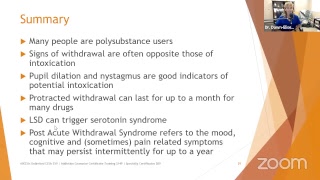
Dr. Dawn-Elise Snipes covers pharmacology for addiction counselors: how purity, route, and hydration affect drug effects, signs of intoxication and withdrawal across alcohol, cannabis, stimulants, and opioids, and why alcohol and benzodiazepine withdrawal can be life-threatening.
Questions this video answers
Episode 22.
August 1, 2018.
Schedule I (no accepted medical use, high abuse potential).
Medical in 29 states and recreational in 8 states (as stated).
9–17% of occasional users and 20–50% of daily users (as stated).
Chapters
Hey there, everybody. And welcome to today's edition of the Addiction Counselor Exam Review Podcast. This is episode 22, and today we're going to be talking about pharmacology. Welcome to today's edition of the Addiction Counsel Counselor Exam Review Podcast. This is episode 22. Okay, so we'll try that again. Welcome to the today's edition of the Addiction Counselor Exam Review Podcast. This is episode 22, and today we're going to be talking about pharmacology. We're going to review symptoms of intoxication and withdrawal of drugs of abuse. We're going to learn about post acute withdrawal syndrome. We're going to talk a lot about that, and we'll identify factors that impact symptoms, symptomatology. So in general, the purity of the drug is going to impact the symptoms, the speed of the effect, the intensity and the range and intensity of negative consequences and its effects. Because if you get something that is diluted down, obviously it's not going to be nearly as powerful as something that's pure the hydration levels of the person. A lot of drugs are responsive to people's hydration levels. So if they're dehydrated, then they're going to get a more intense reaction than if they're not. The route of administration, if people inject, it goes in a lot faster. Inhale, it goes in faster, and oral is the slowest. And usage patterns, if somebody uses every once in a while, they may get a really intense effect. If they're a habitual user, they may have started to develop tolerance, so they may not have the same effects as other people. And we're going to talk about tolerance and sensitization later in the podcast. So remember that injecting can result in blood infections, collapsed veins, and kidney and heart problems, even though that's the fastest method of administration. You know, getting it to the brain inhalation can result in ulcerated nasal passages and, you know, other problems in the sinus, cavities. Oral ingestion, drinking, eating must be filtered through the liver and the kidneys, and it often also irritates the GI tract. And this is the slowest method of administration. So take marijuana, for example. People who smoke it feel the effects a lot faster than people who eat it who may not feel the effects for, you know, 45 minutes or so. Same thing with LSD. LSD doesn't typically take effect right away. It's like 45 minute lag time. So people tend to think, well, it's not working and they take more and then they end up overdosing. So let's start out looking at some of the drugs of abuse. Alcohol is classified as a sedative, hypnotic and a CNS depressant. Now the interesting thing with alcohol is the initial stage when people are buzzed or intoxic, it is more of a sedative. It tends to lower disinhibitions or lower inhibitions. But as it starts to wear off, it wears off faster than the body can start making GABA again. So people start to feel anxiety. And a lot of people will start to feel an anxiety or a panic attack when that alcohol starts to wear off, which leads them to take another drink. So it is important to recognize that alcohol has some really interesting effects in the body. There are eight stages of intoxication as blood alcohol increases. You have your subclinical, which you're not really feeling much. You have your euphoria where you're feeling pretty buzzed. Excitement and then excitement and confusion, then confusion and stupor, coma and death. So obviously it takes a lot to get to coma, but you can do it, especially if you're doing shots or other things that you know, you're ingesting a lot of really high purity alcohol really quickly. And if you're dehydrated or haven't had anything to eat. Men tend to drink more than women. But women are more likely to develop drinking problems and experience alcohol related organ damage at lower levels. This is because women's blood alcohol reaches higher levels with the same amount of alcohol as men, because alcohol mixes with water. And men tend to have more body water, they have more muscle mass, which means they tend to have more body water. So it is important to recognize that it's the blood alcohol we're looking at. More so than how many drinks did the person actually have Alcohol related medical conditions, loss of control of eye muscles or nystigmus. And people may be looking at you, especially if they're intoxicated and their eyeballs are kind of darting back and forth. Hypoglycemia. So if somebody is diabetic, alcohol is really a dangerous thing because it's going to start messing with blood sugar, gastritis and pancreatitis. You know, it really starts upsetting that the, the stomach and the pancreas as well as the liver, all of those digestive organs get hit pretty hard with alcohol. And alcohol increases the level of, or the risk of a lot of different cancers, including stomach and bladder cancer. But I digress. So reduced immunity, cardiac arrhythmia, especially, you know, initially you have that Sedative effect of the alcohol. So heart rate may slow down a little bit, but then when it starts to wear off and the body can't keep up, you know, substituting what the alcohol was doing with gaba, the person may start to feel like they're, like their heart rate is beating really, like their heart is beating really fast. Or they may have arrhythmia, which is irregular heartbeats. People may have anemia because alcohol inhibits the absorption of certain vitamins and minerals. They may experience constant flushing, peripheral neuritis, fatty liver, cirrhosis of the liver, increases in blood pressure. Now, I really want to focus on this because people who are detoxing from alcohol, remember I said. I know, I've said it like five times now, the body can't keep up. So when somebody starts detoxing, they tend to have a stress reaction. So you have anxiety, you have faster heart rate, you have an increase in blood pressure. Someone who has been drinking a lot, if they decide, even if they're not a, quote, problem drinker, if they drink a lot and they decide to suddenly detox themselves, that can be dangerous. Alcohol detox is one of the few drugs that is actually life threatening to detox from. So they need to be under supervision because their blood pressure can go really high, really fast. They also may have inadequate absorption of certain B vitamins, which can lead to something called alcohol related dementia or Weirnicki Korsakoff syndrome. If somebody who is detoxing suddenly starts slurring their words and acting like they've got dementia or some sort of cognitive impairment, it is a medical emergency. It's not just going to improve as soon as the alcohol wears off. If it is Wernicke Korsakoff syndrome, they need to get to an emergency room and get an injection of certain vitamins in order to prevent this from becoming permanent. So, you know, there's my little spiel on alcohol. Cannabis. As of 2016, cannabis is still considered a Schedule 1 drug by the DEA. Schedule 1 substances have no medicinal use and a high risk of abuse. Now, I'm not going to argue whether there's medicinal use or not. I'm just telling you what the DEA says. Okay? So alcohol is not alcohol. Cannabis is legal in 29 states for medical use, despite what the DEA may say. And in eight of those states, it's also legal for recreational use. So it's schedule one. But we've got a lot of laws that kind of contradict that, that which leaves a lot of room for people who have substance use issues. To minimize, justify, and deny they've got a problem because they can point to case law and regulations. Nine to 17% of occasional users of marijuana become addicted, and 20 to 50% of daily users become addicted. So, yes, cannabis can be addicting. Methods of administration of cannabis include being smoked, consumed, smoked, or consumed smoked. It can be smoked in pipes, bongs, blunts, or even through dabs. And that is the more rapid action. If people drink it in tea or eat it in brownies, there is a slower mechanism of action for the cannabis with those. Cannabis acts on cannabinoid receptors, which influence memory, pleasure, concentration, and sensory perception. So let's talk about dabs for a minute, because those are more popular now than they were 20 years ago. DABS are concentrated doses of cannabis that are made by extracting THC and other cannabinoids using a solvent like butane, carbon dioxide, or other things that results in a stick. Sticky oil. If you've ever seen the SAP that comes out of, like, a pine tree, that's kind of what we're thinking about here. Even when home extraction goes well, there's no way to know the quality or purity of the finished product. Dirty oil can contain chemical contaminants, so it may still have some of that butane or carbon, you know, carbon dioxide stuff in it, or excessive amounts of residual solvents that could present health hazards. So is it safe? You know, the jury's really still out. Cannabis extracts often test between 60 to 90% THC, which means it doesn't take much at all to become profoundly high. It can be inhaled using a dab pen or an E cig with certain attachments. So if you've got clients that are vaping, you do want to be aware of exactly what they're vaping and whether it's cannabis, spice, or tobacco. Besides coughing like a maniac, the second most common side effect associated with dabbing is sweating like you ran a marathon. So if you have a break and clients go out and they have a smoke break or whatever, if you allow smoking in your facility and they come back and one person starts just sweating profusely, that's what we call a clue. Effects of cannabis in general, respiratory illness. You know, when you're inhaling things that your body's not used to, you're more susceptible to respiratory illnesses. Heightened heart attack risk. Cannabis can raise your heart rate and cause a heightened risk of heart attack. Neurobehavioral effects on a fetus. You know, it happens. Increased depression, anxiety, and suicidal thoughts, especially in adolescence. Loss of motivation Worsening of schizophrenia, impaired judgment, impaired coordination, reduced life satisfaction, and lower academic or career success. So, you know, when we're looking at the physical impact of cannabis, you know, it's not nearly, in my opinion, not nearly as scary as alcohol, which is also legal. However, it is important to recognize that people can get addicted and there are respiratory effects and potential heart effects from use. People also need to be careful when they get their marijuana or where they get it from because it can be laced with other things. And we'll talk about that when we get down to the hallucinogens. But it's important if they're using, you know, let's just say they're using legally recreational marijuana. They need to know that it's clean and it's of good quality. Also, as a little aside, if you watch the video that we've got on our YouTube channel, allce.comyoutube that's specifically on marijuana, you'll learn that there are dozens and dozens of different strains of marijuana. And some make you more euphoric, some make you more sedated. So it's important to recognize that, you know, marijuana is not just a plant. It's not like oregano, that's pretty much the same. You know, there are different variations to it and the impact on the person is different. You can also, or growers can also genetically modify and do things to enhance the THC levels in their cannabis plants. So again, even if you're getting the same strain from Jim and then you go over to Sally and buy from her, she may have a totally different intensity of her cannabis. So those are things to be aware of when you're working with clients and who may be using cannabis. Synthetic marijuana or Spice K2, whatever they call it. Now, synthetic cannabinoids refer to a growing number of man made, mind altering chemicals that are sprayed on dried, shredded plant material and vaporize to get high. So it can be on oregano, it can be on, you know, just about anything, tobacco, whatever. Synthetic cannabinoids are sometimes misleadingly called synthetic marijuana or fake weed because they act on the same brain cell receptors as thc. But the effects of synthetic cannabinoids can be unpredictable and severe or even life threatening. There are dozens of case studies of people who used spice or K2 and they ended up having a psychotic episode that lasted weeks. They became extremely uncharacteristically violent when they were in the emergency room. So it can have really odd effects on people. Synthetic marijuana or synthetic cannabinoid users report some effects similar to those produced by marijuana, including elevated mood, relaxation, altered perception, and symptoms of psychosis in bad cases. Synthetic cannabinoids can also cause serious mental and physical health problems, including rapid heart rate, vomiting, violent behavior, and suicidal thoughts. And it is susceptible to hydration levels. There was an incident in Washington, D.C. evidently over the 4th of July where 140 people were sickened when they were smoking so spice. And officials blame it, you know, maybe on a not great batch of spice, but also because those people had been out at a festival all day long and were dehydrated, and that contributed to the effects. And I believe either four or six people died. But so you can have some pretty negative effects. Signs of stimulant intoxication. So we're going to move on. We've done alcohol and cannabis. Those are kind of in their own categories. Stimulant intoxication is pretty easy to pick out in clients. They will have dilated pupils. So you want to look for those pupils that are like wide open and they don't respond to light. Obviously, if you're in a really dark room, people's pupils are going to be wide open. But if you're in a moderately lit room, you know, look at other people's pupils and then look at the client and they will be just blown. As we say, they are often restless, hyperactive, may not have an appetite, they may have some weight loss, and they're probably going to be sweating. Think about what a stimulant is. It's something that's supposed to increase your heart rate and get you going, basically mimicking running. So when you think about it, you will have all the effects of being completely wound up and, you know, going full bore. But the person may be sitting still. Signs of stimulant withdrawal. You know, remember, withdrawal symptoms are generally the opposite of what the intoxication symptoms are. So with stimulant withdrawal, the person becomes dysphoric. You know, when they're on stimulants, they may be giddy, they may be excitable, they may be the life of the party when they are not using the. They may be flat and dysphoric. They may have some anxiety or agitation, intense drug cravings, rapid eye movements, concise but quivery speech, brisk but somewhat jerky movements. And their thinking is often scattered and subject to paranoid delusions. So be aware of these. If you're in a detox unit, you're going to have people that may have some paranoid thoughts while. While they're going through detox. And you just wanna watch for Signs and symptoms of these that may need to be intervened or mediated before they become a crisis situation. In the middle stages of stimulant withdrawal, anxiety and agitation are followed by a period of fatigue, increasing depression, anhedonia, which means nothing, makes you happy, and, and decreased mental and physical energy. There's an intense desire for sleep, often accompanied by insomnia. And this usually replaces the drug craving. So think about this, you just want to sleep so bad, but you can't because you have insomnia that really sucks. So this person may start getting frustrated and agitated during this part of the crash. If they're not in detox, users may use alcohol, benzos or opiates to, to induce or prolong sleep. So they try to self medicate that insomnia. The middle crash phase lasts between 24 and 36 hours, during which any attempt at therapy or other intervention is inappropriate. Even if you've got a client on your wing and they're in this phase, they've got insomnia, they can't sleep, they are not cognitively able to focus and really do any sort of therapy at this point. So we just need to provide them palliative care and get them through the withdrawal phase. Protracted and late withdrawal. The user experiences symptoms that are the opposite of stimulants, intoxication. So we're continuing with the fatigue, the loss of energy, depression, yada yada. Symptoms may increase in intensity over the next 12 to 96 hours immediately following the crash and may wax and wane over several weeks. So that middle period, remember, go back here, the middle period is 36 hours. So zero to 36 hours, we expect these symptoms, but they may still intensify up to the 96 hour period. So we've still got another 30 hours to go before we know that the person is going to start decreasing in the intensity of their symptoms. But for the next several weeks, because of the protracted withdrawal, they may have periods where they're asymptomatic and, and then periods where they are symptomatic. So they don't really know from one moment to the next how they're going to feel. A severe and persisting depression in this phase can result in suicidal ideation or suicidal attempts. So you do want to regularly be screening for mood disorders. And remember, we're not just talking about mood disorders that existed independent of the substance use. If someone is detoxing and they hit this period of severe depression, they start sobering up, they realize that they lost their job, they lost their family, and they've got pending legal charges, they may get severely depressed and be suicidal at that point. So if the person is severely depressed for any reason, you really need to pay close attention. The anhedonia and dysphoria usually dissipate over a 6 to 818 week period. Now sit with that for a second. I don't like feeling blah and unhappy and you know, nothing does it for me for six days, let alone six to 18 weeks. And this is true with any stimulant, not just methamphetamine. So your cocaine, your crack, any of that stuff, Adderall. It's important to recognize that, that this is a problem and it will be a relapse trigger for a lot of people. And I always use the analogy of Eeyore. You know, they were feeling like Tigger for, you know, when they were using. Now they feel like Eeyore and just everything is dragging and nothing makes them happy. And some clients report that nothing is, it's not colorful, it's just everything is gray. There are no highs, there are no lows, it's just blah all the time. So think about those days when it's not raining and it's not sunny. It's just really kind of blase gray all day long. Think about living in that mindset for 18 weeks. Okay, so this is why we need to really create a strong relapse prevention plan. And in some cases with some clients, have them consider talking to a psychiatrist about a short course of antidepressants. Periods of drug craving may reemerge and be triggered by environmental cues. You know, you see it, people, places and things and emotional states. So if they're feeling depressed and they have self medicated that depression with stimulants before, well guess what, they may want to do it again. If they are getting ready to go to a party and they've got some social anxiety and they used to use cocaine before they went to parties, it may trigger them to want to use again. So we do need to again pay strong attention to relapse prevention planning early in treatment. Tolerance. There's tolerance to many of the initial effects of stimulants after only a few weeks of use. So just like opiates, which we're going to get to in a few minutes, people if they've been using for just a few weeks, they're going to need to use more and more and more. Tolerance develops rapidly to the euphorogenic and anorectic effects of stimulants and weight of stimulants. So let's just Stop there for a second. Euphorogenic, which means the happy that you get, you don't get that same happy anymore. Which leaves a lot of people doing what we call chasing the high. And they're trying to use more to get that same rush that they got the first time they used. The anorectic effects, those are those appetite suppressant effects, those generally wear off pretty quickly too. And weight loss generally stops after several weeks because the person has lost a significant amount of weight. So their base metabolic rate goes down and their weight loss stops. Tolerance also appears to develop to the cardiotoxic effects of large dosers, which means many users who are using something, you know, three, four, ten times what they were using when they started can use that and not have a heart attack and die because their whole body has gotten used to having that drug put into it. So it's not as dangerous. Tolerance is a really interesting thing, but you got to remember a lot of tolerance will go back, you know, wear off, if you will, over time. So you don't want to assume if the person was using X amount when they stopped using that they can be clean for six months and then use that same amount and not have negative effects. So, you know, it's really important for people to understand tolerance and the resolution of tolerance in the whole scheme of recovery. So if they do relapse, which, you know, I'm hoping they don't, and it's not, relapse is not a necessary component of recovery. But if they do, they do need to be aware of the fact that they can't pick up where they left off at that same dose, or it could kill them. Many of the initial symptoms of stimulant intoxication disappear with chronic use. So they could be using methamphetamine and their blood pressure may be normal and they may not be nauseous or vomiting at all because their body's gotten used to it. The body adapts in order to preserve itself and help the person survive. Told you we'd talk about sensitization. Now, this is the opposite of tolerance. Sensitization is a unique phenomenon of stimulants. Users are especially vulnerable to psychosis inducing effects. So after one psychotic episode is experienced following use, a lower dose may induce another psychotic episode. So some of the negative effects that come from the use of stimulants, you may, you may experience those at lower and lower doses. But in order to get that euphoric feeling, you're needing higher and higher doses. So you see where there's a problem Here, cocaine users are more likely than methamphetamine users to present with serious and potentially lethal physical complications, including cardiac arrhythmia, chest pain, stroke, seizures, hypertension and hyperthermia, which means their temperature went up too high. Cocaine users are also more likely than methamphetamine users to use multiple substances, especially alcohol, benzodiazepines or opiates. And again, think about that middle phase where they're just desperately wanting to sleep but experiencing insomnia. Some people will use the two kind of interchangeably. They use the stimulant to get them revved up for a party, and then when they're ready to go home at night, they use the benzos to come down and go to sleep. So it's really hard on their system. Let's start talking a little bit about hallucinogens and we're going to start with pcp. Signs of PCP abuse include sedation, immobility, amnesia, numbness, slurred speech and other speech difficulties, a sense of invulnerability, a blank stare, rapid involuntary eye movements. You see those eye movements keep coming up. So if you see that in a client, it's a really good indication that something is going on and, and you need to probe further. With pcp, you can also experience hallucinations, hence the name hallucinogens. It's important to recognize that with the loss of the sense of self, they may feel intense alienation, as though the world and people in it make no sense and experience feelings of depression. So if everything that they thought they knew doesn't seem to be the way it was, it gets really confusing. And some people find it cognitively stimulating. And other people, it totally freaks them out. People can have delusions, especially delusions of grandeur. When they're on pcp, they have that sense of invulnerability. They think they're, you know, God, they think they're the president, they think. But they also may have delusions of persecution. They may think that people are chasing them or trying to read their minds. High blood pressure, rapid heartbeat, reduced pain sensitivity and apathy. So there's a lot that goes on with hallucinogens that overlaps both alcohol and stimulants. So we need to ferret out what the person's experiencing. Rarely, if ever. I don't think I've ever had a client that has been primarily a hallucinogen abuser who's been self medicating anything. A lot of times the hallucinogen use starts out recreationally and continues Somewhat recreationally. That's not to say it doesn't happen, but just kind of being aware of why your client is using will help you develop a more effective relapse prevention plan. With hallucinogens. Low doses are characterized by numbness in the hands and toes as well as general drunken like behavior. Moderate doses produce partial or full anesthesia where the person can't move their limbs or any part of their bodies. They're just like frozen. High doses have the potential to cause convulsions and even death. And it can be added to marijuana or other smoked material. I had a client one time who was on work phase, went out to work, smoked what she thought was spice, and she thought she'd get away with that. But the spice happened to also be laced with pcp. And when she came home, she was experiencing effects similar to a moderate dose of PCP as well as very intoxicated from the spice. So she had a lot of stuff going on. Her heart rate was in the 190s. She felt like she couldn't move. We ended up having to have EMS take her to the emergency room because she couldn't get off her bed. So there can be very scary or unpredictable consequences. Other symptoms that may show up in a person who's used PCP over a long period of time include stuttering, impaired memory, inability to think clearly, inability to speak, suicidal thoughts, anxiety, depression, and just isolation and withdrawal. Now remember, with the hallucinations, if they start feeling alienated from people, if those thoughts and experiences stay with them, they may start not trusting other people. So they may start socially isolating from everybody else. Now, another hallucinogen that we hear a lot about is LSD or acid. Common signs of LSD abuse include sweating, dry mouth, dilated pupils, got those blown pupils again, numbness. Remember, dilated pupils are also common in what stimulants. You can't just look at a person's eyes and go, you took that drug. You do need to do a little bit more exploration. So numbness, dizziness, loss of appetite, tremors, increased blood pressure and heart rate, mood swings, hallucination, distorted thinking, impulsiveness, impaired judgment, an intensified sense of smell and hearing. A lot of these symptoms of LSD are very similar to symptoms that people are going to experience when they're using stimulants. But this intensified sense of smell and hearing is one that's unique. So we do want to listen for signs of that. People who use LSD can also experience flashbacks long after the intoxication has ended. So I've heard of people talking about having flashbacks years later. It is important to be aware of and if your client has ever used lsd, it's important to be aware of in creating their relapse prevention plan, also in creating their treatment plan and being cognizant. If they suddenly have certain changes in treatment, you may want to check in with them and see if they're experiencing a flashback. Many individuals may take LSD and be unaware that it takes between 20 and 90 minutes to elicit its effects. So if you take it and you know, you wait 30 minutes and you don't feel anything, and you wait another 20 minutes and you still don't feel anything, then you take another dose, you know, you may end up taking two or three times more than you really anticipated, causing some significant negative side effects. With lsd, it's a man made thing, so doses are not standardized and it's really important to recognize that one dose that's exceptionally pure or multiple doses in a short period of time can lead to overdose. Lsd, like opiates, increase serotonin in the brain. An LSD overdose can produce symptoms of serotonin syndrome, which again is life threatening. So if somebody has markedly dilated pupils, dangerously elevated blood pressure and temperature, super rapid heart rate or irregular heartbeat, tremors, muscle shakes, extreme drowsiness, nausea, diarrhea, excessive sweating, flushing, goosebumps, those are all things that should be warning sign that something is not going well. Anytime somebody's temperature is way up, or their blood pressure is way up, or even their heart heart rate is way up for more than just a second, it's probably worth making sure they get emergency medical care because that's not normal and we need to understand what's going on. Another effect of LSD is called rhabdomyolysis and this is the breakdown of muscle tissue that can lead to kidney failure. And you see rhabdomyolysis in extreme athletes as well. But the take home is that if this muscle tissue starts breaking down, it can lead to kidney failure. It doesn't matter why it started. So we've covered alcohol, cannabis, stimulants, hallucinogens. Let's move on to those prescription drugs. You have opiates, which rank number two behind marijuana as the most abused drug out there. 60% of people who abuse it got it free from friends or relatives. They didn't go to their doc and try to get a prescription, they got it from a friend. Opiates are obviously used to treat pain, but in some cases they're also used to treat, treat Treatment resistant depression. So I have seen cases where people have been prescribed pretty intense levels of sedative type drugs, opiate based drugs, in order to address depression. So being aware of that, why is the person taking the opiates? Now this can be why is the person prescribed the opiates? So you understand how to write a treatment plan or what is the benefit to the person to taking the non prescribed opiates? Because they may be self medicating. So if they take the opiates, and there are certain opiates that make you feel pretty good and take away that anxiety feeling and other opiates will tend to knock you out. But if you find out that somebody's taking a particular opiate because it helps them deal with their depression or, or feel like they've got more energy or feel more relaxed, they're probably self medicating. So we need to look at that. Another prescription drug that people use are depressants. Generally your antidepressants are not drugs of abuse because you don't get high from those. But your benzos, your benzodiazepines and your barbiturates are definitely drugs of abuse and really easily abused. They're used for anxiety and sleep disorders. So you're thinking your Xanax, your Valium, your Lunesta, all those things. And then stimulants are also sometimes prescribed for issues like narcolepsy, ADHD and obesity. So there are legal uses for opiates, depressants and stimulants. But all three of these drugs, or all three of these classes of drugs are also very easily misused. Prescription and over the counter drugs can be abused by taking medication that was prescribed for somebody else. So you're doing it to get high or to self medicate, taking drugs in a higher amount or via a different method than intended. So if your prescription is for one pill three times a day, and you're taking three pills three times a day, that's abusing them. Or if it's for one pill three times a day and instead of taking it orally, you're injecting it, that's abusing it. Taking drugs for a different purpose than intended. So if you're prescribed a drug for pain, you know you had oral surgery and you had oral surgery eight months ago, and then you decide to start taking your leftover opiates, technically that's a method of abuse. And by combining drugs either of the same class or of a different class in order to intensify the high. So some people may combine opiates and alcohol. Dangerous, very dangerous. Anytime you combine two different kinds of basically system depressants, the addition, it's not like taking two doses of something, it's like taking four doses of something. So one plus one equals four. So that can be very dangerous. People may also combine things like opiate and amphetamines in order to get a different type of high. So, so we want to be aware of these things. Withdrawal from drugs of abuse, sustained use of addictive substances causes reversible adaptations within the body. Notice I said reversible, not irreversible. So a lot of times the changes that happen in the brain and the body will recover after a period of abstinence and positive health behaviors. During withdrawal. It's important to recognize that people may experience a lack of pleasure because the euphoria producing drugs act on the nucleus accumbens or the pleasure center of the brain. So this center is kind of overtaxed and it's kind of like what Target looks like after Black Friday. You know, it's just completely wiped out. So we need to give it time to restock its shelves and get itself back together. And again, remember that alcohol and benzodiazepine withdrawal can be life threatening. Opiates, withdrawing from them is generally not life threatening as long as the person doesn't get dehydrated. There are a lot of doctors that will do ambulatory detox for opiates and stimulants, but they won't do it for alcohol or benzos. It's up to your attending physician how to handle those things. But if you're in private practice or you're a mental health counselor and you know of a client who is, you know, deciding that they're going to detox from these and they want to self detox, it's really important to educate them that that could be very, very dangerous. So post acute withdrawal syndrome, this is the roller coaster of intermittent withdrawal symptoms. The that especially impact mood, sleep and pain and can continue after acute withdrawal symptoms have gone away. So a lot of people, if you've ever worked in a detox unit, you know that we bring people in, we usually keep them for three to five days. If we're talking detox from benzodiazepines, it may be up to two weeks. But I've never had a doc keep anybody in detox for longer than two weeks. So while the acute phase is gone, the, the drugs are not in their bloodstream anymore. The person may still have waxing and waning of these same symptoms. Each episode of post acute withdrawal can last for a few days or a few weeks followed by symptom free periods and can continue cyclically for a year. Okay, remember that it's probably going to be on your test. It can continue cyclically for a year. Post acute withdrawal can be just as intense as acute withdrawal and puts the person at risk of relapse in an attempt to stop the discomfort. So those feelings they felt those first three days of detox, six months down the road, they may wake up one morning and they're starting to feel those same feelings again with their mood, their insomnia, increased pain, you know, all that kind of stuff. A good initial relapse prevention plan prepares the person for post acute withdrawal. Each drug has a slightly different post acute withdrawal syndrome profile. So it's important to educate clients about what they can expect. So if they start having drug dreams or really bad cravings again, they don't feel like they are helpless. They don't feel like they have fallen off the wagon or done something wrong. They understand that this is coming and they're prepared for it as much as possible. Pause symptoms post acute withdrawal Mood swings Anhedonia Remember that's that Eeyore like state sleep disturbances, cognitive impairment in memory, learning and concentration. So if you've got a client who is in your program and they detoxed three months ago, but they suddenly start having issues with memory, learning and concentration, they're not able to focus in groups. It doesn't necessarily mean they're being resistant. It probably means they're either experiencing post acute withdrawal or something else may be going on in their life or they've got a co occurring disorder that has been exacerbated. So any of these things you do want to consider, what is the reason for it. And remember that resistance or if a client appears resistant, it generally means that we're missing something. It means we're not doing what the client needs us to do or helping the client to do what he or she needs to do. So anyway, mood swings, anhedonia, sleep disturbances, cognitive impairment, fatigue, drug cravings, stress sensitivity and lower pain threshold. So the stress sensitivity and a lot of us have probably experienced it at one time or another when we've just been really worn down. And one more thing, it doesn't matter how small it is, one more thing is just going to make us freak the freak out. We've all had those days. Well, this happens during that post acute withdrawal phase where people may feel like they're just barely hanging on white knuckling it as they say, um, and anything can prompt an extreme reaction, you know, not necessarily violence, but somebody leaves the cap off the toothpaste, it may result in, you know, screaming instead of just putting the cap back on the toothpaste and having a calm discussion. So, so in summary, many people are polysubstance users and that's important to remember. Signs of withdrawal are often opposite those of intoxication. So that's an easy kind of rule to remember. Pupil dilation and nystigmus, the bouncy eyes, are good indicators of potential intoxication from some type of substance. It can also indicate a head injury. So if somebody's been in a car accident, you know, be aware of that. Protracted withdrawal can last for up to a month for many drugs. So you know, that first month for a lot of people can be really, really rough. And part of that is the, not only the drug getting out of the system, but the body rebalancing itself after, you know, it's been out of whack for a while. So it takes a little while think about, and I use this analogy all the time, running a bath. You know, maybe you have been running really hot bath because you like hot baths and at a certain point it gets too hot and you decide, you know what, I'm going to turn it down a little bit. So you turn on the cold water and the cold water is pouring in at your feet. So what do you do? You swish it around and what happens? You have hot and cold spots. And that's kind of what protracted withdrawal and post acute withdrawal are like. Because you know the initial issue, you've quit using, but you're getting re stabilized and everything is evening out now. So there could be little spurts or hot spots. If you will remember that LSD can trigger serotonin syndrome. So if somebody is taking antidepressants and they have a history of using LSD or they're taking antidepressants and you find out that they're currently using lsd, that's really important for them to talk to their doctor because this could be life threatening. Post acute withdrawal syndrome refers to the mood, cognitive and sometimes pain related symptoms that may persist intermittently for up to a year after somebody quits using. Generally if people can make it through that first 12 months, it gets a whole lot easier. But we need to give them every tool and access to every resource possible for that first 12 months in order to ensure they make it that far because it can be really miserable. Alrighty. So that was your summary of pharmacology. If you go to our YouTube channel, all ceus.com YouTube, you can see a lot more videos on pharmacology and much more detail on each of the individual drug classes. This was just kind of to give you an overview. You can also Google acronyms or mnemonic devices to learn some of the different symptoms of intoxication and withdrawal if that is easier for you to learn with. All right, well, thank you for being with me today and I will see you next week.










