Addressing Adult ADHD | Dr. Dawn Elise Snipes
Recorded continuing-education webinar by Dr. Dawn-Elise Snipes on addressing adult ADHD and treatment planning. The talk covers differential diagnosis (distinguishing ADHD from giftedness, bipolar disorder, anxiety), the role of medication versus skills training, and many practical, scaffolded interventions for motivation, task initiation, organization, impulse control, sleep, exercise, and environmental supports. Speaker provides concrete goal examples (e.g., being on time 90% of the time; reducing forgetting to <2/week), motivational analogies and tactics (Do15, visualizing end-goals, artificial deadlines, buddies, alarms), and recommendations for creating strengths-based treatment plans.
Chapters
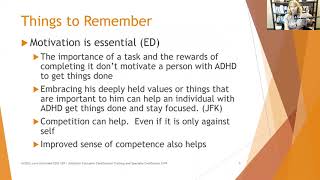
This episode was pre recorded as part of a live continuing education webinar on demand. CEUs are still available for this presentation through all CEUs. Register@Allce.com Counselortoolbox you. I'd like to welcome everybody to today's presentation. We're going to be talking about addressing adult ADHD and treatment planning, and while we're going to focus on adult adhd, a lot of what we're going to talk about today really resonates for adhd, regardless of the age. We're going to identify current points to remember about ADHD how to help motivate a person with adhd, which is different than how you may motivate somebody else Identify ways to get someone with ADHD started, even without motivation, because sometimes there are just things you got to do. Review treatment goals for clients, identify interventions that can help people reach treatment goals, and explore an activity to help clients develop their own action plan. So a couple things to remember. Boys are often diagnosed with ADD or ADHD three times more often than girls because they tend to present as more hype hyperactive type. In girls, the disorder typically presents as the inattentive or dreamy type where they may be daydreaming and staring out windows or drifting off mid conversation. They're in the middle of talking and then their brain just goes somewhere else and they lose focus on what they're talking about along with that. So we want to look at the differences, recognizing that not all ADD is adhd, but we also want to recognize that giftedness and ADHD often co occur. The brains of people who are gifted operate a lot faster than those who are non gifted. And when we're talking about gifted, we're typically talking about IQs over 120, which can lead them because their brain's working faster. It's like taking a old hard drive next to a solid state hard drive. They just process information much, much faster, like 10 times faster. So people who are gifted tend to process the information and be ready to move on. And the rest of us are still trying to catch up, which can lead them to interrupting. You know, they've already heard it, processed it, and are on to the next thing. And it can also cause them to move a lot more. People who are gifted as well as people with adhd, but people who are gifted tend to move a lot. They tend to want to keep their body going because their brain's going so fast their body feels like it needs to keep up. So it's important to differentially diagnose. Now like I said they can co occur. There are a lot of people who are gifted who also have ADD or adhd. So we don't want to say it's one or the other necessarily, but recognize that the interventions are going to be somewhat different for someone who is gifted as opposed to someone who is not, just because of the way their brain works. It's also important to differentially diagnose bipolar disorder, which can mimic adhd. You may have somebody with bipolar disorder who has extreme goal directedness, for example, and the hyperactivity may look like hypomania. So we want to make sure that we differentially diagnose it again. ADHD and bipolar can co occur is not nearly as common as ADHD or add. And giftedness anxiety is another thing that can lead people to goal directed activity and to feel like they're wound up, make it difficult for them to sit still, they're agitated. So we want to rule out, rule in and rule out based on what the person presents with. But today we're really just going to talk about how to treat adhd. Other things that we want everybody to remember, not just us, but we want to make sure that the parents and the teachers and the colleagues and the employers remember that ADHD is not a character flaw, but recovery is a team effort. Especially if somebody doesn't get diagnosed with ADHD until later in life, maybe it's in college, or maybe not even until they're in the workforce. They're going to have to learn new skills and it's going to be a process, a scaffolding process, where they develop new skills and gradually don't need the assistance and support that they do in the beginning of the recovery process. One of the things that we know with ADHD is it's not just a behavioral thing. There is a neurochemical element because it often responds quite well to medication. Unlike depression and anxiety, which, you know, about 35% of people respond well to medication. ADHD has a very, very high rate of positive response if that's what the person has. If you put them on ADHD medication and they're not responding at all or not responding well, then you really want to back up and look and see if it's bipolar disorder or if something else is going on. If the person is gifted and not adhd, the medications that we have, the stimulant medication, should help the ADHD person develop more focus. We also need to remember that pills don't give skills. So while medication is going to help the person potentially get some focus and filter out Some extraneous stimuli. We have to help them develop the tools to operate in the environment that they're in. We need to help them learn how to not blurt. We need to help them learn how to remove extraneous stimuli if they need to in order to help them focus. Pills aren't going to do everything just like pills don't do everything for depression or anxiety. It helps, but there are a lot of things that we also still need to address, like negative cognitions and those sorts of things. Same thing with ADD adhd, we want to not just focus on the things the person does wrong. We need to keep an inventory of the things the person does right. ADHD ADD permeates so many different areas of a person's life that they can feel like they're always screwing up, they're always forgetting something, they're always late, they're having difficulty in relationships, you know, at work, at home, yada yada. So we want to make sure that we are highlighting the things the person does right and continuing to highlight when they are improving. We want to make sure that there's a journal of things that went well, which is one of the reasons we really want to focus on writing strengths based treatment plan goals. Another thing that just to remember is people with ADHD often find it hard to demonstrate what they know to somebody else. You know, figuring out how to communicate it in a way that's meaningful to us. And you know, another reason they find it difficult is a lot of times the things they're having to demonstrate they're not interested in. So they're having a hard time getting motivated to demonstrate this information. Things to remember, motivation is essential. And there was one analogy that I found and it's a little rougher, but it makes sense and you kind of won't forget it after that. They said motivation for people with ADHD can be kind of like erectile dysfunction. You know, when somebody is awake and ready to do something and really motivated to do it, they are on. And when they are not, then nothing's there. So it's important to remember that we need to help people get motivated and figure out what's going to drive them. With people with adhd, the importance of a task and the rewards of completing it don't motivate a person a lot of times. So my son, for example, when I'm constantly telling him, if you don't do this, you're going to have this consequence. You need to do this in order to accomplish this next thing you need to put in your Applications for college so you can get accepted. You know, trying to stay on him about timelines and stuff, it just wasn't sinking in. A different way to approach it is to embrace this person's deeply held values or things that are important to him in order to help him get things done and stay focused. One analogy that I came across was this medical student who was having to learn all these diagnoses and all these, this stuff from his textbooks and it was just rote memorization and he wasn't really involved in it. He was, oh my gosh, one more thing to learn. I don't see the application. So the teacher said, you know, who is somebody that you just really look up to or you idolize? And it turns out it was John F. Kennedy. So the teacher said, alright, what I want you to do is pretend that John F. Kennedy was just rolled into the emergency room and you've got to figure out what's wrong with him. Now. You need to be able to call on all that stuff that seems superfluous right now in order to differentially diagnose and figure out what's going on that helped that student stay more focused. He was applying it to something practical. He was applying it to something that was important to him. It wasn't just any old bloke that was rolled in, it was John F. Kennedy. Competition can also help, even if it's only competition against themselves. So encouraging them to beat their performance from yesterday is helpful for a lot of people with adhd. But in order for them to continue to want to perseverate and continue to want to stay motivated, they need to feel competent. They need to feel like if they put forth the effort, they can get it done. Which is where it's important for us to make sure we break down these goals and make them small enough that the person can reasonably expect to achieve success. You know, don't go from the person walks into your office and say, all right, next week I want you to focus on not having more than two blurting episodes in the entire week. That's probably not going to happen the first week of treatment. So what we want to do is maybe two episodes per day and work down from there. Encourage them to develop a sense and start seeing how their, the interventions that they're learning and counseling are helping them accomplish their goals. Slowly but surely. Things that we can ask a person with ADHD or anybody, but in this particular case we're talking about add. ADHD is what excites you or recharges your batteries, you know, what things just really get you excited? For me, it's grant season. I love when grants come out because I love writing grants and just a little weird thing. So that's something that I really look forward to, and I can get really focused and lose myself in a grant for days. Think about a time in your past when completing a similar type of task wasn't so hard. What was different and can you bring some of those elements into this situation now? So if they're struggling on something and they've done something similar before and it wasn't so bad, what did you do? Did you have a tutor? Did you have or a partner helping you out? Did you have a written manual? Were you working on it in the morning when your energy was high? What was different and how can you kind of recreate that now? How can you break this task down into three pieces so it feels more manageable? And you can do more pieces than that, but three is a good number. You know, beginning, middle, and end. That way, the person can accomplish one part and say, all right, I did it, and they can take a break, reward themselves, whatever. Then they can do the second part. And that helps people with ADD who have difficulty staying focused, especially on things that they're not super motivated to do. They can get motivated, potentially for the short term, I can get my son motivated to do his chores. That takes, like, 30 minutes, getting him motivated to go out and, you know, completely clean out the barn for spring cleaning. It's a whole day project, not so much. So we need to break it down into small increments. And he's like, okay, I can do this small chunk. How will you reward yourself when you complete this? So make sure they've got a carrot out there that they're working toward. What needs to change to turn this should into a want, you know, I should do laundry and turn it into I want to do laundry. And you're probably rolling your eyes going, nobody ever wants to do laundry. Well, sometimes I want to do laundry because there's a particular outfit that's dirty that I want to be able to wear next week. So instead of saying, well, I should do it, I want to do it because I want to be able to wear that outfit. So we're looking at, what's the benefit? What's the end goal of what you're doing? Ask the person what they're good at. If you figure out what they're good at, then you can figure out. Or then they can figure out eventually how to tailor the activity to fit with their Skills, if you remember, and some of you may be way too young to remember this, the old happy days when I think it was Potsi was in school and he was in a physiology class and he had to remember how the blood went through the body. And he was just having a devil of a time remembering it, because reading in textbooks, that just wasn't his thing. But he turned it into a song because he was a singer and that's what he was good at. And so he went around singing, pump, pump, pump, pump, pump your blood with a tune. But I'm not gonna make you listen to that. And those things are all things that can help what self talk do you notice that you can let go of sometimes? I know my son is working on some computer certifications right now, and I hear him talking because he talks, you know, it doesn't just stay in his head. Anything that comes into his head comes out his mouth. But I'll hear him up there working on his computer and I'll hear him talking, going, oh, this is so stupid, stupid. Why do I have to do this? Oh, this again. And so checking that negative talk can be helpful instead of saying, this is, you know, this is stupid, or why am I doing this again? Saying to yourself, all right, well, I have a chance to do it again, and look how well I've come. It's getting easier. Now ask the person, what about this task is important or meaningful to you? Because, you know, just because there's a negative consequence if they don't get it done may not motivate them, but what's the benefit going through and, you know, doing everything he needed to do to graduate, you know, why is this important to you? Well, because he wants to graduate so he can get out of school and start doing things that he enjoys. He's really looking forward to getting into college and focusing on his upper division courses where he can take the classes that interest him. What support do you have to get this task done? Most people with ADD adhd, at least initially, but sometimes henceforth need supports. They need people, if nothing else, to leave them alone so there's not distractions. They may need extra time, and in order to get things done, they may need. They know what they need as far as environmentally, socially, mentally, physically in order to get the task done. What obstacles are preventing you from completing this task and which of these can you eliminate right now? So thinking about what's standing in your way, except for maybe low motivation, you know, we can work on motivation, but what else is standing in your way from you getting this done? Maybe a person is having a hard time getting motivated to work on a project because they don't feel like they have the skills to handle that. I remember when we switched over to an electronic medical record system at the last place I worked. The system was cumbersome and clunky and non intuitive and I just drug my feet. I went through the absolute last training class that they offered because all I had heard about was how awful this thing was. And that was an obstacle. My attitude and what I had heard about it was an obstacle to me getting motivated to go take that class. So we can ask people what's standing in your way? What's kind of putting its hands out and holding you back from completing this? And how can we open the passageway? How can you make this task fun, interesting or enjoyable? Laundry. We'll go back to that again. You know, I don't like, I don't mind doing the laundry, you know, getting it washed and dried, but folding it and putting it away, not my favorite thing. So when it's time to do that, I fold laundry in the living room so I can watch tv. And when it's time to do socks, I set out four baskets because there's four of us in the family and I'll pair socks and I will just play basketball. It's inane, you know, whatever. It amuses me. When my kids were little, they used to play with me. So it was a competition to see who could get the most socks in and, you know, win the game. Finally, help them see the goal. People with ADHD often forget the purpose of their tasks. Remember that inattentive, you know, you start out with a focus and then you kind of get sidetracked. So they may be uninspired to finish them. Have them imagine the negative consequences of not doing something is not a potent motivator. Have them instead imagine how great it will feel to get their goal, get to their goal and encourage them to add visual reminders of the goal, including a daily creative visualization. So, for example, if you need to, whatever issue you're going to handle or whatever you need to do, we'll stick with my son getting his college applications done and studying for the act. Negative consequences to that was really falling on deaf ears. But when I had him start envisioning, what will it be like once you're out of high school and you're not having to study for the ACT anymore? That helped. So he would start each day before he would start his lessons envisioning, you know, what is it Going to be like when I get to go to college and start actually doing stuff that I enjoy. One thing that you can do if you don't have a mother to henpeck you is to get one of the medication apps for your phone, because those things are persistent. If you don't take your meds on time, it'll keep reminding you every five to 15 minutes to take your meds. I have to do that whenever I have antibiotics because I can't remember to take anything three times a day. But I digress. If they put that on there, you know, doesn't matter that it's not a medication. But if they set a medication alarm to remind them to do their visualization, it can prompt them to start their day off correctly again, keeping with this idea of envisioning the end result. Instead of saying to him, you need to get these applications done for college, try something like, think how awesome it'll be when you get in college and can finally start learning stuff that's important to you. Or how great will it feel when you've been accepted to college and see how your hard work paid off. We can do the same thing with employees when we're trying to get them to work on a project. You know, encouraging them to think how proud they will be when they finish this project and what a, you know, feather in their cap it will be. So even if they're not motivated, because like I said, some things like laundry is hard to get motivated. Encourage people to get started. And I've talked before about the Do15, and it worked for me through college. I was dreading doing something, and it still works now when I go out to do do yard work or go to the gym, sometimes I'm just not motivated. But I tell myself, all right, I'll get there. I'll do 15 minutes. And if I'm still miserable in 15 minutes, then I can stop. A lot of times just getting started. It starts going and it's a lot easier. Create urgency. If you don't want to do the dishes, maybe wait. And this isn't for projects. You don't want to put projects off to the end. To create urgency, wait. If you're doing dishes, wait until 15 minutes before your favorite show is on TV, so you have to get them done so you can watch your show. Another way to create urgency that I do do at work is when I have a project due. You know, maybe it's due June 1st, and, you know, in order to create urgency so I can get through it and get it done I may have a reviewer, somebody that's going to look over the project before I hand it to my boss or whatever. I will have a Reviewer scheduled on May 14th. That way I've artificially created urgency because I have to have that done for the reviewer to look at in order to make sure that it's completely proofed and ready to hand to my boss. So you can create artificial deadlines. Keep a list of must dos, bills, dishes, homework, work assignments. Keep that list handy when for somebody that's at work, have them keep it, you know, posted somewhere. I have little sticky notes on my desktop that remind me, like when different renewals are due or when I've got to do different things. That will help keep the person organized. And then they can start picking off one thing a day that they may need to do. Encourage them to work with a buddy. Buddies can help keep you on focus. And when I was studying and even when I've done work projects before that I haven't been really motivated for, if I work with a buddy, you know, I may start to kind of dwindle and you know, look out at the birds and do whatever. But since that person's there, they help keep me focused. They're like, attention back here. So working with a buddy can help you. Working with a buddy can also keep you more on task. There was an example of an attorney who was just having a devil of a time getting his paperwork done and his briefs written and all that stuff he'd had. He'd have a stack of briefs, or whatever it is they call it, that he'd have to write on his desk and he just sit there and be overwhelmed and really not get started. So we started having his paralegal take the entire stack to her desk and she would bring him one case at a time and he had 30 minutes to work on it. At the end of 15 minutes, she would look in and make sure he was still focused. And at the end of 30 minutes, she would come take that file from him and give him another file. Now I'm assuming he got always got it done within 30 minutes, but that created the urgency and that also working with a buddy helped him get it done. And he said that his first feeling was, oh my gosh, I have to be treated like a two year old in order to get this done. I just, I don't feel right about it. But his work product went up, his wins went up, and his billing went up markedly. So he finally figured out or decided that it doesn't matter how I get the job done, I'm getting the job done. Encourage people to reward themselves. Break it down into tasks and reward yourself. When you get chunks of the task done, have them start with the goal of good enough. Sometimes people who are ADD adhd, they failed before or they've had difficulty getting projects done before. And so looking at tasks can feel very overwhelming. And thinking, I need to get this, I need to get this done and I need to get it perfect. I need to make sure that I don't make mistakes this time. It can be overwhelming and daunting. So instead, have them start out with the goal of good enough. Let me get the first draft done. And that's one of the things that I do. Instead of saying it needs to be perfect, first run through, I want to get the first draft done. Let's just kind of get out the basics and then I can go back and fine tune it because that helps people let go of the fear that may paralyze them. Encourage them to work during peak times. Not everybody's a morning person, not everybody's a night person. What is that person's peak concentration and focus time? You know, for me it's anytime between 6am and noon. After noon, I'm like, you know, when it comes to intense focus type work for each goal the person has in their treatment plan. You know, when we start saying, all right, what do you want to change? Ask them how the issue has caused them problems in order to identify specific targets. So if forgetfulness is one of their issues, one of their presenting issues, ask them how forgetfulness has caused them problems and, and then identify specific goal targets. Maybe it's a child who regularly forgets their backpack at home and they're not prepared for class. So the specific goal for that child would be target his forgetfulness. Okay, you need to remember three out of every five days, we'll start out doable to remember to bring your backpack. And ideally we want to set in something to prompt him. And that's the scaffolding part where we might have the parents remind him the night before to put his backpack by the door. That way it's right there. Also, have asked the person, how will your life be improved when this is resolved? And this will help the person visualize it. So for this kid, how will things be improved? What's going to be better if you're not forgetting your backpack all the time? You know, mom won't be mad because she's having to leave work and bring your backpack to you. Teachers won't be mad because you don't have your stuff, you'll do better in your classes, yada yada. So have them envision, you know, what is the benefit to me doing this. So one of the goals or issues for people with ADHD is chronic lateness. So we can set the goal of being on time to work or their appointments 90% of the time. And we want to figure out, you know, there's what you're going to do. And remember, when we create the treatment plan, there's the what you're going to do and there's the how you're going to do it. And we're going to talk about the how in a few minutes. But we want to create strengths based things. Instead of removing chronic lateness, we want to encourage them to be on time 90% of the time. So 90% would be, you know, two work weeks is 10 days. So that means nine out of every 10 days or only one day every two weeks are they late. You can also look at reducing the intensity of lateness. So instead of being an hour late, you know, reduce their lateness to 10 minutes. Work with the person to figure out where they want to start. But make sure that you set goals that are achievable. Difficulty controlling anger and low frustration tolerance. Reduce anger episodes to less than one per day. A lot of these goal statements that I have would be further on in the treatment process because going from five episodes a day to less than one per day in a week, not going to happen. But what we want to see is progression. So you may say, identify certain environments where you reduce anger episodes to less than one per day. So reduce anger episodes at work to less than one per day and then reduce anger episodes to less than one per day, period. So you want to build and have gradual successive approximations. Reduce the intensity of anger episodes from A5, which is just enraged, you know, the vein in the side of your neck is bulging to a 2, 90% of the time. So we want to help people figure out how to take a breath and acknowledge their anger. You know, DBT works really well here. Acknowledge their anger and let it go. Take some steps to distract while that adrenaline bleeds off until they can get into their wise mind where they're probably only going to be feeling irritation at about a 2. And it may be enough to get them motivated to address something. But they're not blind with rage. Forgetfulness, have the person improve their memory by reducing forgetting episodes to less than two times per week. And if you can figure out a positive way to say this, that Would be good. Instead of reducing forgetting, add something. But I couldn't figure out how to put the, put the positive twist on that one. But look at what do they forget? You know, what do they habitually forget that causes them to run late? You know, I will regularly forget to take my vitamins in the morning. So I would say, you know, forgetting for me, I might set a target of remembering to take my vitamins five out of every seven days. So set a target that is meaningful to the person, not just reduce forgetting, but what is the person forgetting that's causing them problems? You know, I can forget to take my vitamin and it's not going to cause me a big problem. If I forget my car keys in the car and I lock the car now, that'll cause a problem. So identify the things that that person is forgetting that are causing the most problems and then develop a plan to reduce those forgetting episodes. Poor organizational skills. Eventually you want the person to reduce the number of times per day he or she cannot find something to less than one per day. My keys. I don't know how many of you frequently lose your keys, but I regularly used to lose my keys. I put a basket in the foyer and now when I come in, I put my purse on the table, my keys in the basket, and I'm not losing them as often before I would come in and just kind of wherever I dropped my stuff, I dropped my stuff. So having people figure out an organizational system that helps. When I need to do remember to take something to the office, I will put it in a bag and hang it on the door, on the front door. So it's right there when I'm getting ready to leave and it's getting in my way. That way I can remember to do those things. So again, ask the person, in what ways is poor organization negatively impacting your life? And then target specifically those areas in the initial interventions because those are going to be the most meaningful. Those are going to be the ones where the person goes, oh, it's such a relief not to have that problem anymore. Procrastination have them get started on tasks within five minutes of the chosen or scheduled time. So you know, at our house, for example, we get up lessons start at promptly at a lazy 8:30, but they need to start at 8:30 and chores start promptly at 2:30. Now promptly for my daughter is 2:30 in one second. Promptly for my son is 3:15. So we've needed to work on that in order to get, you know, he gets his, the alarm goes off on his Phone number one, he needs to not ignore it and encourage him to get started within five minutes. So the alarm is set to go off every single five minutes. The other thing that we found in our house, and you've probably found this with your snooze button. If you set it across the room so the person has to actually stop what they're doing and get up and move to turn the alarm off, they're more likely to actually respond to the alarm than if it's right next to them and they can just pop the snooze button. So encourage them to set the goal of getting started on tasks, you know, in one snooze or less. Improved relationships many times because of the impulsiveness and the blurting and, you know, forgetfulness, lateness, yada yada. People with ADHD have problems in relationships. So you one goal could be to reduce arguments with a particular person to less than two per week and or increase social invitations to one per week. Now, some people who are extreme introverts might not really go for the second one, but we want to see them evidence that their social circle, that their friends are embracing them and are recognizing that they're doing better and they're fitting in and melding better with their social circle. They want to have a better work product. So have them talk about completing paperwork by the close of business on Friday or daily. I had one employee that worked for me. Great. Well, actually more than 12 of them that I can think of right off hand were great therapists, amazing therapists. But getting their progress notes done was a bugaboo. And in order to get them done, you know, I had to help them identify a time instead of trusting that they would be done. Get in the file and get to medical records. They were due on my desk by close of business Friday or daily. One of them I ended up having to move to daily because he would put all of his notes off until like 2pm on Friday, and then he'd have to write all of his notes for the entire week and he just wasn't getting them done. And it was getting overwhelming. So you may have to break it down so a project or something somebody has to do doesn't build up and become overwhelming. Think about what my old supervisor didn't like doing laundry. Whenever he ran out of clothes, he would just go buy more. Okay. And one day he told me that he finally decided to do his laundry and he had 27 loads of laundry. Oh, my gosh. You know, that is a lot because it built up, you Know I like to do laundry once a week. That way it doesn't build up. And then like every third week I do sheets and towels so I have a couple extra loads. But it's not any overwhelming on any one day. Encourage them to try to stay on task with two or fewer reminders at work you've got to figure out how to help the person get a reminder. Is it going to be on their mobile device that prompts them to do something or are they going to work with a partner at first to help them stay on task? You want to graduate, you know, like I said, these are scaffolded. We want to make sure they're developing skills and becoming successful with the easier things. You know, we don't want to set goals that are just not achievable and then graduate them to maybe completing paperwork with two or fewer errors. So not only are you getting it in on time, but you're also getting it in and there's no errors in it or less than two errors in it, which you know, so you don't have to go back and fix something etc. And think about a lot of the forms that we have to fill out. I know when I used to fill out assessment forms, I mean there were check blocks and spaces and stuff everywhere. It wasn't just this easy clean sheet. So it's easy for people to make mistakes, especially if they're doing something that involves forms or data entry. Encourage them to have more independence in self care and getting things done. So getting started, getting ready with two or fewer reminders. A lot of times, you know, people may, people with ADD may get up and get involved in something that really interests them. And remember motivation with people and focus in people with ADD fluctuates Things that they aren't interested in, they can get lost in and they can get in this tunnel. But things that they're not interested in, they're just all over the place and it's hard to keep them focused. My son will get up and he will get on his video games and he will forget, you know, time will get away from him. So we need to have, we needed to set goals that he starts getting ready for, you know, for what he needs to do for the day with two or fewer reminders. Then work from there. Because obviously when you're an adult, hopefully you won't need two or fewer reminders. But sometimes we do. If you're really not wanting to do something, another goal could be leave for work by 7:45 with two or fewer reminders so there's the reminder to get started getting ready and then there's that five minute reminder to get everything you need to get out the door. Complete laundry on Sunday and set out clothes for the week. So this can help people get more organized so they're not running around trying to find what's clean and what doesn't need to be ironed at the last minute. So it's all organized and set out for the week and then they can, you know, relax and they have more time, you know, by doing this, the benefit, they have more time to, you know, get ready in the morning because they're not having to do these tasks of putting together clothes. Encourage them to develop a meal plan and shopping list each Sunday. I randomly picked Sunday, whatever day works for them. Let me see. I think it's this tab. You can google meal plans with shopping lists and there are a lot of free ones out there. This one was just one I happened to come across. But let's see where you go down here. She gives you all the recipes online and these didn't seem too far out there. And then Download Meal Plan 1. When it downloads, it tells you what you're going to eat each day, gives you a few hints, and then it gives you a shopping list on the second page. So the person just has to take that page and go to the store. If you're not a cook, getting everything ready to figuring out what you need to get at the grocery store can be overwhelming. So this can help people with or without add, make sure that they have what they need and they don't have to go to the grocery store multiple times, which wastes a lot of time. Improved self esteem. Have them reduce unhelpful self critical perseverating to less than three times per week. So where they're saying you're so stupid or you should have gotten that right or yada yada, reduce that to less than three times a week. Quiet that internal critic. Have a self report of feeling pretty good or good about themselves seven days a week. And that's a big one. But I really want them to strive to at least have a pretty good attitude about themselves and we'll develop tools for that. Improved self efficacy. Have them report confidence in being able to get things done and be independent six out of every seven days. Now there's going to be that day in there occasionally that it just feels like there's too many things to get done and it's just too much to handle. But I want them to feel as they become More independent, become more organized and develop these tools more and create their own rhythm and that they feel like they can get things done and accomplish their tasks and be good workers. Fewer disruptive behaviors such as interrupting, blurting and fidgeting. Have the person create a self monitoring log that shows less than three interrupting or blurting instances per day. You know, they can have a little notebook with them however they want to log it. It just has to be hash marks, nothing big. But they can monitor that and figure out am I blurting more on certain days or in certain situations. Another self monitoring thing they can have is showing the ability to sit still for at least 45 minutes. And that's a big one for people with ADHD is being able to sit still and stay focused in staff meetings or movies or over dinner. There are times where you're expected to be able to sit still and pay attention for extended periods. So we want to increase that. You may with a person, you want to find out what's the longest you can sit still comfortably right now. Okay, so maybe they say 15 minutes. All right, that's 15 minutes. So let's work on sitting still for at least 20 minutes this week. And then once they're able to do that, bump it up to 25 minutes and just increase it by five minutes every week until you get to the point where you're at 45 minutes or an hour and they can sit through an entire, well, reasonable staff meeting. Those staff meetings that we used to have that were three and four hours long, you know, nobody can be expected to be that calm. Safer behaviors such as crossing streets and cooking dinner. We want to have a self report of getting sidetracked from activities less than two times per day. My son, even at 18, you know, he will get lost in thought when we're walking through a parking lot and just kind of like drift out into traffic. And I'm like, come on back over here. So we have to, I have to encourage him to focus on those things. The same thing can be is true with dinner. He'll start cooking something and I'm guilty of this too. Start cooking something and get sidetracked by something else and then burn dinner. So it's important to encourage people who have add to what can they do to stay focused and not get sidetracked. For us, for example, at our house, we need to stay in the kitchen because going and trying to putter around while something is cooking is not smart because we tend to get sidetracked. Or if you're going to walk out like if you're making noodles or something that takes 14 minutes, set the timer so it goes off and you have to come back in the kitchen to turn off the timer. Things to do if you have adhd, have the person identify their strengths and good qualities. Note each day something they did that shows their character strengths. And I'm not talking about what they can do for people, but that they're kind, that they're compassionate, that they are loyal, that you know all of those values and stuff that make them an awesome human being. Whatever those values are. Have them identify something each day that shows those strengths. Encourage them to learn to reframe mistakes by journaling. So write down what happened, you know, if they made a mistake, if they blurted or forgot something, write it down and encourage them to reframe it as a learning opportunity. Strategies to Stop being impulsive have them make a list of inappropriate situations in which they're most likely to behave impulsively and identify things that make it worse and things that can help them not be impulsive. I went to a festival the other day that was at one of the local churches and they have these bags and I thought it was a great idea. They have these bags that have crayons and coloring books and something else in them for little kids to take into the chapel with them so the little kids don't get bored during the sermon because, you know, holding a six year old's attention through a sermon is challenging. So those are excellent things. I went to a church in Virginia where you could go to the main chapel area and have that traditional church service or you could be downstairs and they piped it in via video and it was a coffee house and we would all sit around and drink coffee and watch the preacher but we weren't having to be quite so still and sedentary and quiet. So have the person identify things that help them not be as impulsive and figure out how to work those in to their situation. Some people like to draw, so I find when I'm at in long lectures like this one, if I were listening I would be doodling and that would help me stay a little bit more focused because I can doodle and listen at the same time, but I have this need to be moving a lot. In order to help people stop blurting and being impulsive, but especially blurting when they're about to enter one of those situations where blurting is bad. Maybe it's a staff meeting or you know, they're going to see their in laws or whatever it is. Have them remind themselves that before they answer anybody, they need to inhale slowly, exhale slowly, put a thoughtful expression on their face, and say to themselves, or say out loud, let me think about that. Have them put a finger over their mouth for a few seconds as if they're considering what they're going to say because it reminds them to be quiet. Hmm. Have them paraphrase what the person said in order to, you know, slow the process down. So. Oh, so you want to know about or you're asking me to. That helps stop the person from blurting their ideas because they've got to remember and paraphrase what the speaker just said. The final suggestion was to imagine locking your mouth with a key to prevent yourself from speaking. And sometimes you've got to do this. And even as adults, we have to, because we're going into a situation where we know we're going to be tempted to just be like, have you lost your mind? Or I can't believe you're saying this. And that's not the appropriate reaction. So we have to imagine ourselves just locking our mouths and throwing away the key and being done with it. And it's important for our clients with ADHD to recognize that a lot of us have some of these symptoms or occasionally have problems with the desire to blurt. So they're not, you know, weird in that way. It's just the degree to which it interferes with their life is more so for them than for the average person. Encourage them to get adequate quality sleep. It's important for them to be well rested, so they're not impulsive, so they're not more emotional, so they are calmer, and their neurotransmitters are all level. So have them audit their sleep hygiene and develop a plan to improve their sleep hygiene, which is everything from their nutrition to their sleep routine that cues their body in to go to sleep to the way they sleep. You know, are they sleeping in a bright, noisy room or are they, you know, all those things. Encourage the person to train themselves to become more organized, including developing a calendar and setting alarm and push notification prompts. Now we can habituate to those. I know, I do, I change it and I'll pay attention for the first week or so. Then I start habituating. So you want to have other things that encourage the person to move on to the next task. Just like in schools, they would have passing periods or when they would switch from one topic to another. There's generally some sort of a transition activity or thing that they do. Have a friend call 30 minutes before it's time to leave. So if you're going out with your friends on Friday night and you need to remember to be organized and be ready to go, have your friend call 30 minutes and say, you know, I'm getting ready to leave the house to come pick you up. You know, just a heads up to remind you to get ready. Prioritize. People with ADD often have problems prioritizing because everything catches their attention. So have them identify what's most important to them to help them move towards a rich and meaningful life. So they need to figure out what's most important in their life. What are the top 10 things? Those are the things that they want to focus and they can tackle one at a time. Control impulsive behavior by developing a list of times when the person is impulsive and things that make it worse and better and creating a plan for handling each type of situation. They're going to require different things. Meetings at work will require different interventions and ways of handling it than maybe when the person gets angry, when they get angry, maybe they can go on a walk or what can they do? Or during movies. And we all know those people who during a movie have to have this ongoing commentary about what's going on. And it drives my daughter absolutely bonkers because my son does that. I don't mind it so much, but he has to comment on everything, which can be frustrating to the people around him. So having people identify times when blurting is causing them the most problem and developing a plan for handling those situations. Have them develop social skills because the blurting and other things that they've had going on may have kept them, may have made them feel more self conscious. So they may not have developed as many friendships as other people. So assess which social skills are lacking, such as assertiveness, verbal and nonverbal communication, sitting still, not touching things. I have one friend who every time she comes over, she just like starts going through cabinets and looking at things and you know, if something catches her eye, she'll go up and pick it up and start looking at it. And I'm just like, don't, don't touch everything. So encouraging people to be aware of appropriate boundaries and social skills will help them in their relationships and develop a plan to address any deficits. Minimize distractions, have people work in a small space and minimize external stimuli. If they've got an out window to the outdoors and they're on the bottom level, have them close the blinds. If you're up on the third floor, most likely you're not going to Be too distracted. But down on the bottom level, you may see people walking by, see birds, butterflies, whatever. So minimize those stimuli if they are working, you know, encourage them to shut the door if they need to. One of you earlier suggested having somebody put on headphones. Not even with noise necessarily, just headphones to block out sound so they get quietness. You can put on noise canceling headphones. Anything you can do to minimize visual and auditory stimuli and potentially olfactory. I know when I used to, you know, work, my office used to be down by the cafeteria. I would start smelling them, cook lunch, and I would keep drifting off, you know, oh, that smells good. I wonder what they are having today. So even smells are a distraction for me. Encourage people to find constructive outlets for excess energy, such as exercise. You know, if you get some exercise in, you can kind of bleed off some of the excess energy. So through the rest of the day, you're not as hyperactive. Worry stones are good, and I don't have mine here. I usually have my rosary or a worry stone with me, so I have something in my hands. Otherwise I'm clicking pens, which can get really annoying. A walking desk can be helpful for some people if they have that hyperactivity component. A walking desk, you're not going to walk fast. You know, it's like one mile an hour. But that constant movement, whether they've got ADD or they're gifted, that constant movement can be very soothing to the person. Isometrics. And you got to be careful how you do this because you don't want everybody in the room seeing you do them. But isometrics is tensing a muscle and relaxing it. So you can tense your calf muscle and relax it or tense your foot and relax it. When you tense it, you hold it and then you relax. It's kind of like progressive muscular relaxation, except for in isometrics, you're focusing on the contraction instead of the relaxation. And, you know, if they just need to keep their hands busy crocheting, I crochet whittling. You know, obviously you can't do this at the office, but if you're in a social situation and you know that you need to have something to do with your hands, bringing something like that can be helpful. Plan ahead for impulse control. Adults with ADHD have difficulty drawing on past experiences to guide their actions. They're often not good at recognizing the subtle aspects of problems and the various tools that might help solve them. So they hit every single problem with a hammer, because every single problem looks like a nail. Instead of realizing that you know, you have flathead screws and Phillips head screws and nails and bolts. You know, there's lots of different things that kind of look like a nail and they all require different tools to use. One way they can do this is picture in their mind a TV and imagine the last time they were in a situation like this. Imagine that like a movie or a show playing on the tv, thinking about what did they learn from that experience and what were the details that made it similar and different to this situation. So encouraging them again to get more visual and think in the past, instead of just finding a memory somewhere, they're actually finding a visual representation of what happened. Have them train their brain. You can train your brain to be less distractible. It doesn't do everything, you know, just like pills don't give skills training. Your brain is not going to help everybody, but it can help some people improve their concentration and their focus. Luminosity has a lot of free activities that people can use. Get a nudge either a personal assistant or environmental supports like alarms to encourage you to get going and stay on task. ADHD can negatively impact relationships, work and addiction recovery if not addressed. It's more important to identify and address symptoms than worry about fitting a particular diagnosis. So if forgetfulness is a big issue or we need to address that more than worrying so much about does this person fully meet the ADHD diagnosis? The best thing you can do a lot of times is identify which symptom is most problematic for the person and address that one first. Somebody with ADHD is having a hard enough time focusing and keeping track of life in general. If you throw five treatment plan problems at them, that's just going to completely be over the top. So pick one and say, okay, this is what we're going to focus on and help them get motivated to work on it and address those. Are there any questions? One of you mentioned that your 6 year old goes to the nursery at church because he gets distracted or bored during the sermon. And you know, that's the wonderful thing. You know, my opinion in some cases, with the fact that a lot of churches have started simulcasting their simulcasting on the Internet. So you can attend church virtually if you're infirmed or if you happen to have children who are have difficulty sitting through an entire sermon. And Pat makes a good point that if somebody is needing to block out extraneous stimuli and they put on headphones, it actually helps everybody in the environment because other people feel more free to get up and walk around not being concerned that they're going to disturb you. All right, everybody, if there are no more questions or comments, have a wonderful day and I will see you on Thursday, where we're going to be talking about milestones in early childhood development and stuck points. If you enjoy this podcast, please like and subscribe either in your podcast player or on YouTube. You can attend and participate in our live webinars with Dr. Snipes by subscribing at allceus.com counselortoolbox this episode has been brought to you in part by allce.com, providing 24. 7 multimedia continuing education and pre certification training to counselors, therapists and nurses since 2006. Use coupon code counselortoolbox to get a 20% discount off your order this month.










