Anxiety Relief from Fear Mongering and Gaslighting
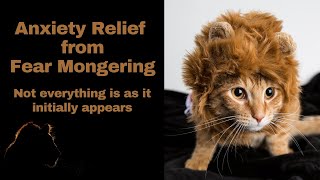
A recorded presentation (YouTube) by Dr. Dawn-Elise Snipes explaining how fear mongering exploits cognitive distortions to increase anxiety and attention. The speaker gives examples (news media, COVID-19, elections), outlines CBT-style steps (identify facts for/against beliefs, recognize controllable aspects, evaluate costs of staying stressed), and recommends practical strategies: mindfulness, thought-stopping, distress-tolerance (TABS: thoughts, activities, breathing, sensations).
Chapters
Foreign. And welcome to this morning's presentation. Today we are going to be talking about anxiety relief from dun dun dun fear mongering. Maybe I should have done this before Halloween since I have all the colors looking kind of Halloweeny, but whatever. Fear mongering is a big issue and it doesn't. It's not just the news media that fear mongers we have as parents. Sometimes we fear monger and you know, as you know, bosses, sometimes they can stretch the truth in order to motivate people. Fear mongering definitely increases people's attention and that's one thing we want to pay pay attention to. So fear mongering is really providing biased information in order to enhance fear. Well, why? Because when people are afraid, when there is something that is fearful to them, they are more motivated to listen, to find out what happens next or to follow directions. So fear mongering is a way of inciting compliance. If you want to think about it that way. One of the ways or one of the main ways that people engage in fear mongering is by taking those cognitive distortions that we have all grown to know and despise and using those to their advantage to increase other people's anxiety. So catastrophizing, proclaiming the worst case scenario. And you know, you can think of a lot of different situations in which this happens. And I am going to pick on the news media in, in this particular video just because they're easy pickings right now. But worst case scenario, catastrophizing, when the news media points out all of the bad things and how it could be this bad and they emphasize the worst case scenario, well, that keeps us coming back because we don't want the worst case scenario. So we're waiting to find out what can we do to keep it from becoming the worst case scenario. Mind reading is another cognitive distortion that people use in order to modify other people's behavior in order to increase their fear. And with mind reading we assume that we know what other people were thinking and that it was nefarious. We assume that these other people had ill intent. We which implies that we know what other people are thinking. And with overgeneralization a lot of times implies that we know what everybody else is thinking and it's nefarious. The availability heuristic is one of those cognitive distortions where you focus on the most recent events and you know, we'll diverge from current events right now and we'll think about when you are doing your evaluations, if you're a supervisor, a Lot of times when you start doing your evaluation on Jim Bob, you're thinking about Jim Bob as he is impacting you right now, which tends to be, you know, the past month, three months. You think about how Jim Bob's behavior and stuff has been at work. You're not thinking about the whole year. You're focusing on what is most present, what is most recent in your mind, and making decisions on that. Instead of looking at the bigger picture in relationships, we can do this too. We focus on what somebody is doing right now. If they are really irritating us, then we may forget some of the good things that they have done. Same thing if you're talking to your friends and maybe your friends don't like the person you're dating, they may focus on all the things that that person is doing right, wrong, right now. Focus on the availability heuristic, what's most recent, instead of looking at the big picture. So we do want to consider context in what's going on and look at the big picture. Has something like this happened before? What are the other factors that we know? Let's look at Covid, for example. Now, Covid is really unpleasant. Covid is really an awful illness to have. I'm not minimizing that. However, I want to look back. We've had other illnesses. We've had swine flu, we had the flu pandemic, we've had pneumonia, we've had smallpox. We've had a lot of other novel viruses and novel conditions come into our existence, and we figured out how to handle them. What, unfortunately, what irritated me about the media during this is they wanted to focus, number one on the worst case scenarios, the catastrophizing. Instead of saying, okay, yes, there's this worst case scenario out here. We're going to talk about what to do about it in a minute, this worst case scenario out here. But they're not talking about how much better it could be if we follow all the precautions, the availability heuristic. They're focusing on what's going on right now and, and personalizing and blaming is another cognitive distortion that, you know, again, parents, media bosses, whomever can use in order to create fear, create anxiety, and motivate behavior. When you tell somebody, it's their fault. When you tell somebody, if you don't pay attention, then really bad things are going to happen. Guess what? They're going to freaking pay attention. Filtering out the good. And this is another one that drives me crazy with, I'll stick with COVID because that is a perfect example. We keep hearing about how many people are getting sick every single day, which goes along with catastrophizing, but they're not telling us with regularity how many people are recovering, how, how many, what the hospitalizations are looking like. In many cases, hospitalizations are going down, filtering out the good. Filtering out what we have control over overgeneralization, assuming that everything we do is going to be a bad thing, or assuming that every cold you get means that you've got Covid. Because, you know, if you look at the symptoms of COVID it's like if you've got a runny nose and a fever, you know, you might have Covid. Well, you might. You also might have a runny nose and a fever. You might have a cold, a common cold. So it's important to get the facts and I guess I'll get ahead of myself here. Remember, when we go back to cognitive restructuring, we want to think about whatever is causing us fear, whatever is causing us anxiety. What are the facts for and against that belief? What, what are the things that you can do to minimize or mitigate? What do you have control over in that situation? And if you do those things that you have control over to mitigate the situation, what is the probability that the worst case scenario is going to happen? It was a three step process, but it's a really important three steps because, you know, yes, worst case scenarios can always happen, but what is the probability if you do the things that are within your control? Polarized, all or none, Thinking and assuming or jumping to conclusions with all the. Without all the facts are other cognitive distortions. And I encourage you to keep these cognitive distortions kind of at hand. And when you're watching the news, when you're listening to, you know, your boss talking, whatever, look for biases that are framed in terms of cognitive dis. Distortions. And I meant to start out by highlighting the acronym for this and it's Camp Faux pas. And yes, I know faux PA is not spelled correctly, but I could not come up with F, A, U, X words for the acronym anyhow. And I'm totally diverging from fear mongering at the moment. But it was when my daughter was little, she was about 6 years old and she got a coat. We had just moved to Virginia, so she had to get a warm winter coat. And we got her a coat and she got it and she's looking at it and she puts it on and she takes it off and she looks at it again and she takes. And she tosses it back at me and she says, Mommy, I can't wear this. She's very adamant, six years old. And I was like, why doesn't it fit? She's like, no, it's made from fox fur and I will not wear an animal. And I'm like, well, okay, not sure what you're talking about. And she showed me and on the tag it said faux fur, F A, U, X fur. Because it was, you know, fake fur, but because she was 6 and, you know, couldn't read French, she read that as fox fur. She was very indignant. But I digress. That's your humor for today. But fear mongering, we do want to look at cognitive distortions and pay attention to faux pas or things that distract us or take us off course or that are not right or not a hundred percent right. Let's look at the election right now. And I know I'm treading on, you know, very uneven ground right here, catastrophizing, proclaiming the worst case scenario. And either both sides are doing it at this point, I'm not claiming one side or the other. Both sides are claiming that the sky is falling to some extent. Extent. So it's important to look at what are the facts for and against your beliefs. Not relying on the talking heads, not relying on Twitter, God help me, but figuring it out, getting the facts for yourself. What does this mean? The availability heuristic. Looking at most recent events and taking issues out of context. You know, there are, there is some of that going on on both sides. Filtering out the good, failing to see, you know, okay with whatever happens, what's the good? Well, one of the good things is it's going to be over pretty soon, God willing. But filtering out the good in the situation, no outcome that I can possibly come up with. And I've tried to run every possible scenario in my mind to no outcome that I can possibly come up with is all bad. None of them are all good, but none of them are all bad. And it's important for you to figure out what's important to you and which parts, you know, what parts of the good might actually happen, or at least not things, things that could happen that aren't super bad. So it's important to remember. And then assuming and jumping to conclusions, we're assuming we know how a particular person is going to behave. How you know, again, regardless of who you think is going to be be put in Congress, who you think is going to be put in the White House, you're assuming you know how those people are going to behave. And we don't necessarily know right now. So all we can do is what we've already done. Vote. All we can do is vote and let the process play out, which takes us to the sweet little kitty. Find the facts for and against whatever you're hearing. Whoever's fear mongering, whoever's trying to get you all stirred up. Find the facts for and against what they're saying. Or if you're getting yourself all stirred up, find the facts for and against what you're believing. Do your research from multiple sources, including personal contacts. So with COVID for example, you can go to the CDC website, you can go to the WHO website, you can go to the National Institute of Health website and you can call up your friend who happens to be an ER nurse or something, or a statistician and get their in input on things you know, not. You don't know exactly know all the facts. You don't exactly know everything that's going on. But it's helpful to try to get information and valid information from multiple sources. If you get it from multiple sources, it's more likely accurate. Accept your reaction to whatever those facts are, non judgmentally. Maybe you get all the facts and there's a bunch of them that are in that column for being fearful. Okay, we'll go with COVID right now. There's a bunch of crap in that four column for being afraid of COVID because it can be super problematic and, and deadly for a lot of people. Accept your reaction, accept that fear non judgmentally and say, all right, this thing is scaring the pants off me. Recognize the aspects of the situation that you can change. I can wash my hands, I can wear a mask. I cannot go into places where it's going to be crowded. I can socially distance. I can get enough sleep. I can do things to keep my immune system up. There's a lot of stuff that I can do in order to prevent the worst case scenario with the election. And this is one I keep going over with my family and some of my friends. Recognize the aspects of the situation that you can change. You went out, you voted. You can't do much about anything else that's going on right now. Yes, we're having a delay in having the results actually verified and called. And that powerlessness and that ambiguity is really stressful for a lot of us. However, is there anything about this situation right now at this point in time that we can change? And I've struggled to find a yes to that, but I don't think there is at this point. We have to let it play out among the people who do have the power. Which takes us to our next step. Evaluate the benefits of staying stressed out over things you can't change. Physically being stressed out. I know so many people right now that are waking up at 2:30 in the morning and not get being able to get back to sleep. And they're. They wake up and the first thing they do is get their mobile device and start looking at Twitter to find out what's going on. You know, that is not good for your immunity. It's not good for your health. Affectively staying stressed out over something you can't control, is that a feeling you really want to nurture? Not me. Cognitively, if you're staying stressed out, you're keeping your norepinephrine high, you're keeping your adrenaline high, you're keeping your cognition kind of hazy. That's why they call it an adrenaline haze. When we are super stressed out, we have more difficulty with problem solving and thinking because we are so honed in on that threat, we have a hard time focusing on anything else. So cognitively staying stressed out over something you have no control over doesn't do you any good environmentally. You know, if you're stressed out over things, you're going to permeate that stress into the environment. When I'm stressed out, I don't even have to be saying anything. Somehow it oozes out of my pores and my dog comes over and gets on my lap. My dog is awesome. Well, all of them are awesome, but one of them in particular is extremely sensitive to emotions and people in your environment. Not just dogs. People in your environment can feel that tension. Do you really want to create an environment or exist? Steep yourself in an environment that is just oozing with stress. Relationally, if you're stressed out, you're probably not as patient. You're probably not spending as much time and energy focusing on the people, things and experiences that are important in your rich and meaningful life because you're using a whole bunch of energy, spinning your wheels, stuck in the mud, fighting the quicksand, whatever analogy you want to use. And I keep focusing on the things that you cannot change. Covid, I can't make it go away. I can't change the fact that, that there are more people getting infected. You know, we've already educated and educated and educated, and all I can do is do what I need to to keep my immunity up and to prevent myself as much as possible from exposure and to, you know, encourage my family members to do the same thing, staying stressed out about it. You know, when I'm at home, when I'm at work, wringing my hands, you know, that is not a good use of my energy. All that does is actually reduce my immunity and do distress tolerance activities. So you figure out that, okay, holding on and nurturing this stress, not doing anything for me, not helping me in any positive way. So what do I do? Well, and I'm going to get this meme wrong, but it goes something like, the thoughts in my head are kind of like my browser window when I've got 25 tabs open and I can't figure out where the music's coming from. Something like that. But that's what happens when we are anxious. When we are anxious about something, we're trying to figure out all the possible things that could go wrong. We're being hyper vigilant about things. There's lots of noise going on and it's important to kind of shut down those tabs in that browser. Which takes us back to mindfulness. You figured we'd get full circle into our basic concepts. Thought stopping. Sometimes you just have to tell yourself, you know what? No, it is not worth me continuing to go down this route. I've had to do that. Well, I regularly, not just recently, because when something bothers me, I'm a little bit of a control freak. And when there's something out of my control, my thoughts repeatedly try to go there. And I have to intentionally tell myself, you know what, no, that's not a good use of my energy. And if I start thinking about it, I'm just going to get myself all riled up and waste a whole bunch of serotonin that an energy that I could use on something else. So thought stopping is a choice. It's hard, don't get me wrong, it's not easy, but it's a choice. So thought stopping, when you, when you stop your thoughts, you don't want to just sit there and twiddle your thumbs. You need to do something else. You know, you say, okay, I'm not going to think about that, so I need to turn my attention to something else. Which one of those things is activities? Do activities that make you happy. You can do things that make you happy and have stress about COVID and have stress about the election and have stress about your finances. You can actually have all three of those stressors, which a lot of people have right now and experience moments of happiness. It's important to recognize in that big old ball of stuff that is distressful you know, once you've done everything you can, you know, maybe you're looking for a job. Well, you've sent out 10 resumes today. All right, well, maybe that's all you can do for today. So stressing over it is not. And, and just wondering when you're going to hear back from one of those resumes. That's not going to do you any good. That just sucks your energy. So take that energy and use it for something positive, some kind of activity that's going to make you happy. It can be exercising, it can be doing, watching a video that makes you laugh. It can be reading a book, anything that helps you feel happy or at least distracts you. Breathing, so important. When we slow our breathing, when we slow our heart rate, we trigger that rest and digest by triggering the rest and digest or helping get out of that adrenaline haze. When we get out of that, then that automatically forces us to keep thinking. Well, helps us keep thinking the less stressful thoughts. When we're anxious, we tend to focus on anxious thoughts. When we're calm, we have an easier time focusing on calm thoughts or using our wise mind and rationally assessing what's going on. And then sensations, you know, that's the S in tabs. It could be take a hot bath or a cold bath. It could be hold ice cubes. It could be start baking cookies so you can smell the cookies or the brownies or the banana bread, whatever it is. But sensations that help distract you and help you focus on something that makes you happy can, can be super positive. So ultimately, fear mongering is when people or, well, yeah, people make you want to believe that there is a lion out there in the bushes that is ready to get you, ready to pounce on you. So it increases your anxiety, it increases your hyper vigilance, and it increases your attention to them if they're saying, hey, I'm warning you, continue to pay attention to me. Guess what? You're probably going to pay attention and you're probably going to be more motivated to do what they want you to do. Now that could be in your best interest. I'm not saying it's not, but it's important for you to evaluate and decide. Or, you know, it may not be this big old lion. It could be a cute little kitty cat that just happens to be dressed up in lion's clothing and it's like, oh, well, that's not so scary after all. So it's important to really look at the facts of what's going on and get a clear Picture of what's going on to figure out if it's a lion or a puddy tat. Fear mongering does sell, and that's one of the reasons that I've chose to do this. And I know I'm going to get a lot of hate for it, but unfortunately, and, and this is true. Even if you have a condition, we've talked about this in other videos. If you have a medical condition, if you Google it guesses what's going to come up highest, probably the things that people are most worried about. So if you Google low blood pressure, you know, I'm just pulling stuff out of the air. Don't check me on this because, you know, I don't know. But if you Google condition on, on the Internet, a lot of times it comes up with the worst case scenario because that's what attracts people's attention and that's what they click on. So fear mongering equates to high search engine optimization. Fear mongering equates to high ratings. Fear mongering equates to strong attention. And we need to remember that so we can evaluate for ourselves how big is this threat at this time in this context, what can I do to mitigate, to minimize the likelihood of the worst case scenario? And then once I do those things, what is the probability that the worst case scenario is actually going to happen? And that's so important with the election. And I'm being as general as I can. I know my children and people that I know, adult people that I know, were very concerned and imagining catastrophic things happening. Should there be a red wave or a blue wave, however, the likelihood of those things actually happening and you know, the, the things that are important to them actually, you know, becoming a problem, were actually very small. When you look at how many different things need to align to change a law, to change the constitution, to, to change things, you have to have a whole lot of people in agreement. And the likelihood that that would actually happen is relatively small. And so it's important. That's where the facts come in, really looking at, you know, I'm afraid this might happen, but what actually has to occur for this all to happen? You know, hurricanes are the same way. I'm afraid I might get hurt, struck by a hurricane. That's when I was living in Florida. But you know, what things have to align in order for, you know, all what stars have to align in order for a Category 2 or above Hurricane to actually hit in Gainesville, Florida, which is in the middle of the state, you know, the likelihood of that was pretty dagum small. And it's also important when we look at, for example, certain drugs. There is a, it's not a drug, it's more of an herb out there right now called Kratom. And the proponents for it are going to tell you, you know, they're going to use those same cognitive distortions to get you to believe that it is the best sliced bread. Opponents of it are going to use those same cognitive distortions to get you to think that it's the worst thing since crack cocaine and the truth actually lies somewhere in between. And that's why it's important for you to evaluate the facts for yourself. It's also helpful to evaluate the source. What could possibly be motivating this person to prevent present a skewed point of view? Is it finances? You know, are they, you know, financially supported by a pharmaceutical company? Are they financially supported by this cause or this 501C3 or, or what's going on? What, what might motivate them to want you to believe one way or another? Because when we have opinions, we generally want people to believe one way or another. We're not. A lot of times if you have an opinion about something, you're not going to tell somebody the good and the bad of everything and say, hey, you know, you decide you're going to say, this is why I like this thing. So it's. We even do it in our daily life when we're trying to convince people of things. And it's important for us to check our own thoughts when we're trying to believe, for example, that something is all bad, you know, we need to step back and go, all right, what are the facts for and against that? Are there questions? I saw the cutest little video the other day of a couple of, I think they were shisus that were dressed up like little panda bears. And to me they looked like little Ewoks running around. It was so cute. Some of these costumes they have for animals now, even though the animals pretty much hate them, at least a lot of animals hate them. Some of the costumes are actually pretty hilarious. I love this one right here. But just to kind of go back through, you know, you see eyes peering at you in the dark. You know there's something that triggers your anxiety. You want to figure out whether it's a lion or whether it is a harmless little house cat. Find the facts, accept your reaction non judgmentally, recognize the aspects you can change and change them. Evaluate the benefits of staying stressed out. And once you figure out that just nurturing stress is probably not in your best interest. Engage in distress tolerance activities in order to help you redirect your energy to things that are important in your rich and meaningful life. Alrighty everybody. Have a wonderful day. As always, if there are topics you want me to cover, please feel free to let me know in the chat window or in the comment section of the video, and I am more than happy to do videos on particular topics of interest to you. Until tomorrow, have a great day. Try to focus on your mindfulness and periodically check in with yourself and ask yourself what is going right right now.










