Attitude of Gratitude for Joyful Living : PACER Integrated Behavioral Health
This is a transcript of a YouTube talk by Dr. Dawn-Elise Snipes titled 'Attitude of Gratitude for Joyful Living.' The talk explains why gratitude benefits physical health (immunity, reduced inflammation, HPA-axis reactivity), affect (mood, endorphins, serotonin), cognition (focus on positives), environment (positive energy), and relationships. Practical activities include creating a year-round 'gratitude tree' and using perspective shifts and radical acceptance to counter stressors. The speaker covers holiday-specific challenges—family dynamics, introversion/extroversion, grief, financial strain, election stress, COVID lockdowns, and chronic illness—and offers coping strategies, focused-thought techniques (identify 3 positives before stressful events), and mood-boosting suggestions (music, baking). The talk closes with personal farm anecdotes and a call for audience-shared gratitude practices.
Chapters
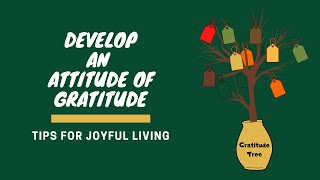
You. I'd like to welcome you to today's presentation on gratitude and happiness. I am your host, Dr. Donnelly Snipes. We are coming up on Thanksgiving tomorrow, so I figured this would be an appropriate topic for today. But why is gratitude important? Well, gratitude is a positive emotion. When we feel grateful, it helps us feel safe. Safe because we're focusing on the things that we do have and that we can control. When we don't have gratitude, then we tend, we're, we tend to focus on the negative. You're either focusing on the positive and you're grateful for it, or you're focusing on the negative and you're unhappy about it. There's very little in between area there. So it's important sometimes to kind of force yourself to look at the other side and focus on some gratitude. And we'll talk about some perspective change in a few minutes. But when we are grateful, let's just take it from the positive spin today. When we are grateful, it helps boost our immunity. They found that things like laughter actually do boost immunity. We know that pain tends to go down when inflammation goes down. And when immunity is doing better, when there's not as much inflammation, when there's not as, as much problem, we tend to have less pain. When we're happy, we tend to have more free floating endorphins, we tend to be more relaxed, we have more serotonin, which is also helpful with pain. And when we are feeling grateful, when we are in that content place, maybe not happy, but content place, it can also help minimize or mitigate other health conditions that would otherwise be harder to control. If the HPA axis, if your threat response system is active, when we're content, we don't have that threat. So our body's not continually dumping blood glucose and, and, and, and stuff. So physically it actually helps us feel better when we practice gratitude. And I've talked about it before, there have been studies that have shown that even if you only spend 20 minutes a day, you set aside 20 minutes a day for focusing on the positive, for focusing on gratitude. It actually has ripple effects throughout the day. It increases your endorphins and it actually reduces the reactivity of the HPA axis, which is a good thing. And we might hypothesize that if we stop, start the day feeling safe and empowered and grateful, then we are not already revved up. So we're not, you know, already waiting and vulnerable for distress. Affectively, when we practice gratitude, it helps us get out of our funk. Now, emotions like we talked about yesterday and the day before emotions are very valid. And you can have emotions like grief or depression or anger that come up, and you want to recognize them and acknowledge them, but also realize that you can have, for example, grief and enjoy the moment at the same time. You don't have to be completely immersed in your grief. Cognitively, when we are grateful, it sends out the. The message to our brain to be more aware and more alert and more observant of the positive things. When we are looking at things and saying, I am grateful for, you know, we don't tend to focus as much on the annoyances and the nuisances and, you know, things that really aren't that big of a threat. We tend to overlook some of the little stuff. Environmentally, when we're grateful, we just create much more positive energy in our environment. If you've been around somebody who is grateful for, you know, whatever they have and what's going on, and they're just in. They have that attitude of gratitude. You know, it, you feel it. They are it. It's almost like they're. They feel lighter and they do bring a positive energy into a room. So even if other people are kind of grumbly, somebody that comes in with gratitude has a light that can't be extinguished. And relationally, when we have an attitude of gratitude, number one, you know, we can improve, you know, maybe help improve people's moods. But number two, we don't add to distress and negativity. We don't come in with our negative thoughts and our negative attitudes and start spilling that out. We pour out gratitude, we pour out happiness. And that can be helpful. One of the activities that you can do, you know, we've got a lot of people have children at home. Whether you're having a big family gathering or not, with all this stuff that's going on, you can make a gratitude tree, go outside somewhere and get a branch that has multiple little offshoots of it off branches, if you will, and a vase or a pot, and put that branch in the pot, and then you can surround it with rocks or sand or whatever you want. And then on each of the little offshoot, tiny branches, put present tags and have each person identify, decorate a present tag however they want and identify one thing that they're grateful for. And you can do this every single day of the year. You don't have to just do it on Thanksgiving. It is a great activity. And because during the year when you're starting to feel frustrated, you can go back and look at all the blessings that you've gotten all the things that you're grateful for that you might be just taking for granted right now. So it's nice to be able to go back and look at those things. You can do it, you know, as a prelude to dinner, for example, every night and have everybody in the house put a gratitude tag on the gratitude tree. The tags come in different shapes and sizes. You can get them from walmart or off Amazon or whatever. They're easy to come by. And, you know, use your creativity with decorating them. Kids love to do this because, you know, it's. It's an art project. The next one we're going to talk about is perspective and radical acceptance. And I want to show you a commercial that I saw today. And I don't usually really like commercials, but this one spoke to me. It is a very powerful commercial by the u. S. Forest service. Dad.
Hey, Lulu. Do trees tell each other stories? I'm sorry, I'm afraid I don't know that. Hey, why don't we go find out? Do clouds take naps? I couldn't tell you. Can birds draw natures? I don't have an answer for that.
Dad.
Just starts visit their pipes.
Look. So I don't know if you could hear all that, but she said, do trees tell stories? Do clouds take naps? And do birds draw pictures? And it was a different way of looking at those things. I mean, you've probably seen the. The birds. I can't think of their names right now. Starlings swarm before and make different picks, shapes or whatever. But you probably thought of it as a swarm. And if you're like me, the starlings are not native to the United States. So I think, ugh, you know, that's a species that's crowding out our, our native animals. But, you know, they are also from a gratitude perspective, you can look at it from, you know, being one of God's creatures, but also recognize looking at what they're doing, making the shapes, and just being in awe of how they can fly that close together and not bump into each other. Envisioning things from a different perspective can really help you work on radical acceptance and gratitude every time. Try every time you have an unpleasant thought to counter it with. A thought that helps you feel safe, loved and or empowered, preferably all three. And that's really what we're looking for, is in what way is this situation that I'm unhappy about? In what ways am I safe and in control? The first step is radical acceptance. Accepting it is what it is. Reality is reality. Now what we do with it, we do have some control over thinking about, how can you accept reality and improve the next moment where you're at right now? You might not like it. You might not, you know, be thrilled with it. So what can you do? Sometimes, like cold temperatures, you can't change that situation necessarily unless you go indoors. And you can be grateful that you do have a warm place that you can go inside, because not everybody has that. Cold temperatures can, you know, you can look for positives in the cold temperatures. I love the cold temperatures because it means there might be an opportunity for snow. It's a great time for certain plants to go dormant that aren't able to flower and fruit unless they have cold temperatures. So, you know, and I love wearing sweaters. Big, bulky, soft, fuzzy sweaters. Love cold temperatures. Yes. When it gets cold, my arthritis acts up. No doubt. When it gets cold, we've got to turn the heat up. And I hate spending money, but I don't. I choose not to focus on those things. I choose to focus on the amazing parts of the cold temperatures and how I could possibly spin that to make it work for me. A messy house is another thing that stresses out a lot of people during the holidays because people are coming over and, you know, stuff gets left out and there's dishes and all kinds of stuff to do. Okay, well, you can get frustrated that there's a messy house, or you can examine, you know, what if I didn't have a messy house, that would mean that people weren't coming over and, you know, we weren't having all this family and support and everything. So being grateful that you actually have people to make your house messy can be a way of expressing gratitude, even in the face of something kind of stressful. Look at. In what ways does that experience enrich your life? Critical family members, you know, they can make you feel not so loved, not so empowered. It's important to recognize where they're coming from, though. Is their criticism meant to be constructive? Is it coming from a place of love or is it coming from a place of darkness where that person is just that unhappy? I don't know. Does it matter? What. When somebody is critical towards you, if you know that there are certain family members that are going to have something to say or be critical? You know, thinking to yourself and practicing that loving kindness meditation. First yourself. All right, I'm getting ready to deal with this person. May I be self, may I be safe, may I be healthy, and may I be at peace and say the same thing for that person. Send them thoughts. May you be safe, may you be healthy, and may you be at peace. Recognizing that if they are cantankerous, it probably means that their heart is not at peace. They're coming from a place of unhappiness. And instead of taking it personally, sending them positive vibes, it may not do anything, but it may. And reacting to their negativity with negativity most likely will make that worse. So if you can take a deep breath and just say to yourself, all right, and maybe even when you're saying, may you be safe, healthy and at peace, just imagining their words just kind of flowing over. Over your body and, you know, off your back like water off a duck, that can be helpful, too. Some people, as I said, will have some constructive feedback that's useful, great. Maybe it's not the best time to bring it up, but if it's useful, fine, I'll take it. But you don't have to take everything people give you. You don't have to take every piece of advice they give you, even if it's coming from a place of love. You can recognize that, okay, this person is sharing with me their thoughts, their opinions, their advice from a place of love, if that's where you think it's coming from. And, you know, I am grateful that I've got people in my life that want to be helpful, even if it doesn't feel like it right now. I am grateful that I do have people in my life who want to be helpful and I don't have to internalize what this person says. If it's useful, I'll take it. If it's not useful, I'll just let it go by. But I don't have to argue the point. I can just say thank you. Extroverting. That's what my daughter calls it on the holidays can be really stressful for people, especially introverts, who get overwhelmed by all of the hubbub and very exhausting recognizing what your needs are. If extroverting feels overwhelming to you and you're like, oh, my gosh, we're gonna have people over all stinking day, even though you love them very much, it's exhausting to extrovert all day long. For introverts, recognizing what can you do, you know, radical acceptance. They're gonna be here. What can you do to help yourself feel safe, loved, and empowered? Can you. Are there times that you can, you know, slip away, take a break for a few minutes? What can you do to help yourself, you know, radically accept that they're going to be there. Be grateful for the fact that you do have people who love you, but also be respectful to yourself and say, what steps can I take? And to. For my own health and well being at this point in time. And you know, I remember when I was younger and I had family that we would go over for the holidays periodically. You know, people would just kind of drift away out onto the porch to sit for a little while and nobody took it as an insult, you know, as long as they came back in. So recognizing that people are, can be sensitive to what needs to happen the other way. I used to escape and I'm writing myself out now because I know my husband's watching. When the kids were little, I would take them outside to go play and you know, they would be playing in the playhouse or outside or whatever, but I would be out there all by myself and it would just be quiet for a moment and there wouldn't be, you know, all of the hubbub. So there are things that you can do. You just have to figure out how you can manage the situation in a positive way. Grief. And we talked about this yesterday, people are going to experience grief on the holidays, for example, or anytime. And when you experience grief, that is your brain telling you, hey, there is something not here you don't have anymore that was important to you. That's not a bad thing. That means you had something that you loved. You know, the old saying is better to have loved than lost, than never to have loved at all. I don't know who said it. You know, maybe one of you does. But the recognizing that grief, but also, you know, not choosing whether you're going to sit in that grief and be unhappy that it's not there anymore, or choosing where you, whether you're going to notice that grief, grief and be grateful for the experiences and the memories that you have because of that person or thing that is no longer here. Money is a huge stress. And yes, if you don't have all the money in the world, if you're not a, you know, one of those 1 percenters, then money can be really stressful over the holidays. You may not be able to buy everybody everything that they want, however, what can you give? What do you have? Do you have enough money to pay your bills, to keep a roof over your head and, and being grateful for what parts that you do have and if, even if you don't and you're struggling to pay your electric bill or something like that, recognizing that there are services out there, you know, call United Way 211 and there are a lot of places out there that can help people when they are struggling financially. So be grateful that there are organizations that can help you. Help is available and you know, just, just being focused on what you can do instead of what you don't have. Election stress is a big thing right now. And you know, I've tried not to go on deep dives into election stress or election anything. But this is going to be prominent at a lot of people's get togethers this season. And it's important to focus on what you do have control over. Are you safe right now? What can you do to keep yourself and your family safe? All right, so if you're safe right now, that's good. Are you loved by your loved ones? If you are, great, you know, that's awesome. What can you be empowered to do in terms of the election? None of us can really do much of anything right now. So dwelling on it probably isn't going to do a lot of good. Taking that energy that would you would use refreshing Twitter or whatever it is and put it towards family. Figure out how you can handle deal with that in a positive way. What are you empowered to do at this point in time? And if you're worried about the outcome of the election, regardless of which person you know ultimately wins, asking yourself in the big scheme of things, how likely is it that the things that are nearest and dearest and most important to you are going to be turned on their head or taken away completely if one person is in the, in the White House? Because it looks like we're probably going to have it divided where the House is controlled by Democrats and the Republicans may have the Senate. We don't even know that yet. But for any major sweeping changes to happen, generally it has to be like a Democratic president, House and Senate. So what exactly is going to get accomplished when we've got the split situation like we do right now? And you know, it's important to really focus on the fact there and recognize that the election is a hot button topic for a lot of people right now. And it may be one of those things. You even hang out a little banner in your, your door. You know, once you cross this threshold is an election free zone and in order just to keep the peace, lockdowns, well, a lot of us don't like them. But if you are in one of those places that are, that is under a lockdown or under some sort of restrictions, recognizing what you do have, you do have the people that are in your Household lockdowns, in theory, are helping keep you safe. Lockdowns are helping, keeping, helping keep other people safe. But, you know, let's just get kind of more global than that. With lockdowns, we're not traveling as much, so we are improving the environment. Trying to find some glimmer of positive may make it a little, little bit more tolerable. Lockdowns today aren't like lockdowns 50 years ago. We do have the ability to FaceTime with people. It's not the same, but we do have the ability to do that. So there are things you can do to help yourself feel, address those things that you're unhappy about and feel more happy, safe and content. Same thing with COVID You know, it's still happening. We're having a surge right now. That's unfortunate. A lot of people are really scared. It's important to recognize what can you do. You know, staying stressed about it only reduces your immunity. So taking active steps to protect yourself, you know, the mask, the social distancing, the hand washing, and even the staying at home. If you're at high risk, you know, know there are things that you can do to protect yourself. And being grateful if you haven't caught it yet, that you haven't caught it, you know, just being grateful that you haven't had to experience that. And if you've got a chronic illness, again, thinking in perspective, recognizing that today, in 2020, almost 2021, there are a lot more strategies and tools to help you control that pain than there were 20, 30 years ago. Recognizing that you can have pain or a chronic illness and a rich and meaningful life, and then focusing on what does that mean? What does that rich and meaningful life look like that I want and how can I use my energy to move towards that instead of focusing on what I don't have, focusing on what I do have and where I can go. Other tips focused thought this one can be really helpful. Before doing something stressful, like going to a, you know, office holiday party or engaging with someone stressful, identify three positive things, even like going to the holiday party, even if it one is, I just have to go in there, shake hands, make an appearance, and I can get out. It won't last forever. Okay, that's a positive thing. You know, there is a time limit and you do have control over how long you stay. But identify three positive things that you can keep telling yourself when you're interacting with that person or you're engaging in that activity to help stay focused on the positive, on what you're grateful for, you know, you're grateful for the fact that this is going to end soon. And get pumped, do things that make you happy and put you in a good mood. When we were decorating our Christmas tree this past weekend, I was just rocking out to Christmas carols and singing at the top of my lungs. And, you know, the neighbors probably didn't appreciate it, but those things make me happy, you know, baking, smelling baked goods, cooking. That makes me happy. So during the holidays, I really enjoy doing those sorts of things, and it gets me into sort of this holiday spirit. Well, that's awesome. You can also listen to music that either gets you in a positive mood or an empowered headspace. They don't. They aren't necessarily always the same thing. Sometimes an empowered headspace says, you've got this, you can do it. You are able to persevere. And that's a little bit more intense than maybe happy music that makes you want to dance around the living room. Either way, make some playlists, get pumped, get excited about life, about the opportunity to make today better than yesterday. That is all I have for you today. And from the farm, I want to wish you a happy Thanksgiving. I will tell you this. The donkey is Flo Jo. She is 29 years old, toothless, but. And braise like crazy, but she is a sweetie. And then the rooster, his name's born stellar, and he is the sweetest rooster you've probably ever met. I love this rooster. He walks up to you, he talks to you. I mean, clucks at you. I can pick him up and carry him around like a football. Even though he's probably pushing 17 pounds now. He's a good boy. And then we have Brewster the boxer Lily the Rhodesian ridgeback hound dog mix thing, and her stuffed possum and dookie, our hound dog. So that's a few of the animals that we've got on the farm. And I'm grateful for every single one of them and what they bring to my life. And I am grateful for you guys being with me today. I know a lot of people are traveling and trying to get ready for the holidays, so it means a lot that you're taking time out to join me this morning, Share with me in the comments, if you will, or in the chat, anything that you do in order to inspire gratitude. What do you do to. To help yourself create an attitude of gratitude in yourself, in others, in your children over the holidays? I'm always open to getting new tips and tools that I can share with others. I'm not one of the most artful people in the world. So a lot of the art projects I have either gotten from, you know, my daughter or other activities or other professionals that I have interacted with. And I am grateful for any tools. And, you know, everybody has their own strategies. Alrighty. Well, keep that. And Daniel Ray points out, like, an attitude, share an attitude or whatever attitude you have tends to be contagious. So figure out what kind of attitude you want to spread and set out to spread it like wildfire. Hopefully it's a good one. Have a Happy Thanksgiving.










