Avoid Misdiagnosing Developmental and Neurocognitive Disorders
Dr. Dawn-Elise Snipes walks through how autism, ADHD, and other neurocognitive disorders get misdiagnosed. She covers what gets confused with what: giftedness that looks like ADHD, PTSD that looks like autism, mood disorders and brain injury. A case study shows why you have to check across different settings and ages.
Chapters
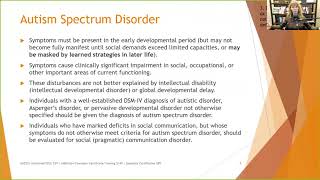
This episode was pre recorded as part of a live continuing education webinar on demand. CEUs are still available for this presentation through all CEUs. Register@Allce.com Counselortoolbox you. I'd like to welcome everybody to Today's presentation on 10 issues in the diagnosis of developmental and neurocognitive disorders. Obviously, we are not going to be able to cover all of the developmental and neurocognitive disorders out there. So I'm kind of hitting the highlights on some of the more common ones that you may see. We're going to talk about Autism spectrum disorder, adhd, both adult and pediatric oppositional defiant and conduct disorder. And you know, obviously we see ODD in some adolescents and you know, sometimes in children and in order for a an adult to be diagnosed with antisocial personality, they have to have a history of conduct disorder. So we're going to look at those because a lot of times clinicians will get those kind of confused when they're making the diagnosis if they don't work with juveniles all the time. We're also going to look at different causes of dementia. And as I mentioned before class, you can see dementia in young people if they've had some sort of vascular episode that has stopped blood flow to the brain or a traumatic brain injury. So, you know, we want to look at that so we can make sure that we are providing the scope of services that is necessary. And then there's a mystery diagnosis at the end that I alluded to that we're going to look at to just kind of throw a little wrench into the works. So autism spectrum disorders persistent deficits in social communication and social interaction across multiple contexts as manifested by deficits in social emotional reciprocity. So reduced sharing of interests or emotions or affect, failure to initiate or respond to social interactions. And one of the keys to diagnosing autism spectrum disorder is you can't use the same behavior to represent multiple things. So if you just have a child who doesn't choose to speak, you know, they just are not communicative at all. You can't use that to quality that one symptom to qualify under both deficits and social emotional reciprocity and in nonverbal and communicative behaviors. So we want to make sure that we're looking for a variety of symptoms. Deficits in nonverbal communicative behaviors could be poorly integrated verbal and nonverbal communication. This is especially true in people with autism. You might see abnormalities in eye contact and body language, lack of facial expressions and nonverbal communication as we've talked about in people with a fetal alcohol spectrum disorder, which is not an autism spectrum disorder right now, remember it's still in areas for further study. But in people with an FASD as well as in autism spectrum, you also may have misunderstandings of gestures and nonverbal behavior and deficits in developing, maintaining and understanding relationships ranging from difficulties in sharing, imaginative play or making friends to just a lack of interest in peers. Now remember, you know, this sounds a little bit like schizoid personality disorder. So we want to rule out, figure out what we're dealing with here. But I do want to also pay attention to pediatric post traumatic stress disorder. If a child has been exposed and pediatric PTSD begins at children under the age of six. If a child is exposed to some sort of trauma and develops ptsd, they may have failure to initiate or respond to emotional, to social interactions. They may have, know, just be completely withdrawn within themselves and have a lack of facial expressions. They may be sort of flat and disengaged and they may have an absence of interest in peers. They just, they don't trust the world. It's a scary place. It's an awful place. They're depressed, they're angry. So whatever we're looking at, we want to make sure of what we're dealing with. So we want to rule out any trauma history that might be confounding our diagnosis. You're also looking for restricted and repetitive patterns of behavior, interests or activities. So stereotyped or repetitive motor movements, use of objects or speech, such as lining up toys or flipping objects. Some people have to have things lined up just so. Or they may do something called stemming where they repeat a particular movement over and over again. They may have idiosyncratic phrases that they say and you know, something that they just say all the time. Yep, yep. Or that's the way it is. An insistence on sameness, an inflexible adherence to routines or ritualized patterns of verbal or nonverbal behavior, which produces extreme distress at small changes and difficulties with transitions, rigid thinking patterns and you know, thinking about my son who tends to be more of a judger on the Myers Briggs he likes structure. I remember one day he went into preschool and they had circle time first thing in the morning. They would, you know, greet each other and they would read a story and it was circle time at 8 o' clock and that morning it was somebody's birthday and he went to the, went into the classroom and he sat down on the circle and he was ready for Circle time. And the teacher called him over. She said, we're not doing that today. We've got a birthday party. And he was just beside himself. He's like, no, it is circle time. And he just sat his little happy self on the circle. And eventually his teacher was like, well, if you want to join us, you can now. Does he have autism? No, he likes routine. And it didn't cause him extreme distress. He was just like, well, you know, when everybody else gets with the program, they'll realize that it's circle time. So we want to look at. You've got children who are much more structured, like my son is, and really needs or cherishes their routines, but if they're disrupted from them, it does. It's not the end of the world for a person with an asd. We're probably looking at someone who's experiencing extreme distress. It throws them into a tizzy at small changes, highly restricted, fixated interests that are abnormal in intensity or focus. And again, you've got some kids out there and some adults who may develop an interest in one area, and they are just fixated on that, and they will know everything there is to know about that. Does that mean that there's a problem? No, it could mean that, you know, they are just really into that particular topic. And, you know, a lot of people go through phases. I know I do. When I decide that I'm interested in something, I'll order every book I can find off Amazon or go to the library and get every book I can find on it to learn everything there is about it. Like, when I started Organic Gardening, I was going to read everything. I was going to learn how to make the best compost and yada, yada. So does that. Is that abnormal? No, but what we're looking at is. Is this part of a constellation where the person has one interest and they're not interested in anything else. I still had other interests. You know, I could break away from it, but there are a lot of people who just. They really throw themselves into something and hyper or hypo reactivity to sensory input. If there was a child that used to come to the daycare center at the gym that I worked at, and when he experienced too much stimulation, he would become extremely distressed. And so the sensory input, if there were too many kids going on, if there was too much noise, it was more than he could take, and it would cause him a lot of distress. Some. You can also talk about sensory input in terms of smells, sights, whatever. So when we're looking at the environment of the person. What do we need to address in that person's environment to help them feel as grounded as possible? But you can also have hyporeactivity where there may be loud noises and the child doesn't startle, or there may be really noxious smells and they don't even seem to notice. So either end of the spectrum we're kind of wanting to take a look at. Symptoms must be present in the early developmental period, but may not become fully manifest until social demands exceed limited capacities. So depending on where they are in the spectrum, it's important to realize that you may have children that aren't presenting as, you know, like they're meeting this kind of criteria. It's not causing them any sort of psychosocial impairment. So parents aren't bringing them in, going, there's something wrong, until they get to the point where whatever their capacities are are stretched to the limit. So it could be kindergarten, it could be first grade, it could be, you know. You know, generally by first grade, there's a huge transition for children, especially in public school, when they go from kindergarten, where they've got a lot more freedom, a lot less structure, yada yada, to first grade, where they're sitting at a table and they're learning, and it's extraordinarily structured. A lot of children have difficulty with that transition. And if you have a child who has other issues with changing structure, making friends, that sort of thing, then you may see things become more problematic when they switch over to first grade. The symptoms have to be, oh, and the problems that the person is experiencing may be masked by learned strategies later in life. So you may have an adult who was diagnosed with an autism spectrum disorder when they were a child. Does it mean that it went away? No, they learned how to deal with it. There are a lot of people who can develop skills to figure out how to accommodate their unique characteristics. So as clinicians, those are things that we can help people do to help them figure out how to integrate into mainstream to the extent that they choose to, and how to be okay with the rest of it. Maybe they aren't interested in making a lot of friends, okay? If it's not causing them problems, if that particular symptom is not problematic, we can address that at a later date. The symptoms have to cause clinically significant impairment in social, occupational, or other important areas of functioning. They're not better explained by intellectual disability or global developmental delay. So we want to look at that too. If you've got a child who may have had, who may be a preemie, who may have been exposed to things in utero, who you suspect for any reason of intellectual disability or developmental delay. And you tend to see that, you know, you see the child not rolling over quite when they should. You want to take a look at what's going on because early intervention services are available in every state and often cover covered by Medicare Part D in order to help children who have developmental delays to get them off on the right start. So you can google early intervention services for children if a parent is bringing this to your attention. Now, I'll share another example. My son, when he was about 20 months old, he still wasn't speaking in full sentences. And he should have been speaking more than like two word sentences by that point. And I was starting to get a little freaked out. But he hadn't been in preschool up until that point because he was micro preemie. And it was recommended that he was not exposed to other children in that kind of environment. But anyway, so I got a little freaked out and I brought him in for his checkup and I told the doctor, I'm like, he doesn't speak in full sentences. He's not meeting the criteria in the book. And I was like completely distressed. And the pediatrician who had eight kids of his own looked at me. He goes, is he getting his needs met? You know, very quizzically. And I was like, oh my gosh, yes. He's like, well then as soon as he needs something that he's not getting met, his speak. Sure enough, as soon as he enrolled in preschool, once he turned two, he started talking. So we don't, we want to take into consideration all of the factors that are going on. Is there a reason this child is not, you know, engaging or making friends? I mean, maybe they have six other siblings at home, so, you know, they don't really have an interest in making friends outside side of the immediate relationship or they've always got a friend with them at the park. So we want to normalize as much as possible and figure out what's causing things. Individuals with a well established DSM. Oops, I mistyped that. DSM 5 diagnosis of. Oh yeah. DSM 4, diagnosis of autistic disorder, Asperger's or pervasive developmental disorder not otherwise specified are now all lumped under in the DSM 5 autism spectrum disorders. You can argue whether that was a good idea or a bad idea, but right now it is. If you've got a client who meets the criteria for what we used to diagnose as Asperger's, they will fall under autism spectrum disorder. It's important for us as clinicians to really understand the depth and breadth of the different symptoms in this spectrum. Now, because it's not broken out like it used to be, individuals who have marked deficits in social communication, but whose symptoms don't otherwise meet criteria for autism spectrum disorder, should be evaluated for social communication disorder. So if most of their issues have to do with interpersonal communication, then we want to take a look at social communication disorder. As I said, you want to avoid using the exact same behavioral exemplar to satisfy two criteria. For example, if somebody repetitively puts their hands over their ears, you could consider that a repetitive motor movement when they get stressed. Or it may be considered a hyper reaction to stimuli if things are too loud. I know for me certain pitches bother me a lot more than other pitches. High pitched sounds drive me bonkers. But low pitched sounds, probably, probably because I usually have my music cranked up, don't bother me as much. So we want to look at, is this a hyper reaction to stimuli or are we going to consider it a repetitive motion? One example of a specific criterion may not be sufficient to assign the criterion as being present. For example, if the child puts their hands over their ears when they are at the daycare, at the gym, they walk around like this the whole time. Or when they're at school, they walk around like this. It may be the noise from that particular environment. So we want to look, is the behavior clearly atypical? Is the noise bothering other children or not? And is it across multiple contexts or does it only occur in in one context or context that are very, very similar, like being in a room with 20 other children. So we want to take a look at that. Now we're going to move on to ADHD because there's also my experience has been with adults, there tends to be under diagnosis of ADHD in people who are not diagnosed as children. And you know, they can be diagnosed maybe with bipolar disorder or a lot of the clients that I used to see, remember I worked in co occurring, would come in and they didn't have another diagnosis except for substance use. And they had been basically self medicating as best as they could with the substances they were using. So we want to take a look if somebody's using, especially if they're using stimulants, but sometimes they're using other medication or other substances like marijuana to help them focus a little bit better because they just feel all over the place. So for children, there need to be six or more of the symptoms. Five for adolescents or adults that have persisted for at least six months in two or more settings to a degree that's inconsistent with developmental level. Now, that's a lot of things, but those are a lot of conditionals that we need to consider. So is it only at work, is it only at home, etc. Symptoms don't occur exclusively during the course of schizophrenia or another psychotic disorder and are not better explained by another mental disorder, specifically mood disorder. You know, we have difficulty concentrating, difficulty focusing in some mood disorders. You can have some symptoms of hyperactivity in hypomania as well as mania. So let's look at it. If they're intoxicated with a substance, you know, is that what's causing the symptoms or the withdrawal from the substance? So what we're looking at is inattention, failure to give close attention to details, or making careless mistakes in work or with other activities. Has trouble holding attention on tasks or play activities. Now this one, again, similar to what we were talking about with autism spectrum disorders, people with ADHD can also have hyper focus. Especially if there's one particular thing that really interests them, they may get lost in it. Sometimes they actually will gravitate towards that thing when they're feeling overwhelmed because there's so much stimuli. They will gravitate towards that because that's the one thing they can focus on and kind of block everything out. A colleague of mine when I was in graduate school did a presentation on adhd. And she stood up at the front of the room and she started talking and, you know, okay, we were listening to her presentation, and then somebody started flicking the lights. And, you know, we thought it was a little bit annoying, but okay, you know, whatever. We looked at that person. We were trying to. To pay attention to her, but it was distracting. Then somebody turned on some music that was getting a little more frustrating. And we could. We were starting to figure out that there was a method to the madness. And she turned on a fan that was an oscillating fan, and she was still doing her presentation. She had other people doing all these other things to distract us. And she said, that's what it's like for me every day. Because people with ADHD have difficulty filtering out and deciding which stimuli are important to pay attention to, and they tend to notice a lot more things. And so that kind of brought it home for me. I was like, okay, I can see why this is overwhelming and how you might have difficulty getting something done if you're looking at the lights and you're looking at the sound and the person. The Kathleen Nadeau, who's a Ph.D. suggested that instead of thinking about it as inattention, we might think about it as people with ADHD have a dysregulated attentional system. Sometimes it's inattention, sometimes it's hyper focus. So we don't want to rule people out again just because they have something that they can get completely immersed in, even if it's a video game. Does not seem to listen when spoken to directly. A lot of children, they'll hear it and it's like it goes in one ear and out the other and you're like, did you even hear what I said? Often does not follow through on instructions. Fails to finish schoolwork, chores, or duties in the workplace because they lose focus and they get sidetracked. Now, this is really easy for children who are gifted as well because their mind is constantly working disorganized with time management problems. Again, not something that's uncommon in children who are gifted. But we can also see, you know, other conditions that may cause people to be more disorganized. Often avoids, dislikes, or it's reluctant to do tasks that require mental effort over a long period of time. Now, this is a little bit more unique to ADHD or the mood disorders. Remember how hard it is when people are depressed or have high anxiety to focus and get sustained mental focus on something. So they may kind of avoid doing those things because they think it's going to be a losing proposition. They often lose things necessary for tasks and activities, like school materials, wallets, keys, eyeglasses and phone. Just this week, I've already lost my keys, my eyeglasses, and my phone. So again, we want to look at is this normative or is this worse than normal? And you know, for developmental age, I definitely shouldn't be losing these things. So we can help people develop strategies for not losing things in their household. For example, we have on the in the foyer, we have a table that I put my basket that I put my keys in and a basket that I put my purse in so I know where those things are. And then I plug up my phone as soon as I walk in the house so I know where those three things are all the time. And that helps me stay a little bit more organized because if I walk in and I just set my keys down, I'll never remember where I left them. That's not necessarily a symptom of anything except for being a little bit distracted, distractibility you know, as I said, people with ADHD can get easily distracted, not only by external stimuli, but by their own thoughts and forgetfulness. If you've got all that stuff going on and coming in, and if you've ever volunteered in a preschool classroom, you can kind of know what this is. Like. You've got 17 kids wanting different things from you, and you're like, okay, I'll get you that. I'll get you a juice. I'll take you to the bathroom. I'll do this. And you. And you start doing one, and then you can't remember what the other three things were, or you forget one of them. It's not all that uncommon. So think about somebody with ADHD who's constantly got all that stimuli coming in, and they're trying to figure out what to remember and what not to remember because their brain doesn't focus, filter out the stuff that's not as important. So they're having to basically manually filter it out going, I need to remember. Don't need to remember. The other criteria we're looking at is hyperactivity, and we want to differentiate it from impulsivity, such as we would see in hypomania. Often fidgets with or taps hands or feet or squirms in seat. This can also be a sign of anxiety. May leave the seat in situations when remaining seated is expected. Again, can be, especially in children, can be anxiety, it can be boredom. It can be they're gifted and they're just. People who are gifted tend to be on the move a little bit more. Often runs about or climbs in situations where it's not appropriate. However, adolescents or adults have gotten it under control a little bit more and tend to feel restless. You know, they're just like, oh, I can't stand waiting in line. I can't stand waiting in traffic. You know, they get really restless if they have to be still for any period of time, they're unable to play or take part in leisure activities quietly. These people are just always on the go. And it doesn't mean they're always talking. It can mean they're just moving and doing things and making, you know, making noise. They are often on the go, as if driven by a motor. Think your little energizer bunny just constantly going and going. They may talk excessively. And especially problematic with interpersonal relationships is when the person blurts out an answer before a question has been completed or finishes somebody else's sentence because they have difficulty waiting their turn. And these are two things, especially in treatment centers. When you're doing group therapy, that can be really problematic to the functioning of the group. If somebody has difficulty doing that, the group can take that as the person dismissing their opinions or not taking them seriously. It can feel invalidating where the person really, you know, didn't mean to be rude. They just didn't have that impulse control there. So we need to help them figure out how to develop skills in order to not finish people's sentences and talk over people. And they may interrupt or intrude on others, butting into conversations or games, just kind of walking up and taking over a conversation. Common errors that we're looking at when diagnosing ADHD is, you know, like I said, differentiating between bipolar, a hypomanic or manic episode, and adhd. ADHD mood swings are generally a response to something happening in a person's life, and it matches the perception, the person's perception of that trigger. So if something happens that makes them angry, their mood swing is going to be angry. And it makes sense. It may be a little bit excessive, but it makes sense. So, you know, we want to look at, was there a precipitating trigger? And they can shift instantaneously. So they may go from being angry or upset and then back to, okay, I'm good. You're not going to see that in somebody who's in a manic episode. In an ADHD mood swing, it often goes away quickly when. When the person with ADHD becomes engaged in something new and interesting. So one thing that parents with children with ADHD can do is if they. Or people with ADHD who are older, if they get upset about something, they can learn to redirect their attention and get involved in something else so they can kind of get some distance from it. Sleep issues, racing thoughts and restlessness can be caused by hypomania, mania, anxiety, or even sleep apnea. So we want to rule out if they're not getting good sleep, if they have some restlessness. When people have sleep apnea, they often wake up multiple times during the night. So they may confuse that with restlessness. If they have difficulty completing projects, we want to look and rule out learning disabilities, dyslexia, something like that. Obsessive comparison, compulsive personality disorder. Remember, people with obsessive compulsive personality disorder often don't finish projects because they want it to be perfect, and they never reach perfection. And they may not turn something in. If they've got an anxiety disorder and they're afraid of evaluation, or if they have PTSD and They're having difficulty focusing on tasks at hand, easily distracted and difficulty concentrating can also be associated with anxiety and depression and obsessive compulsive disorder. One thing that helps differentiate. I read that ADHD distractions are often happy thoughts. They're often not distracted by something that makes them angry. A lot of times, they'll be distracted by a pretty bird. My son, when he was. When we started homeschooling him, he had a window, and I had a butterfly garden outside. And he used to get distracted watching the little birds and the butterflies. And so finally we had to start shutting the blinds when he was doing his study time because he wouldn't get anything done. He just kind of migrated over to the window. Social awkwardness and difficulty reading social cues can be a sign of autism spectrum disorders. And unusual interests and over fixation and interrupting and talking to. Interrupting and talking over people can also be symptoms of autism spectrum disorders. So we want to kind of rule those out as well. So we want to look at the gamut. And remember I said FASD is not technically part of the autism spectrum disorder, but we've talked about that enough for you to be a little bit familiar and think, might there be something going on with this person, adult or child, where they were exposed to alcohol and utero, that might be causing some of these? And it hasn't been diagnosed yet. Disruptive mood dysregulation disorder was added because there were too many children being diagnosed with bipolar disorder. So they added this diagnosis, severe temper outbursts that occur on average three or more times a week. Now we want to look developmentally. What is severe? You know, is the child punching their fist into the wall or are they throwing themselves down? Children have temper tantrums. So how severe is it where it's not developmentally appropriate anymore. The mood between outbursts must be consistently and observably angry or irritable for 12 or more months without a break of three months. Wow. You know, can you imagine having a child that was observably angry or irritable for 12 months with very little break that. That would break my heart. So you can see where we're starting to identify that there's a. Something going on with junior outbursts or elevated or expansive moods that last for longer than a few hours or for days on end may be more likely to be signs of mania or hypomania. So using your best judgment. With conduct disorder, we're looking. And remember, this is the predecessor or has to be diagnosed before somebody can be diagnosed as an adult. With antisocial personality. So this is the one that's the meaning. Aggression to people and animals, bullies, threatens, intimidates, is physically cruel to people or animals, deliberately destroys property, tends to be deceitful, lying or stealing to obtain goods, and there's a serious violation of the rules. So this person is really, really angry and seems to lack empathy. And you know, the key, one of the keys being the aggression to people and animals. We do want to rule out mood disorders, anxiety, ptsd, substance use, ADHD and learning problems. But generally the degree of the aggression and hostility is going to really point you in the direction of conduct disorder. You can have those other things co occurring with conduct disorder though. Now oppositional defiant disorder on the other hand, is kind of like conduct disorder. Light if you will, negativistic, hostile and defiant behavior lasting at least six months. And I'm going to jump down to the bottom here. And it only meets criterion if it occurs more frequently than is typically observed in individuals of comparable age and developmental level. So all teenagers don't have oppositional defiant disorder. We want to look at what is appropriate for age and developmental level because remember in the teen years they're trying to figure out who they are and they're trying to get some distance, they're trying to get some individuality and control over their own lives so they can appear odd at times. So the youth with oppositional defiant disorder often loses their temper, argues with adults, often actively defies or refuses to comply with adults requests or rules, may deliberately annoy people, blames others for his or her mistakes or misbehavior, is often touchy or easily annoyed by others, can be angry and resentful, spiteful and vindictive. So you only need four of those criteria to meet oppositional defiant disorder. Thinking again in the big scheme of things for people who are, You know, this diagnosis is going to follow them. So we don't want to just be throwing out diagnoses of conduct disorder, odd or personality disorders willy nilly. We want to make sure that number one, the disorder, the person's symptoms meet criteria to the threshold that it's abnormal for their age and developmental level and then proceed from there. The disturbance in behavior causes clinically significant impairment in functioning, does not occur exclusively during a psychotic or mood disorder. So if somebody is in the throes of an anxiety disorder, they may lose their temper, they may argue with adults, they may be blame others for their mistakes or misbehavior and be touchy, irritable, easily annoyed, angry and resentful. That's not uncommon to see in people who have anxiety or major depressive disorder or if there's some sort of psychotic episode going on. You want to rule it out from conduct disorder if the individual is 18 years or older, rule out antisocial personality disorder. But like I said, conduct disorder is pretty obvious in terms of what you're dealing with. So neurocognitive disorders due to traumatic brain injury, vascular neurocognitive disorder, and that is anything that causes the brain to not receive blood and oxygen for a period of time, that can be strangulation. And we can see that in instances where someone's been victimized, we can see that in instances of autoerotic asphyxiation, we can see that if somebody overdoses on depressants and their heart stops for too long of a period of time, we can see neurocognitive disorder in people with hiv. So HIV does affect the brain, and we can see it, as you would expect, in Alzheimer's, dementia. And now Alzheimer's is obviously diagnosed later in life. With Alzheimer's, the person has difficulty completing familiar tasks, difficulty determining time or place. They often misplace items, have difficulty making decisions. They may withdraw socially and have mood or personality changes for them. So why is it important? If you don't typically see older populations, why do you need to know? Well, because Alzheimer's can't have an early onset. So if you start seeing some of these, it's important because the earlier somebody gets in for treatment, the better their prognosis. Because there are some medications and treatments now that are showing efficacy at slowing the progression of the disease. They're not able to reverse it or stop it. But if people get on meds early, they can have a much longer period where they're still independent. Lewy bodies and Parkinson's. Lewy bodies can occur by themselves without Parkinson's disorder. Or you can also have Lewy bodies in someone with Parkinson's disease. This is not. Lewy bodies are not reversible. It's not treatable. But the people can see specialists to treat their symptoms and give them the highest quality of life possible. So one of the things first symptoms is visual hallucinations. You may also start seeing movement disorders, tremors, shaking, tics, poor regulation of body functions such as their heart rate, their temperature. Cognitive problems, sleep difficulties, fluctuating attention, depression and apathy. Now, the ones that are italic cognitive problems, sleep difficulties, fluctuating attention, depression, apathy and even hallucinations to an extent could be present in someone with major depressive disorder with psychotic features, if you have the hallucinations there. So we don't want to just assume that it is major depressive disorder. If you have someone that's starting to show these kinds of symptoms, especially with the visual hallucinations, they probably need to be referred for an evaluation so they can be managed and maintain their highest quality of life. Now, Huntington's disease is a progressive, fatal disease. We're not going to spend a lot of time on it because it's hereditary. So people who develop it know that they have a chance of developing it, and they're probably going to come in going, this could be what it is. The onset is typically in the 30s or 40s, but it can be before age 20. It causes the progressive breakdown, degeneration in nerve cells in the brain. And the period from the emergence of symptoms to death is about 10 to 30 years. So people that we're working with who have become symptomatic for Huntington's disease are going to be dealing with a lot of grief and existential issues, as well as long term care planning and those sorts of things. The symptoms, the mood symptoms are similar to depression. The cognitive symptoms are representative of dementia and with the addition of difficulties with impulse control. So those are the things that you kind of want to look at for Huntington's disease. Like I said, if somebody comes into your office and they've got it, they probably know they have it or they know they have a relative with it, and hopefully the family understands that it's transmitted through the generations. Okay, now for our mystery diagnosis to add a little fun for today. What would you diagnose if you had a youth come into your office, say, adolescent who was angry and irritable, tended to get bored easily and be restless, maybe overly excitable, but is underachieving. They're just not making what you would expect them to do in school because they seem to be really bright. They may have peer issues, spending large amounts of alone time, excessively high expectations of others, and a lack of a sense of belonging. They just, they feel like a square peg in a round hole. They may engage in power struggles with adults. You know, and so I'm thinking maybe oppositional, defiant, okay. They tend to have a lot of perfectionism and put a lot of pressure on themselves and get stressed out because they want everything to be perfect. Their judgment often lags behind in their intellect. So they may be really smart, but then, oh my gosh, how, how could you forget to do that? And they may suffer from something called reactive hypoglycemia. Which is, you know, after they do something really intense, they have a hypoglycemic episode. So reactive hypoglycemia is kind of a monkey wrench in the works. But for the rest of them, thinking about, what would you diagnose if this youth came in with these symptoms or the majority of these symptoms. And to answer that question, we are going to move over to our video. And remember, if you can't hear this, please let me know in the chat room and I will do what I can to attenuate it.
High ability certainly is a benefit. I mean, well, I think we all agree that, yeah, it's nice to be brighter than it is to be less bright. But there are some issues that are the most frequent. The first is I mention the 25 to 50% of the time waiting for all this to catch up. I'm sure that you have had that same experience that you have been in situations where you've been at parties where the only thing going through your mind was, if I have to listen to this dribble for five more minutes, I'm going to go crazy. Or I, I just. This person is thinking and talking so slowly. Come on. And you remember that in Patience. Now, the same is for gifted kids. Underachievement goes along with this. I mentioned the gifted kids underachieving by two to four grade levels. And actually what we find is that.
Okay, y' all are saying you can't hear the video very well, so I'm just going to paraphrase this. I really. If you work with children and adolescents, this is definitely an hour that's worth your time for helping to differentially diagnose adhd, Asperger's, autism and giftedness. Because there are a lot of symptoms of giftedness, which all of them are right here. So that was the hint there. All of these symptoms here are symptoms of giftedness. So let's think about why this might be anger and irritability. And he goes on to make the parallel. What if you had to go to an in service and you really didn't want to go and you went and it was dreadfully boring and you just, you had 17 other things you could do and, and, but you had to go to that same in service every single day. For children who are gifted, sometimes this is what school is like. You know, they get finished with everything so quickly or they learn it so quickly and then they've got to sit and wait for everybody to catch up and they find it tedious and they start Getting restless, and they can get sort of agitated, which can lead them, like, we know many of the famous really smart people in the past underachieved in school because they just got bored and they didn't try. And, you know, underachievement is not always the case, but it's not uncommon. If the child or the adolescent or even the adult is not feeling challenged, then they may not really give it the attention. Peer issues with someone who is an. What he was saying at the beginning of the video is, you know, maybe there have been times that you've gone to a party and you've been talking to somebody and they just seemed to talk so slowly, and you were like, come on, give me what you're saying. Get to the point. And for someone with giftedness, a lot of times their mind runs faster than everybody else's, so they get frustrated and irritable. Spending time with their peers especially. So they may spend alone time. They may spend a lot of time talking to themselves. So you can see. And in adults, they may also prefer environments that are either working in isolation, like working in a lab or working at a computer, or working with other gifted people, but they're going to have. They may struggle working with people who are of average intelligence because they just feel like everybody, the whole world is going in slow motion, which can lead to a lack of a sense of belonging because they're like, well, you know, I don't get along with anybody at work or I don't like participating in things. And they also have excessively high expectations of others. They have difficulty understanding how they differ from the rest of the world. They see something and they're like, that is so easy. I don't see what. You have a problem with it. And everybody else in the group is going, what? That's what I feel like a lot of times when I'm working with my son on math because he's brilliant with math and, you know, I'm not. So thankfully, his father takes care of that anyway. Power struggles. Someone who is gifted may see multiple different avenues. They also tend to like to argue and play devil's advocate because it stimulates their mind. It's not because they're trying to be oppositional, but they want to see the other side of it. They can be very much type A personalities, not always their judgment lags behind their intellect. So you will see, especially in teenagers, because as the person gets older, the judgment and intellect gap closes. But when they're teenagers, there's a lot of problems with judgment. Going to school and forgetting their schoolwork at home or going out with friends and doing something that was really showed very, very poor judgment. They're really smart, but they got caught up in peer pressure doing other things. So if somebody's seeming to show poor judgment in the choices that they're making, but they're really bright, and you're like, how could you even think that that was a good idea? You're so bright, think. Is this a symptom of the giftedness? And how can we help people stop and use their thoughts in order to analyze the situation to make better judgment? Now, reactive hypoglycemia is interesting because the human brain uses a ton of glucose. Well, if the brain of the person who is gifted works faster, you know, than the rest of ours. What they've seen in the studies that they've done, and he talks about this during the video, the fact that people who are gifted, especially after a period of concentration on something, they may start getting irritable and tired and sluggish because they're experiencing hypoglycemia. Their brain just burned through that blood glucose. So youth who have reactive hypoglycemia tended to do better when they had a healthy snack, a moderate protein carbohydrate snack at like 10:00am and I think he said 2:00pm, you know, between, between the meals to keep the blood sugar stay more stable. They saw a significant reduction in behavioral problems. Many gifted children are incorrectly diagnosed as having emotional disorders. Other diagnoses are actually more common among gifted children like adhd, but are often overlooked because few psychologists, pediatricians, or other healthcare professionals receive training about gifted children. The video that I have in the class covers information about characteristics of gifted children, frequent issues that arise, and guidelines to distinguish whether the child is simply showing gifted behaviors, suffers from something such as ADHD or Asperger's. You can have, like you said, dual diagnoses. That's important. The other big takeaway if you don't ever watch the video is when we're talking about gifted, we're not talking about that 3% at the tail end of the bell curve. We're actually talking about children who are anywhere in the top 10% students, that 90 to 100% percentile, that's who we're talking about. So children who we would normally think are, you know, really intelligent, but we wouldn't qualify them as gifted, so to speak, they don't meet the MENSA criteria. They will often have many of these symptoms. So if you're, you're looking at a child with an IQ of about 120 or higher may have behavioral symptoms like we talked about. So you want to rule out giftedness, which is not a diagnosis per se. And if the child is gifted, they're going to have to learn strategies to cope with that throughout the rest of their life. And that's where we as clinicians can come in handy. Helping them figure out how to deal with situations when they start feeling restless, how to attenuate their anger and irritability if they have to sit in, you know, boring meetings or whatever, whatever it is that tends to make them more irritable. One thing that some of my clients do is they'll bring a notepad with them wherever they go. And if they're in a meeting and it starts going too slowly, they can write, they can draw, they can doodle. You know, this isn't true in every sort of scenario, but if they have something to do that interests them, it helps them a lot. If they're able to bring a mobile device, like if they're riding on a long bus ride or a plane, where they're going to get really bored really quick, that will also help hold their attention. So many of the disorders of childhood represent endpoints on a continuum. There's just like all of our other diagnoses. There's normal and then there's abnormal. But with children, we have to say, is it normal for developmental age? So what is normal for a child who's eight is obviously not going to be appropriate in a child who's 16. We need to remember to differentiate pediatric PTSD from autism. So if we're looking at a child who has trauma issues, we want to make sure that that is stabilized before we look at other issues. We want to differentiate giftedness from disruptive mood dysregulation. Remember I said a year of primarily being irritable and angry? Well, in someone who's gifted who feels like they're stuck and they hate going to school and they don't like their friends, you can see where this might present. Similar to disruptive mood dysregulation. For the gifted child, we need to figure out an environmental intervention to help them work through it. Bipolar disorder, adhd, and autism are also rule outs. We don't want to negate an autism diagnosis. If we're seeing an adult who does not seem to appear to have significant deficits, that just means they had really good intervention when they were coming up and they've learned how to deal with their unique characteristics when you're making the diagnosis, especially in Autism, you want to avoid using the exact same behavioral exemplar to satisfy two criteria. One example of a criterion is not sufficient to say it's present, especially if it's only present in one setting. So we want to look across settings. Now that's regardless of our diagnosis, confusion. You know, if we're looking at dementia, vascular, vascular dementia, if we're looking at autism spectrum disorders, if we're looking at even depression, we're looking at, does it exist across settings? At home, at school, at work, People with ADHD may have hyper focus to something that they're really interested in. And this can actually be used creatively as an intervention for the person with ADHD who tends to start feeling overwhelmed. If they have something that they can gravitate for and get hyper focused on for 30 minutes and then they have a timer that goes off, there has to be something to jolt them out of that focus that can help them kind of get regrounded in a way. You can also use guided meditation and a variety of other things. Don't diagnose oppositional defiant disorder. If the behaviors are developmentally appropriate, even though they may not be pleasant. There's a period in, you know, you go through the terrible twos when the child is defiant and even worse, threes, and then it emerges again, you know, especially in adolescence when they're trying to develop their independence. If someone is experiencing depressive type symptoms and you may suspect depression with psychotic features, you do want to rule out Lewy bodies, especially if the person is experiencing visual hallucinations. Make sure to not misdiagnose giftedness if it's there. So look at the child's IQ if you've got access to that. Look at their school records, talk to their parents and see are they presenting in their verbal interactions as child who's really, really bright, but just not thriving in the school environment for some reason. And don't assume that the gifted child has it made or is just going to work it out. That's not something that happens if they are feeling like a square peg in a round hole. Yes, they're really bright, but in order to merge with mainstream culture, you know, they need to develop some tools again to deal with their own unique characteristics. They're not necessarily going to just work it out on their own. So we need to help them embrace their gifts and figure out how to develop relationships that are meaningful and work in a way that helps them achieve what is important in their life. Are there any questions. Now? That video is about an hour. You can speed it up. You can understand him if you speed it up to like 1.3 or something. So it shortens it a little bit, but it's. It's really good. I hope everybody has an amazing Thanksgiving holiday and I will see you next Tuesday. If you enjoy this podcast, please like and subscribe either in your podcast player or on YouTube. You can attend and participate in our live webinars with Dr. Snipes by subscribing at allceus.com counselortoolbox this episode has been brought to you in part by allce.com providing 24.7 multimedia continuing education and pre certification training to counselors, therapists and nurses since 2006. Use coupon code counselortoolbox to get a 20% discount off your order this month.










