Case Study: Depression Treatment with the PACER Mind Body Approach
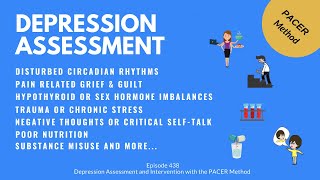
A recorded continuing-education webinar by Dr. Dawn‑Elise Snipes demonstrating the PACER transdiagnostic/transtheoretical approach to treating depression through a detailed fictional case (Tom, mid‑30s). The presentation assesses physical (sleep, nutrition, diabetes, medications), cognitive/affective symptoms (anhedonia, anger, low energy, concentration), social stressors, and outlines an 8‑week multidisciplinary treatment plan (sleep hygiene, medical referrals, psychological flexibility/matrix, cognitive distortion work, hardiness enhancement) with reassessment showing incremental improvement.
Chapters
This episode was pre recorded as part of a live continuing education webinar on demand. CEUs are still available for this presentation through all CEUs. Register@allceus.com Counselortoolbox you.
I'd like to welcome everybody to today's presentation.
Today we're going to be doing the case study format again like we did last Thursday.
Today we're going to be talking about.
Depression and we're still going to be using the PACER method. I am Dr. Donnelly Snipes as I.
Said, we're going to review this case.
Study using the transdiagnostic transtheoretical PACER approach and just kind of a review for those of you who aren't here over the past couple of weeks. Transdiagnostic recognizes or the transdiagnostic approach recognizes that symptoms can be similar in a multitude of different issues. For example, fatigue and irritability and changes in eating habits can be very common symptoms. In diabetes, for example, chronic pain can produce symptoms of increased depression and sleep changes and that those sleep changes can cause other problems. So we really want to look at what is causing the issue. Is it situational depression or is it a physiological condition that is causing mental health type symptoms and they're interacting? And then transtheoretical approach is the belief that there are multiple ways to resolve a problem. And with a lot of the clients that we work with, it's not just talk therapy that's going to work. We're going to have to use a combination of talk therapy, make sure that they've seen their primary care physician and they're getting any medical issues adjusted. We also may need to look to social services systems to make sure that they're getting safe housing, they're getting the food they need, they're able to afford their prescriptions and assist them in finding social support.
So transtheoretical really is representative of a.
Multidisciplinary approach.
As they say on Law and Order.
The following story is fictional and does not depict any actual person or event.
So Tom is a 36 year old.
Male and has been struggling with depression on and off for years. But the past two months it's gotten intolerable.
He recently lost about 85 pounds on purpose to try to help get his.
Diabetes under control and improve his sleep apnea and blood pressure.
He was thrilled with his weight loss.
Progress, but he hit a plateau and feels like he's going backwards now, which is not helping his mood.
This is kind of the information you're.
Going to get at the beginning when you're Just doing your. Hi, how you doing? What brings you in today?
So then we'll move into the assessment.
Just because the PACER acronym starts with P, we start with physical. The other nice thing about that, that I've always found is that a lot of people are much less guarded about talking with you about physical issues. So this is a time to start, start developing rapport.
On an average night, he gets about.
An hour of REM sleep, 0.5 hours of deep sleep, and 6 hours of light sleep.
Now, he's another one who has a.
Fitness tracker, which is really nice because we're getting some level of feedback. Fitness trackers are not equivalent to sleep studies by any means, but they can give you a little bit of an idea of, based on how you feel. Now, whether you're actually getting that much light. REM and deep sleep may or may not be accurate, but that watch or that tracker is going to give you similar results. You know, what it thinks is REM sleep is going to be the same every single night. What it thinks is deep sleep is going to be the same every single night.
So a person can look at that.
Data and go, know when I get at least three hours of deep sleep, according to my fitness tracker, I feel really good.
If they switch fitness trackers, they go.
From a Garmin to a Fitbit or something, those numbers may be thrown out the window and they may have to recalibrate, so to speak. However, it does give you something to start from.
On an average night, how many times.
Do you wake up? And he says three to four times a night. Well, that's a lot.
But he says he has sleep apnea.
And he has not been waking up near as much since he lost weight and started on the CPAP machine. Before the CPAP machine, he was waking up seven, eight, nine times a night with sleep apnea, obstructive sleep apnea. A lot of times people do not actually realize they're waking up. If you've ever slept next to someone with sleep apnea, they may, in our household, we call it snore themselves awake, but they don't actually wake up into a conscious, oh, I'm awake now. It's just enough to startle them and then they go back to sleep. The importance of that is the fact that when we're not getting good sleep, it's going to activate that HPA axis. With Tom, he recognizes he, he's aware of three to four times a night he's waking up. I might pursue that a little bit more to see why he's waking up so much. Is he waking up to go to the bathroom? Given his age, which is 36, I really wouldn't expect any prostate problems yet.
But it's something to look at.
You know, what is waking him up? Does he have allergies? You know, let's think about the different things that might be causing him to.
Wake up on an average night's sleep.
How do you feel? He says exhausted, tired.
When he wakes up from feeling refreshed, he has, according to his tracker, about.
Three hours of REM sleep, more than two hours of deep sleep, and more than two hours of light sleep, which is great. You know, we're still looking at about eight hours here, and this is the ideal scenario. So a lot of times people only get this on the weekends or on their days off or on vacations. It gives us some sort of guideline, though, when you feel your best. How much sleep have you gotten in.
Each of those categories? Using a free app like SparkPeople and I, generally when people make their appointment.
I ask them to do this and bring the information in with them. That way we don't waste an entire week without having some of this vital information.
Using a free app like SparkPeople, track.
Your nutrition for a week.
Which nutrients do you get?
Less than 75% of the full recommended daily allowance. If you remember from other classes, the RDA is a really, really general guideline. Some people, based on conditions they have or their size, you know, if they're extra small or if they're extra large, may need more or less of certain nutrients in order to feed, feel good, in order to feel energized. And people need to be aware of their body, which is where mindfulness comes in.
But the RDA is a good starting.
Point for a lot of people. And when I say extra small or extra large, I'm talking about someone like my grandmother who was 95 pounds and 5 foot tall on a good day, or somebody like a friend of mine from high school who was 6 foot 9 and, you know, I don't even know how much he weighed. But they're going to have drastically different requirements for things like iron and copper and everything else because they're so much different in size. And one's a female and one's a male. Nevertheless, let's just start with the USRDA because that gives us a baseline. We're not dietitians, but. But we can start helping people see the impact of nutrition on their health.
Anyhow, Tom eats pretty healthy.
The only thing that he's not getting Enough of right now is copper. And copper is really hard to actually get in our diet. And I will digress here for a minute. As usual.
World'S healthiest foods.
Whfoods.com is a really good place to go to get a quick and dirty reference for foods that are high in particular nutrients, like copper. Copper is one of the most elusive minerals for us to get in our diet because it's not in foods that we eat a lot. And another diatribe, because of commercial farming, a lot of the foods that typically were high in copper or other nutrients are actually not as high in those nutrients anymore because the soil is depleted.
However, coppers and sesame seeds, cashews, soybeans.
Shiitake mushrooms, sunflower seeds, tempeh, garbanzo beans, lentils, walnuts, and lima beans. Those are the top 10, which is great. Why is copper important?
Well, copper is a key mineral in.
Building strong tissue, maintaining blood volume, and producing energy in your cells.
If you're not getting enough copper, you.
Can feel fatigued and have difficulty concentrating. Another thing in the American diet, we don't know this about Tom, but in the American diet, we typically eat a lot of beef and a lot of grains that are enriched with things with zinc. Too much zinc in our diet prohibits the absorption of copper. So not only is it hard to get enough copper, but if we're getting too much zinc, any copper that we do get is not getting absorbed as effectively.
So the fact that he has a.
Copper deficiency isn't surprising, but it is something to think about for depression. And my guess is if you really looked at the chemical constituents, you would see that copper is necessary in the production of certain neurotransmitters. I don't know that to be the case, but. But it's one of those that if you don't have it, you feel pretty crappy.
So which nutrients do you get less of? 25% of the RDA?
None. So that's good.
One of the reasons his nutrition is.
So good is because he has diabetes. He's been on this diet from his doctor, and he's been trying to lose weight and, you know, in order to get some things under control.
So his intake has been a lot better. When was the last time you had a full panel blood test to examine.
Your kidney and liver function, thyroid and vitamin D levels? He says six months ago. Well, that's good. That's not too long ago. The doctor didn't find any problems with any of those things. So we can kind of check off the block of hyper Hypothyroid. We know that vitamin D deficiency contributes to depressive symptoms. There wasn't any problem with that. Now, vitamin D is one of those that can vary quite a bit, especially going into winter months or if you're in a place where it rains a lot. If people aren't getting enough sunlight, a lot of times their vitamin D levels can get low, which can contribute to depression.
Even though he had this test done.
Six months ago, doesn't mean his vitamin D levels haven't gotten low recently because of seasonal affective disorder or something. Probably wouldn't insist that he get the blood test redone yet because his levels were okay six months ago.
But it is something to file away.
In the back of our mind if his mood continues to get worse or stays irritable or we see a connection between irritability and darkness or cloudiness. It's certainly something to consider.
Describe your eating habits. He says, I've been eating healthier on.
My diet and try not to get too crazy because of my diabetes. And when you ask him about too crazy, he says he doesn't go to Krispy Kreme and eat half a dozen donuts or, you know, gorge himself on potato chips or cookies or something like that because of his diabetes. So cool. That's awesome.
Do you eat due to stress or.
For comfort when you're upset? He says, yeah, he does do that. So, you know, we'll just kind of file that.
Do you drink at least 64 ounces.
Of non caffeinated, non alcoholic beverages each day? Why am I asking about non caffeinated and non alcoholic?
Well, because caffeine is a diuretic, it's.
Going to cause him to become dehydrated. And alcohol also tends to be a diuretic. So we want to make sure that whatever they're drinking is actually hydrating them, not contributing to dehydration.
If they drink caffeine.
A nutritionist friend of mine suggested, and I'm not telling people to do this, but just to give you an idea of the impact of caffeine, she said, for every 8 ounces of caffeine you drink, you need to balance it out with another 8 ounces of non caffeinated, plus the 64 ounces you're supposed to get. And you know, at that point, with the amount of caffeine I was drinking, I figured I would float away if I did that. It is just kind of an interesting comparison. Too much water, too much non caffeinated fluid can also be detrimental because it can flush out your Vitamins and minerals, which is why I say I'm not recommending that. That's something between a patient and their dietetic person, whether it's their MD or their. Their rd.
How much caffeine do you have on an average day? About 600 milligrams. That's pretty average. And somebody asked the other day, and.
I don't have it pulled. Oh, golly. I can't find it right now. There are sites online that tell you the amount of caffeine and everything. And the first time I went to it, I was really surprised because I thought things that, you know, weren't like Mountain Dew or coffee, really didn't have much caffeine in them. But come to find out, a lot of the sodas that we drink, actually. Do you want to look on the label on the nutrition side where all the ingredients are and see if caffeine is added to it or if it says decaffeinated or no caffeine added. If you're trying to cut back on your caffeine.
600 milligrams of caffeine is.
Not uncommon for the American population.
However, when you have diabetes, caffeine does.
Affect blood sugar levels and insulin levels. So it's really important to keep an eye on that because too much caffeine can make it more difficult for people with diabetes to manage their blood sugar.
He doesn't use any nicotine products, so that's good. He doesn't feel he is totally over.
Fat or under fat. He lost that 85 pounds, and he's feeling, you know, pretty good about himself.
Hasn't recently had any problems with excessive thirst or hunger.
Remember, that's our diabetes screening question. We already know he has diabetes but is relatively well controlled with insulin. He just doesn't like how much insulin he's got to take.
Do you have problems with hypoglycemia?
He says yes. He's diabetic. If he doesn't eat frequently. He has hypoglycemic episodes, but he's aware of that and attending to it.
He has recently lost a lot of weight.
That's one of those depression screening questions.
But there are a lot of things.
That can cause sudden weight loss. For him, it was intentional. Not going to be worried about that.
His doctor has tested his blood sugar.
Lately, his fasting blood sugar, and it is as expected for him. He does tend to mainly gain weight around his belly. Remember from last week, we talked about the fact that when people have high cortisol levels, when their HPA axis is activated, for some reason, the, the body likes to store weight in the gut area and it's called metabolic syndrome. And it's a combination of symptoms including belly weight gain as well as insulin resistance, which is one of those symptoms you also see in diabetes. Since he seems to have metabolic syndrome in, in addition to diabetes, if you will, we do want to pay attention to the fact that stress levels and HPA axis dysfunction might be playing a part in what's going on with him.
What medications is he on? Well, he's on insulin for his diabetes.
He's been on it for eight years. And he sees Dr. Smith too. All of our clients are going to see Dr. Smith.
He does take melatonin to help him.
Get to sleep at night.
He's been taking it for about six months. He doesn't have any prescribing doctor, hasn't.
Talked about it with his doctor, remembering that he's got sleep apnea. So it's something certainly to encourage him to talk with his doctor about whether that's safe for him to be doing and whether it's having any side effects. I wouldn't think it would be a problem, but I always encourage people to be forthright with their physicians.
Beta blockers he's taking for high blood pressure.
He's been taking it for about a.
Year with Dr. Smith. If you worked with clients who have.
Been on blood pressure medication, you know.
That there is a very, very small.
Window of, you know, the right dose. My grandmother was on blood pressure medication for a while and they would regularly have to alter it based, you know, her weight and her hydration and everything else. People who are on beta blockers or beta blockers themselves have been known to precipitate depressive type symptoms. Obviously he's not going to be coming off the beta blockers because he has depression. However, we do want to consider with.
His drastic weight loss, has he had.
His doctor look at his blood pressure medication? Has that even come up in conversation in the past three months or whatever since he has lost all of his weight? May or may not be an issue.
And Zyrtec, he's another one that's taking Zyrtec for allergies.
It claims to be a non drowsy antihistamine, but it does make a lot of people groggy. I know if I take it at 4 or 5 o' clock in the afternoon, so, you know, it's in my system when basically when I'm sleeping, I still wake up and I feel hungover the whole next day. Does it does address his allergies, we do know. Now, you know, that's one question we hadn't asked earlier.
Does he have allergies?
Yes, he does. So on top of having obstructive sleep apnea, he has sinus allergies, which, you know when you lay back and that you've got that CPAP machine on your. Your sinuses are also draining, which is potentially going to contribute to his sleep apnea and stuff. Encouraging him to talk with his doctor about alternatives to Zyrtec, if that might be contributing to his fatigue. There are a lot of.
Other medications.
Out there, whether it's nasal sprays, they have a lot of really good nasal sprays or other over the counter oral medications that he can take that might be less sedating to him.
Pain. Do you have any chronic pain?
He says yes. He has bad knees since college.
What makes it worse? So standing and walking, well, that's kind of a bummer. What makes it better?
Heat, ice and elevation. You can tell he was probably an athlete when he was in high school or college.
How has it impacted your life? And he reports that his knee pains.
Annoying.
And it keeps him from playing tennis.
With his daughter because the lateral movements really aggravate his knee and he can't get to the ball nearly as quickly.
That's a little bit frustrating, but it's.
Not horribly impactful in his life. It's just one of those chronic nagging things.
Sedentariness and exercise. Do you exercise?
Well, not anymore.
He said when he was on his.
Diet, he was exercising 45 minutes a day. He was feeling pretty darn good. He was taking off the weight, and he hit that plateau. He got frustrated, and somewhere in there, the depression and apathy kind of set in and he just lost it. And he has no desire to go to the gym right now.
How is your energy, mood, and appetite after you exercise?
And right now he says, if I do anything, I'm exhausted. If I walk down to check the mail and back, I'm exhausted.
Do you sleep better on days that you exercise?
He said, I don't know. You know, over the past couple of months, I haven't been exercising much. When I was.
When he was exercising and he was.
In a better place emotionally and cognitively, maybe he slept better, but he can't really remember. And this is not uncommon with a lot of clients. You know, looking back retrospectively two months ago, to not have an answer, that's okay. You know, we'll take what we can get. Muscle soreness, it's never made it harder to Sleep, so that's a good thing.
On an average day. His energy level is low. He has not had his thyroid levels tested lately.
You know, six months ago was when he last had him tested lately is kind of ambiguous.
Using a pulse ox monitor, his resting.
Heart rate is 85 and his O2 sats are 98. You know, for his age and being male and size and everything, that's probably not horrible.
Does he have high blood pressure?
He says yes, it's managed with medication, those beta blockers. Does he have any other heart conditions, like, you know, palpitations or obstructions? And he says, no.
How is your sex drive? He said, low.
It's pretty much always been low. It's been low for, you know, a couple of years now. There's been no significant change. He doesn't know why it's low.
He's over 45 and has not his.
Had his sex hormones or. Actually, he's not. He's 39, but he has not had his sex hormone levels tested in the past year. This might still be something that we have him consider having his doctor run a quick blood test on.
He reports having sex less than or.
Any sexual activity less than once a week.
Which, if he's doing that by choice.
You know, no harm, no foul, it's his choice. But he seems to be bothered by it because he's saying his sex drive is really low and it's just never been there or hasn't been in the past couple of years. Something that's a little curious that I'm going to file back there when I'm making my assessment of what's going on, because, you know, at 39, I would expect that he would still have a little bit more of a sex drive if his hormone levels are adequate.
Physically. Do you tend to feel on edge and startle easily? No.
No history of trauma, no history of autoimmune diseases, concussions, headaches, migraines. He does say that he drinks beer and wine. On average, two to three drinks a day. This is, again, not really a surprising number for most Americans.
However, since he has diabetes, this can.
Complicate his blood sugar and complicate the diabetes issues. I would encourage him to talk with his doctor about it, just so his doctor knows how much he's drinking and they can work on a treatment plan. Now, he may balk at that, and that's fine. That's not something that is within my purview to really argue with him about, But I do want to educate him, make sure he's aware of the Impact of or interaction, if you will, of alcohol and diabetes. And he doesn't gamble. So all those other things are great. We're ruling out trauma history and autoimmune diseases and other things that could be causing depression.
We know from the Adverse Childhood Experiences.
Survey and clinical practice and a lot of other things that most people have some level of exposure to trauma in their lives. Not everybody identifies trauma as traumatic, and that is semantics. You can be exposed to something and not feel traumatized by it. You can be exposed to something and be traumatized by it, but not recognize the trauma. And you can not have exposure to trauma.
Either way, he's saying he doesn't.
Trauma's not an issue for him, and we're going to let that be for right now.
Affective for each of the following feelings. Identify how you feel it each week, what triggers it, and what makes it better. He feels happy none of the time.
Zero to three days a week.
He's like.
There are brief moments that, you know, he laughs or he smiles, but in general, there's no full day or even half day that he feels happy.
What five things help you feel happy?
He didn't know. He just kind of shrugged. And he's at this point when he presents that he's in a state of sort of learned helplessness and just has kind of given up and doesn't remember what makes him happy anymore.
What things used to make you happy.
Or did you enjoy. And that's going to be one of those assignments for him to do for next week.
I feel sad or depressed more than.
Five days a week.
What triggers it?
He says breathing.
Okay, well, that doesn't help a lot, but it is.
It is a response that I have gotten from people before. If I'm awake, I'm depressed. Okay.
What helps you feel better?
Nothing. It's why I'm here.
Okay, well, the fact that they're here.
Means that somewhere in the back of their mind, they believe that there's something that can make them feel better, there's something that can help them feel better. And they've got hope in there, which is good. And I seize on that right now. They've tried everything in their toolbox, and they're not finding anything that is really helping them feel less depressed. And that has got to be a devastatingly scary and miserable place to be.
I feel stressed or overwhelmed not very often.
You know, he said he just doesn't even have energy to feel stressed or overwhelmed anymore. He just doesn't care.
I feel anxious or worried.
Again, he said he didn't. Doesn't even have the energy to do it. A lot of this is sounding to me. I'm hearing some HPA axis dysfunction, some hypocortisolism maybe. Don't know why, but that HPA axis is just not kicking off. It could be he's got low dopamine levels. It could be his serotonin levels are low norepinephrine levels.
There's some.
Something amiss because the system is not functioning well. And remember, you cannot assess brain levels of neurotransmitters through a blood test or urine screen. I will repeat that. You cannot effectively assess brain levels of neurotransmitters through a blood test or a urine screen at this point. Now, in future, maybe, but I get really frustrated at the companies that say, let's have. Have you take a urine test and we'll figure out which of your neurotransmitters is out of whack and you can enhance that. And that'll make you feel better. No, we have these neurotransmitters throughout our.
Body, and they do a myriad of things.
Serotonin is not only responsible for mood, but for heart rhythm and pain perception and a variety of other things. The urine screen will give you a total amount of certain neurotransmitters, but we can't say that that particular neurotransmitter in any one part of our body is actually accurate. Okay. A lot of diatribes today. Sorry.
I feel angry and resentful four or.
Five days a week or greater than five days a week.
What triggers it?
He's.
He's on top of this one.
The news.
He reads the news.
He gets really frustrated. He. His depression makes him angry that he's depressed. He's frustrated that he can't do the things he used to do, and he can't seem to shake it. He gets frustrated about messages he hears pretty much on the news about toxic masculinity and white male privilege. Seeing more and more clients in practice who are coming in with these two particular. Well, obviously white male clients who are coming in with these two particular issues and a sense of frustration and powerlessness. Again, what helps you feel better? He says, not a thing. He doesn't know.
He reports that he doesn't feel guilty very often.
You know, he feels guilty when he does something wrong, but it's not this pervasive emotion.
In the past year, he has not really experienced any losses that he reports.
As causing him to feel grief. So. Well, that's good.
Currently present Stressors. He lost a promotion to someone who was less qualified and had less seniority.
But was not a white male, as he puts it.
So that's telling me that he's looking.
At everything through the lens of, is this happening to me because I'm a white male? So he is already looking for a rationale or looking for a reason that his who he is could be a rationale.
He says, I'm still bitter about that.
And I have bitter in brackets because that's not the word he used.
My diabetes is currently a stressor because.
It'S not getting better. And he doesn't like the amount of insulin that he's on.
His kids are getting ready for college.
Which will be expensive.
He's more than happy to have them.
Fledge and launch, as they say now. But he recognizes that even with scholarships, college is going to be expensive.
And then he reports that he gets.
Frustrated when he goes online. Evidently, he clicked on a clickbait article that talked about how people, actors, anchors, and athletes specifically, get paid a bunch of money for jobs that he doesn't perceive as contributing to society. So that's another issue that we may want to examine in a little while. What's different when you're happy?
He says he's not tired all the time.
He's able to work out and people don't. And again, used a different word, annoy me as much. Okay.
Something to pay attention to.
That's going to be part of our goal for treatment. You know, I will understand that my depression is lessened when I'm not as tired all the time. I'm able to work out four out of seven days and people annoy me less and figure out some sort of likert scale for that.
How long does it take for you to calm down after you get upset?
Plus or minus an hour.
What helps you calm down?
I vent about it to my wife.
Okay, well, so we do have one skill. It doesn't make him happy, but it.
Helps him reregulate, if you will, or downregulate in the past year. Oh.
How is your attention and concentration?
He says it's awful right now.
And remember that when blood glucose rises sometimes or.
And when glutamate rises, especially under stress, it makes it more difficult for us to concentrate. When blood glucose is low, that can also make it more difficult for us to concentrate.
So as diabetes might be contributing to.
That stress, might be depression. We know problems with concentration is a symptom of depression. Norepinephrine is one of your main focus chemicals. It's also one of your main excitatory chemicals. Since he's depressed, you know, reporting feelings of apathy and anhedonia and having difficulty with concentrating.
I'm starting to look at or think.
About norepinephrine and maybe dopamine, because dopamine is your motivation chemical.
Have you ever been diagnosed with adhd?
No.
Has there been a change in your ability to concentrate?
Yes. Over the past six months his concentration has gotten worse.
What's causing it? Lack of sleep, depression.
He says he doesn't know. There was no precipitating event that suddenly made him less able to concentrate.
Does it seem like it's taking longer to process information?
He says yes, his memory's awful and he's been more forgetful than usual.
When did his forgetfulness started?
About, you know, a few months ago. And he doesn't know what's causing it.
Not something that I'm gonna get super.
Concerned about with a 39 year old male who is otherwise in relatively decent health. You know, he's got the high blood pressure and the diabetes, but they're being controlled right now. I would tend to think that that's probably more of a symptom of the mood disorder and maybe the disruptions in the neurochemicals.
But you know, it's good to know.
And definitely something that I want to watch for if his memory starts getting worse, if he starts having difficulty finding words, anything that might indicate some sort of early onset dementia or Parkinson's.
When you think about yourself, your life, the world, other people do you tend to feel angry, suspicious or hopeless?
He said yes. Back to people annoy him.
Have you always felt this way or does something happen to change your feelings?
He said, I started watching the news and spending time around people. Well, that's, wow, okay. He recognizes that he feels overwhelmed and powerless. You know, kind of what I'm hearing when he's around, when he's getting input from outside because his ideas and ideals and beliefs seem to conflict with the majority right now.
Do you frequently judge or criticize yourself?
Not really.
Do you hold yourself to a higher standard than other people?
Nope. Do you think you are lovable or likable? Only if you're perfect. He said nope.
Where did you learn your negative self talk?
Well, he doesn't have any. So that was sort of a gimme there, which is good.
If this is true, that he doesn't.
Have negative self talk. What I have heard in doing the assessment is he is.
Gets very frustrated.
With people who are not like him and who do not share the same values and ideals. However, I don't hear, you know, I don't hear a bunch of self criticism.
Pay attention to your thoughts for a week. Place a check by the thinking errors that are most common for you and contribute to your unhappiness. For him, all or none thinking contributed it.
Everybody is against me. Everybody discriminates against white males. All of this all the time.
So I'm hearing a lot of all.
Or nothing thinking, jumping to conclusions without getting all the facts. You know, go back to that promotion that whoever it was got promoted over him with, you know, less qualifications and less seniority. Well, there's a lot of reasons we promote people. You know, maybe it was a better fit for that particular job. Maybe his boss had another position that he anticipated moving Tom to. We don't know for certain why this other person got the promotion. So encouraging him instead of going to his fallback, reasoning for why things happened, making sure to get all the facts.
Focus on a small aspect instead of a bigger picture.
Encourage him to consider alternate explanations. We can look at the promotion, we can look at other things as they come up in counseling, expecting life to be fair. Well, it ain't fair. So we will eventually talk about living in the. And living in this idea that I can disagree with other people, other people can annoy the crap out of me.
And I can have a rich and.
Meaningful life because I don't have to let them impact how I feel. I can choose to hold my beliefs but not get upset if they don't agree with me.
Taking things too personally.
Consider alternate explanations. This is something else that, you know, in the assessment itself we were regularly hearing, it was about him being, you know, who he was and holding his.
Beliefs, focusing on the negative and ignoring the positive. I didn't hear a lot of positive.
When we were doing the assessment. I'm hearing he's focusing on the stuff he can't do, the things the promotion he didn't get, the things he disagrees with that other people say, as opposed to, okay, what are some of the positive things that are happening? So we may talk about radical acceptance, remember, and we'll get to it in the treatment plan. When working with a client on cognitive distortions, you're going to do it slowly. You're not just going to, you know, sort of vomit all this on them at once. It's better to help them apply it in session and or out of session, but in session, help them stop and think about, okay, what you just said. Is that an example of all or nothing. Thinking. And if so, what might be some exceptions or what might be some middle ground.
This hardiness exercise. Who or what is important to him. Let's start talking about those good things.
In life that you may not be focusing on right now. And how can you start focusing your energy there instead of spending hours reading the news or watching the news or stewing?
Place a priority on family dinners because.
His children are getting ready to go to college. And that's one time he knows that they're going to come. You know, be around with his partner.
Try to be better about cleaning up.
His dishes in the bathroom so she isn't irritated all the time.
Try to be better at listening to.
Her point of view and doing less venting.
So it sounds like the spouse is.
Getting a little bit frustrated with his persistent venting about things over which he has no control. I'm probably not going to point that out at this point, but that was one of those things that I'll note. Friend one, don't really have any friends.
Okay?
So this might be another avenue for exploration. Why doesn't he feel he has any friends? And has he ever had any friends? What keeps him from having friends.
For his job. He wants to keep looking for a.
New job where he feels he'll be appreciated. Okay, around the house.
You know, the house isn't huge to.
Him, but he, you know, likes to.
Have a safe place to live. So he's going to try to knock.
One thing off his honey do list each weekend.
With his pets. He's just gonna love them.
You know, he has a whole mess of hound dogs that he is just gonna love.
And that's good. You know, his pets, you know, watching.
People'S facial expressions when they talk about their children, their spouse, their job or whatever, you can see the one, the things that really are meaningful to them.
And it seems like his pets bring.
Him a certain amount of joy.
Money. Find a place to start saving Money.
Besides my 401k so I can access it before I die. Well, that's a negative way to look at it, but that's how he's looking at it right now. He's the only place he can tax shelter. His money is a place that he can't even access it. And he's really frustrated about that.
He doesn't see volunteering as important to him. So, okay, he wants to lose 30 more pounds, monitor his blood sugar better. He decides that he might start going.
On a walk with his wife in the evening if he doesn't have the energy to go to the gym. So he's recognizing that maybe moving a little bit might be helpful.
He says his time management is good when he's not depressed, but when he's.
Depressed, he just can't seem to get off the couch.
He doesn't, right now take on too.
Much and feel overwhelmed and rushed. He's just not taking on anything. He's avoiding people. And since he doesn't have a lot of friends, he doesn't have a lot of people making demands on his time.
He doesn't see himself as a perfectionist, so that's good. He does see that he procrastinates, which.
Goes back to that honeydew list.
He says, I just don't have the.
Energy to do anything right now, so I put it off until it's a crisis, which probably doesn't help with family relations.
He says he tends to get irritable when he has something to do, that.
He'S procrastinating and then irritable when he feels rushed to get it done. Okay, well, that makes sense.
What smells are you regularly exposed to? Noxious, unpleasant, or irritating?
He says nothing. My allergies keep me from smelling just about anything, so I didn't even bother to ask about the rest of them.
But that does tell me he has.
A lot of sinus congestion, which is potentially contributing to even more disruptive sleep than one might think. And his allergies are not under control.
Having a lot of allergies can also.
Make you feel sleepy because it's waking you up in the middle of the night coughing or whatever, not just sleep apnea.
Are you able to keep an environment.
At a temperature you find comfortable? No, My wife keeps it hot in the summer and cold in the winter.
Okay, well, we need to talk about that. But cold in the winter, obviously, he.
Can put on layers.
Hot in the summer.
He may want to try to negotiate something so he's less irritable. And we can talk about assertiveness skills and creating a win win.
Yes, it's going to cost a little.
More to keep the air conditioner down.
However, you'll get the benefit of me.
Being in a better mood, and I'll get the benefit of being in a better mood and not being hot. So there's your win win. We will talk about assertiveness skills.
Relationships. He believes he's capable, loving, and deserving. He believes his relationships are healthy.
Overall. He doesn't fear abandonment. Well, he doesn't have that many relationships, so we may want to come back and check on this one a little Bit later. Overall, Tom's level of personal insight is on the moderate. In the moderate range. He doesn't have a super high level of insight like last week's client.
Can you effectively identify and communicate feelings.
And thoughts and get your needs met? Yes. That seems to conflict with what he has been saying. He seems, but okay.
Do you have a social support system.
That can provide practical assistance and emotional support?
Practical assistance, yes.
His parents live close by and his wife's there and his kids are there so he can get people to run errands or help him out with stuff. Emotional support.
He says his parents are great about.
Giving him emotional support, but his wife is kind of over it. So that may be another area that we need to look at.
Initial treatment plan goals, referral to his primary care physician for a hormone evaluation and to check blood pressure medication levels.
Due to his rapid weight loss.
Discuss antihistamines and allergies and try to.
Get feedback from his physician. So this is something that I would give him week zero, which is the day we do the assessment. This is something I really want him to try to have done by the next appointment. May or may not happen.
Sleep duration and quality. Give him the sleep hygiene assessment handout.
This is something standard that I give to pretty much all clients when they come in because I have yet to find anybody who doesn't have some areas of their sleep hygiene that could be improved.
And a lot of people are just.
Totally unaware of things like blue light exposure or napping during the day and how those things can really impact their nighttime sleep.
When he brings that back, we will make a sleep hygiene enhancement plan based.
On his data and review the progress and impact weekly through week eight. I really want to look at if he improves his sleep hygiene and addresses some of these allergies and stuff, is that going to help him have a little bit more energy and what is the impact on his blood sugar levels? Remembering that sleep deprivation upregulates the HPA axis which can negatively impact blood sugar.
Management, emotional dysregulation and psychological flexibility. Matrix Week 0 Before he leaves I.
Like to have people leave with some things to do. Not just the worksheets and data collection.
But but something that they can think.
About that helps them develop hope and momentum.
I'm going to have him define a.
Rich and meaningful life. What people, activities, thoughts and behaviors are important in his life when he is recovered, when he is happy, what is life going to look like and how is he going to feel? What is his average day going to look like? This is the light at the end of the proverbial tunnel that I want him to stay focused on. Week one so the first actual therapy.
Week, we're going to identify autopilot thoughts.
And behaviors in response to distress and discuss radical acceptance.
Autopilot thoughts and behaviors are those things.
That we just do automatically. We get frustrated, something upsets us, and we start thinking negative thoughts and lashing out or eating or smoking or drinking or whatever it is that those automatic behaviors are that we don't even consciously decide, oh, I'm angry, so I'm going to go have a drink. It's, you know, just one of those things that people do.
And radical acceptance.
Helping him start acknowledging and becoming aware and mindful of how he feels, but not fighting with it. You know, I'm angry. It is what it is. Okay, what can I do to improve the next moment?
Week two, we're going to develop a list of distress tolerance skills and empowerment.
Oriented self talk to add to his psychological flexibility matrix. And I will provide him the psychological flexibility matrix. There are other courses specifically on psychological flexibility on our YouTube channel that you can watch if you're unfamiliar.
And weeks three through eight, we're going.
To have him practice applying the matrix at home.
And, and in session, when he starts talking about something that makes him angry.
Or depressed or dysphoric in session, you know, we're going to stop and put it on the whiteboard and say, okay, you feel this way and this is how you reacted. If he's recounting something from the last week, what are your other options? What other choices could you have made at that point? And, or if he starts becoming dysphoric in session, we can, you know, obviously paraphrase and you know, help him feel empathy and all that kind of stuff. And when we get to the point.
Where it would be appropriate, say, okay.
I can see you're really distressed right now. Let's practice using the matrix and see, you know, what options you have here to improve the next moment.
Cognitive distortions, worksheet and log. I want him to focus on one distortion each week. Sometimes I give people the log of.
All of them and I say identify the distortions that you are experiencing each week. You know, whenever you have a distortion, figure out which one it is and identify it for him. I'm going to break it down even more. I want him to focus on one each week. So the first one, first week will be all or none thinking. I want him to really learn about.
That hardiness enhancement to increase positive chemicals.
That's that chart of positive things that are important to him.
Weeks three through eight, we're going to.
Start talking about that. But I want him to create a schedule to help him better use his time to focus on the important things. So he's spending less time reading the news and, you know, reading seven different versions of the news and getting upset.
Specific stressors for discussion beginning week one.
His perception that the world is unfair, and that's really one of those key issues for him right now. The person got the promotion over him. He has a feeling of discrimination due to being a white male and feelings of rejection due to society's stance on, quote, toxic masculinity.
So these are things that we're going.
To want to talk about because I'm.
Hearing that he feels, for lack of.
A better word, oppressed at this point and that there's no way he can find any fair resolution. So he's going to feel resentful until we start focusing on, you know, the things that may be going right in his world or helping him reframe some of the things.
And it's financial stress of kids getting.
Ready to leave for college. I'm not a financial planner, but we can talk about maybe going to see a financial planner and figure out other places that he can or other ways he can increase his savings so he can access his money, as he says before he dies.
Reassessment. Tom went to his PCP and had a physical. The doctor was pleased with his weight loss and reduced his blood pressure.
Medications win.
Tom's thyroid hormones were on the low.
End of normal range, just like the rda. Doctors have a range for all these hormones and everything high and low. And this is, you know, normal, quote, unquote.
But everybody's different. Somebody can be on the low end.
Of normal range and be symptomatic, just like when you take medications. When they prescribe me pain pills after I had my surgery a couple years ago, the dose was two pills every four hours. I'm pretty sure I would have been in a coma if I took two pills at the same time. I took half a pill and I was about drooling on myself.
So it's important for people to recognize.
That just because the official doctor report or lab cutoff said they were within normal range and doesn't mean they're not having symptoms. And they need to advocate for themselves with their doctors if they feel that's a problem. That's between him and his physician.
His testosterone levels were low, so he.
Put Tom on a low dose testosterone replacement Gel. Well, that's good.
He discussed his allergies with his doctor.
Who switched him to an antihistamine nasal spray.
At this point, Tom is still not being totally open with his doctor about.
His alcohol and caffeine use. It's not life threatening, not something I'm going to break confidentiality for. It is something that I think may be contributing to some of his persistent symptoms, but I'll file that because overall this was a win.
Sleep hygiene assessment identified issues with allergies.
Blue light exposure, caffeine intake, daytime napping, and staying in the dark all day. He was depressed, sitting on the couch, watching tv, not really getting out.
Tom ordered. He's a gadget guy. He ordered a blue light filter for.
His tv, which is a little box that you actually hook up to your TV at whatever time you set. It turns on the blue light filter just like the blue light filters you can get for your phone and now.
Has a sleep timer or he now.
Sets a sleep timer on his TV at night so he's got the blue light filter. Plus the TV goes completely off at a certain time.
He ordered noise canceling earbuds.
He recognized that his CPAP machine was really loud and that may be contributing to him actually staying awake, but he wanted to be able to watch his tv. So the earbuds allow him to watch his TV and then their Bluetooth. When the TV cuts off, the sound cuts off, but they're still blocking some of the noise from the CPAP machine.
He stopped drinking alcohol after 7pm and.
Has cut out his caffeine after 3pm.
Still drinking caffeine a little later than.
I'd like to see, but again, I'm taking it as a win. Any small step.
Tom's energy seems to be improving.
He rated his energy good or okay.
Six out of seven days for the last three weeks. His persistent frustration with life seems to.
Be contributing to learned helplessness and hypocortisolism, which is also impacting his blood pressure, his diabetes and his mood.
He is becoming more aware that a.
Sense of disempowerment is contributing to his depression and is practicing using the matrix each day. He's starting to recognize his autopilot, starting to recognize that, hey, I have choices.
Tom has been consistent with sticking to.
His hardiness enhancement plan, which has left him less time to perseverate on the news and getting him out of the house more. He has removed all news apps from his phone and only allows himself to watch the news when he is on the stationary bike at the gym.
He says he can work out his.
Frustrations easier that way. When he gets upset, he just cranks up that resistance.
He's still struggling with some cognitive distortions.
Because he feels like if he doesn't focus on the injustices of the world, they, the other people are winning. We're continuing to work on identifying what parts are within his control, which irritants are worth his energy, and refocusing attention on what is going right in his life instead of what he perceives as wrong with the world.
Thomas stopped looking for a new job.
As he really does like his current job and believes he's going to experience the same injustices elsewhere. I don't know if you want to put that in the win column or not, but it is what it is.
Depression can be the result of low serotonin, dopamine, norepinephrine or glutamate, excessive anxiety.
Or trauma causing hypocortisolism, built up of adenosine as the result of poor quality sleep. Sleep can be disrupted by alcohol, caffeine apnea, blue light exposure, or circadian rhythm disruption from just being in the dark. Too much fatigue can be caused by poor sleep, antihistamines, blood pressure medication, diabetes, excessive stimulant use, poor nutrition, or low testosterone.
Social and behavioral withdrawal can also be.
Caused by anhedonia, fatigue and irritability. These are some of our key symptoms of depression. Again, identifying that there are probably a multitude of factors that are causing these symptoms. It's not just one thing for Tom, and we need to look at him holistically.
Okay, I do see a lot of.
You asked about the matrix.
Let me see if I can pull.
Up that video real quick.
There is the video to teaching psychological flexibility.
That'll walk you through the matrix. And it's really easy. And I talk about different activities that you can do. That's a horrible freeze frame. Let's move it forward just a little. There we go. That's not much better.
Anyway, your matrix is very simple.
You have mindful noticing and choosing energy used to numb, avoid and eliminate distress, or using your energy to work towards the things that are important to you. And you're going to look at basically autopilot behaviors, autopilot thoughts and feelings. Because when we have one feeling, when we get angry, for example, there's other feelings associated with it. They're not simple. So you're probably going to have grief and resentment, you know, other things. And then you're going to look at activities, things you can do to improve the next moment. And then you're going to look at thoughts and feelings. You know, what can you tell yourself that can help you refocus your energy?
And it can be as simple as.
That'S not important to helping me achieve my goals or I want to use my energy for whatever it is that is at the end of their tunnel, as opposed to getting angry about the fact that this person got a promotion and I have no control over that. So yeah, there's a whole course on that. That or video on that that you can watch.
It's.
Available as a podcast. Just go to allceus.com counselortoolbox and search for psychological flexibility. Between writing notes, filing insurance claims and scheduling with clients, it can be hard to stay organized. That's why I recommend TherapyNotes. Their easy to use platform lets you manage your practice securely and efficiently. Visit therapynotes.com to get two free months of TherapyNotes by just using the promo code CEU when you sign up for a free trial at therapynotes.com.
If this podcast helps you help your.
Clients or yourself, please support us by purchasing your ceus@allce.com or getting your agency to sponsor an episode. A direct link to the on demand CEUs for this podcast is@allce.com podcastce that's allce.com podcastce. To sponsor an episode of Counselor Toolbox and reach over 50,000 clinicians per week, go to allce.com sponsor. Thank you.










