Counselor ALERT: Jeannie Smith's Secrets to Getting Locum Tenens Jobs
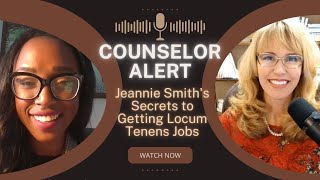
This content was created by Dr. Dawn-Elise Snipes. This content was uploaded by Dr. Dawn-Elise Snipes. This is a YouTube video titled "Counselor ALERT: Jeannie Smith's Secrets to Getting Locum Tenens Jobs" created on December 9, 2024. It features a conversation between Dr. Dawn-Elise Snipes and Jeannie Smith, the associate vice president for behavioral health at locumtenens.com. They discuss the concept of locum tenens, the benefits of working in such positions, and how locumtenens.com assists healthcare professionals in finding suitable placements. The discussion covers the flexibility and opportunities available for behavioral health professionals, including licensing support and job placement services.
Questions this video answers
1995
locumtenens.com
1099
Psychiatry staffing
She said it has passed but not yet implemented and hoped it would be up and running by mid next year.
Chapters
I'd like to welcome everybody to today's presentation. We're going to be talking about Locum Tenens and kind of what a locum is. Today I am being joined by Jeannie Smith, who is the associate vice president for behavioral health for locum tenens.com and that's just an amazing organization that's been around since 1996. Is that what I remember?
1995.
Yep, 1995. Okay. I was close. So they have. They have a long track history and they are branching out into behavioral health now that behavioral health providers like me and you can pro bill Medicare. So I will turn it over to Jeannie and let her tell us a little bit more about locum tenants, the company, and what being a locum really means.
Yeah. Well, thank you first of all, for having me on your podcast. As I share with you, I'm very excited and excited to share what we do in the world of locums. Just to give you, you all a little bit of background. What locums means, it's a Latin phrase which means in the place of. And how that plays out in our industry is we are filling gaps with regards to health care staffing. No matter what the healthcare entity is. What.
What.
No matter what the need is, we are there to help provide for any, you know, workforce gaps. As you said, we were founded in 1995, and the company actually initially started with psychiatry services. So we've branched out into all segments, all specialties, surgery, anesthesia, primary care. But we started with psychiatry services, which is important to talk about just because for 30, almost 30 years, we've had a background in behavioral health and established a nationwide network with healthcare facilities across the United States as well as clinicians across the United States. And what we do is we have kind of two parts of our business. We have the recruiters that work with us and they establish the relationships with the clinicians. Like yourself, they really seek to understand what your preferences are, what your skill set and expertise is, you know, what is your ideal job, you know, what motivates you in your career, what are you looking for, what speaks to you, really get a good understanding of you. And then the other side segment of what we do is on the sales side. And our sales associates, they establish relationships with the healthcare entities themselves. So community mental health facilities, state hospital facilities, correctional facilities, the VA and the dod. I used to work and help establish contracts in that segment of the market years ago. Any healthcare entity that has a workforce gap or needs a workforce solution, we establish relationships and contracts with those Entities. And then based on the clinicians that we have and the opportunities that they're looking for, we do our due diligence to find the best match. Is that a little bit ahead?
Yeah, yeah, yeah. I know when I was talking with Cody, one of the things that she had told me that was that the company that I used to work for in Florida, there was a person that was trying to get a locum position that was actually wanting to work for that company. And so I was trying to get her connected with them. So it's not just a sort of a reactive thing where a company contacts you and says, we need to fill these slots, but you actually proactively help people find positions if they want to work in XYZ Treatment center in Connecticut.
Yeah, definitely. That's such a great point. Yeah. Like I said, we work on both sides. So clinicians who are looking for opportunities, we get an understanding of what they're looking for, what locations they're looking to work, what type of schedules they're looking to work. And if we don't already have an opportunity that falls in that state, we'll go and do research and. And reach out to our networks and say, hey, we've got this amazing clinician who's looking for opportunities, and this is their availability, and this is what they bring to the table, and we'll see if we can identify new opportunities for that clinician as well. So. Yes.
That's awesome. Yeah. Yeah, that's really awesome. And there are just so many different placements, so many different types of placements that clinicians can go to right now. What types of different. You mentioned Community behavioral health and DoD and some of those things. What types of organizations are having the most demand for locums right now?
Yeah, that's a great question. I would say, you know, within behavioral health, a large part of our demand is with state hospital facilities, of course, correctional entities, the federal government. So as I mentioned earlier, the VA and the dod, you know, but we're noticing other segments, especially with our expansion into social work. A lot of community mental health centers and outpatient clinics. And we're also discovering, you know, trauma centers, the ob. There's so many various practice settings that need social work therapy, psychologists, the full gamut of behavioral health services. And as I mentioned, you know, we started with psychiatry staffing in 1995, and primarily the focus was the MD NDO staffing. And then we expanded into advanced practice. And then within the last few years, we expanded into psychology staffing, where they offer testing and assessments and Then most recently social work, and now we're expanding even more into LPC and LMFT staffing. And the reason that, you know, we continue to expand, yes, there is a demand for that, but we want to make sure that we have available positions for all of the various type of behavioral healthcare clinicians and we're able to treat the needs of the patients not just from prescribing. That's right, right. But also therapy is another big part of it. And so that full continuum of care is what we're aiming to provide as far as service offerings to, to our customers.
And that's one of the main reasons, my understanding, is that Medicare started reimbursing for psychotherapy for people who are on Medicare because they were finding there was too much use of medication. And in a lot of the facilities, they call them chemical restraints instead of using psychotherapeutic interview interventions to address the underlying agitation or depression or what have you. So I think we're really making a much more thoughtful, holistic move, which is really awesome. If you have somebody who wants to. Well, let me ask you first, before we go there in your mind, and from the people that you've worked with who've done locums, what do they say are the biggest benefits of taking locum positions?
Yeah, well, there's so many benefits to working locums. And, you know, one of the biggest is the autonomy that you have in doing contract work. You know, years ago it was looked upon with pride to work 80 hours a week. You know, and now it's, you know, the younger generation, they see the benefit of having work life balance and they see Logan's as an attractor. Just being able to, you know, have that career and pursue your career goals, but also have the family life, also have the ability to travel, also have the ability, you know, to do some of the things that you love, engage in self care and, you know, like I said, travel the world. And so I think having the autonomy to dictate what your schedule is, how much and how often you want to work is a big attractor to a lot of clinicians. You know, the other thing about locums is it's not just for one particular type of provider, someone that's finishing up and maybe retiring, or someone who's new right out of training. It's all segments of your career. There are clinicians that I've spoken with who are like, hey, you know, I just need to make some extra money. I've got. I'm putting two kids through college, need to pick up some extra shifts. What do you have? For me, there are others who have been retired and they're like, you know what? I'm itching to just dip my toe in the water. I don't want a full time job, right? Yeah. So it's like, I don't want a full time job, but, you know, I still want to practice what I love and be able to dictate how much I work. There are others who I mentioned just finished training and they're just like, I really don't know what direction I want to go in. And so I want to try some things different various practice settings and I need that exposure. And so it gives them that exposure. You know, we've heard a lot about burnout within the healthcare community and especially post the pandemic, and people feeling overworked and just completely burnt out. And I believe that locums offers an opportunity for you again to dictate how much or how little you want to work so you don't have to go through that burnout. And the other great thing is, you know, for the permanent staff who do feel overworked when they have a locum provider that comes in and they help to alleviate some of that workload and burden, they are so thankful for that additional help and that's gratifying. And I think behavioral health as a whole, there are so many things you're able to give back, pour into the community, offer services nationwide. We provide the opportunity to offer telepsych services so you can work remote, you can get licensed in other locations and provide services across the country. So you get to practice medicine or you get to practice health care and focus on that, the care of patients. A lot of, you know, I've heard from permanent full time clinicians sometimes it's like we're so caught up in the administrative duties, we're so caught up in the bureaucracy that it takes us away from the patient, patient. And I want to focus on patient care.
Right.
And so this provides that opportunity for you to go in and provide patient care and do that for two months, three months, six months, a year if you want, take some time off if you need it, but you get to focus on what you do best.
And some of the other things that you kind of mentioned it. But I do want to highlight it for clinicians because the counseling compact has not yet passed. It's, I mean, it's passed, but they haven't implemented it. We're hoping by mid next year it's going to actually be up and Running, but getting licensed in different states right now is, oh my gosh, it's ridiculous. And one of the things that you do is to help people get licensed in other states once they're already licensed in their given state and get that reciprocity, which is a huge hurdle for a lot of people. And the other thing you mentioned, people who are coming out of school who don't, you know, they don't have a direction, they had their internship, but they, they're not sure where they want to really set up in terms of populations that they're going to work with. And, and that's true. However, I, or, and I also see the ability for clinicians to try out a treatment center if I want to. I think I've heard really good things about XYZ treatment center in Arizona, and I think I might like to live in Arizona. Who knows? And so let me try that out to see if what goes on behind closed doors is what everybody's actually like jives with what everybody's actually saying on LinkedIn, you know, they're saying is great. And so I think that's another thing. You get to try things out. And a lot of the locum opportunities, it appears, have the ability to extend the contract. So you can actually either extend it or go permanent, but you don't necessarily have to. So it gives the agency the ability to fill a gap and it gives the practitioner a chance to travel, a chance to try out a facility before they move their whole family to Arizona to new for a new job. And a lot of the. I feel so old saying this younger generation really likes traveling and, and really likes the ability to go to different places. And that's, that's just awesome. That wasn't something when I was in my 20s and 30s that even crossed my mind because I was, you know, doing that 40, 60 hours a week sort of thing. And the thought of taking a week off was just foreign to me unless I was sick, you know, so there are so many benefits to that now that people have gotten as excited about locums as I am. Tell me what they need to do in order to start, get signed up, start getting their first assignments.
Yeah. So the best thing to do, you can sign up on our website, which is locum tenens.com we have a full job board there. And so a lot of the job opportunities that we have available are listed there. I know you have a link as well that you'll provide. If they have interest in learning more, that link will go to our recruiters and I would say, this is what I would say to prepare for a conversation with one of our recruiters is just really kind of think through some of the things that I talked through earlier, which is, you know, what locations do you have interest in? You brought up a great point. Our company helps with licensure. So let's just say you've got family in Washington and you want to go up and visit your, your mom or your aunt, your sister in Washington and stay with them for three months. We will get you licensed. But share that feedback. What are your areas of interest? What are your expertise? What are your no go's for you and absolutely not. And I think it's important us, you know, our recruiters, we really want to get to know you as a person. I think that's what really distinguishes us in the industry is the relationship that we build with our clinicians as well as our clients. It's not transactional for us. You know, we really want to understand you, what motivates you, what drives you, what your experience is, how much or how little you're willing to work, really share your background. And then once, you know, you've had that conversation with the recruiter, we'll get to work to see what are the best matches, what are the best opportunities for you. If we don't have that opportunity, we'll go do that research for you. So another added benefit is, you know, job hunting. That can be overwhelming, right? It's like, where do you start? It's a lot of work and you have someone that will advocate for you, do the research for you, set up the interviews for you. Once you get your CV over, they'll present your cv, have those initial conversations with the client to determine whether or not you might be a good fit. They'll set up the interviews, make sure it goes well, and then once you've had the interview, if you say, hey, this is, this sounds like a really good opportunity for me, we'll follow up with the client, make sure that they're on board as well. We'll set up a contract. Your contract is with locumtenance.com, right? It's 1099. We will have our travel and lodging team set up. Travel. So that's air, flight, rental car, hotel, get that arranged for you. Paperwork. As far as credentialing and privileging at the various facilities that you work with, we have a department for that as well. And so who loves paperwork? No one. But we have a department that takes care of that for you.
Oh my gosh. I'M going through Medicare credentialing right now and I'm about to pull my hair out. It's just there are some, there are some that aren't too bad. Like, you know, Cigna. I'll throw that out. You know, props to them. Not too hard to get credentialed with them. But Medicare is just. And Medicaid, they're just beasts. And not the people. The people are awesome, but just the red tape, it's a lot, and it's a lot to understand. It's a whole foreign language you've got to learn.
Yeah. And it's, it's constantly evolving. And the awesome thing about us too is we have a provider enrollment team that will help you get enrolled to the variants, to the, to various insurances. And so it's just, you know, we really try to make the process of finding a new job, you know, taking on an assignment as seamless and easy as possible so that again, you can focus on what you do best.
So let me ask. My understanding is that you can only place state licensed people, not people that are, have gotten their master's but are not licensed yet. Is that accurate?
So the large majority of who we place are licensed clinicians. There are certain states that allow for, like, for psychologists, for instance. There are certain states that allow you to practice under a fully licensed psychologist or a licensed an LCSW until you've received your full license.
Right.
So there are certain states that have provisions for unlicensed clinicians to work up under someone that has the full license.
Okay.
And so in those cases. Yes.
So those people could come to locum tenens and potentially find a placement. That's interesting. That's, that's really great for, for a lot of the people that are watching this now, because I have a lot of people that are studying for their ncmhce, which is our licensure exam.
Yes.
And getting ready to start working off those 3,000 postmaster's clinical hours before licensure. And that also tells me that people who are licensed addiction counselors, we haven't really talked about that, but LADCs and CADCs might be able to work with you as well, getting placements obviously in substance abuse, residential treatment facilities, etc.
So I, I really see us expanding even broader down, down the line. We are still learning so much as we go and there is so much to learn. As you said, the licensing process is extensive by state and by specialty, but we are learning so much and expanding so much. And you know, I will say that from a md, do Advanced practice side, you've got to be fully licensed in this therapy sector and even the psychology sector. We've uncovered some opportunity to work while you're still pursuing your life lessons.
Right.
As long as there are supervision arrangements.
Right, Right. Awesome. Okay, well, is there anything else that you wanted to share with me about Locum Tenens and what an awesome opportunity? I mean, it's basically like having a personal agent, you know, it is, it is.
You know, that's, it's like having your own personal agent, your personal advisor, someone that's going to add advocate for you once you've accepted the job and assignment. You know, it doesn't, the relationship doesn't end there. You know, you have someone that's going to stay in contact with you, make sure things are going well. If you want to extend the contract, we'll go to the client, have those conversations. So we're there to guide you every step of the way and be a resource for you. And if you say, hey, you know, I've worked here six months, I want to take three months off and then come back, you know, we'll keep in touch with you. But we really pride ourselves, like I said, @locumtendence.com and establishing that relationships, that relationship with our clinicians to really seek to understand you.
Right.
And what you're looking for. And I think, you know, overall, as an industry, Locums has evolved just from a plug and play where it's let me stop you here and let me know if you're interested and we'll staff you somewhere else to a full, comprehensive workforce solution. And so that's looking at, you know, our clients, their needs, their pain points and how we can work with our clinicians to be a resource for them and service, you know, the communities that need it. Right. That is something that I am so proud of. I remember when I started with the organization, I didn't, I didn't even realize that there was a part time or short term staffing for doctors and clinicians.
Right.
So that was mind blowing to me. But I, I remember in my interview one of the things that I said is, you know, I want to work for an organization with a brand that I can stand behind. I want to be passionate about what I do every day. And I just think it's so incredible that we have this industry where we've identified there's a need and we've identified people that want to help, you know, support and be a resource to serve those in need and we get to bring the two together. And, you know, I think that's just an incredible thing. And I think that passion is what you see in our recruiters on the behavioral health team. Like I said, we've been in existence almost 30 years, but we've had. We have recruiters that have been with us for over 20, 20 something years.
Wow.
You know. And you don't find that. No, but it's, it's, it's a distinguishing factor because we've worked in a lot of the states for a long period of time, which gives us insight into the communities that these healthcare facilities are in and really what those needs are, both in the short term and the long term, you know?
Right.
And so it's just, it's an exciting opportunity. It's a growing opportunity. We're so excited to continue to expand and learn more. We have so much more to learn. And I was so excited when Cody passed you along and the wealth of information and knowledge that you bring, it's just so exciting to partner.
I was, I was so excited when I finally found a locum agency that was willing to place LPCs, LMFTs, and LCSWs, because most of the other ones, I don't. I can't say all because I probably didn't research all of them. But unless you are a prescriber or a nurse, they don't want to really deal with you. And that's fine. I mean, they have their connections and their resources and networks and whatever. But when I finally found Cody, I was just elated that there was actually an agency that was doing that. And I explained to her, you know, I'm sure you read the emails about experiences I had when I was a middle manager and, and I ended up going out on emergency leave when I had my son because he was a micro preemie. And so they were without a director for three months while he was in the hospital. And locum tenens could have, you know, had that existed at that point and been serving LPCs, could have plugged in there and helped fill that gap. So I think that's really awesome. When I came to Nashville to open a clinic here for a different company, one of the things that we had to have in order to open was a psychiatrist on staff. And that was my first actual interaction with a locum tenens company. And he was a locum. He came, came by once a week for four hours, saw our patients and outpatient, and then he was gone. And I mean, he was a wonderful psychiatrist. I absolutely loved working with him. Top, top two of the attendings that I've worked with over the past 25 years, I have to say. And we still kind of stay in touch occasionally with referrals and what have you. But yeah, it was awesome because he felt empowered to do what he was there to do.
Right.
And he wasn't having to deal with the politics. He was able to be a doctor. Oh, my gosh. Yeah.
Right.
And, and that was really awesome too. So, yeah, I think locum is a great opportunity for people who like variation, who like exploration, who love what they do and, but don't want to have something, everything the same every day necessarily, or like we talked about, they're. They want to dip their toe in without a long term commitment to make sure they like it before they, you know, buy a house and move their family and dogs and everything else. So, so, so that's, that's really awesome and I really encourage everybody. If you look down in the show notes, there will be a link to locumtenons.com that you can clink, click on and it will take you to Locum Tenens and connect you with a recruiter there who can help you figure out what your next move is and really get you into the, into the process. And it doesn't sound like it takes a whole long time from what I've learned, to act from intake to first possible placement if the applicant is flexible in where they want to work.
Yeah, that's so true. I think, you know, if you, if you're flexible, there's gonna, that's gonna open up a lot of opportunity for you, you know, as far as where you want to work or how long you want to work. And we do work with people who are like, yeah, you know, I just want really, you know, I've got some part time availability and, you know, I want to be five miles from home. You know, we'll definitely keep an eye out for you and research and find, you know, dig up opportunities that we can find for you. But I will say if you want more versatility, variety, the flexibility definitely helps. And yeah, it's not much of a. It's not really a long process. Really. The conversation with the recruiter is what starts the process. We'll go to market and see what we're able to dig up for you. And, you know, we are still learning, we're still growing. This is a new expansion, especially from the therapy side of it. It's a new expansion for us. And so we are working with a lot of our clinicians as well as our clients to really understand what the needs are and what their interests are. And so, yeah, like. Like I said, I think it's an exciting opportunity, and we look forward to partnering with clinicians who just have questions. And it may not be that you want to make a move tomorrow. I still think it's good. And I encourage clinicians to reach out to a recruiter and tell them what your ideal job is, you know, because you never know that.
Exactly.
Come across our desk and we'll say, hey, you know, we talked to dawn about this, and this sounds exactly like what she wanted. And that happens where they're just like, oh, my gosh, yes, sign me up, send my CV over, and we're able to transition them to a new opportunity that really fits what. What they're looking for so they don't.
Have to spend three hours a night scrolling LinkedIn and Indeed. And all those job boards.
Yeah, that's a job in itself.
Oh, my gosh, it is.
Give that job to us, because that's what we do. That's what we specialize in, to be that. To be that resource for you.
Excellent. Well, I really appreciate you being here today, Jeannie, and I look forward to working with you and locum tenants. I mean, it's just been so great to meet Cody and Amber and you and hear what you're doing and how excited you are about this new segment of your business. So I'm. I'm really grateful you were able to be here today.
Thank you so much. And I just want to say thank you again for giving us this opportunity. And, you know, we love your passion for behavioral health and how informative you are and educating those. Your viewers. I just think that's incredible. And we. We really appreciate this opportunity to partner with you. So thank you so much.
Thank you.










