Counselor Toolbox News Live
Dr. Dawn-Elise Snipes reviews clinical research: TENS therapy reduced pain and fatigue in some women with fibromyalgia. Physical activity, mental engagement, and diet build cognitive reserve. Chronic stress drives inflammation and worsens depression. Antimuscarinics, anticholinergic antidepressants like Paxil, and Benadryl used daily for over 3 years are linked to roughly 50% increased dementia risk.
Chapters
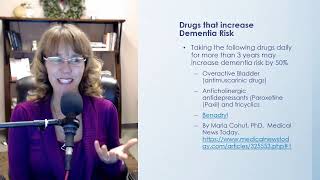
Hey everybody. We're going to be getting started in about a minute, so I just kind of wanted to let you know since this is our inaugural presentation of Counselor Toolbox News. Now, if you've listened to Counselor Toolbox Podcast before, you know that I typically go about an hour. Counselor Toolbox News is much, much shorter. So I'm going to try to hone in on just a few topics each week when we present this. And it will be hosting Counselor Toolbox News every Monday at 2:00pm Central Standard Time. Foreign I'd like to welcome everybody to Counselor Toolbox News. As I said earlier, this is the first episode of Counselor Toolbox News and we will be broadcasting every Monday at 2pm hopefully henceforth and forever more. Some of the things we want to talk about with in our articles today, One of the things that I found that nerve stimulation may benefit women with fibromyalgia. A lot of the patients that we work with have chronic pain and may have fibromyalgia and may have difficulty taking a lot of the medications that are prescribed for that because of the sedating side effects with TENS units. And these are it's called transcutaneous electronic nerve stimulation, which sounds horrible, but basically you can get these machines over the counter and they are little machines that send electric impulses through electrodes and it feels kind of like somebody tapping on you. It's nothing invasive. And when women were using this, 44% showed a clinically important reduction in pain, 45% showed a clinically important reduction in fatigue, and 29 showed a reduction in both pain and fatigue, suggesting that in a sub population of people with fibromyalgia, they will respond well to use of the TENS machine. Now, one of the things that I found funny in the article was it said that the TENS machine works best or the TENS therapy works best for movement evoked pain when it is turned on. And I'm thinking to myself, well, yeah, you would figure. But when you step back and think about it a little bit, the TENS unit basically bombards the nerve endings with stimulation so it quits sending the pain signals to the brain. And after the therapeutic session, the muscles tend to be more relaxed. When the person is, you know, after they've taken the TENS unit off, they may experience still continued relaxation and reduced pain. However, the greatest amount of reduced pain and reduced anxiety about movement happened to be when they were actually experiencing stimulation from the TENS unit. This More about this can be found in a randomized control trial of TENS for movement evoked pain in women with fibromyalgia which was published in the Journal of arthritis and Rheumatology, November 18th of 2019. Another thing that we want to talk about are lifestyle modulators of neuroplasticity. How physical activity, mental engagement and diet promote cognitive health during aging. Now, there's a lot of big words and if you're not a therapist or a doctor, you may be going, what in the world did is she talking about? Basically modifiable lifestyle factors such as physical activity, doing things to keep yourself mentally engaged, and eating a healthy diet not only reduce inflammation in the person, but they also increase what's called neurogenesis. And that's the building of nerve neural connections in your brain. We which leads to enhanced cognitive reserve. As we get older, our brain starts pairing away some of those neural connections. If we've got extra built up in a storeroom, then even though we're losing some neural connections, we've got plenty of extra, which is what they call cognitive reserve. Physical activity was actually found to reduce age related declines in brain tissue density, which is good, and promote that neurogenesis. So you don't just have to read books or do art projects or things like that. You can actually engage in physical activity. And they also found that physical activity upregulated anti inflammatory processes, which is another thing that's associated with the onset of depression and dementia. Physical activity is one intervention that can be really helpful. Typically when we're talking about this stuff during aging, we're talking about dementia, but they also found that in people with schizophrenia, physical activity improves global cognition, working memory, social cognition and attention. All, you know, really awesome targets. What are we talking about in terms of interventions to help people enhance their cognitive reserve? Obviously exercise and nutrition, those are pretty straightforward. But what about enhancing that cognitive reserve? That's kind of ambiguous. What people want to do is start reading anything. It doesn't have to be, you know, a Tale of Two Cities or, or something intense like that. Just read, get online, read things that interest you, Discussion groups, computer usage, surfing the Internet and looking even on Pinterest. You know, we can all get sucked into Pinterest. Occasional, but in increases the activity of our brains. Participation with others in card games and board games, solving puzzles, Sudoku, words with friends, any kind of Tetris, even any kind of puzzles that make your brain kind of work a little bit differently. Playing musical instruments, traveling, Some people really like hearing that attending theater performances, participating in social groups and socializing with family can all increase that cognitive reserve. Most people have access to multiple of those activities that they can do. They just need to make it a priority. You can learn more in Lifestyle Modulators of Neuroplasticity. How Physical Activity, Mental Engagement, and Diet Promote Cognitive Health during Aging, in the Journal of Neuroplasticity. This one was released in 2017. It's not one of the newer articles, but I thought it was a very interesting article because it provided us with a lot of very practical tools that we can give to clients and we can take ourselves to help promote cognitive health. Another article I found interesting was the interplay between stress, inflammation, and attention and how that is relevant for treating people with depression. What they found was basically a cycle. People who are depressed often have negatively biased cognitive processing, which means when we're depressed, we tend to see things as being bad. We see the worst in things. If it's raining outside, we see it as devastating. If we open the refrigerator, we only see the things that we don't want to eat. When we are depressed, we're in that negative mindset and we notice the negative stimuli more, and this enhances our negativity because the more we notice this negative, the more negative we tend to feel. This chronic stress exposure causes inflammation, and there's, you know, a whole process that goes along with that and activation of our stress response system. Not going to get into that right now. But know that chronic stress causes inflammation. Inflammation is associated with the lowering of mood and increased depression. What can we do? What's the point here? Basically, addressing these cognitive biases and encouraging people, even if they're noticing the negative, to also notice some of the positive can also help break this cycle where they're chronically exposing themselves to, to stress and anxiety and increasing that inflammation and reducing their mood. The final article I want to talk about are drugs that increase dementia risk. This is a big topic recently, and we typically don't think about some of the medications that people may be taking, especially for chronic conditions and their side effects. We tend to think very proximally. We. We think about what's going on in the moment, how it can help us right now, and not what are the effects going to be 5, 10, 15 years from now. They found that taking the following drugs daily for more than three years may increase dementia by dementia risk by 50%. That's 5, 0. That's a lot. We want to consider what drugs people are taking and whether they need them, how much they need them, how high of a dose they need, and if there are any other options for them. Maybe to cycle between multiple different drugs. Sometimes it may exist. Sometimes it may not, but it is important to pay attention to that. And if people are taking drugs that increase their dementia risk, all the more reason for them to engage in physical activity and activities to increase their cognitive reserve and proper nutrition in order to reduce their risk. If they're increasing their risk in one area, they need to reduce their risk in other areas as much as possible. What are these three medications? Anti muscarinic drugs, which are the ones people use for overactive bladder. You've seen those advertised on TV a lot. Anticholinergenic antidepressants like Paxil and the tricyclics are also very commonly associated with an increased risk in dementia. Now, that's not all antidepressants. It is specifically the ones that target acetylcholine. Benadryl is the third drug that is commonly associated with increased dementia risk. A lot of people take Benadryl at night to sleep. If you look at the over the counter sleep aids, a lot of them are just pure diphenhydramine, which is the generic name of Benadryl. Talking with your doctor if you're having difficulty sleeping, there may be alternate drugs that might be more helpful and have less side effects than Benadryl. You can learn more about this in the Medical News Today article on drugs that increase dementia risk. Finally, I want to talk real briefly about my one of my favorite books and this is called the Practitioner's Guide to Anger Management. I have a lot of people regularly ask me, you know, what are some of the best protocols for anger management? Or I'm getting ready to teach an anger management group session group series and I have no idea what the protocols are that would be helpful. This book is a great place to start. There are others out there, but I really like this one. It starts out by helping people learn. Selection menu for anger reduction Treatment principles or Smart Principles makes sense. In the protocol, people learn how to enhance their awareness of their anger and their anger triggers. They learn skills to sidestep provocations. They learn how to tolerate negative words and thoughts because not everybody's going to be nice to you. And when you get triggered by somebody's negative words, you have to have ways to handle moves on to help people increase their assertiveness and improve their problem solving skills. Develop radical acceptance and distress tolerance skills. And finally explore perspective taking, compassion and forgiveness as techniques for addressing anger and resentment. There's a lot of stuff in this book. It's really compact and it provides a lot of material for you to use in your group sessions. You can learn more about this if you go to new harbinger.com and look up the guide again, it's the Anger Practitioner. I'm sorry, The Practitioner's Guide to Anger Management. You can save 25% off your entire order at new harbinger.com by using promo code 1168-snipes. If this broadcast was helpful to you, subscribe by clicking the link below and click on the bell right next to that subscription icon in order to be notified when we publish new videos and go live each Monday. Thanks for joining me.










