Creating a Rich and Meaningful Life Addressing FEAR and Motivation
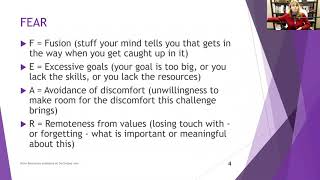
Dr. Dawn-Elise Snipes breaks down FEAR as Fusion, Excessive goals, Avoidance of discomfort, and Remoteness from values, then offers the AM SMART framework for goal-setting. She teaches cognitive defusion techniques like saying "I'm having the thought that" instead of believing anxious thoughts, plus concrete tactics like happiness breaks and environmental cues to build motivation.
Chapters
Welcome to Happiness Isn't Brain Surgery with Doc Snipes. This podcast was created to provide you the information and tools Doc Snipes gives her clients so that you too can start living happier. Our website, Docsnipes.com has even more resources, videos and handouts, and even interactive sessions with Doc Snipes to help you apply what you learn. Go to Docsnipes.com to learn more. I'd like to welcome everybody to today's presentation of Happiness Isn't Brain Surgery practical tools to improve your mood and quality of life. We're going to continue talking about how to create a rich and meaningful life today, and we're going to focus on increasing motivation and addressing fears that may hold you back from doing what you need or want to do. So let's start by reviewing really quickly. We talked last week about creating a rich and meaningful life. Looking at what's going on, where you want to be. Emotionally, what does it look like when you are truly happy? Mentally, what does it look like when you are having this great, wonderful, amazing life? As far as your concentration, your attitude, your outlook, physically, what's going on in terms of your sleep, your energy levels, your pain, your health, your physique, whatever is important to you physically, socially? Which relationships are important to you and what do those relationships look like? Is it somebody that you call once a month? Or are you having regular get togethers that help you feel connected spiritually? And this also kind of goes with your values. What values are you demonstrating? What is important in order to feel connected to the world at large? What is important for you? What are your values? And are you living a life that's authentic to those values? Occupationally, when you're creating this rich and meaningful life, what does your job look like? Are you happy at your job? Are you working towards a promotion? Do you want more power? Do you want more money? Do you just have your job in order to pay for your hobbies? You know, what role does your job play in your rich and meaningful life? And finally, environmentally, when you're having a rich and meaningful life, are you looking around and what does it look like? Who's there? What does your environment look like? You know, some people really want this big, affluent house that they can be in and they can show off and have dinner parties and stuff. Other people, you know, other things in life are really more important to them than having the biggest house on the block. So they would rather have a small farmhouse somewhere out in the woods. You know, my daughter, for example, would much rather live out in the woods, you know, with trees and chickadees and wildlife than in the city. So in a rich and meaningful life for you, what does that look like? What does your environment look like? Where you can just look at your house and where you spend most of your time and go, this is awesome. So you've gone through and you've identified those things. You've identified what things, people and activities contribute to helping you achieve a rich and meaningful life. Because you're not going to do it on your own. You're going to need resources and tools and social supports and whatever in order to help you accomplish that. Some of it you can do on your own. But, for example, to be happy, some people, to be happy, really need to have other people in their life, and most of us need to have someone else. Introverts tend to have a couple of really good friends. Extroverts really need to have a lot of social interaction. They draw energy from other people. So to feel happy and energized, they need to have a strong social network. So you want to look at what is it going to take to help you achieve those goals? And hopefully you did that over the last week. So now we want to look at what may be holding you back from taking the next steps in order to achieve a rich and meaningful life. You may be in a relationship right now that is good, but not great. What needs to change. You may have difficulty with time management. You may be in a job right now that is good, and it is safe, stable, and it pays the bills. But you're not happy, and you would rather be, you know, running a nonprofit or whatever you want to do. So what is holding you back? And the acronym for things that hold you back is fear fusion. Fusion is stuff your mind tells you that gets in the way when you get caught up in it. So it tells you you can't do it or you shouldn't do it, or you know there's a lot of risk. Or fusion is you getting stuck in your thoughts and feelings and not being able to act. E stands for excessive goals. Your goals are too big. You lack the skills to do what you need, or you lack the resources. So you need to look at your goals and make sure that you've got all your resources. You wouldn't go and, you know, try to make a marinara sauce. I always go to marinara sauce because I love making it. But you wouldn't do that if you didn't know how and you didn't have the ingredients. You know, if all you've got is canned tomatoes. You're not going to be able to make a good tomato sauce. So if your goal is to make a good marinara, you need to know what skills you need to have in order to prepare the ingredients, what ingredients you need to have, and get it all together. So excessive goals. You know, we're going to talk about each one of these a little bit more in a minute, but you want to focus and make sure you're making good goals. A is avoidance of discomfort. Change causes crisis, and crisis causes change. That's one thing one of my mentors taught me, and I've adhered to it for the majority of my clinical life. And I really help people look at that concept because when we change, we're upsetting the apple cart. It takes effort. You have to be slightly uncomfortable to want to exert the effort to change. If there's no motivation to do it, if there's no reason, it. If there's no crisis, for example, you're not going to probably be as motivated. So, you know, let's think about exercising, for example, or losing weight. You know, maybe you get up in the morning and you put on your favorite pair of jeans and it's all you can do to get them snapped or buttoned. Okay, that might be a little bit of a crisis that motivates you because it took you forever to get those genes broken in. And so you need to figure out how you can lose enough weight so those are comfortable. Again, there are a lot of things we're going to talk about. It doesn't have to be a huge crisis. It can be a small crisis, but it has to be something that's meaningful. And you say, I want to keep these jeans. Or maybe you're going on vacation for spring break and you want to be able to wear a swimsuit and you don't feel like you look good in a swimsuit right now. So that's a motivation. That's a little bit of a crisis because you're not ready. And we're going to talk about how to create little crises when we get down to motivation. And R stands for remoteness from values, losing touch with or forgetting what's important or meaningful in your life. So if I decide that I'm going to go do something, for example, I put my resume out and I decide, you know what, I want to start working somewhere else. Well, that might be great, and maybe it fulfills one aspect of my rich and meaningful life, but I need to look at the big picture and say, does this whatever I'm doing here. Whatever job I'm applying for, does it help me keep in touch with my values and keep in touch with things that are truly important to me, like my family and my farm and my foster animals? And if the answer is no, then I need to back off and say, all right, maybe this is not the time for whatever, but you need to be able to live authentically. And everything you do, hopefully, will either keep you where you are or move you forward towards a rich and meaningful life. You don't want to go backwards, and you don't want to do a lot of stuff that keeps you where you are. It's kind of like treading water. You can only do that for so long. You can have a break and tread water for a few minutes, but then you need to start swimming again. So let's Talk about F1 fusion. Getting stuck on thoughts that I am or I must do this instead of saying I'm having a thought that I have thoughts all the time, and they go in one ear and out the other, and I don't know where they went. But the thing is that thoughts come and go. If you say I am or I must, it's a lot more integrated in you. So if you say I must have a cigarette, then, you know, that's hard to deny. I must have it. Well, why? So if you put the phrase I'm having the thought that in front of I must have a cigarette. So it becomes I'm having the thought that I must have a cigarette, then you can go, okay, well, I can let a thought go. And I do this a lot at night when I'm watching TV because they always show commercials where they have really good food. And I'm looking at it going, oh, that looks so good right now. I need to have something to eat. And I'm like, you know, no, I'm getting ready to go to sleep in 30 minutes. So I put the phrase in front of it. I'm having the thought that I would like to have that to eat, or I need to have that to eat. And I know thoughts can go away, so I just distract myself for a little while. Other thoughts, people can get stuck in that keep them paralyzed and not moving forward. I'll never be good enough or I'll never be able to achieve that goal. Put the phrase in front of it. I'm having the thought that I will never be good enough. Well, let's look at that thought. Is there any factual basis to that? And we're going to talk about that in A second, the other. Another thought that people can get stuck in is this is terrifying. And yeah, change is scary. Change can be really scary. So the concept that this is terrifying, if it's a thought, then we can identify what about it is terrifying and address it. But we can say, I'm having the thought that this is terrifying and let it go. Think about going up on stage to give a speech or, you know, even when you're walking to get your diploma or whatever. For some people that's terrifying, but they have the, they say, I have a thought that this is terrifying and they just, all right, I'm going to let that thought go and I'm going to go ahead and do this. And it helps them move forward. If they agree in their own mind to let go of that thought instead of holding on to it, then it's easier to do what they need to do. So when you get stuck in those feeling based thoughts, thoughts, look for the facts for and against your thought. So if you say, I'm having the thought that this is terrifying, all right, let's look for the facts for it. Why is it terrifying? And let's look for the facts against it. We want to have fact based thoughts, not feeling based thoughts. And I use this example a lot. You all have probably heard it in other podcasts, but roller coasters, you know, I am terrified of roller coasters. I have friends who love roller coasters. When we go to roller coasters, you know, I am having this feeling and thought that this is really dangerous. So I get myself worked up feeling that it's scary. I'm having the thought that this is dangerous. Well, if I look at the facts, the facts are it's really not, you know, especially in the, you know, roller coaster parks that don't move around. You know, the chances of somebody having a problem or the roller coaster having a problem is really pretty miniscule. So is it terrifying or am I having the feeling or the thought that I'm terrified and let that thought go? So looking at the facts, check it out. If there's any basis to your thought, then you can address it. But a lot of times when we start having a feeling, we have to have a thought to support it. If you go out there and you start feeling scared, you're like, okay, why am I scared? This must be terrifying. And then you create thoughts to back it up. So it's important when you have thoughts, especially ones that hold you back, but also ones that are propelling you forward, the little voice inside your head that says, Go do this, as my daughter would say, or whatever a redneck would say, you know, hey, Jim, hold my beer and watch this. No, you want to think it through before, because you can have the thought. This looks like a lot of fun. And if you stop and think about it, jumping off the roof into the swimming pool, probably not the best idea or whatever it is. So make sure that thoughts are based in fact. And don't listen to your inner critic. Your inner critic is kind of there to protect you. It's there to keep you from taking chances. That way you don't get hurt. However, if you never take chances, then you can never move forward. You've got to get outside that comfort zone a little bit. Your inner critic can also come from people in the past that have said hurtful things or experiences in the past that you feel bad about. Or maybe you failed at doing something and instead of turning it into a learning opportunity, you feel like a failure. So again, that's one of those thoughts. Instead of saying, I feel like a failure, saying I'm having the thought that I'm a failure, let the thought go. Look at the facts for and against it. Are you really a failure? You know, I've never met anybody who's a complete failure. You know, they've succeeded at some things in life, maybe not everything. But then we start looking at why didn't they succeed and at the things they failed at and learn from it and help them move on. A lot of times it comes back to what we're going to talk about with goals that are too big or not created correctly, that don't let them achieve their goals. So learn from your past mistakes, but don't let your inner critic hold you prisoner with them. Your past mistakes, they're in the past. You can't change them. So let's learn and move on. Talk back to your inner critic. If you hear yourself going, you know, you really shouldn't do that because you're just gonna fail. Or you shouldn't even bother trying because you're going to fail. Or whatever your inner critic says to you, tell it to shut up, tell it to be quiet. And you are living in the present moment. Maybe you've tried doing something similar before and you did fail. Okay, let's look at that, look back at that and figure out why you failed. But now you're living in the present. You have the knowledge of what not to do, and you have another shot at it, so you're not held hostage to the past. You can try again and see where you go from there. Live in the present, not in the past. And ask yourself, you know, if you have that inner critic, you know, just screaming in the back of your head negative things about you, heckling you from. From the balconies. Ask yourself whatever that inner critic is saying. Would you say that to your child or to your best friend? Would you walk up and tell them you're a failure? You've always been a failure. No, you wouldn't. So why are you telling yourself that? Tell it to shut up. Okay, so excessive goals. And, you know, I said, this is the reason that a lot of people fail. Now, some goals we set, they're too big. Rome wasn't built in a day. And we get frustrated when we're not achieving them as quickly as we want. And we may overlook certain details which end up causing us problems. If you're building a house and you're doing it really fast and you decide to call in the contractor and pour the concrete, they pour all the concrete before whatever needs to go in it for plumbing or whatever. I don't know how to build a foundation, but if you do steps out of order, then you're going to have problems. Or if you forget to do things, if you build an entire shell of a house but forget to put in the wiring or the plumbing, it's going to be a problem. So when you have a goal, break it into smaller parts. For example, if you want to start a new career, well, first thing to do is decide what your new career is. Maybe you're not happy in your job and you want to do something that you love, but you're not quite sure what that is. Well, do some research. Go on to the website for workforce development or the Department of Labor and look through the different types of jobs. Think about things that you enjoy doing, and look at careers that are related to that. And then decide on your career. Then choose and enroll in a school. Okay, that's pretty straightforward. Then complete the degree one course at a time. And I remember when I was going through college, you know, it wasn't. I wasn't looking so much towards the bachelor's or the master's or the doctorate. I was looking towards the end of the semester. You know, I got to get through this class, and I had this whole list of classes, and each semester I would knock off, you know, four or five of those classes, and I would get closer to my ultimate goal. It's important to recognize that it's going to take time. Once you complete the degree, then you start applying for the job. And sometimes it's not a degree, sometimes it's just a certificate program that you can knock out in six weeks or something. But you still have to choose where you're going to get it from, enroll in it, complete the training, then begin applying for the job. When you start setting goals, sometimes you've done that list what it takes to have a rich and meaningful life and you're looking at it going, oh, there are some really awesome things that I want to do. And you start setting five, six, seven goals and things you want to change, you're not going to do those. Well, it's important to do only one to three goals at a time. Instead of doing a whole bunch of stuff half assed, do one to three goals at a time and do them really well. Then once you get those done, move on to your next set of goals that you're going to work on. Positive changes in any one area are going to cause positive changes in every other area. So you're going to. By working on one to three goals, you're going to be taking strides. Not just baby steps, but strides towards that rich and meaningful life. And ensure each action plan that you develop, each goal plan identifies and develops the skills and resources you need. You've got to figure out, what do I need to make this happen? If you're cooking, you need the ingredients and you need a stove and you may need time. One of the things when I'm baking bread, I always forget about is the time it takes for the bread to rise and, and then punch it down and let it rise a second time. So there are a lot of things that you've got to consider when you are exercising. For example, maybe you don't know the first thing about exercise, but you want to start getting in better shape. So where do you find those resources? Where do you develop the skills so you do it right and you don't hurt yourself. And I would really encourage you to spend time working on identifying the goals and breaking them into small parts. Ideally something that can be completed in less than a month for each sub goal. Now in this example, completing the degree that's not going to happen in a month, but a certificate might. So you want to have these sub goals set so you can have successes and you can see yourself moving forward and feel yourself making progress. A is avoidance of discomfort. When we try to change, remember I said crisis causes change and change causes crisis. When there's a crisis, something's not the way we want it to be, then we need to do something to Fix it so it's back to where we want it to be. Unfortunately, when we start to change, it upsets the apple cart and we have to. We get uncomfortable. Some people start getting a little bit nervous, anxious. It takes a lot of energy. So look at the discomfort that's associated with it. Are you afraid of rejection? You know, if you do this, maybe you decide you want to start a new career or start to make new friends. And, and if you experience rejection from a school you applied for, or from a job you applied to, or from a new person that, you know, you thought you wanted to be friends with, what does rejection really mean? What does it mean to you? And what does it mean about in the big scheme of things? You know, if you don't get a job you apply for, it could mean you didn't have the skills they were looking for. It could mean that the person that was doing the interview didn't think you would be a good fit for that particular team. There's a lot of things it could mean. It's not necessarily a rejection of you. It's saying that, you know, I don't think that you fit in this particular little cubbyhole. And it doesn't mean that you're not going to be able to get a job somewhere else in the same field. It's just with that company at that time and that team, not gonna work. Same thing with friends. You know, sometimes you try to make friends with people and they're just not open to it for some reason. Okay, well, that's on them. You tried, you tried to extend that olive branch. So what does it mean to be rejected and where does rejection come from? And again, I would encourage you to look at all the other possible explanations for why you may experience rejection. And you know, it has to do a lot of times with other factors, not who you are as a person. And consider whether it's realistic to expect to never be rejected. And I'll give you the hint. No, it's not realistic. Everybody gets rejected and everybody experiences a little bit of angst. When we experience rejection is a natural feeling right away. Because if somebody rejects us or rejects our resume or rejects our skills, we're out of control. We can't change what happens. Or like, ah, what do I do? But when you step back and think about it, you know, it could mean that there's something better for you. There's a better fit for you somewhere else. It could mean that that's just not a good direction to go. There are a lot of different reasons so looking outside of yourself that there are reasons besides you not being good enough or not being a good person because you are, you're good enough and you're a good person. And when you get rejected, other people's loss, you know, that's just tough tiddlywinks for them. Failure is another reason people don't want to try. And this can be exercise. This can be starting a new career, going to school for it, trying to make and nurture friendships, time management. You know, if you've tried to do things before and you failed at it, whatever it is, you may not want to try again. And if it's important, whatever it is is important to you, in order to have a rich and meaningful life, then you need to overcome that fear of failure. So again, what does failure really mean? It means that's one way not to do it. So you've learned something. It means that you got outside your comfort zone, and you're not staying with just those things that you know how to do like the back of your hand. You're taking chances, and that's courageous. Failure can be a growing opportunity. Failure can mean, you know, you set this goal or you thought you were going to do this, and it didn't work. Why didn't it work? So back up and say, what did I miss? What did I forget? And sometimes you didn't miss or forget anything. It's more of a rejection than a failure. But a lot of times when we fail, you know, we forgot something. If you forget, if you fail a test, it means you either didn't study correctly or you forgot the information. So you learn. You know, whenever you start taking a test with a new professor, you quickly learn what they test on. And, you know, I had one professor in college who taught straight from the text, and he had his text sitting in front of him whenever he would lecture. And he had highlighted in the book everything that he was going to test on. So we quickly learned this. And I quickly got a seat right in the front row so I could see what was highlighted. And I did great in that class. So failure teaches you how to change a little bit. It teaches you how to be better. Focusing on failure and thinking about how you can turn it into something positive. Because failure often causes those voices in your head, that internal critic, to go, you know, you failed at that before. Why you going to try again? Well, all right. So we want to turn it into something positive and look back and say, what did I learn? How did I grow from that? And what do I need to do differently this time and then move forward. Look at failure as a learning opportunity. The unknown is another source of anxiety and discomfort for a lot of people. When you start doing something new, you've got to figure out, why is this particular situation scary for me, when you start a new job, when you apply for a new job, when you reach out and try to make friends with someone, there are a lot of different situations where you're changing what you're doing or how you're doing it. And you can't predict the future. You don't know exactly how it's going to turn out. So yeah, it's a little bit scary. And some people are like, no, you know what I'd rather do Status quo, because I know what to expect, even if it's not ideal, then go out past my comfort zone and risk not knowing exactly how it's going to turn out. So think about ways you've handled the unknown before. You know, there are generally examples in our life that we can think of. Like when I went off to college, I didn't know what it was going to be like. I'd never been to college before, so that was a little anxiety provoking, but it was also exciting. So sometimes if you can turn the unknown, anticipation of the unknown into a game or something challenging and exciting, it's like, alright, we're starting a new chapter, let's see what we can do with this as opposed to starting a new chapter. I have no idea what lays ahead. Look at it as an adventure and how can you make it a little less unknown. So for example, when I went to college, I went ahead of time and I visited the campus each semester. When I got my class schedule, I would go and I would find the classes. So I knew how to get there and I knew I'd get there on time. And I researched the professors and found out what textbooks I needed. So doing your research can often make things a little less unknown. When you buy a new house, you know, maybe you're moving to a different state. How can you make it a little less unknown? Well, there's lots of data online that you can look at. So you know where the neighborhoods are that you might want to live in. The schools are that you might want your kids to go to where shopping will be. So you feel all those things that you know you need for your average life, your average daily activities, you know where they are and how to get to them. And you're like, okay, I can do this. And the fourth thing that causes discomfort and anxiety in People and holds them back is a fear of loss of control. So what about this situation makes you fear loss of control? If you're getting ready to go to school, to start a new career, to learn something new, well, you don't know how that's going to turn out. Maybe you get into it and two semesters in, you realize that those are not really your strengths. Okay? When you try to make friends with someone, you know, you have no control over their reactions. You have no control over whether they want to be your friend or not. So it can be really anxiety provoking. So thinking about what about this situation makes you fear loss of control? And how can you deal with that? And then what parts do you have control over? And I'll give you a hint. One of the big ones is your reaction to it. So you know, what you do and how you do it is really important. And how you react if somebody rejects you and you have no control over that, how do you deal with it? Do you take it personally and do you let it beat you down or do you say, okay, let me just dust off my feet and get up and start again? So there are a lot of anxiety triggers, which is, you know, interesting that the acronym is fear that keep us from moving forward. We don't like to not have control over everything. We don't like to not be able to anticipate. But sometimes in order to get out of your comfort zone, you just got to take that leap. And it can be scary. So how can you do it in a way that is less scary? You can have a mentor. You can have social supports that are cheering you on. You can, you know, there are a lot of different things that you can do in order to help you fear less about loss of control and the unknown and failing and rejection. R stands for remoteness from values. Ask yourself. You know, every time you start to do something, whether it's typing a response to a nasty post on Facebook or starting a new job, or even going and mowing the lawn, ask yourself, why do I care about doing this? And does this help me live a values driven life? Well, mowing the lawn, for example, I really like to keep my lawn. And you know, we've got almost seven acres, so there's a lot to mow. And sometimes I look outside and I'm like, oh boy, you know, that's going to be a big, big job. But it's important to me to keep my area, keep our lot looking as good as everybody else, relatively everybody else around us. And it's important for me to show that I care about my lawn and our yard and our house. So that's one of those values that's important to me. So when I look outside and I see that the yard really needs to be cut, then I say, yep, it's worth my energy to go outside and do that, or to holler for my son and tell him to go outside and do that. So before you do anything, ask yourself, is this going to help me move towards what is rich and meaningful in my life, or is this just wasting my energy? You know, and sometimes you are going to look outside. When I was in January, the whole family was sick and we were having a hard time just keeping up with the daily indoor tasks. And thankfully the grass wasn't growing, but there was still stuff to do outside with the farm animals. But at that point, we minimized that because the values were for everybody to get better and get healthy and so we could be better for the animals and everything else later on. So the values can switch a little bit. And you want to look and continually evaluate if what you're doing is the most effective use of your energy to help you continue to move towards a rich and meaningful life. So all that being said, you've addressed your fear, you've addressed your anxiety, you are ready to go. That's great. But when the going gets tough, sometimes the tough get going and not in the forward moving direction. Or I guess the tough do get going forward, the not so tough get going, moving the other way back. Thinking about getting in a pool, you know, if you're out there and you're getting hot and you're like, oh, that pool looks really cold, but then you decide to just take the plunge anyway, and you get in and it is too cold and you just can't warm up, you get out. So we need to help people. You know, when that crisis starts to become uncomfortable, when it starts to become a little bit more of an effort, we need to help people. We need to help ourselves keep our motivation up. And there are multiple types of motivation, emotional motivation, whatever you're getting ready to do, whether it's exercise or starting school or making or nurturing new friendships, or even managing your time, ask yourself, in what way does this help make me happy? Ask yourself, is this the right and logical thing to do right now? Do I believe I can do it and does it stimulate my curiosity? Now, you might not say yes to all three of those. I mean, time management is not going to stimulate your curiosity, but it's the right and logical thing to do in order to make sure you have time for all the stuff that you want to do that make you happy socially. You know, ask yourself, is there a social reason why you're doing this? Will it help make others happy? Is it what other people say I should do? And you want to check that one, because not everything people say is really what's going to help you feel happy. But society dictates certain things, and we want to check that and see, is the social pressure great enough that it's worth it to me to do this? And does it help you achieve your social goals, whatever those are, Whether it's having one or two really good friends or having everybody in the town know who you are, does it help you achieve your goals? Other ways you can use social motivation include, you know, inviting a friend to do it. So if I invite a friend to work out with me, then, you know, I'm going to feel kind of guilty if I don't go. It's going to make her unhappy if I don't show up at the gym. And it'll make me unhappy because I'll feel guilty. So, you know, and if we go together, it's more fun because then we can talk and support each other. So you can increase social motivation, physical motivation. Does whatever you're getting ready to do help you feel your best and achieve your physical goals? Sometimes feeling your best means that you're getting good sleep because you're not stressed out, that you're having less pain because you're not stressed out, that you're eating a good diet so you can feel happier and have more energy to do the things that you want to do. So if it helps you feel your best, that's pretty broad there. Environmental motivation triggers in the environment that keep you working toward your goal. Put things in your environment that say, hey, you really want to do this? If you're going on a diet so you can look how you want to look in your swimsuit for spring break, hang your swimsuit somewhere where it's obvious so you see it every day and it reminds you, yes, I want to keep eating healthfully and not eat half a tub of peanut butter. That's me. So those are the things that you kind of want to think about. What else can you put in your environment that keeps you working towards a goal? If there's a house that you want to buy, have a picture of that house that you look at sitting on your desk and it reminds you why you're at work, if you're doing things so you can spend more time or do things, be able to afford to send your kids to camp or whatever, have pictures of your kids around, Whatever it is that are the motivating forces behind what you're doing, keep those around and keep around what you need to make it happen. For example, if you're starting to exercise, then you want to make sure that you have your exercise clothes available and ready. You know, I didn't have them available and ready this morning and I was sitting there going, do I really want to go to the gym? And I knew I'd feel better after I did, but I didn't have have it ready. So my motivation was a little lower because I knew I had to figure out what I was going to packed to wear at the office and yada yada, I wasn't prepared. So environmental triggers can include having your ready gym bag by the door for school. Well, that's easy. If you have to go to class, that's a trigger for nurturing friendships. You know, sometimes it's hard to remember that because you get caught up in your own life. It's hard to remember to email people or call people or text people each day. So you can set reminders in your phone that send you a text message that go, hey, don't forget to call so and so you can go into Google Calendar and you can set a reminder. So every Monday you call Sally, and every Tuesday you call Tom, and every Wednesday you call Jim Bob. I don't know who you're calling, but that way you remember to check in with them. You know, I have a friend right now that each morning, you know, when I'm listening to music, I find a song that reminds me of him and I'll send it to him and it's his good morning, wake up music. You know, that may be the only time we talk that day, but at least I'm reaching out and letting him know that I'm still there. And he reaches back and, you know, generally says, hey, how you doing? And we have some. We're sharing a similar interest and we can talk about the music or whatever if we want to spiritually consider how things are helping you live more in line with your values. So if you're getting ready to do something, think about maybe you're going to school to become a nurse or a counselor or a pastor and ask yourself, you know, how is this career change helping me live more in line with my values, Helping me do things that are more important to my heart occupationally? Does whatever you're doing help you Achieve more power or achieve your financial goals if that's important to you. Again, sometimes a job is a job and you're doing it in order to fund the rest of your life. You don't hate it, but it's, you know, not your be all, end all thing, but you're good with it. You really don't want to go back and get another degree so you can do something else. Okay, that's a personal choice. Whatever function your job serves, figure out how to use that to motivate you. Exercising is not going to really probably improve your job performance at all, but it can for me. It helps me get rid of the foggies in my head in the morning. And I'm a lot more focused at work when I get here, if I work out first thing. So, increasing your motivation by looking at whatever it is you're getting ready to do, how does it help you meet your needs and move closer to that rich and meaningful life? So increasing motivation, know your goal. AM Smart is the acronym that I use. It needs to be appropriate. Know why your goal is necessary to helping you move towards a rich and meaningful life. If you say, I'm going to start exercising, well, that's great. Why? What is the crisis? What is the motivating factor that's getting you to exercise? What are you hoping to gain from exercising? Same thing. If you decide to start focusing on having better time management, well, that's great. But why? Why do you think your time management is bad right now? And how is good time management going to help you meet your goals? M stands for meaningful. It needs to be in an area of your life that's truly important. If it's not, then you're not going to be motivated to do it. So you need to look at which goals are most pressing right now. Which things do I really want to change and that are weighing on me more? It needs to be specific, observable with a stepwise progression. So like I showed you earlier with, you know, maybe changing careers, you need to have the steps laid out. What do I need to do first? What do I need to do second? What do I need to do third? And start working through that list so you can check it off. It's a pretty simple yes or no answer. Did I do it or did I not? Did I do it or did I not? And break it down. You know, I was going through trying to create a checklist for a task that we do at the office today, and I went through and I jotted it down really quick. And then I went through and I did the task and I realized that I forgot some things along the way. So there are certain things, you know, when you're creating this stepwise progression, be a little flexible. You may reach a point and go, ooh, I need to. There's another step in here that I didn't have in my plan. And make room for that. For that step needs to be measurable. So that means we figure out whether you've accomplished it or not. You can look at it and go, yes, I did this or no, I didn't. Is it achievable? Is it something you can do alone? If not, what resources are needed? Achievable is all sort of relative. If I wanted to become an astronaut or a surgeon at my age, that's not going to happen. It's not even achievable for me. If I went back to school, I wouldn't be graduating until I was almost, you know, 55 or something, almost 60. And then I'd be starting my residency. No, you know, my kids would be paying off my student loans. So that's not something that's even achievable. But if I wanted to go get a certificate in project management or get my MBA, you know, that's 18 months, two years. Yeah, that's something I could do. It's achievable. Can I do it alone? Well, that particular example, not really, because I need to enroll in a school and I need to have teachers teach me. So there are resources that I need, I need to reach out. Probably need to take my GRE again in order to get into graduate school again. And, you know, there are steps that I need to take. Is it results based? So I want to look at not whether I took all the steps, but did it help it that. Did it help me move towards a rich and meaningful life as I define it. So, you know, maybe I skip over some steps or maybe I need to add a couple more steps. Well, that's okay. Those are steps ultimately in the outcome, did what I accomplished help me move towards where I wanted to move? And is it time limited? Ideally, most goals you want to try to set so they can be accomplished in under six months. Like I said, going to college for something, that's a couple year progress, a couple year goal right there. So break it down into semesters so you can start checking off semesters and seeing, okay, I've only got 36 more hours left and okay, I've only got 24 more hours left. And you feel like you're making progress in Most goals try to have it so each step is doable in under one month, but maybe even a week. So time limited. If we're talking about exercising, for example, maybe going to the gym every single day and walking on the treadmill for three miles, that's doable. You can say, yes, I did it, or no, I didn't. It's time limited. We're talking about a week here, not forever. We're just talking about this week. And then at the end of the week, you can set a new goal. So make it so it's workable for you. If we're talking about nurturing friendships, again, this is time limited. Did I contact each person on my contact list this week? Yes or no? Okay, the next week, you're starting over again. You're not saying, I will do it henceforth and forevermore. You're saying, I'm going to contact each person one time each week. I'm going to. Or one time this week. If you did it, you accomplished that goal. The next week, probably the same goal, but you can mark that off. So an example characteristic of a rich and meaningful life. If we're talking about occupational, maybe I say I want to have the ability to work at a job I love, which would be project management with a flexible schedule so I can have time home with my kids and on the farm, earn about $50,000 a year or more, and that will help me feel happier. Okay, so that is a good goal right there. So what are the steps there? Is becoming a project manager appropriate? Well, yeah, because project managers can work from home. They're in high demand. It's something I enjoy doing and it helps me meet my rich and meaningful life goals in other life areas. So it's a very appropriate goal. First thing is get a certification in project management. Okay. In order to do that, I need to research the certification and choose one within two weeks. So there's a time limit there. Then I need to begin the certification training once I choose one. So two weeks from now, I need to start that certification training. Complete one unit per week until done. Assuming that it's units, study for two weeks for certification test, register for the certification test, take and pass the certification test, update my resume and social networking profiles to show that I have that certification. Now seek a mentor to work under for a year because that helps take out some of the unknown. And a lot of times when you work with a mentor, then they'll send you their overflow clients and that helps you get started. And then begin marketing myself by contacting at least one company in my field of expertise each week. That is a very step wise progression. It's appropriate, it's meaningful, it's specific, it's measurable, it's achievable. I know it's something that I have the skills and tools to do. It's results based because you know, I'm going to get this certification, I'm going to go through all these steps, get this certification which will allow me to start developing a career in project management. Another example would be an emotional goal for having a rich and meaningful life. And you can say I want to be a 3 or above on the happiness scale at least 90% of the time and have more energy and desire to engage in social activities and hobbies. So I want to be happy. But being happy will also help me reach other goals in my life. If I have more energy, then I'll be able to engage with people more which will help me achieve my social goals. So we know why it is appropriate, we know why it's meaningful to me. Now specific. So the first step would be to identify and eliminate physiological vulnerabilities. Anything going on with my body machine that might keep me from feeling happy, that might keep my neurotransmitters out of balance for some reason. The first one is sleep. So I'll review and identify three ways to improve sleep hygiene in the next week. And I'll ensure that I'm getting at least 30 minutes of sunlight a day. So those are all specific and achievable and measurable nutrition. I'll review and identify any nutritional deficiencies that may be contributing to a neurotransmitter imbalance and develop a plan to address one per week. Not change my entire eating habits, just address one per week. And the third is hydration. Eliminate soda from my diet by reducing consumption in 25% increments over six weeks. So this week I drink 25% less soda. Next week I drink 25% less than I did the week before and so on until I'm not drinking any. So it's not cold turkey. And that's how I like to do it. Some people would prefer to just get it out of the house. I can also begin carrying a water bottle around with me and bring a gallon jug of water to keep in the fridge at work starting tomorrow. So everything is time limited, measurable, specific. These are things that I know I can do. And I know each one of these three things does impact my mood and my energy and how foggy or not foggy I feel the next thing is to identify and eliminate environmental vulnerabilities. So I need to review my environment for stress or unhappiness triggers. Eliminate those within one week. So I'm looking around my office right now and it kind of looks like a hurricane hit it. And that's stressful for me. I don't like in my world we call it flat surface. Itis the inflammation of every flat surface around me drives me nuts. So I need to get that taken care of, probably after this podcast, but also looking around anything else that could be stressful in my environment and making a plan to start addressing those. And initially, you may not be able to eliminate all of them in a week because there may be just too many. Like when I go home right now, every time I walk in the front door, I see the front porch needs to be power washed. Well, I ain't going to get to that this week, but it's on my list. So start making progress, but get the big ones out of the way. If there's something that truly annoys you, get it out of the way. And add at least three happiness triggers to each area of my environment over the next month. Visual, auditory and olfactory. Which is smell. So making sure, like on my third screen right up above me right now, I have a picture of my dog and he just has this cute little look on his face. He's a boxer and he's just adorable. He thinks he's an 80 pound Chihuahua. So that makes me happy. So that's a visual trigger, an auditory trigger. When I'm not doing the podcast, I generally have my music on or something that makes me happy so I can hear things that make me happy. If nothing else, you know, you can go to or I go to YouTube and I Google sounds of gurgling Brooks. I like gurgling Brooks. And YouTube has eight hour segments that you can put on where you're hearing the water or you can get a white noise machine that makes the same sounds, whatever it takes. So that's auditory and then olfactory. That is our greatest smell trigger, memory trigger. So I generally have one of those little things plugged into the wall with the wax tarts in them and I have essential oils in there that I particularly like. So that makes my work environment pleasant. Same thing. I go through and do the same thing in my office, in my living area, in my car, my bedroom, and even my bathroom. I don't spend a lot of time in there, but that's where I'm getting ready for work. And so I need to be happy and energetic. And that's where I'm getting ready for bed, where I need to be calm and not getting irritable about things. So even the bathroom is a place to think about. Beginning Today, add a 15 minute happiness break to my days. And when you start doing something like this, if you're going to add something to your day, it's really helpful to have a program send you an SMS message, at least for the first month, until it becomes part of your routine. 15 minute happiness break. For me, I like to listen to comedians, so I'll find a comedian and I'll listen to a skit for 15 minutes probably while I eat lunch. You know, it doesn't have to be just sitting there listening to a comedian or whatever it is that makes you happy. Petting an animal, you can combine them with other things, but you need to do something each day that gets that gaba going, that gets all of your happiness chemicals going in your brain. And beginning next week, start keeping a happiness journal that I add to each evening. So a happiness journal, you can do it however you want. You can add pictures to, doesn't have to be hard copy, it can be digital where you have picture albums that compose your happiness journal. And you've got it on your mobile device that you write down things that happened that day that made you happy. So you can go back and look at it later and remember. Periodically, I'll go back and look through the pictures of my kids when they were growing up and there are some pictures that just make me smile from ear to ear because I remember how awesome it was when whichever child it was was that particular age. The final thing you want to consider in increasing motivation is just getting logical about it. When we do something, whatever you're doing right now, there's a benefit to it. So if you're not going to the gym, if you're sitting on the couch watching tv, there's a reason for it. Maybe you don't have a lot of energy, maybe you like the television shows, maybe you don't like to exercise. Whatever the benefits of this activity are right now, we need to figure out a way to make those benefits less beneficial. So think about whatever it is that you're getting ready to do. What are the benefits of doing that? So if you're do time management, what are the benefits to managing your time better? You know, some people are like, oh, that's too rigid, I don't have time to make a schedule. But how could it benefit you emotionally? How could it help you Feel less stressed and less harried. How can it benefit you mentally? Where you're not always worried about forgetting something or help you improve your concentration? How can it help you physically? Yeah, time management can help you physically because if you're not stressed and you're managing your time well and scheduling in plenty of time for sleep, then you're going to get more rest and you're going to be happier and you're going to have more energy and think more clearly. Time management, social benefits. Well, if you're managing your time well, then you can help friends out and you're more likely not going to be backing out at the last minute, going, you know, I really don't have time to do that now when you had already committed to it. And occupationally or financially, how can time management help? Well, if you're managing your time better, then you might be able to increase your productivity at work. Who knows? You got to think about what it does for you. What are the drawbacks to time management? Some people think it's rigid. I love it, but I tend to be a little bit more structured mentally. It can be draining. It's something else you got to do. There's generally not a lot of drawbacks you can come up with, but you want to figure out what the drawbacks are to doing it, because you don't. You don't want to get into the place where there's just so many drawbacks and the benefits aren't worth it. You want to make it really beneficial. You want to also look at what are the benefits of not doing it or just staying the same? What are the benefits of not managing your time? And you probably decided you wanted to manage your time because there was a problem. Well, that problem's still going to exist. But does the effort of time management, you know, is it worth it in order to get rid of that problem? And what are the drawbacks to not doing it or staying the same? So you want to look at the benefits and drawbacks of both making the change and staying the same. So we talked a lot today about ways to get motivated and start moving forward. We talked about fear being fusion with our thoughts and feelings. Instead of saying, I am, say I am having the thought that I am, or I am having the feeling that whatever, because thoughts and feelings can come and go. We are in existence for, well, as long as we're on this earth. E stands for excessive goals. Make sure your goals are appropriate. They're achievable. They're time limited and you have the resources A stands for avoidance of discomfort. Change is uncomfortable. That means you're getting out of your comfort zone and that's okay. Look at the reasons why you are anxious about it and address those reasons. Start embracing the unknown and lack of control as a challenge, as an adventure, as an opportunity. And focus on doing the things that you do have control over instead of being paralyzed by fear of not being able to control everything. And R stands for remoteness from values. Before you do anything, ask yourself, is doing this helping me move towards what's truly important in my life? And that can even be waking up in the morning and going, am I going to call in sick today? Well, does calling in sick help you get closer to a rich and meaningful life? Amsmart talks about how to set your goals. Make sure they're appropriate. They're going to help you achieve whatever it is you want to achieve. They're meaningful. They're helping you achieve a goal that's important as you've defined it in your rich and meaningful life. They're specific, so there's no ambiguity about what you're doing. They're measurable, so you can check it off. You can say, yes, I did it or no, I didn't. They're achievable. It's something you actually can do given the right time and resources. It's results oriented. They're going to help you achieve a greater goal. They're going to help you move towards being happy. And they're time limited, so you don't want to set goals that are too big because then you're like, I'm never going to achieve that goal. So set smaller goals. Whether it's saving money or contacting friends or whatever it is that you're doing. Set small incremental goals so you can see yourself making progress forward. Just like when you're hiking. If you're hiking an eight mile trail, that's a long hike, but when you get to that first mile marker you're like, woohoo, I'm a mile in. You get to that second mile marker and you're like, good for me. You get to the third mile marker and you're like, let's stop for lunch. But you've accomplished legs of the goal along the way. With a clear idea of what you want to do, why you want to do it, and how to go about doing it. You're well on your way to starting to create a rich and meaningful life. To stay motivated, identify and enhance how each task helps you feel happier, healthier, more socially fulfilled and moves you toward your concept of a rich and meaningful life, because what that looks like for me is very different than what it may look like for you. And identify the reasons why you may not want to change and how the current state keeps you from reaching a rich and meaningful life. So why do I want to continue sitting on the couch and not go to the gym? And how does sitting on the couch and not going to the gym keep me from achieving one of the aspects of my rich and meaningful life, which is being in good physical condition? So that helps you stay motivated because it helps you see why it's important to change. If you like this podcast, please subscribe on your favorite podcast. Appreciate Join our facebook group@docsnipes.com Facebook or join our community and access additional resources@docsnipes.com. Thanks for tuning in to Happiness Isn't Brain Surgery with Doc Snipes. Our mission is to make practical tools for living the happiest life affordable and accessible to everyone. We record the podcast during a Facebook Live broadcast each week. Join us free@docsnipes.com Facebook or subscribe to the podcast on your favorite podcast player. And remember, Docsnipes.com has even more resources members only videos, handouts and workbooks to help you apply what you learn. If you like this podcast and want to support the work we are doing for as little as $3.99 per month, you can become a supporter@docsnipes.com join again. Thank you for joining us and let us know how we can help you.










