Cross Cutting Issues and Specific Mental Disorders | SAMHSA TIP 42 Part 8
Dr. Dawn-Elise Snipes covers mental health issues that often appear alongside substance use: suicidality, nicotine dependence, PTSD, ADHD, mood and anxiety disorders. She warns against diagnosing personality disorders too early, since withdrawal and early recovery can mimic those traits. The webinar includes practical tools like lethality assessment, safety planning, and trauma-informed care.
Chapters
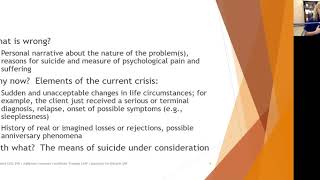
This episode was pre recorded as part of a live continuing education webinar on demand. CEUs are still available for this presentation through all CEUs register@allceus.com counselortoolbox. Welcome Everybody to Part 8 of SAMHSA's Tip 42, Treatment of Persons with co occurring disorders. So we're finally finishing up the SAMHSA tip this week. So today and Wednesday are your final two installments of SAMHSA TIP 42. And I know it's been a long road, but SAMHSA Tip 42 really covers a lot of what we need to know about co occurring disorders treatment. That includes reading some of the appendices as well. But we'll get into that some today and a little bit more on Wednesday. So today we're going to do a brief overview of specific mental disorders and cross cutting issues. So we're going to talk about cross cutting issues like nicotine dependence and suicidality, personality and mood disorders, schizophrenia, other psychotic disorders, add, adhd, ptsd, eating disorders, and pathological gambling. Because we need to know about these. Whether you're a mental health counselor or you're a substance abuse counselor, you're going to have clients that present with a mental health issue, say a mood disorder, a substance abuse issue, and potentially PTSD or an eating disorder or pathological gambling to boot. So they can have multiple disorders and we want to know how they interact and the best way to really go about approaching them. So 25 to 30% of ambulatory clients in general medical practices have a diagnosable psychiatric condition. 10 to 15% of people suffering from major psychiatric illnesses will end their lives by suicide. Let that sink in. 10 to 15%. That's more than 1 in 10 people suffering from a psychiatric illness will end their lives by suicide. Suicide is also more likely among those with personality traits of impulsivity, hopelessness and cognitive rigidity. Okay, when you think about it, that really makes sense. If somebody tends to feel hopeless and cognitive rigidity, you know, inability to see other points of view. So you know, they see the world as hopeless and there's no other options and they're impulsive, at a certain point they're just going to be over it. You can see where suicide might be more prevalent in people with those traits. Abuse of alcohol or drugs is a major risk factor in suicide, both for people with co occurring disorders and for the general population because using substances can sometimes be a disinhibitor. So we know that it lowers people's inhibitions. So they might be doing things that they wouldn't normally do. They might be more impulsive. But you've also got the fact that when people start engaging in addictive behaviors, it starts monkeying with their neurotransmitters, which can exacerbate depression or kick off a psychotic or a manic episode where they might be more impulsive. So it's really important to be aware that any kind of addictive behavior, including but not limited to abuse of alcohol or other drugs, is a major risk factor. Alcohol abuse or alcohol use is associated with 25 to 50% of suicides. Between 5 and 27% of all deaths of people who abuse alcohol are caused by suicide, with a lifetime risk for suicide to be about 15%. Okay, so we know alcohol abuse increases suicide risk. So if you've got a client who's abusing alcohol, you need to make sure that you are really Johnny on the spot with doing your mental status exams and your lethality assessments. There's a particularly strong relationship between substance abuse and suicide among young people. Part of that, as you've heard me say a bunch of times before, is because the prefrontal cortex, the impulse control area of the brain, does not fully develop until age 25. So if you take somebody who's already more impulsive than your average adult and you give them a disinhibitor, then you know, you can see where that's going to have an effect. And like I said just a minute ago, in adolescence, the impact of substances is often stronger than in adults because their brain is undergoing development. Still, they can have more dramatic neurochemical changes from addictive behaviors. Comorbidity of alcoholism and depression increases suicide risk. That's not a surprise. And substance intoxication is associated with increased violence, both towards others and towards the self. So it's important to recognize that, you know, that violence and that anger can go outwards or inwards. We need to screen for suicidal thoughts or plans with anyone who makes a suicidal reference appears seriously depressed, even if they're not talking about suicide overtly or who has a history of suicide attempts. Treat all suicide threats or discussions with seriousness. Now, just because somebody says, oh, I just wish I wouldn't wake up, that doesn't necessarily mean they are needing to be involuntarily committed, but we do want to follow up and see how serious that was. It's important to screen for these things all the time. Every contact you have with a client, and this is what I tell my interns and my staff, every contact you have with a client, I want to know does that client have future plans? Are they talking about what they're going to do next week? Are they willing to make an appointment with you? Are they talking about positive things in their life, Other things that we want to look for? Is, are they talking about tying up loose ends? If so, that's a warning sign. Are they talking about methods of suicide? If so, that's a warning sign. We need to be aware of all these things and document them in the chart. I want to know whenever I read a progress note, I want to see in there that the client was oriented times four, had future plans and, you know, rated their mood on a scale of 1 to 5 at ideally a 3 or above. But sometimes we get a 2 if we're getting down to the ones you know. I'm really wanting a more in depth assessment. Assess the client's risk of self harm by asking about what's wrong. You know, if they are unhappy, if they are struggling, if they are depressed. Tell me about it. What's going on? Why now? Why is this bothering you right now? Why are you having this crisis right now? Sometimes people will have, you know, protracted depression, if you want to call it that. You know, what's going on right now that is making these symptoms feel oppressive. Identify whether specific plans have been made to commit suicide. You know, asking somebody if they're thinking about committing suicide does not increase the chances that they're going to do it. If they've thought about it, then you know they've thought about it. If you ask them if they've thought about it and they haven't, they're going to be like, no. So don't be afraid of the word suicide or killing yourself. Whatever you feel more comfortable with. Ask them about past attempts. If they've got past attempts, they're at increased risk for future attempts. What are their current feelings and what are their protective factors? And this is delicate one. You need to find a way to ask in a way that's not patronizing. You don't want to say, well, what are all the things that you have to live for? If you can't ask anything else, then you know, obviously that's better than nothing. But hopefully you know this client well enough and you know what's important to this client. You know their reasons for living and you know the things that are going at least moderately okay in their life right now. So you can point out the disconnect between suicide and those things. Develop a safety and risk management process with the client that involves commitment on the client's Part to follow advice, remove the means to commit suicide and agree to seek help and treatment. Don't just rely on suicide contracts or no harm contracts or whatever you call them in your place because they're really, in most cases not worth the paper they're written on. A client will sign just about anything to get out of the office. Sometimes we do want to also remember that even if the client planned to commit suicide by firearm, for example, that if they remove the firearm, it doesn't mean that the risk is gone. They can always find a way to do it if they're suicidal. So we do need to understand, understand what's going on. We need to elicit future plans. When I worked at the crisis intervention center, you know, people would call up who were suicidal and sometimes I could only get a two or a four hour commitment and then they would, if they were willing to call me back in four hours, that was good. That was progress. A lot of people, if they're talking about suicide, the majority of people who talk about suicide are ambivalent. They still have a little part of them that doesn't want to die, but they also don't like they can continue to go on like this. We need to assess the client's risk of harm to others and provide availability of contact 24 hours a day until the psychiatric referral can be realized. Now what does that mean? Does that mean you have to be the one? No. Hopefully in your area there is a suicide hotline, there is a crisis intervention team that can be implemented in this kind of situation. Refer clients with a serious plan, previous attempts, or serious mental illness for psychiatric intervention. In order to manage these clients. Monitor and develop strategies to ensure medication adherence in clients with a history of suicidal ideation. We want to make sure their meds are stable. If they run out of meds, they could precipitate a crisis. If they start using substances or smoking or doing something different while they're on meds, their med levels may need to be adjusted. So we need to monitor how they're doing at that particular level. Develop long term recovery plans to treat substance abuse as well as the mood disorder. Review all situations that involve suicidality or high risk clients with your supervisor and with other treatment team members. Consult, consult, consult and document, document, document. That way you have information from reasonable other people, which is what they look for in court. Would a reasonable professional in your position have done the same thing? Well, if you've consulted with two other reasonable professionals and they said the same thing, then you can be pretty confident that you're making the right choice and document thoroughly all client reports and counselor suggestions. So when we ask what is wrong, we want to understand the personal narrative about the problems, their reasons for suicide. What do you think this is going to solve? What's the purpose of this? You know, for some people, suicide is a way of taking shame away from their family if they feel they've shamed their family. For other people, suicide is a way to make the pain stop from just intractable depression or something. So we need to understand what are your reasons and what is your level of pain and suffering? Well, obviously, if they're suicidal, you're not going to go, well, how bad is your suffering right now? We know they're pretty dagum devastated, so we see where they're at. Why now? And, you know, let me go back to pain and suffering. If you're talking to a client who makes sort of an offhanded comment about suicidality and they seem depressed and you're doing your mental status exam and you're like, yeah, I'm concerned about this client, that's when we want to say, how bad is this pain? On a scale of 1 to 5, and give them anchors for their likert scale, because otherwise they're gonna be going, I don't know, what is a two? You know, one being completely unbearable and five being, you know, not so bad, or vice versa, however you want to do it. But make sure to give them anchors so they can tell more accurately, tell you how bad their pain is. Then we want to talk about again, why now? Look at elements of the current crisis. And sometimes we'll find this out in counseling. You know, you've got a client who's flat, they're depressed, they're really struggling, and you start talking to them, and you find out that they've had some sudden, unacceptable changes in their life circumstances like getting a terminal diagnosis or getting served with divorce papers or relapse or onset of possible symptoms of something else. You know, there are a whole bunch of things that could happen. Maybe they just found out that they're being charged with some sort of a crime, and they're, like, totally freaked out. So, you know, there are a variety of things that can precipitate a crisis that the person just feels like, I don't think I can get through this. That's okay. You know, I want to understand where the person is coming from. And, you know, put yourself in that position where you feel like you've just been kicked in the gut and pummeled on the ground with Life. And that's kind of where they're at. We want to also explore a history of real or imagined losses or rejections and possible anniversary phenomena. Some people, you know, a year after the death of their spouse or a divorce or whatever, a year later when they have that anniversary, they may have a resurgence in their symptoms. And they're like, it's been a year and it still hurts like it just happened yesterday. And I don't know if I can keep feeling like this. And then they start to devolve into suicidal ideation. So being aware of those things, talk with them about the means of suicide. How do you plan on doing it? You know, if they say, you know, I don't know yet. Okay, if they have a very clear plan, that's, you know, a huge warning sign that we want to be aware of. But again, remember, you take away their primary means, if they're really determined to do it, they can do it. And, you know, you can use your creative thinking to figure out ways that, you know, anybody can do it. So where and when to get an idea of the location and the timing of the suicide attempt. A lot of times people who have families at home will not commit suicide while they're at home. They will drive somewhere or they may talk about doing it this weekend, which, you know, if it's Tuesday, that gives you four days. That's awesome. You know, if you're working with a client who, you know, anniversary is coming up and holidays are coming up, and they're like, yeah, you know, I don't want to ruin everybody's Thanksgiving, so we'll do it after. I'll do it after Thanksgiving. Okay, that gives you some time. But, you know, the person has made a concrete plan of when they're going to do it. If they've got past suicide attempts, think about when and with what they've tried to commit suicide in the past. You know, what precipitated that crisis. So you can get a better feeling for exactly what factors precipitate the perfect storm? What's the social response to past attempts? You know, we want to think about who was there to help you when you went through this before and who was not helpful, who said, you know, that was a stupid thing to do or turn their back on you. Because we need to know who the supportive people are and who the people are that we need to probably not reach out to right now. And then finally, again, looking at the protective factors, why not now? What are some reasons for not committing suicide now? So try to figure out Their reasons for living. If they've got a cat that they just absolutely adore, you know, they're responsible for that, that cat's life. So pointing that out and sometimes that can help. There are a lot of cases of people who have chosen not to harm themselves because they didn't want to leave their animals in a place where they would end up going to a shelter or something. There are other cases where that doesn't work out so well. But you know, we want to find out what are your protective factors, what's going okay, where might there be a glimmer of hope? Because again, if they're talking to you, they're ambivalent. And if they're ambivalent, then there's a glimmer of hope somewhere. We just need to kind of dig through all the rubble to find that little spark. Are there any spiritual or religious prohibitions against committing suicide? You know, sometimes helping people talk out, you know, what this will mean in the big scheme of things to them can help. And what are their duties to others or residual loose ends that they still have to take care of? Do they have a will? What about their house? What about their credit card bills? What about their pets, their children? Anything like that? You want to know? You know, have they tied up those loose ends? If so, it's really, they're in a really dangerous place. If they haven't tied up those loose ends. It doesn't mean they're super safe. But we can point out that there are a lot of people and things that depend on them and try to help them come back around to trying to think of alternatives besides suicide. Now we also don't want to overwhelm them because if they think about, you know, they're already depressed and they feel like they can't, they can't breathe because the depression is so heavy. And then you start being like, well, you know, your kids need you, your dogs need you, this needs you, that needs you. They're like, I can't even get out of bed right now. I'm no good to those people. So we need to process that through with them. So nicotine is another cross cutting issue. And I know that was kind of a sharp transition, but there are a lot of courses on our website@allce.com YouTube on crisis intervention, verbal crisis de escalation and suicide prevention. So for more in depth information, you can go over there. We hit the highlights of what is really important for every professional and paraprofessional to do. And that's really connect with the client and be aware of their symptoms and status, especially with post acute withdrawal syndrome, because post acute withdrawal can last for up to a year. And they may have days where they're feeling okay, and then they may have days or even a week or two where, where they're feeling really depressed and anxious and fatigued and all that kind of stuff again. And they may have a resurgence in suicidal ideation. So we do need to be aware of that as part of those mood peaks and valleys as part of the normal course of recovery. Okay, so nicotine daily smokers and non daily smokers have about twice the odds of relapsing to drug use at the end of a three year period compared to non smokers. Study has been cited a lot. And yes, it is true that this is a factor that is correlated with relapse. And those who quit smoking during treatment had an 8% relapse rate. So what does that tell me as a clinician and sort of a stats junkie, I'm looking at that going, so people who never smoked have a 6.5% chance of relapse. People who smoked at any point in time have up to an 11% chance of relapse. And quitting smoking during treatment only helps a wee little bit. Well, it's a wee little bit when you're, I think it was done surveying 35,000 people. So 2% of 35,000 people is. Or 3% of 35,000 people is a lot. But still, if I'm working with a client and this goes back to those individualized treatment goals and the client is going, I can give up my cocaine, I can give up my alcohol, I want to work on my depression and start getting stabilized on meds. But I am not ready to give up my smoking, at least until the meds kick in. I don't think I can bear life without my nicotine. Okay. You know, my perspective, not saying it's the right perspective, but my perspective is given these numbers that, you know, there's not a significant difference between the people who quit smoking during treatment and non smokers and their relapse rates. You know, if that's going to give you some sense of control, an element of sanity, if you will, during those early weeks and months of recovery. I don't know whether with that client, I would probably say, okay, we can approach this issue later. You know, you can consider later whether you want to address it. But in terms of their recovery from addiction and depression and anxiety and anything else they got going on, you know, that's what we're focusing on now and nicotine is sort of ancillary. And I know the surgeon general is probably like freaking out if, you know, if he heard that. But of the things that they're doing, let's look at harm reduction. Let's look at giving them the best chance in this early recovery period where they're going through post acute withdrawal and all kinds of other stuff. Let's give them the best chance possible to stay clean, sober and sane. So we do want to screen for tobacco use though, because some people are using tobacco and they've thought about quitting and they might be willing to quit, but nobody's ever presented it to them. And especially if they're in residential, it can make it a lot easier because it's a more controlled environment. And they're like, yeah, this is the perfect time for me to try to quit if I'm going to quit at any time. So let's screen, let's screen whatever setting they're in. And we want to find out the amount and type of tobacco products that they're using, including cigarettes, cigars, chew snuff and even E cigarettes. You know, we're talking about nicotine, not necessarily tobacco. We want to know how much they're using, how often their current motivation to quit, prior quit attempts, you know, have they tried, if so, what worked, what didn't, how long did they stop for, if they were able to stop and why did they relapse? Let's understand their withdrawal symptoms because different people will experience nicotine withdrawal differently. Common triggers for use, and that includes people, places, things, times of day, smells, you know, just about anything. Social supports and barriers to stopping and their preference for treatment. The current US Clinical practice guidelines indicate that all patients trying to quit smoking should use first line pharmacotherapy, except in cases where there might be contraindications. There are currently six FDA approved treatments for tobacco dependence. Bupropion sr, which, you know, helps. It's a selective norepinephrine reuptake inhibitor, I believe, but it helps a lot with the cravings. And there's also five nicotine replacement treatments that when I say five, it's not different drugs, it's just different formats. You have gum, you have transdermal patch, you have inhalers, nasal sprays and lozenges. Whatever works for that person. And a lot of times insurance will cover part of it. A lot of states have campaigns where people can get low cost or free nicotine replacement treatments while they're in a nicotine cessation program. When Clients with serious mental illnesses attempt to quit smoking. Watch for changes in mental status. Because quitting smoking, which is often a anxiety reliever type thing, you know, you're going to have changes in neurochemicals, you're also going to have psychological withdrawal which can increase irritability and depression. But you're also potentially going to have changes in blood plasma levels of the psychiatric medications that they're taking when they are not ingesting nicotine. So you do need to watch for their mental status. Okay, so suicide and nicotine are your cross cutting, you know, some of your cross cutting issues. Personality disorders, these are rigid, inflexible, maladaptive patterns of sufficient severity to cause internal distress or significant impairment of functioning. And they're an enduring pattern that deviates markedly from the expectations of the individual's culture. Is manifested in two or more of the following. Cognitive, affective, interpersonal functioning and impulse control. Alright, so that's the clinical definition. A personality disorder is a group of behaviors, if you wanted, or a pattern of behaviors that is pervasive. It's not just at work, not just at home, not just with their significant other, but it just, it's all, you know, with everybody or most everybody. And it causes clinically significant distress and, or it deviates significantly from the person, from the cultural norms. So you know, somebody with borderline personality disorder may not really say oh my gosh, this is, this borderline personality disorder is driving me crazy because these behaviors are ego syntonic. But if we look at their symptoms, we can often see where their symptoms are causing them problems in two or more areas of life, which kind of is the definition of clinically significant distress. So we do want to look for these things, but it's important, very important not to over diagnose because personality disorders are enduring, which means a lot of people believe they can't get better. I'm not one of them, but a lot of people believe that they can't get better. And that will preclude them from admission to certain treatment programs. You know, it can have repercussions. So before we give somebody a lifelong diagnosis, let's make sure that we are sure that that's what they have. So personality disorders can affect the way people perceive and interpret their self and other people, their range and intensity of emotions. Think borderline how they interface with others, think antisocial and lack of empathy and their impulse control. So we're going to go over a couple of them here. Okay, so may use drugs in a variety of ways and settings. And I'm Going to read through these real quick and then I'm going to ask you a question. At the beginning of a crisis episode, a client with this disorder might take a drink or different drug in an attempt to quell the growing sense of tension or loss of control. They may use the same drugs of choice routes of administration and frequency as the people with whom they're interacting. They often use substances in idiosyncratic and sort of unpredictable patterns. Poly drug use or use of more than one drug is common, which may involve alcohol and other sedative hypnotics taken for self medication. And they're skilled in seeking multiple sources of medication that they favor, such as benzos or opiates. Once they're prescribed this medication in a mental health system, they may demand to be continued on the medication to avoid withdrawal. All right, so what's my question when I read through this? That reads like a person with an addiction to me. Yes, it does. But it's also a definition of general behaviors that we see in personality disorders. Why do I bring this up? Because a lot of people who are in early recovery and you know, within the first year early recovery from addictive behaviors are going to evidence some personality disorder like behaviors that are a result of the addictive process. So we do want to wait till they've got significant clean time before we start slapping a personality diagnosis on them. And my humble opinion, okay, so let's think about this one. Which, what does this sound like? A pervasive pattern of instability beginning in early adulthood and presenting in a variety of contexts indicated by five or more of the following frantic efforts to imagine real, to avoid real or imagined abandonment. Now, you know if you're good on your personality disorder diagnosis, you know which one I'm talking about Just with that a pattern of unstable and intense interpersonal relationships that alternate between extremes of idealization, you're the best and devaluation, you suck. Markedly and persistently unstable self image or sense of self. So the person doesn't know who they are. They're kind of chameleon like they don't know what they want, what they like. They're just trying to fit in impulsivity in at least two areas that are potentially self damaging. Recurrent suicidal behavior or threats or self mutilating behavior. Now one thing I want you to think about with self injurious behavior is a lot of times self injurious behavior is a alternative, is a, dare I say, coping skill to deal with pain or you know, emotional numbness that people use instead of committing suicide. So if they're self injuring, it doesn't mean that they're necessarily going to commit suicide. We do want to recognize self injury for what it is. And there's again more videos on self injury. We're not going to cover those here. Affective instability due to marked reactivity of mood, usually lasting a few hours and only rarely more than a few days. Chronic feelings of emptiness, inappropriate intense anger and transient paranoid ideation. Okay, so if you said borderline personality disorder, well, you're right. But I do want to point out that the items that are starred here are also representative of symptoms that you can see in people in early recovery that are experiencing post acute withdrawal. A pattern of unstable and intense interpersonal relationships. A lot of times people in early recovery have really low self esteem and they are trying to form these relationships. They have difficulty with boundaries, they may not have ever had good boundaries. And they can fall in love at the drop of the hat. And they can also think you are the worst person in the world at the drop of a hat. Because in the environment that they have been in for a while, they learn to don't talk, don't trust, don't feel. So they may all of a sudden meet you and then fall head over heels in love with you. And the first time you do something wrong, they expect the worst because that's what they've experienced a lot of times. So then they look at you like the worst. I mean, it's just complete black and white. There are no, there's no gray area. So. So that makes sense to me. Until they develop this effective interpersonal skills, it's not that they don't want to have them, it's just they've not been taught or they've had really bad experiences and they've quit trusting other people. Same thing goes with markedly and persistently unstable self image or sense of self. In addiction, people are often social chameleons. They try to get people's approval, they try to manipulate other people and they lose their sense of self. You know, who were they before they started using? Who were they before this addiction consumed their life? Effective instability due to marked reactivity of mood. Well, they're detoxing. You know, even if the substance is technically out of their system, you have that post acute withdrawal, they can last again for up to a year. And the person can have emotional ability for a week or two and then be symptom free, if you will, and then have another exacerbation of symptoms. So this is very post acute withdrawal esque chronic feelings. Of emptiness. A lot of times in people's addiction, they have done things that they feel guilty for, that they regret. They may not feel. They may have pushed everyone they loved away. They may feel very empty inside. You know that's true. But you know, again, when did this, when did all these things start? You know, that's one of the questions you want to ask. Did it exist before the addiction started? With a lot of my clients that I've worked with over the years, there's no way to know because they started using when they were 9, 10, 11 and 12. So sometimes there's not a clear cut answer about whether this existed before the addiction. An inappropriate intense anger or difficulty controlling anger is another symptom of post acute withdrawal. So we do want to rule out any other mental health condition, any post acute withdrawal issues before we start really considering a personality disorder diagnosis. Unless you can identify that these symptoms existed before the addiction started. And you really want to go back. And when you're talking about addiction, maybe their drug of choice right now is cocaine, for example. But when they were nine, they were just consumed with watching porn. That does a lot of stuff to a child's brain and an adolescent's brain. You know, we want to look at the addictive behavior that was starting back then and go, you know what? If it were me, I wouldn't be comfortable until they had a year of clean time putting a personality diagnosis down. Okay, so here's another one. A pervasive pattern of disregard for and violation of the rights of others occurring since age 15 and indicating by three of the following. Now remember, a lot of clients with addictions started their addictive behaviors before the age of 15. So it's not a huge leap to look at some of these symptoms and go addiction or personality disorder or something else completely. So failure to conform to social norms with respect to lawful behaviors as indicated by repeatedly performing acts that are grounds for arrest. Well, if you are using illegal substances, you meet this criteria. It doesn't have to be vandalism or something if you're buying cocaine, selling cocaine, you know, prostituting in order to get money for cocaine. Alright, well you meet criteria one, deceitfulness as indicated by repeated lying, use of aliases, or conning others for personal profit or to get drugs or pleasure, impulsivity or failure to plan ahead. A lot of times people who are in active addiction can't plan ahead cognitively. They're just not there. They go from, they're high, as soon as they start to crash, they feel a crisis and then they need to use again. And there's no, you know, well, what should I do? Am I going to use on Saturday? They need to use now. So there's a lot of impulsive behavior, irritability and aggressiveness. Repeated physical fights or assaults, not uncommon in post acute withdrawal. Especially the irritability and just being cantankerous. Not so much the physical fights or assaults. Reckless disregard for the safety of others. That is really not uncommon when somebody is in active addiction because their addiction is what they are obsessed with. And anything else is collateral damage. Consistent irresponsibility as indicated by failure to sustain consistent work behavior or honor financial obligations. Again, I haven't ever to date worked with someone who has a significant serious addiction like residential level treatment addiction, who hasn't at some point during their addiction met this criteria? Now there are people who are functioning alcoholics and functioning addicts who are more responsible, which is why you don't have to have all of these criteria. So just because somebody's responsible doesn't mean that, you know, they don't have a problem. But I do want to point that out. And lack of remorse as indicated by being indifferent to or rationalizing, having hurt, mistreated or stolen from another. Now you may think, well, addiction can't do that. Well, by gosh, yes it can. They have. A lot of people who are in recovery from addiction have been hurt by other people, have been traumatized, have been abused, have been used, have been manipulated by other people. And at a certain point, for whatever reason, whether, you know, they build these walls up so they are indifferent to the suffering of others, they're just like, well, you know, life sucks, tough tiddlywinks. And they have a hard time connecting with other people because they are so guarded at this point. Now again, if it occurred before the addiction began, then it's more likely a personality disorder. But we do want to look at how are these behaviors, how do they make sense in terms of what's going on with the person? Right. Then how does a lack of remorse potentially serve as a protective mechanism for that person? Now there are people out there who have, you know, textbook antisocial personality disorder. But my experience has been and could be the settings that I work in which have always been co occurring disorders. Treatment my experience has been 99.95% of them. These behaviors, these personality disorder symptoms are more reflective of behaviors that were created or occurred during their addictive period. And once they've got clean and sober time, then these behaviors start to go away. And if it's A personality disorder. These behaviors wouldn't go away. In order to get a personality disorder diagnosis, the person does have to be at least 18 for this one, which you've probably guessed by now is antisocial personality disorder. The person has to had conduct disorder with onset before the age of 15. What did I say? A lot of people begin their addictive journey by experimenting with substances. You know, they steal drink from their dad's cabinet or steal their brother's marijuana or whatever it is before age 15. So we may see conduct disorder before age 15. But is it conduct disorder or is it addictive? Addictive behavior. An occurrence is not exclusively during schizophrenia or a manic episode. Other things that we want to think about when we're talking about people with antisocial personality disorder is they use manipulation, intimidation and violence to control others and satisfy their own needs. Now think about the drug dealer on the corner. Think about the person who really needs to get a fix. They will use manipulation and intimidation to get their get their drugs into if they are in really bad withdrawals. A lot of times, not everybody, but a lot of times many people with this disorder use substances in a poly drug pattern involving alcohol, marijuana, heroin, cocaine and methamphetamine. So it's just kind of drug roulette. They also may be excited by the illegal drug culture and may have considerable pride in their ability to thrive in the face of the dangers of that culture. So antisocial personality disorder, they really thrive on the power. But let's look back at the person with the addiction who has experienced trauma. And this gives them a sense of empowerment. This gives them a sense of being in control. Well, they may take pride in it if they're like they're finally the bully instead of the one being bullied. Those who are more effective may limit themselves to exploitive or manipulative behaviors. And that don't make them as vulnerable to criminal sanctions. Okay, so let's talk about mood disorders real quick. About 1/2 of individuals with substance use disorders have an affective or anxiety disorder at some point in their lives. Women are more likely than men to be clinically depressed and or have post traumatic stress disorder. Older adults may be the group at highest risk for combined mood disorder and substance problems. And episodes of mood disturbance generally increase in frequency with age. Older adults can become addicted. You don't have to become addicted when you're 15 or 25. I've known people who have had a life that hasn't had addiction, and they've become addicted at 65 or 67. I think she was. And it's just a matter of what's going on. And you know, sometimes as people get older and their body starts to have problems, they may self medicate and they may get addicted to opiates, they may get addicted to benzos, and then, you know, it just spirals from there. Both substance use and discontinuance may be associated with symptoms of depression and anxiety. So one thing to be aware of in people is the impact of some of these substances can be greatly affected by the functioning of the person's kidneys and liver. So if they've got cirrhosis, if they've got any kind of kidney problems, or if they're older, older adults clear stuff from their system a lot more slowly than younger people. So those things can increase rates of depression and anxiety. Medical problems and medications can produce symptoms of anxiety and mood disorders. Medical problems like Parkinson's have been associated with hallucinations and delusions. Depression, anxiety, same thing with Alzheimer's. You know, there are a variety. Stroke. Stroke is associated with significant anxiety and depression. And there's also medications that people take, including opioids and certain benzodiazepines and certain heart medications even, that can produce symptoms of anxiety and mood disorders. So it's important to recognize that this is a biopsychosocial issue. We need to rule out not only the mood disorder, not only the addiction, but also side effects of prescribed medications for physical conditions. 25% of individuals who have chronic medical conditions such as diabetes or stroke develop major depressive disorder. Since mood and anxiety symptoms may result from substance use disorders, not an underlying mental disorder, careful and continuous assessment is essential. So as people are using, if they're using depressants, it can produce symptoms of guess what? Depression. If they're using stimulants, it can produce symptoms of anxiety. When they're detoxing from depressants, they can have symptoms of anxiety. And when they're detoxing from stimulants, they can have symptoms of depression. So, you know, intoxication and withdrawal can produce mood disorder symptoms such as fatigue, sleep disturbance, eating disturbances, worry and guilt. You know, worrying about what people are thinking, guilt for what they did, yada, yada, irritability, difficulty concentrating and just flat apathy or anhedonia. No pleasure, you know, nothing just does it for them. You know, they're exhausted, they're done, Their dopamine levels are just like flat. So mood disorders, again, we need to rule out the. The effects of any sort of substance or addictive behavior. Pathological gambling, Sex addiction, you know, any of these process addictions mess with the dopamine levels and can also mess with circadian rhythms and cortisol levels and, and produce these same sort of symptoms. Now, can people have an addiction or substance withdrawal and concurrent mood disorder? Sure, they certainly can. And it's important to recognize that we need to treat the symptoms when they appear, not just say, well, let's wait and see if this subsides. You know, after they get through that initial three to seven days of detox, you know, wherever they are is where we need to meet them and help them deal with the presenting symptoms. Whether we think it's a person with an actual major depressive disorder, or if we think it is their post acute withdrawal symptoms from coming off of three years of using cocaine, we still need to treat it or the person is not going to stay clean and sober for very long and their mood is probably going to get worse. ADHD is another thing we want to pay attention to. And I've had a lot of clients with ADHD who are often misdiagnosed as bipolar and vice versa. But we do want to pay attention to the symptoms of inattention and impulsivity. Again, as they correlate, if you will, to post acute withdrawal syndrome. Can they have ADHD and be in withdrawal from a substance? Again, certainly we just for our long term treatment plan, we need to start ferreting out. Once the person has a year or so of good, stable, clean time and they're through that post acute withdrawal phase, then we can start looking at what other underlying diagnoses are there. But for that first year, we still need to treat the symptoms as they present. So someone with inattention fails to pay attention to details, doesn't seem to listen when spoken to, doesn't follow through, they have difficulty with organization, they're easily distracted, and they may avoid tasks requiring sustained mental effort. Well, if you just detoxed from being on cocaine for six months or six years, you're probably going to have difficulty focusing for a while. You're going to be in a brain fog, have difficulty concentrating, you know, be easily distracted and just have a difficult time following through with things because your memory ain't what it used to be. At least right now. Those are post acute withdrawal symptoms. Yes, they're ADHD symptoms too. But we do need to recognize that a lot of our clients are going to have these symptoms. So we need to plan for that when we're doing groups and individuals and creating our program structure and impulsivity, difficulty waiting Their turn interrupting or intruding on conversations and blurting out answers before the question is completed. The impulsivity is more of an ADHD characteristic. It can be a sign of hypomania. So we do want to, again, differentially diagnose really well. It also could be just poor social skills. But we need to figure out what's causing. Is not uncommon, especially in group work, to struggle with clients who have these kinds of behaviors. And sometimes staff will see this as resistance or disruptive. But with the client with adhd, they have difficulty helping themselves. They need skills and tools to figure out how to be less impulsive and manage that impulsivity. And remember, during this first year, while the neurotransmitters are still rebalancing, there are maybe periods. There are likely going to be periods where it's even harder for them to manage their impulsivity because their neurotransmitters have gotten re out of balance, if you will. So when you're working with somebody with adhd, clarify for the client repeatedly what elements of a question he or she has responded to and what remains to be addressed. Eliminate distracting stimuli from the environment. So if you're doing group, shut the door. You know, that's one easy way to do it. If there are windows in the group room, pull the blinds. That helps people focus a little bit more. Use visual aids to convey information so your visual learners are getting it, but you also are giving people something to look at and focus on. Otherwise, their mind's going to probably be all over the place. Reduce the time of meetings and the length of verbal exchanges to about 40 minutes if you can. And if you can't, because your program says you have to do an hour and a half group, have a break halfway through where people can take 10 minutes to stretch. Try to do activities frequently so they're not having to sit there for long stretches and pay attention. And encourage the client to use tools such as activity journals, written schedules, and to do lists in order to organize important events and information. You know, part of recovery in residential, we wanted them to get up and show up. And the first 28 days, if they could do that and stay awake while they were in group, I was really happy. It was important for them to be able to follow their schedule, to be able to be held accountable for being where they were supposed to be and doing what they were supposed to do. PTSD is another issue that comes up a lot in both people with mood disorders as well as schizophrenia and addiction. So they may have symptoms of re Experiencing through flashbacks or nightmares. They may have avoidance symptoms which you know, self explanatory. They may have negative thoughts or feelings or emotional numbing such as. And feelings can include guilt, blame, depression or just emotional numbing or anhedonia. And a lot of times people with PTSD have hyperarousal. They feel like they're always on edge, they are startled really easily, they can be irritable. So with these clients, in addition to having a trauma informed approach in your facility, make sure that you're creating emotional and physical safety in all settings. When they're in the lunchroom, when they are in your personal office, when they are in a group room, you know what helps them feel emotionally safe. Like nobody's going to take advantage of them, you're not going to push them too far. And what's going to make them feel physically safe? You know that nobody's going to hurt their person or steal their stuff. Explore environmental triggers for that person. You know, look around the room and have them, you know, if there's anything in the environment that they find stressful or triggering, encourage them to let you know. That way you can do things about it. Empower clients to speak up. Empower clients to work on their treatment plan. Encourage clients to keep taking those baby steps forward. Validate their perceptions about things. You know, just because you may not have experienced it as a threatening or stressful situation doesn't mean they didn't. Because of their prior trauma, they have different schema about that situation. Highlight the survival functions of their PTSD symptoms. Help them understand how it's their body's way of protecting them. Because the amygdala, where all your emotional stuff is processed, that overrides higher order thinking. So whenever something happens, the brain defaults to the amygdala and it says what's going on here? Threat, threat, threat. Now yes, you can eventually work through that and integrate it, but until that stressor is or trauma is integrated into your story, so to speak, it's going to be sitting there in the amygdala and is going to put off threats whenever a situation is experienced that is similar. Don't delve into trauma without a safety net. So if you're working with someone with PTSD and you are not really well trained in working with ptsd, don't push them. And in early recovery, a lot of times it's best, it depends on the client. Obviously a lot of times it's best not to delve into trauma issues in that first month or so because they're still cleaning up the foggy head. They're still getting their attention span back, and they're starting to develop coping skills, and. And they're dealing with the guilt and remorse and all that stuff that they have once they sober up. And they're like, oh, yeah, I did a lot of things in my addiction that I'm not proud of. Okay, so they've got a lot of stuff on their plate. Do you really want to poke the bear and say, okay, now let's take this experience that was the worst experience of your life, and let's put that on the plate, too. That's overwhelming. Let them handle it in due time. Like I said, if they are determined to handle it. If they are experiencing night terrors that sp they're keeping them from moving forward. You know, obviously there are ways to handle that, and there are pro. It may be appropriate to handle the trauma first, but with most clients, I call it land legs. You know, let them get their land legs a little bit before you start delving into this stuff. That's going to rock the boat. Eating disorders. Approximately 15% of people with a substance abuse issue also have an eating disorder, especially bulimia. People with eating disorders are significantly more likely to use stimulants and significantly less likely to use opioids than other individuals who abuse substances. Well, let's think about this. Stimulants theoretically keep you energized, help you exercise more, help you lose weight, and are appetite suppressants. So that makes sense. Opiates slow you down, make you depressed, make you constipated, sometimes make you bloated. So it makes sense why they wouldn't steer towards the opioids. Many individuals alternate between substance abuse and eating disorders, so if they're not able to access their substance of choice, they may develop an eating disorder or have an exacerbation of symptoms during that period. And I used to see that a lot in residential treatment. And my battle cry was, was always that people are not in recovery until they're in recovery from all of their addictive behaviors. Because if they're just substituting addictions, then they already have one foot into a relapse. So we need to explore eating behaviors. Why are you eating? How do you feel about it? You know, are you purging? Yada, yada? Alcohol and drugs such as marijuana can disinhibit appetite, which means when you drink, it can make you either hungrier or just, you know, not even pay attention to what you're eating and increase the risk of binge eating as well as relapse in individuals with bulimia nervosa. Individuals with eating disorders experience craving, tolerance and withdrawal from drugs associated with purging, such as laxatives and diuretics, and also from exercise, because you have those exercise induced endorphins. Well, people who purge via excessive exercise 3, 4 hours in the gym will experience withdrawal, craving, tolerance, and everything from that. So it's important to recognize that there is a physiological as well as psychological withdrawal for a lot of those drugs. Again, I have an eating disorder series on our YouTube channel that goes over a lot of the issues with eating disorders and some of the nutritional aspects that people experience when they're in recovery from, especially bulimia. Gambling. The rate of co occurrence of pathological gambling among people with substance use disorders has been reported as ranging from 9 to 30%. 30%. That's one in three. Wow. And the rate of substance abuse among individuals with pathological gambling has been estimated between 25 and 63%. Okay, so what's the difference? Sounds like I just read the same thing. No. People with substance use disorders. So if you have a client who presents with alcoholism, their rate of potentially developing pathological gambling is 9 to 30%. If you have somebody who presents with pathological gambling, their likelihood of developing or having alcohol dependence or substance dependence is up to 63%. So if you do your little Venn diagrams, you can see where the overlap is. But it's important to recognize that these are really big freaking numbers. So gambling in a treatment facility, probably not a good idea ever. And that can include, you know, betting on sports games. That can include certain card games. We allowed our clients to play cards, but we were very clear about what types of games they were allowed to play. Someone who's addicted to cocaine may see gambling as a way to get money to support drug use. And addicted to a lot of a variety of drugs may see gambling as a way to get money to support their use. A pathological gambler may also use cocaine or other stimulants to maintain energy levels and focus during gambling and sell drugs to obtain gambling money. Cocaine may artificially inflate a gambler's sense of certainty of winning and gambling skill, contributing to greater gambling risks. Now, one thing that, you know, you're thinking gambling, you're thinking, you know, playing craps or, you know, I'm not a gambler, so I don't know any of those games. Playing the ponies, the dogs, whatever it is. Another type of gambling that I have experienced with some of my clients is day trading. And Clients who do a lot of day trading also or online gambling can also experience some of these issues where their activity doesn't actually kick off until 10 or 11 at night. So they're using stimulants in order to stay up late and then, you know, they go to bed and they wake up. You know, if they've got a family, they may still have to wake up at seven or eight in the morning and then they use stimulants to stay awake. So stimulants help the person stay awake until they can access their addiction of choice. And with day trading, you know, you're like, well that's during the day. Well, some markets open in the middle of the night, like overseas markets. So depends on what they're, what they're working with. So general interventions when you're working with clients, regardless of whether it's mental health, substance abuse or physical issues or all three, there are five Rs to think of. Relevance. Encourage the client to indicate why change could be personally relevant, being specific as possible. So why is this important to you right now? Risks. Help them identify the risks to staying the same, including health concerns, family concerns, social concerns. We're going to talk about a lot about this on the Tuesday webinar of Counselor Toolbox. The Journey to Recovery series on motivation. Rewards elicit from clients possible benefits of change with a particular focus on identifying short term benefits like today, this week that they will notice immediately. What can you do today? If you choose not to use cocaine tonight? What's the benefit going to be to you tomorrow? Roadblocks help the client identify barriers or impediments to change, including withdrawal symptoms, fear of failure, weight gain, lack of support, depression, or just really missing the activity because they enjoyed it. Figure out other ways to meet those needs or deal with those concerns and repetition. The motivational intervention should be repeated every time an unmotivated client visits the clinical setting. People who failed to change in previous attempts need to be informed and reminded that most people have to make multiple change attempts before they're completely successful so they're not a failure. It just means we missed something in the planning process. So your 5R's relevance, risks, rewards, roadblocks and repetition. So over the past hour we discussed suicidality and screening for suicidality, nicotine dependence, personality disorders and differentiating them from post acute withdrawal and addiction related issues, mood and anxiety disorders, attention deficit hyperactivity, post traumatic stress, eating disorders and pathological gambling. So on session nine, which is the next session we'll be recording Wednesday, I will be talking about alcohol induced brain damage and alcohol induced disorders. All right, thanks for being with me today. Counselor Toolbox Podcast is sponsored by BetterHelp, the world's largest e counseling platform providing accessible and affordable counseling services via messaging, live chat, phone or video. To apply to be a counselor at BetterHelp with no overhead, fees or cost, go to betterhelp.comtoolbox. you can also find a counselor by going to betterhelp.comtoolbox and clicking on Get Started in the upper right corner. If you enjoy this podcast, please please like and subscribe either in your podcast player or on YouTube. If you want to attend and participate in our live webinars with Dr. Snipes, you can subscribe at. This episode has been brought to you in part by allce.com providing 24.7 multimedia continuing education and pre certification training to counselors, therapists and nurses since 2006. You can use coupon code counselortoolbox to get 20% off of your current order. If you're a podcast listener, especially on an Apple device, it would be extremely helpful if you would review Counselor Toolbox. To do this on your Apple device, go to the Podcast app, search for Counselor Toolbox, select the icon for the podcast, tap the Reviews tab in the middle. You should then see an option to click Write a Review. We love to see five star reviews, so if there's anything we can do to make this podcast even better for you, please email us at Support@Allce.com.










