CTB Live Stream YouTube
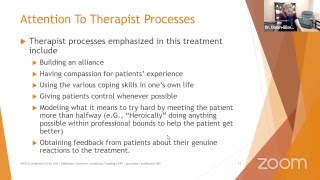
Dr. Dawn-Elise Snipes introduces Seeking Safety, an evidence-based program that treats PTSD alongside substance use, self-harm, and eating disorders by prioritizing safety first. The curriculum integrates cognitive, behavioral, and interpersonal work with practical strategies for therapists and organizations.
Chapters
Well, howdy and welcome everyone. Today we're going to be starting a series called Seeking Safety and this is part of our Trauma Informed Care certification series. So if you're interested in trauma informed care, you can learn a whole lot more by taking the Trauma Informed certification track@allce.com but let's go on with starting with Seeking Safety. Today, Seeking Safety is identified as an evidence based practice for working with people with trauma issues. And it forms a great foundation for just about any program. And it's a very flexible curriculum. I've had several staff members use it, I've used it myself. And it gives you a lot of tools that you can easily communicate to clients to help them really propel themselves into this recovery mode. So today we're going to review the five central ideas of Seeking Safety. Safety as the priority of the first stage of treatment. And we're going to talk about what that means. Integrated treatment of PTSD and substance use and or self harming behaviors. A focus on ideals, content areas that need to be included. We can't just do emotional, we can't just do cognitive. We've got to do cognitive, behavioral, interpersonal and case management and attention to therapist processes. Because 80% of the therapeutic relationship is because or therapeutic improvements are because of the therapeutic relationship. We can have techniques out the yin yang, but if you can't effectively implement them and if you don't have a good rapport and good engagement with your clients, you're not going to be effective. We're also going to kind of talk as we go through this about how we can use a lot of these principles in our organization to create a more trauma informed environment. Safety is the priority of the first stage of treatment. People with PTSD often struggle with depression, addiction, eating disorders, high levels of anxiety. There's a lot of co occurring stuff that goes along with ptsd. And a lot of people, people with PTSD also have chronic pain. Part of that if you were in the biopsychosocial aspects of emotion class yesterday, part of that is because people who are exposed to trauma have their inflammatory cytokines ramped up. And they are permanently ramped up. So they're more prone to inflammatory problems, they're more prone to gastric upset than people who weren't exposed to trauma. So we know that somebody we're dealing with who has ptsd, who has trauma may also have a whole host of physical as well as emotional and behavioral issues that they're trying to contend with. The most urgent clinical need though is to establish safety. Now Think back to Maslow's hierarchy. What is the first thing? What forms the foundation of that pyramid? Biological needs. The next one is safety. And we're going to talk about how they kind of go together and we're going to kind of smoosh them together. Now, safety is an umbrella term that signifies various elements including discontinuing addictive and or self harming behaviors. That includes eating disorders, cutting, anything like that, reducing suicidality, minimizing exposure to high risk situations, such as places where you could get attacked, such as places where you could get access to drugs, such as places where you would be encouraged to binge and purge or over exercise. So minimizing those situations because you don't want to have the person in situations where they're going to engage in those unhelpful or less than helpful behaviors. And you got to remember, and I do want to put a caveat here, what people are doing right now serves a purpose and it's the best way they could solve a problem. Until now, you know, they don't have other tools. If they did, they would sure use it. It's like if there's a screw loose in your kitchen drawer, and I do this all the time, and you don't happen to have a little tiny screwdriver handy, you're reaching in there with your thumbnail and trying to turn it. Is it an effective solution? No. Does it break your thumbnail every time? Certainly does, but it's the best thing that I generally have handy at the time. So what we want to recognize is clients, regardless of what they were doing, are often doing it because they want to live, because they want to survive. So we need to help them figure out, okay, how can we help you get out of some of those dangerous situations, especially while you're learning new tools. We want them to let go of dangerous relationships, and that can be physically or emotionally dangerous relationships gain control over extreme symptoms such as dissociation, hypervigilance, and stop any self harming behaviors like cutting or, you know, again, any of those addictive behaviors. Even though the trauma may have occurred a long time ago, patients have typically been abused and are now abusing themselves. So when we're talking about this trauma, a lot of times what we're talking about is some sort of interpersonal interaction. Whether it's what we typically think about as child abuse or sexual abuse, or if someone was raped or, you know, whatever that abuse took, whatever form that abuse took, they may be treating themselves in ways that repeat it, especially if it happened when they were Younger, they may believe that they deserve that. They may believe that that's how it's supposed to be. They may believe that they're broken and, you know, they don't deserve any better. So we want to recognize that clients are often doing this sort of subconsciously. They are also often ignoring their needs. In their trauma, they probably were not getting their needs met. They probably wanted to scream. They probably wanted help. They probably wanted to reach out, but there was nowhere to go. So they learned to ignore their needs. They learned their needs were not important and weren't going to get met. So we want to help clients, you know, change that way of thinking and recognize that their needs are important and they can meet their needs now as adults, they can, or even older adolescents, they can meet their needs. They have the ability to ask for help and to identify resources. That's down the line. But we want to help them at least start becoming aware of their needs in this first area. And they may also engage in behaviors that perpetuate pain. Why? Well, you know, there are a lot of different reasons, and you want to ask the person, and this comes later in the process. You want to understand what function these behaviors serve. Cutting, for example, can serve to perpetuate pain. So they can feel something because they're dissociated so much of the time that at least if they're cutting, they feel something. It can also help people focus on external pain so they're not focusing on their internal pain. It can serve a lot of different functions. Pain also causes the release of endorphins. So for some people, it gives them a rush. So we want to understand what is the focus of pain, whatever's causing it for you, and how can we help you find alternate ways to meet those needs? When we help them start seeing the connection between their past, between their trauma and the way that they treat themselves, it starts helping them make a meaningful connection between their disorders. If they start understanding that some of their pain, their physical pain from inflammation and Crohn's disease or whatever is can be a result of their earlier trauma, it makes sense. As they realize that as their stress goes up, their pain goes up, they're seeing a connection there. As they realize as their stress goes up, as they get more anxious or hypervigilant and their pain goes up, their depression also goes up, they start seeing that connection. So we want to start helping them see put out representations of all of their disorders. So, you know, you can do it on playing cards, you can do it on, you know, little bouncy balls, however you want to do it. But I have them so they can be moved around. Not my typical whiteboard thing. And I write down each one of their presenting diagnoses, if you will, on one of those cards. And I will move a card forward and I go, okay, when this one acts up, what happens? How does it affect the other two? Or does it. And if it doesn't, then, you know, those other diagnoses stay off the table. But if it does, and it usually does, then we can start seeing those things slide in. And then we also talk about other issues that might be going on with that patient. Maybe they're experiencing relationship difficulties or difficulty being patient and with anger and irritable outbursts and those sorts of things. Again, put those all on index cards, I love my index cards. And have them on the table. So when you see one area becoming symptomatic or becoming problematic, you can start talking objectively about, okay, how does it affect each one of these other areas? And moving them around so the person can see the interrelationship. Recovery requires that patients establish safety, you know, and we're going to talk about different types of safety later. Grieve and reconnect. Now, why do they need to grieve? Because when we experience trauma, we experience a loss, we experience a loss of safety, we experience a loss of security, we experience a loss of how we feel, thought the world was supposed to go or how we thought the world was supposed to be a change in our worldview. There are a lot of things that may need to be grieved in recovery and in developing safety. If they're trying to establish relationships with healthy people and distance themselves from harmful relationships, they may need to grieve that. So they need to start working on that grief process and reconnect with themselves, reconnect with who they are, what they need, what they want, and move forward from there. So safety in the Seeking Safety curriculum is addressed in a lot of different ways, including the safe coping sheet, the list of safe coping skills, the safety plan, and the safety contract. Well, all those are wonderful. And, and they come at different points in the book. But you think, well, safety is the first thing you need to do to start working on trauma resolution. Yes, that's true, but you can't just hand people these worksheets and go to it, because a lot of people don't have effective coping skills to put on a safety plan or a safety contract. They haven't realized what they're doing to make their self unsafe. Emotionally, mentally, physically, interpersonally and environmentally know how to write a safety contract. So we really want to help them identify what can they do to help themselves be emotionally safe so they don't feel like they're constantly getting their feelings hurt. Now, yeah, life happens. It's not a bed of roses all the time. Let's just face it. So there are times people are going to feel sad, and the happies wouldn't be as rich if we didn't also balance them out with some of the SADs. But we do want people to feel emotionally safe, like they're not going to get constantly ridiculed or made fun of. So what can they do to ensure their emotional safety? And how can they set emotional boundaries? So it's okay for them to feel happy if somebody else isn't happy. It's okay for them to feel angry if other people don't feel the same way. Two people can experience the same situation and have very different reactions, but however that person feels is how that person feels, and that's emotional safety. They feel safe. But emotional safety also goes a little bit further toward distress tolerance and emotional regulation, which are dialectical behavior therapy principles. But we want to make sure that people don't feel like their emotions are so overwhelming that they're completely intolerable, that they're oppressive. They're so afraid of feeling anything because they're afraid they can't turn it off. So we do want to make sure they have tools to handle emotional upregulation. You know, notice I didn't say dysregulation, but whenever they start getting anxious, angry, you know, depressed, helping them figure out how to handle those emotions in a healthy, productive way. Physical safety is a lot more obvious. You know, we want to make sure that patients are in an environment where they can get good rest because they can actually sleep. They feel physically safe at home. They feel physically safe at work. Work. They're not in jeopardy of some sort of domestic violence incident. They're not in jeopardy because they're sleeping on the street, and they don't have, you know, four walls and a locked door keeping them safe. So we want to make sure that they have physical safety. Interpersonal safety is kind of emotional, kind of physical. But we want to look at relationships, and we want to make sure that people are safe in their relationships and help them evaluate their relationships to see which ones are beneficial and supporting and nurturing and growth producing and which ones are sucking the life out of them. Because interpersonally, we want people to start recognizing what a healthy relationship looks like, because that is what we want them to develop. So interpersonal safety means developing those skills, such as assertiveness, being able to say no or ask for help when you need it, and knowing what a healthy relationship looks like and being able to assert and maintain those boundaries. And finally, environmental safety is kind of everything else. When people are under stress, they are going to experience life more difficultly. When people have ptsd, they are often hyper vigilant. Well put a hyper vigilant person in a stressful environment and guess what? It's going to compound everything that they're experiencing. So we want to make sure that the person with ptsd, the person who has been traumatized, is in an environment where they feel safe, where they feel like they can breathe and they don't have to be sitting on the edge of the chair every single second. Now think about in your organization, you know, what things can you do? And we're going to work from backwards up because environmental is the easiest. What can you do in your environment to make it feel more safe for that person? And that can be making sure that there are seats available against the wall where the person doesn't have to have other people walking behind them. It can be making sure that the lobby of your waiting room or whatever isn't overcrowded so they don't feel like they're crowded in and they're potentially at risk for something. We want to make sure that if they're feeling vulnerable for some reason that maybe they, you have a different waiting area that they can go to. You know, sometimes we have clients come in and they come into the lobby and they are in crisis at that point in time and they are visibly upset for whatever reason. Having them sit in the lobby where they're already feeling vulnerable and raw is kind of cruel. So what can you do? Can you get them back to another office so they have some privacy until the therapist can see them? Are there places where you can go where you can take the person where they can feel a little bit safer? Sometimes parents bringing children in feel very uneasy or when they're in an environment where there's lots of non parents or adults walking around. If you do see children in your practice, is there a place, a separate waiting area where they can meet so parents can feel more relaxed and not like they have to loom over their child constantly to ensure their safety. What other things can you do in your environment to ensure safety? And remember, safety also comes in just visual triggers. You know, what types of things are on your walls that communicate to Your clients that it is a safe, compassionate place where. Where your staff can be trusted. What types of things do they see when they walk in that communicate to them that they're welcome and this is an accepting place for them. Interpersonal safety in your organization, think about just how you interact, and that's everybody, from the receptionist all the way through the clinician and even senior management. When clients interact with representatives of your organization, you know, do they feel accepted or do they feel judged and condescended? When they are interacting with other clients, again, do they feel safe? So making sure that there are potentially separate waiting areas or ways to handle it, how do you handle in your environment if a client who happens to be in the lobby for whatever reason starts to decompensate, how do you handle that in order to protect and not traumatize the client who's decompensating, as well as protect and not traumatize the people who are there? Physical safety, simple things. Make sure there are plenty of lights in the parking lot. Make sure that the person feels safe going into whatever environment. If they're walking down this long hall with lots of locked doors, that's kind of intimidating. You know, you want it to be warm and welcoming. So looking around to make sure that clients do have physical safety, making sure that the bathrooms are safe and they don't feel like they are in jeopardy of, you know, any sort of harm coming to them. Okay, moving on to integrated treatment. Integration means attention is paid to both or all disorders at the same time. In the present moment. We're not going to talk about PTSD as it happened back then and, you know, anxiety as it's happening now. We're going to talk about how is whatever happened back then impacting you in the present. That's what we're focusing on. It's not talking about details in the past. You know, this is not a processing activity. This is an activity to help people establish safety. And then from there, they can work on processing some of their trauma and stuff. But first they need to have a good foundation so when they start feeling the feelings that come along with processing trauma, they don't become emotionally or physically unsafe. So we're going to ask them, you know, that stuff that happened in the past, how's it affecting you now? How does it affect your relationships? How does it affect your sleep? How does it affect your health? We want to help patients learn what disorders they have and why they may happen together, like PTSD and certain chronic inflammatory conditions, or PTSD and depression, or PTSD and substance Use. So why might they co occur? In what ways does this other behavior either help with the PTSD or is it a reaction? Depression, for example, results from a person ultimately result in a person feeling hopeless and helpless and stuck. Well, how does a person who's been traumatized feeling hopeless, helpless, and stuck? So, you know, we can see how these two can kind of work together. If the person's been struggling with this trauma and has never felt safe, they may have eventually just gotten to the point where they're like, I'm just never going to feel safe. I give up. I'm exhausted. I can't do it anymore. When people are struggling with trauma and their PTSD is ramped up, their cortisol levels are going to stay higher. They're not going to sleep as well. We know that lack of sleep contributes to the development of depression. So we want to help clients start seeing these very logical connections between what's going on with them physically, interpersonally, and emotionally, and their trauma. Once they start making those connections and things start making sense, it often gives them a much greater sense of empowerment because they're like, okay, I get it. You know, that makes sense. So now I can figure out how to solve it. If you don't know where something's coming from, you don't know how to solve it. Have you ever been driving down the road before and you started hearing this grinding noise and you're like, crap, I don't know what that is. Well, you can't even begin to solve the problem until you first figure out what's causing it. We want to help patients explore the interrelationship these disorders in the present moment and understand the course of the disorders in recovery. So, for example, when people are stopping drinking or stopping the use of drugs, they become abstinent. The symptoms of PTSD may be much worse for a little while before it feels better, because they've been numbing that out on the other side of it as they work on their ptsd. If you've got someone with an eating disorder, for example, those eating disorder symptoms may exacerbate. The desire to binge and purge, for example, may get a lot stronger while they're working on their ptsd. So understanding what might happen and why it happens. When you're working on your ptsd, why might your binge and purge symptoms increase? Well, one possibility is because binging, eating these high sugar, high fat foods, which is usually what people binge on, helps the brain release dopamine and serotonin, which are two chemicals that help People feel better and calm down. But a person with an eating disorder, once they eat those foods, they feel bad about themselves. They have a fear of fat. There's a whole lot of, you know, other reasons that they may end up purging. And then that messes up their electrolyte balance, which can contribute to even more mood disorders and other problems and even another binge. So you can get. Somebody can get caught up in a behavioral cycle like that. But we want to help them understand that there was a reason this started. There was a reason they started to binge because they were feeling just completely out of control emotionally. They wanted to numb it somehow. They wanted to feel better. Okay, what else can we help them do that might help them feel better? Distress tolerance skills are huge to help people get from that feeling to the place where they can make a rationed choice about what might be the best next step. We want to help them increase compassion by viewing their other behaviors that seem to be unhelpful as an attempt to cope with the pain of trauma. It made sense. It really did. So let's not be critical. Let's applaud the fact that the person wanted to survive and they still want to survive because they're in treatment. They're even willing to give up this thing that has at least been working a little bit because they want to feel better. So we need to help them. They're going, I'm out of options. We're here to provide options, and we want to help clients learn those options. Safe coping skills that apply to both. So how can you cope with the extreme emotion upregulation that may happen when you start processing your PTSD or your trauma issues without engaging in self harm, binging and purging or addictive behaviors? And when you feel the desire to engage in those types of behaviors, what types of skills can you use? And a lot of times the skills are the same, which is good because it means there's less to learn. Patients are encouraged to see that healing from each disorder requires attention to both disorders all the time. We need to see, as you're processing your ptsd, processing your trauma, you know, keeping a baseline of what's going on with your eating, your binging and purging, if that's your diagnosis or your depression or whatever it is, because we want to be able to monitor them. And then if this other disorder over here, let's say it's bulimia, starts becoming more symptomatic, we're going to need to address that quickly instead of let that get all out of control and just focus on the PTSD and the trauma. So we need to make sure that we're constantly maintaining this balancing act. If you've ever, I don't know what those little boards are called that have the ball on them, but you put your feet on either side of a ball and you try to balance. That's what we're doing right now. Your symptoms may go up a little bit in the trauma area while you're processing it, so we want to bring those back down. And then your other symptoms may go up a little bit, but that's okay. It's just this constant gratitude, graceful balancing act. Instead of going woo, you want to keep it sort of midline and just teeter totter back and forth in order to prevent great dysregulation. Integration is ultimately an intrapsychic goal for patients as well as a systems goal. So they can own both disorders, they can recognize their inner relationship and fall prey less often to each disorder, triggering the other one. So they start realizing that, oh, when my depression starts to ramp up, that's when I'm much more likely to have difficulty sleeping. And when I have difficulty sleeping, that's when I'm more likely to become hyper vigilant and start having flashbacks. Okay, you start understanding the connections. Seeking safety provides opportunities for patients to discover connections between the two disorders in their lives, in what order they arose and why. You know, it's kind of interesting to see, you know, which came first and what function does it serve again. I always go back to functions because it helps to have clients understand why things make sense, why hyper vigilance makes sense, why nightmares make sense. You know, their body's trying to protect them. We want to help clients understand how each disorder affects healing from the other one. So if we don't address the ptsd, how is that going to keep you from healing in these other areas? Or if we don't address these other areas, how might it keep you from addressing all of your trauma issues? And we want to help clients identify the relationship of these diagnoses to other life problems. So how do you think your PTSD and your eating disorder are contributing to problems that you might be having with your significant other or with your finances or at your job? Integration is created by fluid movement among four target areas of the treatment. And I'll warn you, soapbox warning is coming up. Cognitive. We need to help them address their thoughts, and we're going to go into each one of these in depth. Behavioral. We need to help them Address their behavioral urges when they have a feeling we need to address what they're doing. Interpersonal. We need to help them develop that healthy, safe support system. And case management, despite what NBCC says, case management is a function of counseling in many, many, many, many situations. You know, I've worked in the field for more than two decades and I can tell you I do a whole lot of case management. That is something I don't have anybody else to do. We don't work with clients or I don't work with clients who have insurance that pays for any case management. So if I don't do it, it doesn't get done. And in order for clients to achieve their optimal level of recovery, most of them, especially clients with co occurring issues, will need some level of case management to help them address all of the things that need to be addressed. Okay, that was my soapbox. Case management is a part, is a function of counseling, whether you like it or not, to help patients recognize the links among their thoughts, actions and relationships and between their internal experience and their functioning in the external world. We want to integrate what's going on. So help them realize your patient's thoughts, actions. Think of the cognitive triad they have thoughts, behaviors and actions. We want to look at how those things interact, but we also want them to understand how their thoughts and actions impact their relationships and how their relationships impact their thoughts and actions. Again, moving those little slidey things around, patients can really see that. Oh yeah, I guess it does impact this area too. And this area too. And we want them to see the interrelationship between their disorders and their internal experience. Maybe their internal experience is one of fear and dread and low self esteem and depression and helplessness. And they're functioning in the external world. So how would that person function in the external world differently than someone who was empowered and confident and relatively curious about things? You know, they're going to approach life very, very differently. So we want to help them see this so they can start thinking about whether they're ready to adjust their internal experience. And one of the key factors in seeking safety, as well as any trauma informed care approach, is empowering clients to make decisions and do things when they are ready. We're not going to force them to do anything. We want to empower them to, to make the choice when they feel comfortable doing it. Seeking safety also focuses on ideals because a lot of times in ptsd, remember there's been a lot of ignoring your needs and all that kind of stuff we talked about. A lot of times patients have lost their ideals, they've lost the values that are important to them because they're just desperately seeking approval from other people. They're desperately seeking some sort of semblance of safety. Even though they don't ever feel safe, they keep hoping that eventually one day they might feel safe. So we want to help clients start embracing a recovery lifestyle that is focused on positive ideals. So in seeking safety, she focuses each activity on a positive ideal, which is the opposite of, of a common unhelpful ideal that we see within. The disorder, such as honesty combats lying, denial, and the false self. So pretending that everything's okay, denying that there's any problems, lying not only to other people about what's going on or what you need, but lying to yourself. So honesty with self and others commitment is another ideal that she talks about. And it's the opposite of irresponsibility and impulsivity. Now irresponsibility, you know, may or may not be present with your particular client, but impulsivity often is. And a lot of times that's because of the emotional dysregulation, because of the pain that's experienced from the trauma. People may impulsively just try to, you know, they start feeling something and they try to act to protect themselves or to stop the pain. So we want to help them develop commitment to the program, commitment to their coping skills, commitment to themselves. Taking good care of yourself is a solution for the bodily self neglect of PTSD and other behaviors. The language throughout the treatment emphasizes values such as respect, especially self respect. Respect for others comes later. But emphasize emphasizing to patients that they are probably, you know, when they're ready to start looking at this, there probably are people, healthy people in their life that they can respect. You know, they don't have to respect everybody. I'm not going to tell them that because people who have experienced trauma certainly don't want to be told that they have to respect everybody because that also means respecting the person that abused or traumatized them. And that's very disempowering. Maybe they get to that point with at some, some other place if they choose to. But right now, let's focus on self respect, respecting their needs and desires and thoughts are valid and trying to surround themselves with a couple of people whom they can respect, care self care, care for others, care for their program, integration, protection and healing. Remembering that intrapsychic wounds, mental wounds, whatever you want to call them, are just as painful, maybe even more so sometimes than physical wounds. So we are needing to clean this wound out. We Are needing to help it heal. Because right now, the body, the brain, is doing all it can to protect itself. Just like it does when you get a cut on your arm and you don't clean it out and it starts to get infected. Well, your body is working as hard as it can to try to fight off that infection, which is why it gets red and hot and inflamed and pussy. Well, okay, so that's a physical wound. When you have things going on in your head, when you have trauma stuck in your amygdala, your brain is trying to compartmentalize. It's trying to protect you. It's trying to, through flashbacks and hypervigilance, remind you of ways to stay safe so you don't get hurt again. So we need to help people integrate what happened, recognize it as something that happened in the past, and recognize how it's impacting them in the present so they can make more cognitively based decisions about their safety in the present moment. Four Content areas Remember I told you we talk about these in a second. Cognitive is the basis for this treatment. It's brief, time limited, structured, with the goal of strong treatment gains over a short time frame. This is my favorite approach. Love cognitive behavioral. It's educational with an emphasis on rehearsal of new skills. Adult learners and older Older adolescent learners need to immediately apply what they learn and even kids do. But we need to help people get engaged and understand why this might be helpful. Apply it to things that are meaningful to them, and apply it immediately. CBT is directive and collaborative, guiding patients while emphasizing their mature contribution to their own treatment. So we're helping nudge them along a little bit, kind of like helping them re parent. And when I work with my clients, a lot of times I want them to envision it as re parenting themselves, being the parent to themselves now that they wish they would have had growing up. These processes provide, in the very format of treatment, an antidote for the powerlessness and lack of control. We want them to participate. We want them to feel. Feel again like they have control over the progress of what's going on. They start having control over their emotions. They start having control over their own body. The importance of cognition is addressed through standard cognitive therapeutic interventions such as identification of beliefs, helpful and unhelpful ones, restructuring cognitions instead of seeing all bad, embracing dialectics, those sorts of things, exploration of the meaning of their behaviors in the context of trauma. So again, what function did your behavior serve? Was it self medication? Were you somehow using it to compensate for a perceived flaw? Was it Slow suicide, you just didn't care. Were you trying to get revenge at someone else? You know, what was it? And sometimes these meanings will change throughout the course of treatment. I've seen people who have drunk at someone else. Somebody did something that they didn't like, so the person intentionally went out and got schnockered and hoped that the person who did them wrong would feel guilty. So, you know, there are oftentimes a lot of meanings that underline behaviors, and we just need to help clients identify what the function was of that behavior at that particular time, because it may change. And we contrast cognitive distortions with healthier meaning systems. So instead of viewing something as personal, everything's about me. Helping them look a little bit less egocentrically at things. Help them figure out how to address some of those common cognitive thinking errors in the behavioral topics. Patients are encouraged to commit to action. The behavioral bottom line is taught that it's not sufficient to talk about action, but real action, however small, is essential. So good behavior modification principles are really helpful here, because any step forward, even a baby step forward, is still a step forward. And we want people to be tracking that so they can see their forward movement, see what they're doing. If they commit to mindfulness, and they say, I'm going to do it three times a day for a week, and they only end up doing it five times over the whole week. You know, once a day, five times, that was still a little progress. So we want to look at, why didn't you do it the other times? How can we help you integrate that? What didn't feel quite as right. But we want them to see that they did start making an effort and look at the benefits that they may have experienced from that effort. The interpersonal domain is an area of special need, because most people's trauma arises from abuse of some sort inflicted by others. That may evoke in the survivor distrust of others. And you notice we say the word survivor, not victim. We're talking about survivors here. But it may evoke feelings of distrust of others, confusion over what can be expected in relationships, and concern over reenactments of abusive power. If they were in a domestically violent relationship, for example, maybe they grew up in an environment that tended to be somewhat chaotic. So they don't know what to expect in relationships. And then they got into this violent relationship, and they're afraid that because that one started off so great, and then all of a sudden, you know, got really bad. They're afraid that if they get into another relationship, when that relationship starts Going great. It triggers a memory what happened in the domestically violent relationship, and they may start distancing themselves. So we want to make sure that they understand the interpersonal dynamics, how trauma, how whatever trauma or traumas they experienced impact their faith and trust in other people and their worldview. Interpersonal topics seek to help patients maximize the presence of supportive people and let go of destructive people in their time frame. And we need to remember to be culturally sensitive to this. Some interdependent cultures are not going to be as willing to let go of destructive people who may be in their immediate family. So we do need to remember to be culturally sensitive. Patients are encouraged to communicate honestly when it is safe to do so. That's important. When it is safe to do so. And what does honest communication mean and with whom? Reminding them that honest communication is communicating honestly with self. It's always safe to communicate honestly with yourself, but when is it not safe to communicate honestly with others? And when is it? And how can we make this therapeutic environment such that it is always safe for you to communicate honestly? And then how can you make certain other parts of your life where it's always safe to communicate honestly? They need to recognize that they can only change themselves at this point or any other point. People have to want to change. You can't change somebody if they don't want to change. So it's important that we help people recognize that, because they're already feeling disempowered from the trauma. And if they think they're going to be able to change someone else, it's going to probably set them up for, again, feeling disempowered. Why won't that person change? For me, it could be that person's got too much stuff going on that they may not even be willing to look at right now. So again, it's important to recognize that the only one they can change is themselves. And if other people decide they want to change in order to jump on the bandwagon, well, that is wonderful. But if they don't, then the survivor needs to make some choices. We want to help patients explore parallels between their relationship with themselves and with others. It's very common to have problems setting boundaries both internally within oneself and externally with others. So if they feel like they should be helping other people all the time, if they feel like they're not worthy for who they are, just what they do, then they may be, you know, constantly burning the candle at both ends and giving, giving, giving, and getting burnt out. So what is it helping clients recognize how they feel about themselves and how that impacts their relationship with other people. If they feel like they are unlovable and you know, the world is a dangerous place and you know, all those sorts of things. We've all met people before that are just very angry and cantankerous and a lot of that I truly believe is bravado. That is protecting them from the threat of other people coming into their emotional space. And we want them to notice extreme relationship dynamics that re evoke trauma, such as extreme over compliance. If somebody's demanding that they be exceptionally over compliant, or if somebody is really enmeshed, which you know, means all up in their business, it can reignite some of those old trauma dynamics from domestically violent relationships, family abuse, whatever the case may be. Case management is begun at the first session and addressed at every session throughout treatment by the clinician. Unless you have, you're blessed enough to have somebody else that can do it. But it's important because it is assumed that psychological interventions can work only if patients have adequate treatment, an adequate treatment base. Now think again. Maslow's hierarchy. They need those biological needs met. A hungry, homeless, sick person really ain't got a whole lot of energy to focus on addressing trauma and building self esteem. You know, they're worried about where they're going to sleep, what they're going to eat, and maybe trying to get some medicine to get better. So we need to make sure that they have their physical needs met, their biological needs met. We need to make sure that they have safety, emotional safety as well as physical safety. So this can mean case management to help them get out of domestically violent relationships. This can mean, you know, case management to help them get out of living in an environment where their roommates are actively using drugs. This can mean case management to help them deal with legal charges that they've got pending because they got caught holding, you know, a gram of cocaine or something. Whatever it is, there's almost always multiple problems that involve other agencies that will need to be managed. So just prepare for that. Because clients, when they're dealing with trauma or when they're living with trauma, but especially when they're dealing with trauma, may not have the energy or cognitive focus to be able to navigate all of these complex systems. So we can help by doing warm handoffs and helping them link to the correct services. Other core features of seeking safety. It uses educational research strategies to maximize learning. And these are some of my favorite strategies and includes contrast set teaching, which means teaching safe versus unsafe coping or supportive versus destructive people. When I used to do groups. In substance abuse, we had addicted self versus sober self, and we talked about the different characteristics. So helping people see the polar extremes of some things and then recognize that most everything is somewhere in the middle. You know, there are going to be days where when you're in your sober self, you manipulate somebody or you manipulate something for your own good. Now, does that mean that you're back in your addicted self? No, it means you're not perfect. So helping people see that you've got these polls and then reality is generally somewhere kind of midline. Role preparation means helping clients determine determine how to make the most of treatment. Now in the book, they say telling clients how to make the most of treatment. I really want to help clients figure out for themselves what they need to do in order to make the most of treatment. Help them figure out how they'll learn best, what they can do to create a safety plan. I don't want to tell them as much as work with them Socratically to help them develop this because they feel more attached to it when they do it themselves. We can provide suggestions though, you know, because we have all these tools in our toolbox and if we're going to eventually share them anyway, might as well start sharing them now. Another concept is teaching for generalization. So ask people to teach a new skill to a partner who can cue them to use it. So learning how to use distress tolerance skills, they learn it in group. Then we want them to take that and teach it to somebody at their house, you know, maybe their, their partner, or maybe they can teach it to their kids. And then each those people in that environment can also cue each other in on when to use distress tolerance skills. Mindfulness is another great tool for teaching for generalization. Teach it in group. Then say, okay, now take this home and teach it to your roommates or to your partner or whomever, and then start working on it together so you can remind each other to use this particular skill. Affect engagement. Adult learners need to know from jump, why do I care? Why is this going to help me? Or how is this going to help me? So we want to make sure that everything that we're teaching, we relate back to them, back to why it's important for them to know this particular concept. And memory enhancement devices such as mnemonics, like in dialectical behavior therapy, we have accepts and improves. So those are distress tolerance acronyms that can help people remember different skills that they can do when they're feeling stressed out. A focus on potential rather than pathology. You know, somebody who comes in who may have PTSD and Crohn's disease and depression and generalized anxiety. Okay, they got a lot of stuff going on right now, but they have potential because PTSD can be remediated, depression can be remediated, the Crohn's disease hopefully can be remediated with a healthy lifestyle. So let's look at what a rich and meaningful life looks like for this person as they define it and how can we help them move towards that. Instead of focusing on removing these problems, let's help them focus on moving towards what's important to them. And we want to focus on successes, not failures. So like that example I used of the mindfulness exercises, okay, they planned on doing it 21 times during the week and they only managed to do it five. Well you know what, that's still five more times than they did it the week before. So that's progress. So I'm going to focus on that success or focus on the fact that, you know, instead of. Engaging in self harm behaviors, somebody used an alternate behavior that was a little less damaging. There's an emphasis on practical solutions to problems, helping them identify if they're having difficulty sleeping because they've got night terrors, what can they do? What can help them? Understanding the function of the night terrors in terms of the amygdala and all that kind of stuff is helpful, but also what can they do to help themselves get reoriented when they wake up? And relating the material to clients lives. When we're talking about different coping strategies and there's lots of handouts and worksheets in the seeking safety manual, helping clients relate it to their lives, how could this skill or this concept help you in your recovery? If you would have known this skill or concept last week, would it have helped you out in any situation? And how do you expect to use this skill or concept next week? So we want to look at what do they think about the issue now? If they would have known it last week, how might that have helped them? You know, Hindsight is always 2020 so they can usually find some way to apply it. There's and then have them forecast into the future so they're anticipating using it. They're already starting to create some mental connections for using this skill or concept in the future. And finally, like I said at the beginning, no matter how good the techniques are, if the therapist process is not there, progress is probably not going to happen. So the therapist processes that are emphasized in seeking safety include building an alliance with the client, having compassion for the Patient's experience using the various coping skills that we tell them to do in our own life. You know, do as we do, and as we say, not just do as I say, not as I do. So we want to make sure that we're not asking clients to do things that we can't or won't do ourselves. Giving patients control whenever possible. And there's a lot of times that it's possible, modeling what it means to try hard by meeting the patient more than halfway. And this is counterintuitive to a lot of us who've worked in substance abuse for many, many years, because we're taught that we're not supposed to enable the client. We're not supposed to do things for them. Well, we're not really enabling here. We do want to do anything possible within professional bounds to help the patient keep moving forward, especially, you know, when it's something that they can't necessarily do completely alone. And there's a concept called scaffolding here, where, you know, when the patient is having difficulty even following through at all, then we may need to step in and prompt them to do something. So if they're having difficulty completing their daily journals, for example. All right, well, doing the daily journal is really important to recovery. What can we do? So maybe the therapist starts sending the patient a secure text message every morning to prompt them to do their daily journal. So we're not doing it for them, but we're prompting them, and eventually it'll become second nature for them to do it without us prompting them. So we do want to look at different methods to assist the person without enabling them in achieving. In achieving recovery. And we do want to obtain feedback from patients about their genuine reactions to treatment. And I do this every week. You know, it's good to have them be able to write it down or to talk to you. Some patients are more comfortable writing it down, but hopefully they get to the point where they're okay, you know, looking you in the face and telling you, yeah, that was a great session. Or, you know what? That fell flat for me today. I'm not sure why. And that's okay. That's that honesty that we want them to start working on. But in order for us to help them get better, we have to know what's working and what's not. The flip side of these positive therapist processes can be something called negative countertransference, which includes harsh confrontation, sadism, inability to hold patients accountable due to misguided sympathy, becoming victim to the patient's abusiveness, power struggles with the client and allowing patients to be scapegoated, especially in group. So we do need to pay attention to these. If we feel the desire to be harsh in our confrontation, we need to check ourselves. If we notice we're having difficulty holding patients accountable, we need to check ourselves because there is that part of us that may want to rescue people and that's where we that fine line between heroically assisting versus enabling comes in. And this is why when you're doing seeking safety as well as when you're doing a lot of other techniques with clients who have a lot of trauma and or borderline characteristics, it's really helpful to have a weekly consultation group to make sure that you're not experiencing negative countertransference. Attention is also directed to what might be termed the paradox of countertransference. PTSD and addictive or self harm behaviors often evoke opposite countertransference reactions and it can be difficult to balance these. PTSD evokes sympathy, identification with the patient's vulnerability and this desire sometimes to rescue and overindulge the client and maybe not even hold them accountable because we feel like they're fragile. Whereas the addictive and self harming behaviors can evoke a lot of frustration and anger and resentment at the client. And it's hard to balance those things. Which is again is why consultation is so important when working with clients who've experienced trauma, especially ones with co occurring disorders. So emotional, mental, physical, environmental and interpersonal safety is the priority of the first stage of treatment, which is all kind of summed up under safety. Integrated treatment of PTSD and addictive or self harming behaviors is essential to recovery. And there are a lot of things that co occur with PTSD and, and a lot of times we see people with borderline personality disorder or borderline personality disorder traits have a history of pretty significant trauma. So we do want to recognize this and you know, pay attention to our own self care as well as the approaches that we're using. We need to focus on ideals that can help patients embrace the recovery lifestyle. Make sure that we're using the multiple content areas including cognitive interventions, behavioral interventions, interpersonal interventions and case management, and pay attention to therapist processes since 80% of therapeutic change is attributed to the relationship, not particular skills. Alrighty, thank you for joining me for this first installment of our Seeking Safety curriculum and I will see you on Monday. It.










