CTB Live Stream YouTube
Dr. Dawn-Elise Snipes walks through how to audit your home, car, and office for what energizes or drains you, then offers concrete fixes across sight, sound, smell, lighting, and organization. She covers LED bulbs, decluttering methods, aromatherapy placement, and ambient music, with tips tailored to whether you're an introvert or extrovert.
Chapters
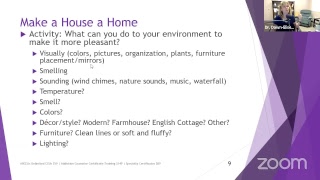
Hi, everybody and welcome to today's presentation. Alright, there we go. Welcome to today's presentation of Happiness in brain surgery. Practical tools to improve your mood and quality of life. We are finishing up the 100 plus tools to defeat depression today and we're going to be talking about environmental interventions. So we're going to discuss how all of your senses can either help you feel happier or more stressed and identify happiness triggers and ways to incorporate them into your home, which you spend a lot of time in, your car, which you probably spend a lot of time in, and your office, which again, you spend a lot of time in. So it's important to really think about all three of those areas. Your environment plays a huge role in how you feel. I want you to just like stop whatever you're doing right now, unless you're driving, of course, or on the treadmill. But look around and look at your environment and think about what things are in your environment that make you happy right now and what things in your environment that might be draining energy. Like on my other monitor over here, I have a picture of my dog, Brewster, and he always makes me smile. So that gives me energy. You know, if I look at my desk, it's kind of cluttered right now, that drains my energy. But it's important to look around. And I mean, the lights above, I've got bright lights in here, so that gives me energy. The wall coloring and you can't really tell on this video, but it's a warm tan color, which I tend to like yellows and tans for walls because it's warm and inviting, it's not stark, it's not cold. So it feels comfortable in this environment. And obviously I decorated my area to reflect my personality, so that makes me happy. And it's important that you look around your environments and figure out, you know, what does this say about me? A soothing environment will trigger calming physiological responses. So anytime you're in an environment that is what you consider calming, you're going to have calming physiological responses. Now, some people like darkness, some people like cool colors. You know, it's up to you what you prefer. A stressful environment can trigger anxiety or depression. And we're going to talk about your senses as well. Some people prefer to be in a room in order to be calm that's quiet. Myself, if it's too quiet, I start going a little bit stir crazy. I like to have background noise. So it's important to know what kinds of environments trigger your stress and trigger your calm. If you're stressed or depressed, Your environment tends to end up reflecting that. So if you are stressed and overwhelmed, a lot of times your environment will be cluttered and show that you're stressed and overwhelmed. If you are happy and energetic, your environment is probably going to reflect that more. So you want to look at the amount of clutter and disarray and stuff that's just not making you happy in your environment, get rid of that. Make it a priority so your environment is at least welcoming. When you're happy and energized, your environment often reflects that. So think about how your home and your office are different when you're depressed versus when you're happy. When I'm happy, I tend to have more energy. I tend to focus better. So my inbox is a lot lower. My desk is, you know, a little less cluttered. My home tends to be dusted more often. I'm not a big duster, and I tend to keep things cleaner than when I'm depressed or fatigued or whatever the case may be. And I'm just like, screw it, I don't care. So think about those two things. When I'm depressed, I tend to not open the blinds. When I'm happy, I tend to open the blinds so I can see outside and watch the birdies and do that kind of stuff. Think about, you know, when you're thinking about your environments and what causes stress and what, you know, makes you more relaxed, think about a place that you walked into that had bad energy. And I remember one place I worked, the first time I walked in to Interview, I walked in and I was like, oh, I'm not sure if I really want to work here. Everybody seems unhappy, and it felt stress, stressful. Everybody was quiet and they felt. Well, I don't exactly know what it was, but it felt stressful. And we've all been in those situations before. When you walk into a room and when you were a kid and you walked into the room and you knew you'd done something wrong because you could just feel it emanating from your parents, and you're like, oh, crap. I don't know what I'm in trouble for, but I'm in trouble, all right? That's the kind of energy we're talking about. And then think about a place that you walk into that has good energy, and hopefully there are more of those kinds of places. And I can think of a lot of different places that I've been that have had good energy where people were happy, where animals were happy, where, you know, it was just an energizing happy place to be. Now you want to eliminate aspects that remind you of the place that had bad energy and increase aspects that remind you of the place that have good energy. So let's talk about our senses. When we're talking about our environment, that's how we interpret our environment is through our senses. So sights are the first thing that we want to talk about. And extroverts like me, we tend to really like to be able to people watch and see things. If we're in a cubicle, we can get, you know, kind of frustrated really fast. So extroverts tend to like to be in more active environments and they don't mind people walking around. I actually prefer it. I like to study at a library or at, you know, a coffee shop or something where I'm not the only one just sitting there in total silence by myself. Introverts, on the other hand, prefer quiet to be the only one. No interruptions, that sort of thing. So which do you prefer? My daughter is an introvert. She doesn't. She'll go into her room and she will study. She doesn't want people messing with her when she's studying. Also think about what you see and what feelings that triggers what pictures are on the wall. And I mean, this office is a really bad example. If you looked around, there aren't many pictures on the wall. I've never been big on putting up pictures, but at my house, I have a lot of tapestries hanging up on the wall that make me happy. A lot of them are Thomas Kincaid tapestries and tapestries of chickens and ducks and, you know, whatever y' all know, I live on a farm. So now you understand why I have the tapestries of the animals. But that's one way that, number one, the tapestries cut down on the echoing, so it makes the sound a little softer. But it also reminds me of the things that make me happy. So putting those up on the walls, you can put up posters on the wall, you know, you can put up memes, you can print things out from the Internet. Whatever it is that when you see it, it makes you smile. That's a good thing to have in your environment, and that will help with depression. Likewise, if you have things around your office or house or whatever that remind you of things that make you angry or sad. Guess what? Even if you're not directly looking at it, when you catch a glimpse of it, it's going to remind you of that thing, and it's going to trigger a little bit of a stress response or a Depressive response. So sometimes there are things that you need to take out of your environment, at least for a little while, especially things that make you angry in order to let yourself get some energy back and kind of get on a good footing. There are things that I have at my house that remind me of times in my past where it's been a very, very unhappy time, very stressful time. I don't want reminders of that time around. It's passed, I've dealt with it, whatever, but I don't want to keep seeing it and remembering how I felt back then, because that's not productive now. There are going to be things that may trigger a little bit of melancholy in you. Like people. I have a picture of my daddy hanging on the wall in my. In my living room. And you know, that's melancholy because he's passed away and I do miss him. But it also brings a smile to my face because I remember the time that we had together. When you're depressed, you may not want to have those melancholy triggers up there right now. You can put them back later. You need to decide what's comfortable for you. Colors. Like I said before, this office is kind of a yellowy tan. That makes me happy. But figure out what colors make you happy. Consider doing an accent wall. Or if you can't paint wherever you're at, consider getting wallpaper and using little tacks to put it up on the wall, or using accent pillows and sofa covers in order to bring that color into your environment, if that's what makes you happy. You know, I've said that I tend to like yellows and tans and things, but I also like dark purples, royal blue, and periwinkle. Who knew? But those are my accent colors. I don't want a whole room in royal blue because that would be overwhelming. But an accent wall or decorations that are in that color work really well for me. So think about what colors you use. The colors orange, red, and brown and yellow all are supposed to make you hungrier because they're associated with food. I mean, a lot of people, when they see those colors or the foods that they like, tend to be those colors. The things that they don't like to eat as much, like green vegetables, tend to not trigger that same hunger sensation. So think about that. You can also look up feng shui and learn a little bit more about what the different colors mean. In that theory of interior design. Think about the people that you see in your area, whether it's pictures of people or the people that you're interacting with. Does it make you happy or does it make you stressed out? And what things in your environment make you happy? And, you know, we don't want to get too materialistic because material things can always go away. But things like a soft pillow or I love soft, fuzzy blankets. I don't know why, but I do. And my pets, they're not really things, but they're not people either. Love my cats, my dogs. Not so crazy about my son's bird, but, you know, he's a living creature, so God love him. But think about what things in your environment are there that make you happy and what things that are you would like to have in your environment or that would improve or enhance your environment. For example, you know, like I said, I'm not so crazy about the cockatiel, but I love the outside birds. So I hang up a bird feeder on our deck so I can watch the birds come and eat. And I love titmice, chickadees and cardinals. Those are my three favorite that come. Thankfully, they're pretty popular, so it's easy to get them to come. But those make me happy. I like watching them, especially during the winter when it's all white outside. Those things make me happy. I like hummingbirds, so I'll put out hummingbird flowers and I grow hummingbird flowers so they come. I attract things into my environment that make me happy because that's going to increase my happiness and reduce my sense of apathy a little bit. Because the more you increase your happiness, you're not going to feel elated right away, but it's going to make you hopefully start feeling a little bit more content. Like, you know what, there are some things in this life worth living. My life isn't so bad. This is kind of a cool day. Lighting is something else you want to consider in terms of sites. Fluorescent lights are very stressful. And if they're flickering, like if a ballast is getting ready to go out, they can trigger migraines and seizures in some people. So try to get rid of the fluorescence. Go more for the LED lights. They're better for energy efficiency. They don't flicker. They don't have the same kind of problems. Lights that are too dim will trigger your brain to start making melatonin potentially. And that'll throw off your sleep cycles as well as your eating cycles. And if they're too bright at the wrong times, it can mess up your circadian rhythm. So you want to have a blue light filter on all of your electronic devices after, you know, two hours before you go to bed. So your brain cues in that it's time to start going to sleep. And you also want to dim the lights during those times to let your brain know that, hey, it's almost time for bed. If you're not getting enough sleep, if you're not getting enough quality sleep, you're going to feel depressed. And I have other videos on that on our YouTube channel. But what's important to recognize is that quality sleep is important to feeling rested. Just sleeping for 10 hours ain't gonna do it. If you can get seven or eight hours of good quality sleep, you're gonna feel eventually feel more rested and rejuvenated. It may take your body a week or two to kind of get into that cycle. But practice good sleep hygiene. Total room light is not necessarily necessary. Some people, especially people with add, prefer to have just a bright light on their desk. And that's totally okay if that works for you. That way they're not seeing as much of the extraneous stimuli that might distract them. Smells are one of the strongest memory triggers we have, if not the strongest. So when I talk about aromatherapy, I'm not necessarily talking about specifically using essential oils. I'm talking about thinking about the smells that make you go, ah, that smells good. There are certain fabric softeners that I really, really like and certain fabric softeners that not so much. There are certain spices when I smell them, like cloves and cinnamon that bring back happy memories. There are, you know, coffee is another one. So think about the different types of smells that make you happy. And you can get the little wax tarts that you put in the things that you plug into the wall. They're not expensive and it will really enhance the smell of any particular room. One thing that I was taught so you don't get used to a smell. If you will put different smells in each room, different types of tarts in each room. So you may have caramel in one and sugar cookie in another and coffee in the third one. So every time you walk into a different room, your senses go, oh, that's new. And it brings a little jolt, but it also brings a little jolt of dopamine, like that's a good thing. Baby powder, pine trees, sugar cookies, whatever it is. Some types of cleaners. I've told you all before that pine salt reminds me of my grandma's house. So what smells work for you? Think about five different scents that help you feel energized and clear headed. Rosemary is a big one for me. I love Rosemary. I grow rosemary outside of our front walkway because it smells so good. When I go out there, I will use the rosemary. Once I cut it off the shrub, I'll make an infusion and pour it over my hair after I condition. So I'm smelling rosemary throughout the day. Whatever it is that you like to smell, peppermint and mint things don't really do it for me, but they do it for a lot of people. So if you're a mint person, more power to you. Think about 10 ways you can distribute fragrances too, because I talked about the wax tarts and I gave you the little hint of making infusions where you're boiling, kind of making a tea with some herbs, drain it and then you've got a tea that's a better word for it that you can use on your hair or you can spritz on your clothes or whatever. Be careful if it has tannins in it because it can stain. But anyway, you can put fragrances, whether they're essential oils or none essential oils, on a cloth in your sock drawer because that will permeate and make your socks smell good. On your pillow. And I suggest putting it on the underside of your pillow. If you sleep on one side, put it on the bottom of your pillow. That way you're not sleeping directly on the odor because that can be overwhelming. Put it in a spray bottle and just spritz the room. I will mix some of that fabric softener that I like, little bit. It doesn't take much in a 32 ounce spray bottle. And I'll just periodically spray my comforter and my room with it and it smells good. They have light bulb rings that sit on obviously light bulbs. And as the light bulb heats up the ring, it disperses the aroma that's in the light bulb ring. When I dust my ceiling fan blades, I will use aromatherapy or essential oils and I will, you know, wipe over my ceiling fan blades with them. You can get little sachets to put in your return vents for your air conditioner or to put in your vent vents for your air conditioner. There are tons of ways that you can get smells, get good smells to permeate your house and your environment. So try to think about creative ways that you can do it. Order. An organization is another one. And you may not be somebody who is a complete neatnik and that is cool. I'm not, I am not a super organized person, but I like my bins. You know, I've got a bin for active bills. I've got A bin for paid bills. I've got, you know, we've got bins in our house. But occasionally you just need to declutter and because things start building up. So you can use the three box method, the keep it, give it away, or trash. So every time you pick something up, it either goes in the keep it box, the give it away box, or the trash box. If you're a clothes hog, one of the things you can do is at the beginning of the season or at the beginning of the year, turn all your hangers around so they're facing the wrong way, so they're facing out instead of the right way. As you wear clothes, put them back on the rack. Hanging the correct way. Then at the end of the season or at the end of the year, any clothes that are still hanging the wrong way, those get donated because you haven't worn them for a year and means you probably won't wear them. That's one thing you can do. With my kids and sometimes with myself, I will go into their room and and make Mount Everest. I will clean off every single flat surface that there is and I will put it in a pile in the middle of their room. And that way they don't have to think, well, where do I start? I'm like, yes, start at the top. And their job is to clean Mount Everest until it is gone and you know, the floor's empty. Going along with that, you can do it a little more frequently. Is something I call flat surface itis. That's when a flat surface gets inflamed with all the crap that's sitting on it. I don't deal well with flat surface itis. So it's important that we go around or I go around every single day and clean off all the flat surfaces. Otherwise, when I get up in the morning and I see piles of stuff on flat surfaces, I get cranky. And I know that. So, you know, I headed off at the pass and make sure that I go around in the evening and clean off the flat surfaces ahead of time. Try to make your house a home. There's a house, you know, somewhere where you can sleep and feel safe. But there's also a lot you can do to make it a really warm, welcoming place. So again, you can go to this Feng Shui for Dummies cheat sheet, which has a lot of great suggestions for easy things that you can do. One of the things that they point out in feng shui is that when, when you have your back to an area where somebody can come up behind you, it adds stress. So if your oven, for example, faces a wall, which most of ours do, it's ideal to put a mirror behind the stove so you can see anybody coming up behind you. It's also ideal when you go to sleep to have your head against a solid wall and to be able to see all of the entrances and exits for an ideal restful environment. So there are a lot of little tips and tricks that you can do like that to make your house a home. Walk into your living room today, you know, after this podcast, whatever, and look around and say, what does this room say about me? And then when you figured out what the room's saying, figure out if that's what you want it to say. And if it does, then cool, you're great. If it doesn't, you know, if it doesn't really communicate who you are and what you care about, figure out how you can fix that, how you can adjust that. And do just do one room a month because, you know, redecorating can be expensive. But do one room a month so you can have this month you focus on your living room. So the place that you spend a lot of your time, it really screams your name. Think about what you can do, you know, when you're doing this to make your environment more pleasant as well. Not just more personalized, but more pleasant. What things do you want to have on the wall? You know, what colors do you want? What pictures do you want? Plants are a great thing to have in your environment if you can. If you have enough light to keep them alive. And you don't have cats that are going to eat them. Most houseplants are going to make cats kind of sick. I've had a hard time finding non toxic houseplants, but I digress. And think about furniture placement and mirrors again, making sure that you're putting them in the least stressful arrangements. What can you do to make it smell more pleasant? Now, sound, we really haven't talked about much, but you can put out wind chimes. You can have, you can get little desktop or tabletop waterfalls or even the big ones that go on the wall. One of the things you want to look for with that is to make sure it doesn't splash out. So look in the reviews to make sure whatever waterfall you get says has reviews that says it doesn't splash because that causes all kinds of problems. You can have ambient music on in the background. What do you want to hear? Do you want to hear nature sounds? Do you want to hear classical music? Do you want to hear death metal. What is it that makes your house a home? What kind of temperature do you like? In my house, my kids get so irritable during the winter because I don't turn the air conditioner or the heater up above 63. And they're like, mom, it's so cold in here. I'm like, well, put on some clothes. It is January in Tennessee. You do not need to be wearing short sleeves and shorts. You know, put on some sweatpants and a sweatshirt and you'll be fine. And they are. But, you know, what temperature do you like to have your house? What smells? We've talked about that. What colors? What kind of decor do you like? Some people find the really clean lines of the ultra modern furniture very relaxing. I find it cold and, you know, not inviting. You know, just depends on your preferences. Some people like to have lots of white because it's clean. Me, not so much. You know, I want to have something that doesn't show as much dirt. Do you like a farmhouse or a cottage decor? What makes you look at a room and go, that's an awesome place to be? So flip through magazines. You can go to the library and get books on interior design, you know, so you're not paying anything for them. And you can look at different ideas for things that you can do to. To personalize your house. And what can you do as far as lighting? A lot of times when we look around our lighting in our homes, we realize that our lighting is really pretty poor. So what types of things can you do to adjust the lighting so it's more inviting and energizing during the day and more calming at night? So your environment can trigger a variety of different feelings based on your prior experiences and personal preferences. Remember, smell is going to trigger a lot of memories. So what may trigger a happy memory for me may not trigger a happy memory for you in terms of smells. So it's important to know what triggers the memories for you. Environments that are too noisy, bustling, and chaotic can be exhausting for introverts. But environments that are too quiet and subdued can make extroverts feel very depleted. Environments that trigger memories of happy times can help you feel less alone, more energetic and empowered. So I know it's not counseling per se, but it is really important to take a look around your environment because you can do that today. You can start making some positive changes in your little area today to start making it more inviting and relaxing, even if that means running up to the store and getting some kind of fabric softener. That you like. All right. Thanks for being with me today. And I will see you next Sunday.










