CTB Live Stream YouTube
This content was created by Dr. Dawn-Elise Snipes. This content was uploaded by Dr. Dawn-Elise Snipes. This is a YouTube video titled "CTB Live Stream YouTube" created on July 25, 2018. The content details are not provided, so the specific topic or participants are unclear.
Chapters
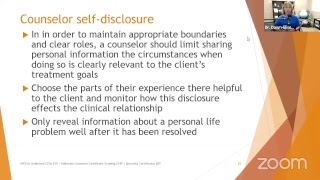
Hey there, everybody, and welcome to today's talk for the Addiction Counselor Exam review podcast. This is episode 21 and we're going to be talking about ethics. And I know you may be kind of rolling your eyes and groaning and ugh, ethics. Not again. But you know what? We're going to try to make ethics fun. We're going to define ethics, because we have to for the review. Review the rationale for ethics, explore ethical issues that you may need to be aware of, and learn a model of ethical decision making, which is going to be important for you to know when you take your ex. So professional and ethical responsibility. You have to get CEUs in this every single renewal period. For some of us it's every single year. Other people it's every two years. But whatever, you're going to have to continue to get ethics. So we need to know what they are so we can know what courses qualify and make sure that we're behaving ethically. So ethics is designed for the protection of four groups. The client, the clinician, the profession, and the community. So how does that work? Well, obviously, if we're behaving ethically as clinicians, we're going to do what's in the best, best interest of the client. So that's kind of a no brainer. They're designed to protect the clinician. Because if we're behaving ethically, then we have a code, if you will. We have standards that we can point to. If somebody says you weren't doing what you were supposed to do, we can point to the ethics and say, yeah, yes, we were. So ethics gives us a foundation to know what we can and cannot do or should and should not do as well as, you know, you know, protects us sometimes legally from certain accusations. It protects the profession. Because if you have a whole profession of people who a lot of them are behaving unethically, then what do you think about that profession? You think, oh, I've got to hire one of those people. And they are just always, you know, unethical. And we know some professions that tend to fall in that category. And then there are others that you think they tend to be relatively ethical. So it protects the profession. Because if we are behaving ethically, if we are adhering to our code, then we're all doing or not doing very similar things. And it protects the community because we want the community to feel like we're a resource. And if we have a client that has a bad experience or multiple clients that have bad experiences with unethical professionals, then they're going to go out and tell the community, oh, you don't want to go to counseling, because counselors, you know, they're just an unethical group. So the community loses that resource. So we want to protect the community. We want to be there for the community. We want to be there as a resource for prevention, for outreach, for intervention. And we can't do that unless the client and the clinician are both, you know, pro counseling on board. And we've protected the profession, so we have a good reputation. When there are unclear or conflicting needs between the four groups, ethical conflicts arise. So, you know, maybe you want to do something. Bartering is one of those examples that comes up a lot. You want to do something in the best interest of the client, and they don't have a lot of money. So maybe you want to barter and have them mow your lawn in exchange for counseling. Well, most ethical codes say that bartering is a no, no, and there are very, very few exceptions to that. But as a clinician, you're trying to do what's in the best interest of the client. But the profession and the professional ethics say, no, no bartering. So they're in conflict. And you gotta figure out, what do I do here? The primary responsibility for ethical practice and for identifying ethical breaches or rests with counselors and the clinical supervisors. So in clinical supervision, when you're working with people, if you're a supervisor for two or three years, ethical issues are going to come up. And I encourage my supervisees to bring me ethical issues. And if we go a month or two months and no ethical issues come up, my spidey senses start going off because stuff arises where, I mean, it may not have been a huge conflict. They may have said, yeah, this was. I knew how to resolve this, but they had to make an ethical decision. And I want to know that they're recognizing that and acting on it. So scope of practice is another thing that falls within the ethical guidelines. We are not to practice outside of our scope of practice. So if you are an addictions counselor, then in most states, you have not been licensed and given the permission to diagnose or treat mental health issues. That rests with an LPC LCSW psychologist, yada yada. So we need to make sure that whatever we're doing is within the bounds of our competency and our scope of practice as defined by our board. So it's important to keep those things in mind. For example, coaches, you know, y' all are going towards counseling, but if you Are a coach, coaches, mental health, substance abuse, it doesn't matter. They are not allowed to diagnose or treat any sort of disorder. They can help people implement plans that they have developed, that the client has developed themselves. They can cheerlead, they can be a coach, but they can't treat anything in order to spur recovery. It's a little semantic there, but it's an important one to know. Addiction professionals have a responsibility for self governance. That means if we notice that somebody who is working with us is not behaving ethically, then we need to handle it. We need to just talk it over with them, talk it over with a supervisor, make a report to the board if it's bad enough. But it's important that we self govern. The board can't be everywhere all the time. They can't ensure that. So if we want to ensure that our profession maintains a good reputation and we don't harm the client or the community, then it's important that we make sure that all of our colleagues are behaving ethically. Many questions of professional ethics rely on subjective interpretation. You know, what is the best choice in this situation? There may not be a clear right or wrong. Laws are your minimal competencies, and that tells you what you can and cannot do. Ethics is a higher level of expectation. So with ethics there, there isn't often a clear right or wrong answer. So we've got to subjectively interpret it, which is why consultation is so important. If you have an ethical conflict, it is always advised to come consult with somebody that you trust. Clear communication is essential in the counseling relationship to avoid ethical problems. That includes communication during the initial intake. That includes the communication and the informed consent. And that includes communication about confidentiality as well as things like social networking and what am I going to do if I run into you in the grocery store? Talk about that ahead of time. Because some clients don't want to be recognized out in public. Some clients get their feelings very, very hurt if you see them in public and don't go over and say hi. So it's important to let them know what you are able to do, what you are allowed to do by your ethics. Ethical standards, both prescribed, prohibit specific behaviors on the part of the professional. So dual relationships is one of those things. And in substance abuse counseling, one of those dual relationships that comes up a lot is sponsorship. If you, the counselor, happen to be in recovery, it is not ethical to sponsor a client. You know, you may think, well, you're kind of doing the same thing anyway. But it's not that creates a dependency. A sponsor is supposed to expand their support network. So it's not ethical to sponsor a client. You also really probably don't want to be going to the same meetings if at all possible, that your clients go to. Because if you share in group, that may be more self disclosure than you were really wanting to put out there for your clients. So it's important to choose which meetings you go to. And there's another bugaboo that comes up with ethics and hiring practices. A lot of programs will end up hiring people who have graduated from their program. And you know, you can argue the ethics of that. You can argue whether they should be allowed to work with, as colleagues, work with the clinicians that treated them, because that really creates an dual relationship and ethical conflict. But you can also argue that we need people in the profession. So, you know, a lot of agencies have started saying you can't work here until you have been out of the program for a minimum of two years. You need to check your state regulations on what's acceptable. Often more attention is paid to the ethical breaches that deal with prohibited behavior than to prescribed behaviors. So what does that mean? Well, ethics says, okay, here's a list of things that you don't do. You don't have sex with clients, you don't sponsor clients, you don't barter, yada, yada, yada, those are prohibited. So when people do those, there's a glaring hello that people notice and they will start to report. Same thing when we're driving, for example, you know, when you're driving and somebody is like zipping in and out of traffic, weaving, speeding, doing all kinds of craziness, you notice that because they're doing something that's against the rules, something that's prohibited. But if they are, you know, maybe not being as defensive as they could be when they're driving, you know, that's a prescribed thing to do, then we don't necessarily notice that. We just notice when they're doing the wrong thing. So prescribed ethics are those things that our ethics tell us we have to do. We have to be loyal, we have to be faithful. We have to ensure justice. We have to ensure things are in the best interest of our client and above all do no harm. There are things we're supposed to do, including advocacy. A lot of clinicians fall into this kind of rut where they're reactive. They don't do the stuff that's prohibited, but they also don't do, don't do as much of the stuff as prescribed as they probably should. And again, subjective counselors have a professional responsibility to seek and utilize appropriate supervision. And complete continuing professional education supervision does not start or does not stop as soon as you get licensed or certified, whatever your state calls it. Your intensive supervision may stop then, but it is really important in order to maintain your professional boundaries and awareness and all that stuff, to continue to get supervision, even informal supervision, throughout your career. So if you're working in an agency, maybe once a month, have a brown bag where all of y' all get together, and you have a group supervision thing over lunch, it doesn't have to be, obviously, lunch at the facility, so you're not breaking HIPAA rules, But it doesn't have to be something formal where you're paying a whole bunch of money to go meet with somebody again. But it's where you're meeting with other licensed or certified colleagues and discussing current issues that may be going on for you, and that will help you maintain your ethical awareness. Continuing professional education. Like I said, you have to get some ethics every single renewal period, but the rest of the hours can go towards improving your ability to effectively serve the clients that you work with. So if you work with pregnant women in a rural area, then you may want to seek out specific training to enhance your competencies. That's one of those prescribed ethics enhance your competencies in working with that population. The code of ethics defines a standard of expected behavior, and they're helpful for giving clients and the public a sense of the level of professional behavior. They can look at our codes of ethics and go, okay, that makes sense. Codes may not provide a practical or detailed guidance when needed. So you can't possibly have codes that are going to address every specific issue. And it's important to look at some of those things. One ethical issue that comes up, for example, if you are a clinician in a small town, you know, a really small town, and there's one bank, and your client writes a check to you, is it ethical? You know, to what can you. Who should the check be written out to, and what should it say on it in order to prevent breach of confidentiality? Another ethical issue comes up with credit cards. Is it ethical to have the credit card statement read, you know, Dr. So and so addiction counselor, when the person gets their statement? Because that means everybody at American Express or whomever that process, that transaction saw that go through. So is that a violation of ethics? And different people have different feelings on that. Simply following a list of specific rules of conduct does not ensure that you're going to Practice in an ethical manner, because things come up and things change. So it's important to constantly be reviewing ethical principles like beneficence, doing what's in your client's best interest, non malfeasance. Above all, do no harm. Justice, making sure that everybody has equal access and fidelity. You know, keeping your promises and being loyal to your client. Contracts define provider duties and responsibilities. You know, love contracts because it sets things out, but again, it's not going to account for every possible permutation. Negligence is a failure to uphold your contractual duties. When you are charged with negligence in court, for example, or due to breach of contract, one of the questions that's going to be asked is, did you, the clinician, behave as any other reasonable clinician would have behaved? Did you do what any other reasonable clinician would have done? Or. Or did you fall short? So you need to be aware of your ethics, because that usually tells the court what a reasonable professional would have done. And they'll measure your culpability in large part against that. Requirements must be treated in the following order of precedence. So things that you're required to do or not do. Law, as I said, that's the bare minimum. You've got to follow the law. Then there's precedent set by case law. So there may be case law that supports notification of a partner of someone who is HIV positive, who is continuing to engage in risky behaviors. But, you know, if the law says you can't do it, then the law is the final answer. The reasonable person test. Regulations or administrative rules and contracts. So this is kind of backwards. You know, you first look at contracts, and if the contract says it's okay, then okay. Then you look at your agency's regulation and administrative rules. If nothing seems to be wonky there and whatever you're wanting to do doesn't conflict with those, okay, then you go down to that reasonable person test. Would a reasonable professional in your position think this is okay to do? That's when it's really good to ask somebody. And if that's okay, then okay, you might go down to case law to make sure that there's no case law that says this is not okay. And then finally, if for some reason you're still questioning whether it's okay to do or not, look at the law, because the law is going to tell you the bare minimum of, you know, your responsibilities. The use of public funds creates an obligation to fulfill the public trust and results in higher standards than those required in private industry. So if you're, if you're funded by the state. A lot of times you're held to higher standards. Ethics can be thought of as a set of principles that define our actions. And there are seven criteria for defining ethics. They require other people. You know, ethics are about relationships. They're not just about sitting in an office by yourself. So it requires two people or more. Intent makes a difference. If you intended to hurt someone or you didn't intend to hurt someone, it does make a difference what the result is of your behaviors. Thinking is necessary for ethics and morality. You know, you've got to be able to look at a situation and apply basic general ethical principles to see if it works. Ethics asks you to be impartial and requires you to care about the suffering of others. And ethics really judges. It's a standard by which to judge human behavior. So ethical principles, I've talked about these already, but we're going to go over them again. Autonomy. The client has the right to choose and has the ability to choose their own treatment and make informed choices. Fidelity. Do what you say and say what you mean. Justice. Make sure everybody has equal access to the best of your ability. Beneficence. Do what's in the best interest of your client and the profession, and that includes being efficient and effective in treatment. You know, don't keep somebody on your caseload just because they're a good client. They always show up and they pay. That's not ethical. Even if you're not overtly hurting them, you may be creating a dependence. You're causing them to spend more money than they would have to. So that's a no go. Beneficence also can include advocacy and outreach activities in the community in order to enhance the environment in which your clients choose to live and work. And non malfeasance is do no harm, you know, and that's the big one. Above all, do no harm. So you have to ask yourself, am I harming this client in any way? Not just emotionally, but mentally, cognitively, interpersonally, financially, occupationally? Are my actions, could my actions in any way be construed to be damaging to this client? So personal qualities that we have to have ethically, we need to be empathetic, sincere, we need to have integrity. We need to be resilient because, you know, just like we expect clients to be resilient and we try to teach them that we have to be resilient, we're not always going to have a good day. Clients are not always going to have a good day. So we need to be able to bounce back with them. We need to have respect for ourselves, for our colleagues, and for our clients. We need to be humble and recognize that we don't know everything. Just flat out, I don't care if you're Carl Rogers. Carl Rogers didn't know everything. So we have to be humble and we have to recognize that clients have lived in their own skin a whole lot longer than we've known them. So they're the experts on themselves, and they know what works for them and they know what doesn't work for them. And then there's the whole other basket out here of stuff they've never tried. But it's important to get their input. We need to be competent and we need to be aware of the bounds of our competence. Not only the scope of practice, but, you know, for example, the scope of practice. For me as a professional counselor, I can see kids, I can see the elderly, I can see, you know, any age group. I personally do not feel competent in working with young children, except for earlier intervention services. You know, I don't feel comfortable doing depression work with an 8 year old. I'm not trained in play therapy. I've never been. Could I legally see that client? Yes. Ethically, should I see that client? Heck, no. So it's important to be aware of your competence within the scope of practice where you work. We need to be fair. We need to be smart. We need to be courageous, committed, and concerned. Published codes of ethics may lag behind the needs and demands of practice. This is why it's important for professionals to understand the principles that lie behind or underneath their respective codes, for example, and this is still kind of working its way out. But etherapy is a whole new practice and deciding is it ethical to practice with someone who is working in another state or who lives in another state? Most states now have said no, not unless you're licensed in that state too. So we need to define, is it ethical to work, what kind of clients is it ethical to work with? Virtually the codes of ethics for the APA and social work and counseling and all that, really. They put out their first iterations of etherapy related ethics, but they're still in flux as technology changes. And you can't wait for the ethical code to come out to guide your decision necessarily. Most codes are general in nature and reflect the consensus of professionals in a given field at a single point in time. So if the codes were written back in 2000, you know, they're going to be very different than codes that are written in 2018. You know, back in 2000 we were still on, you know, HTML1. I think we're up to HTML5 now. I don't know enough about computers, but I know it's much different. There may be inconsistency within codes of ethics or between codes of ethics that govern the same profession. So if you are nationally certified as well as state certified, the national body and the state body may have some seemingly conflicting codes of ethics. So you're going to have to figure out where you stand in terms of those. While there's no universally accepted code of ethics for the addiction field, clinicians should be familiar with the ethical codes from his or her state, territory, or tribe. So again, it's always good to go and look at the American Counseling association code of ethics. They're national, they're pretty broad. The NAADAC code of ethics that's out there, that is a national addiction code of ethics. And then anything that your state puts out, because most of us, I think all states require that you pass a ethical test before you get your license, in addition to your clinical test. Ethics are based on moral values or a sense of what is right and wrong. Professional ethics focus on the intersection between client rights and professional duties. So we want to think about that again. What does the client have the right to, and what do I, as a professional, have to do? This comes up, for example, with involuntary commitment in Florida. We could involuntarily commit people to detox and even potentially to substance abuse treatment for a short period. Is that a violation of client rights or are we upholding our professional duties to ensure the safety of the client? There are huge arguments about that. The same thing happens when there's involuntary commitment for mental health. Other examples where that might cross is access. Like I said, sometimes clients don't have any money to access services, but it's our duty to try to make services available, that whole justice thing. And so how can we try to make services available without bartering, without crossing any other ethical lines? What do we need to do and how much of the onus is on us as clinicians who versus the community? So maybe it's not providing a program for those people. Maybe our responsibility is to go to the county commission and say, you know what? We got a lot of people that are struggling here, and if we could get some funding, we could open a program that would serve 150 people a year or whatever it is. So there's a lot of different things you can do, and you just have to be creative in solving those ethical problems. Ethical conflicts or dilemmas occur when the perception of what is appropriate within a particular context is not shared between the parties. So touching is one of those things. And there are a lot of rules about when it's okay to touch clients. And one of the go buys is if you wouldn't touch anybody else in group like that, or any of your other clients like that, you know, you probably shouldn't be touching this one like that. But there, there are different codes of conduct at meetings, 12 step meetings. There's a lot of hand holding and hugging and things, and some people are very uncomfortable with that. So if the person, the client that you're working with does not think that that's appropriate conduct and you have a meeting at your facility and then all of a sudden everybody's hugging and the client may be kind of freaked out. So it's important. That's where communication comes in about what is going to happen, what we perceive is appropriate at this facility. Ethical conflicts arise in three basic contexts. Failure to comply with the law governing policies or codes, so you didn't even do the bare minimum. Personal dilemmas where an individual knows what is right and is tempted to do wrong, such as dual relationships and moral dilemmas where there are conflicting rights or conflicting wrongs. You know, I could do this and you know, ethically I would be okay, but you know, in my heart I wouldn't feel right. Or I could do this and in my heart I would feel I would feel better. But ethically I might be on shaky ground. What do I do? Bartering again is one of those things that comes up, especially in low income areas. When compliance with the law or policy is mandatory. Failure to comply becomes an ethical issue. You broke the law. We don't want lawbreakers as part of the profession. When both positions in an ethical question are wrong, one's going to prevail. So we need to choose the lesser of two evils. And you know, obviously the law has indicated what's what the right choice is, but there may still be two legally right choices. And you know, if those two choices are legally right, but both of them are ethically not okay, you don't feel good about them. You have to choose the one that does the least amount of damage. And again, consult, consult and document. Because if you don't document it, it didn't happen. There are three elements to ethical or moral decision making. You, the counselor has to have a sense of self awareness. You have to have a moral sense, which means having a conscience and an understanding of the difference between right and wrong, and values that reflect what you believe in your life. So counselors show all of these things. In your choice of theories or strategies or interventions, you know what you think is the best approach to treating something individualized. Treatment says there are multiple best approaches depending on the person. But there are some practices that you may say, no, that's not something I can do that reflects your values. It is neither possible nor desirable for counselors to be neutral in the values they demonstrate. You need to be self aware of your values because you can't be totally neutral all the time. You just. It's not humanly possible. But if you're aware, then you can guard against any harm that may come. So, for example, if you're working in a program where they have medication assisted therapy or a methadone program, and you are adamantly against methadone and medication assisted therapy, you know, you work for that facility, they have that program, that program is legal. You are very adamantly against it. You need to be aware of your own issues, biases, prejudices about that, feelings about that, so you don't negatively impact your work with the client. And you may need to take it up with a supervisor and talk about why the agency made the decision to start a methadone program or whatever, and really look at the research. But it's important that you're aware of your biases so you don't start treating the client negatively. It's important for counselors to be clear about your own values and how that info impacts the therapeutic relationship. It does. Your upbringing, your culture, everything you bring into a session that makes you you is going to impact the therapeutic relationship. Sometimes it's really helpful, sometimes not so much. But if you're aware of it, then you can be more cogn can educate yourself about culturally responsible practices. So you know, if you're going into a treatment session with somebody who maybe is of a different religion than you are, or a different race or ethnicity than you are, you know how your presence is impacting them and how your values may coincide or difference. You know, I notice I didn't say conflict, I said differ from theirs. So you can work to remember you want to enhance the autonomy of the client. It's about what the client believes. So you need to be able to kind of check your values at the door and go, okay, this is what I believe, but it may not be what my client is believing. Counselors should not try to persuade clients to adopt their values and should acknowledge and label their own values. So if something comes up, you know you're talking about an issue that you have strong feelings about. It's okay to say, in my personal opinion, this is not a good idea. However, you know, it seems like it's a choice that you have made. So let's see how it works for you. Six general guidelines for daily ethical conduct. Provide informed consent. And this can be admission. This can be. If you're going to do some new group activity that people might be like, it's not a par course. What am I thinking of? One of those courses that you go around that you develop trust with one another. I'm failing to come up with the idea at the moment, but doing one of those, you know, you have to provide informed consent. If it's anything that's out of the ordinary, you need to operate in a competent and theoretically sound manner. Ensure confidentiality, maintain appropriate relationship boundaries. Use adequate consultation and adequate means. Use it a lot, especially the first five years you're practicing. Yeah, I know, you're like five years. Yeah. It's really good to have somebody that you work with or somebody that's a colleague that you can call and go, you know, I'm feeling a little off about this. What do you think? And you need to honor diverse personal and cultural values. If you notice that a client comes in that is different from you personally or culturally, which pretty much everyone is going to be different from you in some way and you have a negative reaction to them, it is really important that you check that out and talk it over with someone and honor their those clients personal and cultural values even if you don't embrace them. That's the client's choice. Operating in a confident and theoretically sound manner means the scope of practice defines the actions that a member of the profession is authorized to perform. If you are not authorized to perform it. If you're not authorized to write prescriptions which are not, well, don't do it. If you're not authorized to prescribe. Oh, here's one that really gets under my skin. As addiction counselors, we can educate about the importance of good nutrition, but we cannot write prescriptions or menu plans for clients. Registered dietitians in almost every state, if not every state have the legal authority, are the only ones in addition to doctors that have the legal authority to write a menu plan for a client. We cannot prescribe dietary changes, we cannot prescribe supplements. We cannot prescribe any of that. And I see a lot of clinicians getting a little bit, you know, loosey goosey with those prescriptions and even things like over the counter medications like melatonin for sleep that's not okay to prescribe. You know, you can educate clients about where to go to learn more about it so they can talk with their doctor, but you have to make sure that they know that it's important they talk with someone who has the authority to prescribe that. Counselors have an ethical responsibility to identify and evaluate client issues that are outside of their scope of practice and refer to other professionals as indicated. A lot of clients, you know, it's the expectation, not the exception, that clients have co occurring disorders. If you are not also a licensed mental health professional of some sort, then you may not be trained to deal with things like bipolar, schizophrenia, ptsd. You don't want to wing it. You know, this is not the time to start trying to learn something. You need to be able to identify those issues and refer to a competent professional and then coordinate treatment with that person. You're not giving up the client, you're just acknowledging that that's out of your scope of expertise. Competence can be indicated by education, experience, training and certification. Certification is generally a state or national thing that happens. You can get certificates that show that you've got intensive training in something like trauma informed care. You can show that you've got experience working with something, maybe you worked there for five years and that's okay. All of those things can help demonstrate competence, but you need to be able to demonstrate it. You need to understand your strengths and weaknesses and have a level of self awareness about why you do the things you do in your counseling practice and strengthen your professional competence. Why do you choose particular topics to go over? Why do you avoid particular topics? Why do you choose group over individual? Why do you, you know everything that you do. You have to ask yourself, why exactly am I doing this? If a client asked me, why do we do that? You need to have a good answer for them. And because the insurance company said so is not a good one, competence in one clinical area does not necessarily translate to another. So if I am competent in working with addictions with adults, that's great. It doesn't mean I'm necessarily competent in working with adolescents who have addiction issues or elders who have addiction issues. They're a special population. Continuing professional development through self education, self evaluation, clinical supervision and consultation helps the addiction counselor maintain confidence and enhance professional effectiveness. Always reach out. Obviously, if you're listening to this podcast, then you know the addiction counselor exam review is something that you're interested in when you pass your exam. Counselor toolbox. We have, we're working on the 300th episode now. So there's lots of information out there based on SAMHSA tips and tools and other best practices that can help you learn, you know, on the go, when you're driving to work, when you're at the, when you're at the gym, on the treadmill, wherever it is that you like to learn. It doesn't necessarily have to produce a certificate in order to help you be behave more ethically. It doesn't have to earn you a certificate to necessarily impart knowledge. So, you know, reading journal articles, that's another great thing to do. Counselors have an ethical responsibility to understand how theory and research underlies their work and to know how to choose appropriate interventions on the basis of those theories. You're not going to use the same intervention, you know, if you're cognitive behavioral in nature, you're not necessarily going to use the same intervention with every client. You have to understand why you're using this, what you hope to get out of this intervention, and who it's appropriate for. Cognitive behavioral is great for a range of people, but if you've got somebody who is actively psychotic or who is experiencing some dementia symptoms during alcohol withdrawal or anything like that, they may not be a good candidate for cognitive behavioral. Counselors are making their own choices about the theoretical approach they will use and must examine ethical considerations including cultural appropriateness, their own training, their competence and client needs. Some things are really short term, like motivational enhancement therapy is four sessions. Motivational enhancement therapy is very appropriate for some clients, but it is very inappropriate for a lot of clients who need a lot more in depth work than that. They need a lot more contact than that. So you need to understand what which approaches are appropriate for which client. One of the highest ethical charges for the addiction counselor is maintaining confidentiality. And we go above what professional counselors have to do with HIPAA. And we also have federal law 42 CFR that you need to be aware of. We need to protect the client's privacy and guard the information contained in the clinical record. According to Federal Law 42 CFR, unauthorized disclosure of client information is prohibited regardless of whether the person is seeking disclosure, already has the information sought. So, and this comes up a lot, if a cop shows up at your facility and he has a warrant for somebody who's in your program, you know, he knows, the cop knows that the client is most likely there. But unless it meets other criteria, you may not be able to confirm nor deny. So we can't provide unauthorized disclosure even if the person seeking the disclosure knows the information already or has another means of obtaining it is a law enforcement officer or other official has attained a subpoena or asserts any other justification or basis for disclosure not permitted by this regulation. So, you know, we need to be really aware of that. Now. Court orders can sometimes supersede. This is where you need to have a legal counsel. Regulations apply equally to present and former program personnel. Violation of the CFR 42 can result in a fine up to $5,000. The prohibition of disclosure covers all records and communications, whether written or not, about clients who apply for or have been diagnosed, treated, or even referred for treatment. So a lot of times they say, well, the client hasn't gone through the assessment, so, you know, they're not officially a client if they have been referred to you for treatment. CFR 42 covers them. CFR 42 outlines the provisions which must be followed. Written records must be kept secure at the time of admission. Each program is required to tell clients that the records are confidential and protected by the federal law and regulation. And clients must be given a written summary of the laws and regulations. If state law permits a minor acting alone to apply for and obtain treatment, a written consent of confidential information may be given only by the minor client. In many states, minors must sign all informed release consent, not the parent, but the minor themselves also has to sign it. Client information can be released in three ways with client written consent, without client's consent as specified in the regulations, or with a court order. And court orders are generally very specific about what needs to be released. A written consent form contains all of the following elements and this is really important. Has to have all of the the name or general designation of the program making the disclosure the name of the individual or organization who will receive the disclosure the name of the participant who is the subject of the disclosure, the purpose or need for the disclosure, a description of how much and what kind of information will be disclosed, the patient's right to revoke, consent in writing, and any exceptions to the right to revoke. So if you are getting a release of information signed for probation and parole, you know, you ideally need to have the name of the probation officer that it's going to go to the duration of time that this release of information is good for what's going to be released? Is it going to be progress notes? Is it going to be the assessment? Is it going to be drug tests? Is it going to be all of the above? You know, you need to be specific. The written consent also has to indicate the program's ability to condition, treatment, payment, enrollment, or eligibility of benefits on the patient's agreeing to consign agreeing to sign the consent. So it needs to explain if you're able to say, well if you don't sign this consent then I can't treat you, you need to disclose that ahead of time. Sometimes this happens in situations where for example, probation and parole has hired the agency to provide treatment and probation and parole is paying for treatment. Probation and parole will not pay for treatment if the client doesn't sign a release of information for the probation officer. That doesn't mean that the client can't sign, seek treatment and self pay necessarily. There are other options. But in order to be enrolled in that program and get that payor to pay, they may have to sign the release and they need to be notified about that. At the beginning. It needs to have the date or condition upon which the consent expires if not previously revoked. So again that duration, the signature of the patient or other authorized person and the date on which the consent is signed. And generally informed consents also have a place for a witness. Each disclosure must be accompanied by a written statement prohibiting further disclosure of the information unless authorized in the original. Release of information. There are several special provisions for the release of information where a client has involvement with the criminal justice system. Be aware that state laws may differ. So you do need to check with your state laws. In general, a signed release of information is still required. But releases of information for criminal justice clients differ in the following ways. Information may be released to those persons within the criminal justice system who have a need for the information in connection with their duty. So if the client, and this is more like usually more appropriate to mental health issues, we may need to release information about the client has a certain mental health diagnosis and is on certain medications. If you have somebody that goes into jail and they are part of a methadone program, it may be imperative that the jailers that the corrections officers know that information. Otherwise the person's going to start detoxing and detoxing hard really fast. So there is some information that corrections officers may need to know. The release must state an end date and will remain in effect, taking into account the length of treatment and the type of criminal proceeding. The provider may redisclose information to those within the criminal justice system to carry out official duties. You see how this sort of ethics thing is kind of what exactly qualifies as an official duty and you really want to play it close to the vest and not disclose anything that you don't think is imperative in making sure the client Gets the highest quality of treatment and service. Criminal justice client information may be disclosed to those programs within the criminal justice system when participation in the program is a required condition like probation and parole, and to those individuals who need the information in connection with their duty to monitor the client's progress, including prosecutors, court officials, and probation and parole officers. So, you know, in order to help the person get off papers, those people may need to be in the know. So it's important to know who you're required to release information to. Disclosures without client consent, you're like, well, when can we disclose without a release? If there are reports of suspected child abuse or neglect, you don't need a disclosure. Assigned consent. If there are crimes on program premises or against program personnel during medical emergencies, When a client can't speak for themselves, you may need to step up and, you know, give some basic information. When there's research activities conducted by qualified researchers and they have to go through the whole institutional review board thing, Audit and evaluation activities, including third party payers and peer review organizations. So when JCO comes in, when CARF comes in, when you know, Medicaid comes in to do audits or accreditation surveys, you don't need additional client consent for those. If there are qualified service organizations or if there is a specific court order from a judge, then you may be able to disclose without client consent. Informed consent different from consent for disclosure Informed consent is one of the most basic and important concepts in ethical practice because it establishes the client's independence and right to self determination in receiving services. That whole concept of autonomy. The client's treatment focus is based on the assumption that the client has the right to choose or refuse treatment, to set goals for treatment outcomes, and to define his or her own recovery process. So if a client doesn't believe that abstinence is the only way, you know, they have the right to direct their treatment accordingly. If a client doesn't believe that medication is appropriate for someone in recovery, if they don't want to take psychotropics and they don't want to be on medication assisted therapy, they have the right to make that decision. To make good decisions, the client needs to be able to fully understand what will happen in the treatment process. The proposed length of treatment. Are we talking 30 days, 90 days, you know, two years? What are we talking here? The conditions for termination, you know, is it just when the clock runs out or do I have to complete specific tasks? The policy for making complaints or resolving disputes. Most places we call those grievances the cost of services, how to access third party payments. So if they qualify for TANF or Medicaid or state funding or anything like that, how do they access that funding? The risks and benefits of accepting or refusing treatment and the possible outcomes of treatment, they have the right and the power to consent and more importantly to refuse to consent to treatment. Informed consent is more than signing the right forms. It's an ongoing so it's not just when they come into the program, it's an ongoing collaborative effort between client and counselor for establishing and continuously monitoring the goals and strategies of counseling. Critical elements of an informed consent probably something you need to know. Clients has to have rational capacity to provide consent. If the client is just walked in to detox and they have a blood alcohol content of 0.27, they are probably not able to provide a full consent at this point. So you may get a preliminary consent and then when they sober up a little bit, they can provide a more appropriate, fully informed consent. The client has to comprehend everything that you're telling them. So if they are experiencing dementia, hallucinations, or if they are just so inebriated that they can't comprehend, this is not the time to get the informed consent. If they are cognitively impaired in some way that they are not going to be able to sign that informed consent, then they need to have someone who has legal power to sign that informed consent for them and the client has to have a sense of self determination or voluntariness. Now this doesn't always happen because we've got a lot of instances where the client is involuntarily committed to treatment, but we do need to let them know if they're involuntarily committed, how long they have to be there, you know what's going to happen and what their choices and options are, how they can contact their ombudsman, if they believe that they're being held against their will or being mistreated, etc. Cultural issues are important considerations in determining whether truly informed consent has been obtained. Lack of understanding of professional terminology, linguistic barriers and and poor literacy skills may inhibit a client's true understanding and also affect their willingness to ask questions. Some cultures are very apprehensive about asking questions of authority figures, which we are when we're doing all this documentation and paperwork and counseling. So it's important not to ask yes or no questions. It's important to ask open ended questions like what do you think the best course of treatment would be for you? In order to get a better idea, encourage them if need be, to ask questions but you need to do that another way besides saying, do you have any questions? Because most people are going to say no. So you need to, after each section that you go through of the informed consent, ask them a particular question applying that, or ask them if they have questions about something with regard to that practice and counselor self disclosure. In order to maintain appropriate boundaries and clear roles, a counselor should limit sharing personal information to circumstances when doing so is clearly relevant to the client's treatment goals. So if you have a history of abuse, or if you've been diagnosed as codependent, you have a history of alcoholism and the client does too, well, okay, that's great. You may be able to acknowledge that, yeah, been there, done that, bought the T shirt, or you may not, but you don't probably want to go into the nitty gritty details because that's not going to benefit the client. You know, you really, every time you start sharing something personal, you want to be able to answer, how does this enhance the client's treatment? You don't want it to turn into a treatment session for you. Choose the parts of the experience that are helpful to the client and monitor how this disclosure affects the clinical relationship. Sometimes clients will start getting a little heebie jeebie if they feel that you're disclosing too much or that you're dominating the session. Other times, clients may feel very validated that somebody who is their counselor has experienced those things and has been resilient. Only reveal information about a personal life problem well after it's been resolved. So if you're in the middle of a messy divorce, this is not the time to be sharing with a client who is also going through a divorce. You know, you want to make sure your issue is resolved, put away and done with before you start sharing it with the client again in order to make sure that the session doesn't become more about you than them. Dual relationships are common, although not ethical. In substance abuse counseling, you cannot sponsor or be sponsored by a client. It is discouraged, when possible to attend the same meetings as clients. And you are not allowed to see, in a clinical capacity a client that you've known as a sponsee or even just a fellow person in recovery. So if you've been going to the same meetings and then John suddenly needs more treatment than just self help meetings, that's great. You can refer John to your facility. He can see one of your colleagues, maybe, but he can't see you. Ethics is an aspirational thing. It's not a minimal standard. It's something that you aspire to and encourages us to reach beyond legal mandates. Ethics helps ensure counselors are doing things in the best interest of the client. And violations can lead to fines, suspensions or license revocation. It's imperative for us to observe the principles of beneficence. Do what's in the best interest of the client. Non malfeasance. Above all, do no harm. Fidelity. Be faithful. Justice. Make sure everybody has equal access and you're being just and fair. And autonomy, you're encouraging them to direct their own program and make their own choices. Alrighty, everybody. Thanks for being with me today and I will see you next week for episode 22.










