Desire to Heal: Neurobiology of Trauma
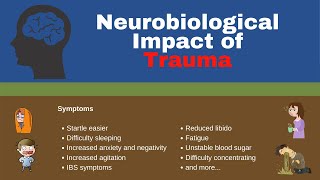
A CE webinar transcript by Dr. Dawn-Elise Snipes describing how psychological trauma (both acute and cumulative) dysregulates the hypothalamic–pituitary–adrenal (HPA) axis and broader neurobiology. Key points: hypocortisolism and glucocorticoid dynamics; neurotransmitter/receptor alterations (norepinephrine, serotonin, GABA, glutamate, endogenous opioids); excitotoxicity and possible hippocampal volume reduction; heightened amygdala responsivity; clinical implications emphasizing psychoeducation, emotion-regulation/distress-tolerance skills (DBT), prevention/early intervention for adverse childhood experiences, and cautious consideration of exposure therapies and pharmacologic options.
Questions this video answers
Dr. Dawn-Elise Snipes
March 7, 2017
46%
CEU contact: register@allce.com; coupon code: counselortoolbox (20% discount)
Chapters
This episode was pre recorded as part of a live continuing education webinar on demand. CEUs are still available for this presentation through all CEUs register@allce.com counselortoolbox you. Welcome to today's presentation on the neurobiological impact of psychological trauma on the HPA axis. We're going to define and explain the HPA axis, which we've talked about before. It's basically your stress response system. So it's not anything to get too, you know, overly concerned about that. It's going to be super dry. Well, identify the impact of trauma on this axis and on basically your whole nervous system and your brain. Identify the impact of chronic stress and cumulative trauma on the HPA axis. Because a lot of times when we talk about ptsd, we think only about some particular acute event and that's not necessarily true. There are a lot of people with PTSD who have basically what I call cumulative trauma and they were exposed to extensive child neglect. They were in domestically violent relationships. They were in a situation where they were exposed to trauma over and above what the normal person would see on a regular basis. Think law enforcement, think military personnel, think first responders. I mean, they see stuff that no human should have to see. And they see it not only once, but, you know, once a week or once a month, depending on kind of where you are. So it's important to understand that while one thing may not be so traumatic to create post traumatic stress, we're going to look at some of the reasons that PTSD symptoms may develop as a cumulative sort of thing, which I found this to be really interesting. Anyway, we'll identify symptoms of dysfunction and we'll talk about some interventions that are useful for this population. Now, my guess is none of you are prescribing physicians, so when we're going through this, you're going to be going, yeah, that's all well and good. What's the point? And I want you to think about exactly that with what this information is telling me on each slide. How can I use that to help my clients who either have been exposed to trauma and have not yet developed any sort of PTSD symptoms, or who have PTSD symptoms? And how can I use this information to better tailor my treatment plan to help them become more effective in managing their symptoms? This is kind of a unique presentation because it was based on only one article. Now, this was a meta analysis. So it's a really long article and it's a really good article that I would strongly suggest looking at. It's in your Resources section in the class. It lays out the many changes and or conditions that are seen in the brain and nervous system of people with ptsd. So they really looked at a lot of research longitudinally to see what we know and what we don't know. As clinicians, awareness of these changes can help us educate patients about their symptoms. Why do you feel this way? And find ways of adapting to improve quality of life. So neurobiological abnormalities in PTSD overlap with features found in traumatic brain injury. So that started making a lot of researchers go, traumatic brain injury there is something organic or hurting part of the brain. So why are the symptoms similar in ptsd? And what you're going to find out pretty soon is that PTSD actually does cause damage, actual physical damage in the brain. The response of an individual to trauma depends not only on the stressor characteristics, but but also factors specific to the individual. So somebody can see a trauma and not be as traumatized, if you will, as someone else. And part of these factors, there was a study done by Pineous and Nader back in, I believe, the early 80s that looked at triage factors for PTSD. And some of the factors that they found about why certain traumas may be more traumatic to certain people versus others have to do with this particular trauma you're experiencing. Was it close to one of your safe zones where you live, where you work, somewhere where you're not where you're supposed to feel safe? And if so, then it's probably going to be perceived as more traumatic. Now, again, think about the survival capacity or the survival function of this behavior. When your brain says this is supposed to be a safe zone and it's not, so I need to respond in kind. You're trying to protect yourself. Makes sense. The similarity to the victim. If it could happen to her, if it could happen to him, they're like me. It could happen to me. That makes me feel scared. Because we like to categorize the world in terms of us them. Bad things happen to those people, not to us people. But if you're looking at a victim who's like you and you say, well, I am an us people, then you're gonna have more difficulty separating it out and feeling safe and going, well, that couldn't happen to me. And the degree of helplessness, you know, if you saw something and you were just like, there was nothing I could do, there's a greater sense of helplessness and horror than if you didn't have that necessarily that same experience. So those are a couple of things as far as the stressor perception that we want to consider when we're talking to our patients. Even if you're not a therapist that works with the trauma specifically, some people refer out for that. Some people are working with an EMDR therapist and you know, cool. But it's important to understand and if you happen to go down this road with your clients, help them understand why they perceive that particular stressor so intensely versus some other stressor that they think may should have. Good English there. Oh well, sorry. That they think should have stressed them out more. So their perception of the stressor prior traumatic experiences. And we're going to learn that prior traumas actually do cause changes in the brain in order to prepare you basically to respond more quickly when there's a threat. So prior traumatic experiences can send you from 0 to 100 a lot faster, which means it's going to be or could be more traumatic. The amount of stress in the preceding months. If you're already worn down and your body has already said I can't fight anymore, it's not doing any good, Then when it encounters ptsd, when it encounters a trauma, the body might be going, I just can't take another thing, please just I can't do it. Which is why we see in people with PTSD chronic stress, burnout and chronic fatigue. This inability to tolerate stress because the body's just already waving that white flag going I can't do it. Current mental health or addiction issues. Again, that's your body's way of saying something is in the neurotransmitter, something in the system is a little bit wonky and that means I'm not going to be able to respond 100% healthy and functionally to whatever's going on and the availability of social support. Now a lot of the research, especially with emergency service personnel, points to the availability of social support within 24 hours of the trauma. So when there's an officer involved shooting, when there's something that they encounter on duty, that's a trauma. The ability to have social support within that first 24 hour, preferably first two hour period to at least touch base with a social positive. Social support is really vital to helping somebody process the memories instead of just kind of them disappearing into never never land and getting solidified in an unhelpful way. For the vast majority of the population, though, psychological trauma is limited to an acute transient disturbance. You see something, it's traumatic, you're like, oh my gosh, wow. It is devastating. And yeah, it's going to affect you for A little while, but in a week or two, you're kind of feeling like you got your land legs again. So there's this sub population of the population, there's a small group that end up developing ptsd. The signs and symptoms of PTSD reflect a persistent adaptation of the neurobiological symptoms to witnessed trauma. And I crossed out abnormal in the article. It says abnormal, and I look at it as a perfectly normal adaptation because the body's either going with the reserves I have right now, I can't deal, or whatever it's doing, it's trying to protect itself. Now, it may not be really helpful, but from a survival perspective, it generally makes sense. So I try when I'm working with clients to help them see the functional nature of their symptoms, given the knowledge they had or the state they were in at the time. So now to the HPA axis, the hypothalamic pituitary adrenal axis, AKA your threat response system. It controls reactions to stress and regulates many body processes, including digestion, the immune system, mood and emotion, sexuality, energy storage and expenditure. So let's think about this real quick. When you're under stress, your body goes, threat, threat, threat, I need to survive. So it sends out excitatory neurotransmitters that get you wired up, which kind of makes your digestion speed up a little bit. It can cause some cramping in the abdominal area, your immune system. This is not really important right now. Threat, threat, threat. We're not worried about the flu, mood and emotions. You tend to be hyper vigilant, more easily startled. Threat means fight or flee, which means anger or anxiety. So you've got some stress emotions, and I don't want to say dysfunctional because they're very functional. Your body perceives a threat and it's saying, you need to do something. Sexuality. Well, if there's a threat, this is no time to procreate. So your body says, let's turn off those sex hormones right now because we need to use our energy for fighting and fleeing, not procreating. Which is all well and good, but when we have reduced sex hormones, it also reduces our serotonin availability, which. And serotonin is one of those calming chemicals, which helps us calm down the excitatory neurochemicals, so without them you stay revved up, which brings us to energy storage and expenditure. You're revved up, you're on high alert, you're staying up here and your body says, you know what, if I'm going to survive this fight or flight I need fuel, which means you need to eat preferably high fat, high sugar foods. That gives us instant energy and sustained energy. We want calorie, dense stuff. Now thinking about it from that perspective, you can see how when you're under chronic stress or a big stressor, you know, some of your symptoms make sense. Why you want to go eat chocolate or do whatever you do, that's my go to pizza. And chocolate when I'm stressed is generally what I crave, not what I need, but what I crave. So we want to help people understand that there's a reason it makes sense. Now we just have to figure out how to deal with it differently. The ultimate result of HPA axis activation is to increase levels of cortisol in the blood during times of stress. Now cortisol is the hormone that goes out and sets off kind of this whole. Well, there are a couple before it, but it sets off this whole event. Cortisol is your stress hormone. Cortisol is the one who says no sex hormones right now. You know, and it monkeys with all your different hormones to make sure and your energy storage to make sure that you're ready for this fight or flee. It main role is in releasing glucose into the bloodstream in order to facilitate fight or flight. Now glucose is sugar. It's raising your blood sugar so you've got energy. Now we're going to talk regularly about glucocorticoids, which is glucose hormones that make your body release glucose, which is mainly cortisol. And that term is going to become important later. I'm just kind of throwing it out there right now. Cortisol also suppresses and modulates the immune system, digestive system and reproductive system. So again, cortisol is saying we've got this energy, we've got this threat. Let me figure out how to sort of dole out our resources right now for survival in the now. Cortisol is very present, focused, it's not looking at, you know, the long term and going well, this will pass. Cortisol is very right now HPA axis dysfunction. The body reduces HPA axis activation when it appears. Further fight or flight may not be beneficial. And they call this hypocortisolism. So basically your threat response system is, you know, warning, warning, warning. The alarm. In my dorm when I was in college used to have these really annoying blinking lights. I think that's why I do this all the time. Sorry. The hypocorticalism is your body's response to going, if I keep fighting, I am just throwing good Energy after bad, there is no sense. I surrender. And so it turns down the system and it stops producing as much cortisol that way. It has cortisol, your stress hormone for when there is a bigger, more threatening threat. Well, what does that mean? Well, we need cortisol. Cortisol is what helps us get up in the morning. Our cortisol goes up and down throughout the day, which helps us have the energy to get up, go to work, do those sorts of things. It's a normal hormone when it's in the right balance. Hypocortisolism, seen in stress related disorders such as chronic fatigue syndrome, burnout and ptsd, is actually a protective mechanism designed to conserve energy during threats that are beyond the organism ability to cope. So dysfunction in the axis causes abnormal immune system activation, so you have increased inflammation and allergic reactions. Cortisol is also related to cortisone. Your body is not releasing its natural antihistamines when you are, pardon me, under stress, which is why your allergies seem to bother you more. Which when your allergies bother you more, you're probably not sleeping as well at night. And we know that not sleeping as well as night keeps your HPA axis activated. So you're fighting this battle. You're trying to squeeze blood out of a turnip, basically because your body said, we're not releasing any more cortisol. I don't care what you say. But everything else, you're not sleeping as well. You're still kind of revved up, you're fatigued and your body's going, but there's a threat. And back in your brain they're going, yep, but it's not a big enough threat yet. So you can see where this cascade you're fighting inside your own body and all your systems are kind of arguing Irritable bowel syndrome, such as constipation and diarrhea, because cortisol speeds things up. And if you don't have enough cortisol, you know what might happen. Reduce tolerance to physical and mental stresses, including pain. Remember I said that sex hormones go down, which means that availability of serotonin goes down. We know that serotonin is not only involved somehow in mood, it's involved with some level of anxiety reduction, but we also know it's involved in pain perception. So when serotonin goes down, we perceive pain more acutely and altered levels of sex hormones. So fatigue. And you're like, well, where did that come from? Well, the HPA axis is activated. See, how many times I can say that without tripping on my tongue. When it's activated, it sends out these, you know, excitatory neurotransmitters. When you're excited for too long, you get fatigued. Well, interesting little caveat or thing here. Fatigue is actually an emotion generated in the brain. You know, we've learned to label it, which prevents damage to body when the brain perceives that further exertion could be harmful. So sound similar to hypocortisolism. It is. So what do we know from athletes? We know that fatigue in sports is largely independent of the state of the muscles themselves. So fatigue, you know, your muscles usually only work up to about 60% of their ability to work. And then fatigue starts to set in. So there was still a big margin that you could work before your muscles finally gave out and said, oh, no more, I've got jelly legs. But your muscles quit, you start feeling tired, you start feeling exhausted. So this is a protective mechanism. The body's going, we need to conserve a little bit of energy because you got to get home and shower and, you know, prepare to run in case a tiger chases you. But what factors is your body paying attention to that tells it, okay, whoa, we need to stop. So we've got enough reserve in the event of a problem. Core temperature, you're working out, your core temperature goes up. At a certain point, it goes, that's high enough. Your glycogen, your blood sugar levels, your oxygen levels in the brain, how thirsty you are, whether you're sleep deprived to begin with is going to mean that you fatigue a lot easier. And the level of muscle soreness and fatigue going into that exercise session, the brain kind of takes all these factors into effect and goes, okay, I can let you work out this much and then I'm going to shut you down. It's off. What they have found, though, is we can override this. So when clients come into our office, they're fatigued, they're off. They're just like, I'm exhausted, I'm agitated, I'm irritable, I'm not sleeping well. I just. Okay. So with athletes, we know that psychological factors can be used to reduce fatigue, such as their emotional state. If they go in in a positive emotional state or a hyped up, energized emotional state, if they're listening to really energizing music, it can help them push past that fatigue point a little bit. If they know the end point, maybe they know they're doing three sets of 10 reps, they're going to push through faster or more effectively than if they're working with a coach and they have no idea how many sets they've got or how many reps they've got to do. They're just like, are you going to make a stop? Other competitors that serve as motivation, they're looking around, they're seeing other people doing it and they're going, okay, I got this. In the case of athletes, visual feedback, you know, they're seeing growth in their muscles, they're seeing positive changes, so they can push through that fatigue a little bit more. They're like, okay, this is worth it. So fatigue is one sign that the body is getting ready to downregulate that HPA axis and go conservation in practice, in counseling practice. How can we help reduce mental fatigue, help clients restore their HPA axis functioning? And one of the things I would challenge you to think about is how can we increase their self efficacy and their hyped upness, if you will, in their emotional state that can do attitude, increase their hardiness and resilience. You know, we talk about those a lot, make sure they know their end point, where are they going? What are their symptoms look like? What is it going to look like in three weeks, in three months? And what can we reasonably think will change? You know, let's give them some tangible goals that they can look at other competitors or motivation. Group therapy can be very, very helpful in dealing with some of this stuff. Obviously you're not going to do a lot of trauma work in group most of the time, but having other people around, knowing that there are other people that are dealing with PTSD and having support groups can be really helpful because they can cheer each other on and go, come on, John, you got this. You just need to push. I know this is a really tough week for you. That can help people push through that fatigue and feedback. Now, in the case of psychological issues, we're not talking visual feedback, but we're talking about looking at that treatment plan or looking at their symptoms and being able to say, you know what, I have made progress. I'm not having nightmares as much. I actually slept through the night last night. Who knew? And finding those things that they can latch onto and go, things are getting better. You know, they're not going to get exponentially better overnight, likely, but they are getting better. And I can see this incremental progress. And in doing that, we can help people get a sense, increase that those dopamine levels, increase that learning and go, okay, I can do this. We want to make sure that we are considering Their fatigue level, though, and not putting too much on them at once. Let's look at really, really small steps and then solidifying those steps. Not taking one step after another, but taking one step and then taking a breather. For some of our clients, helping them identify how they're feeling and be aware of their own fatigue level, low cortisol has been found to relate to more severe PTSD hyperarousal symptoms. And you're like, yeah, it took me quite a while to wrap my head around this whole concept, but it makes sense now. So when you have low cortisol, your body's conserving all its energy it can in case it needs to respond to an extreme threat. The sensitized negative feedback loop in veterans diagnosed with PTSD have. They've shown that they've got greater gluticocorticoid responsiveness. Now, remember I talked about cortisol being a glutocorticoid, and there's just no nice way to talk about this without using really obnoxiously clinical terms anyhow, which means that the body is holding on and it's going, you're not going to have cortisol to just get irritable or happy or excited about just anything. But if there's a threat, I'll let you have it. Unfortunately, in patients with hypocortisolism, when there's a threat, they have an exaggerated response. Think hypervigilance, and I call it the flat or the furious. So their mood is either kind of flat and they're not real responsive to much. But when there is something that startles them or their body perceives a threat, all of a sudden their body dumps cortisol and dumps glucose into the system, which floods the system. And if you've ever flooded your engine, you know what happens. Doesn't respond quite as well. But there are even more problems with this. So evidence says that the role of trauma experience in sensitizing the HPA axis regulation is independent of PTSD development. Hmm. Okay, so what does that mean? That means even if somebody doesn't develop ptsd, clinical diagnosis, if they've had trauma, that HPA axis is going to sensitize a little bit and hold back a little bit more cortisol and be a little bit more reactive when there is a trauma, which means successive traumas could produce success. Successively significant reactions, those with prior trauma may be more at risk of PTSD for later traumas. So again, as a clinician, what does this mean for me? This means that if I'm Working with a client who comes from a troubled childhood. There were adverse childhood events, or, you know, whatever you want to label it. They had chronic stress. They had trauma in their childhood, even in the prenatal period, they found. I want to educate them about the fact that they are at a greater risk of developing PTSD if they're exposed to more trauma, so they can learn how to keep their stress levels more under control because it's more important for them, according to this research, because of some persistent brain changes that we're going to see. Core endocrine factors of PTSD include abnormal regulation of cortisol and thyroid hormones. Okay. So we've already talked about cortisol, our stress hormone. And you're probably familiar with thyroid hormones being sort of your metabolism hormone. But what happens when cortisol goes down and the body's starting to rein in the energy? Thyroid hormones also go down. Hypocortisolism in PTSD occurs due to increased negative feedback sensitivity of the HPA axis. Okay. Studies suggest that low cortisol levels at the time of exposure to trauma may predict the development of ptsd. So if their cortisol levels were already low, they were already suffering, if you will, from hypocortisolism. And remember, we've seen hypocortisolism in burnout and, you know, regular old burnout, chronic fatigue syndrome, as well as ptsd. So we're not just talking about veterans here. If the cortisol levels are already abnormally low and the body's already started conserving cortisol, then when they're exposed to a trauma, we can, with more certainty, predict which people are going to develop PTSD symptoms back to those glutocorticoids. They interfere with the retrieval of traumatic memories, an effect that may independently prevent or reduce symptoms of ptsd. So when cortisol is in the system and it's causing all the blood sugar to be developed, we're not forming lots of memories right now. We're just surviving. Which they hypothesize could prevent or reduce the symptoms if those memories aren't consolidated and they go away. Or it could contribute to difficulty in treating ptsd. Why? Well, let's think about it. If people who've been exposed to trauma, you know, hypocortisolism, they respond to threat by increasing the amount of cortisol and glucocorticoids exponentially. They have an exaggerated response. Then when we're. When they're in our office and we're talking to them about their trauma, and they start to get upset, they start to get excited. Their body's going to start dumping all these glutocorticoids. And guess what? It's going to make it more difficult for them to retrieve those memories, potentially. So it's kind of an interesting thing to look at as to, because a lot of clients that I've worked with, with PTSD have been like, I can't remember. Why can I not remember? And my very general response, because they don't want to know about all this stuff generally, is it's your brain's way of protecting you. It's your brain's way of saying there's a threat right now and you need to protect yourself from the threat. We don't need to be worrying about all those memories back there. So we do some, you know, relaxation activities and those sorts of things to help them, you know, get back down to baseline. So we're not continuing to fight against those glucocorticoids and the cortisol, because when you fight with that, what happens? The client generally gets progressively frustrated, progressively upset, and progressively unable to think clearly and access those memories. Neurochemical factors. Core neurochemical factors of PTSD include abnormal regulation of catecholamine, serotonin, amino acid, peptide, and opioid neurotransmitters, each of which is found in brain circuits that regulate and integrate the stress and fear response. Now, again, if you're thinking, I'm never going to remember this for the quiz, don't get too stressed out about it because I want you to take home the overarching concepts. I'm not going to ask you really nitpicky questions about stuff that you have absolutely no control over. Or at least that's what I tried to do. That being said, I think it's important that you know that all of these neurochemicals, including the opioids, are involved in the regulation and integration of stress and fear responses. It's not just serotonin or dopamine, the catecholamine family, including dopamine and norepinephrine derived from the amino acid tyrosine. Now, it's not really all that important, but an interesting little aside is that norepinephrine is made from the breakdown of dopamine. So your focus and get up and go chemical is made from your pleasure chemical. Interesting little concept there. When a stressor is perceived, the HPA axis releases corticotropin releasing hormone which. Which interacts with norepinephrine to increase fear conditioning and encoding of emotional memories. Enhance arousal and vigilance and increase endocrine and autonomic responses to stress. So when the threat response system is turned on, it releases cortisol, which interacts with norepinephrine. So the stress hormone and the get up and go hormone say there's some really bad mojo brewing here, which increases fear conditioning because the heart rates going and everything, and the responses to stress. There's an abundance of evidence that norepinephrine accounts for certain classic aspects of ptsd, including hyperarousal, heightened startle, and increased encoding of fear memories. So what about serotonin? You know, that's supposed to be one of our common chemicals. Where did it go? Poor serotonin transmission and PTSD may cause impulsivity, hostility, aggression, depression, and suicidality. Remember, you've got the downregulation of the sex hormones, so less availability of serotonin. And there are other things that cause the serotonin to not be as available. But they found that serotonin binding to 5ht1a receptors, and this is just a little soapbox I'm going to go on, don't differ between patients with PTSD and controls. So what that tells us, because that's the only way we can really figure out what's going on in the brain in a live subject, is look at PET scans. But what we have figured out, or they've hypothesized, is the fact that the serotonin may not transmit effectively. It may be a really weak connection, it's connecting, but it's, you know, it's kind of like having rabbit ears. You got to twist it to get the signal to come in correctly. All right, this is another one, just a concept I want you to think about. All they're looking at in the research is the 5ht1a receptor. There are a ton of 5ht serotonin 5ht receptors, and each one of these receptors is involved in some aspect of addiction. Anxiety, mood, sexual behavior, mood, sleep. So when we're Talking about why SSRIs don't work well, SSRIs only bind to certain receptors. And if we're not picking the right receptor, if it is serotonin at all, then we're probably barking up the wrong tree. I educate my patients about this if they decide they need to go on antidepressants, just so they don't get frustrated as easily. I mean, it's still frustrating, but so they don't feel hopeless if the first medication they start taking doesn't seem to work or Makes it worse. We talk about why that might be because there are so many different receptors for each one of the neurotransmitters. There is a really cool table if you're into this stuff. It's actually on Wikipedia, and it talks also about not only what these receptors do, but also what chemicals, what medicines act on these receptors and how. So food for thought. GABA has profound anxiolytic effects, in part by inhibiting, Inhibiting the cortisol norepinephrine circuits. So it turns down the excitatory circuits. Patients with PTSD exhibit decreased peripheral benzodiazepine binding sites. Well, we know that when the body secretes a neurotransmitter, it goes to the other end and it binds like a locking key, if you will. Or it knocks on the door and the door gets opened and it goes through. However you want to think about it. Basically what they found is in patients with ptsd, the GABA goes through and the GABA levels are okay. But then it knocks on the door to get let in, or it tries to put its key in the lock and there's something wrong at the binding sites or the binding sites. You know, somebody super glued them shut and they're just not there. Which is why patients with PTSD10 tend to have a harder time de escalating when their anxiety and stuff gets up, because the gab is there, but it's got no doors to go through, no locks to bind with, however you want to, whatever metaphor you want to use. This may indicate the usefulness of emotion regulation and distress tolerance skills due to the potential emotional dysregulation of these clients. So remember we talked about them having a more exaggerated get up and go response to a perceived threat. And they also have a harder time calming down, which is basically one of your primary tenants of emotional dysregulation. So one thing as clinicians we can do is help patients learn that, okay, their body responds differently to stress than other people, at least for right now. So it's important for them to understand what emotional dysregulation is, emotional regulation strategies, as well as distress tolerance skills to help them until they can calm down to baseline, because it sometimes takes them longer than other people. As clinicians, we also can help reduce excitotoxicity in order to reduce stress, improve stress tolerance, and enable the acquisition of new skills. When the brain gets really going, when the cortisol is out there and the glucocorticoids are in there, it's actually toxic and starts causing neurons to Disappear, which we're going to talk about in a second. It's kind of scary. NMDA receptors have been implicated in synaptic plasticity, which means the brain's ability to adjust and adapt well as learning and memory. So these are good receptors. I'm liking them. Glutamate binds with these receptors, and high levels of glutamate are secreted during high levels of stress. Glutamate, remember, is what GABA is made from. But high levels of glutamate, it's an excitatory neurochemical. It gets in the brain, and overexposure of neurons to this glutamate can be excitotoxic, may contribute to the loss of neurons in the hippocampus of patients with ptsd. So we're actually seeing brain volume decrease as a result of exposure to certain chemicals. Elevated glucocorticoids increases the sensitivity of these receptors. So you've got a bunch of glutamate being dumped, and you've got a bunch of glutocorticoids. You've got cortisol in there, making these receptors more sensitive. So it's got. They're more sensitive and they've got more coming in, which makes it a whole lot easier to become toxic and start causing neuronal degradation. What does that mean? Why do we care? It may take clients with PTSD more time to master new skills because of emotional reactivity, but also because some of their synaptic plasticity may be damaged. So it may take them a little bit longer to actually acquire and integrate these new skills. It's not saying they're stupid. They can remember it just fine. However, when they're an emotionally charged state and helping their brain learn that, okay, this isn't a threat, that's one of those sort of subconscious things that has to happen that can take longer. If the brain becomes excitotoxic during stress, inhibited learning and memory, then it becomes excitotoxic during stress, which inhibits learning and memory. So it's under stress, things are excitotoxic, neurons are starting to disappear. So I'm wondering, and I'm just hypothesizing here, I don't know the answers, obviously, or I wouldn't be prefacing it. But what happens during exposure therapies, because that's exactly what we're doing, is we are flooding the brain with all of these chemicals and creating basically an excitotoxic situation. Now, they found some evidence that exposure therapies can be helpful. According to The DOJ website, but. Or not the doj, the. I can't even think of it right now. The VA website. But you know, I'm wondering long term what the impact is. Endogenous opioids, natural painkillers, act upon the same receptors activated by exogenous opioids like morphine and heroin. These exert an inhibitory influence on the HPA axis. Well, we know that people take opiates and it has depressant effects on them. It slows them down, calms them down. Alterations in our natural opioids may be involved in certain PTSD symptoms such as numbing, stress induced analgesia and dissociation. Again, think of any clients you've had who have abused or even taken and not like the side effects of opiates. What do opiates do to some people? Make them feel more relaxed? Stress induced analgesia, they don't have as much physical pain. Sometimes they just their I don't care pill. Another interesting factor is naltrexone, which is used to oppose opiate, appears to be effective in treating symptoms of dissociation, flashbacks in traumatized persons. So basically they're saying if we undo the endogenous opioids, we can treat these symptoms. It highlights the risk of opiate abuse for persons with PTSD though, because if endogenous opioids produce some of these numbing symptoms and dissociative symptoms so they can get away from the pain and the flashbacks, then if they add to that, you know, oral opioids, it could prove to be a very tempting cocktail. We do want to, as clinicians, figure out how we can assist them with their physical and emotional distress tolerance so they don't feel the need to numb and escape. And, you know, I can't imagine what some people have seen have gone through, and I'm not trying to take that away from them. I'm trying to help them figure out how they can stay present and learn to integrate. It changes question mark in brain structure. And one of the questions that's come up in the research is because there aren't any longitudinal studies that looked at it, was the hippocampal volume low to begin with, which created a predisposition for ptsd? Or did PTSD create the smaller hippocampal volume? Interesting. The hippocampus is implicated in the control of stress responses, memory and contextual aspects of fear conditioning. So it helps you, you know, find these triggers in the environment that help you become aware with your senses about when there might be a trauma. Prolonged exposure to stress and high levels of glucocorticoids damages the hippocampus. We've talked about that Hippocampal volume reduction in PTSD may reflect the accumulated toxic effects of repeated exposure to increased cortisol levels. What I called earlier the flat or the furious. Having, you know, your body holding on to cortisol for this extreme stress and then when it perceives the stress, it's either nothing or it's extreme. There's no kind of sort of mild stressors out there. Decreased hippocampal volumes might also be a pre existing vulnerability factor for developing ptsd. The amygdala, yet another brain structure, is a limbic structure involved in emotional processing and is critical for the acquisition of fear responses. Functional imaging of studies have revealed hyper responsiveness and PTSD during the presentation of stressful scripts, cues or trauma reminders. But also patients show increased amygdala responses to general emotional stimuli that are not trauma associated, such as emotional faces. So they show an increased responsivity to things they see on the TV that aren't trauma related to people crying, to people showing anger. They're going to have a stronger emotional amygdala response than people without ptsd. So clients with PTSD may be more emotionally responsive across the board, leading to more emotional dysregulation. Again, an area that we can help provide them. Tools for early adverse experiences, including prenatal stress and stress throughout childhood has profound and long lasting effects on the development of neurobiological symptoms. The brain is developing and if it's exposed to a lot of stress and some of these excited toxic situations, how does that differ in the amount of damage caused versus a brain that's already kind of pretty much formed? Programming may change for subsequent stress reactivity and vulnerability to develop for ptsd. So if these happen during childhood or at any time really, the brain can basically reprogram and go that it's a really dangerous place out there. So I need to hold on to cortisol and I need to hold on to these stress hormones because every time I turn around it seems like there's a threat. So I am going to be hyper vigilant and respond in an exaggerated way to protect you from the outside world. Adult women with childhood trauma histories have been shown to exhibit sensitization of both neuroendocrine and autonomic stress responses. So basically they're showing hypocortisolism. A variety of changes take place in the brains and nervous systems of people with ptsd. And we talked about a Lot of those. And the key take home point is stress can actually get toxic in the brain and cause physical changes, not just thought changes in the brain. Pre existing issues causing hypocortisolism, where the brain has already down regulated, whether it's due to chronic illness or chronic psychological stress, increases the likelihood of the development of ptsd. This points to the importance of prevention and early intervention of adverse childhood experiences. We really need to get in there and help these people develop distress tolerance skills, understanding of vulnerabilities so they're not going from flat to furious all the time and so that they can understand why their body kind of responds and why they respond differently than others. And you know, as we talk about this, and of course I'm regularly bringing up DBT buzzwords if you will. But think about your clients. If you've worked with any who've had borderline personality disorder, what kind of history do they have? Did they have just a great childhood? No. We know that people with BPD generally had pretty chaotic childhoods. So this research is also kind of underscoring why they may react and act the way they do. That flat to furious people with hypocorticalism may or may not have ptsd. So we don't want to say, well you're fine if you don't have PTSD symptoms. We do know that every trauma potentially can cause the body to down regulate. And I kind of look at it as conserving a little bit more of the energy that it needs each time. So Instead of conserving 60%, now it's conserving 65, then 66 each time it encounters a stressor. In order to prepare for potential ongoing threats in the environment. Hypocortisolism sets the stage for the flat and the furious, leading to toxic levels of glutamate upon exposure to stressors, which can cause, they theorize, reduction in hippocampal volume and persistent negative brain changes. Now I always say the brain can, you know, rebalance itself and all. Well, that's part of the plasticity. That is the really cool thing about our brain. However, as far as regenerating those neurons, I haven't found any evidence in the research that we found a way to help people regenerate. Once we've those neurons are gone, they've been killed off. The brain has to find a workaround. So it does take time. But I do believe people can minimize some of the impact of the trauma they may have experienced. People with PTSD are more reactive to emotional stimuli, even stimuli unrelated to Trauma, again, think about some of your clients. Maybe especially if you work in a residential situation, you're around them 24, seven, you know, for 30 or 60 days, and you may see some clients that seem to get upset over everything, and you're like, oh, such a drama queen or such a drama king. And to yourself, not to anybody else. But when you think about it from this perspective, then it gives you a different perspective. And you might say, oh, maybe their body responds differently. They've got more emotional dysregulation because of prior trauma. They're not trying to overreact. This is their body's response because it's perceived threat. So many times for me, it gives me a different approach to working with that client. Hypocortisolism results when the brain perceives that continued effort is thin. Futile feelings of fatigue set in, akin to reduced stress tolerance. So think about, you know, when you've had a really long stressful period, you know, weeks or months, maybe you're dealing with an ailing family member or something, and it's just a lot of stress and you start getting really tired. And when you're really tired and you're worn down and somebody gives you one more thing, that one more thing normally wouldn't bother you, but right now you just can't take it. So we can see how there's a reduced stress tolerance when somebody's already at this stage. Reducing fatigue in our clients can be accomplished in part with psychological factors, including motivation or knowledge of other people who are dealing with similar things. Support groups, feedback about their and making sure they have frequent successes. Not once a week. But I want to have them keep a journal every day of something good that happened or something positive that may indicate they're moving forward in their treatment goals and knowledge of an endpoint. Where are we going with this? When is treatment going to end? Most clients don't want to be with us forever. No matter how lovable we are, they want to feel better and be done with us. So helping them see that there is an end point. We're going to accomplish this goal this month. Then we can reassess. 46% of people in the US are exposed to adverse childhood experiences. So like I said, this is a huge area for early intervention where we can prevent people from developing PTSD later in life. How awesome would that be? Instruction and skills to handle emotional dysregulation, including mindfulness, vulnerability, prevention and awareness, emotion regulation, distress tolerance, and problem solving could be wonderful additions to health curriculums. Anything, any skills groups you do with children or adolescents or even adults. I mean, just because they're adults doesn't mean that they're safe from PTSD or that they crossed any threshold where they're too old to learn or never too old to learn. Of those exposed to trauma, education about and normalization of their heightened emotional reactivity and susceptibility to PTSD in the future may be helpful at increasing their motivation for their current treatment protocol, whatever it is, but it also just normalizes things so they don't feel like they're overreacting or they don't feel guilty for being so tired or whatever they're experiencing right now. Are there any questions? I know I went through a lot of really complicated stuff, but I thought it was really interesting, not only the way our brain reacts in order to protect us, but how cross cutting a lot of this stuff was. It's not just PTSD we're talking about necessarily, but a lot of this information applies to our clients with chronic fatigue and burnout and chronic stress. And we can see that those people also are at risk, at higher risk of PTSD should they be exposed to a trauma. And none of us is immune. I mean, there are tornadoes, there are hurricanes, There are, you know, things that happen that really stink. So the more we can help clients be aware of things, develop skills and tools to prevent. To prevent as much harm as possible, I think the more effective we are as clinicians, Depending on the client. And I can do some more research on the VA website because they're really into medications and ptsd. I know ketamine, which is a horse tranquilizer, has been shown to be effective in people with ptsd, and there have been some others that have kind of given me pause. Ketamine is a hypnotic. You know, most of the drugs they're trying out right now are really, in my opinion, they're powerful drugs. But a lot of them, all of them that I know of, have pretty high addictive potentials too. So they make me nervous. But, you know, when you're weighing the. When you're going from a harm reduction model, that's not necessarily, not necessarily such the be all, end all, I guess. Now that's interesting that you use ketamine in the er. It's definitely powerful, effective stuff. And like I said when I earlier, some of the stuff that some of my clients and some people have seen, done, experienced, I couldn't even imagine. And, you know, sometimes for them to actually survive, we may need to look at some of these more intense, more powerful drugs. PTSD and veteran trauma is not, Is not my focus right now. And yes, marijuana is being experimented with or looked at, used, whatever, however you want to look at it. For PTSD treatment with veterans, there's pretty much not a drug out there they haven't tried to throw at it to see, well, what will this do? I believe they were even using LSD experimentally for a little while too. The va. I mean, if you're interested in this topic. Let me see. See if I can pull that down into here. Here we go. The National center for PTSD, U.S. department of Veterans affairs has a lot of information. If you go to for professionals, it has a ton more information if you can get on get some of your CEUs on demand. They do have some free CEUs for PTSD here. I've never taken any of them, but what I've looked at when I've looked at like the PowerPoints, the presentations and stuff, I'm sure they're good. So if you do focus a lot with PTSD and you can get on demand CEUs, then this might be place to get some good free ones. Aside from dbt, are there any other evidence based practices for therapy that you've seen work best in combination with the medications? Cognitive processing therapy when you're working specifically with veterans. And there is a free course on that too. And this one I have gone through and it's really awesome. Cpt musc here, I'll just put it in the edu and this is a free course. Oops. And. Here's the other one. Golly everyone. And EMDR does have a lot of research effectiveness with people with PTSD too. So yes, I would definitely encourage people to explore all options. Alrighty everybody. I really appreciate you coming today and sticking with me through this topic and I will see you on Thursday. If you have any questions, please feel free to email me. Or you can always also send it to supportce.com either way, I get it and otherwise I will see you on Tuesday. Thanks a bunch. If you enjoy this podcast, please like and subscribe either in your podcast player or on YouTube. You can attend and participate in our live webinars with Dr. Snipes by subscribing@Allce.com Counselortoolbox this episode has been brought to you in part by allce.com, providing 24. 7 multimedia continuing education and pre certification training to counselors, therapists and nurses since 2006. Use coupon code counselortoolbox to get a 20% discount off your order this month.










