Disaster Planning for Behavioral Health and Recovery Residences | Counselor Toolbox Episode 140
Dr. Dawn-Elise Snipes walks through disaster planning for behavioral health programs and recovery residences. She covers hazard assessment, continuity planning, medication management during emergencies, and how to keep clients in care when services are disrupted. The talk includes funding sources, staff training, and how to adapt services like telehealth and hotlines when normal operations shut down.
Chapters
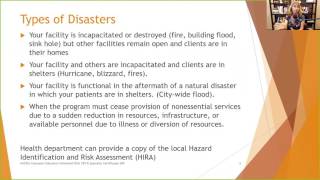
This episode was pre recorded as part of a live continuing education webinar on demand. CEUs are still available for this presentation through all CEUs. Register@Allce.com Counselortoolbox you I'd like to welcome everybody to today's presentation. Disaster an ethical Obligation. Doesn't that make it sound like it's going to be a really important presentation? We're going to talk about the rationale and process for disaster planning. Preparing for disaster continuity planning, managing prescription medications, which is important, and testing the plan. Now you might be thinking right off, you know, well, I'm in individual practice or I'm just a clinician, I'm not an agency administrator. Why does this matter to me? And we don't have that many natural disasters, hurricanes, tornadoes, whatever in my area. Well, disaster planning covers a whole wide range of things. When we went through our last. Which was it? I think it was a JCO audit. Could have been carf. Anyway, we had to really up our level of preparation for a variety of disasters. And we'll talk about how you figure out what, what you need to plan for in your area. And the hint is there's a list at your health department, but we'll go on from that. And even if you don't prescribe prescription medications, which most of you probably don't, being able to make sure your clients know where they can go to access to get refills, to access physicians who can and will write a prescription refill. Maybe it's only a 30 day refill, but in the event of an emergency in which hospitals are overloaded and you know, stuff happens, we need to make sure that we know how to get our clients to the resources they need. We don't want somebody staying in a shelter such as, you know, back, if you think back to Hurricane Katrina, people staying in Texas in one of the shelters, not having access to their medication for, you know, a week, let alone a month or two months. So we want to make sure that we know how to do all this and test it. Disaster planning can save lives, minimize injury, emotional trauma, protect property and operational capability, and prevent or reduce interruptions in treatment. This is why I think it's an ethical issue when we start thinking about non malfeasance, you know, above all do no harm and beneficence. Making sure we're proactively thinking in terms of protecting and assisting the client. Disaster planning really comes in there. Behavioral health treatment programs have a special obligation to prepare for disasters because we provide essential services. You know, sometimes you may feel not as Essential to certain things, but we really are essential in a disaster situation in which, you know, some people may be getting hurt, but there's often a lot more people who are experiencing traumatic reactions from the disaster. By their very nature, disasters have an impact on behavioral health. Most people who experience disaster, whether as a victim or a responder, and this is important, responders have reactions too. And sometimes they have to stuff those down because they can't deal with them right then and do their job. So it's important to make sure that we reach out to those people and provide some stabilization services. But they will have some type of psychological, physical, cognitive and or emotional response to the event. Most reactions are very normal responses to severely abnormal circumstances. And that's one of the ones that I really harp on when I'm doing stress response training for law enforcement emergency medical services is the fact that, you know, talking about these things, having some depression, being stressed out, being really freaked out by something, you know, whatever word they want to use for it, that's normal. It doesn't mean that they are mentally ill or they're impaired or they're risking losing their job because of said perceived impairment. Most of the time it's a transient, you know, short term normal reaction to the abnormal circumstances. So, you know, I say that a lot in order to get them to kind hear it and embrace it. Disaster planning can prepare the program for continuing to provide services to its existing clientele in order to prevent relapse. So if you've got people that are coming, maybe they've stepped down, they're only seeing you once a month, they may need to up their services. You may also have clients who have recently discharged, disaster happens and they need access to services. Medical and psychological consequences for prematurely discontinuing medically managed detox or crisis stabilization. So if you run a, or work on a detox or crisis stabilization unit, there's a major disaster, there's a flood, there's something and you've got to evacuate. You can't just open the doors and go, well, good luck. It's been real. There has to be a plan in place that's not kosher. Homelessness. If clients are at a residential facility, if they are again in detox, in CSU or in residential treatment, they may not have a place that they lay their head at night. So ideally, when they go through their assessment process, they identify somewhere that they would be able to go should an emergency arise or should they discharge. Ama, we wanna start. And all insurance companies require start discharge planning at the time of Admission. I sound like a broken record with that. And this is one of those reasons. If for some reason they have to leave the facility, where are they going to go? We don't want to just turn them out and go, well, nice knowing you, good luck. There's probably opening at a shelter downtown somewhere that doesn't work. We also want to prevent client destabilization due to lack of access to medications prescribed and or administered by the agency. And I put that a little bit more broadly because those of us in private practice, you know, we don't prescribe, we don't administer, and most of us don't have a psychiatrist on staff. The client is seeing an independent psychiatrist. But in order to exercise due diligence, in my opinion, it's good practice to make sure that clients know and we know where they can go should something happen. A tornado, a hurricane, a flood, a fire, something where they can't get to their psychiatrist. And all of the typical walk in emergency clinics are closed. Where do they go to get their prescription refilled? Some places don't want to deal with prescribing psychotropic medication refills for someone who hasn't been a historical patient. There are also other places where, or some of the same places who will not or do not want to prescribe opiate based medications, pain medications, or methadone, buprenorphine, suboxone to people for whom they are not current clients. And some of those things like Suboxone and buprenorphine and methadone have to come from a specifically licensed clinic. So make sure you know what meds your clients are on, make sure you know where they can access them in an emergency. And we also don't want to, or we want to prevent exacerbation of problems in at risk populations as the result of lack of access to support. So we're talking about those typically what they consider your high risk populations, people who use injectable drugs, pregnant and postpartum mothers, the elderly, children, making sure that we have resources that we can refer out to. We may not even be in our offices at this point. So we need to make sure that we know what the plan is. Disaster planning can help mitigate psychological issues in the community by providing services to new clients, either through aiding other programs who have had to shut down, but you're still operating. So you say, you know, we can take on some of your clients temporarily and having group services available and individual services and crisis services available to people who may not have been a client anywhere before, but all Of a sudden this hit and their world was turned topsy turvy or they're freaked out and they need to talk to somebody just to deal with that before it becomes an issue. We recently had a major fire down in Gatlinburg and the same thing was true there. I mean, there are a lot of people who had never had diagnosable mental health issues, never seen a mental health clinician, but that was a really stressful, horrific experience. And it was a normal reaction to abnormal events. And they needed help figuring out how to make sense of it. So by making sure that we know how, we can best reach out to the community to prevent problems that will prevent later over utilization of treatment services. Types of disasters and there are a bunch, but just some to think about. If your facility is incapacitated or destroyed due to fire, building flood, sinkhole, but other facilities remain open and clients are in their own homes. One example of this, one of the places I worked, we had several buildings. But our main building where we provided outpatient services was remodeled. Gorgeous, looked beautiful. Unfortunately, the plumbers did not do a good job. And in the middle of the night, one of the main water mains broke and flooded the entire building. And we didn't have electronic medical records at this point. We had paper medical records. All of them were soaked. I mean, it was a disaster. And obviously we couldn't see clients in there for quite a while because we had to dry the whole place out and put in new drywall and flooring and all kinds of stuff. So there are times when you're working in an individual setting or in a small clinic where you may have to shut down and you need to prepare for that. Your facility and others are incapacitated and clients are in shelters such as hurricane Katrina or during some of the blizzards they've had up north recently. The fire like the one in Gatlinburg, I mean, there was nothing in Gatlinburg that was able to be accessed. People were having to go out to Knoxville and other places. So where are you going to refer people to and your clinicians if they want to continue seeing clients or if you're in private practice and you want to be able to continue to see clients, do you have a memorandum of understanding with someone in a nearby county where you could go and see your clients office? Share do something. Another thing would be if your facility is functional in the aftermath of a natural disaster in which your patients are in shelters. So a city wide flood would be one, you may be on a high ridge somewhere where Most of the city got wiped out. Nashville back in 2010 had a flood that leveled a ton of stuff. But in the outlying counties, like where I am, you know, they weren't affected that much. So where do your clients go when the program must end? Patients had to go in shelters during the Nashville floods because they were flooded out of their homes too. I mean, the entire city and large parts of the city were just totally underwater. When your program must cease provision of non essential services due to a sudden reduction in resources, infrastructure or available personnel due to illness or diversion of resources, which you know is if in an emergency, if your staff has to go and instead of doing normal billing stuff, they're triaging phone calls or whatever, or if there's a pandemic illness such as influenza. And evidently now you're required by many accrediting bodies if you're accredited by JCO or CARF to have a plan if there is like an influenza pandemic. So I alluded to this earlier. Health departments will provide you a copy of the local Hazard identification Risk Assessment, or hira. You can call them, ask them for it. If you're getting accredited, that's what you're, you're going to have to use. And those are the hazards you're going to have to plan for. Should you be going through the accreditation process if you're not bothering to get accredited? You're an independent practitioner and JCO accreditation isn't something you're worried about. It's still a good idea to have it, to be aware of things that might happen in your area so you can look over it and go, is this something I need to plan for with my population? Continuity planning requires a program's personnel to consider the threats that could adversely affect essential functions, determine the personnel and vital information and other resources required to continue those essential functions. So looking at your program, you know, as an independent practitioner, I provide individual and group counseling and obviously training. So those are essential functions. If something happened, you know, what would I need in order to continue to provide those functions? An Internet connection, Something that's. That's for sure. You know, I could probably downgrade and not have the video available, just do audio so there was less drain and use a lower bandwidth. But I'd have to know where to access that and have to have it a place where I could meet with clients. Other than that, there's not a lot of essential functions. Now. When I worked at a community behavioral health center, we had crisis stabilization detox. We had residential units. Those residential units had to Be fed, obviously. So we had a kitchen staff. There were a lot of things. In order for our clients to be served efficiently and effectively, there were a lot of things that had to happen. So we had to look and say, okay, what can be kind of cut back on during this period? We still need to maintain some sort of records management. Once we went over to electronic health records, that was easier because we didn't have so much filing to do. But that's an essential function, whether we want to embrace it or not. You don't write it down, it didn't happen. You don't get paid, you can be sued. And in this time of chaos and everything, there is a significant chance that there may be an increased risk for liability or, you know, lawsuits. Not necessarily that you did anything wrong, but people can get agitated and frustrated and look for somebody to direct their frustrations out on to feel a sense of control again. You want to develop a plan for providing those essential functions either on site or at alternate locations. Like I said, be creative. You know, you may not be able to get a timeshare with another mental health practice. If you are an independent practitioner, where else might you be able to find office space? I mean, the nice thing about what we do is the fact that we don't. We're not like medical doctors where we have to have equipment and stuff. We pretty much have to have ourselves and a confidential room. So are there local community centers? Are there rooms at libraries you could access if they're still open? Make advanced arrangements for obtaining the resources necessary to support essential functions throughout the disaster and recovery phases. Again, if you're in. If you have a residential program or a program. Well, especially residential, you need to make sure you have enough food, water, batteries, flashlights, blankets, that kind of stuff squirreled away to handle your daily number of clients. And we tended to err on the high end, not go with the average, but say the average plus 10% in order to, you know, hopefully make sure we had enough. And we also need to plan for the safety of personnel during these periods. If there is a hurricane, well, hurricanes you can plan for, you usually have pretty good forewarning of that. There's a huge storm cell that's coming in that eventually is going to produce a flood. You don't know that ahead of time, but you see this storm cell coming in, you don't want to be calling your staff to come in. So they have to drive through that in order to maintain facility staffing. So what do you need to do? Who's going to Be responsible for monitoring weather conditions. At what point do people need to be called in to prevent them from having to travel in hazardous situations? In its initial work, the disaster planning team conducts or gathers from partner agencies in the community a hazard identification and risk assessment. Again, this is usually the health department, but you can also talk with other agencies or other providers about what they've experienced in terms of disasters that have caused them to shut down for a week or two weeks. When you're creating this, you're going to create something called a hazard specific index. You're going to have a general hazard plan with your decision tree of who decides when you're going into emergency protocols and who decides who's going to be called in and all that kind of stuff, who it's coordinated with, and then you're going to have a hazard specific index. So if it is an explosion at a factory in your town, you're going to institute these procedures. If it is a hurricane, you're going to institute these procedures. It's much more specific types of clients you're going to see. Current clients, well, they're pretty easy to deal with because you've already got their charts open. Current clients who are destabilizing, you know, again, you've got their charts open. If they're destabilizing and need additional services. At a time when your services are being stretched really thin, what are you going to have available? Some of the things that we've offered in the past have been crisis hotlines. We've also offered ongoing support groups where clients who are destabilizing could come in and there was a safe place place if they're in a shelter. If transportation is not possible to the facility for some reason, then obviously the telephone hotlines are better than nothing. You may have guest clients from other agencies. How are you going to handle that? You're going to need to be able to get hold of their medical records in order to be able to provide continuity of care. This is all done through what we're going to talk about in a little while called an MOU or memorial memorandum of understanding, where they say, yeah, if we become incapacitated, you will take. We'll refer 20% of our clients to you and we will make sure that you're able to get the bare minimum information that you need to provide treatment through this method with E Electronic health records. I'm not even going to try to do the abbreviation. That's much easier than it was before. But you do have to have somebody on the tech end that can Open the switch that gives clinician Jane from the new facility access to your electronic health record. So everybody's going to get involved in this. You'll have prior clients whose recoveries are threatened because of the stress. Individuals who've never been treated before, who need to have treatment in order to prevent further deterioration. Family members of clients who need assistance to support their loved ones. Again, hotline online support groups. Those are also great if the people can access an Internet connection. The beauty with mobile devices is that it's often possible for them to log in and participate in online support groups, even from a shelter because there's generally WI fi, it may be overloaded, so there could be some other problems with that. But trying to provide as many creative options as possible. Patients who need prescription refills written somebody may come to your facility and say, you're, you know, Jane in private practice and they're like, I need new prescription for this antidepressant. And you look at them and you're like, well, I'm sorry but I don't have prescribing privileges. You can't. Well, you could, but ethically you shouldn't just say, well, not my thing. Good luck. Try down the road. So who are you going to refer to? And patients on an opioid pain medication, not necessarily methadone, buprenorphine or Suboxone, but somebody who has a pain condition, who's being pain managed, who can't access their physician, where can they go? If they're your client and you know, we have clients who have chronic pain, how do you handle them? Where can you refer them? Theoretically, their treating physician is going to have a similar plan in place and is going to be able to refer them. That would be where I would first start when I'm making my disaster plan, is to call, you know, the pain management clinic in town or the one that my clients are seeing and say, if there's an emergency, what's your disaster plan? Where do you refer to so clients don't destabilize, Generally they already have one in place. You just fill it in with that information and you're good to go. So the plan, the introduction is the purpose of the plan and the objectives. Generally. What we stated on the first slide, the concept of operations. Who, what, when and how are going to activate and deactivate this process. Are you going to send out a text message to all your staff? Are you going to call everybody? Staff meeting, what's going to happen? You also may consider doing broadcast message on your local TV and radio Station if you need to institute emergency procedures just like they do when they close schools for a snow day. If your facility needs to be closed for, you know, even for a snow day, it is nice for people to be able to go to their local web, their local television channel and, or the website they're in and see which businesses are closed so they don't think, well, do I need to try to make that appointment? You need to have which staff are responsible for what in the disaster, who organizes the clients, who monitors the weather station, who gets out the flashlights and batteries, etc. List the personnel positions authorized to make requests for outside aid or assistance. If you can't handle something. If you determine that you need to evacuate clients and you need emergency medical services assistance doing so, who's able to make that call? At the places I've worked with, it's always been a senior vice president or higher. If you're in a smaller organization, there may be a different person, but you need to know who you can call if things start getting bad and you need to request assistance. The conditions under which to request aid. Yeah, if it's really bad weather outside and it's kind of scary, you know, maybe debris is flying everywhere and a window broke, but you have, you're in a big 15,000 square foot facility. Probably not a reason to call out the calvary in the middle of the storm. But if part of your roof blows off, then that might be different. So you may need to take different procedures. Procedures for managing requests to give aid. If another facility is having problems managing their clients because they've been flooded or whatever, and they call you, who's authorized to say, sure, we can take, we'll activate that memorandum of understanding and we will take 20% of your clients right now, direct them to call this number in order to get an appointment or whatever your procedure is, a list of resources that can be used in those efforts. Well, if the roof blows off the building and you need everybody evacuated and you're standing there twiddling your thumbs going, well, who do I call? Law enforcement, ems? That needs to be decided ahead of time. So in each appendix for each type of disaster, you're going to have a list of the types of people you may need to contact and their phone numbers and a contact name if you have that. So there's no guessing. You're not flipping through the book trying to figure out who to call. So these specific indexes are called functional annexes and they are by specific hazard. So hazardous weather, tornado, fire, flood, facility, flood, Hurricane or a blizzard. You know, hurricanes and blizzards, you have a lot more time to plan for than tornadoes or hazardous weather coming in. So, you know, some of these maybe seem similar, but they may be separated based on the amount of time you have to plan for them. Implementation instructions, checklists and materials necessary to perform disaster related tasks and things that can be included in this appendix would be scripts to respond to the media, the public or consumers if they're calling and going, you know, where can I get help? Or when are you going to be open again? Or whatever the case. That way you have a consistent message to put out floor plans so you know, if everybody's been evacuated, ideally emergency response will also have a copy of your floor plans in their response plan because if there's a fire, they need to know what the floor plan is of the facility and community maps. So if you're trying to tell somebody to get from point A to point B and the Internet's down so you can't pull up Google, an old fashioned community map is going to be really helpful. Safety related policies and procedures will also go in here. You know what to do in the case of a slip and fall, what to do, you know, all of those other things and your memoranda of agreement or understanding depending on where you are, it's the same thing, including the address of each facility, phone number and a contact person. So for you know, here, for example, if I was going to refer patients up to Centennial Hospital, I would have the name of the person that I would need to contact to see if they were going to accept our activation of the MoU, the phone number, the address of the facility, and whatever procedures I needed to undertake to make sure that they were prepared to handle my clients. The basic plan should address general procedures, contain a general decision and notification tree, and plans for monitoring where clients go. So if you've got a big facility and 300 clients coming in, you're not going to refer all of them to one place. What you're going to do is, you know, kind of probably break them up between two or three different facilities. So you need to know where you're referring. Avoid having staff need to refer to multiple sections in the plan. You don't want staff flipping back and forth going, okay, I need to refer here and then I need to contact this person. That's not going to work. If your agency has multiple locations or types of programs, each program type needs its own addendum to each functional annex. So in a hurricane warning, for example, when I worked at Community Mental health. We had a detox facility, which, you know, obviously we couldn't just open the doors and go, good luck. We had a residential program. The clients in there were a lot more stable. Ideally, we would keep them in residential, but that wasn't necessarily mandatory. There were situations where some clients, maybe not all of them, could be referred to, other could be referred back home, and then they would come back to us as soon as the crisis had passed. If you have an adolescent facility or an adolescent outpatient program, your outpatient programs are going to close sooner than your residential programs. You just kind of need to plan for that. Supervisory staff should maintain a paper copy, and each building unit should maintain a paper copy in an accessible location. I know this sounds antiquated, but in the event of a major power outage and you can't access the Internet or the online intranet or anything like that, you need to have something to which you can refer, which unfortunately is still paper. Administrative and clinical staff must all be adequately trained, including scenario training. So they need to know what they're supposed to do in the event of any sort of disaster. Your MoUs memorandums should include hospitals and health departments. So because they're probably going to be good referral sources and you might be able to help, they may need additional counselors coming in. Your behavioral health disaster response team, which is usually coordinated by the health department, you want to have one with emergency management for the evacuation of patients in the event of an emergency. Even if you're an outpatient program, if you've got 30 people on your clinic and there happens to be a major emergency and you need to have them evacuated, you know, you got to think about whether that. How likely that is to really happen. But if it is possible, then you may want to have a MOU with emergency management, other clinics for mutual referral or staff borrowing. So if other clinics shut down, you're taking on the brunt of a lot of different agencies caseload. You may need additional staff, so they may be able to let you borrow their clinicians. And there's got to be policies and procedures for getting all of their, you know, human resources information, as well as who pays them and how does billing work and sober homes for patients in addiction recovery. If you've got, for example, a residential facility or an IOP facility, and patients can't go back to their homes and they can't stay at your facility, if you can send them to sober homes, yeah, they may have to sleep on the couch, but it would be better in a disaster for them to be in a safe, clean environment than on the streets. Obviously, SAMSA's Disaster Technical Assistance center can help you link with disaster behavioral health coordinator for your state and answer questions about accessing state and federal funding in a disaster. You know, obviously we're talking wide scale, not your plumbing bursts, but if there's a natural disaster of some sort, oftentimes you can access funding to support additional staff on duty and the functions that you need to do. Health departments must coordinate disaster planning with the community's behavioral health treatment systems. So the health departments, if you're in an agency, not necessarily if you're an independent practitioner, you may have to reach out to them. But if you're in an agency, health department should have already reached out to you and said, okay, you're part of this big conglomerate now, so let's all get on the same page. For disaster planning, the health department engages and coordinates with emergency management healthcare organizations, both private and community based and behavioral health providers, and community and faith based partners. I've been in many locations where the churches served as temporary shelters and were able to provide a place where, where clinicians could go meet with clients who were able to get to that location. Because sometimes you can get in a 10 square mile area and not any farther, but then people can come to that location. So faith based partners and community organizations, even your community centers are great. Health departments support the development of public health, medical and behavioral health systems that support recovery. So theoretically, they're supposed to be making sure that we are all on the same page. They participate in awareness training with community and faith based partners on how to prevent, respond to and recover from public health incidents. Now, if, and I don't know if any of you run recovery homes, your agency runs a recovery home. You know, it's really good for them to be in this same conglomerate. That way health departments can use them as a resource in the event of a disaster. We want to make sure the health department promotes awareness of and access to medical and behavioral health resources that help protect the community's health and address the functional needs of at risk individuals. So again, back to prevention. Instead of waiting until after the disaster is over and people have decompensated and they receive and or integrate health needs of populations who have been displaced due to incidents that have occurred in their own distant communities. Again, thinking back to Katrina, I was able to manage the Katrina Grant for the 13 northern counties of Florida. But we had a lot of people that came to Florida who were from Mississippi and Alabama who had been displaced. The dea. Yep. They get their fingers in it too. Monitors and reviews actions the program takes in a disaster. Regarding controlled substances. If your agency has controlled substances, if your sober living facility happens to have controlled medications on the premises, and it does happen with medication assisted therapy, then the DEA is going to want to know how do you transport those in the event of an emergency to make sure your clients get them and nobody else does. Inform the local DEA agent about the use of controlled substances that are prescribed or dispensed to patients and stored at the facility. And this includes not only opiates but also anxiety medications, Xanax, you know, any of your benzos and any of your central nervous system stimulants that are usually used to treat, treat things like adhd. So the DEA is going to be interested in how you're handling that. The state opioid treatment authority can assist in making contact with the local DEA official. Even if you're not talking about opiate medications, that person's going to know who to contact. So reach out to them. Instead of trying to go through the decision tree of the phone numbers. The media can assist in the coordination of services. So request being included in local TV and radio emergency listings. So everybody's aware of the operating status of the program and where to go. If it's closed, if they were planning on coming to you for detox, or if you're the community Crisis Stabilization Unit and they're closed, where are they supposed to go? Generally it's to the next county over, but you know, which county and who do they contact? Pre disaster preparedness. Educate partners to destigmatize and ensure continuity of care at guest agencies or in shelters during Katrina and other disasters, I'm sure. But there's a lot more research on Katrina because it was so long. There were people who were on methadone and suboxone who were not able to get access to their medication or not allowed into certain shelters because they were on that medication. So we want to educate partners, including the ones that are going to operate the emergency shelters and facilities about these different medications, how to store them, what they're used for, yada, yada, so they don't discriminate against our clients. Schizophrenia is another one where agencies or people who are running the shelters may be less inclined to open them with, welcome them with open arms, and may say they need to go over to this specialized facility. Well, if that specialized facility is locked down, full up, whatever, we need to make sure we can get someone who is relatively stable on their medications, but who has schizophrenia into this other facility with their meds. Educate the public about the importance and availability of behavioral health services in an emergency. You know, going out doing outreach, doing stress management, going to some of the shelters where people may be residing and doing preemptive stress management outreach kind of activities, not group therapy, but education. Helping parents understand why their kids are acting, why they are, helping parents understand why they're feeling, why they are, what to do about it, giving them practical tools to help them. All those sorts of things are great in an emergency, but we also want to provide them as much as possible beforehand. So if a local elementary school is going to be a shelter, maybe looking at who's going to staff that shelter and can we provide pre disaster training so the people who are staffing it have a few tools to hand out and maybe some handouts about stress reactions? Again, make sure your memorandum of understanding are signed and in place before the problem. Educate local emergency response organizations about the characteristics of your patients. You know, if you've got your general run of the mill mood disordered clients, you know, that's one thing. If you've got clients who run run the gamut from severe substance abuse to severe and persistent mental illness, let's educate them so they know how they can best serve those clients and what they can do in a disaster to help the client instead of further stigmatize them or traumatize them. They need to know the needs of patients during and after transportation, the most appropriate settings for relocation. Maybe it's not one of the special needs shelters. Maybe it is a general shelter that has the ability to dispense medications. Specific locations that have, through mou, agreed to accept your patients. So if you have clients, for example, on methadone maintenance and there is a shelter who's agreed to accept all of your clients, then you want to have an MOU with them and educate the local emergency response so they're not going. Well, this person's on methadone. I have no idea where to take them. Let me just dump them off at the local emergency room. We want to make sure that they know that they can take them over to the church at the corner of 5th and 3rd, which is they've agreed to accept all of the methadone maintenance patients and that's where your physicians are going to end up going. Patients have a right to expect from general population emergency shelters, support services that provide access to medications to maintain their mental health and their health, refrigeration for medications and assistance that may be required due to cognitive and intellectual disabilities. So this is not your special needs shelter. This is your general purposes shelter. We need to make sure that the shelters and the shelter staff understand that so they're not thrown for a loop. This is a time of stress. People are, you know, typically very nice and very open minded, but when they get stressed out and they're flooded with intakes and stress levels are high and it's chaotic, they may not, you know, think or respond in the way that they would normally. So we want to make sure there's a plan, want to make sure that they know what's happening, you know, and the same is true for emergency response. They try to do the best by the clients. So they're going to take them to whatever makes the most sense based on their knowledge to care for the patient. Which, you know, for methadone, clients that are maintained on methadone may be a hospital. Not saying that they're trying to be ugly. We need to make sure that they know that we've already prepared for that. And this is a simple place you can take them and drop them off and they're not going to give you a hard time because emergency response needs to be able to do their job and get free as quickly as possible. Identify your essential functions to maintain the safety of clients and visitors. You may have a bad storm cell suddenly come in or a tornado warning go off and it's visitation. You know, you've got 20 visitors and 37 clients that you've got to figure out what to do with and how to handle them. Behavioral health emergency services, including crisis and relapse prevention. What are you going to be able to provide and how are you going to do it? How are you going to track your clients who've been evacuated, maybe even to a different state to make sure that they're getting their needs met? How can you assist clients in accessing needed medications? We talked about that already. If there are clients who have court mandated drug testing for some reason, you may need to figure out how you're going to conduct those mandated drug tests. Now, where I've been in the past, that has fallen to a secondary sort of thing. And if probation officers want the test that bad, they come out and get it. But that is a decision your agency has to make. How are you going to adhere to applicable state licensing standards? You know, hipaa, high tech, all that stuff. Maintain treatment and billing records in accordance with regulatory requirements? Yeah, the paperwork just doesn't even go away in the middle of a disaster. Partly to ensure continuity of care, to prevent clients from falling through the cracks and to make sure that your agency gets reimbursed. Because if they go two weeks or a month providing all these great services and can't get reimbursed for one of them, you know you're going to take a big hit. Going back to risk management on cash flow. You want to be able to protect client rights and privacy, including the integrity of their phi. So you know, if you're talking to someone who's an intake person at a shelter, how can you maintain that client's confidentiality when you're trying to manage things? If you're having a face to face conversation, if you're able to go to a facility and provide counseling services, where's a secure place that you can provide that counseling, where you can protect their confidentiality as resources are available and based on mandates, you need to be able to provide disaster mental health services in the community, including prevention, specific guidance and crisis intervention. So this goes down to your prevention people, your behavioral health techs, you know, not just your licensed clinicians. There is a lot of stuff your unlicensed staff can do to help free up your licensed staff in order so they can focus on the clients who are destabilizing or who are in active crisis. Become aware of funding sources and how to access them. Like I said, state and federal funds become available in a natural disaster crisis. Counseling assistance and training program grants are funded by fema. So if FEMA is activated, you're probably going to have access to these. And your SAMHSA emergency response grants also would be available in the case of a declared emergency. That won't apply if you're having a locally. You know, it's just your building, something happened, but it could apply in these situations. Mitigate risk by improving your facility's ability to withstand a disaster. If you live in a place that has hurricanes, make sure you have hurricane window coverings, backup generators. Backup generators are good anywhere because the power can go out and you need to make sure that medications stay refrigerated. Sometimes food may need to stay refrigerated. If you're providing food at your facility, there's a lot of reasons for that. Prepare shelter in place for when evacuation is unsafe. For example, there's a semi going down the street right outside your facility and it gets into a wreck and there is a huge noxious chemical spill and right in front of your parking lot and there is no other way to get out of your facility. You've got a river on one side and you just. It's not even possible to walk out. So you got a shelter in place for 48 hours while EMS and everybody else gets it cleaned up. Stockpile supplies including cots, linen, soap, toothpaste, non perishables for a 72 hour period for as many clients and staff as you expect to be on the premises. This is not something you can plan for a week in advance, so you want to stockpile it and then audit it every six months or so. Prepare personal go kits, one per client with a water bottle, flashlight batteries, toiletries, and consider adding a T shirt and shorts, a towel, a high energy food bar. Some of these things, if you're running a residential program or it's a sober living facility, you can have clients bring these at admission so they have their own personal go bag in the event of an emergency. You know, that's up to whatever funding your agency have and inventory and replace supplies at least quarterly. We all know batteries explode, so enough said. There have real time data backup of electronic health records at remote location accessed in an emergency. Keep coolers on site for transportation of refrigerated medications. Ensure an electric water pump, if any. You know, if you have pump water instead of city water, make sure it's connected to the backup generator. Train all staff. This includes your front desk staff, your techs in emergency psychological first aid, so they can become aware of the signs of somebody who's who is starting to head into crisis and they know what to do to get them referred out and help stabilize the situation. Have a psychiatric advance directive in the file for any patient who may destabilize in an emergency, which includes helpful interventions about legal representatives. Helpful interventions and inform about legal representatives should they become incapacitated. We do this at admission, when we go through the process. I have a whole sheet that's dedicated to, okay, you know, in the past when you've gotten into crisis and you've just, you know, really been unable to function or really been angry or stressed out, whatever the case is for that client. What things help? What things help you de escalate? What can we do that is going to be useful and what could we do that might be harmful or might make the situation worse? That way we know ahead of time what not to do. And in the event that you can't speak for yourself, you go into a full psychotic episode or something if you're dealing with that kind of patient. Who could we contact in order to make decisions on your behalf? Prepare for financial resiliency. And this kind of goes back to risk management. How to enroll clients in emergency Medicaid if you've got clients who are paying and all of a sudden there's a disaster and they can't pay, you may lose a big portion of your client population. So if you can get them enrolled in emergency Medicaid, that might help. Likewise, again with Katrina, we had people coming in from other states. They weren't on our state Medicaid, but in order to get paid for providing them services, we had to get them on emergency Medicaid so they could get services and the agencies could get paid. Educate payers about modified counseling services to facilitate reimbursement. We'll talk about that on Tuesday with technology based counseling. But some payers are still not okay with reimbursing for any sort of telemental health video or otherwise. So if you think that's something you're going to use, educate the payors ahead of time and say, if we're in an emergency and we have no other way, we will use this. Are you going to pay for it? Or what do we need to do in order to get it paid for? To see if you can come to some sort of an understanding for an emergency situation. Some agencies may have a reduction in cash flow due to relocation of community residents. You know, all your patients have gone over to another state, so you need to figure out how are you going to maintain payroll and get through that situation. Staff members might be shared with programs or other agencies experiencing an influx of clients to reduce your payroll load. So they may basically work PRN at another facility during the disaster in order to help them with their increased client load. Take the burden off of your agency. Consider how to support client retention through active outreach following a disaster. When things like this turn the apple cart topsy turvy, a lot of clients will drop off. They'll just kind of forget about counseling. It will seem less important. So what can you do during and after a disaster to continue to reach out? Make sure those clients know that they're important to you and their welfare is important to you. Disaster planning prepares for client safety and continuity of care and financial solvency for organizations in the event of a disaster. It is largely about client safety and making sure that we do no harm and, you know, all that stuff. But we also want to make sure our staff is safe and they're able to keep their jobs and, you know, all that kind of stuff and that our agency is able to maintain payroll and resume functioning as soon as possible, providing those services that we have promised our clients we're going to provide. Get memoranda of Understanding with local agencies, the health department and emergency services. This is vital to preparation. You want to make sure that you've already gone out and shook hands and agreed upon in writing what each agency is going to do. So there's no question. I mean, think about it. If you've got kids and you go on vacation, what do you leave? With whoever's keeping your kids, you leave them the doctor's number, you leave them your number, you leave them, you know, whatever plans need to happen. If the kid is sick and doesn't want to go to school, what are the procedures? There are a lot of things that you would do. Think about, you know, your agency or your clients in some ways as a family and in an emergency, how are you going to protect your family unit as well as your house, your agency have a list of identified risks for your area by contacting the local health department and getting that just handed to you. They've already got it. You might as well save yourself some work and make sure all staff is trained in the disaster procedure and scenario. Training reinforces this periodically. It's great to write it down and talk about it. But as we all know, when it comes to crunch time and in a crisis and when people are kind of in an adrenaline fog, we might not think as clearly. And if you go through the scenarios, it's really easy to put something down on paper and go, yeah, that looks great, you know, let's file that away. But then when you actually operationalize it, you get to places and you're like, oh, wait a second, we went on a hike yesterday and we got to this one point. It was supposed to be just, you know, an out and then a loop, kind of like a, kind of like a balloon. But there were a couple different places we had to make decisions about which ways to turn. And that wasn't something we had really planned for. Thankfully we had the map. But you want to make sure that you actually walk through, through it at least once. Obviously you're not going to, you know, transport clients, but you would get to the point of calling emergency services to transport clients and talk about what would you do and may even have someone act like emergency services so you make sure the handoff goes smoothly. Okay, that is what I've got as a really brief rundown for disaster planning. Whether you are a single practitioner, a sober living facility, or a full scale multi program community mental health facility, it's a good idea to plan ahead to make sure that those people that you are responsible for serving are going to be taken care of in the event of, you know, weird things and you know, knock on wood, they'll never happen. But it's better to be safe than sorry. Any questions? So on Tuesday we're going to talk about technology based techniques for the use in counseling. And there are a lot of them out there and a lot more research than I really realized. There's actually like 196 clinical trials going on right now with technology based mental health treatment. So that's really exciting stuff that's coming up and it segues in with this disaster planning and the ability to provide services to clients who are at a distance who can't get to your facility and you need to use remote procedures. Everybody have an amazing weekend and I will see you on Tuesday. If you enjoy this podcast, please like and subscribe either in your podcast player or on YouTube. You can attend and participate in our live webinars with Dr. Snipes by subscribing at allceus.com counselortoolbox this episode has been brought to you in part by allce.com providing 24.7 multimedia continuing education and pre certification training to counselors, therapists and nurses since 2006. Use coupon code counselortoolbox to get a 20% discount off your order this month.










