Don't Alienate Your Patient During the Eating Disorder Assessment
A recorded continuing-education webinar by Dr. Dawn-Elise Snipes providing practical guidance for conducting eating-disorder assessments without alienating patients. The talk covers prevalence and age-of-onset, multi-domain risk and protective factors (biological, psychological, interpersonal, familial, sociocultural), common red flags and medical complications, screening and assessment areas, relevant instruments (e.g., EDI-3, EDE-Q), and criteria for higher levels of care.
Questions this video answers
20% (1 in 5).
10–15%.
Between 12 and 25 years.
About age 8.
Chapters
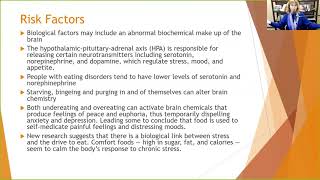
This episode was pre recorded as part of a live continuing education webinar on demand. CEUs are still available for this presentation through all CEUs. Register@Allce.com Counselortoolbox you. I'd like to welcome everybody to today's presentation on eating Disorders Assessment. Part one. We're going to review the prevalence of eating disorders, identify assessment areas, risk and protective factors, explore some complications people may experience with bulimia and anorexia, and explore potential guidelines for treatment. Now the next three this presentation as well as the next two are based in part on the APA guidelines for Eating Disorders, the NICE guidelines for eating Disorder recognition and Treatment. That's from the UK and the National Eating Disorders Association Coach and Trainers Toolkit. So trying to pull together some current best practices that might be workable for you. Now. If you remember on the quiz, I do not test on specific numbers unless I tell you ahead of time. So just this is for informational purposes only. 20% of women struggle with disordered eating. That's 1 in 5. 10 to 15% of people with eating disorders are male. So before we used to think that, you know, men really didn't struggle with eating disorders. 10 to 15% of the people with eating disorders are male. So that is a significant portion and I would tend to think it's actually higher than that. But men are still a little bit reluctant to come into treatment for something that's perceived as a female problem. 40% of male football players in one study that was done were found to engage in disordered eating. So that in and of itself kind of underscores the notion that there may be more eating pathology out there among men than we're thinking of because there's a lot of wrestlers, there's football players, there's male gymnasts and male bodybuilders. So, you know, muscle dysmorphia and body fat preoccupation is seen in a majority of bodybuilders and wrestlers. So they're really concerned about their weight, their body body fat percentage and their muscularity. 90% of people with eating disorders become symptomatic between 12 and 25. Let that sink in for a second. 12, that hurts. And you'll find that when you look at the research, a lot of young girls go on their first diet at about age 8. So that's what second grade. Just let that sink in for a bit. I did do a little bit of looking today on some of the girls and teens magazines and I was really pleasantly surprised to see how well they're starting to Incorporate things that are more midline in terms of emphasizing weight and shape and things like that. So that was a little bit encouraging. So risk factors? Well, we still don't exactly know what causes eating disorders. However, the condition sometimes runs in families. And young women with a parent or sibling with an eating disorder likelier to develop one themselves. Now, you want to think nature or nurture here. Is it a biochemical thing, or are they growing up in a household that emphasizes weight and shape and appearances and yada yada? People with anorexia come to believe that their lives would be better if they were only thinner. And this is true with some people with bulimia as well. They believe that they would be more lovable if they lost some weight, they would believe that they'd have better relationships, etc. These people tend to be perfectionists and overachievers and typically are good students or good involved workers. And they're involved in school and community activities. They're sort of the picture of what you would think of the ideal happy person, but inside is just all kinds of turmoil. Many experts think that anorexia is part of an unconscious attempt to come with terms with unresolved conflicts or painful childhood experiences. You know, it kind of goes with whatever camp you come from. There are a lot of factors that contribute. So a saying that somebody with an eating disorder has some sort of painful childhood experience, I think really grossly limits what you're looking at in terms of what could have caused it and what might be maintaining it. Now, while sexual abuse has been shown to be a factor in the development of bulimia, and we're talking about correlation here, not causation, were saying that a higher percentage of people who are bulimic have had sexual abuse histories in comparison with those without bulimia. So we're not saying it necessarily causes it. We're just saying it's a correlation factor. But sexual abuse has not been found to be a factor in the development of anorexia. Biological factors may include an abnormal biochemical makeup of the brain. The HPA axis, which y' all know I call our threat response system, is responsible for releasing certain neurotransmitters, including serotonin, norepinephrine, and dopamine. The HPA axis, hypothalamic, pituitary, adrenal, says there's a threat, there's something going on. So it secretes cortisol, our stress hormone. Our stress hormone says, all right, we need to suppress the serotonin right now. We need to increase the norepinephrine and the get up and go chemicals because there's some kind of a threat here. Well, you know, when all that stuff starts happening and you know, we could go on about that for an hour, Norepinephrine and dopamine and serotonin levels kind of get out of whack. Now what do we know about these three chemicals? They're responsible for the regulation of stress. You know, when that HPA access is pumping, people are stressed out, they're looking around for the threat. And when serotonin is low, it's harder to calm down. Because serotonin is one of our anti anxiety neurochemicals. Mood can be more erratic. People tend to be a little bit more edgy when they're feeling like there's a threat. But serotonin is also responsible and to a certain extent norepinephrine and dopamine for regulation of appetite for satiation. 70% of our serotonin is found in our gut. So we want to pay attention to the fact that if these neurochemicals get wonky for whatever reason, that is probably going to affect stress, mood and appetite and may lead people to more stress type or self soothing type eating. We'll talk about that in a minute. People with eating disorders tend to have lower levels of serotonin and norepinephrine. Serotonin is kind of your common chemical. Norepinephrine tends to be more of your focus chemical, but it's also one of your get up and go motivation chemicals. Starving, binging and or purging, any of these things, you start monkeying with the body's fuel system. It'll alter brain chemistry. If the brain doesn't have or the body doesn't have the tools, the amino acids and vitamins and minerals to make serotonin and norepinephrine and all those things, then brain chemistry is going to get altered some. If the person perceives there's a threat, you know, if they're starving themselves, the body goes, oh, there must be a famine. You know, it doesn't take in the information from the eyes and go, well there's plenty of food out there. The body says, I'm not getting enough food, there must be a famine. So I'm going to lower the base metabolic rate. And it also alters the brain chemistry. So it's important to recognize that both undereating and overeating can activate brain chemicals that produce feelings of peace and euphoria. So you're like, wait a minute, starvation can produce feelings of peace and euphoria. Yes. In some people, once you get past that hunger, that kind of uncomfortable sensation, there's more of a euphoric sensation after that. The hunger is the worst part, getting through that. And then there's sort of a rush that some people report feeling after they get through that phase. So those feelings in starvation or after you eat a high fat, high sugar food that causes the release of dopamine and serotonin leads some to conclude that food can be used to self medicate painful feelings and distressing moods. New research suggests that there's actually a biological link between stress and the drive to eat. Now think about it for a second. If you're under stress, that means your fight or flight system is going, your body's going, there's a problem, we got to get the heck out of here. So what do you need if you're going to fight or flee? Fuel. So it makes sense that when the fight or flight system is going, when that HPA axis is activated, that people are going to be looking for high energy food. And high energy translates to high calorie, which is your high carbohydrate and your high fat types of foods. So when people eat these, it can kind of calm the body because the body's like, okay, fuel tanks filled up. You know, think about, we've got snow coming down like gangbusters out here. And everybody started panicking as soon as they heard it was going to snow and the bread went off the shelf and everybody filled up their fuel tanks and then they were able to calm down. They're like, okay, I have what I need. Your body kind of does the same thing. So it's important to recognize that if a patient's levels of stress are high, if they're perceiving a threat and they perceive a lot of threats, that they may crave high sugar, high fat foods more. Now, it doesn't mean they're going to give into them. The anorexic takes great pride at being able to avoid those foods and control how much he or she puts into his or her body. So psychological risk factors, low self worth, low self esteem, and feelings of inadequacy contribute to the development of eating disorders. We often see these factors predating the symptomatology of the eating disorder. So it's not something that generally comes after the eating disorder begins. Often it happens ahead of time. So then the person says, I'm going to get control of this, I'm going to get control of my weight, I'm going to get control of My life, I'm going to make people like me, yada yada, and hence the beginning of the problems. Obsessive behaviors regarding food and diets may also play a part in eating disorders. And you know, back in the day, when I was younger, you couldn't open up Seventeen magazine or Teen magazine or any of those or, or Red Book or any magazine for that matter, without finding some sort of a diet. How you could lose weight. And even on the Internet today, there are fad diets here, there and everywhere. Lose £15 by this. And so there's a lot of pressure on people that says you need to be losing weight. We may not be sure why, but the media is telling us you need to lose weight. So seeing that and being bombarded with it can prompt obsessive thoughts about weight and shape. And these people may also have more obsessive compulsive personality traits in other parts of their life. They may be very organized, very neat, and display some of those other traits. I'm not saying they have obsessive compulsive personality disorder. I'm just saying look for the traits. They may have a strong or extreme drive for perfectionism and unrealistic expectations not only of themselves, but also of others. So it's important to recognize that people with eating disorders not only hold themselves up on this high standard, but they expect other people to do it too. And when other people don't meet that high standard, they feel very angry and let down. In spite of their many achievements, people with eating disorders may feel inadequate. So they achieve all these things. They're like, I, you know, I got an A on my test. Well, I could have gotten 100%. You know, it's always looking at how you could have done better or how somebody else did better than they did. So they often feel inadequate. So we want to look at where's that coming from and what kinds of external validation were they hoping to get for that achievement. They tend to see the world dichotomously. So we want to help them start looking at, you know, the in betweens. Individuals who develop anorexia are led to think that they're never thin enough, regardless of how much weight is lost. And a lot of times people with anorexia especially, but sometimes with bulimia, think about it. When you start severely restricting your food intake, you drop weight really quickly. And, you know, people who go on these crazy 500 calorie a day diets or whatever, they drop weight really quickly. A lot of it's water weight at first. But think about, you know, if you've ever had a small child or a puppy or, you know, whatever. And you know, you go along day to day and they're growing every single day. And you don't notice it because it's, it's gradual, but you see them every day. But you could go and take your kids to see their grandparents after a month and the grandparents like, oh my gosh, you've grown so much, but you didn't see it. Well, the same thing kind of works in reverse for weight loss. The person who's losing weight, they don't see the changes as much, so they're not experiencing or realizing how much their shape has changed. In a study I participated in as a research assistant when I was in graduate school, people came in and they were given a, they were taken a picture in a full leotard. And then we put the picture of them in the leotard on a monitor and we distorted it, you know, way out of proportion so it wasn't even looking human looking. And we gave them a dial to control how much, you know, what they actually thought they looked like. And the people with higher eating disorder symptomatology tend to rank themselves or set that dial as being about 30% heavier than they actually were. So when they look in the mirror, they see something completely different than what you see when you look at them. People with negative affects such as depression, anxiety, stress or loneliness or a sense of lack of control in their life are also at risk of developing eating disorders. Many times it's thought that people with eating disorders want to take control and fix things in an unhappy life, but don't really know how. I mean, think about a 10 year old who's in a chaotic environment or, you know, doesn't feel loved or appreciated or whatever's going on that's creating angst, they don't know how to fix it. But this culture has kind of taught us that success and happiness mean thinness. So maybe if I can lose enough weight, then people will notice me, maybe I can get approval, maybe things in the house will be better. If so, the person tackles his or her body instead of the problem at hand. Dieting, binging, purging, exercising and other strange behaviors are not random craziness. And when we talk about strange behaviors, we're talking about ritualized eating, forbidding certain food groups, etc. These are often misguided, ineffective attempts to take charge in a world that seems overwhelming. They just, they don't feel like they've got the tools to cope with whatever it is that they're dealing with interpersonal risk factors. And these are all things we're going to assess for, we're going to be listening for in that assessment. Troubled personal relationships, difficulty expressing emotions and feelings. A lot of people with eating disorders will say they feel fat. Fat's not a feeling. So we want to talk about what does that mean to you? Or and they'll counter maybe with, well, I feel disgusting. Okay, that's not helping me. You know, let's talk about feelings. Happy, mad, sad, glad, angry, confused, out of control. And obviously this is not something we go over in the initial assessment. I'm just going to take what they say is how they're feeling, maybe probe a little bit. But we'll work on developing an emotional vocabulary in treatment. History of being teased or ridiculed based on size or weight. And this can just be a passing comment from somebody who is important to them. So it's important to understand they don't have to be hounded every single day. If somebody whose opinion is important to them makes even a jesting passing comment, it can with them forever. You know, every time they go to eat, they hear that person in the back of their head. And potentially a history of physical or sexual abuse may contribute. Some people with eating disorders use the behaviors to avoid sexuality. So we want to look at why is that? You know, is it a history of sexual abuse? Is it they're struggling with their sexual identity, what's going on there? And others may try to take control of themselves and their lives by creating and winning the power struggles inside. I can't fix what's going on out here, but I can be the thinnest person in my household. I can be the prettiest person at school. I can be. And it generally revolves around appearance in what their superficial goal is. The underlying goal is to get control of the uncontrollable inside. The person with eating disorders often feels weak, powerless, victimized, defeated and resentful. They often lack a sense of identity and try to define themselves by manufacturing a socially approved and admired exterior. So think about that low self esteem thing we've talked about in other courses. If people can't self validate, if they can't look in the mirror and go, I'm good, I'm okay, and they rely on other people to validate them. Their entire existence is based on external validation, then you can see how, you know, creating an image that society thinks is most approving or most acceptable would be a way they might try to gain approval. People with Eating disorders are often legitimately angry, but they seek approval but fear criticism. So I really want approval from you. I want. I need some validation, but I'm afraid to put myself out there because if you criticize me, if you don't accept me, if I don't get that validation, it literally obliterates me. So, you know, think borderline traits here. Not personality disorder, but traits. They often don't know how to express their anger in healthy ways. They often use terms like I feel fat. When they feel like things are uncontrollable, when they feel like they are powerless. And they often turn their emotions against themselves by starving or stuffing. It gives them something to focus on. If they're starving, they're focusing on not eating and distracting themselves and doing other things. If they're stuffing, they're focused on the food. Appearance obsessed friends or romantic partners, sorority houses, theater groups, dance companies, and sports that emphasize size and weight can all foster eating disordered behavior, some more overtly than others. So it's important to understand what are your social activities? What are your extracurriculars? Not saying you have to get out of it, but saying we need to be aware of what the influences are. Some people with eating disorders are withdrawn, with only superficial or conflicted connections to other people. They're just too afraid to put themselves out there. But others may seem like the belle of the ball, but when you start talking to them, they say, you know what? I'm there. And they seem to like me, but I don't really feel like I fit in. Nobody understands me. I don't have anybody that I confide in. I just put on a happy face, and everything is a facade. They often desperately want healthy connections to others, but fear criticism and rejection. They're afraid of letting their feelings, doubts, and insecurities be seen, let alone their hopes and ambitions. Because if they put those out there and somebody says that's stupid, again, it crushes them. It's not something that they can just kind of go, well, whatever. What's your opinion? But it really is devastating. Family risk factors, including a family history of an eating disorder. Eating disordered behaviors typically are taught, if you will, in families. If a family member has a certain rigid way of eating or exercising, if there are certain attitudes about shape and weight and size, it's often directly and or indirectly communicated throughout the family. You want to get an idea about what are the familial attitudes toward weight, dieting, and eating? Is a parent always on a diet? Is somebody always exercising? Is somebody always obsessing? About what size, clothes they wear. You know, you want to look about to see, does the family or does someone in the family overvalue appearance? Do they make jokes about appearances and especially about the patient's appearance? But if they're someone with an eating disorder, the parent or the sister or whatever, you know, if that person is constantly making jokes about being fat or whatever, it hits home. It sends some messages indirectly to everybody else in the family. If there's a deficit in emotional support, the person is probably not getting the validation they need to develop a strong self esteem, which can set up the cascade of events. Overly enmeshed or detached family dynamics also may play a part. Some people feel smothered in overprotective families. And they're like, the only thing I can control is what I eat or what I don't eat and how much I weigh. Because mom and dad tell me what to do, when to do it, how to do it, who I'm supposed to be, yada yada, I can't breathe, I have no identity. In other families, they may feel abandoned and misunderstood and alone. If the parental figures or the caregivers are overly detached and overly involved with work and everything else, they may be approving, but they don't give that approval, they don't give that validation. So the child is like, am I doing right? Am I getting approval? Am I screwing up? What's going on? You don't seem to notice that I exist. Addiction within the family or other causes of significant family disruption can also trigger an eating disorder or maintain it. The theory is that sometimes eating disorders can be used to distract from family chaos. So if there's some chaos going on over here and the person with the eating disorder has becomes more symptomatic, family attention turns there. So then the family equilibrium is kind of re established trying to get this person, the identified patient, healthy again. We're not focused on whatever this chaos was over here. The other thought is in a different situation, if the person, if there's addictions in the family and the person feels really out of control or feels really unnoticed and ignored and needs help, and they're crying out for somebody to notice that, you know, they're struggling here too. Eating disorders may also become a method of crying out for help. Parents who focus primarily on success and performance rather than on the youth as a whole person, also may set an occasion for eating disorders. Now, none of these is causative. We're just saying we see increases in these factors in people with eating disorders. These families tend to be Overprotective, rigid and ineffective at resolving conflict. Sometimes moms can be emotionally cool while fathers are physically or emotionally absent. And to read more about this sort of dynamic, the Body Betrayed by Catherine Zerbe is a really good book. She approaches it from a more psychoanalytic, psychodynamic approach. Definitely worth a read. If you work with eating disordered clients, there are high expectations of achievement and success, and children learn not to disclose doubts, fears, anxieties and imperfections because they're either met with hostility or ignored. They're like, you're making nothing out of some, or you're making something out of nothing. So just, you know, I've got too much on my plate, you go away now. So instead, since they can't rely on the parental caregivers, units, whatever you want to call them to help them solve their problems, they try to solve their own problems by manipulating weight and food. The American Journal of Clinical Nutrition indicates that when parents restrict eating, children are more likely to eat when they're not hungry. The more severe the restriction, the stronger the desire to eat prohibited foods, setting the stage for a full blown eating disorder in the future. So this is a whole different kind of ball game. If you've got a parent or a caregiver who restricts entire food groups or restricts how many calories and just calorie counts and henpecks the child, then the chances of the child becoming dysregulated at a certain point or unable to regulate their own eating is a lot greater. Sociocultural risk factors Western cultures, desire for thinness and displays of extreme unrealistic thinness as beautiful contribute to people having eating disorders. If everywhere you look, and I did, here we go. And I'm just going to have you watch this for just a second. Stinkies. This is what you can do in Photoshop with a normal picture. I'm going to fast forward a little bit. Okay, so you're seeing that with Photoshop. You know, it is not unusual, it is not, probably not unheard of in a lot of the models and people that we see and actresses to be really Photoshopped. If you look at some of the things that the paparazzi get compared to what you see when they're actually intentionally getting their picture taken, they look very, very different. Another one is when they take off acne. And while that one loads, I did a Google search for happy people and that seemed pretty innocuous to me. But when you look through pages and pages and pages of happy people on Google, there is not one person who is overweight in this entire thing. So what does that say? What does that communicate if this to somebody who's just looking at a picture? And yes, it may be subliminal, but it does communicate something. And then in this video, it just kind of shows you how they can take away other imperfections, not just weight. So those are just some different things that may contribute to people's perceived inadequacies when they're looking at, you know, what's out there, what's in the media, you know, what do the happy people look like? Well, number one, do we know if they're really happy? But that's a whole different therapeutic issue. Number two, is that what they really look like? There's a lot of peer pressure and teasing about looks and weight. Sports that emphasize a parent weight requirements or muscularity can set people up for risk. So think about kids in high school, cheerleading, gymnastics, wrestling. I used to be an athletic trainer in high school and the things those young men did in order to get to weight before a meet were just mind boggling. Spitting, running with hefty bags, not eating for 24, 36 hours. It sets them up. And you know, this was all sanctioned by the coaches. Endurance sports such as track and field, running and swimming that really need a lean physique, an overvalued belief that lower body weight will improve performance. Now this is a sociocultural risk factor for the athletic culture, if you will. So college athletes, high school athletes, and even random recreational athletes may believe that they need to have lower weight. People who are competitive bodybuilders believe that they need to have wealth. They're told they need to have this really ridiculously low body fat. Training for a sport since childhood or being an elite athlete can set somebody up for an eating disorder, Especially if it's in one of these high focus sports where there's a lot of demand and focus on your weight and appearance. The media reading between the lines of many ads reveals a not so subtle message that you're not acceptable the way you are. The only way you can become acceptable is to buy our product and try to look like our model. If you can't quite manage it, you better keep buying our product because it's your only hope. So one of the things that I have people do in groups sometimes is go through and look at some of the ads in the magazines and we look at what the magazine communicates and then we talk about whether that's real. And then we go and switch gears and identify. And sometimes you have to have these in your Head. Some people who are heavier, you know, they're not size zeros that are happy and successful and brilliant and all those other things to help people see that, you know, just being thin doesn't necessarily make you happy. And we also look at thin people who are miserable because there are a lot of thin people who are in and out of rehab and this, that and the other. An important question for people who watch tv, read magazines and go to movies. All of our clients, do these media represent images that open a window to the real world or do they hold up a funhouse mirror in which the reflections of real people are distorted into impossibly tall thin sticks? Three risk factors are thought to particularly contribute to a female athlete's vulnerability to developing eating disorder. Social influences emphasizing thinness. There are probably a lot more female oriented sports that emphasize thinness than there are male oriented sports. But I haven't really done the tally sheet. But a lot of times there is an emphasis on females being thin. Performance anxiety can contribute to it. And being up there in the view of everybody in a leotard, in a cheerleading skirt, in a tutu, whatever it is, they may feel like, well, society says I should be a size zero. So no matter how well I do, people are going to be looking at me and judging me on my size in addition to what I do. And negative self appraisal of athletic achievement. So if they feel like they're faltering athletically, they may start to blame, well, if I were thinner, if I had a lower body fat, if I did this or that. A fourth factor is having an identity that's solely based in participation in athletics. And this kind of goes to those elite athletes that get up every morning, bless their hearts, at 3am they're at the gym by 4:30. They practice and train until it's time for school. They go to school, they get out of school and they go back to training. So they're not spending a whole lot of time being, being kids. And this is also true for college athletes who, you know, get up, spend a whole bunch of time training, come home, do their homework or whatever, go to class, and then they're on the road with their team. You know, if there's a lot of emphasis on that and they don't have other friends and activities outside of that, then the question becomes, what if I am not a. And this, a lot of football players encounter this really frequently. You know, if you get your ACL torn, what happens if you are not a football player? What's your identity then? If you're not a linebacker. What are you? The female athlete Triad Disordered eating, amenorrhea and osteoporosis. Disordered eating causes amenorrhea. You don't get enough nutrients in there, you're going to lose your period, which can lead to calcium and bone loss, putting the athlete at a greatly increased risk for stress fractures and other problems. So we want to be aware that these hormone changes that take place when the body goes into starvation mode have far reaching effects. While any female athlete can develop the triad, adolescent girls are at most risk because of the active biological changes and growth spurts, peer and social pressures and rapidly changing life circumstances that go along with the teenage years. Think about back to that 10, 12, 13 age when you were going through puberty and you still had that baby fat. If you want to. That's what my mother always called it. You go through a growth spurt or right before a growth spurt, you put on a little weight and you're like. And then you go through the growth spurt and the weight is all gone. But a lot of people with eating disorders notice that weight gain and they start freaking out. A panel at the 2004 International Conference on Eating Disorders in Orlando suggested the following Screening if the person has high weight concerns before 14, high level of perceived stress behavior problems before 14 a history of dieting Mother, sibling or peers who diet and and or are concerned about appearance. Negative self evaluation, Perfectionism. No male friends. That's one we haven't talked about yet. Parental control, especially enmeshment. Rivalry with one or more siblings competitive with siblings shape and or appearance if they're shy and or anxious distressed by parental arguments or life events occurring in the year before the illness develops or critical comments or teasing from family members or friends about weight, shape and eating. So the more of these characteristics that somebody has, this is a real quick and dirty screening that can be done even in a physician's office in a primary care. The more characteristics of these criteria the person has, the greater risk they are for developing eating disorder. It doesn't mean they will, it just means it's kind of setting up that cascade. Protective factors. Yes, we can protect positive person oriented coaching, parenting and teaching styles rather than negative performance oriented parenting. Coaching and teaching styles are very, very helpful. So we want to focus on the whole person. It doesn't mean we have to say everybody wins all the time, don't worry about it. You know, yeah, definitely. If you had a bad performance, look back at your tapes or whatever and learn from them. But your Performance is that it's your performance, it's not you. So we want to separate. Just like we want to punish a behavior in a young child. We want to say that was inappropriate behavior, not you're a bad boy. So we want to be person oriented in our rearing and supporting of these people. Social influence and support from teammates, friends with healthy attitudes towards size and shape can also be a protective factor. I mean, you see certain groups of people who are very comfortable in their own skin, even if they're not a size 0 or a size 2 or whatever. Coaches and parents and teachers who emphasize factors that contribute to personal success such as motivation and enthusiasm rather than body weight or shape. So you want to focus on, you know, yes, you may not be the smallest one on the team, but you have got the heart of a lion, or you may not be, you know what, a size 2, but you're a brilliant mathematician or whatever the case may be. So focusing on the strengths the person has instead of focusing on necessarily their weight or body shape. Coaches and parents who educate, talk about and support the changing female body can also be a protective factor. And coaches and parents who model as well as teach healthy coping skills and how to deal with failure, It's really important that they actually practice what they preach in order for it to be internalized by the youth that they're working with. Red flags. Skipping meals, making excuses for not eating, eating only a few certain safe foods. Adopting rigid meal or eating rituals such as spitting food out after chewing, cooking elaborate meals for others, but refusing to eat. Repeated weighing or measuring of themselves and food. If you see somebody who insists on measuring everything, you know, that could be good portion control. But if they're adamant about it, it's something to consider. Frequent checking in the mirror for perceived flaws, complaining about being fat, not wanting to eat in public. Calluses on the knuckles or eroded teeth if vomiting. And generally the callus is on the index finger and sometimes the middle finger knuckle, because I mean, think about the mechanics of self induced vomiting. That's where the teeth rub against covering up in layers of clothing. Maybe because their body weight is so low, they're having difficulty staying warm. But also to hide weight changes from people who might be critical. Disappearing shortly after a meal. You know, somebody always gets up and goes to the bathroom after a meal and they're gone for, you know, five or 10 minutes. You know, it's not just a go to, you know, powder your nose, especially if they come back and they've got kind of swollen salivary glands Or a puffy face. They look like they've been crying. You can see when somebody, most of the time when somebody has self induced vomiting, there are some telltale signs. Be alert throughout the assessment and treatment to signs of bullying, teasing and abuse. When assessing a person with a suspected eating disorder, find out what they and their family members know about eating disorders and address any misconceptions. It's not caused by the mother or the father or, you know, we don't know what causes eating disorder, so we're not going to be poking blame. Eating disorders does not behavior, does not necessarily mean recovery, does not necessarily mean having to gain a whole bunch of weight. Eating disorders doesn't necessarily mean that the person is significantly below weight. There are a lot of people who are bulimic who are slightly above weight, and people with binge eating disorder are often above weight. Offer people with an eating disorder and their family members education and information on the nature and risks of the eating disorder, how it could affect them and what treatments are available, and the likely benefits and limitations. When communicating with people with an eating disorder and their family, be sensitive when discussing the person's weight and appearance. You don't want to go in and go, you know, she is grossly underweight, we need to put some meat on her. That's going to freak the person with an eating disorder out. Not to mention the fact that it's just really insensitive. Be aware that family members may feel guilty and responsible for the eating disorder or, or they may have no issue with it. They may say, you know, so she throws up three or four times a week. It helps her maintain her weight. It's not going to hurt her. At least she's not doing it five, six times a day or something. They will minimize what's going on. So you want to kind of feel around there, show empathy, compassion and respect and provide information in a format suitable to the person so they can understand it. You know, don't put it in jargon. Don't start rattling off some of the things that we're going to talk about that are more clinical in nature. That they're like hyperkalemia. What in the world is that? So areas for assessment. The person comes in, you want to assess their height and weight, their blood pressure, pulse and their nutrition. You know, what do you eat? Just get a general idea. Be aware that they may not be being honest with you. You know, that just kind of goes without saying. How much do you exercise? This is another one that they may lie about mental status, are they oriented do they know where they are? Good cognitive functioning, Are they obsessional? Do they have obsessions about food, weight or body size? And do they have any suicidal ideation, homicidal ideation and or do they self harm at all? It is not uncommon to see self harming in people with eating disorders, especially if they're prevented from purging, if they're bulimic or if they're force fed when they are. If they're anorexic and they feel like they're gaining weight, they may feel like they need to get out of their own skin. If they have a disproportionate concern about weight or shape, you know, it's a red flag, not necessarily causative problems managing a chronic illness that affects diet, such as diabetes or celiac disease can lead to dysfunctional eating, which eventually may lead to disordered eating. And obviously if with someone who has a co occurring medical problem, the eating disorder is probably going to exacerbate that. So we want to make sure we help them figure out how to get it under control. Menstrual or other endocrine disturbances and other explained gastrointestinal symptoms. If they complain about those, look for physical signs of malnutrition, including poor circulation, if the their nail beds are kind of blue, if they're really, really cold and it's hot in your office, if they're dizzy, if they report heart palpitations or if there's even delayed puberty. We want to look at why is that going on? Obviously we are not medical personnel, we're going to refer to a physician to identify why. But these are all signs that there may be something going on that warrants a referral to a multidisciplinary team. Abdominal pain that's associated with vomiting or in restrictions in diet and that cannot be fully explained by a medical condition. Sometimes if you don't eat something for a long time, you cut out an entire food group, like fats, you know, an entire food group and then you have some fatty food, your stomach is going to tell you, wait, wait, wait, we don't eat that anymore. And it's going to be uncomfortable. So they may report that, you know, I can't eat that anymore. And they have this ongoing list of things that they can't eat. You want to find out if they take part in activities associated with a high risk of eating disorders. Look at the family history. Is there a family history of mental health problems or addiction? The depression, the anxiety? Remember, food can be a self medicating sort of method. Especially for really young kids that are like, oh, if I eat a cookie, it makes me feel better. If I eat five cookies, I feel great and then I crash. But is there a history of obesity? And how does the family deal with that? How does the patient feel about the obese members of their family? What's the family attitude about weight, shape and eating? What are family interactions like in relation to the patient's disorder? Does it put the patient on a pedestal? Does it give that patient a lot of attention? Is the family inadvertently reinforcing that? Or are they being sending messages that inadvertently say you have to be thinner in order to be lovable? Or maybe the family's not involved at all. Family attitudes towards eating, exercise and appearance, Family stressors whose amelioration may facilitate recovery. You know, is this eating disorder serving to distract the family or do something? What's its function? What's its role in the family unit in terms of helping maintain homeostasis? You know, there's probably a, there's a benefit or the eating disorder wouldn't be continuing. So what's the benefit? Involve parents or household members? You know, if you're talking about somebody who's married, you know, you want to bring in the spouse or the boyfriend or whoever's living in the household that may be supporting the person in recovery or supporting the eating disorder behaviors. And ideally other health professionals who routinely work with the patient. Depending on the client and the setting where you work and everything, you can either choose to assess weight there and when we talk about treatment, intensive outpatient treatment, later, we'll talk about the fact that you really do need to get a weight like two or three times a week. So a lot of times weight is assessed in the clinician's office if there's not a doctor or nutritionist available. If there is, that's great. One thing that we often do with patients who have, you know, who get really freaked out by whatever the number is, if they can tolerate it, a lot of times it's easier for them to get on the scale backwards so they don't see the number. Some patients that's just too anxiety provoking, no matter how they do it. So it's going to be a balancing act. You know, we're assuming in outpatient, we're dealing with somebody who is somewhat motivated to get better. When assessing for an eating disorder or deciding whether to refer for assessment, take into account an unusually low or high bmi, their body fat percentage or body weight for their age, any rapid weight loss, dieting or restricting restrictive eating Practices that are worrying them, their family members or other professionals, A family's report in a change in eating behavior, social withdrawal, particularly from situations that involve food and other mental health problems. And a lot of this you're going to get from obviously weighing, but also talking to the family and getting an idea about what their concerns are or maybe the referral source. When you're looking at diagnosing the eating disorder, really stick with the basic DSM 5 criteria for anorexia, bulimia and binge eating disorder in order to determine if there is one there. During treatment, it's important to monitor the patient for shifts in weight, blood pressure, pulse and other cardiovascular parameters. Behaviors likely to provoke physiological decline and collapse and increasing levels of anxiety, self harm and or suicidal ideation. Even for somebody who is of semi normal weight, who is bulimic, purging, abusive laxatives, abusive diuretics and self induced vomiting and excessive exercise can all throw the electrolytes way out of whack and trigger a variety of problems. Not ruling out seizures, death, you know, passing out. So we want to watch this. Low blood pressure, these are all things that we want to be aware of. A lot of times they will to compensate or to get rid of excessive, what they perceive as excessive weight, water retention, they'll drink a lot of water. It also helps them stay full. But doing that reduces the sodium level so much that they may become hypotensive. So you want to be able to watch that. If you're working in an eating disordered clinic, then it's likely that you have an LPN on staff who's able to take blood pressure and pulse at every assess at every meeting. Patients with a history of purging behavior should be referred for a dental examination and bone density exams should be obtained for patients who have been amenorrheic for six months or more. Obviously this is with patients who should have started their period by now. But if it's been six months or more, or if it's been really sporadic for six months, maybe once in six months, consider making a referral to a physician to get that looked at. Physical complications of anorexia, bulimia, weakness, fatigue, palpitations, faintness, shortness of breath, chest pain, bradycardia, which is slow heartbeat, hypotension, which is low blood pressure. So have you ever gotten up too fast and gotten really dizzy? That's what they call orthostatic hypotension. That just happens for a second, it goes away. People with hypotension that lasts like this. They may be dizzy a lot. Cold intolerance, abdominal pain, apathy, poor concentration. It's really hard to function and think clearly when you're. You're nutritionally deprived. Your body's in starvation mode. Food obsessions. These get worse as starvation increases. As body weight decreases below whatever the person's set point is, their food obsessions are probably going to go up. Irritability, depression, seizures. These are more likely in people who are grossly malnourished or who are using some sort of chemical such as laxatives, diuretics or diet supplements in order to compensate for their eating disorder. Reduced bone density, especially because of the amenorrhea, cavities and gingivitis, especially in people who excessively vomit. Hair loss or brittle hair. That happens a lot when people are under stress, but also when they lose weight rapidly. Muscle weakness. If the person's not getting enough protein, the body will start digesting itself. Basically, it breaks down muscle in order to get the protein it needs. It's. It's got to have it. So people will start feeling weaker and arrested development of secondary sex characteristics. Your hormone levels, the testosterone and in men and estrogen in women is going to go down if your body is in starvation mode. It is not worried about procreation at this point. So secondary sex characteristics also tend to not develop. With bulimia, you also may have swollen salivary glands. And I should put with compensatory behaviors because you can see purging in anorexia. And the difference is in anorexia, the person refuses to maintain a body weight that is even reasonably within healthy parameters. It's generally less than 85% of their minimum healthy weight. But they can. People with anorexia can purge. They starve. And then when they do eat something, they feel that whatever they ate, they have to purge. So swollen salivary glands, stress fractures from excessive exercise, A ruptured esophagus from manually vomiting, and lazy bowel. When you take laxatives for too long, your bowel gets a little bit sluggish. It quits. It's used to having a stimulant telling it to go. And when you quit taking that stimulant, it can't figure out what it's supposed to do. It takes a little while to kind of get with the program again in your class. There is a sheet in there that goes over a bunch of assessment instruments. I'm just hitting a couple right here. The EDI 3, the Eating Disorders Inventory 3, which was done by Garner. He kind of Pioneered eating disorder research from the 1970s to today. The scales are Behavior and Attitude Towards Food Weight and Body Image Ineffectiveness, Low Self Esteem, Perfectionism, Interpersonal Distrust, Interoceptive Awareness, Identification and Maturity Fears. So it helps you look at a lot of the contributing factors. The EDEQ or the Eating Disorders Examination Questionnaire, which was done by Fairburn. I think it's Lisa Fairburn and she's another one who has been in the eating disorder research area for many, many years, even back before I started my master's. This has three main scales. Restraint, Weight Concern and Shape Concern. The attitude regarding change in eating disorders is a good one. If you've got somebody coming in and you want to figure out how motivated they are. There are other instruments including the Beck Depression Inventory, the State Trait Anxiety Inventory, the Barrett Impulsiveness Scale, and the Millon Clinical Multiaxial Inventory. All of which I'm sure you're familiar with if you've taken your nce. But these are all things that can help you monitor other issues that may be going on in addition to the eating dysfunction. Factors suggesting hospitalization include rapid or persistent decline in oral intake. That means in order to gain the weight, they're having to either feed the person nasogastrically or through IVs. A decline in weight despite maximally intensive outpatient or partial hospitalization. The presence of additional stressors that may interfere with the patient's ability or willingness to eat, such as a hostile recovery environment or maybe a divorce going on or you know, whatever knowledge of the weight at which instability previously occurred. So if you know that physical instability previously occurred when this patient got down to X weight, then if they're nearing that weight, it's probably indicative that they need hospitalization. Co occurring psychiatric issues, especially if there's a history of suicidal ideation and the degree of the patient's denial and resistance to participate in care. Now that would necessitate an involuntary commitment, which, you know, whole bunch of ethical issues that go along with that. But if somebody is at the point of being medically unstable, the doctor may decide to involuntarily commit. Partial hospitalization generally meets at least five days a week for eight hours a day. Careful monitoring includes weight determination two to three times a week done directly after the patient voids using wearing the same class of garment. You know how when you go to the doctor, you always try to wear like the thinnest thing that you have because they always wear you when you're fully dressed. Have them weigh in the same exact thing and routinely monitor Serum electrolytes to make sure their electrolytes are in balance. They're not at risk of cardiac arrest or anything. Urine specific gravity will tell you if they're drinking way too much water in order to artificially increase their weight. So you don't realize that they're actually losing weight still. Blood pressure and oral temperature, As a person goes into starvation, their oral temperature will also go down. So there are a myriad of psychological, biological, interpersonal, familial, and sociocultural factors which may contribute to the development of eating disorders. So basically what we can say is we don't know what causes them. We know we have somebody that has an eating issue. They have an issue with food. And it's not just about weight. Weight means something. Gaining weight means something to them other than being 10 pounds heavier. Unlike mood disorders, clinicians working with patients with eating disorders must be vigilant about monitoring basic vital signs and ensuring health monitoring, because they can go downhill really fast. The initial assessment needs to explore not only biological and psychological factors, but which may have contributed to the development, but also what is currently maintaining it. What is this eating disorder doing for you? Or what do you hope it will do for you? It's important to remember that many patients with eating disorders have pored over literature regarding health and nutrition, and the disorder is about much more than food. So sitting there telling them that they need to eat at least 1200 calories and they need to have something from all these food groups and everything, they're looking at you like, yeah, whatever. Ain't gonna happen. So we need to approach it from a different perspective. Yes. You know, figure out what do they know about eating. Ask for their, you know, for them to tell you, and then start talking about what does it mean to you to gain weight? You know, you're here, you're. You're wanting to, to address this issue. What will happen if you gain five pounds? What will that mean to you? What will it do? And start dealing with their anxieties and their fears and their frustrations about that instead of lecturing them on things they already know and they're probably not going to do unless there's. You can form a mutually agreeable goal, which we talk about on Thursday, for why they need to gain five pounds. If you tell them that that's a treatment goal, they're gonna walk out of your office and never come back. They're gonna be like, you're not hearing me, you know, no, I cannot. I don't want to purge anymore. But if I gain weight, I don't know how I can handle that. So we need to talk about what are your goals and how can we arrive at them in a healthy, safe sort of way. People with eating disorders are very afraid of rejection and criticism and may lash out or in at perceived slights. So if they perceive rejection, they may get very angry and they may even eat or purge at someone, look what you made me do. Or they may go somewhere in secret and basically punish themselves by vomiting more, exercising more, going if I were only thinner, if I were only this or if I hadn't eaten that donut, things would have been better. So they punish themselves. So we want to look for lashing out as well as lashing in and throughout treatment. We want to help the person with an eating disorder understand the function of food shape and restriction for them, develop a healthier self esteem and sense of self efficacy, learn how to cope with stress, improve communication skills and emotional vocabulary, and develop strategies to deal with the media and cultural and peer pressure. We're going to talk about that more on Wednesday and Thursday. If you enjoy this podcast, please like and subscribe either in your podcast player or on YouTube. You can attend and participate in our live webinars with Dr. Snipes by subscribing at allceus.com counselortoolbox this episode has been brought to you in part by allce.com, providing 24. 7 multimedia continuing education and pre certification training to counselors, therapists and nurses since 2006. Use coupon code counselortoolbox to get a 20% discount off your order this month.










