Don't Crap on the Present: Addressing Anxiety and Regret
This content was created by Dr. Dawn-Elise Snipes. This content was uploaded by Dr. Dawn-Elise Snipes. This is a YouTube video titled "Don't Crap on the Present: Addressing Anxiety and Regret" created on September 1, 2017, discussing themes related to anxiety and regret.
Chapters
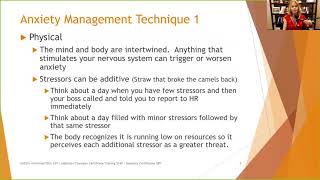
This episode was pre recorded as part of a live continuing education webinar on demand. CEUs are still available for this presentation through all CEUs. Register@Allce.com Counselortoolbox you I'd like to welcome everybody to today's presentation. Don't crap on the Addressing Anxiety and Regret if you remember this last four, five classes and the next, you know, four or five classes, we're really looking at providing tools that you can use that you can give your clients or use with your clients. Today I really want to try to provide some practical tools, some practical interventions that you can use to base groups off of or like I said for interventions with clients. I do encourage participation in the class, so please feel free to type in the chat room we will be exploring the concept of anxiety and regret being energy tied up in the future. In the past, we only have so much energy. We'll identify five anxiety management techniques and methods to teach those and identify five regret interventions and methods to teach those. And then we're going to finalize ways to find happiness on a daily basis. Because clients nobody can spend all day, every day trying to become undepressed. There needs to be time where you're just trying to relax or be happy. So we're going to talk about some of those things because we want to encourage clients to start finding time in their day when they're actually happy. They're not struggling against being depressed or anxious. So anxiety is another term for worry and regret. And when I teach this to my clients, we kind of talk about fight or flight and anger. Regret is often anger at yourself. So worry is a term assigned to anxiety about things that have not yet happened. How much effort does it take to worry? You know, I don't know about you. I tend to be a little bit of a worrywart. So when I get anxious about something, I can perseverate on it if I don't check myself. So it's important to have clients really pay attention to how much energy they spend over the course of a week worrying. And it doesn't have to be overwhelming, oppressive worry. It can be fretting about something here and fretting about something there. If they keep a log of it, you know, you know, don't have to keep a super detailed journal, but keep a log of it. A lot of times clients are surprised when they look back over the week and they're like, yeah, I worry about a lot of stuff and I worry a lot, which drains their energy. I mean, think about a time when you've Been worried about something, and, you know, it's natural to worry. It's part of the fight or flight reaction. Something happens where we start, you know, we get nervous holding onto that. Worry is what drains our energy. Regret is a term assigned to anger or disappointment at yourself for things that already happened. This is energy tied up in the past. And it doesn't matter whether your clients have mental health issues, substance abuse issues, whatever's going on, maybe they're dealing with grief over the loss of a loved one. A lot of times clients will present with regret issues, things they should have said, things they should have done, things they shouldn't have. And we want to talk about how to process that, how to come to terms with that in order to let that go and stop being angry at themselves. And we're also going to look for both of these at why clients might not want to let these things go. Why might it be scary to let go of worry? And why might they be afraid to let go of regret? What's going to happen? So again, when I'm presenting this to a group, I talk about how we only have so much energy. You know, you can only do so much in a day. You can only, you know, you've only got so much energy. So it's holding on to regret or worrying, helping you achieve your goals and live a rich and meaningful life. And that goes back to acceptance and commitment therapy and really helping them define what a rich and meaningful life looks like for them, who is important to them, what things are important to them, and, you know, what are their values, if you want to go there. And then whenever, whenever anything comes up, have them check it against what they envision as a rich and meaningful life. Is worrying about this helping me get towards that, or am I just kind of draining energy, like sitting in the car, just flooring the gas pedal while it's in park. You know, you're just burning up gasoline, but you're going nowhere. So then I asked them, okay, you know, again, worry, regret, anger, whatever you want to call it, those are very normal emotions. You have them, you feel them, you identify them. And then you ask yourself, what can you do to more effectively use your energy to achieve your goals? If, you know, think maybe you have teenagers at home. Thankfully, mine aren't dating or driving yet. But I already worry. I already worry about what that's going to be like when they are late for curfew and pacing around on the floor. I know what I did to my parents. So does worrying about whether they're alive or they're on the side of the road in a ditch somewhere. Does that do any good? And the answer is no. You know, all those thoughts come into your head. True. Does it trigger anxiety? Yes. What can you do about it besides pace the floor and get progressively more wound up? So we're going to talk about those things in the interventions. So, like I said before the class started, I was going to ask you, what are some common anxiety themes or issues for your clients? What do they worry about when they come in and they say, I am worried that we have the more existential things. I'm worried about death and things that are more global. I'm worried about the direction the world is going. But then they have common other worries. They have fears of abandonment. They have fears that they're not being a good enough parent. So what are some things that you see as common themes in your clients? You know that three or four of your clients almost always present with anxiety or worry that fill in the blank. And the reason I'm asking you to brainstorm this again is so when we go through these interventions, you can think about how you might apply them to that particular worry. So, you know, and failure is a huge one for a lot of. For a lot of clients getting a new job and they're about to start their first day, that's really intimidating. They're out of control. They don't know what's coming up. So you have loss of control and the unknown. And if it doesn't go well, they're afraid they might fail. They may be rejected by their peers if they don't do well. You know, these are all kinds of things going back to those basic fees that may be going through somebody's head before they start a new job. So totally get why they would feel anxious. And hopefully we can help them figure out how to channel some of that anxious energy into excited energy. But we'll talk about that. Making mistakes, failure, relationships with peers, not being good enough. Those are all very common anxiety issues that we'll try to address as we go through these. One of the first things that I talk about with clients with anxiety or depression, quite honestly, is the fact that the mind and body are intertwined and anything that stimulates your nervous system can trigger or worsen anxiety. So maybe we're not addressing the failure issue here, but we're addressing what Linehan called the vulnerabilities. If we've already got somebody who's revved up and on the brink of feeling anxious, on the brink of having increased heart rate, or even a full out panic attack. Then if they're drinking caffeine, if they are ingesting lots of stimulants, if they're not eating and their blood sugar takes a dive, then they could start to feel more anxious. And we know from the challenging questions worksheet that we've talked about a lot that sometimes when people start feeling those anxiety symptoms, their heart, heart rate starts to pound a little bit and they may start feeling a little dizzy. All signs of increased cortisol, which the body does in reaction to stimulants as well as low blood sugar. They may say, oh, I have anxiety, so there must be something to be scared about. And they'll find something to fret about because they've got to make the connection between what they're feeling and what's out there. So they're saying, what's making me anxious? Instead of saying what's causing these symptoms? Is it anxiety or is it low blood sugar? And remember, when people drink, the first reaction after alcohol is the depressant effect. But about halfway through the alcohol wearing off, you have an anxiety effect because the body doesn't have a chance to balance out those neurotransmitters as quickly as the alcohol wears off. So some people can feel anxiety after drinking. Not that I'm suggesting they drink to deal with stress, but I do point that out for people. If they say, I've got a lot of anxiety, we look at this and we say, okay, physically, what's going on? I also emphasize the fact that stressors can be additive. Think about a day when you've had few stressors and then your boss called and told you to come to, come to HR immediately. And you know, most, most of us can relate to this. We've been called down to hr, to the president's office or something, and it always feels like you're going to the principal. So the first thing is, if you haven't had very, if you've had a lot of stressors or even a few stressors, you're already a little bit stressed out. You've already used some of the, you've already used some of your energy. And remember, we only have so much. So you're already kind of worn down. And then that call comes in and you're like, oh crap, I can't take another thing. So then the anxiety can go up because you want to fight or flee. Now, on a day that's filled with stressors, you can feel even more intensely what's going on. On a day that has Very few stressors. You probably have the energy to deal with it. The body, when you're exposed to a lot of stressors, think you woke up late, you were running to get out the door, you forgot to eat breakfast, you got to work, something else went wrong, your computer wouldn't boot. You know, lots of little irritants and stressors, then something like that comes on. Yeah, it's going to be probably harder to deal with. So encouraging clients to kind of again, be cognizant, be mindful of how many minor stressors and recognize that the stressors are additive and what can they eliminate? When I lived in Virginia, I hate traffic. I don't like driving in traffic. So I would always kind of take the back roads in order to get where I needed to go, or I would go at an off peak time so I didn't have to, you know, fight so much with the heavy, heavy traffic. That reduced my stress level. So encouraging clients to brainstorm. If I have to go to Nashville, I'll typically go in a couple hours early, work out in Nashville, shower and change there, and then go to whatever meeting I have so I don't have to fight the rush hour traffic. So encouraging clients to look at what stressors can you minimize that often come up in your life. That way you're preventing those vulnerabilities. So other things that we need them to do, and you can make a little checklist for them. If you're teaching this intervention in a group, examine what stimulants you're consuming. And a lot of them will think caffeine and that's it. But we need to remind them that nicotine has a stimulant effect. Decongestants have a stimulant effect. So what else are you eating and are you considering all the sources of caffeine? I didn't realize until about a year and a half ago that Dr. Pepper had caffeine in it. I thought it was just Diet Coke and Diet Pepsi. So, you know, knowing how much caffeine you're taking in and being aware of the effects it has on you, look at the side effects of medications. And the first one I have here is opiates. And you might be like, well, opiates, those are basically depressants. Well, yeah, they can be depressants, but when people are coming off of opiates, it can also increase their anxiety. So if they've been using them for a while, and some people may just feel weird when they're coming off of opiates, benzos typically have a pretty strong rebound anxiety when the benzos start to wear off. SSRIs, certain antidepressants actually trigger anxiety. And it's important to go online and, and drugs.com has some forums where people talk about their experiences, but it's important to talk with your clients about their experiences on different medications. The feedback I've gotten has been Zoloft tends to be a pretty benign. It doesn't rev you up or make you sleepy. Things like Lexapro and Paxil tend to make people really sleepy. But then you've got SSRIs like Prozac that often trigger anxiety in people. Part of that is because of the serotonin receptor it's working on, and part of it can just be the chemical makeup of the drug. So people who start taking antidepressants, if they start feeling anxiety, may get really confused and frustrated. So it's important to go through that with them and help them identify. If, you know, is this just a indoctrination side effect or is this something that is going to be an unacceptable side effect that's not going to go away and you need to talk to your doctor. The SNRIs Selective Norepinephrine Reuptake inhibitors. Remember, norepinephrine is your get up and go chemical, so it can be tricky. But typically SNRIs will trigger more anxiety in people than some of the SSRIs. And like I said, decongestants, people take them, you know, when they're, when they have a cold or when their head's stuffy or whatever. But those can cause anxiety because they're stimulants. It's, you know, it's Sudafed. It's, it's just what it is. Learn about good nutrition. You know, so we're looking at the food type stimulants, we're looking at medications, and then we're looking at nutrition. In order to build the neurotransmitters GABA and serotonin that are both responsible for helping people feel calm, people need to have tryptophan, which is a protein. They don't need to get in the weeds with all the different nutrition stuff. But a good quality protein is important. If they're vegetarian, have them talk with a nutritionist to make sure that they're getting enough of that. Insufficient magnesium, calcium and B vitamins can prevent the body from making serotonin because it prevents the chemical reactions that need to break down and transform the tryptophan. So again, not getting too far in the weeds. Because a lot of times clients don't want to. If they do, you can refer to a nutritionist. But making sure they're eating three colors on a plate, a protein at every meal of some sort. Dehydration can also cause kind of shakiness and jitteriness and it can affect heart rate. So if somebody gets dehydrated, their heart rate might start increasing. Increasing. They can interpret that as anxiety and then again go forth with that and look for what's causing their anxiety instead of what's causing their rapid heart rate and blood sugar issues. When your blood sugar goes down, your body releases cortisol. Cortisol tells your body to release more blood sugar, but if you haven't eaten and there's no blood sugar there, then you may have a problem. So people who are on very low carb diets may tend to experience more anxiety, especially during the first three to six months. So just talking with your clients and being aware and helping them be aware that there are side effects to pretty much everything we do and we need to take care of our bodies. Encourage them to practice good sleep hygiene to ensure their circadian rhythms are in sync. Circadian rhythms are not just being awake and being asleep. When your circadian rhythms are in whack, if you will, about between six and eight o'clock in the morning, depending on your particular time clock, you will have a surge of cortisol. That's your, hey, get out of bed, it's time for a new day. And then later in the afternoon, you'll have another surge of cortisol, which is why a lot of us feel sleepy right after lunch. But then we kind of get our second wind. But if those rhythms are out of whack, then you may have cortisol surges when you're not supposed to have them, and it can disrupt your sleep. And encourage clients to always get a physical to rule out hormone issues. Estrogen, testosterone, progesterone and thyroid hormones can all cause anxiety like symptoms, even if they don't have anxiety, even if they're not a worry type of person, they may have anxiety like symptoms and environmentally. So this is two. The first one I start out with is just your basic vulnerability prevention. Then we move to the environment. Your environment can be calming or draining. And you all know that I typically look towards feng shui for helping people modify their environment a little bit. Now, a lot of people are not going to completely change their house or office around, but encouraging them to create an environment that doesn't drain their energy, where they're not constantly stressed. Feng shui says that if you can't see a potential person coming up approaching you, whether it's behind you or to your side, it's going to naturally drain energy. That's part of our hardwiring, that we always want to be on alert for predators, if you will. So it's important to be able to see, which is why you always want to be able to see the door and preferably not have your back to a window. If they have to, they can put get those little tiny round sticky mirrors that we used to put in our lockers in high school and put that on their monitor so they can see behind them. There are lots of different things that they can do to reduce the stress in their environment. Too much brightness, including fluorescent lights, especially the ones that flicker because the ballast is about to go out. Harsh lines and orange and red colors like I'm wearing today can contribute to anxiety. Think about going into a room. And my son's preschool used to be like this. It just wow. It was mind boggling. You'd walk in and there was one wall that was bright yellow and one wall that was bright purple and one wall that was bright red. And everything was bright and energetic and loud and. And it was exhausting to be in there. So there is a time and a place to have the bright colors. Accent walls are great, but there also has to be a way to get away from it if it starts to feel too stimulating. When my son was little, he was about 2 and he had maybe symptoms of ADHD. He was a micropreme, so he had difficulty with too much stimulation. I remember one day I was working on the computer and he was just having kind of a rough day. And he walked up to me. Now obviously we had been through this before. He wouldn't know the words, but he just walked up to me and he goes, mommy, I'm taking a break. I'm overstimulated. And popped his binky in his mouth and toddled in his room. And we had one wall of his room that was just a blank white wall. And he sat in there and stared at it for about five or 10 minutes. And then he came out when he was ready. But knowing, being aware that he was feeling anxious. He's always been pretty in tune to himself. Was something that we want to help our clients become aware of. So if they start feeling overstimulated, they can get into a different environment. Maybe it's going outside and watch. For me, it's watching the squirrels. I love watching Squirrels, essential oils can be diffused in the air. Lavender, chamomile, valerian and clary sage are four of the more common calming essential oils. But each person is different, so encourage them to just kind of try it out and get organized for you. Now, organization runs a pretty wide gamut. Some people have files upon files upon files. Some people have piles upon piles upon piles. Whatever it means for you so you don't feel like it's just totally cluttered and in disarray and you can think clearly, can help. And encourage clients especially to do that in their bedroom and in their workspace, because those are two of the places that you need to kind of be the most relaxed and clearest and examine the environment for stressful items and sounds. You know, if there's a picture of something that stresses you out, you know, you might consider putting that somewhere else. Bills, reminders of stressful people or times, you know, that can be in terms of you can get something in the mail that reminds you of something. Just taking stuff that may have a negative energy to it and putting it in its own little pile so you don't have to be inundated with it everywhere you look is helpful. So both of neither one of those first two techniques really addresses anything in particular. So then we go to three. Now we're on to what we talked about here. Helping clients remember that their thoughts can trigger a nervous system response. If you tell your body there's a threat, it'll respond. One of the best examples I can give you I used to do with my class at ufo. I would walk in one day and I'd say, everybody, clear your desk. We're going to have a quiz. And, you know, just those words, clear your desk. We're going to have a quiz made a lot of people's heart rate go up. You know, they had this thought that, I'm going to fail this quiz. I didn't study for this quiz. I'm not ready. So they had an automatic anxiety reaction. I know it was mean. And then there would be no quiz. But. But I would point out to them how they had a thought. There wasn't even anything like impending. They didn't have any proof that they were going to fail, but they had a thought and their anxiety response was triggered. So encouraging people to systematically desensitize to fears. If they have a fear anxiety about flying, encourage them to think about flying, be able to calm themselves down, then maybe go to the airport and watch airplanes and be able to calm themselves down. And baby steps for that. If it's starting a new job, encouraging people to think about what is it going to be like to start this new job and imagine yourself there. Think about how you're going to meet people, what it's going to be like, how exciting it's going to be. And yeah, there's going to be some anxiety, that's true. But what can they do with that anxiety? Encourage them to identify and dispute their stressful thoughts while they're imagining being in that stressful situation. So, you know, when we're talking about starting a new job, I'll walk somebody through it and I'll say, okay, now what you imagine you're walking in the front door and you're checking it at HR in order to get your badge made. Now tell me what you're thinking. What are you telling yourself? What, where's your anxiety level right now? And a lot of times it's not super high at that point. So then we'll go on to the next phase and keep going through the day until we hit a place where they're like, I'm afraid I'm not going to know the answer, or maybe I wasn't the right choice for this job or whatever it is. And then we start talking about those thoughts. What happens if you don't have all the answers? What does that mean about you and what does that mean for your job? In most cases, nobody has all the answers. So we'll start identifying and disputing all or nothing thinking and some of those cognitive distortions. And I encourage them to practice this until they can imagine the situation without getting stressed out. Or better yet, imagine it with a happy ending. So hopefully leading up to starting this new job, they've got a week or two that they can imagine going through it and having it turn out successfully when they experience the situation. So then when they're going in for that first new day, they've already got the. They've already done the homework. They know what unhelpful thoughts they might have and they've already got the disputes ready. You know, if I make a mistake, people are going to think I'm stupid. If I make a mistake, everybody makes mistakes and it's not going to be a big deal. So they're already going to have those disputations, if that's a word in their mind, because they've practiced it and they've already disputed those thoughts. So if they start coming up, it's not like they're having to think, well, what do I tell myself about that? I find this Is really helpful for a lot of people in dealing with things. Another example that you guys gave was driving somewhere you're not familiar with. And that's a big one for me. You know, before the gps, oh my gosh, I couldn't find my way out of a paper bag. My daughter will be the first to tell you that. But it would stress me out to no end because what if I got lost? Well, if you get lost, you pull out a map back in the olden days, or you stop at a gas station and you find your way, it's not going to, you know, be a major crisis. But really playing that through, you know, what's the worst that can happen? If I get lost, what am I going to do? And then imagining the stressful situation, you know, maybe you have the thought that if I get lost, then I'm going to end up in a bad neighborhood and I'm going to get carjacked and da da da, da da da. Well, yeah, you can go down that road. What is the likelihood that that's going to to happen? So if you start to get lost, what do you need to do? So encouraging clients, again, think it through. Another example is for me is bridges. I hate bridges. Total irrational fear. But I've gotten to the point where I can talk myself through driving over a bridge without getting completely freaked out. Management technique 4 cognitive, again is the challenging questions encourage people to focus on one issue at a time. If they're going into a new job and they're worried that people aren't going to like me and I'm going to look stupid and I don't know if I can handle the job well, that's three things they're worrying about. So let's take one thing at a time and let's take a look at it. What is the evidence for and against it? Is the reasoning based on fact or feelings? Now remember, you know, you may have those feelings. Don't those thoughts going through your head? A lot of people do before they start a new job. But are there facts to support the notion that people are going to hate you, that you're not going to get along with others, that you're the wrong person for the job? Probably not. So a lot of the reasoning that people are using that's causing the anxiety about this new job is based on feelings. It's the unknown. They don't know what to predict. And you know, it's, it's anxiety provoking. So what can you do about that? And I also ask them to highlight the Fact that it's going to be a great experience, you know, I turn it around and say, what else could you. How else could you envision this coming out? And what's the. What are the facts for that? Encourage them to look at. What are some other explanations for how you're feeling right now? If they're feeling really anxious, stop and go. You know, let me check myself. Have I eaten? Is there something else going on that is triggering this anxiety? Am I using extreme words? All or nothing? Which parts of this are within or without my control? Another example somebody just gave, if you're in a group situation and people start laughing, you know, maybe three or four people start laughing over on another table, the person starts thinking they're laughing about me. They must think that I am totally stupid. So again, going back over these questions, what's the evidence for and against the fact or the notion that they're laughing at you as opposed to maybe some internal joke they had among themselves? What other explanations might there be for their laughter? Which parts are within your control? Even if they are laughing at you, is that within your control? Probably not. So what can you do about it? How can you use nervous energy to address things that you're in control, that are in your control? So instead of getting anxious or angry at the people that you think might be laughing at you, how could you use that energy to improve your next moment despite them? And in the big scheme of things, is it worth your energy to get upset over whatever's going on? So all of these are things that you can encourage clients to hash out. One anxiety thing that a lot of my clients present with is if their significant other doesn't return messages, and then all of a sudden they fear they're going to be abandoned. You know, they're mad at me, they're going to leave me, we're going to break up. Well, again, going through all of those questions and having the person look at it as objectively, and I try to avoid the word rational objectively as possible to see what's what and what they can do with the facts that they have in the present. And technique number five, radical acceptance and hardiness. First part is radical acceptance. Accepting without judgment that you're anxious but not fighting it. We have that fight or flight reaction. It's gonna happen. And if you continue to fight with it, you're going to ramp it up. If you're somebody who tends to have panic attacks, excuse me, if you start feeling a little bit jittery or however you feel right before your panic Attack. Then when you start feeling that way, even if it's for some other completely unknown reason, you could start fighting and struggling with that feeling and getting anxious that you're not able to control it, and angry, which is going to increase your cortisol, increase your heart rate and probably work you into a full blown panic attack. So radically accepting I am anxious right now or I am really angry about whatever it is. Okay, realize, and this is the key part to help clients really hone in on. And sometimes I will give this to them just as an assignment for the week. Feelings subside within about 20 minutes if they aren't fixed. And I encourage them when they get angry or anxious or start feeling regret, use your distress tolerance skills and do something else, which we're going to talk about in just a second. And then in about 20 minutes, check back in with yourself or don't because you'll probably have moved on by then. So I encourage them to try sort of turning their mind away from the distress that point in time to see, you know, how things are different if they don't feed those feelings with constant negative thoughts. So during that time, turn their attention to hardiness. What in your life are you committed to? What is meaningful and going well? So we'll stay with the anxiety about starting a new job or not being good enough or for a promotion encouraging people to look at, okay, well that's this thing over here. What else in your life are you committed to and what is meaningful and going well? So if you don't get that job or you don't get that promotion, is that everything? You know, if that happens, does your world come crashing to an end? And a lot of times that can help people start getting some perspective and recognize that, yes, it would be unfortunate. However, there are other things going well in my life and when they start focusing on that, then they're not feeding the fear. What parts of your life and the situation do you have control over and what can you do to improve the next moment? So sometimes clients will realize, you know what, I have control over this weekend and spending time with my family, that's important to me. And worrying about what I'm going to hear on Monday is just going to detract from that. So in order to improve the next moment, I'm going to do xyz. However they deal with their worry and how can you view this situation as a challenge instead of a threat? You know, when you're getting ready to go up and fight against a lion, you know, yeah, that's threatening but you can also view it as a challenge. You know, how can I defeat this lion so he doesn't eat me? And it's a little bit of perspective shift, but it's a more positive, empowering perspective shift. Because when it's a threat, a lot of times we want to run away. So regret, as I said earlier, is often anger at oneself, and it's half of the fight or flee sort of thing. It's the person gets stimulated. It's an excitatory response that tells you there's a threat and you need to get out of here. To eliminate regret, you must eliminate the threat. So, you know, anger is half or fight or flee. We already talked about the flee part, the anxiety. But we need to figure out, what was it that triggered this reaction? What's the threat? Many times, choices in the past made sense based on knowledges and experiences. Until that point, external factors and your current tools, energy, and needs. So encouraging clients, you know, those things they say they regret? You know, maybe they got a DUI and they regret that maybe they cheated on their spouse, and they regret that. I'm not encouraging them to give themselves a pass and go, oh, it was okay, but I'm encouraging them to look at things in context. And could you have made better choices? Yeah, possibly. But does this choice make sense? Was it one possible solution to what was going on? And generally, the answer is yes. Now, do you have to continue to make that same type of choice that you regretted? No. Hopefully they can learn from it. So what are some common regrets your clients have? For my clients, I think I already stated a couple of them. Cheating on their spouse, getting DUIs, criminal charges, sometimes breaking up with somebody that they don't think they should have, or not giving 100% at their job. Then they lose their job. Then they're like, well, that actually was a really good job. I regret losing it. So the first thing to eliminate regret, you got to eliminate the threat. Got to identify it first. So whatever it is that you have a regret about, I regret having an affair. Okay, so if you regret having an affair, what does that behavior say about you? Why do you regret it? And does it. You know, maybe it says it's a way of acting that is not in concert with your values. Maybe you feel bad because you hurt somebody else's feelings. Maybe. You know, there's a lot of maybes. So we want to look at, you know, what does this say about you as a person? Are you a despicable liar, cheater, awful person who doesn't deserve to breathe the air? No. So is this true about you in all situations and in the present, they're probably looking at it going, you know, I'm a pretty good person. I regret what I did back then. You know, regrets are in the past. So we want to look at it and say, okay, it's not true about you in all situations. It was true about you then. Are you the same person you were then? Most of us change, most of us evolve, develop. Even after we get to be grown ups, we learn new skills and, you know, morph into different people than we were 10, 15, 20 years ago. And how can you improve that is? What can you learn from that so you make a better choice the next time you're in a similar situation. How is this regret threatening your self image and or current lifestyle? So, you know, one of my former co workers, long before I met him, had, you know, a wicked drug problem and got some pretty significant rap sheet, criminal charges. Did he regret doing that? Yeah. However, you know, the happy ending, fast forward 20, 30 years later, he ended up getting those expunged from his record, becoming mayor of his town. And, and it's just generally an all around great guy, good employee, that kind of thing. So yes. Did he regret it? Yeah. But lashing himself for it and just sitting there and wallowing in regret wasn't going to change the fact or help him achieve his goals and have a rich and meaningful life. So he decided to take steps. He went to treatment and then he went through the process of building, building up his reputation again and getting his record expunged, et cetera. Another question you can ask people is in what way can dealing with this issue make you stronger or help others? Now for John, you know, he was a model for a lot of our clients that came through the facility, that just because you've got criminal charges or you know, you've made mistakes in your past, used drugs, had an affair, whatever it is, it doesn't mean that your life is over. There are things that you can do and it's having the strength to address them. So identifying the threat, figuring out why it's a threat, what does it say about you? And so why are you angry about it? Why are you angry at yourself? And then figuring out, is this who you are now and how can you change so you learn from that. Stop with the hindsight, please. When we look back over things that we regret, and I think all of us can experience this, not just our clients, we see a lot of things we didn't see back then. So we may say, well, I should have, or I could have, or there were all these other options. Well, yeah, but you didn't see it back then, or you didn't choose it for whatever reason, can't redo it. So hindsight, shoulda, coulda, wouldas are just going to keep you stuck and make you feel angry. If you can learn from them, you know, look back and go, okay, I see these things were there. I will learn from them and move forward and become better at being mindful and adapting to situations, basically recognizing that back then there were probably three or four options that you didn't see. So how in the present can you make sure that you're seeing the options? One of those is often getting in your wise mind, if you will, not acting in your emotional mind, not being reactive to everything, but practicing the pause and saying, all right, how can I best deal with this situation in a way that will help me move forward towards my goals? Intervention 3 Focus on gratitude that attitude of gratitude can go a long way, even if things are kind of crappy. Occasionally focusing on what you have now that is good despite the past. Again, people, I think all of us, I would venture to say all of us have made mistakes, have things that we regret. But in your current situation, what do you have that is good and meaningful and awesome despite all that? And what opportunities do you still have? So a lot of people with regrets get stuck thinking that they can't move forward, being grateful for what they do have. If you have a death in your family and you know that person passes away whether it was anticipated or not, and there were things that you didn't say, things that were left unsaid, or things you feel like you should have done while they were alive, well, you can't undo that. What can you do now? What opportunities do you still have to avoid that mistake with other people to, you know, however they want to look at resolving that. But again, this is another learning experience, being grateful for the opportunities to not make that same mistake again, forgive yourself and accept that you're fallible. You know what? All of us make mistakes. Forgiveness is a choice to quit spending energy in the past and dedicate that energy to improving in the future. So I use the metaphor, you know, the money metaphor. Because spending energy in the past is like continuing to pay for your college education even after you finally get those loans paid off. You're like, you know what? I'm still going to keep throwing money back there. And if you decide to donate to your alma mater, you know, great. But developing the understanding that you only have so much energy, you only have so much money, and you got to figure out how you're going to use that. Are you going to quit, keep throwing it at something that doesn't impact you anymore, or are you going to use it to help you move forward? The fallibility thing is hard for a lot of people to wrap their heads around because they are so self critical. So encouraging them to identify five people they respect, it can be teachers, it can be movie stars, it can be whomever. And are they infallible? And this is something that sometimes they got to think about for a while. Like Martin Luther King, was he infallible? Well, my guess is he made some mistakes. I am not a, you know, super expert on Martin Luther King, but he was human, so my guess is he made mistakes. But encouraging them to understand that even some of the people they look up to, or pretty much all the people they look up to, they're going to make mistakes. Are they without regret? And they may or may not be depending on how they handle it. A lot of people that we respect have gained some power, gained some authority, gained some stuff. And a lot of that comes from using their energy to move forward instead of getting stuck in the past. So, you know, encouraging them to look at that, you know, do you think that so and so regretted making this choice? Did they get stuck in their regret or did they use it to learn and move forward? And you know, if you think they regretted something, you know, maybe it is something like Martin Luther King. You can't just go interview him now hypothesize. How do you think they would have handled this regret? And this can help clients get out of their own selves and think about how someone whom they may want to be like would handle regret. So it can feel less, less threatening and personal to discuss this other third party here and explore the benefits and perpetrators of self hatred. Many clients, like I said at the beginning, many clients are terrified to let go of regret. And this is true whether you're a parent or whether you're in recovery from substance abuse or whatever the case may be. Sometimes we look at our regrets and we're afraid that if we let go of them, maybe we'll forget and make the mistake again. Maybe we're afraid that if we let go of our regret, people are going to look down on us because we're not still beating ourselves up. So encouraging them to look at what would happen if you just decided, you know what, I'm going to learn from this and I'M going to move on. I'm going to, you know, in 12 step programs, we say give it to God. In your program, you may have a way of giving it to the universe or just saying, it's done. I'm going to let it be in the past. That's the first thing to encourage them to look at. Because a lot of times there is something, you know, we always say that clients don't do anything without a benefit. So what is the benefit to continuing to stay angry at yourself and regret what you did? How is that protecting you? How is that benefiting you? And then that will help you get to the crux of why the person may be stuck and who are the internal critics and what are they telling you? A lot of times, like I said, people may be afraid to forgive themselves because they don't think other people have forgiven them. They hear their great aunt or their mother or their priest or whomever in the back of their head telling them that they are a shameful person for making that mistake, or they're not good enough, or I always knew you would turn out to be the black sheep of the family. So encouraging them to identify, you know, are they the only one that is maintaining that regret? Or do they have internal critics that are continuing to beat them down for it? And if they do, they need to have a little heart to heart, if you will, with those internal critics and let those go. And there's a bunch of different ways they can handle that. Writing a letter to them, deciding that that's not accurate anymore. And in some cases, when it's clinically appropriate and the person is still alive and involved in the client's life, maybe having a session, a session with that person, that's rare. Most of the time it ends up being writing a letter to them or the client just deciding to silence that voice. That's being a bully in their head. And also to counter the internal critic. If that internal critic says, I always knew you would end up being a failure. Having the person come up with disputing thoughts when they hear that in their own head, that reminds themselves that they are not a failure at lot of things. They may have failed at this one thing. They may have made a bad choice. Everybody makes mistakes and I'm good at blah, blah, blah, blah, blah. Now, happiness. This helps people remember that there's more to life than eliminating anxiety, anger, regret. You can't be miserable and happy at the same time. So have clients brainstorm a list of things that make them happy and encourage them to do One each day, mindfully. Now, I like doing this as a group because it's a fun activity. Bubble bath, walk in nature, listen to a comedy skit, watch a sitcom. You can see, you know, those are just some that we brainstormed. For some clients, listening to music makes them really happy. But one of the keys is to doing it mindfully. Not just doing it, but really paying attention and savoring the moment when they're doing it. When you're taking a bubble bath, what does it smell like? What does the water feel like? And focusing on relaxing all of your muscles, or, you know, that was just one example, but encouraging clients to talk about, you know, after you brainstorm this list, what does it mean to do this mindfully? You know, what are you going to pay attention to while you're walking in nature? You know, I can go on a hike and I can be thinking about 16 other things, or I can be focusing on exactly where I'm walking and what birds I'm hearing and all that kind of stuff. That's a whole lot more relaxing than just walking down a path and thinking about all the stuff I got to do at the office. So mindfulness is a key component when you're doing things for relaxation or that make you happy. And have them keep a log each day of five things that made them smile. And it's non negotiable five things each day that make you smile. Because a lot of times clients will go through an entire day and they may have smiled five times but not recognized it. So this encourages more mindfulness. But at the end of the day, if they haven't had five things that made them smile, then they got to go out and find something. And with the Internet, you can do that. You can find things that make you three or four things on the Internet that make you smile before you go to bed, if you have to. But we want to make sure that they're getting their happiness quotient each and every day in order to ramp up those happy chemicals and help them experience some relaxation. Belly laughs release endorphins, which help people actually feel good and feel relaxed. So I really encourage belly laughs as much as possible. Anxiety and regret take up an inordinate amount of people's energy, often helping people understand the function of the feeling. So, you know, where's this threat coming from? And addressing it can help them get unstuck. Anxiety can be addressed both directly with cognitive interventions and indirectly by eliminating triggers and vulnerabilities in the environment. So, you know, there's a Lot you can. With regret, it doesn't matter how well you eat or how much you sleep. If you're feeling regretful, that's just. There's a lot of cognitive stuff that has to go there. But we can really help clients start looking at some of these. Depending on their readiness for change, clients may look at the 10 interventions we talked about, and they may find one that they're willing to explore. Well, cool. That's one more than you were willing to explore yesterday. So let's start there and start presenting different approaches to handling their regret and anxiety. Another thing that I found helpful with clients, especially ones that maybe we don't seem to quite be finding the right intervention to help them get unstuck. I encourage them to go online and that can be really tricky for medical stuff. It's a lot less tricky with mental health stuff. And Google, you know, getting over regret or dealing with anxiety and read some articles and then come back and tell me three things that they learned that they might be willing to try. Because, you know, goodness knows, I don't know every intervention out there. So let's find out what works for them or what they think will work for them, and then we can start integrating it into the treatment plan. And a lot, a lot of times people can get. Develop a lot of regrets. I'm reading through some of the comments that I didn't quite get to. People can develop regrets over getting angry. You know, you get angry, you blow up, and then you're like, oh, crap, did that again. And helping clients figure out how to stop and practice the pause before they get angry in the present. Now, back then, you didn't have those tools. Yes, it's regretful. We can look at how you might make amends, if that's even possible. But then also, what can you do in the present to prevent that from happening again so you don't have that regret like an albatross around your neck. Saying things that you wish you hadn't said Again, those things. I have made bonehead comments before and you know, there are a couple of them that continue to haunt me periodically and I just push them out of my head. I'm like, I didn't mean it maliciously. I said it, I apologize for it. I gotta let it go because I can't. There's nothing I can do about it. I find with these two particular emotions, sometimes it's helpful to do a little bit of self disclosure with clients so they understand that we're fallible too, and we have regrets, we make mistakes. And we get anxious and it's not abnormal. It's just something that we deal with because a lot of times clients think that we don't have any sort of anxiety, worry or mental distress. And that's just so not the case. Any other questions or any questions? Anything else anybody wants to add? Well, I truly appreciate y' all being here today. Again, if you have topics that you want me to cover, please feel free to you can email them to me. You can also email them to supportlce.com or you can type them in the group chat window either before or after a class. And I will get right on that. Yeah, the quiz should be working. Let me see. Yep, two people have taken the quiz. If you enjoy this podcast, please like and subscribe either in your podcast player or on YouTube. You can attend and participate in our live webinars with Dr. Snipes by subscribing@Allce.com Counselortoolbox this episode has been brought to you in part by allce.com, providing 24. 7 multimedia continuing education and pre certification training to counselors, therapists and nurses since 2006. Use coupon code counselortoolbox to get a 20% discount off your order this month.










